Best for a home shop
The best plasma cutters for home use
Home-shop machines, why the compressor is the real purchase, and how to read cut-capacity numbers.
Our pick: Lotos LTP5000D
Level 4
The only rung on this ladder that is about shaping metal rather than joining it — and the one where the machine is the smaller half of the purchase.
Best for a home shop
5/8 inch clean cut on 240V with a pilot arc, if you already own a compressor.
Level 4 arrives quietly. You do not decide you want a plasma cutter because you read about one. You decide it after the third time you spend most of an afternoon making a curved bracket with an angle grinder and a lot of patience.
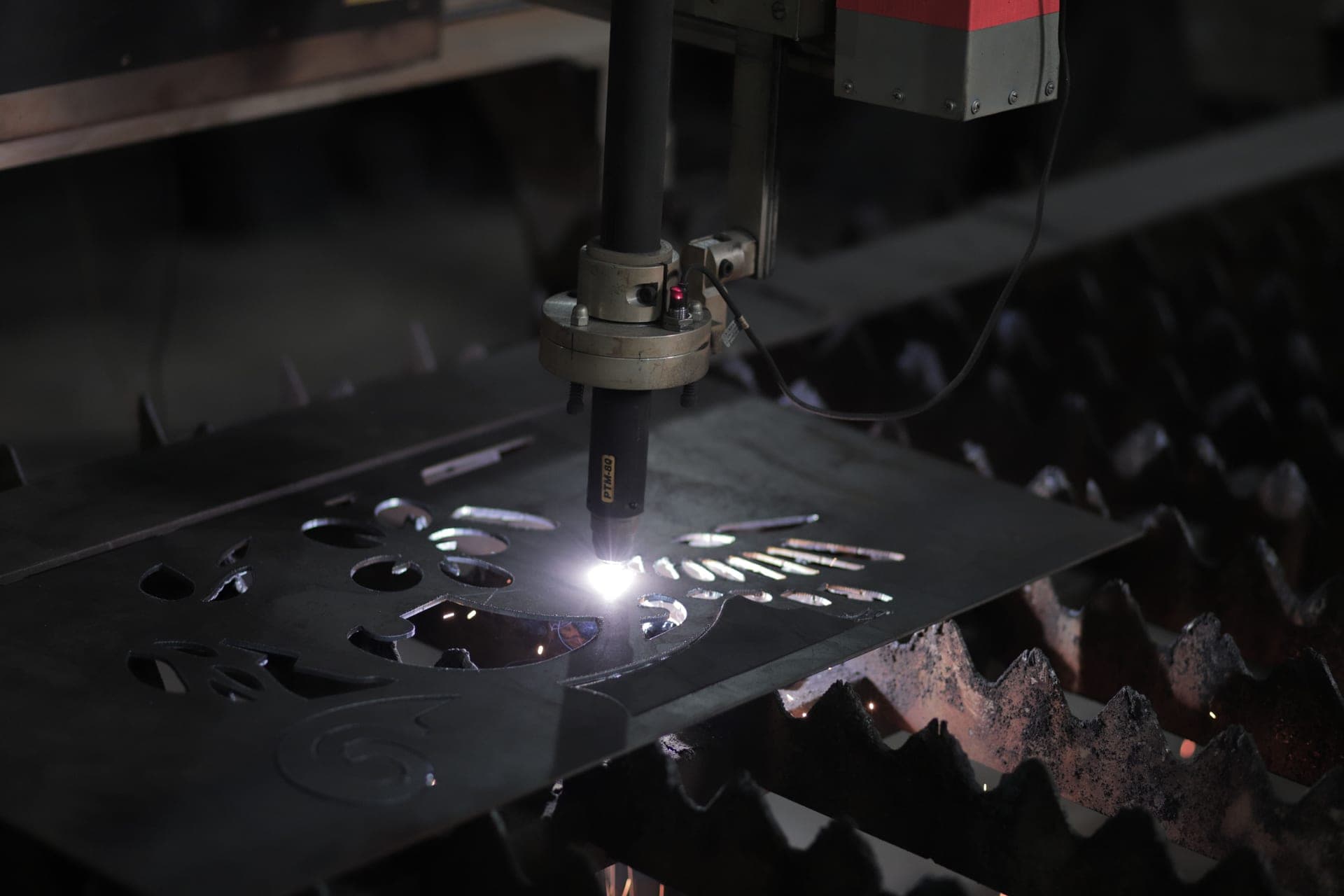
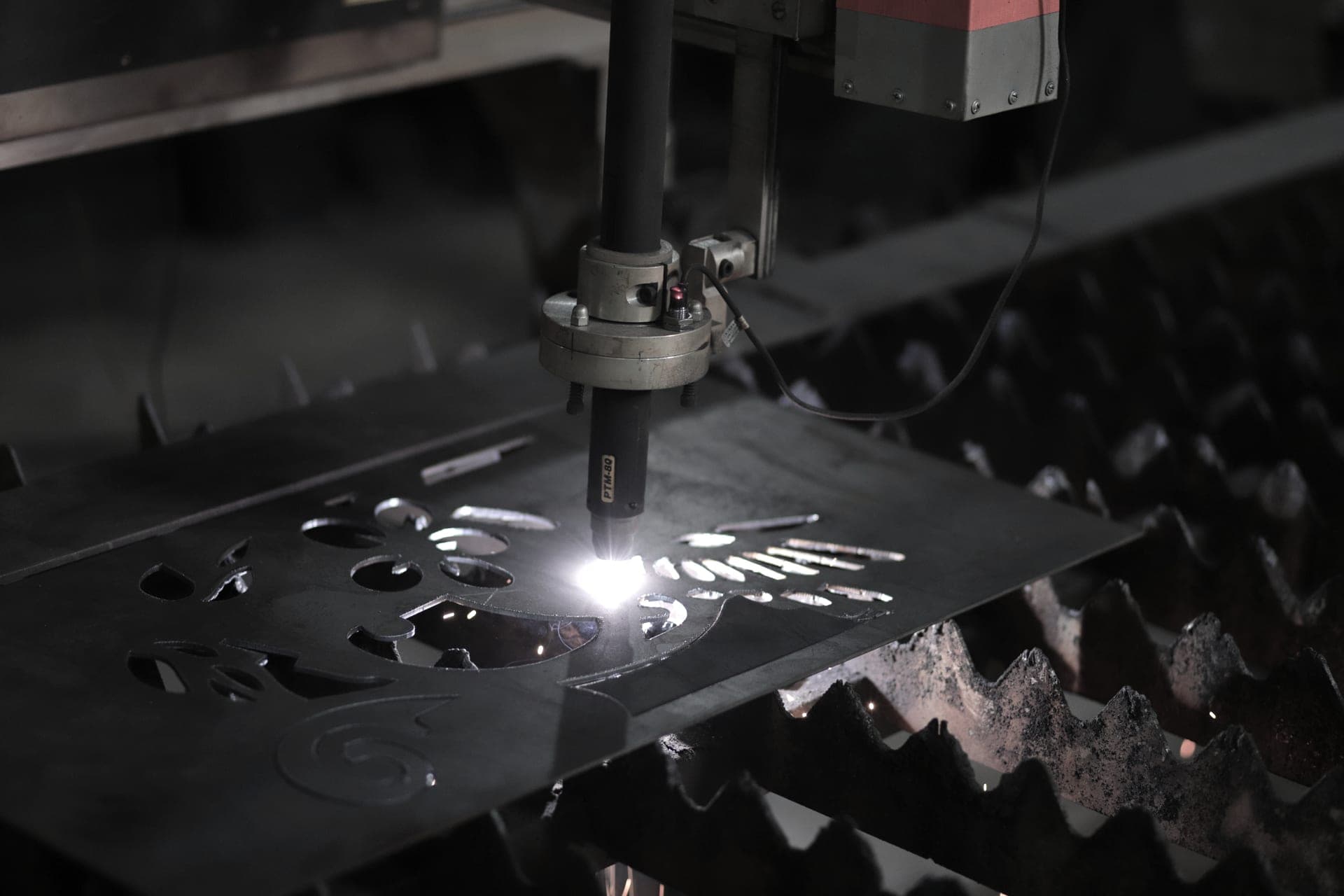
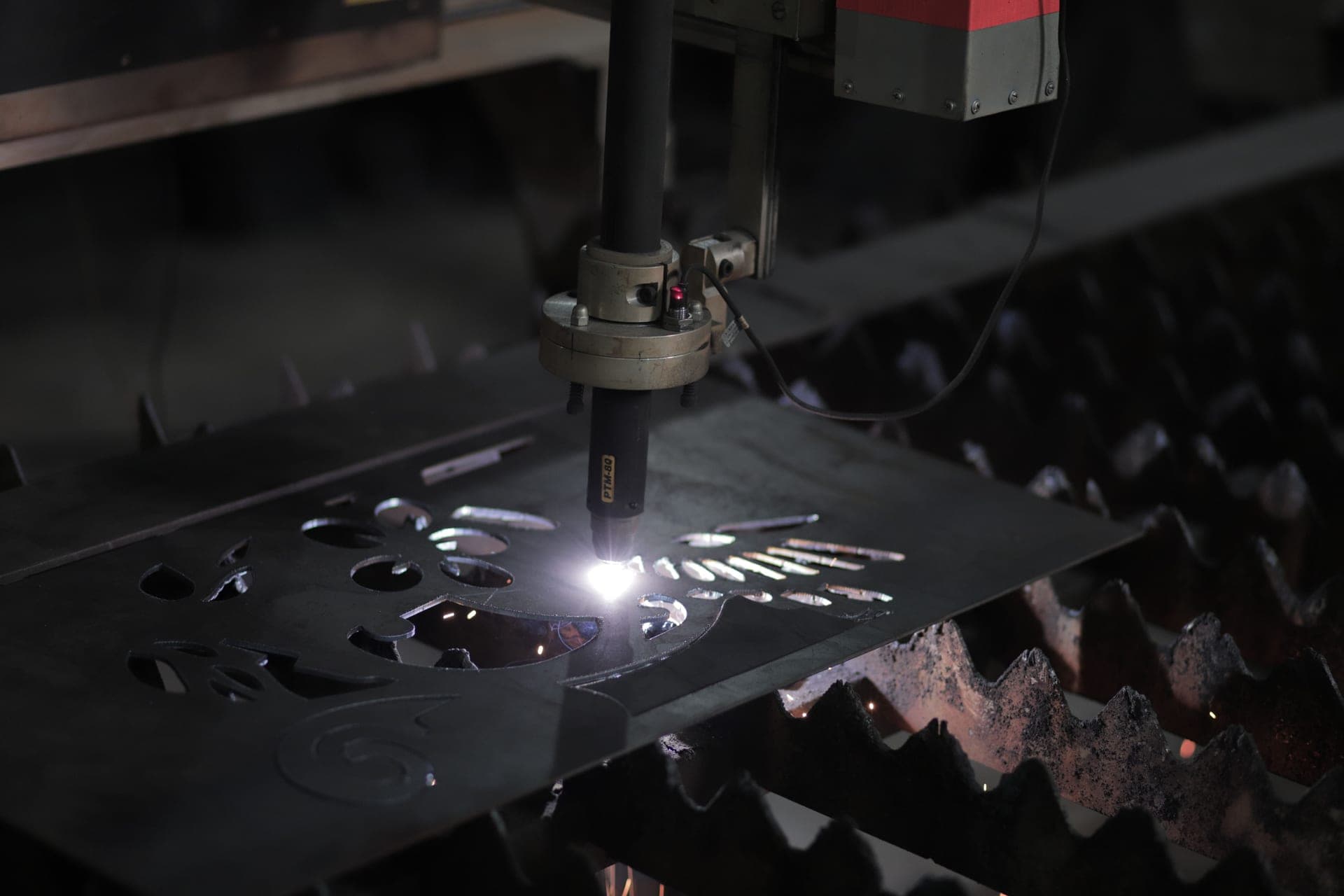
Plasma cutting forces compressed air through a small nozzle and an electric arc, which ionizes the air into a plasma jet hot enough to melt steel and moving fast enough to blow the molten metal out of the cut. The result is a narrow, controllable cut that follows a drawn line, through material an angle grinder handles badly or not at all.
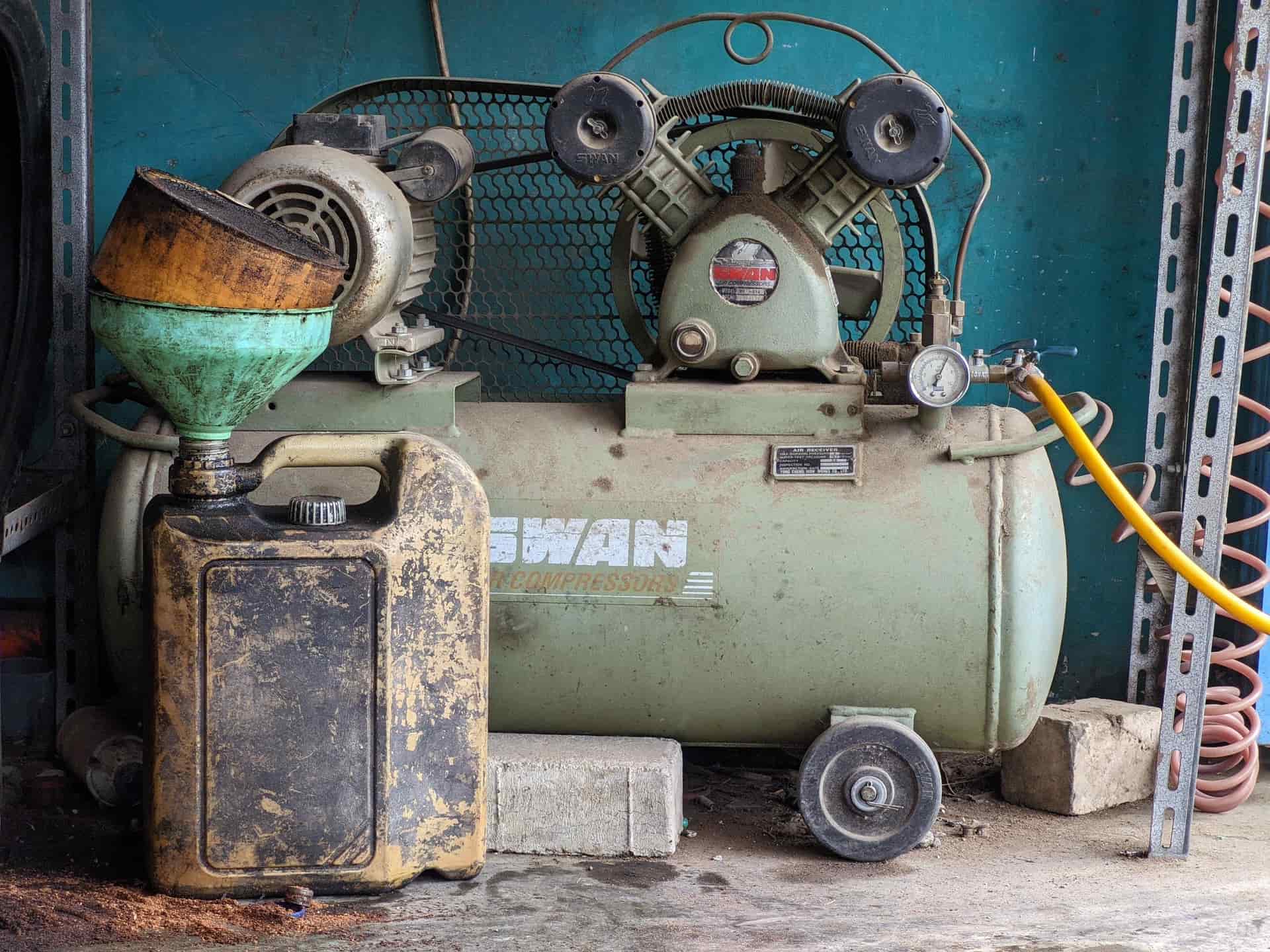
This is the most important paragraph on this page. For most home plasma buyers, the compressed air setup is the larger and more surprising part of the total cost.
A plasma cutter consumes air continuously while cutting, at a specified volume and pressure. Manufacturers publish that requirement in cubic feet per minute at a given PSI. If your compressor supplies less than that figure on a sustained basis, the cutter does not fail loudly — it produces a poor, dross-heavy cut and eats consumables, and you spend weeks blaming the machine.
Air also has to be dry. A compressor tank collects water, and water in the plasma stream shortens consumable life dramatically and spoils the cut. A water separator, and ideally a dryer, is part of the system rather than an upgrade. Plasma cutter air requirements covers how to read the specification and what it means for what you buy.
There is one way out of this problem, and it is worth knowing about before you price a compressor: some machines include a built-in compressor. They cut thinner material than an equivalently priced external-air machine, and they remove the whole second purchase. Plasma cutters with built-in air compressors is the page for that trade.
Every plasma cutter publishes two thickness figures and retailers habitually quote the larger one.
Recommended or clean cut is the thickness the machine cuts at a working speed with an edge you would be happy to weld. Severance cut is the thickest material it will get through at all, slowly, with an edge that needs grinding.
Buy on the recommended number. A machine advertised as cutting three-quarters of an inch and recommended for five-eighths is a five-eighths machine that can be made to struggle through three-quarters in an emergency. The cut thickness chart sets the figures out side by side.
Voltage compresses these numbers too. Dual-voltage machines typically lose about a third of their output and close to half their clean cut thickness when run from a 120-volt outlet rather than 240 volts. If the capacity figure is why you are buying the machine, you need the circuit that goes with it.
A touch-start plasma cutter establishes its arc by contact with the workpiece. A pilot-arc machine establishes a low-power arc in the air at the nozzle first, then transfers it to the work.
On clean bright steel, both work. On painted, rusted, galvanized or expanded metal — which is most of what a home shop actually cuts — the touch-start machine stalls repeatedly and the pilot-arc machine simply works. Pilot arc used to be a premium feature and is now available at the bottom of the market, so there is little reason to buy without it.
Plasma cutting produces intense ultraviolet light, a great deal of noise, and airborne metal particulate — including, on galvanized material, zinc oxide fume that causes a genuinely unpleasant flu-like illness. Cutting galvanized steel needs serious ventilation and a respirator, not an open door. Respirators and fume safety covers what that means in practice.
The eye protection requirement is also different from welding: the correct shade for plasma cutting at typical home amperages is lower than for arc welding, which means a helmet whose range stops at shade 9 is awkward here. The shade chart has the numbers by process and amperage.
As with every electrical question on this site: your machine's own manual governs its requirements, and circuit work is for a licensed electrician.
Worth asking honestly. If most of your cutting is stock to length, a good angle grinder and a supply of cut-off wheels will serve you better and cheaper — plasma cutter versus angle grinder makes that case properly rather than dismissing it.
Plasma earns its place when you are cutting shapes: curves, holes, profiles, brackets that exist in your head rather than in a catalog. That is fabrication, and it is a different activity from welding things together. If it is what you are doing, this is the right rung.
Best for a home shop
Home-shop machines, why the compressor is the real purchase, and how to read cut-capacity numbers.
Our pick: Lotos LTP5000D
Best with built-in air
Internal-compressor machines: what you trade in capacity, and when that trade is right.
Our pick: Hypertherm Powermax30 AIR
Best at the entry end
What entry-level plasma cutters compromise, and the running-cost trap that makes them expensive.
Our pick: YESWELDER CUT-55DS
Full guide
Standoff, travel speed, drag cutting and piercing — everything from unboxing to a clean cut.
Guide
How to read CFM and PSI, why tank size is not the answer, and what a compressor must sustain.
Reference
Recommended versus severance capacity by amperage, and what you lose on a 110V outlet.

Comparison
An angle grinder cuts lengths; plasma cuts shapes. The one question that settles it.
Not there yet?
Drop back a rung if you still need the joining side sorted before the cutting side.
Gear you need at every level
What you can see and what you can plug in decide more than the machine does.
Not sure you are in the right place?
Four rungs, four machines, and an honest answer about which one is yours.
Check the cutter's own stated air requirement in CFM at a given PSI, then buy a compressor that exceeds it continuously rather than in bursts. A small pancake compressor almost never keeps up with a 50-amp cutter.
The air must also be dry. Moisture destroys consumables quickly and produces a ragged cut, so a water separator is part of the setup rather than an accessory.
Manufacturers publish two numbers and the difference matters. The recommended or clean cut thickness is what the machine will cut with a usable edge at a working speed. The severance thickness is the absolute maximum it will get through, slowly, leaving an edge that needs cleanup.
Buy on the recommended figure, not the severance figure.
If you cut painted, rusty, galvanized or expanded metal, yes. A pilot arc establishes the plasma jet in the air before it touches the work, so it starts on material that does not conduct at the surface.
A touch-start machine needs clean metal contact and will stall repeatedly on anything coated.
For curves, shapes and anything beyond a straight line, decisively yes. For a single straight cut in thin stock, a grinder with a cut-off wheel is faster to set up and costs nothing to run.
The honest test is whether you are cutting shapes or cutting stock to length. Shapes justify plasma; lengths usually do not.
Plasma cutting shade requirements are lower than welding at the same amperage, which is why a helmet with a shade range that stops at 9 is limiting.
Most auto-darkening helmets with a range starting at shade 5 cover typical home plasma amperages. Check the helmet's stated cut mode and the amperage you will actually run.
Ryder M. is the hands-on owner behind Magoo Media Group. He writes Arc & Bead's buying guides and picks every machine on the site. What every recommendation is based on — and what it is not based on — is set out on How We Pick.