Hypertherm alternatives
Hypertherm machines are the benchmark in this category for reasons that are real and specific. Here is what those reasons are, and which machines match one of them for much less.
Arc & Bead is an Amazon Associate. If you buy through a link on this page we may earn a commission, at no extra cost to you. We have not physically tested the machines on this page and we say so on How We Pick.
Quick picks
Tap any row to jump to the full write-up further down this page.
| # | Product | Best for | Price |
|---|---|---|---|
| 1 | 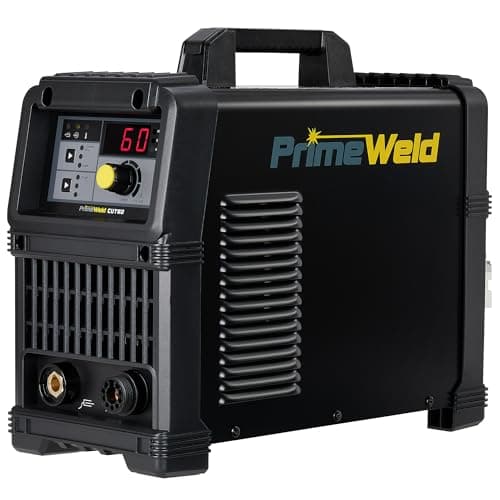 PrimeWeld CUT60Sixty amps, a non-HF blowback start that will drive a CNC table, and a three-year warranty - the Hypertherm argument at a fraction of the price. | Closest match | $699.00 · View on Amazon #ad How this is funded · Price as of November 13, 2026 |
| 2 | 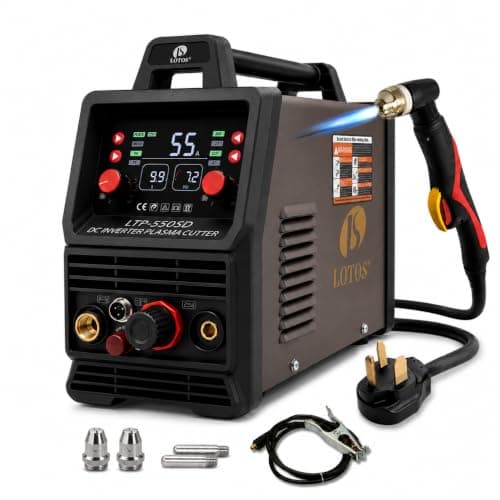 Lotos LTP5505DThe cheapest pilot-arc machine in our registry, with a published 100% duty cycle at 43 A and a complete specification on both supplies. | Budget pick | |
| 3 | 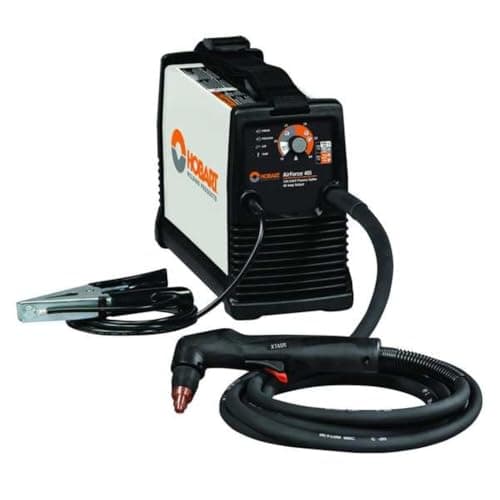 Hobart Airforce 40iIf the Hypertherm appeal is a dealer who stocks your consumables, this is the registry machine with the nearest equivalent network. | Closest on support | $2,198.75 · View on Amazon #ad How this is funded · Price as of November 13, 2026 |
| 4 | 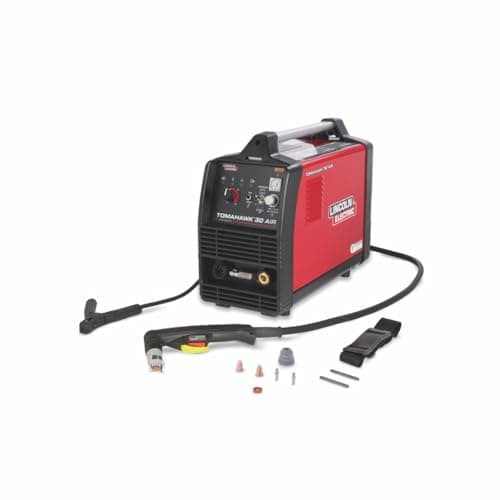 Lincoln Electric Tomahawk 30 AIRAn internal air compressor and a published 25 A at 100% duty cycle, for the shop where the air supply is the real obstacle. | Closest on no-compressor cutting | $1,359.00 · View on Amazon #ad How this is funded · Price as of November 13, 2026 |
The short answer
Hypertherm is bought for three published things: single-piece cartridge consumables that cannot be assembled wrong, SpringStart arc initiation with no high-frequency circuit so the machine can drive a CNC table, and consumable life that makes the cost per cut far lower than a budget machine's. Hypertherm publishes the Powermax65 SYNC at 20–65 A with a 3/4 in recommended cut, a 50% duty cycle at 65 A and 100% at 46 A.
The closest alternative in our registry is the PrimeWeld CUT60, which matches it on output range and on non-HF arc starting for CNC work. The budget alternative is the Lotos LTP5505D. If the appeal was the dealer rather than the specification, the Hobart Airforce 40i is the nearest equivalent network.
Every price in the table comes from the live feed with its own "as of" date inside the buy button. Hypertherm's own machines are in our registry too, so you can compare the live numbers directly rather than taking our word for the gap.
What Hypertherm is actually known for
Not amperage. On headline output, a $700 machine and a $4,000 machine are closer than the price suggests — and on recommended cut thickness the budget machine sometimes claims more. What Hypertherm publishes and sells on is different.
Cartridge consumables. A conventional plasma torch stacks an electrode, swirl ring, nozzle, retaining cap and sometimes a shield. Assembled slightly wrong — which happens constantly — the cut bevels, dross increases and consumable life collapses. Hypertherm's single-piece cartridge removes that failure mode.
SpringStart. No high-frequency starting circuit means no electrical noise, so the machine can sit next to a CNC controller without upsetting it. For table cutting that is a requirement rather than a nicety.
Consumable life. This is the number that decides the purchase for a professional. If a tip lasts three times as long, the cost per cut is a third, and at volume that swamps the purchase price. It is also the thing no budget machine in our registry matches, and this page says so plainly rather than pretending otherwise. Plasma cutter consumables explained has the arithmetic.
| Machine | Output | Arc start | Duty cycle | Air source |
|---|---|---|---|---|
| Hypertherm Powermax65 SYNC | 20-65 A | SpringStart (no HF) | 50% at 65 A; 100% at 46 A | External; 200-480 V supply |
| PrimeWeld CUT60 | 20-60 A (240 V); 20-30 A (120 V) | Blowback non-HF pilot arc | 60% at max; 100% at 46 A | External; 5 CFM at 90 PSI |
| Lotos LTP5505D | 20-55 A (240 V); 20-35 A (120 V) | Non-touch pilot arc | 60% at 55 A; 100% at 43 A | External; panel regulator |
| Hobart Airforce 40i | 40 A | Not published in our registry entry | Not published | External |
| Lincoln Tomahawk 30 AIR | 15-30 A | Not published in our registry entry | 60% at 30 A; 100% at 25 A | Internal compressor, or external |
Where no alternative replaces it.
If you cut for a living, or cut on a CNC table most days, consumable cost per cut is the deciding number and Hypertherm wins it. Nothing on this page changes that, and we are not suggesting it does. These alternatives match a stated strength or cost much less — they do not replace a consumable economy built over decades.
Name the reason, then take the machine
If it was amperage and CNC compatibility: PrimeWeld CUT60. A non-HF blowback start and published CNC compatibility at a fraction of the price.
If it was price-insensitivity you have since reconsidered: Lotos LTP5505D, and put the difference into a better compressor and a water separator. That will improve your cut quality more than the machine upgrade would.
If it was the dealer and the parts counter: Hobart Airforce 40i.
If it was avoiding the compressor: Lincoln Tomahawk 30 AIR, and the built-in compressor roundup is the full field.
If it was consumable life: buy the Hypertherm. That is the honest answer, and it is in our registry with a live price for exactly that reason.
How we chose these alternatives
Each pick matches a named published strength or is explicitly the cheaper answer. We did not assemble a list of machines in the same category. Every pick above states the specific specification it matches and what it gives up.
Facts about Hypertherm are Hypertherm's own. The Powermax65 SYNC is in our product registry with its published figures, so the comparison is against what the maker publishes rather than a recollection. We have not cut with it and we publish no consumable-life testing.
Nothing here is a criticism of the brand. The reasons people buy Hypertherm are real and specific, and two of them — cartridge consumables and consumable life — nothing else here matches. More on the method on how we pick.
1. Closest match
PrimeWeld CUT60
Sixty amps, a non-HF blowback start that will drive a CNC table, and a three-year warranty - the Hypertherm argument at a fraction of the price.
PrimeWeld publishes the CUT60 at 20–60 A on 240 V and 20–30 A on 120 V, a 60% duty cycle at maximum output with 100% at 46 A on 240 V, a cutting capacity of up to 7/8 in steel, blowback non-HF pilot-arc start, CNC compatibility, an IPT60 torch, 30 lb and a three-year warranty.
It matches the Powermax65 on three specific published points. The output range is similar — 20 to 60 A against Hypertherm's 20 to 65 A. The published steel capacity is in the same territory. And crucially the arc start is non-high-frequency, which is the characteristic that lets a machine run a CNC table without interfering with the controller; Hypertherm calls its version SpringStart.
Who it is for: someone who wanted a Powermax for the amperage and the CNC compatibility rather than for the consumable economics.
What it does not match: consumable life. That is Hypertherm's actual product and the gap is real. Air demand at 60 A also needs a serious compressor, and on 120 V PrimeWeld publishes only 20–30 A.
What works
- 60 A gives real headroom on 1/2 in plate instead of treating it as a severance cut
- Pilot-arc start and a well-regarded torch for the price
What does not
- Air demand at 60 A is beyond what a small compressor can sustain — budget for the compressor as part of the purchase
- Dual voltage, but on 120 V PrimeWeld publishes only 20–30 A — half the machine. The 60 A you are paying for needs a 240 V circuit
2. Budget pick
Lotos LTP5505D
The cheapest pilot-arc machine in our registry, with a published 100% duty cycle at 43 A and a complete specification on both supplies.
Lotos publishes the LTP5505D at 20–55 A on 220/240 V and 20–35 A on 110/120 V, a 5/8 in clean cut and 3/4 in severance at the higher supply, a 60% duty cycle at 55 A with 100% at 43 A, non-touch pilot-arc start, a front-panel regulator and gauge, and a three-year limited warranty including one year of new replacement.
The budget alternative. For a home shop that cuts a few times a month, the arithmetic that justifies a Hypertherm — consumable cost per cut over thousands of cuts — never comes into play, and this machine covers the same thicknesses a 50 A Powermax would.
It is also unusually honest in what it publishes: output, clean cut, severance and duty cycle for both supply voltages, which most machines at any price do not give you.
Against it: consumable life is noticeably shorter and the running cost shows it; a 20 A output floor means less control on thin sheet; and you must supply clean dry air, because wet air destroys consumables fast on a machine whose consumables are already the weak point.
What works
- Pilot arc means it will start on painted, rusty or galvanized material where a touch-start machine stalls
- 5/8 in clean cut on 240 V is more capacity than most home shops will ever use
- Publishes a complete specification on BOTH supplies — output, clean cut, severance and duty cycle — which most dual-voltage machines do not
What does not
- You must supply clean dry air. A small pancake compressor will not keep up, and wet air destroys consumables fast
- On a 110 V outlet the top end falls from 55 A to 35 A and the clean cut from 5/8 in to 3/8 in
- The output floor is 20 A rather than the 10 A some competing machines publish, so it throttles down less far for thin sheet
- Consumable life is noticeably shorter than Hypertherm's, and the running cost shows it
Who this is wrong for: Anyone cutting daily. Consumable life is exactly where this machine gives ground to a Hypertherm, and at volume that difference is the whole cost of ownership.
3. Closest on support
Hobart Airforce 40i
If the Hypertherm appeal is a dealer who stocks your consumables, this is the registry machine with the nearest equivalent network.
Hobart publishes the Airforce 40i at 40 A on 120 V or 240 V dual voltage, with an external compressor required.
Half the reason people buy Hypertherm is not in the specification: it is that the consumables are available, correct and supported. A plasma cutter is a recurring-purchase tool, and a machine whose tips you cannot buy locally becomes an expensive paperweight. Hobart's dealer network is the closest thing in our registry to that reassurance at a home-shop price.
Forty amps also sits in a sensible middle for the material most people cut: more capacity than a 30 A machine, less air demand than a 60 A one.
Against it: priced above the budget 50 A machines while cutting less, a less complete published specification than Lotos or YESWELDER give, and it still needs a real compressor with a water separator.
What works
- Backed by Hobart's dealer network, which matters more for a plasma cutter than a welder because consumables are a recurring purchase
- 40 A sits in the useful middle: more capacity than a 30 A machine, less air demand than a 50 A one
What does not
- Priced above the budget 50 A machines while cutting less
- Still needs a real compressor with a water separator
4. Closest on no-compressor cutting
Lincoln Electric Tomahawk 30 AIR
An internal air compressor and a published 25 A at 100% duty cycle, for the shop where the air supply is the real obstacle.
Lincoln publishes the Tomahawk 30 AIR at 15–30 A with 25 A at a 100% duty cycle and 30 A at 60%, an internal air compressor plus a standard external air connection, 230 V single-phase input drawing 16 A at rated output, a recommended cut of 5/16 in mild steel at 22 ipm, a maximum cut of 3/8 in at 14 ipm, a 1/2 in severance cut at 5 ipm, 40 lb, an LC30 hand torch on a 10 ft lead, and three years on the machine with one on the torch.
This is on the page because the hidden second purchase is what sinks most first plasma buys. Hypertherm's smaller machines are often bought precisely to avoid that problem, and a machine with the compressor inside removes it entirely — while still taking shop air for the long cuts the internal pump has to pause for.
A 25 A rating at 100% duty cycle is a genuinely continuous figure rather than one you have to work around.
Against it: 230 V single phase only, so a garage with no 240 V circuit cannot run it at all; 40 lb; it costs multiples of a budget 50 A machine while cutting thinner material; and buy on the 5/16 in recommended figure rather than the 1/2 in severance number.
What works
- The compressor is inside the machine, so the hidden second purchase that sinks most first plasma buys does not exist
- It takes external air as standard as well, so a shop compressor can carry the long cuts the internal pump has to pause for
- 25 A at a 100% duty cycle is a genuinely continuous rating rather than a figure you have to work around
- Lincoln publishes three years on the machine and a dealer network behind a tool that eats consumables
What does not
- 230 V single phase only. There is no 120 V option, so a garage without a 240 V circuit cannot run it at all
- 40 lb, which is portable for a machine carrying its own compressor but not the under-30-lb class
- Costs multiples of a budget 50 A machine while cutting thinner material
- Buy on the 5/16 in recommended figure: 1/2 in is a severance limit at 5 ipm, not a working thickness
Questions people actually ask
What is a good alternative to Hypertherm?
The closest machine in our registry is the PrimeWeld CUT60: PrimeWeld publishes 20-60 A on 240 V against Hypertherm's 20-65 A, a blowback non-HF pilot arc that is CNC compatible in the same way SpringStart is, a 100 percent duty cycle at 46 A and a three-year warranty.
What it does not match is consumable life, which is Hypertherm's actual product.
Why are Hypertherm plasma cutters so expensive?
Three published reasons. Single-piece cartridge consumables remove the multi-part stack-up that gets assembled wrong on other torches. SpringStart arc initiation uses no high-frequency circuit, so the machine can drive a CNC controller without interference. And consumable life is long enough that the cost per cut is far below a budget machine's.
At volume, that third point is the whole purchase case.
Is a cheap plasma cutter good enough for home use?
For most home shops, yes. The feature that used to separate cheap from good - a non-touch pilot arc that starts on rusty, painted or oxidised metal - is published on every budget machine we list, along with dual-voltage operation.
The gap is consumable life, and a shop cutting a few times a month never reaches the volume where that becomes the dominant cost.
What is the cheapest pilot arc plasma cutter?
In our registry it is the Lotos LTP5505D. Lotos publishes 20-55 A on 220/240 V and 20-35 A on 110/120 V, a 5/8 inch clean cut at the higher supply, a 100 percent duty cycle at 43 A, non-touch pilot-arc starting and a three-year limited warranty.
Check the live price in the table - these machines move around.
Can a budget plasma cutter run a CNC table?
Some can. The specification to look for is a non-high-frequency arc start, because HF starting circuits generate electrical noise that interferes with CNC controllers. Hypertherm calls its version SpringStart; PrimeWeld publishes a blowback non-HF pilot arc and states CNC compatibility for the CUT60.
A machine with HF ignition is not a safe choice for table work regardless of its cut quality.
Does Hypertherm make a cheaper machine?
Hypertherm's range extends well below the Powermax65, and the smaller Powermax machines are frequently bought by home shops. Our registry carries the Powermax65 SYNC with its published figures, so you can compare the live price directly against the alternatives here.
If avoiding a separate compressor is the appeal of a small machine, the Lincoln Tomahawk 30 AIR on this page carries its own.
Sources
- Hypertherm - Powermax65 SYNC published specifications: 20-65 A, recommended cut 3/4 in (20 mm), severance cut 1-1/4 in (32 mm), 50% duty cycle at 65 A and 100% at 46 A, 200-480 V single phase and 200-600 V three phase (CSA), SpringStart arc initiation with no high-frequency circuit, single-piece cartridge consumables, 61.7 lb with the 25 ft torch (as recorded in this site's product registry, ASIN B09S7P2KGM)
- PrimeWeld - CUT60 published specifications: 20-30 A on 120 V and 20-60 A on 240 V, 60% duty cycle at maximum output and 100% at 23 A / 46 A, capacity to 7/8 in steel, blowback non-HF pilot arc, CNC compatible, IPT60 torch, 30 lb, 3-year warranty (read 2026-10-22, recorded in this site's product registry, ASIN B07BYJPGB1)
- Lotos - LTP5505D published specifications: 20-55 A DC on 220/240 V and 20-35 A on 110/120 V, clean cut 5/8 in and severance 3/4 in at 220/240 V, 60% duty cycle at 55 A and 100% at 43 A, non-touch pilot arc, 3-year limited warranty with 1-year new replacement (as recorded in this site's product registry, ASIN B0052OX876)
- Hobart - Airforce 40i published specifications: 40 A output, 120 V or 240 V dual voltage, external compressor required (as recorded in this site's product registry, ASIN B0828JNFG5)
- Lincoln Electric - Tomahawk 30 AIR (K5457-1) published specifications: 15-30 A with 25 A at 100% duty cycle and 30 A at 60%, internal air compressor with standard external air connection, 230 V single phase 60 Hz drawing 16 A at rated output, recommended cut 5/16 in at 22 ipm, maximum cut 3/8 in at 14 ipm, severance 1/2 in at 5 ipm, 40 lb, LC30 torch on a 10 ft lead, 3-year machine and 1-year torch warranty (as recorded in this site's product registry, ASIN B0D98DBX3X)
Read next
- The best plasma cutters under $1,000
Three pilot-arc plasma cutters under $1,000 at current live prices, ranked on published output on both supplies, continuous duty cycle and what the air supply will cost you.
- Plasma Cutter Consumables Explained
The five torch parts, which two actually wear, what destroys them early, and why consumable cost decides which machine is cheaper to own.
- The best plasma cutters with a built-in air compressor
Internal-compressor machines: what you trade in capacity, and when that trade is right.
- Best Dual Voltage Plasma Cutters
Dual-voltage plasma cutters ranked on published 120 V output, not the 240 V headline figure.
- Plasma cutter air requirements
How to read CFM and PSI, why tank size is not the answer, and what a compressor must sustain.
- Is a plasma cutter worth it?
The honest break-even: what plasma does that nothing else does, and the costs beyond the machine.
Back to Level 4 · Plasma, or start over at Find Your Level.
Ryder M.
Ryder M. is the hands-on owner behind Magoo Media Group. He writes Arc & Bead's buying guides and picks every machine on the site. What every recommendation is based on — and what it is not based on — is set out on How We Pick.