Plasma cutter vs oxy-acetylene torch
One of these cuts stainless and aluminum. The other one cannot, at any setting, and that fact decides most of this for most people.
Arc & Bead is an Amazon Associate. If you buy through a link on this page we may earn a commission, at no extra cost to you. We have not physically tested the machines on this page and we say so on How We Pick.
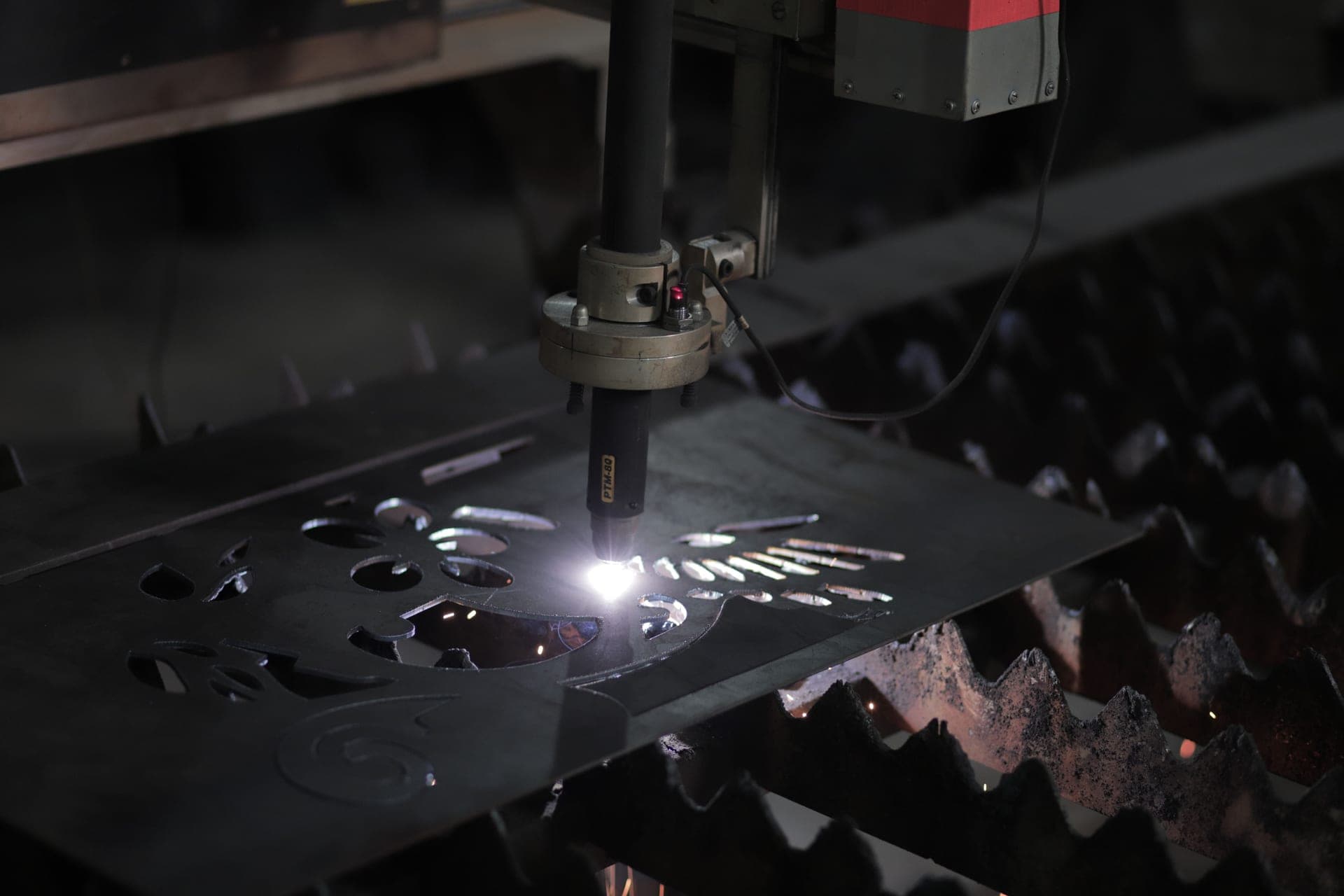
Plasma cutter or oxy-acetylene torch?
Plasma wins on thin and medium steel, on cut quality, on speed and on material range — it cuts stainless, aluminum, copper and brass, none of which oxy-acetylene can cut at all. Oxy-acetylene wins on very thick carbon steel, on equipment cost, and on needing no electricity. For a home shop cutting under an inch of steel, plasma is almost always the right tool.
They do not cut the same way, which explains everything else
An oxy-fuel torch does not melt steel. It preheats the steel to its ignition temperature and then injects a jet of pure oxygen, which burns the iron — the cut is a controlled chemical reaction, and the heat comes largely from the steel itself.
That is why it only works on carbon steel. Stainless and aluminum form tenacious oxides that do not burn the same way, so the process has nothing to sustain it. It also explains the wide heat-affected zone: you have to heat a substantial area to ignition before the cut starts.
A plasma cutter does melt the metal. It forces compressed air through a constricted arc, ionizes it, and blows the molten material out of the kerf. It does not care what the metal is, only that it conducts electricity — which is why the material list is so much longer.
Head to head
| Plasma | Oxy-acetylene | |
|---|---|---|
| Materials | Any conductive metal — steel, stainless, aluminum, copper, brass | Carbon steel only |
| Best thickness range | Thin to around 1 in in a home shop | Thick plate, and upward of several inches |
| Heat-affected zone | Narrow; less distortion on thin material | Wide; often needs machining back |
| Cut edge | Clean, usually weld-ready after a light dress | Rougher, with more dross and edge burr |
| Consumables | Tips and electrodes, continuously | Very few — tips last a long time |
| What it needs | Electricity plus clean dry compressed air | Oxygen and acetylene cylinders |
| Portability | Needs a power supply | Fully self-contained |
| Also does | Nothing else | Heating, bending, brazing |
The thickness crossover
The rule of thumb that holds up: under about an inch, plasma. Well over an inch, oxy-fuel.
The reason is that plasma capacity is bought with amperage and amperage is bought with money — a machine that cuts an inch cleanly is a serious purchase and needs a serious compressor. Oxy-fuel cuts thick plate with the same torch that cuts thin plate; you change the tip and the pressures, not the equipment.
In the other direction, oxy-fuel struggles badly on thin sheet. The preheat distorts it and the cut wanders. Plasma on 16 gauge is trivial.
If an inch of steel is specifically your problem, plasma cutters for 1-inch steel covers what it takes.
Running cost is not where you expect it
An oxy-acetylene set is cheaper to buy and more expensive to keep. Cylinder rental runs whether you cut or not, acetylene is not cheap, and there are two regulators, two hoses and a set of flashback arrestors to maintain.
Plasma costs more up front and then costs you consumables — tips and electrodes, continuously — plus whatever running a compressor costs. Wet air multiplies that consumable cost fast, which is why a water separator is not optional.
Neither is dramatically cheaper over a few years of home use. The decision genuinely is about what you cut, not what it costs.
The safety picture is different, not better
Two different risks
The thing oxy-fuel does that plasma cannot
A cutting torch is also a heating torch. Freeing a seized bolt, bending a bar, shrinking a panel, brazing a joint — all of that is the same tool with the cutting oxygen off.
A plasma cutter cuts. That is its whole function. For a lot of home shops the honest answer is that oxy-acetylene was never really a cutting purchase, and a plasma cutter does not replace it — it removes the cutting job from it.
The verdict
Buy a plasma cutter if you cut under an inch, you cut shapes rather than lengths, you work with stainless or aluminum at all, or you want weld-ready edges without a second cleanup pass. That is most home shops.
Keep or buy oxy-acetylene if your work is thick carbon steel plate, you need a portable rig with no power available, or you want heating and bending as much as cutting.
And consider neither if most of what you do is cutting stock to length in thin material — an angle grinder with cut-off wheels does that for a fraction of either. Plasma cutter vs angle grinder is the honest version of that conversation.
What we would buy
1. If plasma is the answer
Lotos LTP5000D
50 amps, pilot arc and a 5/8 inch clean cut — the most capacity per dollar.
Lotos publishes 10 to 50 amps on 220/240 volts falling to 10 to 35 amps on 110, a 5/8 inch clean cut at 220 volts and 3/8 at 110, 3/4 inch severance, a non-touch pilot arc and a built-in pressure regulator.
For a home shop replacing or avoiding an oxy-acetylene setup, this covers the same thicknesses most people actually cut, adds stainless and aluminum, and needs air rather than two gas cylinders.
The honest caveat is that the air is not free. If you do not already own a compressor that can sustain the machine's published requirement, the total cost looks a lot more like a torch set than the machine price suggests.
What works
- Pilot arc means it will start on painted, rusty or galvanized material where a touch-start machine stalls
- 5/8 in clean cut on 240 V is more capacity than most home shops will ever use
- Dual voltage with a switch rather than a different machine
What does not
- You must supply clean dry air. A small pancake compressor will not keep up, and wet air destroys consumables fast
- On a 110 V outlet you lose a third of the output and half the thickness
- Consumable life is noticeably shorter than Hypertherm's, and the running cost shows it
2. If you have no compressor and no bottles
Hypertherm Powermax30 AIR
Built-in compressor and auto-voltage — the closest thing to a torch set's self-sufficiency.
Hypertherm publishes 30 amps with a built-in compressor, auto-voltage across 120 and 240 volts, a 5/16 inch recommended cut at 20 inches per minute, 3/8 inch at 10 ipm, 5/8 inch severance, and under 30 pounds.
An oxy-acetylene set is self-contained: you carry it to the work and it runs. This is the plasma machine that matches that property, because it brings its own air. It is why it belongs in this comparison specifically.
It cuts thinner than a 50 amp machine and costs considerably more. What you are buying is the absence of a compressor, a hose run and a water separator.
What works
- The internal compressor removes the hidden second purchase that sinks most first plasma buys
- Auto-Voltage means it works on a 120 V outlet today and a 240 V circuit later with no switch
- Hypertherm consumables are stocked everywhere and last markedly longer than budget equivalents
What does not
- Costs multiples of a budget 50 A machine while cutting thinner material
- 30 A is a genuine ceiling: 5/8 in severance is the limit, not a working thickness
- The internal compressor has a duty cycle of its own — sustained cutting needs pauses
Who this is wrong for: Anyone whose cutting is mostly over 3/8 inch. Thirty amps is a genuine ceiling, and heavy plate is where oxy-fuel still wins.
Questions people actually ask
Is a plasma cutter better than oxy-acetylene?
For material under about an inch, and for anything that is not carbon steel, yes — plasma is faster, cleaner and distorts less.
For thick carbon steel plate, or where no electricity is available, oxy-acetylene is still the better tool.
Can oxy-acetylene cut stainless steel or aluminum?
No. Oxy-fuel cutting works by burning iron in a jet of oxygen, and stainless and aluminum form oxides that do not sustain that reaction.
A plasma cutter cuts both, because it melts and blows out the metal rather than burning it.
Which is cheaper to run, plasma or oxy-acetylene?
Over a few years of home use they are closer than people expect. Oxy-acetylene is cheaper to buy but carries cylinder rental and gas costs whether you use it or not.
Plasma costs more up front, then costs consumables — and wet air makes that number much worse, which is why a water separator matters.
Do I need a compressor for a plasma cutter?
For almost every machine, yes, and it has to sustain the published air volume and pressure. A small pancake compressor will not, and starving the machine produces a dross-heavy cut and rapid consumable wear.
The exception is a machine with a built-in compressor, which is why those exist.
Can a plasma cutter replace a cutting torch completely?
For cutting, usually. For everything else a torch does — heating a seized bolt, bending a bar, brazing — no, because a plasma cutter only cuts.
Many shops end up keeping the torch set for heating and using plasma for all the cutting.
Sources
Read next
- Plasma cutting for beginners
Standoff, travel speed, drag cutting and piercing — everything from unboxing to a clean cut.
- Plasma cutter vs angle grinder
An angle grinder cuts lengths; plasma cuts shapes. The one question that settles it.
- Plasma cutter vs laser cutter
Thickness, tolerance, cost and ownership — where a laser beats plasma and where it does not.
- Plasma cutter cut thickness chart
Recommended versus severance capacity by amperage, and what you lose on a 110V outlet.
- The best plasma cutters for home use
Home-shop machines, why the compressor is the real purchase, and how to read cut-capacity numbers.
- Plasma cutter air requirements
How to read CFM and PSI, why tank size is not the answer, and what a compressor must sustain.
Back to Level 4 · Plasma, or start over at Find Your Level.
Ryder M.
Ryder M. is the hands-on owner behind Magoo Media Group. He writes Arc & Bead's buying guides and picks every machine on the site. What every recommendation is based on — and what it is not based on — is set out on How We Pick.