Welding respirators and fume safety
A helmet protects your eyes. It does nothing about what you breathe — and that is the exposure with the longest tail.
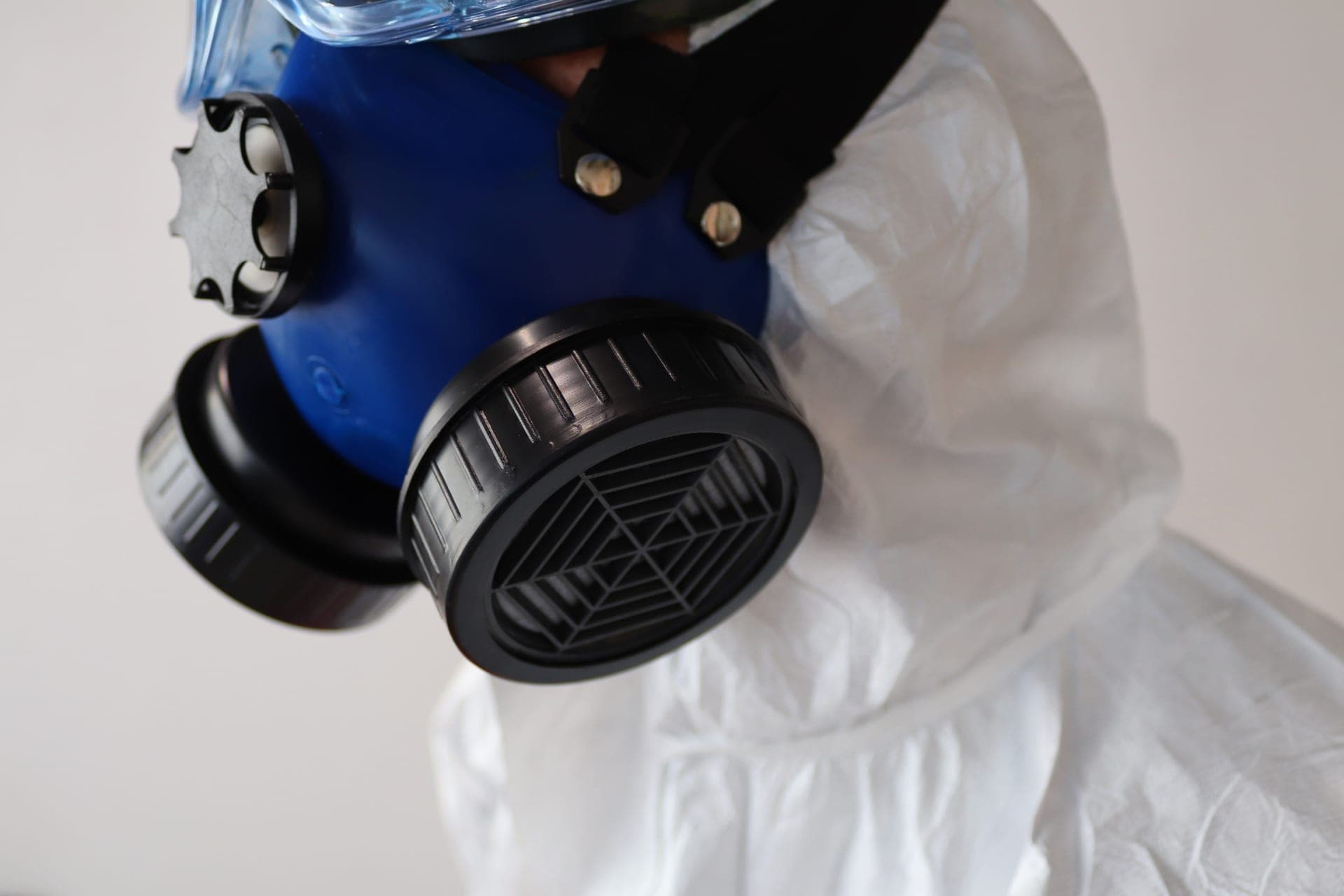
What a respirator does and does not do
A P100 particulate respirator removes at least 99.97% of airborne particulate, which is the main welding fume exposure. It does not remove gases — ozone, carbon monoxide, nitrogen oxides pass straight through — so ventilation is still required with one on. And it only works with a proper seal against clean-shaven skin.
What is actually in welding fume
Welding fume is metal vaporized by the arc and immediately condensed into extremely fine particles — small enough to reach the deepest part of the lung. On plain mild steel with standard wire it is predominantly iron oxide plus flux compounds: irritating, and the reason for long-term exposure limits rather than for acute concern at hobby volumes.
Three materials change that assessment significantly.
Galvanized steel. The zinc coating vaporizes into zinc oxide, which causes metal fume fever — fever, chills, aching and a metallic taste, typically starting four to twelve hours after exposure and resolving within a day or two. Unpleasant and usually self-limiting, and genuinely avoidable: grind the coating off the weld area first, ventilate properly, and wear a respirator.
Stainless steel. Introduces chromium and nickel compounds, and welding can produce hexavalent chromium, which OSHA regulates under a dedicated standard because of long-term health concerns. This is not an acute risk in a garage, and it is the reason to take stainless fume more seriously than mild steel fume.
Painted, coated or treated metal. Can release essentially anything. Old paint may contain lead; some coatings decompose into genuinely toxic products. Grind back to bright metal before welding, which improves the weld anyway.
The gases, which the filter does not touch
This is the part most often glossed over, and it is why "wear a respirator" is not a complete answer.
Ozone forms when the arc's ultraviolet light interacts with oxygen in the surrounding air. It irritates the airways, and it is the sharp smell you notice after welding.
Carbon monoxide forms when CO2 shielding gas breaks down in the arc — which is exactly what the 25% CO2 in a 75/25 mix does.
Nitrogen oxides form from nitrogen in the air at arc temperatures.
A P100 filter is a particulate filter. None of these gases are particles, so none are removed. The only thing that deals with them is air movement, which is why ventilation remains mandatory with a respirator on rather than being an alternative to one.
The seal, which is the whole thing
A respirator works by forcing all the air you breathe through the filters. If the seal leaks, air takes the easier path around it, and you get a respirator that feels protective and is not.
Facial hair along the seal line defeats it. Not reduces it — defeats it. There is no workaround and no amount of tightening fixes it. If you have a beard and need respiratory protection, a powered air-purifying respirator with a loose-fitting hood is the category that works, at considerably more cost.
Check the seal every time you put it on: cover the filters with your palms and inhale. The mask should pull in against your face and hold. If air leaks in, reposition and try again.
Ventilation, practically
"Ventilate the area" appears in every manual and is uselessly vague. In a home garage it means four specific things.
Extract, do not circulate. A fan blowing at you across the weld stirs fume and disturbs the gas shield on any gas process. The useful arrangement is a box fan in an open doorway or window pulling air out.
Open two things. One opening gives no cross-flow. Air needs somewhere to come in as well as somewhere to leave.
Keep your head out of the plume. Fume rises straight into your face if you lean over the joint. Stand to the side. This is free and it is the most effective single change on this page.
Scale it to the session. A short repair with the door open is a different exposure from an afternoon of continuous welding. The risk is cumulative.
When a respirator is not optional
Wear one, without debating it, for: any galvanized material; any stainless steel; any painted, coated or previously treated metal; any flux-core work in an enclosed space; and any long session regardless of material.
For a short mild-steel repair with the door open and a fan running, a respirator is good practice rather than mandatory. Flux-core welding safety covers why flux-core specifically sits at the higher end of that range.
What this page is and is not
This is general guidance for home welding. Your wire manufacturer's safety data sheet, your machine's manual, and the applicable OSHA standards govern where they differ from anything written here — and for stainless in particular, OSHA's hexavalent chromium standard is the authority.
What we would buy
1. Best overall
3M 6000-series half-mask respirator with P100 filters
P100 filtration, low enough in profile to wear under a helmet, filters everywhere.
P100 filters remove at least 99.97% of airborne particulate, which is the right specification for welding fume — the exposure in a home garage is respirable metal particulate rather than gas.
The 6000-series shell is low-profile enough to sit under most welding helmets without the shell pressing the seal open, which is the practical requirement. A respirator that does not fit under your hood does not get worn.
Filters are inexpensive and stocked everywhere, which matters because a respirator with no replacement filters stops being used.
What works
- P100 filtration handles welding fume particulate, which is the actual exposure in a home garage
- Low-profile 6000-series shell fits under most welding helmets without breaking the seal
- Filters are cheap and universally stocked
What does not
- Needs a proper seal against clean-shaven skin. Facial hair defeats it, and a defeated respirator protects nothing
- Particulate filters do not remove gases such as ozone or carbon monoxide — ventilation is still required
- Adds warmth and breathing resistance under a helmet
Who this is wrong for: Anyone with facial hair along the seal line. Facial hair defeats the seal, and a respirator that does not seal protects nothing while feeling like it does.
2. Lowest profile under a helmet
Miller LPR-100 half-mask respirator
Designed from the start for use under a welding hood rather than adapted to it.
Where the 3M is a general-purpose respirator that happens to fit, this one was designed for welding. Its filters sit outboard and flat, so the helmet shell does not press them into your face.
P100 particulate filtration, the same specification as the 3M.
Filters are less widely stocked, so buy replacements ahead rather than assuming you can pick some up locally.
What works
- The lowest-profile option here — it was designed for exactly this use, not adapted to it
- Filters sit outboard, so the helmet shell does not press them into your face
What does not
- Filters are less widely stocked than 3M's, so plan replacements ahead
- Same hard limit as any particulate respirator: it does not remove gases
3. The helmet that leaves room for one
YESWELDER LYG-M800H large-view helmet
Deep shell, which is what a respirator underneath actually needs.
The combination is the part people get wrong: a low-profile helmet and a half-mask respirator fight each other, because both want the same few centimeters in front of your face.
A deep panoramic shell gives the respirator room to sit without the helmet pressing on it and breaking the seal. If you intend to wear both — and for flux-core you should consider it — shell depth is a specification to check.
What works
- Panoramic view at a fraction of a name-brand large-view helmet's price
- True-color lens makes the puddle and the weld pool edge much easier to read than a green lens
- Deep shell accommodates most prescription glasses without pressure on the temples
What does not
- Published optical-class figures are inconsistent between listings — treat unstated clarity as unverified
- Headgear adjustment is coarse compared with the X6 or Halo systems
Questions people actually ask
Do I need a respirator for welding?
For galvanized, stainless, painted or coated metal, and for any flux-core work in an enclosed space, yes.
For short mild-steel repairs with good ventilation it is good practice rather than mandatory. The risk is cumulative, so session length matters as much as material.
Can I wear a respirator under a welding helmet?
Yes, and that is how it should be worn. Low-profile half-mask respirators are designed for it.
The combination needs a helmet with enough shell depth — a low-profile helmet and a half-mask respirator compete for the same space and the helmet can press the seal open.
Does a P100 filter remove welding gases?
No. P100 is a particulate filter, and ozone, carbon monoxide and nitrogen oxides are gases rather than particles.
That is why ventilation is still required with a respirator on, rather than being an alternative to one.
Will a dust mask work for welding?
A disposable N95 offers some particulate protection and is better than nothing, but it seals poorly, does not fit well under a helmet, and clogs quickly with fume.
A reusable half-mask with P100 filters is not much more expensive and is substantially more effective.
What is metal fume fever?
A flu-like illness caused by inhaling metal oxide fume, most commonly zinc oxide from welding galvanized steel. Symptoms — fever, chills, aching, a metallic taste — typically begin four to twelve hours after exposure and resolve within a day or two.
It is avoidable: grind the coating off the weld area, ventilate seriously, and wear a respirator.
Sources
Read next
- Flux-core welding safety
Fume, eyes and fire — including the risks that show up hours after you stop welding.
- Welding gloves and jackets
Why MIG gloves and TIG gloves are opposite tools, and when a leather jacket stops being optional.
- Welding helmets for glasses wearers
Shell depth, temple pressure and fogging — plus the cheater-lens alternative.
- Plasma cutting for beginners
Standoff, travel speed, drag cutting and piercing — everything from unboxing to a clean cut.
- Helmets and PPE: the gear that decides what you can see
Every level needs a helmet. What the right helmet is changes as the level changes — and a bad one is the most common reason a beginner's welds look worse than their technique.
Back to Helmets & PPE, or start over at Find Your Level.
Ryder M.
Ryder M. is the hands-on owner behind Magoo Media Group. He writes Arc & Bead's buying guides and picks every machine on the site. What every recommendation is based on — and what it is not based on — is set out on How We Pick.