The best plasma cutters for aluminum
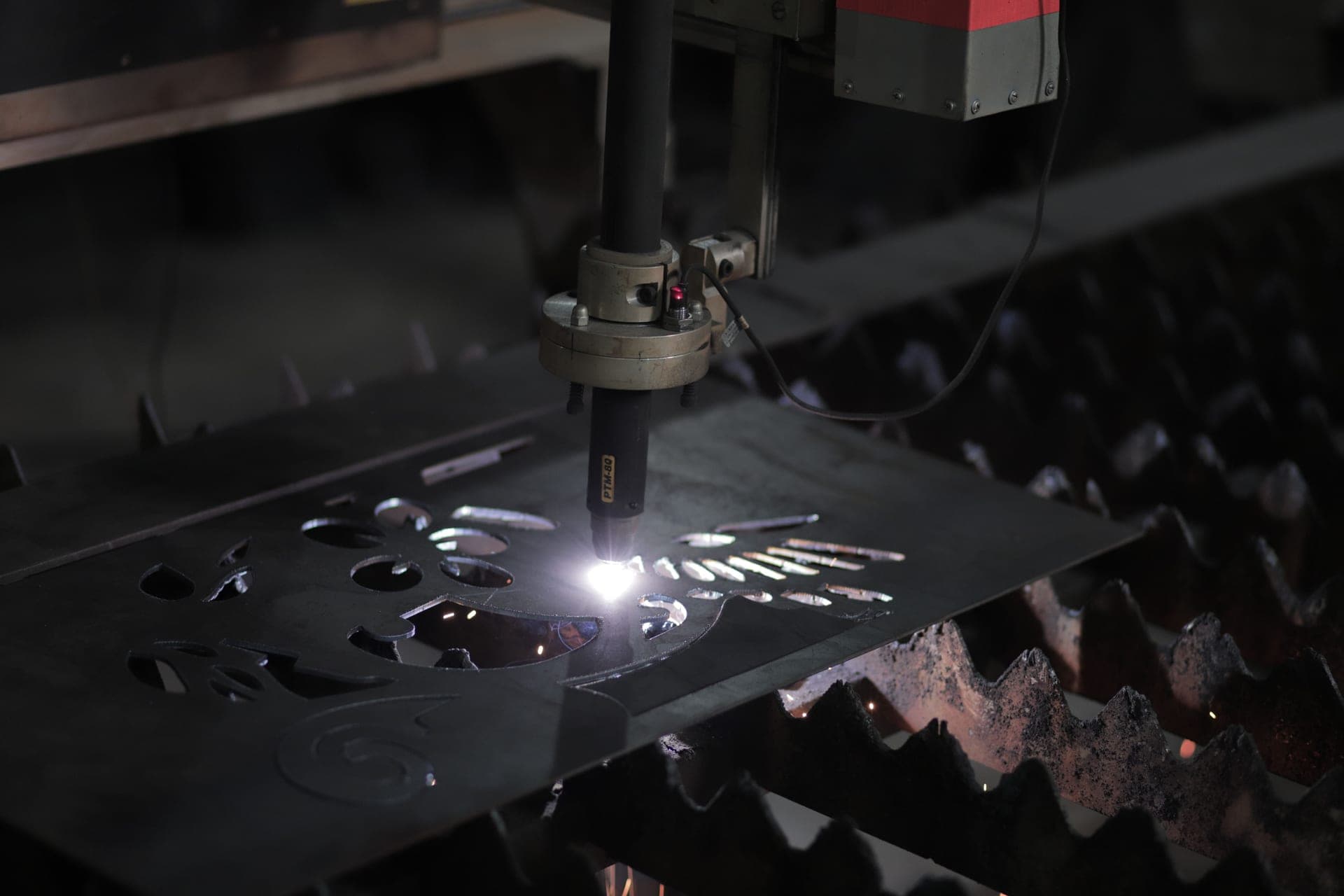
Plasma cuts aluminum perfectly well. What catches people out is that every thickness rating on the box was measured on mild steel, and aluminum does not behave like mild steel.
Arc & Bead is an Amazon Associate. If you buy through a link on this page we may earn a commission, at no extra cost to you. We have not physically tested the machines on this page and we say so on How We Pick.
Quick picks
Tap any row to jump to the full write-up further down this page.
| # | Product | Best for | Price |
|---|---|---|---|
| 1 | 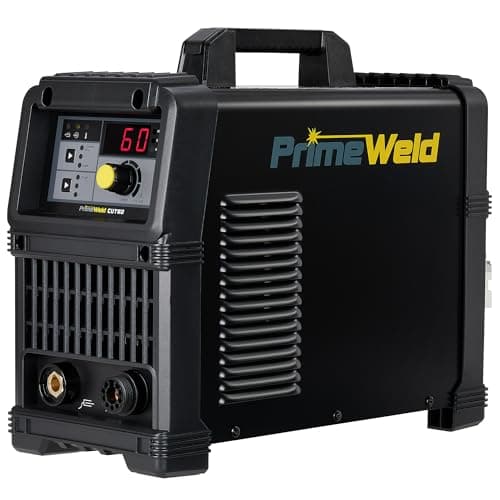 PrimeWeld CUT60Sixty amps on a 240 V circuit is the headroom that turns a struggling 1/2 in aluminum cut into a clean one. | Best overall | $699.00 · View on Amazon #ad How this is funded · Price as of November 13, 2026 |
| 2 | 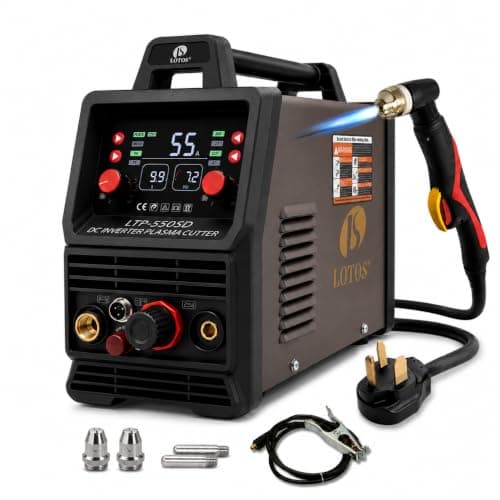 Lotos LTP5505DThe cheapest pilot-arc machine in our registry, and it publishes a complete specification on both supplies. | Budget pick | |
| 3 | 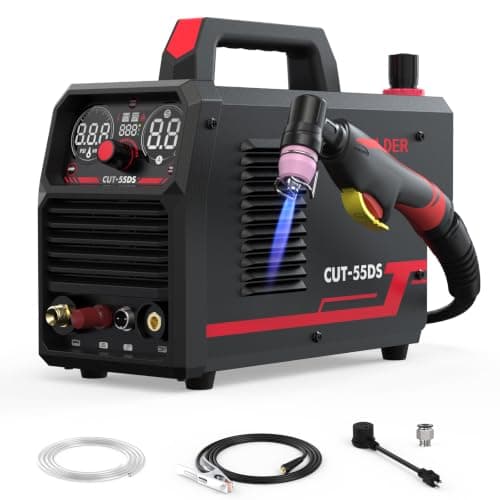 YESWELDER CUT-55DSA published 10 A output floor, which is the figure that decides whether thin sheet comes out as a cut or a tear. | Best for thin aluminum | |
| 4 | 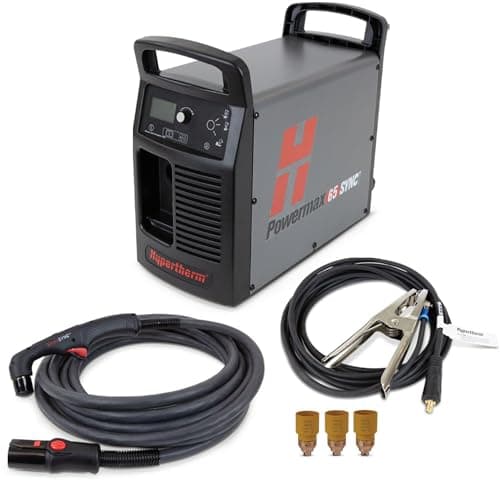 Hypertherm Powermax65 SYNCSingle-piece cartridge consumables and 65 A of output, for someone cutting aluminum often enough that running cost is the deciding number. | Best cut quality | $4,175.00 · View on Amazon #ad How this is funded · Price as of November 13, 2026 |
The short answer
Yes, air plasma cuts aluminum — the process is electrically indifferent to whether the metal is ferrous. What changes is the arithmetic: aluminum pulls heat out of the cut zone far faster than mild steel, so treat every published thickness rating as a steel rating and buy amperage headroom rather than a matching number.
Our overall pick is the PrimeWeld CUT60, for 60 A on a 240 V circuit and a 100% duty cycle at 46 A. The budget pick is the Lotos LTP5505D, the cheapest pilot-arc machine in our registry. For thin aluminum sheet the YESWELDER CUT-55DS is the better tool, because it publishes a 10 A output floor rather than 20 A.
Prices in the table are read from the live feed when the page loads and each carries its own "as of" date inside the buy button.
Why aluminum needs headroom and not a bigger number
Plasma cutting works by blowing a column of ionised air through molten metal. The variable that decides whether that works cleanly is how fast the surrounding metal removes heat from the cut line. Aluminum is one of the best heat conductors in common use, several times better than mild steel, which has two consequences at the torch.
First, the cut wants to be fast. Slow down and the heat spreads sideways rather than down, so the kerf widens and the bottom edge accumulates dross. Second, the machine needs to put more energy into the same thickness than the steel rating implies. A 50 A machine rated for 1/2 in steel is not a 1/2 in aluminum machine; treating it as a comfortable 1/4 to 3/8 in aluminum machine is closer to the truth.
The background on the process is in can plasma cutters cut aluminum, and the cut thickness chart has the amperage-to-thickness relationships for steel that these figures are all quoted against.
| Machine | Output range | Duty cycle | Steel cut (published) | Air demand |
|---|---|---|---|---|
| PrimeWeld CUT60 | 20-60 A (240 V); 20-30 A (120 V) | 60% at max; 100% at 46 A (240 V) | Up to 7/8 in | 40-75 PSI, 5 CFM at 90 PSI |
| Lotos LTP5505D | 20-55 A (240 V); 20-35 A (120 V) | 60% at 55 A; 100% at 43 A | 5/8 in clean, 3/4 in severance (240 V) | External compressor; panel regulator |
| YESWELDER CUT-55DS | 10-55 A (220 V); 10-35 A (110 V) | 60% at 55 A; 100% at 35 A | 3/8 in rated, 1/2 in clean maximum | 55-70 PSI, 6.0 CFM max |
| Hypertherm Powermax65 SYNC | 20-65 A | 50% at 65 A; 100% at 46 A | 3/4 in recommended, 1-1/4 in severance | Not published in our registry entry |
Dross on aluminum is normal, and it is your job not the machine's.
Plasma-cut aluminum almost always leaves an adherent bottom edge that has to be removed before welding — more than steel does, because the molten aluminum is sticky and the oxide reforms instantly. Budget an angle grinder or a flap disc into the workflow: the best angle grinders for welding is the tool that finishes every plasma cut you make.
Clean dry air matters more on aluminum
Every machine here except the Lincoln Tomahawk in our registry needs an external compressor, and the published figures are the minimum rather than the target. Two things go wrong if the supply is marginal.
Moisture in the air is the first. Water arriving at the torch destroys consumables quickly on any material, and on aluminum it also puts hydrogen into the cut, which shows up as porosity if you then weld the edge. A water separator is not optional.
Volume is the second. A small pancake compressor will start a cut and then fall behind, producing a cut that deteriorates halfway along. The numbers to compare are in plasma cutter air requirements, and if you would rather not own a compressor at all, the machines with one built in are on the built-in compressor page.
Who should not buy a plasma cutter for aluminum
If the aluminum you want to cut is thin sheet and the edges need to be finished anyway, a jigsaw with the right blade or a bandsaw is cheaper, quieter and leaves less to clean up. Plasma earns its place on thickness, on curves a saw cannot follow, and on volume.
And if the actual goal is to weld the aluminum afterwards, the cutting tool is the smaller half of the problem. The best AC TIG welders and the best MIG welders for aluminum are where that budget usually belongs first. The honest overall case is in is a plasma cutter worth it.
How we picked these
Pilot-arc start was effectively the entry requirement. Aluminum carries an oxide skin at all times, and a non-touch start is what begins reliably on it. Every machine here publishes either a pilot arc or, in Hypertherm's case, SpringStart.
Ranked on headroom and floor, not on headline thickness. The two numbers that decide aluminum results are how much amperage you have spare and how far down you can turn it. Those are the axes.
No hands-on, and no invented aluminum ratings. We have cut aluminum with none of these machines, and not one manufacturer here publishes a separate aluminum thickness figure — so this page does not print one either. More on the method on how we pick.
1. Best overall
PrimeWeld CUT60
Sixty amps on a 240 V circuit is the headroom that turns a struggling 1/2 in aluminum cut into a clean one.
PrimeWeld publishes the CUT60 at 20–60 A on 240 V and 20–30 A on 120 V, a 60% duty cycle at maximum output with 100% at 46 A on 240 V, a cutting capacity of up to 7/8 in steel, blowback non-HF pilot-arc start, CNC compatibility, an IPT60 torch, 30 lb and a three-year warranty. Air demand is published at 40–75 PSI and 5 CFM at 90 PSI.
Why headroom is the right axis for aluminum: every published cut-thickness figure in this category is a mild-steel figure. Aluminum conducts heat out of the cut zone several times faster than steel, which means the arc has to deliver more energy to the same thickness or the cut turns into a slow, dross-heavy gouge. The practical rule people use is to treat your machine as capable of noticeably less aluminum than its steel rating, and the fix is amperage you are not using.
Who it is for: someone cutting aluminum plate or diamond plate at 1/4 in and above who wants the cut to be finished rather than started. The 100% duty cycle at 46 A is the other reason — long cuts in aluminum run hotter for longer.
The costs are honest and they are about air, not amps. Sustaining 60 A is beyond a small compressor, so budget the compressor as part of the purchase. And on 120 V PrimeWeld publishes only 20–30 A — half the machine — so the 60 A you are paying for needs the 240 V circuit.
What works
- 60 A gives real headroom on 1/2 in plate instead of treating it as a severance cut
- Pilot-arc start and a well-regarded torch for the price
What does not
- Air demand at 60 A is beyond what a small compressor can sustain — budget for the compressor as part of the purchase
- Dual voltage, but on 120 V PrimeWeld publishes only 20–30 A — half the machine. The 60 A you are paying for needs a 240 V circuit
2. Budget pick
Lotos LTP5505D
The cheapest pilot-arc machine in our registry, and it publishes a complete specification on both supplies.
Lotos publishes the LTP5505D at 20–55 A on 220/240 V and 20–35 A on 110/120 V, with a 5/8 in clean cut and 3/4 in severance at the higher supply and 3/8 in clean with 1/2 in severance at the lower, a 60% duty cycle at 55 A with 100% at 43 A, non-touch pilot-arc start, a front-panel regulator and gauge, and a three-year limited warranty.
This is the budget pick in the strict sense: the least expensive registry product that does the job. Pilot arc is what qualifies it — a non-touch start will begin on painted, oxidised or anodised surfaces where a touch-start machine stalls, and aluminum always has an oxide skin.
Who it is for: occasional aluminum work at 1/4 in and below, where 55 A is plenty and the saving goes toward the compressor and a water separator.
Against it on aluminum specifically: the output floor is 20 A rather than the 10 A some rivals publish, so it throttles down less far for thin sheet — and thin aluminum sheet is where a high floor shows as a wide, rough kerf. Consumable life is also shorter than the name brands, and on 110 V the clean cut falls to 3/8 in.
What works
- Pilot arc means it will start on painted, rusty or galvanized material where a touch-start machine stalls
- 5/8 in clean cut on 240 V is more capacity than most home shops will ever use
- Publishes a complete specification on BOTH supplies — output, clean cut, severance and duty cycle — which most dual-voltage machines do not
What does not
- You must supply clean dry air. A small pancake compressor will not keep up, and wet air destroys consumables fast
- On a 110 V outlet the top end falls from 55 A to 35 A and the clean cut from 5/8 in to 3/8 in
- The output floor is 20 A rather than the 10 A some competing machines publish, so it throttles down less far for thin sheet
- Consumable life is noticeably shorter than Hypertherm's, and the running cost shows it
Who this is wrong for: Thin aluminum sheet. A 20 A output floor is high for 16 gauge and below - the 10 A floor on the YESWELDER is the better tool for that end of the range.
3. Best for thin aluminum
YESWELDER CUT-55DS
A published 10 A output floor, which is the figure that decides whether thin sheet comes out as a cut or a tear.
YESWELDER publishes the CUT-55DS at 10–55 A on 220 V and 10–35 A on 110 V, a 60% duty cycle at 55 A and 100% at 35 A, a rated cut of 3/8 in at 220 V and 5/16 in at 110 V, a 1/2 in maximum clean cut, 3/4 in severance at 220 V, non-touch pilot arc with HF ignition, an AG-60 torch, and an air requirement of 55–70 PSI with 6.0 CFM maximum.
The 10 A floor is the specification worth paying for here. Thin aluminum is the material most likely to be ruined by too much current: the arc blows through, the kerf widens and the edge rolls. Being able to dial down to 10 A rather than stopping at 20 A is the difference between cutting 16 gauge aluminum and shredding it.
Who it is for: anyone whose aluminum work is sheet rather than plate — panels, brackets, trim, tank repairs.
Against it: consumables are the running cost and they do not last like the name brands, and owner feedback reports more variation between units than the established makers. A 3/8 in rated cut also means plate work is outside its comfortable range.
What works
- Pilot arc at the bottom of the market, which used to mean paying twice as much
- Dual voltage, so a 110 V outlet gets you started
What does not
- Consumables are the running cost and they do not last like the name brands
- Owner feedback reports more variation between units than the established brands
4. Best cut quality
Hypertherm Powermax65 SYNC
Single-piece cartridge consumables and 65 A of output, for someone cutting aluminum often enough that running cost is the deciding number.
Hypertherm publishes the Powermax65 SYNC at 20–65 A with a recommended cut of 3/4 in and a severance cut of 1-1/4 in, a 50% duty cycle at 65 A and 100% at 46 A, 200–480 V single phase input, SpringStart arc initiation with no high-frequency circuit, and a weight of 61.7 lb with the 25 ft torch.
Two things make it the cut-quality pick. Single-piece cartridge consumables remove the five-part stack-up that gets assembled slightly wrong on every other machine, and a consumable stack assembled slightly wrong is precisely what produces a dross-heavy aluminum edge. And SpringStart means no high-frequency noise, so it can drive a CNC table without upsetting the controller — which is where repeated aluminum profile cutting usually ends up.
Who it is for: a shop cutting aluminum regularly, where consumable cost per cut swamps the purchase price difference. Who it is not for: a home garage. It costs several times a budget machine, it needs a 200 V minimum supply and the air volume to match, and the 1-1/4 in figure is a slow severance cut rather than a working thickness.
What works
- Single-piece cartridge consumables, which removes the five-piece stack-up that gets assembled slightly wrong every time
- SpringStart means no high-frequency noise, so it can drive a CNC table without interfering with the controller
- Hypertherm consumable life is why professionals buy these: the running cost per cut is far below a budget machine's
What does not
- Costs several times an 80 A budget machine, and cuts thinner plate than one at its recommended setting
- 3/4 in is the recommended cut; 1-1/4 in is a severance cut, which is a slow rough parting cut, not a working thickness
- Needs a serious supply — 200 V minimum, and the air volume to match
Questions people actually ask
Can a plasma cutter cut aluminum?
Yes. Plasma cutting works by blowing ionised air through molten metal and does not care whether the metal is ferrous, so aluminum, stainless and copper alloys all cut.
What changes is the thickness you can manage. Aluminum conducts heat away from the cut several times faster than mild steel, so treat every published rating as a steel figure and expect noticeably less capacity on aluminum.
How many amps do I need to cut aluminum with plasma?
More than the same thickness of steel would need. As a working guide, a 50 to 55 amp machine is comfortable on aluminum up to about 1/4 inch and workable to 3/8 inch, and 60 amps or more gives real headroom at 1/2 inch.
No manufacturer in our registry publishes a separate aluminum thickness rating, so these are headroom guidelines rather than quoted figures.
Does plasma cutting aluminum leave dross?
Yes, usually more than on steel. Molten aluminum is sticky and its oxide layer reforms instantly, so an adherent bead on the underside of the cut is normal rather than a sign of a bad machine.
Plan on cleaning the edge with a grinder or flap disc before welding. Cutting faster and keeping the air dry both reduce how much there is.
What is the cheapest plasma cutter that will cut aluminum?
In our registry it is the Lotos LTP5505D, the least expensive machine we list with a non-touch pilot arc. Lotos publishes 20-55 A on 240 V with a 5/8 inch clean cut in steel, which translates to comfortable aluminum work at 1/4 inch and below.
For thin aluminum sheet the YESWELDER CUT-55DS is the better choice despite costing slightly more, because it publishes a 10 amp output floor rather than 20 amps.
Do I need a pilot arc to cut aluminum?
It helps considerably. Aluminum always carries an oxide skin, and a touch-start machine has to make electrical contact through it. A non-touch pilot arc establishes the arc in air first, so it starts reliably on oxidised, painted or anodised surfaces.
Every machine on this page publishes either a pilot arc or, on the Hypertherm, SpringStart initiation.
Can you weld a plasma-cut aluminum edge without cleaning it?
Not reliably. The cut edge carries oxide and often adherent dross, and the heat-affected material at the edge can hold hydrogen from any moisture in the air supply - which shows up as porosity in the weld.
Grind or file the edge back to clean metal, then clean it with a dedicated stainless brush or acetone before welding.
Sources
- PrimeWeld - CUT60 published specifications: 20-30 A on 120 V and 20-60 A on 240 V, 60% duty cycle at maximum output and 100% at 23 A (120 V) / 46 A (240 V), cutting capacity to 7/8 in steel, blowback non-HF pilot arc, CNC compatible, IPT60 torch, 40-75 PSI and 5 CFM at 90 PSI, 30 lb, 3-year warranty (read 2026-10-22, recorded in this site's product registry, ASIN B07BYJPGB1)
- Lotos - LTP5505D published specifications: 20-55 A DC on 220/240 V and 20-35 A on 110/120 V, clean cut 5/8 in and severance 3/4 in at 220/240 V, clean cut 3/8 in and severance 1/2 in at 110/120 V, 60% duty cycle at 55 A and 100% at 43 A, non-touch pilot arc, front-panel regulator and gauge, 3-year limited warranty (as recorded in this site's product registry, ASIN B0052OX876)
- YESWELDER - CUT-55DS published specifications: 10-55 A on 220 V and 10-35 A on 110 V, 60% duty cycle at 55 A and 100% at 35 A, rated cut 3/8 in at 220 V and 5/16 in at 110 V, 1/2 in maximum clean cut, 3/4 in severance at 220 V, non-touch pilot arc with HF ignition, AG-60 torch, 55-70 PSI and 6.0 CFM max (read 2026-10-22, recorded in this site's product registry, ASIN B083GPXF8Y)
- Hypertherm - Powermax65 SYNC published specifications: 20-65 A, recommended cut 3/4 in (20 mm), severance cut 1-1/4 in (32 mm), 50% duty cycle at 65 A and 100% at 46 A, 200-480 V single phase, SpringStart arc initiation, 61.7 lb with the 25 ft torch (as recorded in this site's product registry, ASIN B09S7P2KGM)
- American Welding Society - plasma arc cutting process fundamentals, including the effect of base-metal thermal conductivity on cut quality
Read next
- Can plasma cutters cut aluminum?
Yes — and air plasma does it today. What the edge looks like and why it causes weld porosity.
- The best plasma cutters for stainless steel
Four plasma cutters ranked on the published amperage floor and cut-edge condition that stainless work actually depends on, with the cheapest pilot-arc machine as the budget pick.
- Plasma cutter cut thickness chart
Recommended versus severance capacity by amperage, and what you lose on a 110V outlet.
- Plasma cutter air requirements
How to read CFM and PSI, why tank size is not the answer, and what a compressor must sustain.
- The best plasma cutters under $1,000
Three pilot-arc plasma cutters under $1,000 at current live prices, ranked on published output on both supplies, continuous duty cycle and what the air supply will cost you.
- The best AC TIG welders
Five AC/DC TIG welders ranked on AC balance, AC frequency and published duty cycle - the controls that decide whether aluminum behaves, with the cheapest machine that has them named as such.
Back to Level 4 · Plasma, or start over at Find Your Level.
Ryder M.
Ryder M. is the hands-on owner behind Magoo Media Group. He writes Arc & Bead's buying guides and picks every machine on the site. What every recommendation is based on — and what it is not based on — is set out on How We Pick.