Best first welder
The best flux-core welders for beginners
Gasless machines that weld the day they arrive, and the duty-cycle figure that separates them.
Our pick: Forney Easy Weld 261 140 FC-i
Level 1
If you have never struck an arc, this is your page. One machine, a standard household outlet, and nothing else to buy before your first weld.
Best first welder
30% duty cycle at 90 amps and continuous controls — the most machine per dollar here.
Level 1 exists because of one fact: the hardest part of learning to weld is not technique, it is getting to the point where you can make an arc happen at all without a shopping list in the way. A flux-core wire-feed machine removes every obstacle between you and your first bead. Plug it into a wall socket, load a spool, squeeze the trigger. There is no gas bottle to source, no regulator to fit, no second trip to a supplier.
That is the whole argument for this level, and it is a good one. It is also why the rest of this page is honest about what you are giving up.
Every arc welding process has the same problem: molten steel exposed to air absorbs oxygen and nitrogen and turns brittle and porous. Something has to keep the air off the weld pool while it solidifies. Gas MIG solves this by blowing shielding gas over the weld from a bottle. Flux-core solves it by packing flux compound inside a hollow wire; the flux burns in the arc, produces its own shielding gas, and leaves a glassy slag layer on top of the bead.
That design decision produces every advantage and every disadvantage of the process. No bottle means portability and no running gas cost. Self-generated shielding means it works in a breeze where gas MIG would be blown clear of the weld. The slag means an extra step after every single weld, and more spatter to clean off the surrounding metal.
Most self-shielded wire you will buy is classified AWS E71T-11 or E71T-GS. The difference matters more than the price gap suggests: E71T-11 is rated all-position and for multi-pass work, while E71T-GS is single-pass rated. For learning, either is fine. For anything that holds weight, use the E71T-11. The wire size chart covers which diameter to run for which thickness.
The specification list for a first welder is short, and most of the numbers on a box do not belong on it.
It must run on the outlet you actually have. Nearly all of these machines state a 20-amp, 120-volt circuit. That is not the same as "any wall socket" — a shared 15-amp garage circuit will trip. How many amps a welder uses gives the numbers by machine type.
Its duty cycle has to be real. Duty cycle is the fraction of a ten-minute window the machine can weld before it has to cool. A 30% duty cycle at 90 amps means roughly three minutes of arc time in ten. That is enough for a gate. It is not enough for a trailer deck in one sitting. Duty cycle is always quoted at a specific amperage, and a figure quoted without one tells you nothing.
It should have continuous controls, not fixed taps. Four fixed voltage settings are four decisions, which sounds simpler and is worse: when your bead is not right, you need to be able to move a little, not jump a whole step.
It does not need five processes. A multiprocess machine that does MIG, TIG, stick and flux-core gives a beginner four ways to be confused. Buy the one thing you will actually use.
The welder is usually about two-thirds of the real cost of starting. A helmet that you can see through, gloves that let you rest a hand near the work, a decent wire brush and chipping hammer, a grinder for prep and cleanup, and clamps — always more clamps than you expect. The starter kit checklist sets out the whole list, and beginner welding helmets covers the one item where spending a little more changes your results immediately.
On safety, two things are not optional and neither belongs in a footnote. Flux-core produces significantly more fume than gas MIG, so ventilation is a requirement rather than a nicety — open the door, put a fan behind you pulling air away, and read flux-core welding safety before your first long session. And your machine's own manual governs its electrical requirements; where this site and your manual disagree, the manual wins.
It is not ambition and it is not a project. It is a specific, recognizable irritation: you finish a weld, reach for the chipping hammer, knock the slag off, wire-brush it, and think "I do this every single time." That is the moment gas MIG becomes worth its bottle. When that happens, go to Level 2 · MIG — and read whether you actually need gas first, because the answer is less absolute than it sounds.
The other legitimate reason to move up is thickness. If you keep running into the quarter inch ceiling, no amount of technique fixes it — that is a power problem, and it is solved at the 240-volt end of the shop.
Best first welder
Gasless machines that weld the day they arrive, and the duty-cycle figure that separates them.
Our pick: Forney Easy Weld 261 140 FC-i
Guide
The one job a first welder has to do, and the four specifications that decide whether it does it.
Best at the entry end
The entry end of the flux-core market, what you give up there, and why we quote no prices.
Our pick: Lincoln Electric Handy Core (K2278-1)

Comparison
Where the shielding comes from, and how that one difference changes everything downstream.

Full guide
Drag or push, polarity, reading your first bead, and what to change when it is wrong.
Reference
Starting settings by thickness, and a symptom-by-symptom guide to fixing a bad bead.
Reference
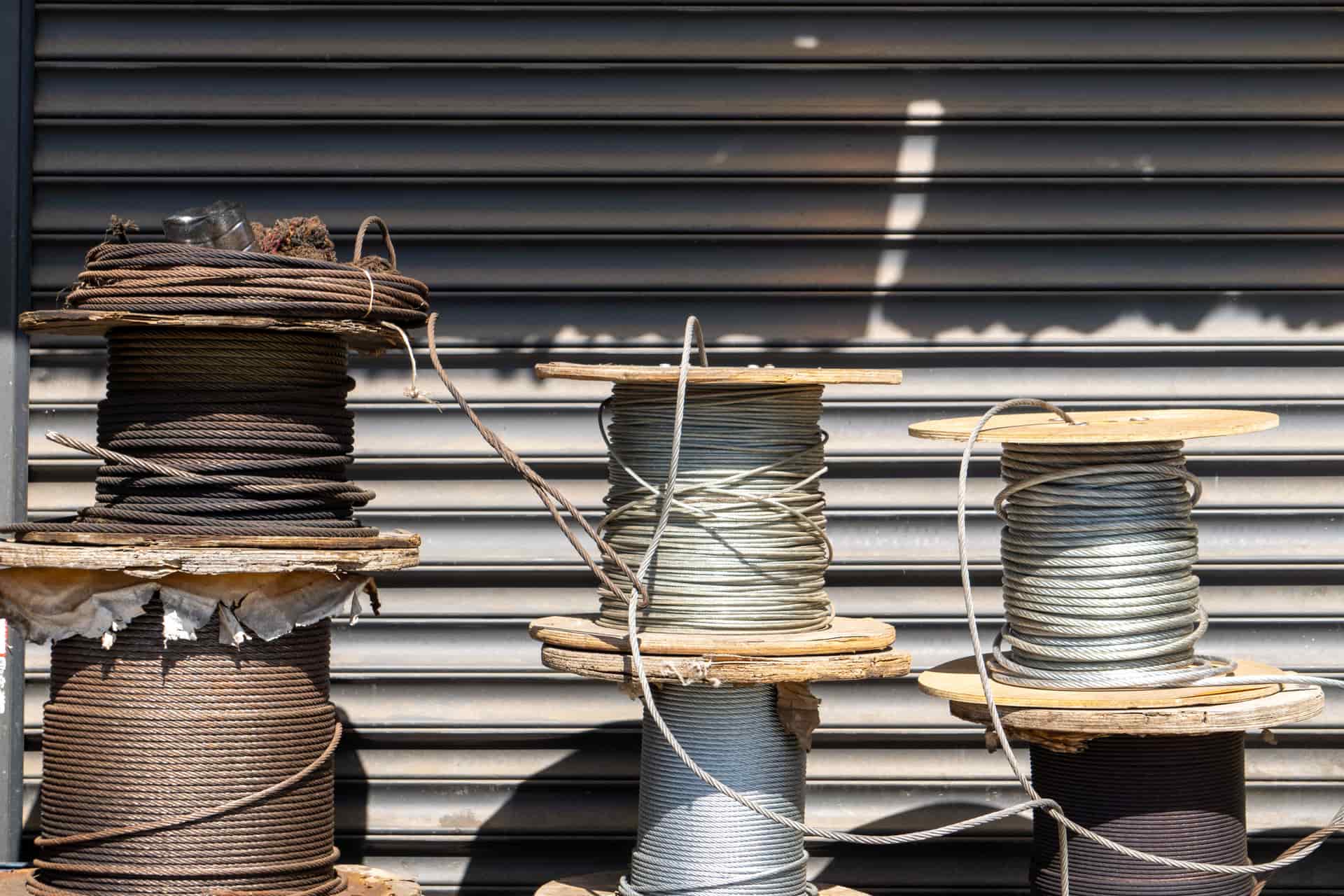
Which diameter for which thickness, and why the wrong wire looks like a machine fault.

Guide
No, and the reason is chemistry rather than technique. What to do instead, by budget.
Safety
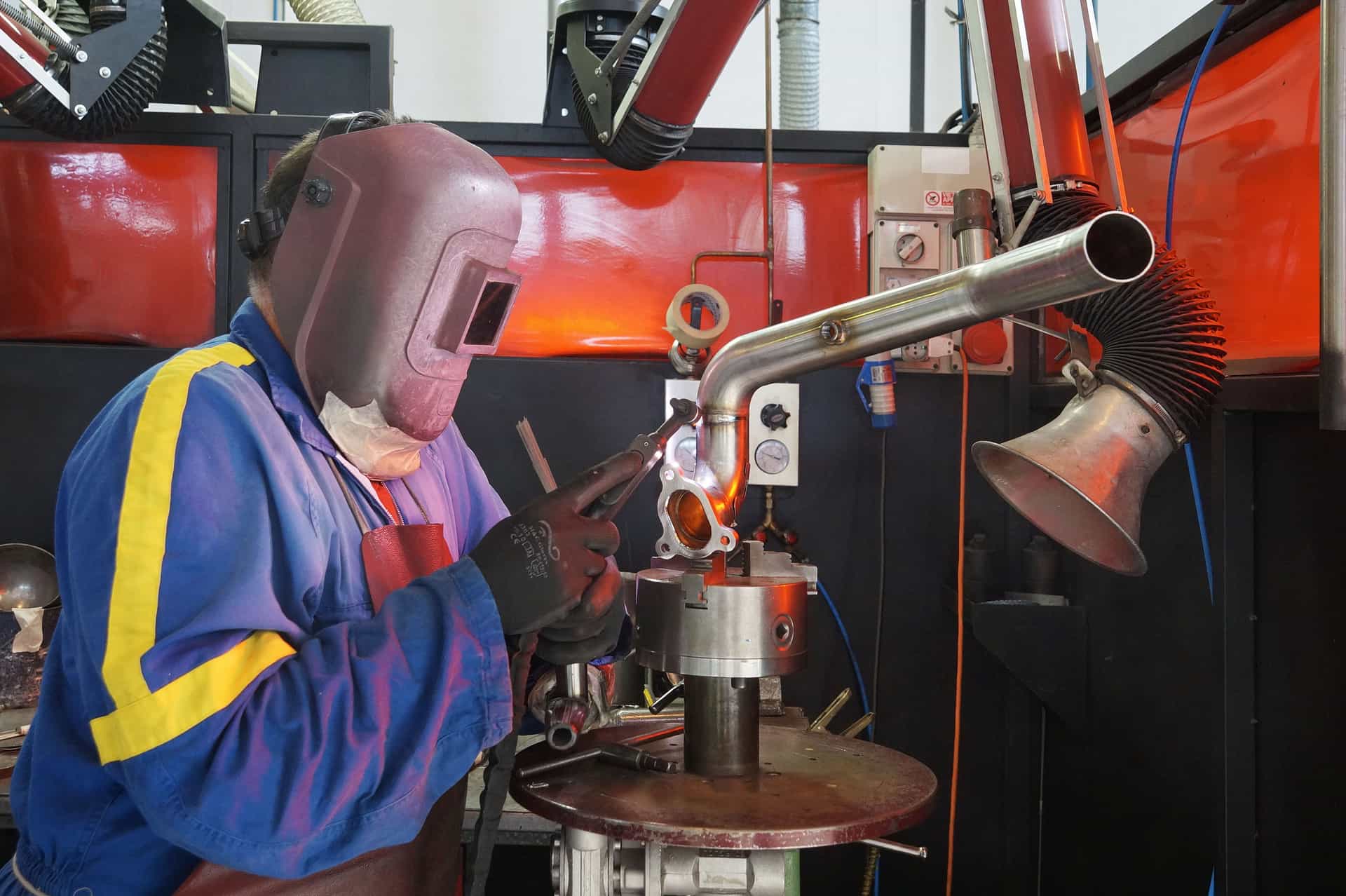
Fume, eyes and fire — including the risks that show up hours after you stop welding.
Comparison
Two processes that work outdoors on rusty steel — and why one is far easier to begin with.
Ready for the next level?
The signal is specific: you are tired of chipping slag off every single weld.
Gear you need at every level
What you can see and what you can plug in decide more than the machine does.
Not sure you are in the right place?
Four rungs, four machines, and an honest answer about which one is yours.
Yes — it is the best starting point for most people. There is no gas bottle to buy, set up or refill, it tolerates wind and less-than-perfect metal prep better than gas MIG, and it runs from a standard household outlet.
The trade is cosmetic: flux-core leaves slag on top of the weld that has to be chipped and brushed off, and it spatters more than a gas process.
No. The shielding comes from flux packed inside the hollow wire, which burns as you weld and produces a gas shield plus a slag layer. That is exactly why it works outdoors and in a drafty garage where a gas MIG weld would be ruined.
Realistically: a garden gate, a workbench frame, a trailer hitch, a log splitter repair, a mower deck patch, brackets, stands and most garden and garage steelwork up to about a quarter inch thick.
What it will not do: half-inch structural plate, aluminum of any kind, or thin car body sheet without a lot of practice and a very careful hand.
Most 120-volt flux-core machines specify a 20-amp circuit. A 15-amp garage lighting circuit will often run one at low settings and trip at higher ones. Check the machine's own manual for its stated requirement, and if the circuit needs changing, that is work for a licensed electrician.
Drag. Flux-cored wire is a slag process, so you pull the gun away from the finished weld — the same rule as stick welding. Pushing drives the arc into the slag and gives you a shallow, contaminated weld.
The memory aid is: if there is slag, you drag.
Ryder M. is the hands-on owner behind Magoo Media Group. He writes Arc & Bead's buying guides and picks every machine on the site. What every recommendation is based on — and what it is not based on — is set out on How We Pick.