Plasma cutter air requirements
The specification that decides whether your machine works, written in a unit most people have never had to think about.
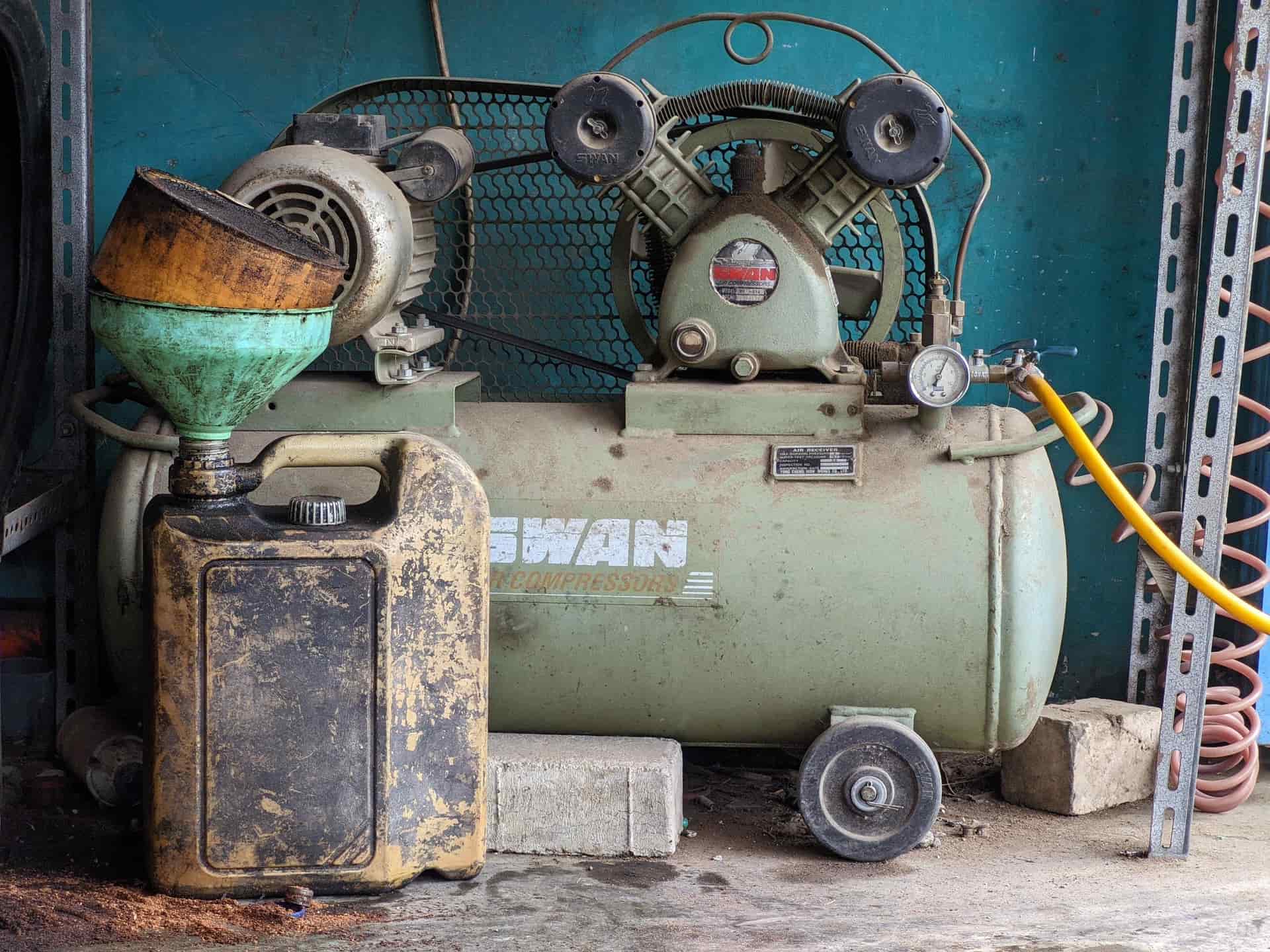
The specification, and how to read it
Plasma cutters state an air requirement as a volume at a pressure — for example, CFM at a given PSI. Both numbers must be met continuously while cutting, not in a burst. A compressor that delivers the figure momentarily and then falls behind produces a poor, dross-heavy cut and rapid consumable wear, with no error message.
Why tank size is not the answer
The most common mistake is buying a compressor by tank size. A large tank with a small pump holds a lot of air and refills slowly.
A plasma cutter draws air continuously for as long as the trigger is down. The tank buys you the first few seconds; after that, what matters is whether the pump can keep up with the demand indefinitely.
So the figure to compare is the compressor's delivered CFM at the pressure the cutter requires — not tank gallons, and not the compressor's maximum pressure. CFM ratings are quoted at a specific pressure, and they fall as pressure rises, so a rating at 40 PSI tells you nothing about performance at 90.
The symptoms of insufficient air
It fails quietly, which is what makes it so persistent a problem.
Dross on the underside that will not stop no matter how you adjust travel speed. An arc that goes out partway through a cut. Consumables wearing out remarkably fast. Cuts that start well and degrade as the compressor falls behind — this last one is the giveaway, because the first ten seconds look fine.
People diagnose all of these as a faulty machine or poor consumables. Check the air first.
Moisture: the other half of the problem
Compressing air condenses the water vapor in it, which collects in the tank and travels down the line with the air.
Water in the plasma stream does two things: it destroys consumables quickly, and it produces a ragged inconsistent cut. Both look like machine problems.
A water separator between compressor and machine is the minimum, and it is genuinely not optional. In a humid climate a desiccant dryer downstream of the separator is a worthwhile addition.
Also drain the compressor tank regularly — daily in use. Water sits in the bottom, and a tank that has never been drained is pushing water into the line continuously.
Line size and length
Two things people get wrong after buying the right compressor.
Hose diameter. A narrow hose restricts flow regardless of what the compressor can produce. Use the diameter the machine's manual specifies, not the quarter-inch coil hose that came with a nail gun.
Length and fittings. Every meter of hose and every quick-connect fitting drops pressure. A long run through several connectors can lose enough to put the machine below its requirement even though the compressor is adequate.
Measure pressure at the machine while cutting. That is the only number that matters, and it is often lower than the gauge on the compressor suggests.
Checking what you actually have
Find your machine's requirement in its manual — the CFM at the stated PSI.
Find your compressor's delivered CFM at that same pressure. It is on the nameplate or in the manual, and it must be quoted at the pressure you need. If the compressor is rated at a lower pressure, the number is not comparable.
Compare, with margin. A compressor exactly meeting the requirement will run continuously and struggle in warm weather. Comfortable headroom matters more here than in most tool specifications.
Then test it in use, by cutting for a minute and watching whether the cut quality holds. Degradation partway through is the signature of a compressor falling behind.
If your compressor is not enough
Three honest options.
Cut at lower amperage. Air demand scales with output, so a 50-amp machine run at 30 amps needs less air. That reduces your cut capacity accordingly.
Cut in shorter bursts. Let the tank recover between cuts. Workable for short cuts, frustrating for long ones.
Buy a machine with a built-in compressor instead. If the compressor you would need costs more than the price difference, an integrated machine is the cheaper answer overall.
Before you buy any plasma cutter
Read the air requirement first, and check it against what you own or can buy. It is the specification that decides whether the machine works at all, and it is the one buried furthest down every product page.
What we would buy
1. Removes the question entirely
Hypertherm Powermax30 AIR
Built-in compressor matched to the torch, so it cannot be under-supplied.
If working out compressor sizing is the obstacle between you and plasma cutting, a machine with an internal compressor removes the problem by design: the air supply is matched to the torch and the moisture handling is built in.
Hypertherm publishes a built-in compressor eliminating any external air supply or filter, Auto-Voltage at 120 or 240 volts, a 5/16 inch recommended cut and under 30 pounds.
The trade is capacity — 30 amps rather than 50 — and a duty cycle on the internal compressor itself.
What works
- The internal compressor removes the hidden second purchase that sinks most first plasma buys
- Auto-Voltage means it works on a 120 V outlet today and a 240 V circuit later with no switch
- Hypertherm consumables are stocked everywhere and last markedly longer than budget equivalents
What does not
- Costs multiples of a budget 50 A machine while cutting thinner material
- 30 A is a genuine ceiling: 5/8 in severance is the limit, not a working thickness
- The internal compressor has a duty cycle of its own — sustained cutting needs pauses
2. External air, with the regulator built in
Lotos LTP5000D
Built-in pressure regulator, so one part of the air setup is handled.
Lotos publishes a built-in pressure regulator alongside 10 to 50 amps on 220/240 volts and a 5/8 inch ideal clean cut.
A built-in regulator means you set pressure at the machine rather than adding another component to the line, which is one less place for the supply to go wrong.
It does not remove the need for a water separator. That is a separate job and it is the one that actually protects your consumables.
What works
- Pilot arc means it will start on painted, rusty or galvanized material where a touch-start machine stalls
- 5/8 in clean cut on 240 V is more capacity than most home shops will ever use
- Dual voltage with a switch rather than a different machine
What does not
- You must supply clean dry air. A small pancake compressor will not keep up, and wet air destroys consumables fast
- On a 110 V outlet you lose a third of the output and half the thickness
- Consumable life is noticeably shorter than Hypertherm's, and the running cost shows it
Questions people actually ask
What air compressor do I need for a plasma cutter?
One that delivers the machine's stated CFM at its stated PSI continuously, with headroom. Both numbers come from your cutter's manual.
Compare delivered CFM at that pressure — not tank size, and not the compressor's maximum pressure, because CFM ratings fall as pressure rises.
Does tank size matter for plasma cutting?
Much less than people assume. A plasma cutter draws air continuously while the trigger is down, so the tank only covers the first few seconds.
What matters is whether the pump sustains the required flow indefinitely.
Do I need a water separator?
Yes, and it is not optional. Compressing air condenses water vapor, which collects in the tank and travels down the line.
Moisture in the plasma stream destroys consumables quickly and produces a ragged cut. Drain the tank regularly too.
How do I know if my air supply is insufficient?
The signature symptom is a cut that starts well and degrades partway through, as the compressor falls behind.
Also: persistent dross that no travel-speed change fixes, an arc that cuts out mid-cut, and consumables wearing out remarkably fast.
Can I use a small pancake compressor?
Almost certainly not for a 50-amp machine. Small compressors deliver low CFM and cannot sustain continuous demand.
You may manage short cuts at reduced amperage. For anything beyond that, either buy a larger compressor or choose a machine with a built-in one.
Sources
Read next
- The best plasma cutters with a built-in air compressor
Internal-compressor machines: what you trade in capacity, and when that trade is right.
- The best plasma cutters for home use
Home-shop machines, why the compressor is the real purchase, and how to read cut-capacity numbers.
- Plasma cutting for beginners
Standoff, travel speed, drag cutting and piercing — everything from unboxing to a clean cut.
- Plasma cutter cut thickness chart
Recommended versus severance capacity by amperage, and what you lose on a 110V outlet.
- Level 4 · Plasma: cutting as accurately as you weld
The only rung on this ladder that is about shaping metal rather than joining it — and the one where the machine is the smaller half of the purchase.
Back to Level 4 · Plasma, or start over at Find Your Level.
Ryder M.
Ryder M. is the hands-on owner behind Magoo Media Group. He writes Arc & Bead's buying guides and picks every machine on the site. What every recommendation is based on — and what it is not based on — is set out on How We Pick.