The best plasma cutters for 1-inch steel
Most machines that claim an inch are quoting a severance cut. That is a slow parting cut, not a working thickness, and the difference is the whole page.
Arc & Bead is an Amazon Associate. If you buy through a link on this page we may earn a commission, at no extra cost to you. We have not physically tested the machines on this page and we say so on How We Pick.
Quick picks
Tap any row to jump to the full write-up further down this page.
| # | Product | Best for | Price |
|---|---|---|---|
| 1 | 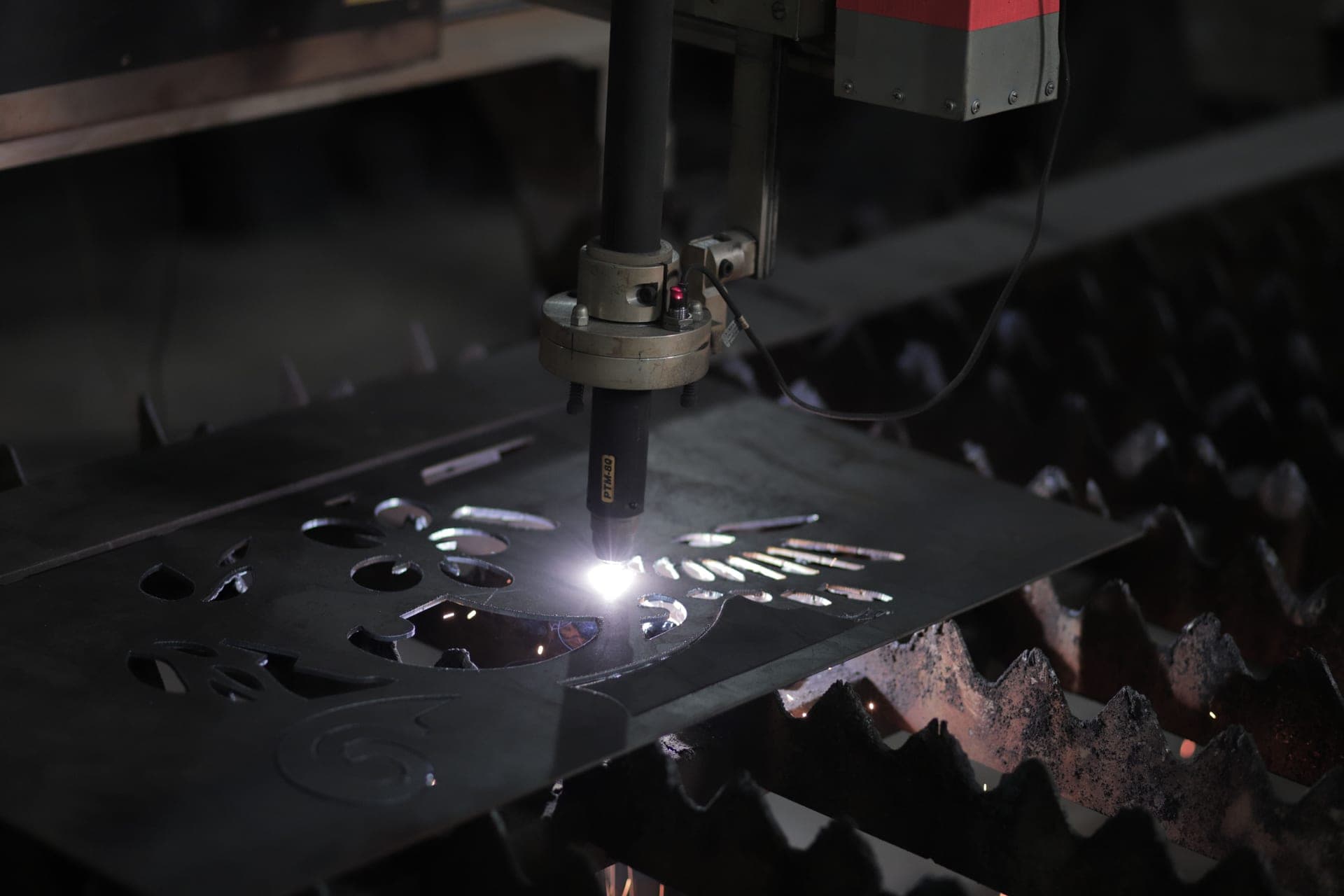 Lotos LTP800080 amps with a published 1 inch clean cut and 60% duty cycle — the specification this page is about. | Best published 1-inch clean cut | |
| 2 | Hypertherm Powermax65 SYNC3/4 inch recommended, 1-1/4 inch severance, and consumable life that changes the running cost. | Best cut quality at thickness | |
| 3 | PrimeWeld CUT6060 amps and a pilot arc — genuinely good to 1/2 inch, and not the machine for an inch. | The honest step below |
What plasma cutter do you need for 1-inch steel?
An 80 amp machine with a published clean cut rating of one inch, a 220 volt supply, and a compressor that can sustain the machine's published air volume. Sixty-five amp professional systems will part an inch as a severance cut, and 50 amp machines will not do it usefully at all.
Clean cut, recommended cut and severance cut are three different numbers
This is the whole page, so it is worth being precise.
Recommended or clean cut is the thickness the machine cuts at a sensible travel speed with a usable edge. This is the number to buy on.
Severance cut is the maximum thickness the machine will part, cutting very slowly, with a rough edge and heavy dross. It is a "can it get through" figure, not a working specification.
Maximum cut is used loosely by some manufacturers and usually means severance. Read the cut chart rather than the headline.
| Machine | Published clean/recommended | Published severance |
|---|---|---|
| Lotos LTP8000 (80 A) | 1 in | 1-1/2 in maximum |
| Hypertherm Powermax65 SYNC (65 A) | 3/4 in (20 mm) | 1-1/4 in (32 mm) |
| PrimeWeld CUT60 (60 A) | Not rated at 1 in | — |
| Lotos LTP5000D (50 A) | 5/8 in at 220 V | 3/4 in at 220 V |
Air is a bigger constraint at an inch than anywhere else
Amperage and air demand rise together. An 80 amp machine needs substantially more air than a 50 amp one, and it needs it continuously, because cutting an inch means slow travel and long cuts.
A compressor that just about kept a 50 amp machine happy on short cuts will fall behind, and the symptoms look exactly like a bad machine: a cut that does not sever, heavy dross, and tips that wear out in an afternoon.
Moisture matters more here for the same reason — more air moving for longer means more water carried. A separator is not optional at this amperage. Plasma cutter air requirements covers how to size it.
The power supply is part of the purchase
Machines in this class are 220 volt only — the dual-voltage convenience of the smaller machines does not survive at 80 amps — and the draw can reach 50 amps.
That is a dedicated circuit, and quite possibly a panel conversation. Price it before you price the machine. What size breaker a welder needs and how many amps a welder uses both apply directly.
Should you cut an inch with plasma at all?
An honest question, and for some readers the answer is no.
Oxy-acetylene cuts thick carbon steel with equipment that costs a fraction of an 80 amp plasma system, needs no electricity and no compressor, and gets better relative to plasma as the plate gets thicker. If the material is carbon steel and the cuts are straight, that is a serious alternative — plasma cutter vs oxy-acetylene sets out where the crossover sits.
Plasma wins at an inch when the material is stainless or aluminum, which oxy-fuel cannot cut at all, or when you need shapes rather than straight cuts.
One cut a year is not a machine purchase
1. Best published 1-inch clean cut
Lotos LTP8000
80 amps with a published 1 inch clean cut and 60% duty cycle — the specification this page is about.
Lotos publishes 20 to 80 amps, a 1 inch clean cut, a 1-1/2 inch maximum cut, a 60% duty cycle at 80 amps and 100% at 50 amps, 210 to 250 volt single-phase input and a non-touch pilot arc with a fitted regulator and filter.
A published clean cut at an inch is the reason this leads. Most machines that mention an inch are quoting severance — a slow, rough parting cut that leaves an edge you would have to grind before welding. A clean-cut rating means the machine is designed to do it as normal work.
The 60% duty cycle at full output matters more at this thickness than at any other. Cutting an inch is slow travel, so a single cut across a plate can take long enough that a lower-rated machine stops you halfway.
Two hard requirements come with it: a 220 volt circuit at up to a 50 amp draw, and a compressor that can genuinely sustain 80 amps of air demand. Neither is optional and both belong in the budget.
What works
- A published 1 in CLEAN cut rather than a 1 in severance cut — that distinction is the entire point of this class
- 60% duty cycle at the full 80 A, so a long cut in thick plate does not become a stop-start job
- Pilot arc, so rusty and painted plate — which is what thick stock usually is — does not stall the machine
What does not
- 80 A needs serious air volume. A pancake or small twin-stack compressor cannot feed it, and starving it ruins both the cut and the consumables
- 220 V only, at up to a 50 A draw. The circuit is part of the purchase
- Consumable life and support do not match Hypertherm's, and at 80 A you get through consumables faster
Who this is wrong for: A shop without 240 V and a serious compressor. Starved of air, an 80 amp machine cuts worse than a well-fed 50 amp one.
2. Best cut quality at thickness
Hypertherm Powermax65 SYNC
3/4 inch recommended, 1-1/4 inch severance, and consumable life that changes the running cost.
Hypertherm publishes 20 to 65 amps, a recommended cut of 3/4 inch (20 mm) at 20 inches per minute, a severance cut of 1-1/4 inch (32 mm), a 50% duty cycle at 65 amps and 100% at 46 amps, SpringStart arc initiation with no high-frequency circuit, and 61.7 pounds with the 25 foot torch.
Note what Hypertherm publishes and what it does not: 3/4 inch recommended, not an inch. An inch sits between its recommended and severance figures, which is an honest way of saying it will do it and will not enjoy it.
What you get in exchange is cut quality and consumable life. At thickness, a professional system produces an edge much closer to weld-ready and gets far more cuts from a set of consumables — and at an inch, where every cut is slow, that difference compounds quickly.
SpringStart also means no high-frequency noise, which makes this the machine to choose if a CNC table is part of the plan.
What works
- Single-piece cartridge consumables, which removes the five-piece stack-up that gets assembled slightly wrong every time
- SpringStart means no high-frequency noise, so it can drive a CNC table without interfering with the controller
- Hypertherm consumable life is why professionals buy these: the running cost per cut is far below a budget machine's
What does not
- Costs several times an 80 A budget machine, and cuts thinner plate than one at its recommended setting
- 3/4 in is the recommended cut; 1-1/4 in is a severance cut, which is a slow rough parting cut, not a working thickness
- Needs a serious supply — 200 V minimum, and the air volume to match
3. The honest step below
PrimeWeld CUT60
60 amps and a pilot arc — genuinely good to 1/2 inch, and not the machine for an inch.
PrimeWeld publishes 60 amps with a non-touch pilot arc on 220 volts.
Included deliberately, because a lot of people searching for an inch do not actually need an inch. At 60 amps this machine turns half-inch plate from a severance cut into a working one, which covers the great majority of "thick" home-shop work.
At a full inch it is out of its depth, and pushing a machine past its rating is how you get a rough edge and a fast consumable bill. If an inch is genuinely regular work, buy the machine rated for it.
What works
- 60 A gives real headroom on 1/2 in plate instead of treating it as a severance cut
- Pilot-arc start and a well-regarded torch for the price
What does not
- Air demand at 60 A is beyond what a small compressor can sustain — budget for the compressor as part of the purchase
- 220 V only, so it needs the circuit before it needs anything else
Who this is wrong for: Regular work at an inch. It will part the material and the edge will show that you asked too much of it.
Questions people actually ask
How many amps do you need to cut 1 inch steel with plasma?
Around 80 amps for a clean cut you would weld to afterwards. Sixty-five amp professional systems publish an inch as a severance cut, which parts the material but leaves a rough edge.
Fifty amp machines are not rated for it usefully at all.
What is the difference between a clean cut and a severance cut?
A clean or recommended cut is the thickness the machine cuts at a sensible speed with a usable edge. A severance cut is the maximum it will part at all — very slowly, with a rough edge and heavy dross.
Buy on the clean-cut figure. The severance figure describes an emergency, not a job.
Can a 50 amp plasma cutter cut 1 inch steel?
No, not usefully. A 50 amp machine typically publishes a 5/8 inch clean cut and a 3/4 inch severance cut on a 240 volt supply.
An inch is beyond its severance rating, and pushing a machine past its rating wrecks consumables without producing a usable edge.
What compressor do I need for an 80 amp plasma cutter?
One that sustains the machine's published air volume and pressure continuously, not in bursts — cutting an inch means slow travel and long cuts, so the demand does not let up.
A water separator is equally necessary: more air for longer means more moisture carried into the torch.
Is oxy-acetylene better than plasma for 1 inch steel?
For straight cuts in carbon steel, it is a genuinely competitive option — the equipment costs far less, needs no electricity and gets relatively better as plate gets thicker.
Plasma wins when the material is stainless or aluminum, which oxy-fuel cannot cut, or when you need shapes rather than lengths.
Sources
Read next
- Plasma cutter cut thickness chart
Recommended versus severance capacity by amperage, and what you lose on a 110V outlet.
- Plasma cutter air requirements
How to read CFM and PSI, why tank size is not the answer, and what a compressor must sustain.
- Plasma cutter vs oxy-acetylene torch
Where each process wins on thickness, cost and material — and the two metals oxy-fuel cannot cut.
- The best plasma cutters for the price
Value per dollar in plasma, counted properly — including the consumables and the compressor.
- What size breaker do you need for a welder?
Read the rating plate, not the marketing. What decides the circuit, and what to tell your electrician.
Back to Level 4 · Plasma, or start over at Find Your Level.
Ryder M.
Ryder M. is the hands-on owner behind Magoo Media Group. He writes Arc & Bead's buying guides and picks every machine on the site. What every recommendation is based on — and what it is not based on — is set out on How We Pick.