The best plasma cutters with a built-in air compressor
One machine, one plug, no compressor to buy. The trade is capacity — and for a lot of home shops it is the right trade.
Arc & Bead is an Amazon Associate. If you buy through a link on this page we may earn a commission, at no extra cost to you. We have not physically tested the machines on this page and we say so on How We Pick.
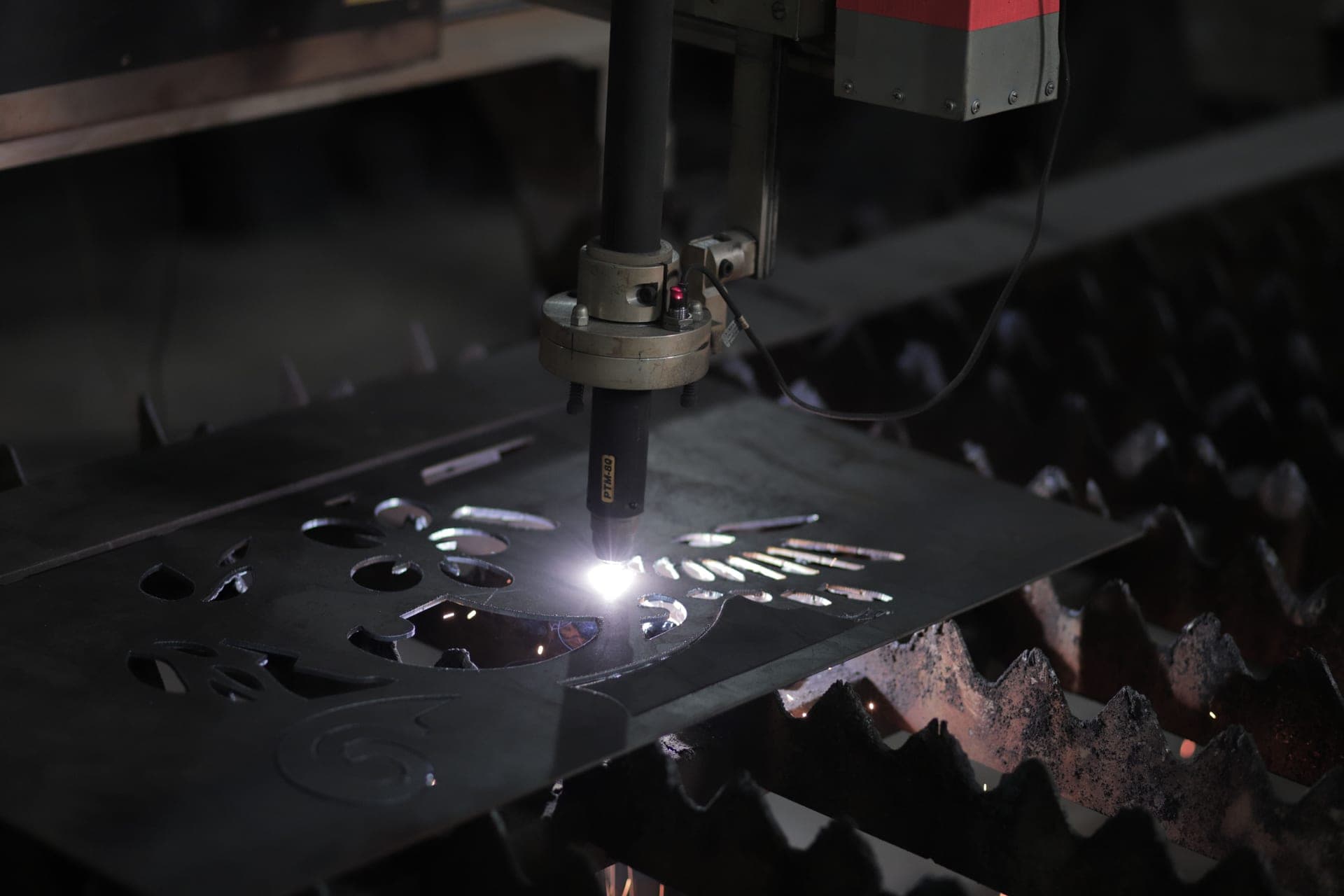
Quick picks
Tap any row to jump to the full write-up further down this page.
| # | Product | Best for | Price |
|---|---|---|---|
| 1 | Hypertherm Powermax30 AIRBuilt-in compressor, Auto-Voltage, 5/16 inch recommended cut, under 30 lb. | The one to buy | |
| 2 | Lotos LTP5000D5/8 inch clean cut at 50 amps, if you already own a real compressor. | The external-air alternative | |
| 3 | 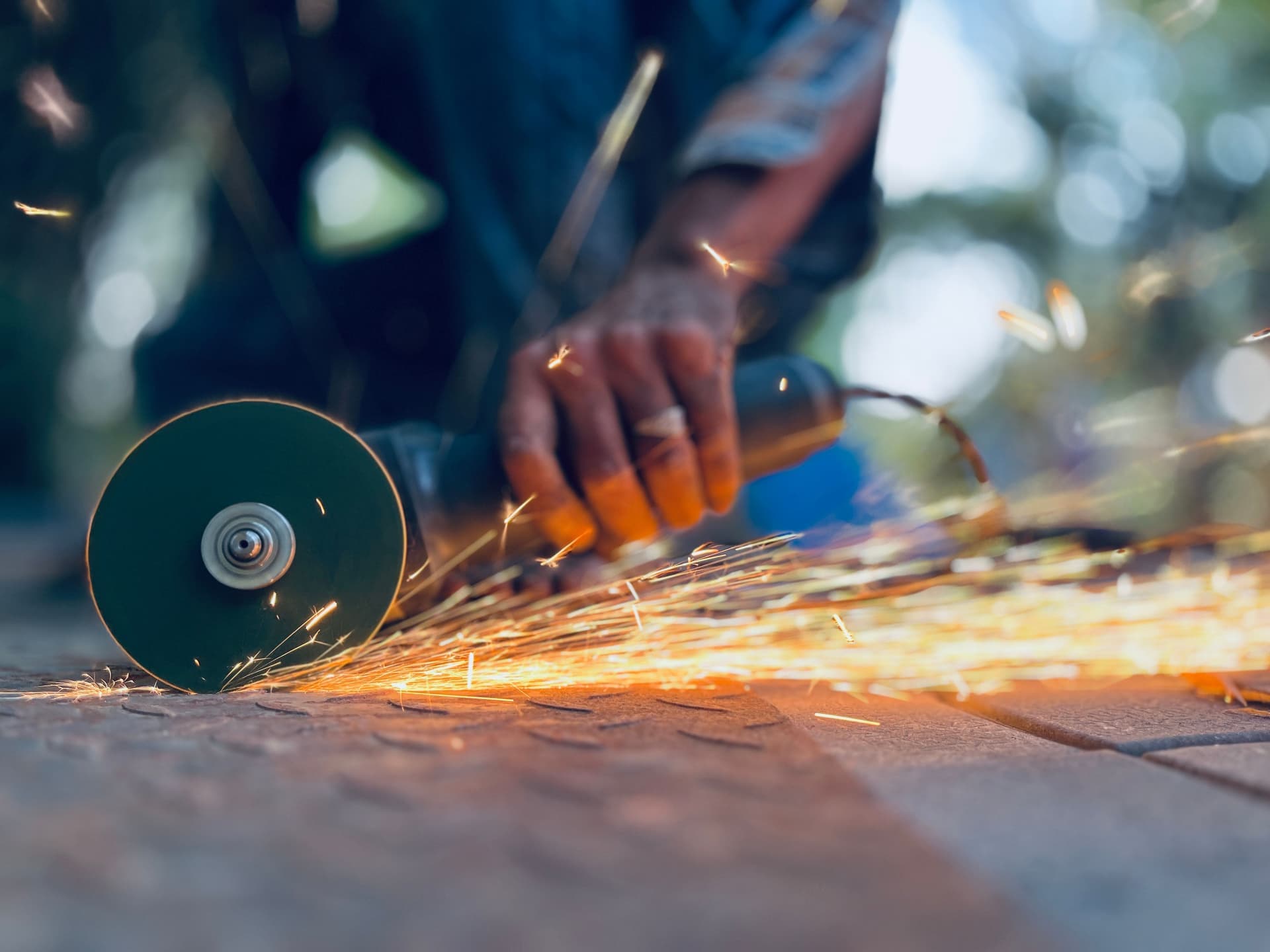 DeWalt DWE402 4-1/2 in angle grinderIf you mostly cut stock to length, a grinder does it for a fraction of the money. | The honest alternative to both |
What the built-in compressor actually saves you
Four things, not one: the compressor itself, the water separator that keeps moisture out of the plasma stream, the hose and fittings, and the floor space and noise a compressor brings. For a small garage that bundle is often the real obstacle to owning a plasma cutter at all.
The air problem this solves
A plasma cutter consumes air continuously while cutting, at a specified volume and pressure. The failure mode when a compressor cannot sustain it is quiet: no error, no shutdown — just a poor, dross-heavy cut and consumables that wear out fast, which people reliably attribute to the machine.
Air also has to be dry, and a compressor tank collects water. Wet air in the plasma stream shortens consumable life dramatically and spoils the cut, which is why a water separator is part of the system rather than an accessory.
A machine with an internal compressor sidesteps both problems by design, because the air supply is matched to the torch and the moisture handling is built in. Plasma cutter air requirements covers what satisfying it externally actually takes.
What you trade
Cut capacity. An internal compressor is physically small, which limits air volume, which limits amperage. A 30-amp built-in machine publishes a 5/16 inch recommended cut against 5/8 inch for a 50-amp external-air machine. That is a real difference and it is the whole trade.
Continuous cutting. The internal compressor has its own duty cycle. Long continuous cuts need pauses that an external tank would absorb.
Price per amp. You are paying a premium for the integration. Judged purely on amps per dollar, these machines lose — which is exactly why the comparison has to include the compressor you would otherwise buy.
Who should buy one
Anyone with no compressor and no other reason to own one. If plasma is the only thing that would use it, the integrated machine is usually cheaper overall.
Anyone short of space. A compressor is a large, loud object that lives somewhere permanently.
Anyone cutting away from the shop. Under 30 pounds with no air line means the machine goes to the job. With external air, the job comes to the machine.
Anyone cutting thinner material. If your work is sheet, brackets and profiles up to about a quarter inch, 30 amps is genuinely sufficient and the extra capacity would go unused.
Who should not
Anyone who already owns a capable compressor. The economics reverse completely — you get far more capacity per pound spent from an external-air machine.
Anyone regularly cutting over a quarter inch. Thirty amps runs out, and no technique extends it.
Anyone doing long production cuts. The internal compressor's duty cycle becomes the constraint.
The consumable-life point that narrows the gap
Purchase price is only part of plasma cutting's cost. Tips and electrodes are consumed continuously, and life varies substantially between brands.
Hypertherm consumables cost more each and last markedly longer, and they are stocked essentially everywhere. Over a machine's life that narrows the gap against a cheaper machine with shorter-lived parts — and it is worth factoring in before judging on sticker price alone.
Still check the circuit
A built-in compressor removes the air question, not the power question. These machines are dual voltage, and capacity on a 120-volt outlet is lower than on 240 volts.
What size breaker a welder needs applies here too, and circuit work belongs to a licensed electrician.
1. The one to buy
Hypertherm Powermax30 AIR
Built-in compressor, Auto-Voltage, 5/16 inch recommended cut, under 30 lb.
Hypertherm publishes 30 amps output, a built-in compressor eliminating any external air supply or filter, dual voltage at 120 or 240 volts with Auto-Voltage, a recommended cut of 5/16 inch at 20 inches per minute and 3/8 inch at 10 inches per minute, a 5/8 inch severance capacity, and under 30 pounds.
The honest framing is that this is not really competing with 50-amp machines on capacity. It is competing with the whole cost and hassle of a compressor, a water separator, a hose and somewhere to put all of it.
Under 30 pounds with no air line means you genuinely carry it to the work. For anyone cutting outside a fixed shop, that is transformative.
Two limits. Thirty amps is a real ceiling — 5/8 inch severance is a limit rather than a working thickness. And the internal compressor has its own duty cycle, so sustained cutting needs pauses.
What works
- The internal compressor removes the hidden second purchase that sinks most first plasma buys
- Auto-Voltage means it works on a 120 V outlet today and a 240 V circuit later with no switch
- Hypertherm consumables are stocked everywhere and last markedly longer than budget equivalents
What does not
- Costs multiples of a budget 50 A machine while cutting thinner material
- 30 A is a genuine ceiling: 5/8 in severance is the limit, not a working thickness
- The internal compressor has a duty cycle of its own — sustained cutting needs pauses
2. The external-air alternative
Lotos LTP5000D
5/8 inch clean cut at 50 amps, if you already own a real compressor.
The honest comparison. Lotos publishes 10 to 50 amps on 220/240 volts with a 5/8 inch ideal clean cut and 3/4 inch severance, plus a built-in pressure regulator — but it needs an external compressor.
If you already own a compressor that can sustain the required CFM, this is substantially more cutting capacity for considerably less money. That is the whole decision in one sentence.
If you do not, the compressor you would have to buy usually erases the price difference and then some.
What works
- Pilot arc means it will start on painted, rusty or galvanized material where a touch-start machine stalls
- 5/8 in clean cut on 240 V is more capacity than most home shops will ever use
- Dual voltage with a switch rather than a different machine
What does not
- You must supply clean dry air. A small pancake compressor will not keep up, and wet air destroys consumables fast
- On a 110 V outlet you lose a third of the output and half the thickness
- Consumable life is noticeably shorter than Hypertherm's, and the running cost shows it
Who this is wrong for: A shop with no compressor, or only a small pancake unit. Under-supplied air produces a poor cut and destroys consumables.
3. The honest alternative to both
DeWalt DWE402 4-1/2 in angle grinder
If you mostly cut stock to length, a grinder does it for a fraction of the money.
Worth including because a lot of people buy a plasma cutter for work an angle grinder does adequately.
A grinder with a cut-off wheel cuts straight lines in thin stock perfectly well, needs no air and no dedicated circuit, and costs a small fraction of any machine here.
What it cannot do is follow a curve accurately, and that is exactly what plasma buys you. Plasma cutter versus angle grinder makes the case properly.
What works
- Every weld needs prep and cleanup, so this earns its place from your first day regardless of process
- Cut-off, grinding and wire-wheel discs all fit the same tool
- No air, no gas, no dedicated circuit
What does not
- Slow and physical on anything thicker than about 1/4 in
- Cannot follow a curve accurately — that is the thing a plasma cutter buys you
- Makes far more mess and noise than plasma cutting
Questions people actually ask
Are plasma cutters with built-in compressors any good?
Yes, within their capacity. They cut thinner material than an equivalently priced external-air machine, and in exchange they remove the compressor, the water separator, the hose and the space all of that needs.
For a shop with no compressor, that trade is usually worth it.
How thick can a 30-amp plasma cutter cut?
Hypertherm publishes a recommended cut of 5/16 inch at 20 inches per minute and 3/8 inch at 10 inches per minute for the Powermax30 AIR, with a 5/8 inch severance capacity.
Buy on the recommended figure — severance is the absolute limit, not a working thickness.
Is a built-in compressor cheaper overall?
If you do not already own a compressor and have no other reason to buy one, usually yes — once you count the compressor, water separator, hose and space.
If you already own a capable compressor, the economics reverse and an external-air machine gives far more capacity per pound spent.
Can I use an external compressor with a built-in machine?
Some machines allow it and some do not — check the specific model's documentation.
Where it is supported it can help with sustained cutting, because an external tank absorbs demand that the small internal compressor has to work continuously to meet.
How long do the consumables last?
It varies enormously by brand and by how clean and dry the air is. Hypertherm consumables cost more each and last markedly longer than budget equivalents.
Wet air and the wrong standoff distance shorten consumable life dramatically on any machine, and both are avoidable.
Sources
Read next
- The best plasma cutters for home use
Home-shop machines, why the compressor is the real purchase, and how to read cut-capacity numbers.
- Plasma cutter air requirements
How to read CFM and PSI, why tank size is not the answer, and what a compressor must sustain.
- Plasma cutter vs angle grinder
An angle grinder cuts lengths; plasma cuts shapes. The one question that settles it.
- Plasma cutter cut thickness chart
Recommended versus severance capacity by amperage, and what you lose on a 110V outlet.
- Level 4 · Plasma: cutting as accurately as you weld
The only rung on this ladder that is about shaping metal rather than joining it — and the one where the machine is the smaller half of the purchase.
Back to Level 4 · Plasma, or start over at Find Your Level.
Ryder M.
Ryder M. is the hands-on owner behind Magoo Media Group. He writes Arc & Bead's buying guides and picks every machine on the site. What every recommendation is based on — and what it is not based on — is set out on How We Pick.