Plasma cutter cut thickness chart
Two numbers, and retailers always quote the bigger one. Here is what each actually means and which to buy on.
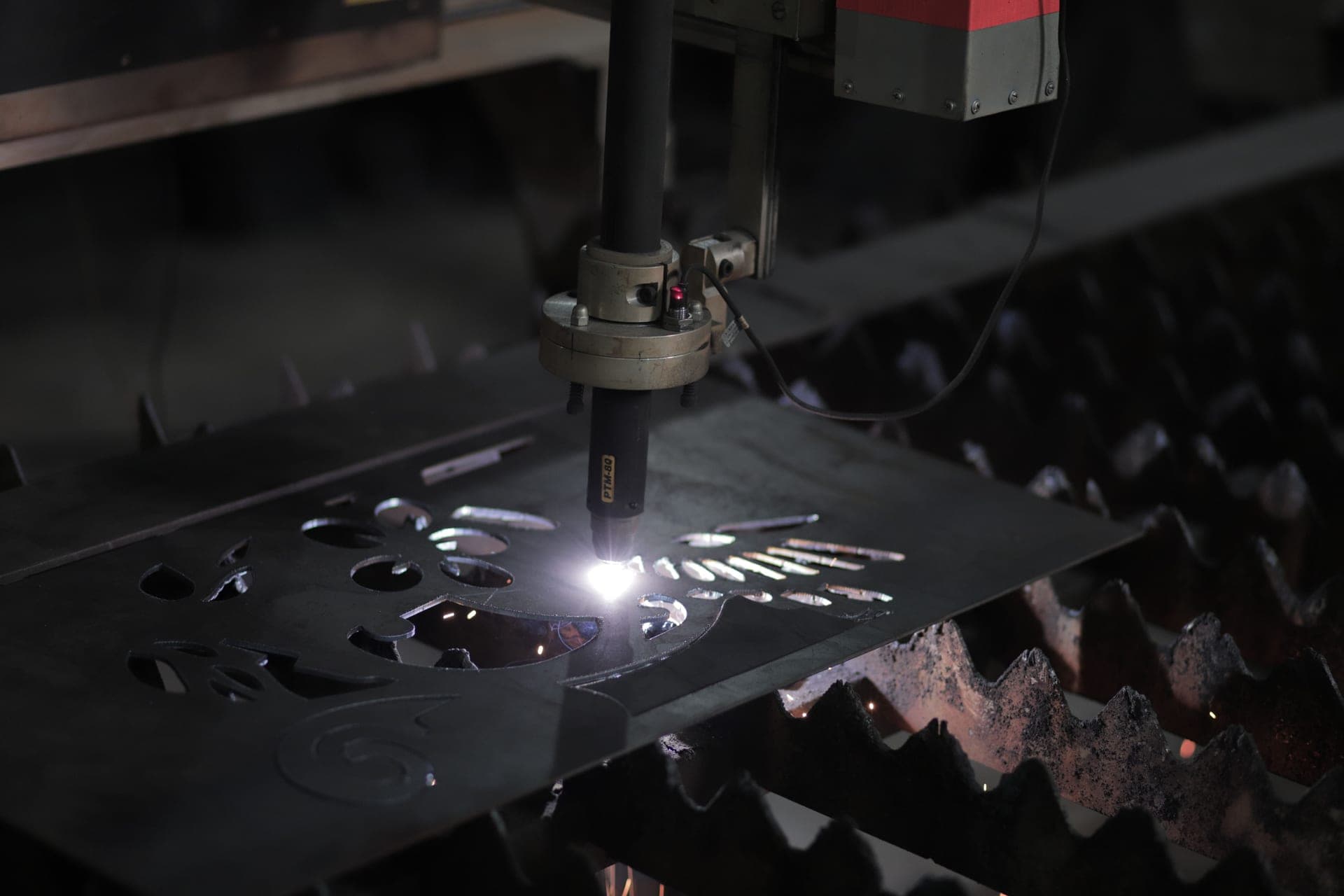
Cut capacity by machine output
| Machine output | Supply | Recommended clean cut | Severance cut |
|---|---|---|---|
| 30 A | 120 V or 240 V | About 5/16 in at speed; 3/8 in slowly | About 5/8 in |
| 40 A | 240 V | About 3/8 in | About 5/8–3/4 in |
| 50 A | 240 V | About 5/8 in | About 3/4 in |
| 50 A machine on 110 V | 110/120 V | About 3/8 in | About 1/2 in |
| 60 A | 240 V | About 3/4 in | About 1 in |
The two numbers, and which one to buy on
Recommended or clean cut is the thickness the machine cuts at a working speed, leaving an edge you would be happy to weld without much cleanup. This is the machine's real capacity.
Severance cut is the thickest material the machine will get through at all — slowly, with a poor edge, and hard on consumables. It is a specification, not a working figure.
Buy on the recommended figure. A machine advertised as cutting three-quarters of an inch and recommended for five-eighths is a five-eighths machine that can be made to struggle through three-quarters in an emergency.
Speed is part of the capacity
Hypertherm's way of publishing this is the clearest: 5/16 inch at 20 inches per minute, 3/8 inch at 10 inches per minute.
That makes the relationship explicit. You can cut thicker than the headline figure by going slower — but slower means more heat into the part, more dross, more consumable wear, and a worse edge. Capacity is really a curve rather than a number, and the recommended figure is the point on it where the result is still good.
The voltage penalty
Dual-voltage machines lose substantial capacity on a household outlet, and the published figures show exactly how much.
The Lotos LTP5000D publishes 10 to 50 amps with a 5/8 inch clean cut on 220/240 volts, falling to 10 to 35 amps with a 3/8 inch clean cut on 110/120 volts. That is roughly a third of the output and close to half the clean cut thickness.
Headline marketing figures always quote the 240-volt numbers. If you will run the machine on a household outlet, halve your expectations and check the 110-volt column of its specification.
What size breaker a welder needs applies to plasma cutters too, and circuit work belongs to a licensed electrician.
Pierce thickness is a third, lower number
Often buried, and it matters for anyone cutting holes rather than profiles from an edge.
Starting a cut in the middle of a sheet is harder on the machine and the consumables than starting from an edge, so maximum pierce thickness is always below maximum cut thickness.
If your work involves internal cutouts — holes, slots, profiles inside a panel — that figure is the one that limits you. On thicker material, drilling a start hole and beginning the cut from it avoids the problem entirely.
What affects your real-world capacity
Air supply. An under-supplied machine does not reach its published capacity, and this is the most common reason a machine appears to underperform — plasma cutter air requirements.
Consumable condition. Worn tips widen the kerf and reduce the effective cut. Capacity figures assume fresh consumables.
Material. Published figures are for mild steel. Stainless and aluminum generally cut at somewhat reduced thickness for the same machine.
Technique. Correct standoff and travel speed are worth a surprising amount — a machine cutting at the wrong standoff performs well below its rating.
The practical rule
Buy a machine whose recommended capacity comfortably exceeds your usual material thickness, on the voltage you will actually run it on. Buying at your maximum means working at the machine's limit constantly, which produces poor cuts and rapid consumable wear.
What we would buy
1. The gap, illustrated
Lotos LTP5000D
5/8 inch clean cut, 3/4 inch severance, and a third less output on 110V.
This machine publishes every figure this page is about. Lotos states 10 to 50 amps on 220/240 volts with a 5/8 inch ideal clean cut and 3/4 inch maximum severance, falling to 10 to 35 amps with a 3/8 inch clean cut and 1/2 inch severance on 110/120 volts.
Set those side by side and both lessons are visible at once: severance is well above clean cut, and 110 volts costs you roughly a third of the output and close to half the clean-cut thickness.
What works
- Pilot arc means it will start on painted, rusty or galvanized material where a touch-start machine stalls
- 5/8 in clean cut on 240 V is more capacity than most home shops will ever use
- Dual voltage with a switch rather than a different machine
What does not
- You must supply clean dry air. A small pancake compressor will not keep up, and wet air destroys consumables fast
- On a 110 V outlet you lose a third of the output and half the thickness
- Consumable life is noticeably shorter than Hypertherm's, and the running cost shows it
2. Published at a cut speed
Hypertherm Powermax30 AIR
5/16 inch at 20 ipm, 3/8 inch at 10 ipm — capacity quoted honestly.
Hypertherm publishes its recommended capacity at a stated cutting speed: 5/16 inch at 20 inches per minute and 3/8 inch at 10 inches per minute, with 5/8 inch severance.
That is the most useful way to state cut capacity, because it makes explicit what the recommended figure means — you can cut thicker, but progressively more slowly.
What works
- The internal compressor removes the hidden second purchase that sinks most first plasma buys
- Auto-Voltage means it works on a 120 V outlet today and a 240 V circuit later with no switch
- Hypertherm consumables are stocked everywhere and last markedly longer than budget equivalents
What does not
- Costs multiples of a budget 50 A machine while cutting thinner material
- 30 A is a genuine ceiling: 5/8 in severance is the limit, not a working thickness
- The internal compressor has a duty cycle of its own — sustained cutting needs pauses
Questions people actually ask
What is the difference between cut capacity and severance cut?
Recommended or clean cut is the thickness the machine cuts at a working speed with an edge you would be happy to weld. Severance is the thickest it will get through at all — slowly, with a poor edge, and hard on consumables.
Buy on the recommended figure; severance is a specification rather than a working capacity.
How thick can a 50-amp plasma cutter cut?
Around 5/8 inch clean cut on 240 volts with roughly 3/4 inch severance, based on published figures for machines in that class.
On a 110-volt outlet the same machine can fall to around 3/8 inch clean cut, so the supply voltage matters as much as the amperage rating.
Why does 110V reduce cut thickness so much?
Less available power means lower output amperage. The Lotos LTP5000D, for example, publishes 10 to 50 amps on 220/240 volts and 10 to 35 amps on 110/120 volts.
Lower amperage means a less energetic plasma jet, which cuts thinner material.
What is pierce thickness?
The maximum thickness at which you can start a cut in the middle of a sheet rather than from an edge. It is always lower than the maximum cut thickness, because piercing is harder on the machine and consumables.
On thicker material, drilling a start hole avoids the limit entirely.
Do aluminum and stainless cut the same as steel?
Published capacity figures are for mild steel. Stainless and aluminum generally cut at somewhat reduced thickness on the same machine, and the edge quality is typically not as clean.
Both cut perfectly well — plasma works on any electrically conductive metal — but expect some finishing.
Sources
Read next
- Plasma cutter air requirements
How to read CFM and PSI, why tank size is not the answer, and what a compressor must sustain.
- The best plasma cutters for home use
Home-shop machines, why the compressor is the real purchase, and how to read cut-capacity numbers.
- Plasma cutting for beginners
Standoff, travel speed, drag cutting and piercing — everything from unboxing to a clean cut.
- 120V vs 240V welders: which one do you actually need?
The decision that sets your ceiling: what each supply voltage welds, and what the circuit really costs.
- Level 4 · Plasma: cutting as accurately as you weld
The only rung on this ladder that is about shaping metal rather than joining it — and the one where the machine is the smaller half of the purchase.
Back to Level 4 · Plasma, or start over at Find Your Level.
Ryder M.
Ryder M. is the hands-on owner behind Magoo Media Group. He writes Arc & Bead's buying guides and picks every machine on the site. What every recommendation is based on — and what it is not based on — is set out on How We Pick.