Do you need a welding helmet for plasma cutting?
Yes, you need eye protection — but a plasma arc needs a lighter shade than a weld, and a helmet that cannot go light enough is the wrong helmet.
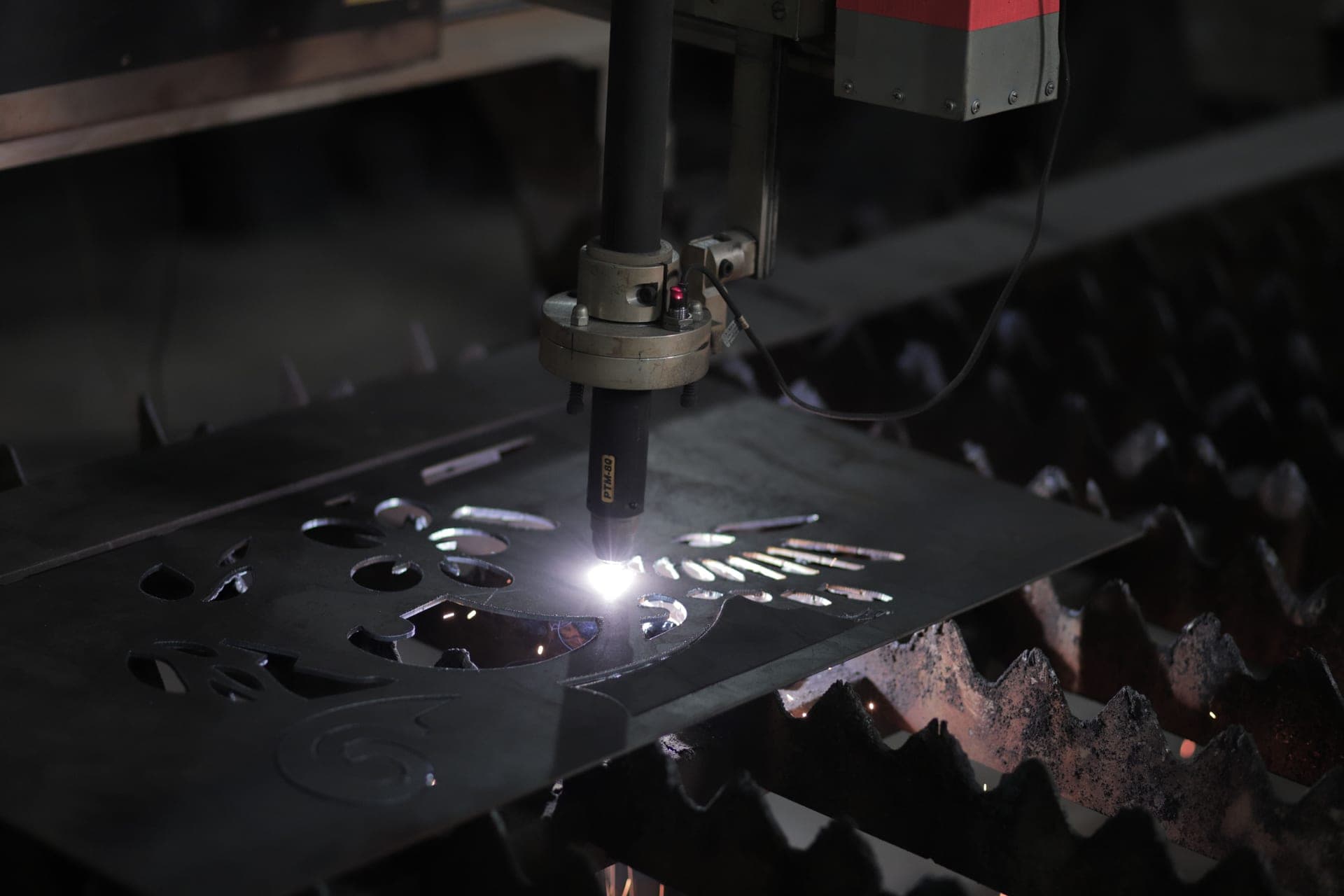
The direct answer
Yes. Plasma cutting produces an arc with the same ultraviolet and infrared hazard as welding, and it requires a filter lens — a welding helmet or a rated face shield with the correct filter. The shade needed is lighter than for welding: OSHA's minimum for light plasma arc cutting under 300 A is shade 8, against shade 10 for MIG at 60 to 160 A. Safety glasses alone are not sufficient.
The question gets asked because plasma cutting does not feel like welding. There is no filler, no puddle to read, no bead to inspect, and the whole operation is over in seconds. It is easy to treat it like using a cutting disc. The arc, however, does not know the difference — it is an electrical arc at thousands of degrees, radiating UV in every direction.
Why the shade is lighter than for welding
This surprises people, and it is the practical heart of the question: cutting at 50 amps needs a lighter shade than welding at 50 amps.
Shade requirements track the radiant energy that actually reaches your eyes, which depends on the process and not just on the current. A plasma cutting arc is largely confined inside the torch nozzle and down in the kerf it is cutting, so a good deal less of it reaches your face than an open welding arc does.
| Process | Arc current | Minimum protective shade |
|---|---|---|
| Plasma arc cutting (light) | Less than 300 A | 8 |
| Plasma arc cutting (medium) | 300–400 A | 9 |
| Plasma arc cutting (heavy) | 400–800 A | 10 |
| Gas metal arc welding (MIG) and flux-cored | 60–160 A | 10 |
| Shielded metal arc welding (stick) | 60–160 A | 8 |
| Gas tungsten arc welding (TIG) | 50–150 A | 8 |
Every home plasma cutter sits in the first row. The machines on this site run from 20 to 80 amps, so "light plasma arc cutting, less than 300 A" covers all of them with a great deal of room to spare — the plasma cutter thickness chart sets out what those amperages actually cut.
The trap: a welding helmet that cannot go light enough
Here is the specific problem this page exists to warn about, and it catches people who already own a perfectly good welding helmet.
Many auto-darkening helmets have a variable shade range that starts at 9 or 10, because that is where welding lives. Set one of those to its lightest dark state and you are at shade 9 or 10 for a cut whose minimum is 8 — darker than the task needs. You can see the arc perfectly; what you cannot see is the cut line you are trying to follow, which matters far more in cutting than in welding because there is no puddle guiding you.
The consequence is not a safety failure. It is a practical one: you end up cutting blind, lifting the hood mid-cut to check, or taking the hood off entirely — and that last one is where it becomes a safety failure.
Check your helmet's low end before you cut
Look up the shade range your helmet publishes. If it starts at 5 — like the VIKING 3350 — or has a dedicated cut mode — like the Digital Infinity's 5 to 8 — you are set. If it starts at 7, you are usable but darker than ideal. If it starts at 9 or 10, buy a second hood or a rated cutting shield rather than fighting it. The welding helmet shade chart covers how to read the whole range.
What a welding helmet does not cover when you are cutting
A helmet handles the arc. Plasma cutting has three other hazards that welding either does not have or has less of, and a hood does nothing about any of them.
Dross and sparks go downwards and outwards. A plasma torch blows molten metal out of the kerf, and on a cut from above that spray comes out underneath and to the sides. Leather boots, trousers over the boots and sleeves are not optional, and bare forearms will be burned on the first long cut.
The fume is different. Cutting vaporises the base material and whatever is on it — paint, galvanising, primer, oil. Galvanised steel is the one to take seriously: cutting it releases zinc oxide fume, and that is a documented acute hazard rather than a long-term one. Welding respiratory protection covers what a P100 does and does not remove.
The noise is real. A plasma torch at 40 amps and up is loud — louder than a welding arc by a clear margin — and it is a sustained hiss rather than a crackle. Hearing protection belongs on the list, which it does not for most welding.
And there is a fire risk under the work. Dross falls, and it falls while still molten. What is under the cut matters as much as what is beside it.
Face shield or welding helmet?
Both can be correct, and the distinction is worth understanding.
A welding helmet covers your whole face and neck, holds a filter at the right shade, and leaves both hands free. For a home shop that already owns one, it is the obvious answer — provided the low end of its range reaches the cutting shade.
A rated cutting face shield or goggles with the correct filter shade is also permissible and is lighter and cooler for long cutting sessions. The trade is coverage: a shield that leaves your neck and the sides of your face exposed leaves them exposed to both UV and to spray.
What is not sufficient, in any configuration, is clear safety glasses, a clear face shield, a sunglass tint, or a dark lens with no stated shade rating. The filter has to be a rated welding filter at a shade number, and the device has to meet ANSI Z87.1.
What to look for if you are buying for plasma
A shade range that reaches 8 or lighter. This is the one specification that decides whether a helmet suits cutting. A 5 to 13 range or a dedicated cut mode is ideal.
ANSI Z87.1 marking, which is the line between eye protection and a novelty regardless of price.
Four arc sensors if available. Cutting is often done at an angle with your hand near the front of the hood, which is exactly the geometry that blocks a sensor.
A grind mode, ideally external. Dross removal happens immediately after the cut, every time, and a grind mode turns that into one operation rather than three.
Nothing paid for a low TIG trigger rating. That figure is irrelevant here — a plasma arc is enormously brighter than a 2 amp TIG arc and will trigger any functioning lens. The best welding helmets for plasma cutting is the ranked roundup if you want picks compared head to head.
What we would buy
Arc & Bead is an Amazon Associate. If you buy through a link on this page we may earn a commission, at no extra cost to you. We have not physically tested the machines on this page and we say so on How We Pick.
1. Best helmet for both welding and cutting
Lincoln Electric VIKING 3350
A variable shade 5 to 13 range, so it reaches the light end plasma cutting wants and the dark end welding needs.
Lincoln publishes 12.5 square inches of viewing area, a full 1/1/1/1 optical class, the 4C lens with X6 headgear, a variable shade 5 to 13 range and a low-profile external grind button.
The number that matters on this page is the 5. OSHA's minimum for light plasma arc cutting under 300 amps is shade 8, and most plasma operators sit between 8 and 9 — a helmet whose range starts at 7 or above forces you darker than the task wants, and a helmet that starts at 9 cannot reach the useful setting at all.
The external grind button is a plasma-specific benefit people do not anticipate. Cutting produces dross along the underside of the cut, and dross removal is grinder work you do immediately afterwards — switching to grind mode without lifting the hood keeps that one operation instead of three.
It costs several times a budget auto-darkening helmet, and the shell is physically large, which is a real consideration when you are leaning over a cut line on a table.
What works
- 12.5 sq in of view at 1/1/1/1 clarity is the combination that makes a helmet stop being something you tolerate
- The external grind button means you switch modes without lifting the hood — the single feature you notice most every day
- Shade 5 low end covers plasma cutting, so one helmet spans all four levels
What does not
- Costs several times a budget auto-darkening helmet
- Physically large, and in a tight corner the shell finds things to bump into
2. Cheapest helmet that reaches the light end
Antra DP3-6404
A 3/5 to 13 range with a shade lock — it covers plasma without pretending to be a welding flagship.
Antra publishes a true-colour lens with a 3/5 to 13 shade range and a shade lock, a DC TIG rating down to 2 amps, tack, weld and cut memory presets, a quick grind button, ANSI Z87.1 compliance, and solar power with battery backup.
The continuous 3/5 to 13 range is exactly what a plasma user needs from a budget hood: it runs straight through the shade 8 to 9 region where light cutting lives and on up into the welding shades, rather than stopping at 9 the way weld-only hoods do. The shade lock is relevant to cutting too, because a plasma arc partly confined in the kerf makes an unlocked lens hunt.
The headgear is the known weak point and neither the optical class nor the viewing area is published, which keeps this a sensible first helmet rather than a long-term one. For plasma specifically, where sessions tend to be short bursts of cutting rather than long continuous arcs, that matters less than it would on a welding page.
What works
- A published 2 A TIG rating at the bottom of the market, where the usual answer is no rating at all
- Shade 5 low end covers plasma cutting, so one cheap helmet spans more than MIG
- Quick grind/weld button and shade lock — two things that are normally the first upgrade
- Cheap enough that starting here and upgrading later costs less than agonizing over it
What does not
- Antra does not publish a 1/1/1/1 optical class for it, and over a long session you can feel the difference
- Headgear is the weak point on budget helmets generally, and this one is no exception
- A small shell: next to a VIKING 3350 the view is noticeably tighter
Who this is wrong for: Low-amperage TIG, and anyone wanting one premium helmet for everything. This is the cheap route to a correct plasma shade, not an upgrade.
3. The one with a dedicated cut mode
Miller Digital Infinity
A published cut mode of shade 5 to 8 alongside weld 8 to 13 — the shade question answered by a switch.
Miller publishes 13.4 square inches of viewing area, the ClearLight lens, four arc sensors, a DC TIG rating down to 5 amps, and discrete modes: weld 8 to 13, cut 5 to 8, grind 2.5 and X-Mode 8 to 13.
A separate cut mode is the clearest illustration of this page's argument. A manufacturer that publishes a distinct 5 to 8 range for cutting is confirming that cutting is not welding with a different name — and it removes the risk of leaving a hood set to a welding shade and then being unable to see your cut line.
X-Mode is the other plasma-relevant feature: it holds the lens dark through sensor blockage, which is the fix for working at an awkward angle with your hand in front of the hood.
It is the most expensive helmet on this site by a wide margin, and almost everything it adds over a VIKING 3350 is refinement rather than capability.
What works
- 13.4 sq in is the largest view in this group, and on long fabrication work that is the difference you actually feel
- X-Mode holds the lens dark through sensor blockage — the fix for out-of-position welding where your hand covers a sensor
What does not
- The most expensive helmet on this site by a wide margin
- Everything it adds over a VIKING 3350 is a refinement, not a capability
- Rated to 5 A rather than the 2 A of the Lincoln and ESAB helmets, which matters on very thin stainless
Who this is wrong for: Anyone buying a helmet primarily to go with a first plasma cutter. The money is better spent on the machine and its consumables.
Questions people actually ask
Do you need a welding helmet for plasma cutting?
Yes. A plasma arc carries the same ultraviolet and infrared hazard as a welding arc, so it needs a rated filter lens - a welding helmet or a rated cutting shield with the correct shade.
Clear safety glasses, a clear face shield or a sunglass tint are not sufficient. The filter has to be a rated welding filter at a stated shade number.
What shade do you need for plasma cutting?
OSHA 29 CFR 1910.133 Table I-5 sets a minimum of shade 8 for light plasma arc cutting under 300 amps, which covers every home plasma cutter.
In practice most operators work at shade 8 or 9. OSHA permits going one shade lighter than the specified figure where it is too dark to see the work zone, as long as you stay above the stated minimum.
Can you use your welding helmet for plasma cutting?
If its shade range goes light enough, yes. Check the published low end: a 5 to 13 range or a dedicated cut mode is ideal, a range starting at 7 is usable but darker than the task wants, and a range starting at 9 or 10 cannot reach the useful setting.
The problem with a too-dark helmet is not safety, it is that you cannot see the cut line - and cutting has no puddle to guide you.
Why is the shade lighter for cutting than for welding?
Because shade requirements track the radiant energy that actually reaches your eyes, not just the current. A plasma arc is largely confined inside the torch nozzle and down in the kerf, so less of it reaches your face than an open welding arc does.
OSHA's minimum for light plasma cutting is shade 8, against shade 10 for MIG at 60 to 160 amps.
What else do you need besides a helmet for plasma cutting?
Leather boots with trousers over them, covered forearms, hearing protection and a clear area under the cut.
A plasma torch blows molten dross out of the kerf, downwards and sideways, so the spray goes where a welding arc's spatter does not. The torch is also noticeably louder than a welding arc, which is why hearing protection appears here and not on most welding pages.
Is plasma cutting fume dangerous?
It needs respect, and the material matters more than the process. Cutting vaporises the base metal plus whatever is on it - paint, primer, oil, galvanising.
Galvanised steel is the one to take seriously: cutting it releases zinc oxide fume, which is a documented acute hazard. Ventilate properly and consider a P100 respirator under the hood.
Can you use a cutting face shield instead of a welding helmet?
Yes, if it carries the correct rated filter shade and meets ANSI Z87.1. It is lighter and cooler than a hood for long cutting sessions.
The trade is coverage. A shield that leaves your neck and the sides of your face exposed leaves them exposed to both UV and to dross spray, which a full hood does not.
Sources
- OSHA — 29 CFR 1910.133 Table I-5, filter lenses for protection against radiant energy, including plasma arc cutting shades
- OSHA — 29 CFR 1910.252, general requirements for welding, cutting and brazing
- Lincoln Electric — VIKING 3350 published specifications: variable shade 5–13, 12.5 sq in, 1/1/1/1, external grind button
- Antra — DP3-6404 published specifications: 3/5–13 shade range with shade lock, 2 A DC TIG rating, ANSI Z87.1
- Miller — Digital Infinity published specifications: weld 8–13, cut 5–8, grind 2.5, X-Mode, 13.4 sq in, 4 sensors
- ANSI/ISEA Z87.1 — occupational and educational personal eye and face protection
Read next
- The best welding helmets for plasma cutting
Plasma needs shade 8, not 10, plus a lens that triggers on an arc partly hidden in the kerf.
- Welding helmet shade chart
OSHA's minimum protective shades by process and arc current, and how to use them in practice.
- Plasma cutting for beginners
Standoff, travel speed, drag cutting and piercing — everything from unboxing to a clean cut.
- Plasma cutter cut thickness chart
Recommended versus severance capacity by amperage, and what you lose on a 110V outlet.
- Welding respiratory protection: fume mask, PAPR or extraction
Half-mask, powered air or extraction — the three welding respiratory protection systems compared.
- Level 4 · Plasma: cutting as accurately as you weld
The only rung on this ladder that is about shaping metal rather than joining it — and the one where the machine is the smaller half of the purchase.
Back to Level 4 · Plasma, or start over at Find Your Level.
Ryder M.
Ryder M. is the hands-on owner behind Magoo Media Group. He writes Arc & Bead's buying guides and picks every machine on the site. What every recommendation is based on — and what it is not based on — is set out on How We Pick.