Do plasma cutters need gas?
Yes and no, and the distinction is the whole answer: the gas is compressed air, which you make rather than buy.
The short answer
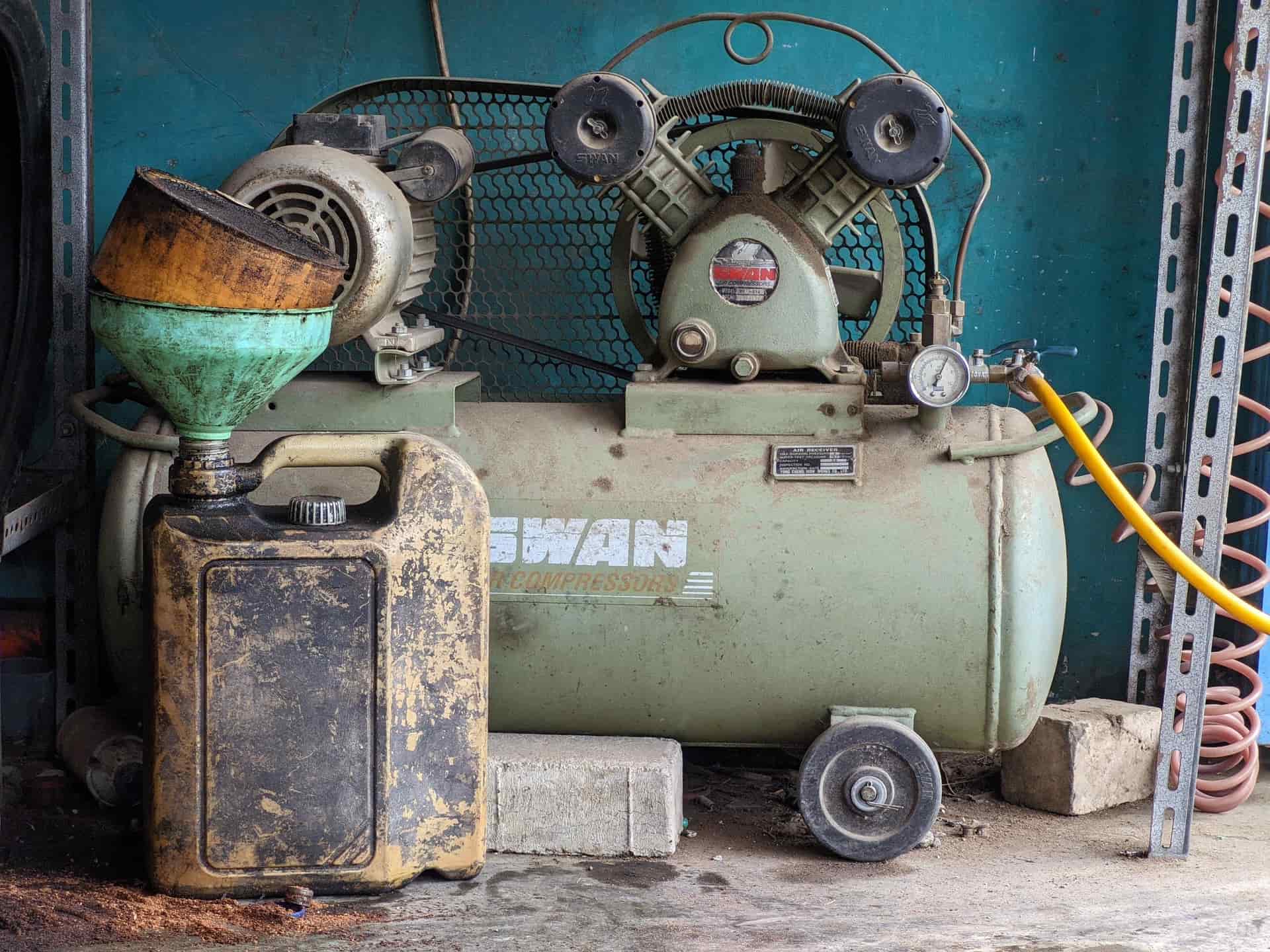
Yes — every plasma cutter needs a gas, because the plasma itself is ionized gas. But on every handheld machine a home shop would buy, that gas is ordinary compressed air from a shop compressor, not a bottled gas you purchase. Hypertherm puts it plainly: air is the most versatile plasma gas, it produces good cut quality and speed on mild steel, stainless and aluminum, and it "lowers the cost of operation because it is not necessary to purchase gases". Some machines go further and carry their own compressor, so there is no external supply at all.
Why people ask this, and why the answer confuses
The question comes from welding. Anyone who has looked at MIG or TIG has already learned that the process needs a shielding gas, that the shielding gas comes in a cylinder, and that the cylinder is usually leased rather than bought.
Plasma uses gas for a completely different purpose. In MIG and TIG the gas shields a molten pool from the atmosphere. In plasma the gas is the cutting medium itself — it is forced through a constricting nozzle, ionized by the arc, and the resulting jet blows the molten metal out of the cut.
Because the gas is doing mechanical work rather than chemical shielding, ordinary air does the job. That is why there is no bottle in the corner of a shop that plasma cuts, and why the running cost of plasma is consumables and electricity rather than gas refills.
| Gas | Used for | Where it comes from | Relevant to a home shop? |
|---|---|---|---|
| Compressed air | Plasma and shield gas on every handheld machine | Your compressor, or a built-in one | Yes — this is the answer |
| Oxygen | Plasma gas for mild steel on industrial systems; air shield | Bottled | No — multi-gas systems only |
| Nitrogen | Plasma gas for stainless and aluminum under 1/2 in | Bottled | No — multi-gas systems only |
| Argon-hydrogen (H-35) | Plasma gas for stainless and aluminum over 1/2 in | Bottled | No — multi-gas systems only |
| Water | Secondary / shield on some industrial systems | Plumbed | No |
What the air actually has to be
"Shop air" is not a low bar, and this is where most disappointing plasma purchases go wrong. Three properties matter.
Clean. Hypertherm's guidance is explicit that shop air must be cleaned to remove contamination. Compressor oil carried into the plasma stream coats the consumables and shortens their life sharply.
Dry. Moisture is the single most common cause of a bad cut. Water in the stream destabilizes the arc, throws the cut off square and wrecks consumables. A tank drain, a water separator and ideally a desiccant filter are part of the machine, not accessories.
Enough of it, continuously. This is volume rather than pressure, and the two get confused constantly. A compressor that reaches the required PSI but cannot sustain the required CFM will cut for twenty seconds and then degrade. Plasma cutter air requirements is the full treatment of CFM and PSI, and why tank size is not the answer.
Never feed a plasma cutter bottled oxygen on a handheld machine
Oxygen is a legitimate industrial plasma gas on systems designed for it, with the torch, consumables and gas console to match. Plumbing a bottle of oxygen into a machine designed for air is not a performance upgrade — it is a fire and equipment hazard. Run what the manufacturer specifies, which on every machine on this site is compressed air.
Machines with a built-in compressor
A small number of machines carry their own compressor, which removes the external air supply entirely. Lincoln's Tomahawk 30 AIR publishes an internal air compressor that needs no external air supply or filter, with an external air connection as standard anyway.
What that genuinely solves: the hidden second purchase. A budget plasma cutter that needs a compressor costing as much again is not a budget plasma cutter, and that arithmetic is what sinks a lot of first plasma buys.
What it costs: capacity, and duty cycle. An internal compressor is sized for the torch it feeds, which constrains the machine to the lower amperage band, and the compressor has a duty cycle of its own on top of the cutter's.
The built-in compressor roundup goes through the trade properly.
What air costs you in cut quality
Air is the right answer for a home shop, and it is not a free one. Hypertherm notes that "some nitriding and oxidation of the cut surface occurs with air plasma", and that "this can cause porosity in welds".
In practice that means an air-plasma cut edge should be cleaned back to bright metal before you weld it. On mild steel a flap disc does it in seconds. On aluminum it matters more, because the oxide is more tenacious and the porosity is more likely.
For cutting parts to shape — which is what a home shop mostly does — none of this is a problem. It only becomes one when the cut face is also the weld prep.
So what does plasma actually cost to run?
Three things, and gas is not one of them.
Consumables. The electrode and nozzle are wear items and they are the dominant running cost. Name-brand consumables last markedly longer than budget equivalents, which is why the cheapest machine is not always the cheapest to own.
Electricity, for both the cutter and the compressor.
Compressor maintenance — draining the tank, changing separator elements, and eventually the compressor itself.
Against a MIG setup with a leased cylinder charging whether you weld or not, that is a genuinely different cost shape. Whether a plasma cutter is worth it adds the numbers up.
What we would buy
Arc & Bead is an Amazon Associate. If you buy through a link on this page we may earn a commission, at no extra cost to you. We have not physically tested the machines on this page and we say so on How We Pick.
1. Needs neither a bottle nor a compressor
Lincoln Electric Tomahawk 30 AIR
Internal compressor, so the gas question disappears entirely.
Lincoln publishes 15 to 30 amps, an internal air compressor that needs no external air supply or filter, a 230-volt single-phase input, a 5/16 inch recommended cut at 22 inches per minute, a 1/2 inch severance cut at 5 ipm, and 40 pounds.
If the gas supply is the thing standing between you and plasma cutting, this machine removes it by design. The air supply is matched to the torch and the moisture handling is built in, which also removes the most common cause of bad cuts.
The trade is capacity — 30 amps rather than 50 — and the internal compressor has a duty cycle of its own, so sustained cutting needs pauses.
What works
- The compressor is inside the machine, so the hidden second purchase that sinks most first plasma buys does not exist
- It takes external air as standard as well, so a shop compressor can carry the long cuts the internal pump has to pause for
- 25 A at a 100% duty cycle is a genuinely continuous rating rather than a figure you have to work around
- Lincoln publishes three years on the machine and a dealer network behind a tool that eats consumables
What does not
- 230 V single phase only. There is no 120 V option, so a garage without a 240 V circuit cannot run it at all
- 40 lb, which is portable for a machine carrying its own compressor but not the under-30-lb class
- Costs multiples of a budget 50 A machine while cutting thinner material
- Buy on the 5/16 in recommended figure: 1/2 in is a severance limit at 5 ipm, not a working thickness
2. Runs on ordinary shop air
Lotos LTP5505D
External compressor, with the pressure regulator and filter already fitted.
Lotos publishes 20 to 55 amps on 220/240 volts and 20 to 35 amps on 110/120 volts, a non-touch pilot arc, a 5/8 inch clean cut at 220 volts, and an external compressor requirement with a built-in pressure regulator.
This is the normal arrangement: the machine takes a hose from a shop compressor and regulates the pressure itself. No bottled gas is involved at any point.
The requirement that is easy to skate over is "clean dry air". A small pancake compressor cannot keep up with a 50-amp machine, and wet air destroys consumables fast.
What works
- Pilot arc means it will start on painted, rusty or galvanized material where a touch-start machine stalls
- 5/8 in clean cut on 240 V is more capacity than most home shops will ever use
- Publishes a complete specification on BOTH supplies — output, clean cut, severance and duty cycle — which most dual-voltage machines do not
What does not
- You must supply clean dry air. A small pancake compressor will not keep up, and wet air destroys consumables fast
- On a 110 V outlet the top end falls from 55 A to 35 A and the clean cut from 5/8 in to 3/8 in
- The output floor is 20 A rather than the 10 A some competing machines publish, so it throttles down less far for thin sheet
- Consumable life is noticeably shorter than Hypertherm's, and the running cost shows it
3. Cheapest pilot arc on shop air
YESWELDER CUT-55DS
Dual voltage with a non-touch pilot arc, fed from a normal compressor.
YESWELDER publishes a 55-amp rating, 110 or 220 volt input, and a non-touch pilot arc.
Pilot arc matters directly to the gas question. A touch-start machine has to make physical contact to establish the arc, which fails on painted, rusty or galvanized stock; a pilot arc ignites in the gas stream itself and does not care what the surface is.
Consumables are the running cost at this end of the market and they do not last like the name brands. Clean dry air extends them noticeably — which is the practical argument for spending on a water separator rather than on the machine.
What works
- Pilot arc at the bottom of the market, which used to mean paying twice as much
- Dual voltage, so a 110 V outlet gets you started
What does not
- Consumables are the running cost and they do not last like the name brands
- Owner feedback reports more variation between units than the established brands
Questions people actually ask
Do plasma cutters need gas?
Yes, but on every handheld machine a home shop would buy, that gas is ordinary compressed air rather than a bottled gas. The plasma is ionized gas forced through a nozzle, and air does the job.
Some machines carry their own internal compressor, so there is no external supply at all. There is no cylinder to lease and nothing to refill.
Can you use a plasma cutter without an air compressor?
Only with a machine that has a compressor built in, such as the Lincoln Tomahawk 30 AIR, which publishes an internal air compressor that needs no external air supply or filter.
Every other handheld machine needs an external compressor supplying clean, dry air at the CFM the manufacturer specifies.
Do plasma cutters use nitrogen or argon?
Industrial multi-gas systems do. Hypertherm's guidance uses nitrogen for stainless and aluminum under about half an inch and an argon-hydrogen mix over it, with oxygen as the plasma gas for mild steel.
Handheld machines are air plasma systems and use air for both the plasma and the shield gas. Switching gases is a property of the equipment, not an upgrade you can buy.
What PSI does a plasma cutter need?
It varies by machine and is published in the manual, but pressure is the easier half of the requirement. The harder one is volume — sustained CFM at that pressure.
A compressor that reaches the stated PSI but cannot sustain the stated CFM will cut briefly and then degrade, which looks exactly like an underpowered machine.
Does moisture in the air ruin a plasma cut?
Yes, and it is the most common fixable cause of poor cuts. Water in the plasma stream destabilizes the arc, throws the cut off square and shortens consumable life sharply.
A tank drain, an inline water separator and a desiccant filter should be treated as part of the machine rather than as accessories.
Sources
- Hypertherm — Gas selection guide for plasma cutting aluminum, stainless steel and mild steel
- Lincoln Electric — Tomahawk 30 AIR (K5457-1) published specifications: internal air compressor with an external air connection standard, 80–110 psi gas pressure, 230 V 1-phase input, 5/16 in recommended cut at 22 ipm
- Lotos Technology — LTP5505D published specifications
- The Fabricator — What gas should welders use for manual plasma cutting
Read next
- Plasma cutter air requirements
How to read CFM and PSI, why tank size is not the answer, and what a compressor must sustain.
- Can plasma cutters cut aluminum?
Yes — and air plasma does it today. What the edge looks like and why it causes weld porosity.
- Is a plasma cutter worth it?
The honest break-even: what plasma does that nothing else does, and the costs beyond the machine.
- The best plasma cutters with a built-in air compressor
Internal-compressor machines: what you trade in capacity, and when that trade is right.
- Plasma cutting for beginners
Standoff, travel speed, drag cutting and piercing — everything from unboxing to a clean cut.
- Level 4 · Plasma: cutting as accurately as you weld
The only rung on this ladder that is about shaping metal rather than joining it — and the one where the machine is the smaller half of the purchase.
Back to Level 4 · Plasma, or start over at Find Your Level.
Ryder M.
Ryder M. is the hands-on owner behind Magoo Media Group. He writes Arc & Bead's buying guides and picks every machine on the site. What every recommendation is based on — and what it is not based on — is set out on How We Pick.