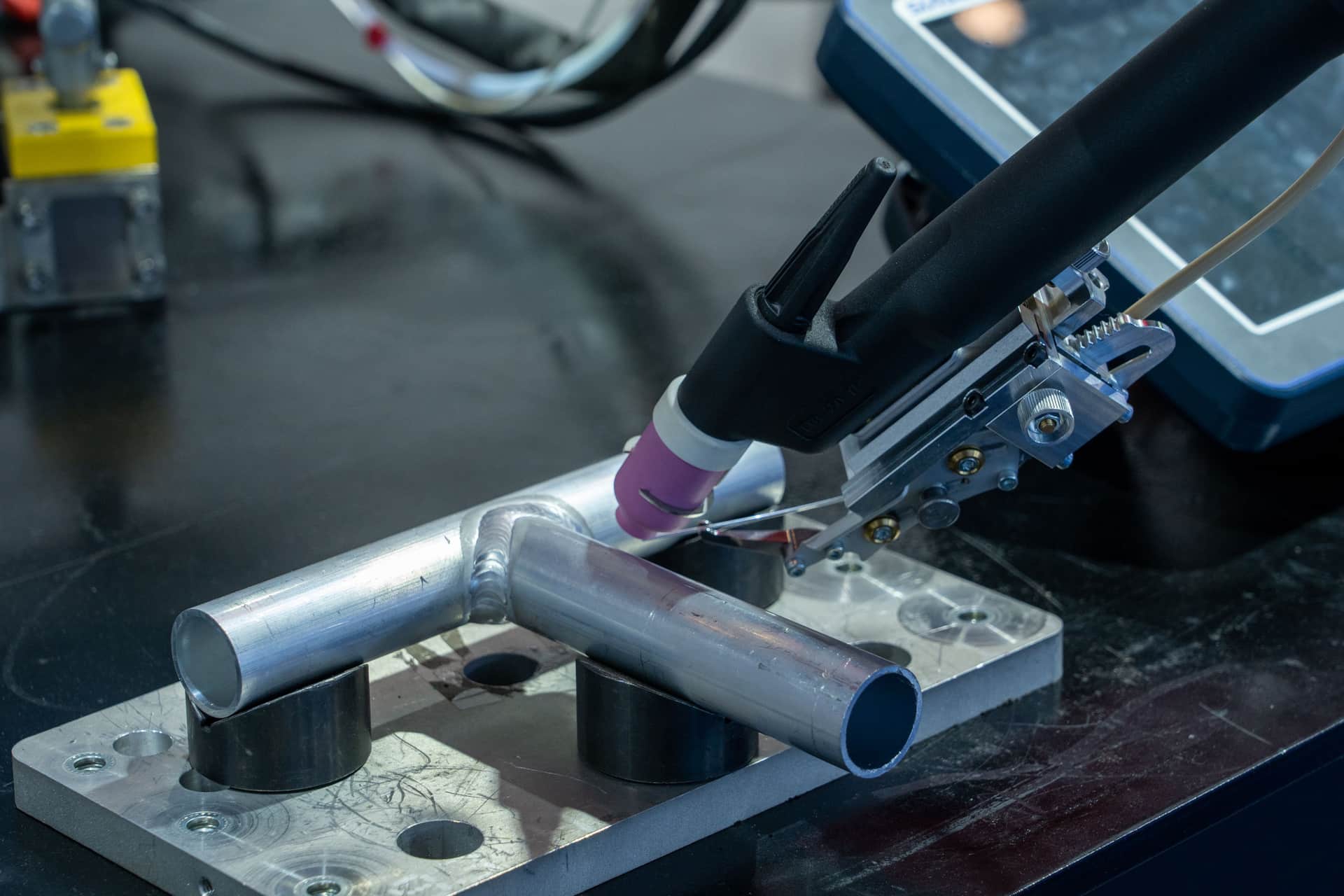
Best first TIG machine
The best TIG welders for beginners
AC/DC machines for a first TIG setup, and why the bundled torch matters as much as the welder.
Our pick: AHP AlphaTIG 200X
Level 3
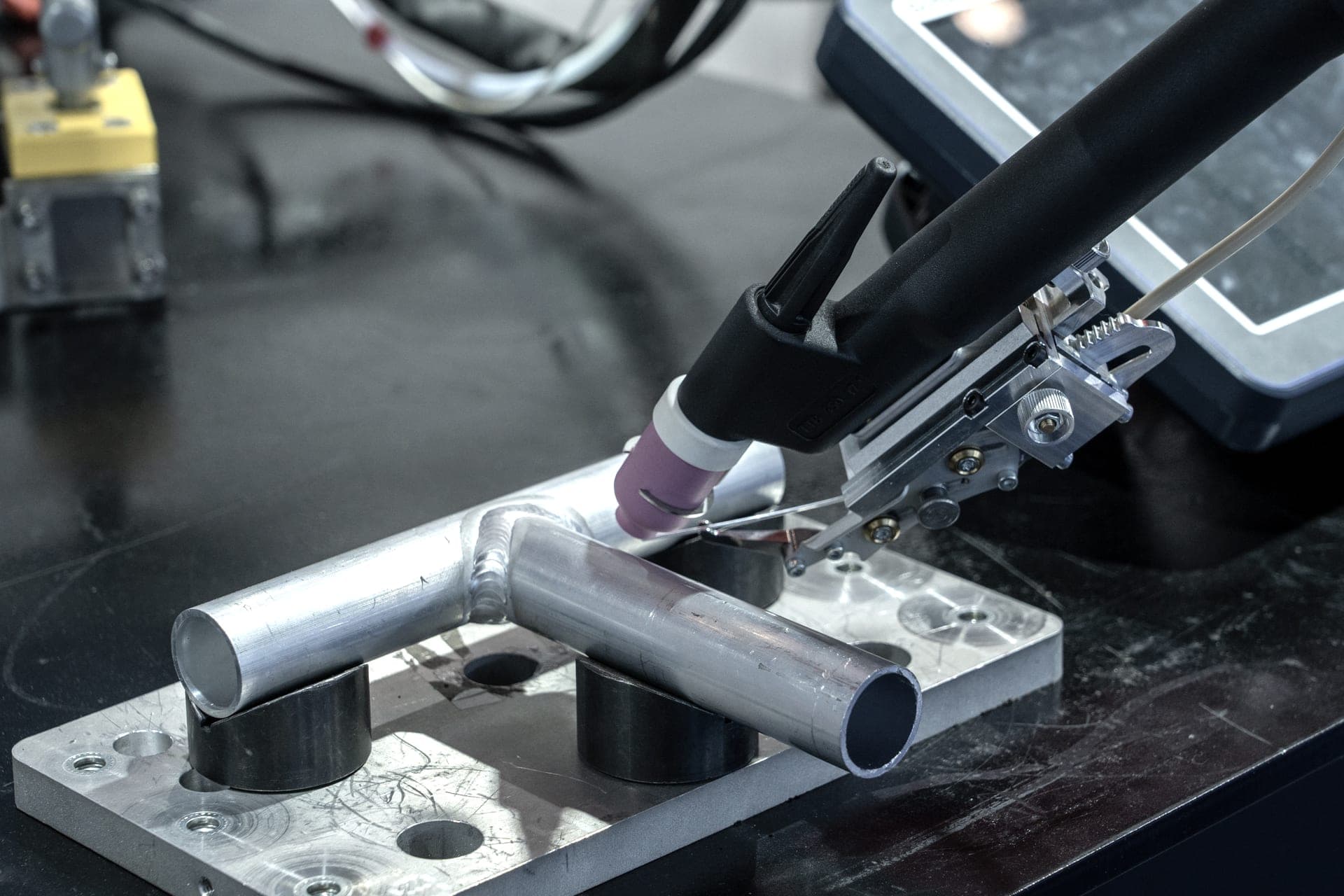
TIG is slower, harder and more expensive than wire welding. It is also the only way to weld aluminum properly at home, and the only way to get a bead you would photograph.
Best first TIG machine
AC/DC at 10 to 200 amps with a 60% duty cycle. The standard first TIG machine.
Everything below this level is about getting metal to stick together reliably. Level 3 is where the weld itself becomes part of the design. It is also where the honest answer to "should I?" is genuinely "it depends what you want to make" rather than "yes, eventually".
TIG is not an upgrade to MIG in the way MIG is an upgrade to flux-core. It is a different craft with different strengths, and a great many extremely competent home fabricators never own a TIG machine because nothing they build needs one.
In MIG, the wire is both the electrode and the filler — it melts into the joint as it feeds, so one trigger controls everything. In TIG, the electrode is tungsten and it does not melt. It exists purely to make the arc. The filler is a separate rod you hold in your other hand and feed into the puddle manually, and the amperage comes from a foot pedal.
That separation is the whole point. Because heat and filler are independent, you can put exactly as much heat into a joint as it needs and exactly as much metal as it needs, which is what makes TIG work on 22-gauge stainless where a wire process would blow straight through.
It is also why it is hard. Three inputs at once, plus the discipline never to let the tungsten touch the puddle — which contaminates it and means stopping, grinding and starting again.
If you read nothing else on this page, read this. DC TIG welds steel and stainless very well and cannot weld aluminum usefully. AC TIG welds aluminum.
The reason is oxide. Aluminum instantly grows an oxide skin that melts at roughly three times the temperature of the aluminum beneath it. On AC, the electrode-positive half of each cycle blasts that oxide apart — the cleaning action — while the electrode-negative half does the heating. That alternation is exactly what aluminum needs, and it is why AC/DC machines cost more than DC-only ones.
So the buying question at Level 3 is not really which machine. It is: will you ever weld aluminum? If yes, buy AC/DC and accept the price. If genuinely never, a DC machine will save you real money and weld steel and stainless beautifully. AC versus DC TIG works through it properly, and TIG welders for aluminum covers the machines if the answer is yes.
Budget AC/DC machines advertise a long list of adjustable parameters. Three of them earn their place.
AC balance sets how much of each cycle is spent cleaning versus penetrating. More cleaning for dirty or anodized aluminum; more penetration for thick, clean material. This is the control you will actually reach for.
AC frequency tightens or widens the arc cone. Higher frequency gives a narrower, more focused arc, which matters on fillets and tight corners.
Pulse alternates between a high and low current many times per second. On thin material it lets you put in enough peak heat to fuse without accumulating enough average heat to burn through.
Everything else on the panel is refinement. A machine with fewer controls and better defaults is often the better first TIG machine, which is the real case for the name-brand options over the parameter-rich budget ones.
TIG has the longest supporting-cost tail of any level here. You need 100% argon, a regulator and a bottle. You need tungsten, and a dedicated grinding wheel for it, because sharing a wheel with steel contaminates the tip and ruins the arc. You need filler rod in the right alloy for the metal, which means stocking more than one. And you need a helmet that triggers reliably at low amperage — a budget lens that fires fine on a 100-amp MIG arc can fail to darken on a 15-amp TIG arc, which is exactly the situation you do not want to discover experimentally. See auto-darkening helmets for what to check.
On power: a 200-amp class machine on a 240-volt circuit is the normal home setup, and the circuit comes first. What size breaker a welder needs is the page to read before you order anything, and circuit work belongs to a licensed electrician.
This one is not about welding at all. It arrives when you notice that the slow, annoying part of every project is no longer joining metal but cutting it — when you are spending forty minutes with an angle grinder to produce a shape you could draw in thirty seconds. That is Level 4 · Plasma, and it is the only rung on this ladder that is about shaping rather than joining.
Best first TIG machine
AC/DC machines for a first TIG setup, and why the bundled torch matters as much as the welder.
Our pick: AHP AlphaTIG 200X

Best for aluminum
AC output, balance and frequency are what weld aluminum. Which machines give real control.
Our pick: PrimeWeld TIG225X
Comparison
What AC output does, why DC cannot weld aluminum, and how to decide before you buy.

Full guide
Torch angle, arc length, feeding rod — the order to learn TIG in so it stops feeling impossible.
Reference
Amperage, tungsten and filler size by metal and thickness, plus symptom-by-symptom diagnosis.
Comparison
How to decide by thickness and by whether the weld will be seen. Both processes work.
Best value AC/DC
What the value end of the AC/DC TIG market compromises, and the upgrade that changes most.
Our pick: AHP AlphaTIG 200X
Ready for the next level?
The signal is specific: cutting has become the slow part of every project.
Gear you need at every level
What you can see and what you can plug in decide more than the machine does.
Not sure you are in the right place?
Four rungs, four machines, and an honest answer about which one is yours.
Not practically. Aluminum carries a tough oxide layer with a far higher melting point than the metal underneath, and AC output is what breaks that oxide up as you weld — the cleaning action happens on the electrode-positive half of the cycle.
On DC, you end up pushing a dirty, gray, unstable puddle around. If aluminum is why you want TIG, you need an AC/DC machine, and there is no accessory that adds AC to a DC machine.
Yes, noticeably. MIG is one control: pull the trigger and steer. TIG asks you to hold a consistent arc length with one hand, feed filler rod with the other, and modulate amperage with a foot pedal, while keeping the tungsten from touching the puddle.
Most people need several hours before their first acceptable bead and several weeks before it is repeatable.
For learning, yes. Amperage control while you weld is how you manage heat going into the joint as the part warms up, and it is most of what makes TIG controllable.
Lift-start TIG on a multiprocess machine without a pedal is a genuinely different skill, and it is not a route into Level 3.
Two percent lanthanated, usually marked with a blue band, is the sensible single choice for a home shop. It works on both AC and DC, so one box covers aluminum and steel.
Thoriated tungsten is still common and works well on DC, but it is mildly radioactive and the grinding dust is the reason most shops have moved away from it.
Manufacturers of 200-amp class AC/DC machines typically publish a capacity of about 3/8 inch on mild steel and about 1/4 inch on aluminum in a single pass.
Aluminum is lower for the same amperage because it conducts heat away from the joint far faster than steel does — you are fighting the whole part, not just the weld.
Ryder M. is the hands-on owner behind Magoo Media Group. He writes Arc & Bead's buying guides and picks every machine on the site. What every recommendation is based on — and what it is not based on — is set out on How We Pick.