The best TIG welders for beginners
One specification decides most of this purchase, and it is not amperage. It is whether the machine has AC output.
Arc & Bead is an Amazon Associate. If you buy through a link on this page we may earn a commission, at no extra cost to you. We have not physically tested the machines on this page and we say so on How We Pick.
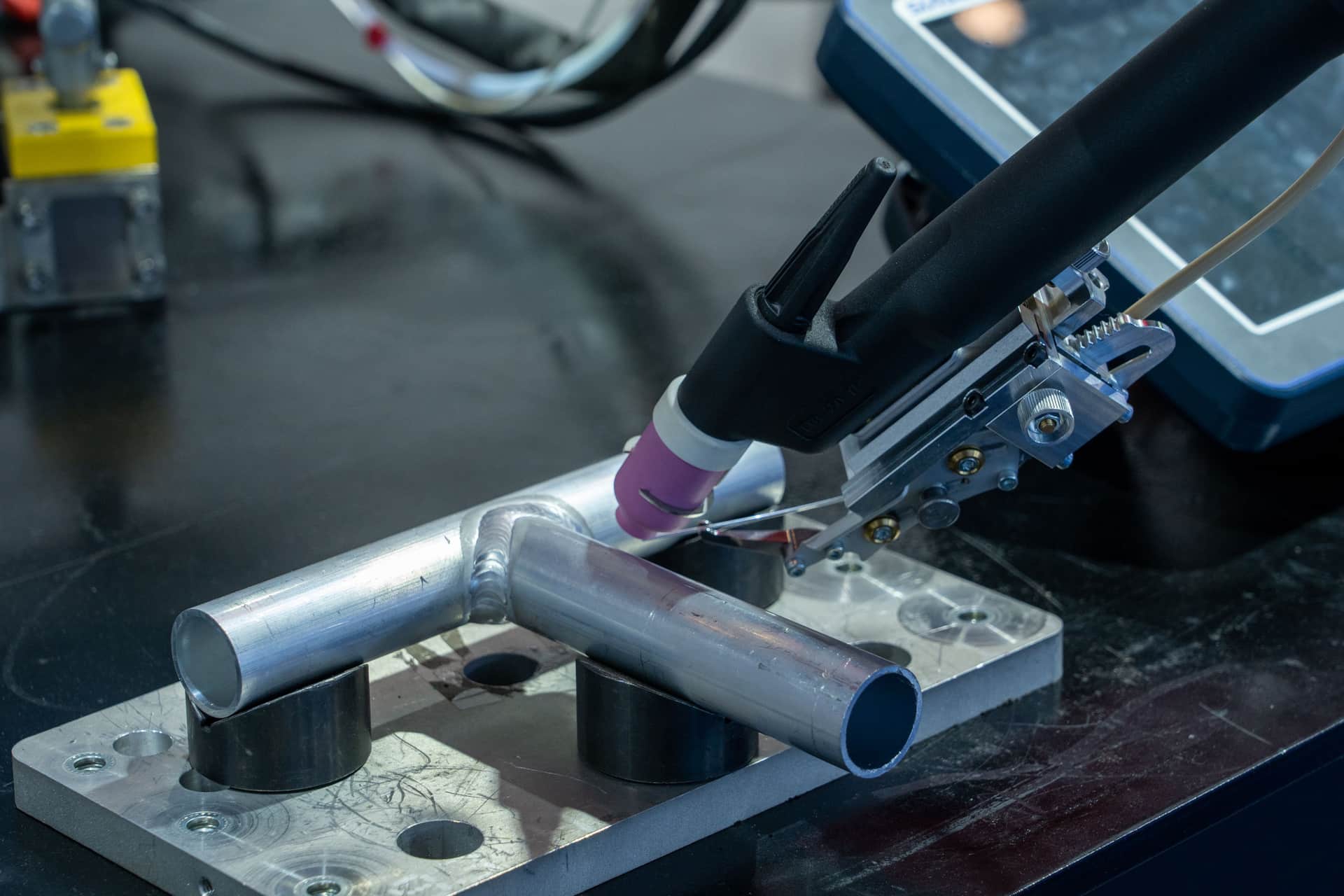
Quick picks
Tap any row to jump to the full write-up further down this page.
| # | Product | Best for | Price |
|---|---|---|---|
| 1 | AHP AlphaTIG 200XAC/DC at 10 to 200 amps with a 60% duty cycle. The standard first TIG machine. | Best overall | |
| 2 | PrimeWeld TIG225XShips with a genuine CK17 torch — the part everyone else upgrades to. | Best equipped out of the box | |
| 3 | Lincoln Electric Square Wave TIG 200Fewer controls and better defaults, with a dealer network behind it. | Simplest to get a usable arc on | |
| 4 |  CK Worldwide 2% lanthanated tungsten electrodesOne tungsten type that works on both AC aluminum and DC steel. | The consumable to start with |
The specification that decides this purchase
AC output. A DC-only TIG machine welds steel and stainless beautifully and cannot weld aluminum usefully — aluminum's oxide layer needs the cleaning action that happens on the electrode-positive half of an AC cycle. No accessory adds AC to a DC machine, and the two are often listed at similar prices with the difference buried in the specification.
So ask one question first
Will you ever weld aluminum?
If yes, buy AC/DC and accept the price. If genuinely never, a DC-only machine saves real money and welds steel and stainless perfectly. AC versus DC TIG covers the mechanism.
The honest observation is that most people asking about TIG are asking because of aluminum, which is why every machine in this roundup is AC/DC.
The controls that actually change the weld
Budget AC/DC machines advertise long parameter lists. Three of them earn their place.
AC balance sets how much of each cycle is spent cleaning oxide versus penetrating. More cleaning for dirty or anodized aluminum; more penetration for thick clean material. This is the control you will actually reach for.
AC frequency tightens or widens the arc cone. Higher frequency gives a narrower, more focused arc, which matters on fillets and in corners.
Pulse alternates between a high and low current many times per second. On thin material it lets you put in enough peak heat to fuse without accumulating enough average heat to burn through.
Everything else is refinement. A machine with fewer controls and better defaults is often the better first TIG machine, which is the real case for the Lincoln over the budget options.
The foot pedal is not optional
Every machine here includes one and it matters more than any specification on this page.
Amperage control while you weld is how you manage heat as the part warms up. A joint that needs 90 amps when cold needs noticeably less after thirty seconds, and without a pedal you cannot respond to that.
This is also why lift-start TIG on a multiprocess machine is not a route into Level 3. It is genuinely useful for occasional work; it is a different skill, and it teaches you a different thing. Multiprocess welders covers that distinction properly.
What else the setup needs
TIG has the longest supporting-cost tail of any level on this site, and the machine is often the smaller part.
100% argon and a regulator. Not 75/25 — the CO2 destroys the tungsten. If you already run MIG, that is a second cylinder.
Tungsten and a dedicated grinding wheel. Sharing a wheel with steel contaminates the tip.
Filler rod in the right alloy for each metal — ER70S-2 for steel, ER308L for stainless, ER4043 or ER5356 for aluminum. That is three products, not one.
Thin gloves. You feed filler rod by feel, and thick MIG gloves make that impossible — gloves and jackets.
A helmet that triggers at low amperage. This is the one people discover the hard way: a lens that fires reliably on a 100-amp MIG arc can fail to darken on a 15-amp TIG arc. Auto-darkening helmets covers which ones publish a minimum amperage rating.
Power, before anything else
A 200-amp class machine on a 240-volt circuit is the normal home setup, and the circuit comes first. What size breaker a welder needs covers what to tell an electrician. Your machine's manual governs its requirements, and circuit work belongs to a licensed electrician.
1. Best overall
AHP AlphaTIG 200X
AC/DC at 10 to 200 amps with a 60% duty cycle. The standard first TIG machine.
AHP publishes AC/DC TIG at 10 to 200 amps, a 60% duty cycle at 200 amps, 35% at 155 amps on stick, capacity of 24 gauge to three-eighths of an inch on mild steel and to a quarter inch on aluminum, AC balance adjustable from 30 to 70 percent, and 50 pounds.
This has been the default first AC/DC TIG machine for years for a straightforward reason: AC output at a price that used to buy DC only. Sixty percent duty cycle at 200 amps is also a genuinely high rating — far beyond what home use demands, which means the machine is never the limit.
Adjustable AC balance is the control that matters most for aluminum. It lets you trade oxide cleaning against penetration instead of accepting one fixed compromise, and it is the difference between fighting dirty aluminum and simply turning a dial.
Two honest caveats: the bundled torch and consumables are the first thing most owners replace, and the manual is thin enough that you should budget time for learning the machine as well as the process.
What works
- AC output is what makes aluminum possible at all — this is the cheapest widely supported machine that has it
- 60% duty cycle at 200 A is a genuinely high rating for the price
- Adjustable AC balance lets you trade cleaning action against penetration instead of accepting one compromise
What does not
- The bundled torch and consumables are the first thing most owners replace
- The manual is thin. Budget time for learning the machine as well as the process
- 50 lb and a foot pedal means it lives in one place
2. Best equipped out of the box
PrimeWeld TIG225X
Ships with a genuine CK17 torch — the part everyone else upgrades to.
PrimeWeld publishes AC/DC TIG at 10 to 225 amps — 145 on 110 volts, 225 on 220 volts — a 40% duty cycle at maximum output, mild steel to three-eighths and aluminum to a quarter inch, with adjustable AC balance, AC frequency and pulse, and a genuine CK Worldwide CK17 flex-head torch with a Superflex lead.
The torch is the reason this costs more than the AlphaTIG, and it is a real difference rather than a marketing one. The CK17 is the torch most budget-machine owners buy separately within a year, and a flexible head genuinely changes what angles you can reach on a real part.
Auto voltage detection is a small mercy: no switch to set wrong.
Its 40% duty cycle at maximum is lower than the AlphaTIG's 60%, though both are well beyond hobby demand.
What works
- It ships with a genuine CK Worldwide CK17 torch — the part everyone else upgrades to, included
- Auto voltage detection means no switch to set wrong
- Adjustable AC balance, AC frequency and pulse — the three controls that actually change how aluminum behaves
What does not
- 40% duty cycle at maximum is lower than the AlphaTIG's 60%, though both are far beyond hobby demand
- Costs meaningfully more than the AlphaTIG; the CK torch accounts for a good part of it
- Like every AC/DC inverter in this class it is heavy and wants a permanent bench spot
3. Simplest to get a usable arc on
Lincoln Electric Square Wave TIG 200
Fewer controls and better defaults, with a dealer network behind it.
Lincoln publishes AC/DC TIG and stick at up to 200 amps, on 120 or 230 volts.
The deliberately simple front panel is the point rather than a limitation. A first TIG machine with fewer parameters and better defaults gets you to a usable arc faster than one with a dozen adjustments you cannot yet use meaningfully.
Lincoln's dealer and service network is also the best in this category, which matters if something goes wrong.
You pay substantially more than the AlphaTIG for comparable output, and you get fewer waveform and pulse adjustments — which is the trade for the simpler panel.
What works
- Deliberately simple front panel — fewer controls, better defaults, faster to get a usable arc
- Lincoln's dealer and service network is the best in the category if something goes wrong
What does not
- Costs substantially more than the AlphaTIG for comparable output
- Fewer waveform and pulse adjustments than the budget machines, which is the trade for the simpler panel
4. The consumable to start with
CK Worldwide 2% lanthanated tungsten electrodes
One tungsten type that works on both AC aluminum and DC steel.
Two percent lanthanated tungsten — blue band — works on AC and DC, so one box covers aluminum and steel and you stop thinking about it. Common sizes are 1/16, 3/32 and 1/8 inch.
It also contains no thorium, so grinding dust carries no radioactive-material handling question. Thoriated tungsten still works well on DC and is still widely sold; most shops have moved away from it for exactly this reason.
It needs a dedicated grinding wheel. Sharing a wheel with steel embeds particles in the tip and contaminates the arc, which is a frustrating problem to diagnose.
What works
- Works on AC and DC, so one box covers aluminum and steel and you stop thinking about it
- Contains no thorium, so grinding dust carries no radioactive-material handling question
What does not
- More expensive per electrode than unbranded tungsten of the same designation
- Still needs a dedicated grinding wheel — sharing a wheel with steel contaminates the tip
Questions people actually ask
What is the best TIG welder for a beginner?
An AC/DC machine in the 200-amp class with a foot pedal, adjustable AC balance, and a torch you will not immediately want to replace.
The AHP AlphaTIG 200X is the usual starting point on price; the PrimeWeld TIG225X costs more and ships with a genuine CK17 torch, which is the part most budget-machine owners buy separately anyway.
Do I need AC/DC or will DC do?
DC only welds steel and stainless very well and cannot weld aluminum usefully. AC output is what breaks up aluminum's oxide layer.
If aluminum is anywhere in your plans, you need AC/DC — there is no accessory that adds AC to a DC machine.
Is a foot pedal necessary?
For learning, yes. Amperage control while you weld is how you manage heat as the part warms up, and it is most of what makes TIG controllable.
Lift-start TIG without a pedal is a genuinely different skill and is not a route into proper TIG welding.
How thick can a 200-amp TIG machine weld?
Manufacturers of 200-amp class AC/DC machines typically publish about 3/8 inch on mild steel and about 1/4 inch on aluminum in a single pass.
Aluminum is lower at the same amperage because it conducts heat away from the joint far faster than steel, so you are heating the whole part.
What tungsten should I buy?
Two percent lanthanated, blue band, in 1/16, 3/32 and 1/8 inch. It works on both AC and DC, so one box covers aluminum and steel.
It also contains no thorium, so the grinding dust carries no radioactive-material handling question. It needs a dedicated grinding wheel — sharing one with steel contaminates the tip.
Sources
Read next
- AC vs DC TIG: which do you actually need?
What AC output does, why DC cannot weld aluminum, and how to decide before you buy.
- TIG welding for beginners
Torch angle, arc length, feeding rod — the order to learn TIG in so it stops feeling impossible.
- The best TIG welders for aluminum
AC output, balance and frequency are what weld aluminum. Which machines give real control.
- MIG vs TIG welding: which should you learn?
One control versus three. What that difference buys, and the jobs only one of them can do.
- The best auto-darkening welding helmets
Viewing area, optical clarity and low-amperage triggering, compared across four helmets.
- Level 3 · TIG: aluminum, stainless, and welds you meant to look like that
TIG is slower, harder and more expensive than wire welding. It is also the only way to weld aluminum properly at home, and the only way to get a bead you would photograph.
Back to Level 3 · TIG, or start over at Find Your Level.
Ryder M.
Ryder M. is the hands-on owner behind Magoo Media Group. He writes Arc & Bead's buying guides and picks every machine on the site. What every recommendation is based on — and what it is not based on — is set out on How We Pick.