The best value AC/DC TIG welders
People search this by price. We cannot quote one — but we can tell you exactly what the value end of this market compromises, and what it does not.
Arc & Bead is an Amazon Associate. If you buy through a link on this page we may earn a commission, at no extra cost to you. We have not physically tested the machines on this page and we say so on How We Pick.
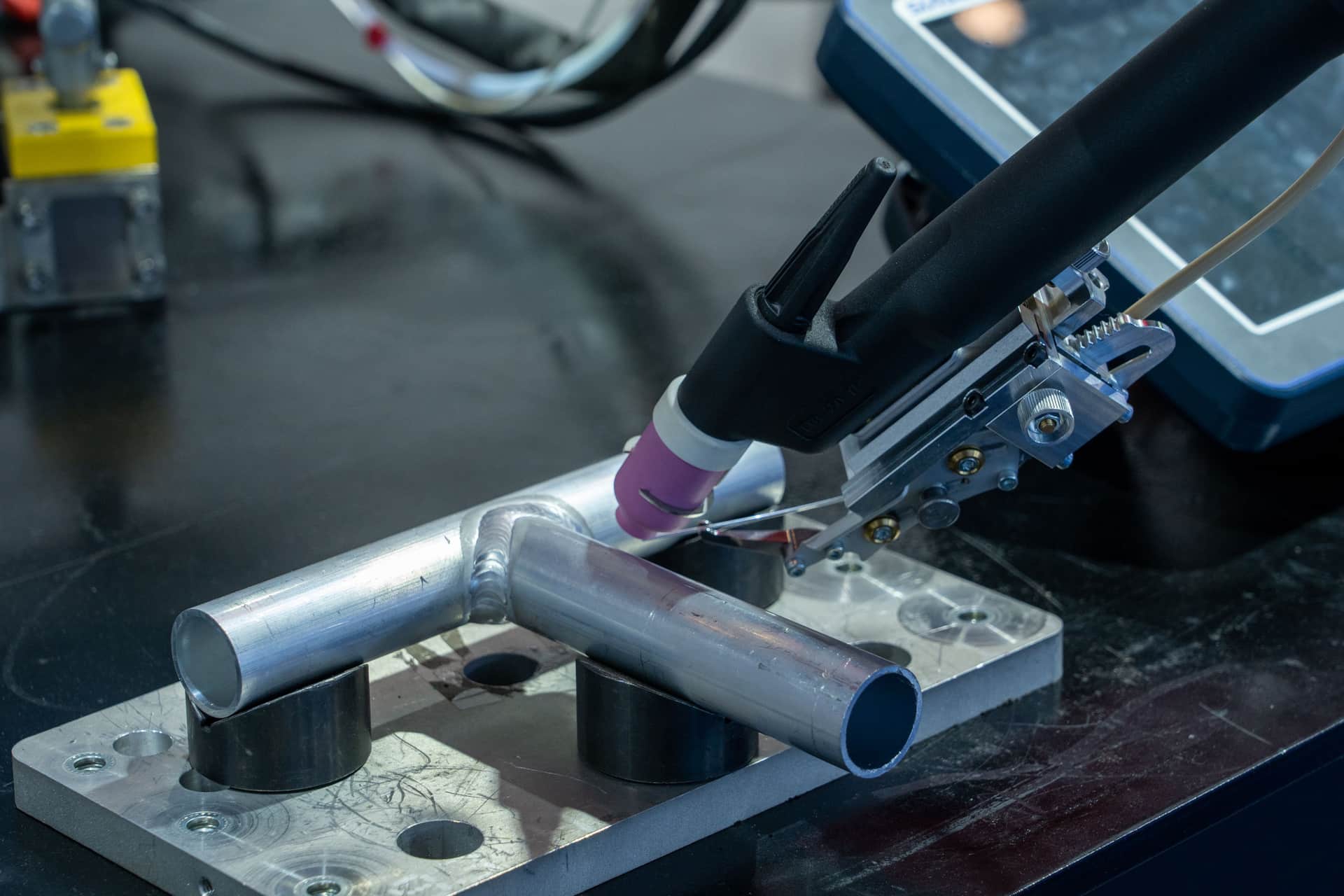
Quick picks
Tap any row to jump to the full write-up further down this page.
| # | Product | Best for | Price |
|---|---|---|---|
| 1 | AHP AlphaTIG 200XAC/DC, 200 amps, 60% duty cycle and adjustable AC balance. The benchmark here. | Best value overall | |
| 2 | YESWELDER TIG-250PDC only, with pulse, at well below AC/DC money. | Cheapest capable TIG, with one big caveat | |
| 3 | PrimeWeld TIG225XShips with a genuine CK17 torch, which is the upgrade everyone else buys anyway. | Worth stretching for | |
| 4 |  CK Worldwide 2% lanthanated tungsten electrodesGood tungsten and a dedicated wheel fix more arc problems than a better machine would. | The cheap upgrade that matters most |
Why there are no prices here
Arc & Bead has no live price feed, so any figure we printed would be a snapshot we could not keep current — and on a page people find by searching a price bracket, a stale figure is worse than none. Every button links to the current price at the retailer. What does not change is which machines sit at this end and what they compromise.
What you genuinely give up
The bundled torch. Consistently the weakest part of a value AC/DC machine. Stiff leads, poor ergonomics, and consumables that do not quite fit. It is also the easiest thing to fix, and it is what most owners replace first.
Documentation. Thin manuals with sparse guidance on what the parameters do. On a machine with adjustable AC balance, frequency and pulse, that matters — you are given controls with no explanation of them.
Dealer support. Compared with Lincoln or Miller, the network is thinner and warranty handling is slower.
Unit-to-unit consistency. Owner reports at this end show more variation than from the established brands. Most machines are fine; the tail is longer.
What you do not give up
AC output. The capability that decides whether you can weld aluminum at all is present, and it works.
Real duty cycles. The published figures are genuinely generous — 60% at 200 amps on the AlphaTIG is beyond what home use demands.
The controls that matter. AC balance, and usually frequency and pulse. A value machine often has more adjustable parameters than a name-brand one, not fewer.
A foot pedal. Included, and it works.
The upgrade order for a budget machine
If you buy at this end and want to improve the experience, the order is not obvious.
First, the consumables. Good tungsten, a dedicated grinding wheel, and a gas lens. This is cheap and it fixes a genuine share of the arc problems people blame on the machine.
Second, the torch. A CK17 or similar flex-head torch with a flexible lead. This is the single biggest improvement to how the machine feels to use.
Third, the helmet — if low-amperage triggering is letting you down. Auto-darkening helmets covers which ones publish a minimum amperage rating.
The machine itself, last. By the time you have done the first three, most people find the machine was never the limitation.
The DC-only temptation
The largest saving available on this page is buying DC only, and it is worth being explicit about the trade because the price gap is genuinely tempting.
DC TIG welds steel and stainless very well. It cannot weld aluminum, no accessory adds AC, and the two are often listed at similar-looking prices with the difference buried in a specification list.
So the question is simply: will you ever weld aluminum? If there is real doubt, buy AC/DC — the cost of guessing wrong is a second machine, which is far more than the premium. AC versus DC TIG covers the mechanism.
Budget for the setup, not just the machine
TIG has the longest supporting-cost tail of any process on this site: argon and a regulator, tungsten and a dedicated grinding wheel, collets, cups and gas lenses, filler rod in several alloys, thin gloves, and possibly a better helmet.
Buying the cheapest machine and none of that produces a frustrating experience that looks like a machine problem.
1. Best value overall
AHP AlphaTIG 200X
AC/DC, 200 amps, 60% duty cycle and adjustable AC balance. The benchmark here.
AHP publishes AC/DC TIG at 10 to 200 amps, a 60% duty cycle at 200 amps, AC balance from 30 to 70 percent, capacity of 24 gauge to three-eighths of an inch on steel and to a quarter inch on aluminum, and 50 pounds.
This machine defined the value end of the AC/DC market. AC output at a price that previously bought DC only is the whole proposition, and the 60% duty cycle at maximum is genuinely generous.
The compromises are the torch and the documentation, in that order. Both are fixable — the torch by replacing it, the documentation by patience.
What works
- AC output is what makes aluminum possible at all — this is the cheapest widely supported machine that has it
- 60% duty cycle at 200 A is a genuinely high rating for the price
- Adjustable AC balance lets you trade cleaning action against penetration instead of accepting one compromise
What does not
- The bundled torch and consumables are the first thing most owners replace
- The manual is thin. Budget time for learning the machine as well as the process
- 50 lb and a foot pedal means it lives in one place
2. Cheapest capable TIG, with one big caveat
YESWELDER TIG-250P
DC only, with pulse, at well below AC/DC money.
YESWELDER publishes DC TIG and stick at up to 250 amps on 110 or 220 volts, with pulse.
If you genuinely never need aluminum, this is a lot of DC TIG capability for the money, and pulse on stainless is a real feature rather than a specification.
The caveat is absolute and has to be stated plainly: no AC means no aluminum, ever, and no accessory changes that. Buying this and then wanting aluminum means buying a second machine.
What works
- Pulse TIG on steel and stainless at a price well below any AC/DC machine
- If you never intend to weld aluminum, you are not paying for AC you will not use
What does not
- DC only. It cannot weld aluminum, and no accessory changes that
- Buying it and then wanting aluminum means buying a second machine
Who this is wrong for: Anyone whose reason for moving to TIG is aluminum. DC cannot weld it, and this is the one TIG specification you cannot change later.
3. Worth stretching for
PrimeWeld TIG225X
Ships with a genuine CK17 torch, which is the upgrade everyone else buys anyway.
PrimeWeld publishes AC/DC TIG at 10 to 225 amps, auto voltage detection, a 40% duty cycle at maximum, adjustable AC balance, frequency and pulse, and a genuine CK Worldwide CK17 flex-head torch with a Superflex lead.
The reason this belongs on a value page is arithmetic: the torch is the first thing most budget-machine owners replace, and a CK17 bought separately closes much of the price gap. Buying it included is often the better value.
What works
- It ships with a genuine CK Worldwide CK17 torch — the part everyone else upgrades to, included
- Auto voltage detection means no switch to set wrong
- Adjustable AC balance, AC frequency and pulse — the three controls that actually change how aluminum behaves
What does not
- 40% duty cycle at maximum is lower than the AlphaTIG's 60%, though both are far beyond hobby demand
- Costs meaningfully more than the AlphaTIG; the CK torch accounts for a good part of it
- Like every AC/DC inverter in this class it is heavy and wants a permanent bench spot
4. The cheap upgrade that matters most
CK Worldwide 2% lanthanated tungsten electrodes
Good tungsten and a dedicated wheel fix more arc problems than a better machine would.
Before upgrading a budget TIG machine, upgrade the consumables. A surprising share of "this machine has a wandering arc" complaints are contaminated or badly ground tungsten rather than the inverter.
Two percent lanthanated works on AC and DC, so one box covers everything. Keep a grinding wheel exclusively for it — a shared wheel embeds steel particles in the tip and produces exactly the instability people blame the machine for.
What works
- Works on AC and DC, so one box covers aluminum and steel and you stop thinking about it
- Contains no thorium, so grinding dust carries no radioactive-material handling question
What does not
- More expensive per electrode than unbranded tungsten of the same designation
- Still needs a dedicated grinding wheel — sharing a wheel with steel contaminates the tip
Questions people actually ask
Why do you not show prices?
Because this site has no live price feed, so any figure we published would be a snapshot we could not keep current.
On a page people find by searching a price bracket that is especially misleading, so every button links to the current price at the retailer instead.
Is a budget AC/DC TIG welder any good?
Yes, within known limits. The AC output works, the published duty cycles are generous, and the controls that matter are present — often more of them than on a name-brand machine.
What you give up is the bundled torch, the documentation, dealer support and unit-to-unit consistency.
What should I upgrade first on a budget TIG machine?
Consumables, then the torch. Good tungsten, a dedicated grinding wheel and a gas lens fix a genuine share of the arc problems people blame on the inverter.
After that, a flex-head torch such as a CK17 is the biggest improvement to how the machine feels.
Should I buy DC only to save money?
Only if you are certain you will never weld aluminum. DC cannot weld it, no accessory adds AC, and the cost of guessing wrong is a second machine.
Most people who move to TIG do so because of aluminum, which is why AC/DC is the standard recommendation.
Is a name-brand TIG machine worth the extra?
You are buying dealer support, documentation and consistency rather than capability — budget machines often have more adjustable parameters, not fewer.
If you value a simple panel with good defaults and a service network behind it, that is a reasonable thing to pay for.
Sources
Read next
- The best TIG welders for beginners
AC/DC machines for a first TIG setup, and why the bundled torch matters as much as the welder.
- AC vs DC TIG: which do you actually need?
What AC output does, why DC cannot weld aluminum, and how to decide before you buy.
- The best TIG welders for aluminum
AC output, balance and frequency are what weld aluminum. Which machines give real control.
- TIG welding for beginners
Torch angle, arc length, feeding rod — the order to learn TIG in so it stops feeling impossible.
- Level 3 · TIG: aluminum, stainless, and welds you meant to look like that
TIG is slower, harder and more expensive than wire welding. It is also the only way to weld aluminum properly at home, and the only way to get a bead you would photograph.
Back to Level 3 · TIG, or start over at Find Your Level.
Ryder M.
Ryder M. is the hands-on owner behind Magoo Media Group. He writes Arc & Bead's buying guides and picks every machine on the site. What every recommendation is based on — and what it is not based on — is set out on How We Pick.