Best TIG Welders With a Foot Pedal
The pedal is not an accessory. It is the amperage control, and on a TIG machine that makes it the difference between welding and watching. These are the machines that include one.
Arc & Bead is an Amazon Associate. If you buy through a link on this page we may earn a commission, at no extra cost to you. We have not physically tested the machines on this page and we say so on How We Pick.
Quick picks
Tap any row to jump to the full write-up further down this page.
| # | Product | Best for | Price |
|---|---|---|---|
| 1 | 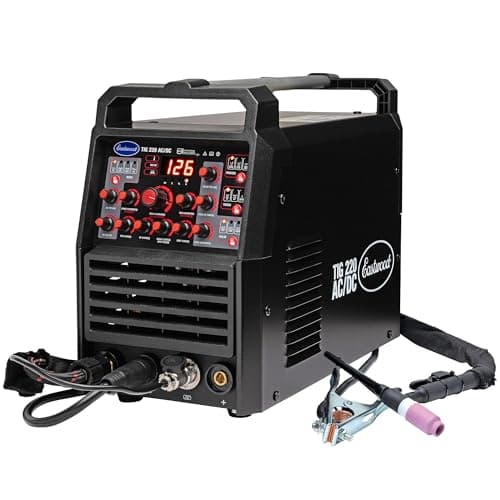 Eastwood TIG 220 AC/DCA pedal on a 16 ft cable and a gas-lens flex torch in the same box, on a machine that publishes 10–220 A and states what it does on 120 V. | Best pedal package overall | $1,019.99 · View on Amazon #ad How this is funded · Price as of November 13, 2026 |
| 2 | 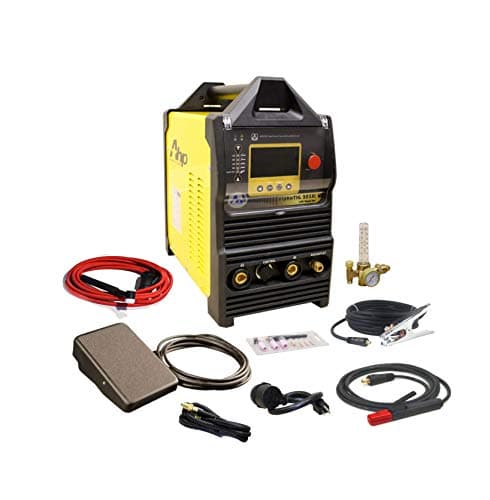 AHP AlphaTIG 200XPedal included, AC balance from 30 to 70%, and a published 60% duty cycle at 200 A — the cheapest complete AC/DC TIG setup here. | Best pedal machine for the money | $689.00 · View on Amazon #ad How this is funded · Price as of November 13, 2026 |
| 3 | 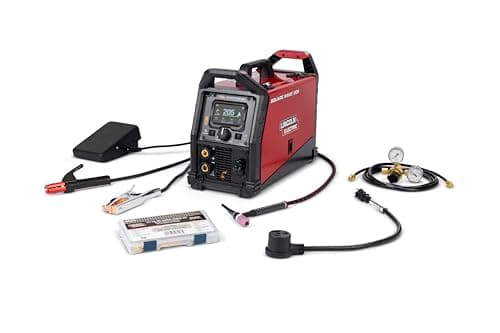 Lincoln Electric Square Wave 205Ships with a Foot Amptrol and the rest of a working setup, behind the best dealer network in the category. | Best supported pedal machine | $1,598.99 · View on Amazon #ad How this is funded · Price as of November 13, 2026 |
The best TIG welder with a foot pedal
The Eastwood TIG 220 AC/DC is the best TIG welder with a foot pedal included, because it pairs a pedal on a 16 ft cable with a gas-lens flex torch, a 10–220 A range and a published 10–140 A figure on a household circuit. The AHP AlphaTIG 200X is the cheapest complete pedal setup, with AC balance 30–70% and a 60% duty cycle at 200 A, and the Lincoln Square Wave 205 is the best-supported, shipping with a Foot Amptrol and a Caliber 17 torch. Budget DC machines such as the ARCCAPTAIN TIG200P and YESWELDER TIG-205P sell the pedal separately — which is a real cost, not a footnote.
Almost every TIG machine in this price range has a 5-pin socket on the front and will accept a pedal. That is not the same as including one, and the gap between those two facts is where a lot of first TIG purchases go slightly wrong.
What the pedal actually does
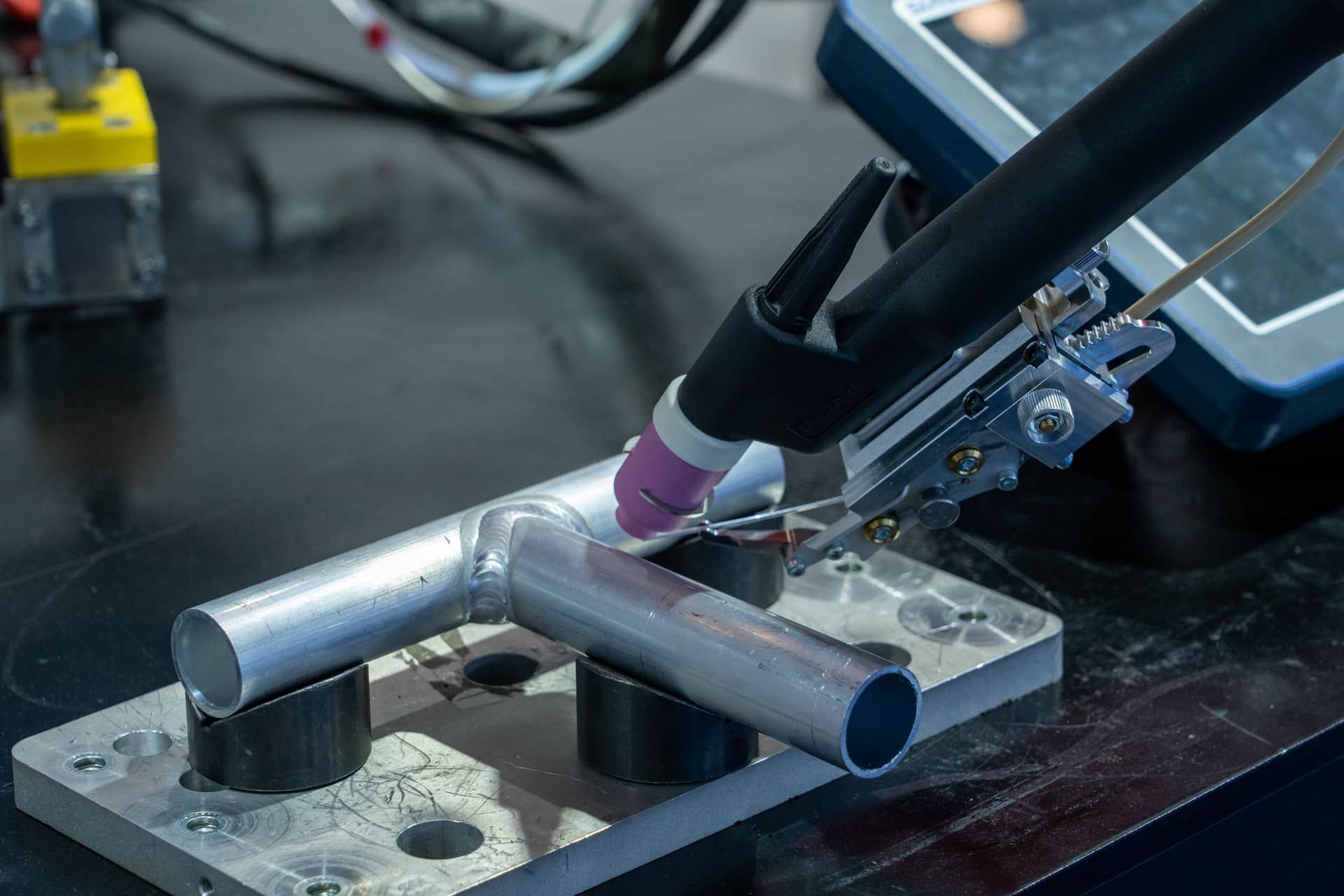
On a MIG welder you set the voltage and wire speed, pull the trigger and the machine holds that output. On a TIG welder the pedal is the amperage control, live, while you weld. Press to add heat, ease off to take it away.
That matters because of a problem specific to TIG: the joint gets hotter as you travel along it. The current that started the puddle cleanly will be burning through by the time you are four inches down the seam. With a pedal you simply back off as you go. Without one, you are fixed at a single current and have to compensate with travel speed and arc length instead — two variables you are already struggling to hold steady while you are learning.
The pedal is also how you finish a weld. Taper the current down at the end of a bead and the puddle solidifies gradually; chop the arc at full current and you leave a crater that cracks. How to get good TIG welds covers the start-and-stop defects that come from exactly this.
Pedal included, or pedal extra
| Machine | Pedal in the box | AC output | Low end of range | Duty cycle |
|---|---|---|---|---|
| Eastwood TIG 220 AC/DC | Yes, 16 ft cable | Yes | 10 A | AC TIG 40% at 220 A; 60% at 179 A |
| AHP AlphaTIG 200X | Yes | Yes | 10 A | 60% at 200 A TIG |
| Lincoln Square Wave 205 | Yes, Foot Amptrol | Yes | 8 A | 25% at 200 A TIG |
| ARCCAPTAIN TIG200P | No — separate purchase | No, DC only | 10 A | 60% |
| YESWELDER TIG-205P | No — 5-pin socket, pedal sold separately | No, DC only | Not published | Not published |
The two machines at the bottom are good machines, and both are considerably cheaper. The point of including them is arithmetic: add a pedal and a better torch to a budget DC machine and the gap to an AC/DC machine with both included gets narrow — while the DC machine still cannot weld aluminum.
Can you TIG weld without a foot pedal?
Yes, and there are two ways. The first is a torch-mounted amperage control — a thumbwheel or slider on the torch body. That is the right answer when you are welding out of position, up a ladder or lying under something, because there is nowhere to put a foot.
The second is to weld at a fixed current with the torch trigger only. This is how lift-TIG on a multiprocess machine works, and it is genuinely fine for short, repetitive joints in material of one thickness. It is a poor way to learn, because every correction you would have made with your foot has to be made with your hands instead.
If the machine you want sells the pedal separately
Buy the pedal with the machine, not later. A generic pedal has to match your machine's connector and its internal potentiometer range, and matching those after the fact is how people end up with a pedal that only works over half its travel. Where the manufacturer sells its own pedal, that is the one to buy.
What else to budget alongside
A pedal does not change the rest of the setup. You still need 100% argon and a flowmeter regulator, tungsten, filler rod, thin gloves you can feel a rod through, and a helmet that will trigger on a low-amperage arc — which is a specification most MIG helmets do not publish. Welding helmets for TIG explains why that matters more on this process than any other.
If aluminum is the reason you want a pedal — and it often is, because aluminum is where live heat control pays off most — affordable TIG welders for aluminum is the same shortlist viewed through the AC requirement.
Which one to buy
For the best complete package: the Eastwood TIG 220 AC/DC. Pedal on a 16 ft cable, a gas-lens flex torch, an argon regulator, 10–220 A and nothing you will immediately want to replace.
For the cheapest complete setup: the AHP AlphaTIG 200X. Pedal, AC balance and a 60% duty cycle at 200 A, at the lowest price those arrive together.
If parts and support decide it: the Lincoln Square Wave 205. The Amptrol is a catalogue part, and pedals are the part that gets destroyed.
We have welded with none of these machines. The ranking is built from published specifications plus retailer confirmation of box contents — how we pick sets out what that does and does not mean.
1. Best pedal package overall
Eastwood TIG 220 AC/DC
A pedal on a 16 ft cable and a gas-lens flex torch in the same box, on a machine that publishes 10–220 A and states what it does on 120 V.
Eastwood publishes AC/DC TIG and stick, 120 V or 240 V single-phase input, TIG output of 10 to 220 A on 240 V and 10 to 140 A on 120 V, an AC TIG duty cycle of 40% at the full 220 A and 60% at 179 A, and capacity to 1/4 inch. The box includes a foot pedal on a 16 foot cable assembly and a flex-head WP-17F torch on a 12 foot lead with the gas-lens collet body, collet and number 8 cup already fitted.
The pedal cable length matters more than the spec sheets let on. Sixteen feet is enough that the machine can sit where the extraction and the bottle are while the pedal sits where your foot is, which is the difference between modulating heat properly and working at whatever distance the cable allows. On a process where you change current continuously as the joint heats up, that is the control.
The 10 A low end is the other half of the story. A pedal is only as useful as the machine's lowest stable current, because the bottom of the pedal travel is where you start an arc on thin stock and where you taper out to avoid a crater at the end of a bead.
Honest cost: Eastwood does not publish the pedal's pivot type, so if a rocker action specifically is what you want, confirm it on the listing in front of you. Its 40% duty cycle at the full 220 A is also lower than the AlphaTIG's 60% at 200 A.
What works
- It publishes both supply figures — 10 to 220 A on 240 V and 10 to 140 A on 120 V — so you can size the circuit before you buy instead of after
- Adjustable AC balance and AC frequency plus pulse frequency, peak on-time and base current: the controls that actually change how aluminum behaves
- Flex-head torch with a gas-lens kit, foot pedal, argon regulator/flowmeter and ground clamp are all in the box. Only the gas bottle is extra
- 22.93 lb. Almost nothing else in the AC/DC class is light enough to carry to the work rather than the other way round
What does not
- The 40% duty cycle applies at the full 220 A in AC TIG; the 60% figure is at 179 A. The AlphaTIG publishes 60% at 200 A
- The bundled torch is a WP-17 pattern — widely supported and cheap on consumables, but not a branded premium torch
- Full output needs the 240 V circuit. On 120 V Eastwood publishes 140 A in TIG and 120 A in stick, roughly two-thirds of the machine
- Eastwood publishes one 1/4 in capacity figure for the machine rather than separate steel and aluminum numbers, so there is less to compare on than some rivals give you
2. Best pedal machine for the money
AHP AlphaTIG 200X
Pedal included, AC balance from 30 to 70%, and a published 60% duty cycle at 200 A — the cheapest complete AC/DC TIG setup here.
AHP publishes AC/DC TIG and stick, 110 V or 220 V single phase, 10 to 200 A, a 60% duty cycle at 200 A TIG and 35% at 155 A stick, aluminum to 1/4 inch and AC balance from 30 to 70%. It weighs 50 lb, pedal included.
This is the machine most people buying their first pedal-equipped TIG welder end up with, and it earns that honestly: AC output, a 10 A low end, adjustable balance and a pedal, at the lowest price those four arrive together.
The 60% duty cycle at full output is worth more to a pedal user than it first appears. Pedal work is slow work — you are feeding rod, repositioning, watching the puddle — so the limit you hit in practice is rarely thermal. But when you are learning, you run hot and you dwell, and a machine that tolerates that is a machine you can practice on.
Two costs. The bundled torch is the first thing most owners replace. And 50 lb plus a pedal on the floor means this machine has a permanent spot rather than a shelf.
What works
- AC output is what makes aluminum possible at all — this is the cheapest widely supported machine that has it
- 60% duty cycle at 200 A is a genuinely high rating for the price
- Adjustable AC balance lets you trade cleaning action against penetration instead of accepting one compromise
What does not
- The bundled torch and consumables are the first thing most owners replace
- The manual is thin. Budget time for learning the machine as well as the process
- 50 lb and a foot pedal means it lives in one place
Who this is wrong for: Anyone short of bench space or who needs to carry the machine to the work. At 50 lb with a pedal trailing a cable, it is a bench machine.
3. Best supported pedal machine
Lincoln Electric Square Wave 205
Ships with a Foot Amptrol and the rest of a working setup, behind the best dealer network in the category.
Lincoln publishes AC/DC TIG, pulsed TIG and stick; 120 V or 230 V input; and TIG output of 8 to 205 A on 230 V. A Foot Amptrol ships in the box along with the Caliber 17 TIG torch, regulator and flowmeter, electrode holder, work clamp and power cords.
Lincoln's pedal is the one most instructors have their students on, which matters less for the hardware than for the replacement path: an Amptrol is a stocked part with a catalogue number, not a generic pedal you hope still matches your machine in three years. Pedals get stepped on, rolled over and dropped. That is the part that fails.
The 4.3 inch colour display is the second argument for a pedal machine specifically. Pedal work means your eyes stay on the puddle, so the time you spend reading the panel needs to be short — and a screen that names what it is showing beats counting clicks on an unlabelled knob.
What you give up: it costs substantially more than the AlphaTIG for comparable output, and on 120 V its TIG ceiling is 125 A rather than 205 A.
What works
- Lincoln's dealer and service network is the best in the category if something goes wrong
- A Foot Amptrol, torch, regulator and lead set all ship in the box, so the ticket price is close to the real cost of welding
- Adjustable pulse, AC frequency and AC balance — the three controls that actually change how aluminum behaves
What does not
- Costs substantially more than the AlphaTIG or the Eastwood for comparable output
- On a 120 V circuit TIG output is capped at 125 A, so the 205 A headline is the 230 V figure
Questions people actually ask
Which TIG welders come with a foot pedal included?
In this registry, three do: the Eastwood TIG 220 AC/DC ships with a pedal on a 16 ft cable assembly, the AHP AlphaTIG 200X ships with AHP's own pedal, and the Lincoln Square Wave 205 ships with a Foot Amptrol. Eastwood publishes its box contents directly; the other two were confirmed against retailer listings.
The budget DC machines do not. Both the ARCCAPTAIN TIG200P and the YESWELDER TIG-205P have a pedal socket but sell the pedal separately.
What does the foot pedal on a TIG welder do?
It controls amperage live, while you weld. Pressing adds current and easing off removes it, so you can match the heat to the joint as the joint heats up.
That is the single biggest difference between TIG and MIG in practice. It is also how you finish a bead: tapering the current down lets the puddle solidify gradually instead of leaving a crater that can crack.
Can you TIG weld without a foot pedal?
Yes, two ways. A torch-mounted amperage control - a thumbwheel or slider on the torch - does the same job and is the right answer for out-of-position work where there is nowhere to put a foot.
You can also weld at a fixed current using the torch trigger only, which is how lift-TIG on a multiprocess machine works. It is workable for short repetitive joints in one thickness, and a poor way to learn, because every correction has to come from your hands.
Is a rocker-style foot pedal better than a standard one?
For fine control, generally yes. A rocker pivots under the ball of your foot rather than hinging at the heel, which gives smaller and more repeatable changes in current over the pedal's travel.
None of the three machines on this page publishes its pedal's pivot geometry, so if a rocker action is what you specifically want, check the photographs on the listing in front of you rather than the spec sheet. On any pedal, the other half of the control is the machine's lowest stable current - a 10 A low end gives you far more usable pedal travel on thin stock than a machine that starts at 20 A.
Will any foot pedal work with my TIG welder?
Not reliably. A pedal has to match both the machine's connector - commonly a 5-pin socket, but not universally - and the internal potentiometer range the machine expects.
Mismatch the potentiometer and the pedal appears to work but only covers part of its travel, which is worse than no pedal because you cannot tell. Where the manufacturer sells its own pedal for your machine, buy that one.
Do I need a foot pedal to weld aluminum?
You do not strictly need one, but aluminum is where it pays off most. Aluminum conducts heat away from the joint quickly at first and then runs away with you once the part is hot, so the current that was right at the start is too much by the middle of the weld.
A pedal lets you back off as that happens. What you genuinely cannot weld aluminum without is AC output, which is a property of the machine rather than the pedal.
Sources
- Eastwood — TIG 220 AC/DC (SKU 74010) published specification table: 120/240 V single phase, TIG 10–220 A on 240 V and 10–140 A on 120 V, stick 20–180 A and 20–120 A, AC TIG duty cycle 40% at 220 A and 60% at 179 A, high-frequency start, 22.93 lb
- Eastwood — TIG 220 AC/DC published box contents and features: flex-head TIG torch and cable assembly, 12 ft, with 3/32 in gas-lens collet body, collet, #8 cup and long back cap fitted; foot pedal with 16 ft cable assembly; ground cable/clamp, 9.5 ft; argon regulator/flowmeter; 120 V adapter cord; adjustable AC balance and AC frequency; adjustable pulse
- WeldingPros — AHP AlphaTIG 200X review confirming the machine ships with AHP's foot pedal (checked 2026-10-17)
- Cyberweld — Lincoln Square Wave 205 (K5613-1) listing confirming the Foot Amptrol ships in the box (checked 2026-10-19)
- YESWELDER — TIG-205P published specifications, including the 5-pin pedal socket with the pedal sold separately
Read next
- The best TIG welders for beginners
AC/DC machines for a first TIG setup, and why the bundled torch matters as much as the welder.
- Affordable TIG Welders for Aluminum
The cheapest TIG machines that actually publish AC output, which is the only specification that makes aluminum possible.
- How to get good TIG welds
The five variables behind a good TIG bead, in the order they go wrong. Settings are only one.
- Everlast PowerTIG 210EXT review
A published-specification review of the Everlast PowerTIG 210EXT - what its duty cycle, waveforms and included accessories actually buy you, and who should not buy it.
- AC vs DC TIG: which do you actually need?
What AC output does, why DC cannot weld aluminum, and how to decide before you buy.
- The best welding helmets for TIG welding
TIG helmets are decided by minimum trigger amperage, not viewing area. Four that publish the figure.
- Level 3 · TIG: aluminum, stainless, and welds you meant to look like that
TIG is slower, harder and more expensive than wire welding. It is also the only way to weld aluminum properly at home, and the only way to get a bead you would photograph.
Back to Level 3 · TIG, or start over at Find Your Level.
Ryder M.
Ryder M. is the hands-on owner behind Magoo Media Group. He writes Arc & Bead's buying guides and picks every machine on the site. What every recommendation is based on — and what it is not based on — is set out on How We Pick.