The best TIG welders for stainless steel
Stainless is a DC job. That single fact changes which machine is the right one, and it usually makes it cheaper.
Arc & Bead is an Amazon Associate. If you buy through a link on this page we may earn a commission, at no extra cost to you. We have not physically tested the machines on this page and we say so on How We Pick.
Quick picks
Tap any row to jump to the full write-up further down this page.
| # | Product | Best for | Price |
|---|---|---|---|
| 1 | 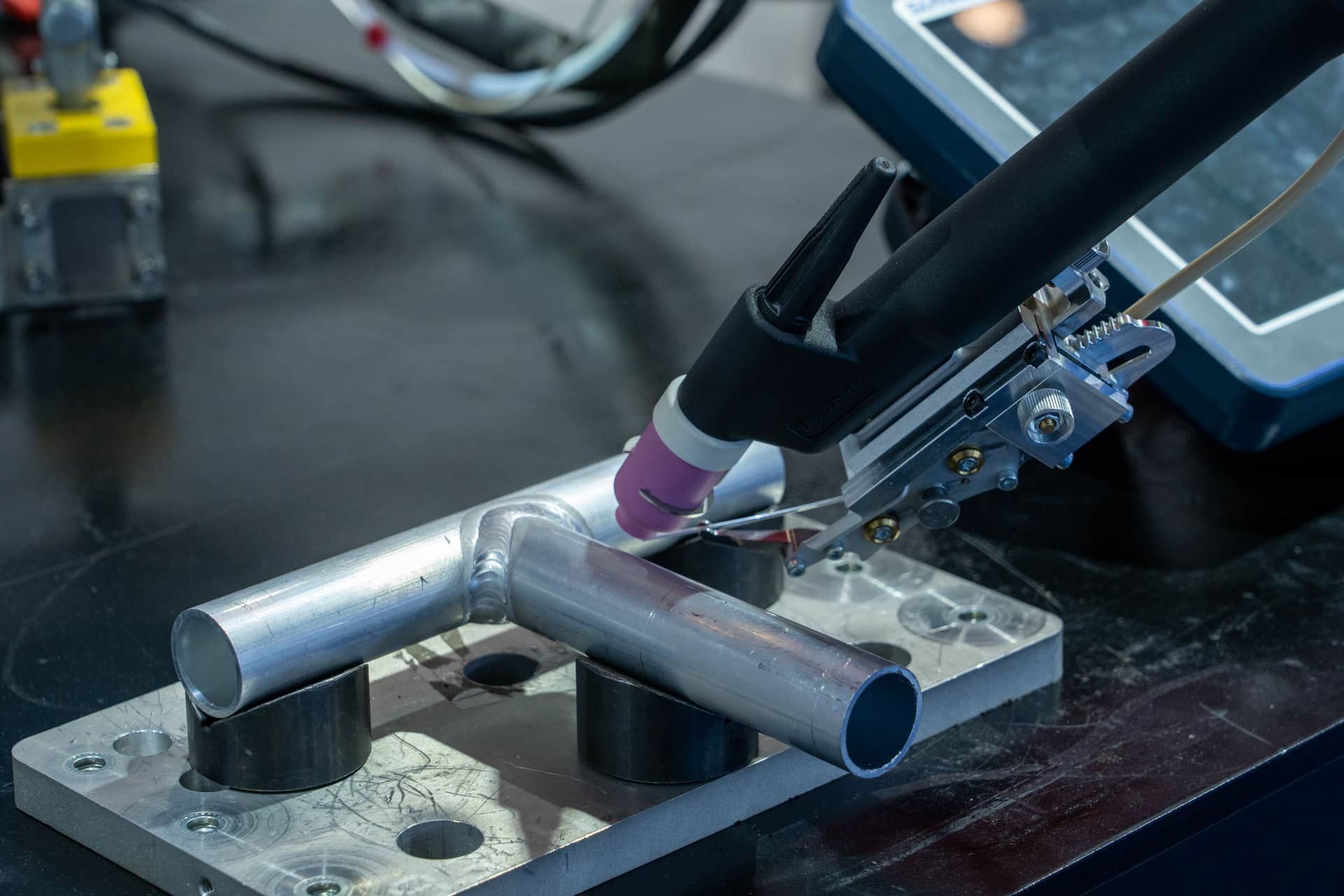 PrimeWeld TIG225XPulse and a CK17 torch — heat control and torch control, which is the whole stainless problem. | Best overall for stainless | |
| 2 | ARCCAPTAIN TIG200HF-start DC at 10 to 200 amps. Everything stainless needs, none of what it does not. | Best value for stainless only | |
| 3 | Everlast PowerTIG 210EXTAdjustable pulse frequency and peak/background current — the settings stainless rewards. | Best pulse control | |
| 4 |  CK Worldwide 2% lanthanated tungsten electrodesOne tungsten type for stainless and aluminum, with no thorium in the grinding dust. | The consumable that matters |
What TIG welder do you need for stainless steel?
A DC TIG machine with high-frequency start, a stable arc at low amperage and — ideally — pulse. AC output is not needed: stainless has no aluminum-style oxide layer for AC's cleaning action to break up, so a DC-only machine does the job for considerably less money.
Stainless is a heat problem, not a power problem
Stainless conducts heat roughly a third as well as mild steel and expands about half again as much. Put those together and the result is the thing everyone struggles with: the part moves, and the weld zone stays hot long after you have stopped.
Practically, that means less current than you would use on the same thickness of mild steel, faster travel, and more patience between passes. A machine that helps is one that lets you put in less heat — which is what pulse, a responsive foot pedal and a clean low-amp arc all do.
Why the weld changes colour, and what the colours mean
The tint on a finished stainless weld is an oxide layer, and it is a direct readout of how much heat went in and how well the argon covered it.
| What you see | What it usually means | What to change |
|---|---|---|
| Silver or pale straw | Good gas coverage, controlled heat | Nothing |
| Gold or bronze | Slightly hot, or coverage trailing off | Travel faster, add post-flow |
| Blue or purple | Too much heat in the joint | Less current, or pulse |
| Gray and grainy | Oxidized — the argon did not cover it | Check flow, gas lens, post-flow, drafts |
| Gray on the back of the joint | The underside was not shielded | Back-purge, or accept it on non-critical work |
A note worth taking seriously: heavy tint is not only cosmetic. It marks where chromium has been drawn out to form oxide, and chromium is what makes stainless corrosion-resistant in the first place. On anything that will live outdoors or hold food, this matters.
Gas, and the side of the joint you cannot see
Stainless TIG runs on 100% argon like any other TIG work. The difference is the back of the joint.
On open-root pipe and tube, the underside of the weld is exposed to air while it is molten and comes out gray and sugary — a crusty, weak surface. The fix is back-purging: filling the inside of the tube with argon before you weld. On solid bar, bracketry and anything where the back is not a sealed surface, it is not a concern.
Post-flow matters more on stainless than on steel for the same reason. Let the gas run after the arc stops until the metal is dark, and the last inch of your weld stops being the ugly part.
The fume issue on stainless is real
Hexavalent chromium
Respirators and fume safety covers the equipment.
Filler rod selection, briefly
Two numbers cover most stainless work. ER308L is the filler for 304 stainless, which is the common one. ER316L is for 316 stainless, which is the marine and chemical grade. The "L" is low carbon, and it reduces the risk of carbide precipitation — the thing that quietly ruins corrosion resistance in the heat-affected zone.
Match the filler to the base metal rather than reaching for whatever is in the tube, and keep it clean. A rod handled with oily fingers puts the oil in the weld.
1. Best overall for stainless
PrimeWeld TIG225X
Pulse and a CK17 torch — heat control and torch control, which is the whole stainless problem.
PrimeWeld publishes AC/DC TIG at 10 to 225 amps, auto voltage detection, adjustable AC balance, AC frequency and pulse, a 40% duty cycle at maximum and a genuine CK Worldwide CK17 flex-head torch.
Pulse is the reason it leads here. Stainless conducts heat poorly and holds it, so the failure mode is not lack of penetration — it is too much heat, which warps thin sheet and burns the chromium out of the weld zone. Pulsing the current lets the puddle cool between peaks while still penetrating, which is exactly the control stainless wants.
The CK17 contributes for a related reason: gas coverage. A good torch with a properly fitting gas lens gives you a wider, calmer argon envelope, and stainless punishes poor coverage visibly — the weld goes gray and grainy instead of staying bright.
What works
- It ships with a genuine CK Worldwide CK17 torch — the part everyone else upgrades to, included
- Auto voltage detection means no switch to set wrong
- Adjustable AC balance, AC frequency and pulse — the three controls that actually change how aluminum behaves
What does not
- 40% duty cycle at maximum is lower than the AlphaTIG's 60%, though both are far beyond hobby demand
- Costs meaningfully more than the AlphaTIG; the CK torch accounts for a good part of it
- Like every AC/DC inverter in this class it is heavy and wants a permanent bench spot
2. Best value for stainless only
ARCCAPTAIN TIG200
HF-start DC at 10 to 200 amps. Everything stainless needs, none of what it does not.
ARCCAPTAIN publishes DC TIG at 10 to 200 amps, stick at 10 to 170 amps, a 60% duty cycle, high-frequency non-contact start, dual 110/220 volt input and 11.8 pounds.
If stainless and mild steel are the whole job, AC output is money spent on a circuit you will never switch on. Stainless has no problematic surface oxide of the kind aluminum has, so AC's cleaning action has nothing to do — it would only put heat into the tungsten.
High-frequency start matters more on stainless than people expect. A scratch start leaves tungsten in the weld, and tungsten inclusions in stainless are exactly the kind of defect that shows up later as a corrosion site.
No pulse is the honest limitation. On thin sheet that means the heat control is entirely in your travel speed and your foot.
What works
- High-frequency start rather than scratch start — the difference between a clean arc and a contaminated tungsten on every single strike
- 11.8 lb, so it goes to the work instead of the work coming to the bench
- Dual voltage, so it runs on a household outlet now and a 240 V circuit later
- The lowest price at which HF DC TIG is genuinely available from a supported brand
What does not
- DC only. No aluminum, now or ever, and no accessory changes that
- No pulse, so thin stainless relies on your hand rather than the machine to control heat
- A foot pedal and a better torch are extra, and both are worth budgeting for
Who this is wrong for: Anyone who also wants to weld aluminum. This machine will never do it, at any setting.
3. Best pulse control
Everlast PowerTIG 210EXT
Adjustable pulse frequency and peak/background current — the settings stainless rewards.
Everlast's EXT line exposes pulse as a set of numbers rather than an on/off switch: pulse frequency, peak current, background current and the ratio between them.
On thin stainless that granularity is genuinely useful. A high pulse frequency stiffens and narrows the arc cone, which helps on tight fillets; a low frequency with a large peak-to-background gap lets the puddle freeze between pulses, which is how you run thin sheet without distortion.
If your stainless work is heavier — brackets, frames, quarter-inch plate — this control is not worth the premium, and the simpler machines above are the better buy.
What works
- Deep pulse and waveform control — more adjustable than anything else at this price point
- US-based support and parts availability, which is not the norm in this price bracket
What does not
- The number of adjustable parameters is genuinely overwhelming on a first TIG machine
- Priced above the AlphaTIG and PrimeWeld for capability most Level 3 welders will not reach for a year
4. The consumable that matters
CK Worldwide 2% lanthanated tungsten electrodes
One tungsten type for stainless and aluminum, with no thorium in the grinding dust.
On stainless the tungsten is a bigger variable than most of the machine settings. A clean point, ground lengthwise rather than across, gives a focused arc that stays where you aim it.
Two percent lanthanated works on DC for stainless and on AC if you later add aluminum, so one box covers the shop and you stop thinking about it. It contains no thorium, which removes the radioactive-dust question that comes with thoriated tungsten.
Grind it on a wheel used for nothing else. A wheel shared with mild steel puts iron into the tip, and iron in a stainless weld is a rust spot waiting.
What works
- Works on AC and DC, so one box covers aluminum and steel and you stop thinking about it
- Contains no thorium, so grinding dust carries no radioactive-material handling question
What does not
- More expensive per electrode than unbranded tungsten of the same designation
- Still needs a dedicated grinding wheel — sharing a wheel with steel contaminates the tip
Questions people actually ask
Do you need AC TIG for stainless steel?
No. Stainless is welded on DC, electrode negative. It has no aluminum-style oxide layer for AC's cleaning action to break up, so AC would only put unnecessary heat into the tungsten.
That means a DC-only machine is a legitimate and much cheaper choice if stainless and steel are all you weld.
Why does my stainless weld turn gray instead of silver?
Gray and grainy means the weld oxidized because the argon did not cover it. Check gas flow, whether the cup or gas lens suits the joint, how long post-flow runs, and whether a draft is pulling the shield away.
Gray on the underside of a tube joint is a different problem — that side was never shielded, and needs a back-purge.
What amperage for TIG welding stainless steel?
Less than you would use on the same thickness of mild steel. Stainless conducts heat poorly and holds it, so the same current puts more heat into the joint.
Start around 30 to 40 amps per sixteenth of an inch of thickness and adjust down if the part is discolouring or moving.
Is pulse worth it for stainless?
On thin sheet, yes — it is one of the few machine features that directly solves the stainless problem. Pulsing lets the puddle cool between peaks while still penetrating, which reduces distortion and tint.
On heavier stainless it matters much less, and a simpler machine is the better buy.
Is welding stainless steel dangerous?
The fume is. Stainless welding produces hexavalent chromium, which is a known carcinogen, and it is the one case on this site where an open garage door is not adequate ventilation.
Use a P100 respirator and extraction at the arc for anything more than occasional work.
Sources
Read next
- TIG welding for beginners
Torch angle, arc length, feeding rod — the order to learn TIG in so it stops feeling impossible.
- AC vs DC TIG: which do you actually need?
What AC output does, why DC cannot weld aluminum, and how to decide before you buy.
- TIG welding settings chart
Amperage, tungsten and filler size by metal and thickness, plus symptom-by-symptom diagnosis.
- The best TIG welders for the money
Where the money actually goes on a TIG machine, and which ones return the most capability per dollar.
- Welding respirators and fume safety
What is in welding fume, what a P100 filter does and does not remove, and when it is mandatory.
- The best TIG welders for professionals
Duty cycle, parts availability and repeatability — the three things that separate a working machine from a good hobby one.
Back to Level 3 · TIG, or start over at Find Your Level.
Ryder M.
Ryder M. is the hands-on owner behind Magoo Media Group. He writes Arc & Bead's buying guides and picks every machine on the site. What every recommendation is based on — and what it is not based on — is set out on How We Pick.