The best AC TIG welders
AC is the difference between a TIG machine that welds aluminum and one that never will. It is also the one thing you cannot buy as an accessory, which makes it the first decision rather than the last.
Arc & Bead is an Amazon Associate. If you buy through a link on this page we may earn a commission, at no extra cost to you. We have not physically tested the machines on this page and we say so on How We Pick.
Quick picks
Tap any row to jump to the full write-up further down this page.
| # | Product | Best for | Price |
|---|---|---|---|
| 1 | 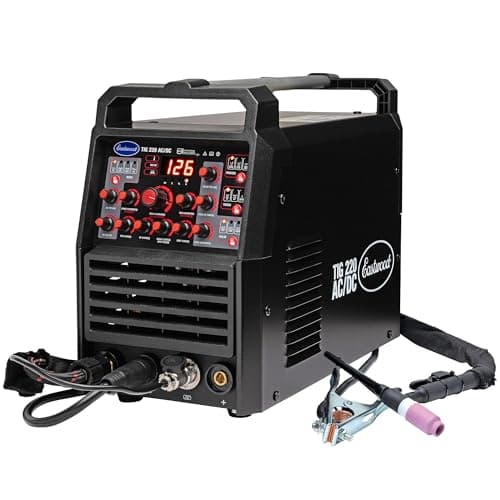 Eastwood TIG 220 AC/DCPublishes its output on BOTH supplies, carries full AC balance and frequency control, and arrives with the pedal, flex torch and regulator already in the box. | Best overall | $1,019.99 · View on Amazon #ad How this is funded · Price as of November 13, 2026 |
| 2 | 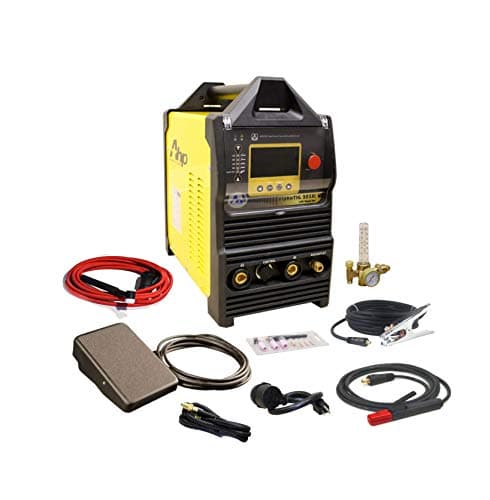 AHP AlphaTIG 200XThe cheapest machine here that genuinely has AC output, and its published 60% duty cycle at 200 A is the best in the group. | Budget pick | $689.00 · View on Amazon #ad How this is funded · Price as of November 13, 2026 |
| 3 | 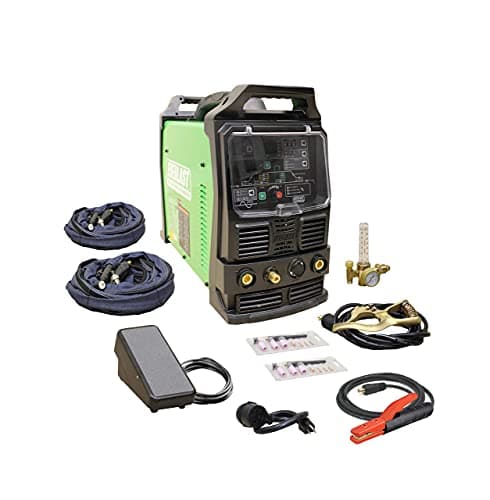 Everlast PowerTIG 210EXTThree selectable AC waveforms, 20-250 Hz AC frequency and 5-90% balance. More adjustment than anything else at the price, and more than most people will use. | Most AC control | |
| 4 | 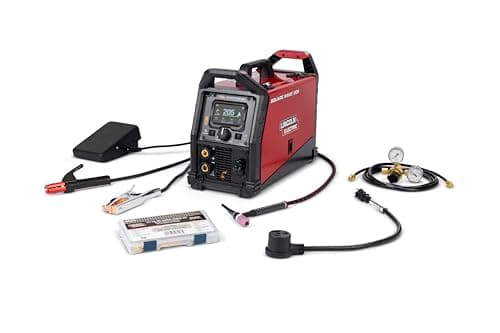 Lincoln Electric Square Wave 205Pulse, AC frequency and AC balance behind a color LCD, with the best service network in the category standing behind it. | Best dealer support | $1,598.99 · View on Amazon #ad How this is funded · Price as of November 13, 2026 |
| 5 | 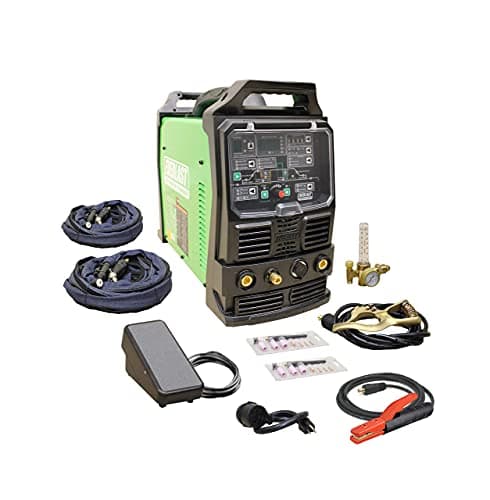 Everlast PowerTIG 255EXT100% duty cycle at 200 A. The only machine here that will not make you stop, which is what separates a job from a hobby. | Best for arc time | $1,875.00 · View on Amazon #ad How this is funded · Price as of November 13, 2026 |
The short answer
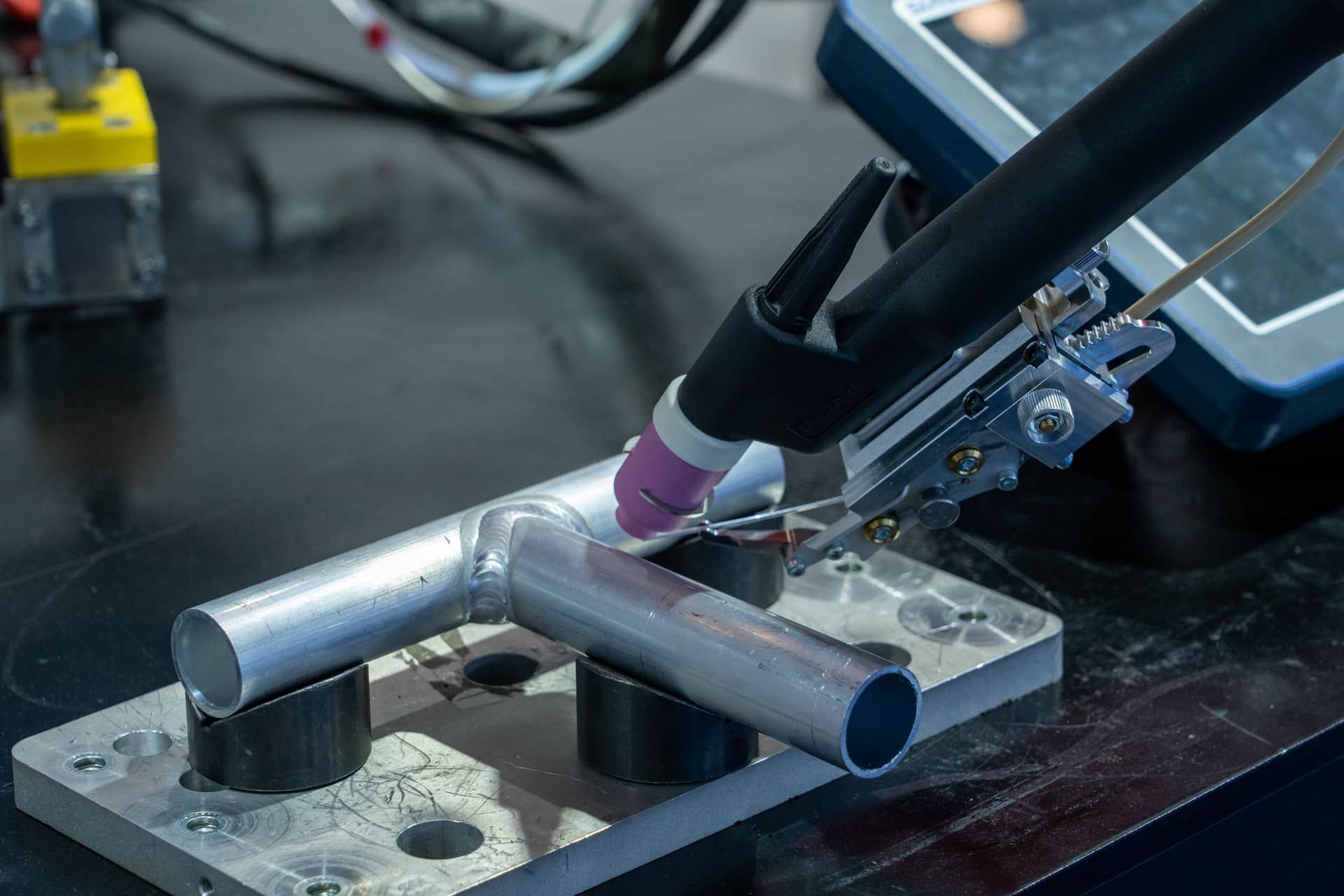
An AC TIG welder is one that can output alternating current, which is the only way to weld aluminum with a TIG torch: the electrode-positive half of each cycle blasts the aluminum oxide skin off the joint, and the electrode-negative half does the welding. A DC-only TIG machine cannot do this at any setting and no accessory changes it.
Our overall pick is the Eastwood TIG 220 AC/DC, because it publishes its output on both 120 V and 240 V, carries adjustable AC balance and AC frequency, and includes the foot pedal, flex torch and regulator. The budget pick is the AHP AlphaTIG 200X — the cheapest machine in our registry that has AC output at all, with the best published duty cycle in the group at 60% at 200 A.
Every price in the table above is read from the live price feed when the page loads and carries its own "as of" date inside the buy button. Nothing is typed into this copy, so a number you see here is the number the listing showed on that date rather than the day we wrote the page.
Why AC is the one TIG decision you cannot undo
Almost everything else about a TIG machine can be fixed later with money. A scratchy torch is replaceable. A missing foot pedal is a purchase. A thin manual is a weekend of reading. AC output is different: it is a transformer and inverter capability designed into the machine, and a DC-only welder will never have it.
The reason it matters is chemistry rather than preference. Aluminum grows an oxide layer that melts at roughly three times the temperature of the metal under it, so a DC arc sits on top of a skin it cannot get through. On AC, the half-cycle where the electrode is positive lifts that oxide off — welders call it the cleaning action — and the negative half-cycle puts heat into the base metal. That is the whole mechanism, and it is why the first question to ask about a TIG welder is not its amperage but whether it does AC at all.
This is also why the DC-only machines on this site are cheaper and are not on this page. The 120 V TIG welders and the budget DC machines are genuinely good value if steel and stainless are the whole job, and a waste of money if aluminum is the reason you are buying. Decide which of those you are before you compare anything else.
AC output is not the same as an aluminum spool gun.
A MIG machine welds aluminum with a spool gun and 100% argon — a completely different mechanism, with no AC involved. If what you actually want is thicker aluminum faster rather than thin aluminum neatly, the honest answer may be a wire machine: the best MIG welders for aluminum and do you need a spool gun for aluminum cover that route.
The published AC figures, side by side
| Machine | AC output | AC balance | AC frequency | Top-end duty cycle |
|---|---|---|---|---|
| AHP AlphaTIG 200X | 10-200 A | 30-70% | Not published | 60% at 200 A TIG |
| Eastwood TIG 220 AC/DC | 10-220 A (240 V); 10-140 A (120 V) | Adjustable | Adjustable | 40% at 220 A AC TIG; 60% at 179 A |
| Everlast PowerTIG 210EXT | 5-210 A (240 V); 5-120 A (120 V) | 5-90% electrode positive | 20-250 Hz | 60% at 210 A |
| Lincoln Square Wave 205 | 8-205 A (230 V); 8-125 A (120 V) | 60-90% | 60-150 Hz | 25% at 200 A; 60% at 130 A |
| Everlast PowerTIG 255EXT | 5-250 A | Published as adjustable | Published as adjustable | 60% at 250 A; 100% at 200 A |
Read the duty-cycle column as the one that will interrupt you. A 25% rating at 200 A means a theoretical two and a half minutes of arc in every ten, and aluminum is the material most likely to push you there because it conducts heat away from the joint so quickly that you end up running hotter and longer than you would on steel of the same thickness.
What AC balance and AC frequency actually do
AC balance is the proportion of each cycle spent with the electrode positive. More positive time means more oxide cleaning and a wider, shallower bead with more heat going into the tungsten — which is why aggressive cleaning settings make the tungsten ball up. Less positive time means deeper penetration and a narrower bead with less cleaning. Weathered, cast or anodized aluminum wants more cleaning; fresh, clean sheet wants less.
AC frequency is how many times per second the current reverses. Low frequency gives a broad, soft arc that is forgiving on thick material. High frequency tightens the arc cone, which concentrates heat and lets you weld a thin edge or a tight inside corner without washing the surrounding metal. Machines with a fixed 60 Hz AC output give you one arc shape.
If none of that is familiar yet, it does not have to be on day one. The settings baseline is in the TIG settings chart, and the technique side is in how to get good TIG welds.
The circuit and the gas, before you buy the machine
Every machine on this page except the 255EXT publishes a 120 V figure and a 240 V figure, and the gap between them is large. The Eastwood drops from 220 A to 140 A, the 210EXT from 210 A to 120 A, the Lincoln from 205 A to 125 A. Aluminum is exactly where that gap bites, because aluminum needs roughly one amp per thousandth of an inch of thickness — about 125 A for 1/8 in — so a 120 V machine is a thin-material machine whatever its badge says.
Work out what the circuit costs before you choose the machine: what size breaker for a welder and what size wire for a welder outlet are the two numbers an electrician will ask you for. On gas, AC TIG runs on 100% argon — never a MIG mix — and what gas for TIG welding covers the flow rates and cylinder sizes.
How we picked these
AC output was the entry requirement. Every DC-only TIG machine in our registry was excluded regardless of price or value, because the page is about the one capability those machines do not have.
Published figures only, and nothing measured. We have not welded with any of these machines. Every number here is the manufacturer's own published specification, and where a maker does not publish a figure the table says so rather than filling the gap.
Ranked on control, not on amperage. All five of these machines will weld aluminum thicker than most home shops ever will. What separates them is how much of the AC waveform you can adjust and how long they will hold their rated output, so that is the axis. More on the method on how we pick.
The other half of the circuit question
Every machine on this page except the 255EXT publishes a 120 V mode as well as a 240 V one, and the gap between them is where most aluminum disappointment comes from. The best dual voltage TIG welders ranks the same field on that axis alone — which machines print a separate output figure for each supply, and which print one number and leave you to find out which supply it belongs to.
1. Best overall
Eastwood TIG 220 AC/DC
Publishes its output on BOTH supplies, carries full AC balance and frequency control, and arrives with the pedal, flex torch and regulator already in the box.
Eastwood publishes this machine at 10–220 A in TIG on a 240 V circuit and 10–140 A on 120 V, with AC TIG duty cycles of 40% at the full 220 A and 60% at 179 A. Publishing both supply figures is rarer than it should be in this class, and it is the reason this is the pick: you can size the circuit before you buy rather than discovering after delivery that two thirds of the machine needs an outlet you do not have.
What earns it the top slot on an AC page specifically is the control set. Adjustable AC balance, adjustable AC frequency, and pulse with peak on-time and base current are the four knobs that change how aluminum actually behaves — balance trades the oxide-cleaning half of the cycle against penetration, and frequency tightens or widens the arc cone. A machine with a fixed AC waveform gives you one compromise and asks you to live in it.
The box matters too. A WP-17F flex-head torch on a 12 ft lead with a gas-lens collet body and a #8 cup, a foot pedal, an argon regulator/flowmeter and a ground clamp all ship with it, so the only thing left to buy is the gas bottle. On machines whose pedal is an accessory, the real cost is meaningfully higher than the ticket price.
Where it gives ground: the AlphaTIG below publishes 60% at 200 A against Eastwood's 40% at 220 A, so on long AC passes the cheaper machine has the better rating. And Eastwood publishes a single 1/4 in capacity figure rather than separate steel and aluminum numbers, which leaves less to compare on.
What works
- It publishes both supply figures — 10 to 220 A on 240 V and 10 to 140 A on 120 V — so you can size the circuit before you buy instead of after
- Adjustable AC balance and AC frequency plus pulse frequency, peak on-time and base current: the controls that actually change how aluminum behaves
- Flex-head torch with a gas-lens kit, foot pedal, argon regulator/flowmeter and ground clamp are all in the box. Only the gas bottle is extra
- 22.93 lb. Almost nothing else in the AC/DC class is light enough to carry to the work rather than the other way round
What does not
- The 40% duty cycle applies at the full 220 A in AC TIG; the 60% figure is at 179 A. The AlphaTIG publishes 60% at 200 A
- The bundled torch is a WP-17 pattern — widely supported and cheap on consumables, but not a branded premium torch
- Full output needs the 240 V circuit. On 120 V Eastwood publishes 140 A in TIG and 120 A in stick, roughly two-thirds of the machine
- Eastwood publishes one 1/4 in capacity figure for the machine rather than separate steel and aluminum numbers, so there is less to compare on than some rivals give you
2. Budget pick
AHP AlphaTIG 200X
The cheapest machine here that genuinely has AC output, and its published 60% duty cycle at 200 A is the best in the group.
This is the budget pick in the strict sense the site uses: the least expensive product in the registry that actually does the job. The job on this page is AC output, and the AlphaTIG 200X is the cheapest widely supported machine that has it. Everything below it in price in our registry is DC only, which means aluminum is off the table permanently rather than temporarily.
AHP publishes 10–200 A in TIG, a 60% duty cycle at 200 A TIG and 35% at 155 A in stick, 30–70% adjustable AC balance, and a capacity of 24 gauge to 3/8 in on mild steel with 1/4 in on aluminum. The 60% at the full 200 A is the headline: it is a higher published rating at the top of the range than either Eastwood or Lincoln publishes, and duty cycle is what stops you mid-weld rather than at the quoting stage.
Who it is for: someone who has decided aluminum is the reason they are buying TIG and wants the capability without the price of a dealer-network machine. The AC balance range is enough to clean oxide off cast or weathered aluminum, which is where most home aluminum work actually lives.
The costs are real. The bundled torch and consumables are the first thing most owners replace, the manual is thin, and at 50 lb with a foot pedal it lives in one place. If you want to know whether those trades land for you, the full AlphaTIG 200X review takes the published figures apart on their own.
What works
- AC output is what makes aluminum possible at all — this is the cheapest widely supported machine that has it
- 60% duty cycle at 200 A is a genuinely high rating for the price
- Adjustable AC balance lets you trade cleaning action against penetration instead of accepting one compromise
What does not
- The bundled torch and consumables are the first thing most owners replace
- The manual is thin. Budget time for learning the machine as well as the process
- 50 lb and a foot pedal means it lives in one place
3. Most AC control
Everlast PowerTIG 210EXT
Three selectable AC waveforms, 20-250 Hz AC frequency and 5-90% balance. More adjustment than anything else at the price, and more than most people will use.
Everlast publishes DC 3–210 A and AC 5–210 A on a 240 V supply, a 60% duty cycle at the full 210 A, AC frequency from 20 to 250 Hz, AC balance from 5 to 90% electrode positive, pulse to 500 Hz in DC and 250 Hz in AC square, nine stored programs, and three AC waveforms — advanced square, soft square and triangular.
The waveform list is the part that belongs on an AC page. Square wave is the default because it transfers the most energy per cycle; a softer wave is quieter and gentler on thin material; a triangular wave concentrates heat for faster travel on thick aluminum. Being able to choose is a genuine capability, not a spec-sheet flourish — but it is also a capability most Level 3 welders will not reach for in their first year.
Two torches, a foot pedal, an argon regulator with hose, a stick holder and starter consumables ship with it, which brings the real cost closer to the ticket price than the number suggests.
Against it: 62 lb and 25 inches wide makes it a bench machine, the parameter count is genuinely overwhelming as a first TIG machine, and on a 120 V circuit TIG output is capped at 120 A, so the 210 A headline is the 240 V figure.
What works
- Deep pulse and waveform control — more adjustable than anything else at this price point
- US-based support and parts availability, which is not the norm in this price bracket
- Two TIG torches, a foot pedal and an argon regulator all ship in the box, so the ticket price is close to the real cost of welding
- Published 60% duty cycle at the full 210 A rather than at a reduced current
What does not
- The number of adjustable parameters is genuinely overwhelming on a first TIG machine
- Priced above the AlphaTIG and the Eastwood for capability most Level 3 welders will not reach for a year
- 62 lb and 25 inches wide — this is a bench machine, not one that moves to the work
- On a 120 V circuit TIG output is capped at 120 A, so the 210 A headline is the 240 V figure
Who this is wrong for: A first TIG machine. The number of adjustable parameters is the point of this welder, and on day one it is the obstacle - the AlphaTIG or the Eastwood get you welding aluminum sooner for less money.
4. Best dealer support
Lincoln Electric Square Wave 205
Pulse, AC frequency and AC balance behind a color LCD, with the best service network in the category standing behind it.
Lincoln publishes the Square Wave 205 at TIG 8–205 A and stick 15–170 A on a 230 V supply, TIG 8–125 A and stick 15–90 A on 120 V, 200 A at a 25% TIG duty cycle with 130 A at 60%, pulse from 0.1 to 500 Hz, AC frequency 60–150 Hz and AC balance 60–90%, through a 4.3 in color LCD. A Caliber 17 torch, Foot Amptrol, regulator/flowmeter, electrode holder and work clamp are in the box.
Who it is for: someone buying one TIG machine for a long time who wants a dealer to call rather than a support email address. That is not a specification and it is the most common honest reason people pay the Lincoln premium. The AC control set here is narrower than Everlast's — 60 to 150 Hz against 20 to 250 Hz, 60 to 90% balance against 5 to 90% — but it covers the range aluminum work actually uses.
The costs: it is substantially more expensive than the AlphaTIG or the Eastwood for comparable output, the 25% duty cycle at 200 A is the lowest top-end rating on this page, and on a 120 V circuit TIG output is capped at 125 A.
What works
- Lincoln's dealer and service network is the best in the category if something goes wrong
- A Foot Amptrol, torch, regulator and lead set all ship in the box, so the ticket price is close to the real cost of welding
- Adjustable pulse, AC frequency and AC balance — the three controls that actually change how aluminum behaves
What does not
- Costs substantially more than the AlphaTIG or the Eastwood for comparable output
- On a 120 V circuit TIG output is capped at 125 A, so the 205 A headline is the 230 V figure
5. Best for arc time
Everlast PowerTIG 255EXT
100% duty cycle at 200 A. The only machine here that will not make you stop, which is what separates a job from a hobby.
Everlast publishes DC 3–250 A and AC 5–250 A, a 60% TIG duty cycle at 250 A with 100% at 200 A, and in stick 60% at 225 A with 100% at 175 A, from a digital microprocessor-controlled IGBT inverter on 110 V or 220 V.
The 100% at 200 A is the whole argument. Every other machine on this page has a number above which it needs to cool down, and on aluminum — which pulls heat out of the weld faster than steel and therefore wants more amperage for longer — that number is the one you hit. If TIG is work rather than a weekend, this is the specification to buy on.
A 225 A stick rating at 60% also means it genuinely doubles as the shop's stick machine instead of pretending to.
Against it: heavier, larger and dearer than any 200 A entry machine, and none of that helps if you weld an hour a week. Everlast's dealer network is smaller than Lincoln's, which matters most on a machine you depend on.
What works
- 100% duty cycle at 200 A is the specification that separates a professional machine from a good hobby machine — it never stops you mid-job
- Full AC parameter control on top of a 250 A ceiling, so thick aluminum is a setting rather than a limit
- 225 A stick at 60% means it genuinely doubles as the shop's stick machine rather than pretending to
What does not
- Heavier, larger and dearer than any 200 A entry machine, and none of that helps if you weld an hour a week
- The parameter depth is genuinely intimidating if you have not run TIG before
- Everlast's dealer network is smaller than Lincoln's or Miller's, which matters on a machine you depend on
Questions people actually ask
Do I need an AC TIG welder?
Only if you want to weld aluminum or magnesium. For mild steel, stainless and chrome-moly, a DC-only TIG machine does everything an AC/DC machine does, and costs considerably less.
The reason to buy AC anyway is that it is the one capability you cannot add later. If there is a realistic chance aluminum is in your future, the price difference is cheaper than owning two machines.
What is the cheapest AC TIG welder worth buying?
In our registry it is the AHP AlphaTIG 200X, which is the least expensive machine we list that has AC output at all. It publishes 10-200 A in TIG, a 60% duty cycle at the full 200 A and 30-70% adjustable AC balance.
Below that price point the machines are DC only, which means aluminum is permanently off the table rather than just harder.
Can an AC TIG welder weld steel as well?
Yes, and that is how most of them are used. Every machine on this page is AC/DC, so you select DC for steel and stainless and AC for aluminum. Nothing is compromised on the steel side by the AC capability being there.
What you are paying for is the AC half, so if you are certain you will never weld aluminum, a DC-only machine is better value for the same steel performance.
What does AC balance do on a TIG welder?
It sets how much of each AC cycle is spent with the electrode positive, which is the half that cleans the oxide layer off aluminum. More electrode-positive time means more cleaning, a wider bead and more heat in the tungsten. Less means deeper penetration and less cleaning.
Dirty, cast or weathered aluminum needs more cleaning; clean new sheet needs less. A machine with a fixed balance gives you one compromise setting for every job.
Can I run an AC TIG welder on a 120 volt outlet?
Most of the dual-voltage machines here will run on 120 V, but at roughly 60 percent of their rated output. The Eastwood publishes 140 A on 120 V against 220 A on 240 V, the Everlast 210EXT publishes 120 A against 210 A, and the Lincoln 125 A against 205 A.
Aluminum needs roughly one amp per thousandth of an inch of thickness, so a 120 V circuit limits you to thin material. If aluminum is the job, run the 240 V circuit.
Is high-frequency start the same as AC?
No, and the names cause real confusion. High-frequency start is how the arc is initiated without touching the tungsten to the work. AC output is the alternating current used to weld aluminum.
A machine can have HF start and be DC only. All five machines on this page have both, but you should check the two separately on any machine you are considering.
Sources
- AHP - AlphaTIG 200X published specifications: AC/DC TIG and stick, 110 V or 220 V single phase, TIG 10-200 A, 60% duty cycle at 200 A TIG and 35% at 155 A stick, mild steel 24 gauge to 3/8 in and aluminum to 1/4 in, AC balance 30-70%, 50 lb (as recorded in this site's product registry, ASIN B076BSD6PG)
- Eastwood - TIG 220 AC/DC (SKU 74010) published specification table: 120 V or 240 V single phase, TIG 10-220 A on 240 V and 10-140 A on 120 V, stick 20-180 A on 240 V and 20-120 A on 120 V, AC TIG 40% at 220 A and 60% at 179 A, DC TIG 25% at 220 A and 60% at 142 A, capacity to 1/4 in, WP-17F flex torch on a 12 ft lead, 22.93 lb (read 2026-10-26, recorded in this site's product registry, ASIN B0GFG9PL8X)
- Everlast - PowerTIG 210EXT published specification table: AC/DC TIG and DC stick, DC 3-210 A and AC 5-210 A on 240 V, DC 3-120 A and AC 5-120 A on 120 V, 210 A at 60% on 240 V, pulse 0.1-500 Hz DC and 0.1-250 Hz AC, AC frequency 20-250 Hz, AC balance 5-90% electrode positive, advanced square / soft square / triangular waveforms, nine stored programs, 62 lb (read 2026-10-29, recorded in this site's product registry, ASIN B00NAC9Y1Q)
- Lincoln Electric - Square Wave 205 (K5613-1) published specifications: AC/DC TIG, pulsed TIG and stick, 120 V or 230 V, TIG 8-205 A and stick 15-170 A on 230 V, TIG 8-125 A and stick 15-90 A on 120 V, 200 A at 25% TIG and 130 A at 60%, pulse 0.1-500 Hz, AC frequency 60-150 Hz, AC balance 60-90%, 4.3 in color LCD (recorded in this site's product registry, ASIN B0F3JXZ4KR)
- Everlast - PowerTIG 255EXT published specifications: AC/DC pulse TIG and stick, DC 3-250 A and AC 5-250 A, TIG 60% at 250 A and 100% at 200 A, stick 60% at 225 A and 100% at 175 A, 110 V or 220 V (recorded in this site's product registry, ASIN B00OBY3OMW)
- American Welding Society - gas tungsten arc welding process fundamentals, including the role of alternating current in welding aluminum
Read next
- AHP AlphaTIG 200X review
A published-specification review of the AHP AlphaTIG 200X - what its 60% duty cycle at 200 A and 30-70% AC balance actually buy you, what the bundled torch costs you, and who should buy something else.
- The best TIG welders for aluminum
AC output, balance and frequency are what weld aluminum. Which machines give real control.
- Affordable TIG Welders for Aluminum
The cheapest TIG machines that actually publish AC output, which is the only specification that makes aluminum possible.
- AC vs DC TIG: which do you actually need?
What AC output does, why DC cannot weld aluminum, and how to decide before you buy.
- What gas for TIG welding?
100% argon covers almost everything. When helium or hydrogen blends help, and what will ruin a weld.
- TIG welding settings chart
Amperage, tungsten and filler size by metal and thickness, plus symptom-by-symptom diagnosis.
Back to Level 3 · TIG, or start over at Find Your Level.
Ryder M.
Ryder M. is the hands-on owner behind Magoo Media Group. He writes Arc & Bead's buying guides and picks every machine on the site. What every recommendation is based on — and what it is not based on — is set out on How We Pick.