Affordable TIG Welders for Aluminum
Aluminum needs AC. That one requirement sets a hard price floor on TIG, and it is well above where the cheap DC machines live. Here is the cheapest honest way across it.
Arc & Bead is an Amazon Associate. If you buy through a link on this page we may earn a commission, at no extra cost to you. We have not physically tested the machines on this page and we say so on How We Pick.

Quick picks
Tap any row to jump to the full write-up further down this page.
| # | Product | Best for | Price |
|---|---|---|---|
| 1 | 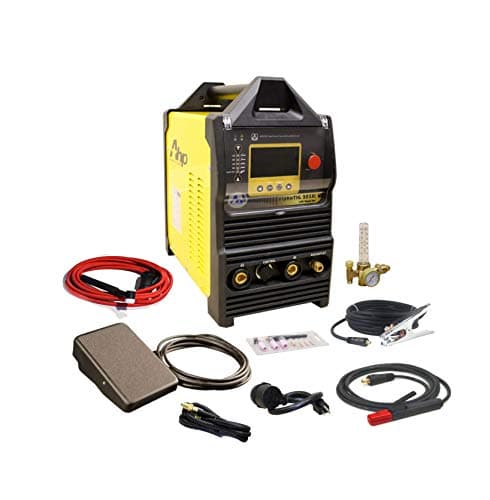 AHP AlphaTIG 200XThe lowest price at which AC output, adjustable AC balance and a foot pedal all arrive together, with a 60% duty cycle at 200 A on top. | Cheapest widely supported AC/DC machine | $689.00 · View on Amazon #ad How this is funded · Price as of November 13, 2026 |
| 2 | 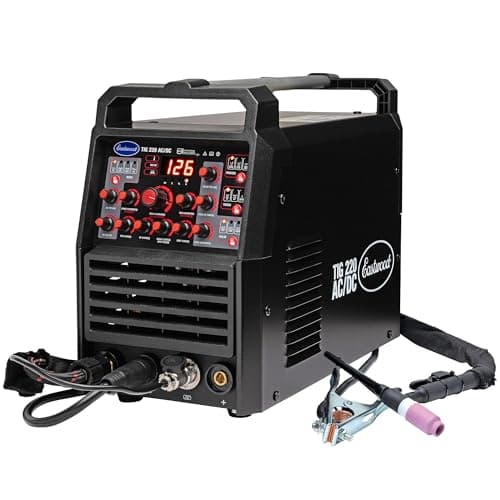 Eastwood TIG 220 AC/DCCosts more than the AlphaTIG, then hands back most of the difference in a gas-lens flex torch, a regulator and AC frequency control. | Cheapest without an upgrade waiting | $1,019.99 · View on Amazon #ad How this is funded · Price as of November 13, 2026 |
| 3 | 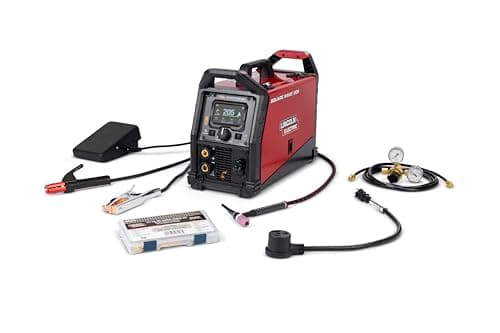 Lincoln Electric Square Wave 205The least expensive route to AC aluminum from a brand with a real service network, with a complete working kit in the box. | Cheapest AC machine with a dealer behind it | $1,598.99 · View on Amazon #ad How this is funded · Price as of November 13, 2026 |
The cheapest TIG welder that will weld aluminum
The AHP AlphaTIG 200X is the cheapest widely supported TIG welder that will weld aluminum, because aluminum requires AC output and the AlphaTIG is the lowest-priced machine that publishes it along with adjustable AC balance (30–70%), 10–200 A and a 60% duty cycle at 200 A. If you can stretch, the Eastwood TIG 220 AC/DC arrives with the gas-lens flex torch, foot pedal and argon regulator you would otherwise buy separately. No machine under about the AlphaTIG's price has AC at all, so there is a hard floor here — a cheap DC TIG welder cannot weld aluminum at any setting.
This page exists because "affordable TIG welder for aluminum" is a search with a disappointing answer, and it is better to give it to you straight than to dress up a DC machine. The specification that decides whether a TIG welder can weld aluminum is not amperage, not duty cycle and not brand. It is whether the machine has an AC output. Most cheap TIG welders do not.
Why AC is the whole price floor
Aluminum grows an oxide skin the moment it meets air, and that oxide melts at roughly three times the temperature of the aluminum underneath it. On DC, the arc never breaks through it — you get a dull grey crust floating on a puddle you cannot see or control.
AC solves it by reversing the current many times a second. On one half of each cycle the electron flow blasts the oxide off the surface; on the other half it puts heat into the metal. That reversal needs extra hardware inside the machine, and that hardware is what the price difference between a DC and an AC/DC inverter buys. AC vs DC TIG covers the physics properly, and it is worth reading before you spend anything.
What the three cheapest AC machines publish
| Specification | AHP AlphaTIG 200X | Eastwood TIG 220 AC/DC | Lincoln Square Wave 205 |
|---|---|---|---|
| AC output (aluminum capable) | Yes | Yes | Yes |
| Output range | 10–200 A | 10–220 A (10–140 A on 120 V) | 8–205 A (8–125 A on 120 V) |
| Input | 110 V or 220 V | 120 V or 240 V | 120 V or 230 V |
| Duty cycle | 60% at 200 A TIG | AC TIG 40% at 220 A; 60% at 179 A | 25% at 200 A TIG; 60% at 130 A |
| AC balance control | 30–70% | Adjustable | 60–90% |
| AC frequency control | Not published | Adjustable | 60–150 Hz |
| Aluminum capacity | To 1/4 in | To 1/4 in (whole machine) | Not published in our registry |
| Foot pedal in the box | Yes | Yes, 16 ft cable | Yes, Foot Amptrol |
| Torch in the box | AHP torch | WP-17F flex, 12 ft, gas-lens kit fitted | Lincoln Caliber 17 |
| Weight | 50 lb | 22.93 lb | 36 lb |
The Lincoln publishes the most of the three, including the AC frequency range the AlphaTIG leaves out. It is not the lead pick on this page for a disclosure reason, then — it is the price. The AlphaTIG leads because it reaches 200 A with a 60% duty cycle for a fraction of the Lincoln's ticket, and a first AC machine is usually bought on that number.
The machines that are cheaper, and cannot do this
It is worth naming them, because they appear in the same search results and they are good machines at what they do.
The ARCCAPTAIN TIG200P publishes HF TIG, lift TIG, pulse TIG, spot TIG and stick, 10 to 200 A, a 60% duty cycle and 11.8 lb — for a lot less money than anything above. The YESWELDER TIG-205P publishes DC TIG with HF start, pulse and stick, up to 200 A, at 10.7 lb. Both are DC only. YESWELDER states plainly that theirs cannot be used to weld aluminum, and no accessory, setting or filler rod changes that on either machine.
So the choice is not "cheap aluminum TIG or expensive aluminum TIG". It is "cheap steel-and-stainless TIG, or the AC price floor". If aluminum is genuinely the reason you are buying, buying the cheaper machine means buying twice — best TIG welders under $500 sets out what that bracket does and does not include.
Budget the setup, not the machine
The machine is the biggest line on the invoice and not the only one. Aluminum TIG needs 100% argon — not the 75/25 mix in a MIG bottle — so a cylinder and a flowmeter regulator come with it, and what gas for TIG welding covers which bottle to ask for. You need tungsten, and on AC aluminum the electrode balls over rather than staying pointed, so you will use it faster than on steel. You need thin gloves, because TIG is fed by feel. And you need a helmet that triggers on a low-amperage arc, which is a different specification from a MIG helmet.
One honest warning about 110 V
All three machines run on a household outlet, and none of them does its headline output there. Eastwood publishes 140 A of TIG on 120 V against 220 A on 240 V. Aluminum is also the most heat-hungry thing you can ask a TIG welder to do, because aluminum conducts heat away from the joint far faster than steel does. If aluminum is the plan, treat the 240 V circuit as part of the purchase — what size breaker for a welder is the next page to read.
Which one to buy
If price is the constraint: the AHP AlphaTIG 200X. It is the cheapest machine here that can do the job at all, and the AC balance range plus the published 60% duty cycle mean it is not a compromised version of AC — it is AC.
If you would rather not upgrade anything later: the Eastwood TIG 220 AC/DC. The gas-lens flex torch and the AC frequency control are the two things AlphaTIG owners most often add after the fact, and the argon regulator is a third.
If a dead machine would be a real problem: the Lincoln Square Wave 205. More money, the deepest published arc controls here, and a service counter you can drive to.
We have welded with none of these machines. Everything above is built from published specifications plus retailer confirmation of what ships in each box — how we pick sets out exactly what that means. For the wider field without the price axis, see best TIG welders for aluminum.
1. Cheapest widely supported AC/DC machine
AHP AlphaTIG 200X
The lowest price at which AC output, adjustable AC balance and a foot pedal all arrive together, with a 60% duty cycle at 200 A on top.
AHP publishes AC/DC TIG and stick, 110 V or 220 V single-phase input, a 10 to 200 A output range, a 60% duty cycle at 200 A TIG and 35% at 155 A stick, aluminum capacity to 1/4 inch, and AC balance adjustable from 30 to 70%. It weighs 50 lb.
This is the machine that defines the bottom of the aluminum market, and the reason is the AC balance range. Balance sets how much of each AC cycle is spent cleaning the oxide layer off the aluminum versus pushing heat into it. A machine with a fixed balance makes that compromise for you once; 30 to 70% lets you make it per joint, and on aluminum that is the difference between a bead and a grey smear.
The 60% duty cycle at full output is the other thing worth paying attention to, because it is unusually honest for the price. Most machines in this bracket publish their generous figure at a reduced current. AHP publishes theirs at 200 A.
Two real costs. The bundled torch and consumables are the first thing most owners replace, so budget a CK17-class torch at some point. And at 50 lb with a pedal, this machine takes a bench spot and keeps it.
What works
- AC output is what makes aluminum possible at all — this is the cheapest widely supported machine that has it
- 60% duty cycle at 200 A is a genuinely high rating for the price
- Adjustable AC balance lets you trade cleaning action against penetration instead of accepting one compromise
What does not
- The bundled torch and consumables are the first thing most owners replace
- The manual is thin. Budget time for learning the machine as well as the process
- 50 lb and a foot pedal means it lives in one place
Who this is wrong for: Anyone who knows they will never weld aluminum. You are paying for the AC side of the machine whether you use it or not, and a DC-only machine does steel and stainless for a lot less.
2. Cheapest without an upgrade waiting
Eastwood TIG 220 AC/DC
Costs more than the AlphaTIG, then hands back most of the difference in a gas-lens flex torch, a regulator and AC frequency control.
Eastwood publishes AC/DC TIG and stick, 120 V or 240 V single-phase input, TIG output of 10 to 220 A on 240 V and 10 to 140 A on 120 V, an AC TIG duty cycle of 40% at the full 220 A and 60% at 179 A, capacity to 1/4 inch, high-frequency arc starting, and a flex-head torch with a gas-lens collet body, a foot pedal and an argon regulator/flowmeter in the box.
Read the budget question properly and this machine often wins it. The AlphaTIG is cheaper to buy and then wants a torch, a gas lens and a regulator. The TIG 220 ships all three, so the cheaper machine is only cheaper until you have finished buying it.
It also adds AC frequency to the AC balance control. Frequency changes how tightly the arc cones in: higher frequency narrows the arc and makes a fillet on thin aluminum far easier to place. Along with pulse, that gives you all three controls that actually change how aluminum behaves rather than two of them.
The honest trade is the duty cycle — 40% at the full 220 A against AHP's 60% at 200 A, though Eastwood publishes 60% at 179 A too. Both are far beyond anything a home shop asks of a TIG machine, where you spend most of your time repositioning rather than welding, but the figure is lower and it belongs on the page.
What works
- It publishes both supply figures — 10 to 220 A on 240 V and 10 to 140 A on 120 V — so you can size the circuit before you buy instead of after
- Adjustable AC balance and AC frequency plus pulse frequency, peak on-time and base current: the controls that actually change how aluminum behaves
- Flex-head torch with a gas-lens kit, foot pedal, argon regulator/flowmeter and ground clamp are all in the box. Only the gas bottle is extra
- 22.93 lb. Almost nothing else in the AC/DC class is light enough to carry to the work rather than the other way round
What does not
- The 40% duty cycle applies at the full 220 A in AC TIG; the 60% figure is at 179 A. The AlphaTIG publishes 60% at 200 A
- The bundled torch is a WP-17 pattern — widely supported and cheap on consumables, but not a branded premium torch
- Full output needs the 240 V circuit. On 120 V Eastwood publishes 140 A in TIG and 120 A in stick, roughly two-thirds of the machine
- Eastwood publishes one 1/4 in capacity figure for the machine rather than separate steel and aluminum numbers, so there is less to compare on than some rivals give you
3. Cheapest AC machine with a dealer behind it
Lincoln Electric Square Wave 205
The least expensive route to AC aluminum from a brand with a real service network, with a complete working kit in the box.
Lincoln publishes AC/DC TIG, pulsed TIG and stick; 120 V or 230 V input; and TIG output of 8 to 205 A on 230 V. A Foot Amptrol is included in the box along with the Caliber 17 torch, regulator and flowmeter, electrode holder and work clamp.
It costs substantially more than the AlphaTIG for comparable output, and it is on this page anyway, because "affordable" has a second meaning that shows up two years in. Lincoln's dealer and consumable network is the best in the category. If a board fails on a direct-to-consumer machine, you are negotiating by email; if one fails on this, you are driving to a counter.
The aluminum controls are the other argument, and they are not a compromise: AC balance is adjustable from 60 to 90% and AC frequency from 60 to 150 Hz, which is the pair that decides how much oxide gets cleaned and how wide the bead runs.
What you give up is money, not capability. On 120 V this is a 125 amp machine, so the 205 A figure needs the 230 V circuit to mean anything.
What works
- Lincoln's dealer and service network is the best in the category if something goes wrong
- A Foot Amptrol, torch, regulator and lead set all ship in the box, so the ticket price is close to the real cost of welding
- Adjustable pulse, AC frequency and AC balance — the three controls that actually change how aluminum behaves
What does not
- Costs substantially more than the AlphaTIG or the Eastwood for comparable output
- On a 120 V circuit TIG output is capped at 125 A, so the 205 A headline is the 230 V figure
Who this is wrong for: Anyone whose budget is the binding constraint. If the choice is this machine or no machine, buy the AlphaTIG and the argon.
Questions people actually ask
What is the cheapest TIG welder that can weld aluminum?
The AHP AlphaTIG 200X is the cheapest widely supported one. The reason is AC output: aluminum cannot be TIG welded on DC at any setting, and the AlphaTIG is the lowest-priced machine in our registry that publishes AC along with adjustable AC balance from 30 to 70%.
That sets a hard price floor. Machines below it, such as the ARCCAPTAIN TIG200P and the YESWELDER TIG-205P, are DC only and cannot weld aluminum no matter what you do with the settings.
Can a cheap DC TIG welder weld aluminum with the right filler rod?
No. The problem is not the filler rod, it is the aluminum oxide layer on the surface, which melts at roughly three times the temperature of the aluminum beneath it.
AC output removes that oxide on one half of each cycle. A DC machine never breaks through it, so you get a grey crust rather than a puddle. YESWELDER states plainly that its DC machine cannot be used on aluminum.
Is the AHP AlphaTIG 200X or the Eastwood TIG 220 better value for aluminum?
It depends on whether you count the kit. The AlphaTIG is cheaper to buy and its bundled torch is the part most owners replace first, so the saving shrinks once you have bought a flex torch, a gas lens and a regulator.
The Eastwood ships a flex-head torch with the gas-lens collet body fitted, a foot pedal and an argon regulator/flowmeter, and adds AC frequency control on top of AC balance. Its published duty cycle at maximum is lower - 40% at 220 A against AHP's 60% at 200 A - though Eastwood also publishes 60% at 179 A, and both are far beyond home-shop demand.
How thick an aluminum section will a budget AC TIG welder handle?
AHP publishes 1/4 inch aluminum capacity for the AlphaTIG 200X and Eastwood publishes a single 1/4 inch capacity figure for the TIG 220. Both figures assume the machine is on its higher supply voltage.
Aluminum pulls heat out of the joint much faster than steel does, so thickness ratings on aluminum are closer to the truth than steel ratings and you will feel the ceiling sooner. For anything approaching 1/4 inch, preheating and a 240 V circuit stop being optional.
Do these welders come with a foot pedal?
All three do. The AHP AlphaTIG 200X ships with AHP's own pedal, the Eastwood TIG 220 AC/DC with a pedal on a 16 ft cable assembly, and the Lincoln Square Wave 205 with a Foot Amptrol - confirmed against Eastwood's published box contents and retailer listings.
That is worth knowing because the cheaper DC machines do not. Both the ARCCAPTAIN TIG200P and the YESWELDER TIG-205P sell the pedal separately, which closes part of the price gap to an AC machine.
What gas do I need for aluminum TIG?
100% argon. Not the 75/25 argon-CO2 mix used for MIG on mild steel - CO2 is an oxidizing gas and it will ruin a TIG weld on any metal, aluminum included.
If you already own a 75/25 bottle for MIG, aluminum TIG means a second cylinder or a bottle swap. Budget the cylinder, the flowmeter regulator and the deposit alongside the machine.
Should I buy a cheap DC TIG welder now and an AC machine later?
Only if steel and stainless are genuinely most of your work and aluminum is a maybe. In that case a DC machine with HF start is excellent value and you lose nothing.
If aluminum is the reason you want TIG at all, buying DC first means buying twice. The AC price floor does not move, and the money spent on the DC machine does not come back.
Sources
- AHP — AlphaTIG 200X published specifications: AC/DC TIG and stick, 110 V or 220 V, 10–200 A, 60% duty cycle at 200 A TIG and 35% at 155 A stick, AC balance 30–70%, aluminum to 1/4 in, 50 lb
- Eastwood — TIG 220 AC/DC (SKU 74010) published specification table: 120/240 V single phase, TIG 10–220 A on 240 V and 10–140 A on 120 V, stick 20–180 A and 20–120 A, AC TIG duty cycle 40% at 220 A and 60% at 179 A, high-frequency start, 22.93 lb
- Eastwood — TIG 220 AC/DC published box contents and features: flex-head TIG torch and cable assembly, 12 ft, with 3/32 in gas-lens collet body, collet, #8 cup and long back cap fitted; foot pedal with 16 ft cable assembly; ground cable/clamp, 9.5 ft; argon regulator/flowmeter; 120 V adapter cord; adjustable AC balance and AC frequency; adjustable pulse
- Cyberweld — Lincoln Square Wave 205 (K5613-1) listing confirming the Foot Amptrol, Caliber 17 torch, regulator, electrode holder and work clamp ship in the box, and the 205 A TIG / 170 A stick output (checked 2026-10-19)
- YESWELDER — TIG-205P published specifications, including the manufacturer's statement that the machine cannot be used to weld aluminum
Read next
- The best TIG welders for aluminum
AC output, balance and frequency are what weld aluminum. Which machines give real control.
- The best TIG welders under $500
What a $500 cap genuinely buys in TIG, what it rules out entirely, and the machines that fit inside it.
- AC vs DC TIG: which do you actually need?
What AC output does, why DC cannot weld aluminum, and how to decide before you buy.
- Best TIG Welders With a Foot Pedal
The TIG machines that ship with a foot pedal, and what that pedal changes about learning the process.
- What gas for TIG welding?
100% argon covers almost everything. When helium or hydrogen blends help, and what will ruin a weld.
- Level 3 · TIG: aluminum, stainless, and welds you meant to look like that
TIG is slower, harder and more expensive than wire welding. It is also the only way to weld aluminum properly at home, and the only way to get a bead you would photograph.
Back to Level 3 · TIG, or start over at Find Your Level.
Ryder M.
Ryder M. is the hands-on owner behind Magoo Media Group. He writes Arc & Bead's buying guides and picks every machine on the site. What every recommendation is based on — and what it is not based on — is set out on How We Pick.