Best 120V TIG welders
There is no such thing as a 120-volt-only TIG machine at this level — only dual-voltage machines, most of which decline to tell you what they do on the low side.
Arc & Bead is an Amazon Associate. If you buy through a link on this page we may earn a commission, at no extra cost to you. We have not physically tested the machines on this page and we say so on How We Pick.
Quick picks
Tap any row to jump to the full write-up further down this page.
| # | Product | Best for | Price |
|---|---|---|---|
| 1 | 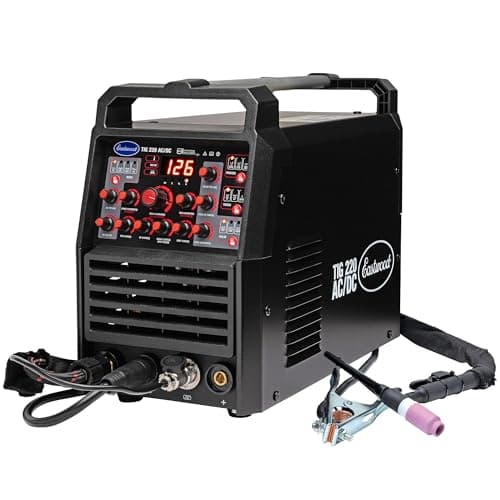 Eastwood TIG 220 AC/DCThe highest published household-circuit figure here: 10 to 140 A on 120 V, from an AC/DC machine that arrives complete. | Best overall on 120 V | $1,019.99 · View on Amazon #ad How this is funded · Price as of November 13, 2026 |
| 2 | 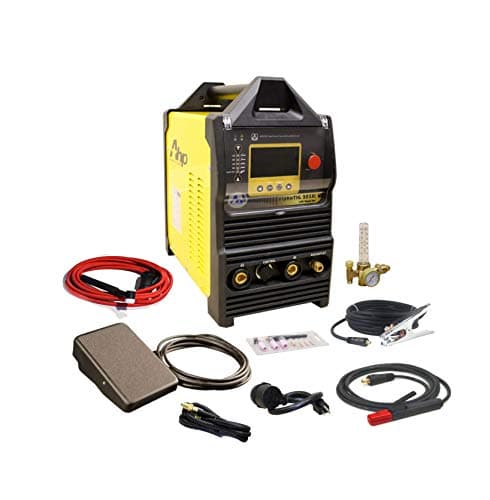 AHP AlphaTIG 200X10 to 200 A AC/DC with a 60% duty cycle and 30-70% AC balance, dual voltage — but the 110 V output is not stated. | Best AC/DC value | $689.00 · View on Amazon #ad How this is funded · Price as of November 13, 2026 |
| 3 | 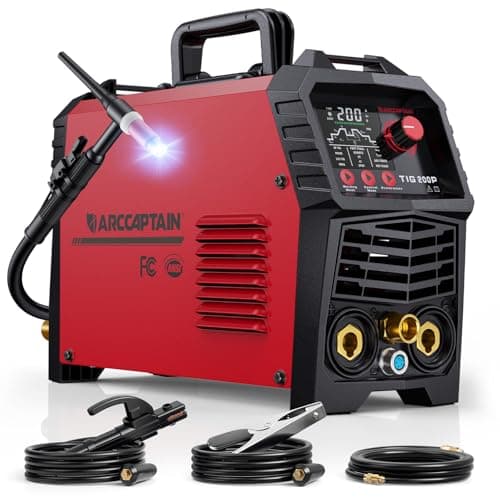 ARCCAPTAIN TIG200P11.8 lb, genuine high-frequency DC start, 10 to 200 A and a 60% duty cycle — DC only, with no aluminum ever. | Best lightweight 120 V option | $249.99 · View on Amazon #ad How this is funded · Price as of November 13, 2026 |
| 4 | 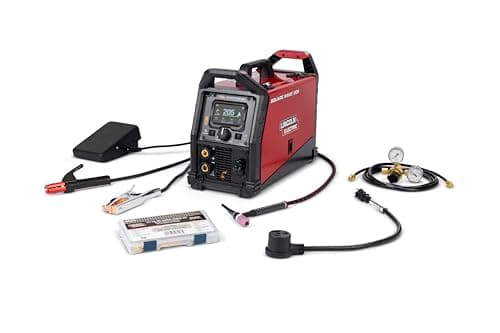 Lincoln Electric Square Wave 205The only machine here that publishes its 120 V output: 8 to 125 A of AC/DC TIG, with Lincoln's dealer network behind it. | Best supported | $1,598.99 · View on Amazon #ad How this is funded · Price as of November 13, 2026 |
The short answer
The best 120-volt TIG welder is the Eastwood TIG 220 AC/DC — it publishes the highest household-circuit output of any machine in this class: 10 to 140 A on 120 V against 10 to 220 A on 240 V, with a 120 V duty cycle stated as well and the torch, pedal and regulator in the box. There are no 120-volt-only TIG machines at this level, only dual-voltage ones, and most do not state their low-side output at all.
That framing is the whole reason this page exists. Search for a 120-volt TIG welder and you will be shown dual-voltage machines advertised on their 220-volt numbers, because those are the big numbers. If you are going to run one on the outlet in your garage, the 220-volt figure is not the figure you are buying.
What each one publishes for a household circuit
| Machine | Current type | Output on 220/230 V | Output on 110/120 V | Duty cycle | Weight |
|---|---|---|---|---|---|
| Eastwood TIG 220 AC/DC | AC/DC | 10–220 A TIG; 20–180 A stick | 10–140 A TIG; 20–120 A stick | AC TIG 40% at 220 A; 60% at 179 A | 22.93 lb |
| AHP AlphaTIG 200X | AC/DC | 200 A | Not published | 60% at 200 A TIG | 50 lb |
| ARCCAPTAIN TIG200P | DC only | 200 A TIG / 170 A stick | Not published | 60% | 11.8 lb |
| Lincoln Square Wave 205 | AC/DC | 8–205 A TIG; 15–170 A stick | 8–125 A TIG; 15–90 A stick | 25% at 200 A TIG | 36 lb |
Two of four. That is the state of disclosure in this category, and it is the most useful thing we can tell you about it. An unpublished figure is not a bad figure — it is an unknown one, and on a purchase you are making specifically because of the circuit you have, an unknown is not neutral.
What 120 V costs you on TIG specifically
TIG is less punished by a household circuit than MIG is, and it is worth understanding why before you decide the reduced output is a problem.
TIG runs at lower amperage for the same work. A TIG arc concentrates heat rather than depositing filler at speed, so the amperage you use on thin stainless or a small aluminum bracket is well inside what 110 volts can deliver. Where a MIG machine on 120 V hits its ceiling on a quarter-inch fillet, a TIG machine at the same supply is nowhere near it on the work TIG is actually for.
TIG work is slow and intermittent. Duty cycle is a far smaller constraint when you are positioning filler rod, repositioning the torch and inspecting as you go. Both AC/DC machines here publish 40 to 60% duty cycles, and TIG practice rarely approaches either.
What you do lose is thickness and aluminum. This is the real limit. Aluminum conducts heat away aggressively, so it needs more amperage than steel of the same thickness, and that is exactly where a reduced 110-volt ceiling bites. TIG welders for aluminum covers that properly.
Dedicated circuit, not just any outlet
A 120-volt TIG machine still wants its own circuit. Sharing with a freezer or a shop compressor is how you get nuisance trips you then blame on the machine. What size breaker a welder needs covers reading the rating plate, and how many amps a welder uses explains why input and output amps are completely different numbers.
AC or DC is the bigger decision than voltage
If you take one thing from this page beyond the Eastwood's published figure, make it this: choosing DC-only to save money is a far more consequential decision than choosing a 120-volt supply.
A reduced voltage limits how thick you can go. DC-only output rules out an entire metal, permanently, with no upgrade path. Aluminum requires alternating current to break up the oxide layer, and no torch, gas, filler or setting substitutes for it — AC versus DC TIG sets out why.
The ARCCAPTAIN is on this page because high-frequency DC start at its price and weight is genuinely useful, and because plenty of people only ever want steel and stainless. But it is listed third with its limitation stated twice, deliberately.
How we ranked these
Published 110-volt output first. On a 120-volt page, a manufacturer stating the figure outranks one offering more amps it will not quantify at your supply.
AC capability second, because it is the permanent decision and the expensive mistake.
What ships in the box third. The Eastwood's gas-lens flex torch, foot pedal, argon regulator/flowmeter and 120 V adapter cord are the four purchases everybody else makes separately — which changes the real cost comparison against the cheaper machine. Our Eastwood TIG 220 versus AHP AlphaTIG 200X comparison works that trade through in full.
Nothing credited to an unstated specification. Two of these four leave the 120-volt figure blank, and the table shows it rather than filling it in. Our how we pick page sets out the method, including the fact that we have tested none of these machines.
If the 240 V circuit might happen later
This page is scoped to machines judged on what they do at 120 V. If you expect to run a 240 V circuit eventually and want the welder to survive that upgrade rather than be replaced by it, the best dual voltage TIG welders ranks the same class of machine on how honestly each one publishes its output on both supplies — which is the figure that tells you what you are buying now and what you are buying later.
1. Best overall on 120 V
Eastwood TIG 220 AC/DC
The highest published household-circuit figure here: 10 to 140 A on 120 V, from an AC/DC machine that arrives complete.
Eastwood publishes AC/DC TIG and stick, 120 V or 240 V single-phase input, an AC TIG duty cycle of 40% at the full 220 A and 60% at 179 A, capacity up to a quarter inch, high-frequency arc starting, and a WP-17F flex-head torch with the gas-lens collet body already fitted. Critically, it states the split for both processes: TIG 10 to 140 A on 120 V against 10 to 220 A on 240 V, and stick 20 to 120 A on 120 V against 20 to 180 A on 240 V.
Those published numbers are why it leads. Two of the four machines here tell you what they do on 240 V and leave the 120 V figure to your imagination, and on a page about 120-volt TIG that is the one specification that cannot be guessed. Of the two that do state it, Eastwood states the higher figure — 140 A against the Lincoln's 125 A — at well under the Lincoln's money. 140 amps of AC/DC TIG on a household circuit is a real capability: enough for aluminum up to around an eighth of an inch and for steel well past what most home work needs.
Eastwood also publishes a 120 V duty cycle, which is rarer still: 40% at 140 A in AC TIG, 60% at 115 A, 100% at 89 A. On a household circuit that is the figure that actually governs how long you can weld, and nobody else on this page prints it.
The 120 V adapter cord is in the box with the torch, pedal and argon regulator/flowmeter, so moving between a garage outlet and a 240 V circuit needs no second purchase.
Two honest costs. It is dearer than the AlphaTIG, with the bundled kit accounting for a good part of that, and its 40% duty cycle at the full 220 A is lower than the AlphaTIG's published 60% at 200 — though both are far beyond hobby demand, and especially so on 120 V where you cannot reach maximum anyway.
What works
- It publishes both supply figures — 10 to 220 A on 240 V and 10 to 140 A on 120 V — so you can size the circuit before you buy instead of after
- Adjustable AC balance and AC frequency plus pulse frequency, peak on-time and base current: the controls that actually change how aluminum behaves
- Flex-head torch with a gas-lens kit, foot pedal, argon regulator/flowmeter and ground clamp are all in the box. Only the gas bottle is extra
- 22.93 lb. Almost nothing else in the AC/DC class is light enough to carry to the work rather than the other way round
What does not
- The 40% duty cycle applies at the full 220 A in AC TIG; the 60% figure is at 179 A. The AlphaTIG publishes 60% at 200 A
- The bundled torch is a WP-17 pattern — widely supported and cheap on consumables, but not a branded premium torch
- Full output needs the 240 V circuit. On 120 V Eastwood publishes 140 A in TIG and 120 A in stick, roughly two-thirds of the machine
- Eastwood publishes one 1/4 in capacity figure for the machine rather than separate steel and aluminum numbers, so there is less to compare on than some rivals give you
2. Best AC/DC value
AHP AlphaTIG 200X
10 to 200 A AC/DC with a 60% duty cycle and 30-70% AC balance, dual voltage — but the 110 V output is not stated.
AHP publishes AC/DC TIG and stick, 10 to 200 A of TIG output, a 60% duty cycle at 200 A TIG and 35% at 155 A stick, 30 to 70% AC balance adjustment, mild steel capacity from 24 gauge to 3/8 inch with aluminum to a quarter inch, 110 V or 220 V single-phase input, and a weight of 50 lb.
It is the default first AC/DC machine for good reasons — AC output is what makes aluminum possible at all, and this is the cheapest widely supported machine that has it. The adjustable AC balance is the control that actually changes how aluminum behaves, letting you trade cleaning action against penetration rather than accepting one compromise.
What keeps it second on this page is the blank. AHP does not separately publish a 110 V output figure, so you are buying a dual-voltage machine without knowing what the low side gives you. That is not a criticism of the machine; it is a criticism of the spec sheet, and on a 120-volt page it is the material fact.
The bundled torch and consumables are the first thing most owners replace, the manual is thin, and 50 lb with a foot pedal means it lives in one place.
What works
- AC output is what makes aluminum possible at all — this is the cheapest widely supported machine that has it
- 60% duty cycle at 200 A is a genuinely high rating for the price
- Adjustable AC balance lets you trade cleaning action against penetration instead of accepting one compromise
What does not
- The bundled torch and consumables are the first thing most owners replace
- The manual is thin. Budget time for learning the machine as well as the process
- 50 lb and a foot pedal means it lives in one place
Who this is wrong for: Anyone who needs to know the 120 V output before buying. If that figure is the deciding factor, the Eastwood is the machine that states it.
3. Best lightweight 120 V option
ARCCAPTAIN TIG200P
11.8 lb, genuine high-frequency DC start, 10 to 200 A and a 60% duty cycle — DC only, with no aluminum ever.
ARCCAPTAIN publishes DC TIG with high-frequency non-contact start at 10 to 200 A, stick at 10 to 170 A, a 60% duty cycle, dual 110 V or 220 V input, and a weight of 11.8 lb.
On a household-circuit page, 11.8 lb is more relevant than it looks. The reason people want 120-volt TIG is usually mobility — welding where the outlet is rather than where the machine lives — and a machine you can carry in one hand with a torch in the other is the honest expression of that.
High-frequency start is the specification to insist on at this price. Scratch start is not a cheaper version of the same thing: it contaminates the tungsten on every strike, and on thin stainless that is the difference between a clean arc and a grey, dirty one.
The limitation is absolute and singular. DC only, which means no aluminum now or ever and no accessory that changes it. Pulse and spot TIG are included and help on thin stainless, but neither reaches aluminum. A foot pedal and a better torch are both extra and both worth budgeting for.
What works
- High-frequency start rather than scratch start — the difference between a clean arc and a contaminated tungsten on every single strike
- 11.8 lb, so it goes to the work instead of the work coming to the bench
- Dual voltage, so it runs on a household outlet now and a 240 V circuit later
- The lowest price at which HF DC TIG is genuinely available from a supported brand
What does not
- DC only. No aluminum, now or ever, and no accessory changes that
- Still DC only, so the pulse that helps on thin stainless does nothing for aluminum
- A foot pedal and a better torch are extra, and both are worth budgeting for
Who this is wrong for: Aluminum of any kind. Buying DC and then deciding you want AC means buying a second machine — see AC versus DC TIG before you commit.
4. Best supported
Lincoln Electric Square Wave 205
The only machine here that publishes its 120 V output: 8 to 125 A of AC/DC TIG, with Lincoln's dealer network behind it.
Lincoln publishes AC/DC TIG, pulsed TIG and stick on 120 V or 230 V input, and — unusually for this page — publishes the two supplies separately: TIG 8 to 125 A and stick 15 to 90 A on 120 V, TIG 8 to 205 A and stick 15 to 170 A on 230 V.
That published 120 V figure is the reason it leads a 120 V page. Most dual-voltage machines quote one headline amperage and leave you to discover what the household circuit actually gives you; here you can plan around 125 amps before you buy.
The other half of the argument is support. Lincoln's dealer and service network is the best in the category, which is the thing you care about on exactly one day — the day something goes wrong — and not at all before then.
The cost is the price. It is substantially dearer than the AlphaTIG for comparable output, and the 205 A headline is a 230 V number — on 120 V this is a 125 amp machine for roughly three times an AlphaTIG.
What works
- Lincoln's dealer and service network is the best in the category if something goes wrong
- A Foot Amptrol, torch, regulator and lead set all ship in the box, so the ticket price is close to the real cost of welding
- Adjustable pulse, AC frequency and AC balance — the three controls that actually change how aluminum behaves
What does not
- Costs substantially more than the AlphaTIG or the Eastwood for comparable output
- On a 120 V circuit TIG output is capped at 125 A, so the 205 A headline is the 230 V figure
Questions people actually ask
What is the best 120V TIG welder?
The Eastwood TIG 220 AC/DC, because it publishes the highest household-circuit output in this class and the duty cycle that goes with it: TIG 10 to 140 A on 120 V against 10 to 220 A on 240 V, and 40% duty cycle at 140 A on the low side. The flex-head torch, foot pedal, argon regulator and 120 V adapter cord are in the box.
On a page about 120-volt operation, a stated low-side figure is worth more than a larger 240-volt number the manufacturer will not break down.
Are there any 120V-only TIG welders?
Not meaningfully at this level. Every TIG machine in this price class is dual voltage, running on either 110/120 V or 220/240 V, and is usually advertised on its 220-volt output figure.
That is why the useful question is not whether a machine runs on 120 V, but what it actually produces when it does - and only two of the four machines here state it.
Can you TIG weld aluminum on 120V?
Yes, with an AC/DC machine, and thickness is the limit rather than the metal. Aluminum conducts heat away aggressively, so it needs more amperage than steel of the same thickness, and that is where a reduced 110-volt ceiling bites.
A DC-only machine cannot weld aluminum at any voltage. That is the permanent decision, and it matters far more than the supply.
Is 120V enough for TIG welding?
For most of what home TIG is actually used for, yes. TIG runs at lower amperage than MIG for comparable work, and it is slow and intermittent, so duty cycle is rarely the constraint.
Where 120 volts stops being enough is thickness - particularly on aluminum, and particularly past about an eighth of an inch.
Does a 120V TIG welder need a dedicated circuit?
Yes. Sharing a circuit with a freezer, a compressor or shop lighting is how you get intermittent breaker trips that feel like a machine fault.
Check the rating plate for the machine's rated input amperage and give it a dedicated circuit of at least that rating, with no extension cord while you are diagnosing anything.
Should I buy DC-only TIG to save money?
Only if you are certain you will never weld aluminum, because DC-only rules out that metal permanently and no accessory changes it.
If you are sure, the saving is real and high-frequency DC start at the ARCCAPTAIN's price and weight is genuinely good value. If you are not sure, buying DC and then wanting AC means buying twice.
How much output do you lose on 120V?
Where a manufacturer publishes both figures, roughly a third to two fifths: Eastwood states 140 A on 120 V against 220 A on 240 V, and Lincoln states 125 A against 205 A.
The other two machines on this page do not publish a 120-volt figure, so for those the loss is unstated rather than known - which is itself worth factoring into the decision.
Sources
- Eastwood — TIG 220 AC/DC (SKU 74010) published specification table: TIG 10–220 A on 240 V and 10–140 A on 120 V, stick 20–180 A and 20–120 A, AC TIG duty cycle 40% at 220 A / 60% at 179 A on 240 V and 40% at 140 A / 60% at 115 A on 120 V, high-frequency start, 22.93 lb
- Eastwood — TIG 220 AC/DC product overview: adjustable AC waveform, balance and frequency, adjustable pulse, WP-17F flex-head torch with gas lens kit, foot pedal, argon regulator/flowmeter and adapter cord in the box
- AHP — AlphaTIG 200X published specifications: 10–200 A AC/DC TIG, 60% duty cycle at 200 A, 30–70% AC balance, 110 V or 220 V, 50 lb
- ARCCAPTAIN — TIG200P published specifications: 10–200 A DC TIG with HF start, 10–170 A stick, 60% duty cycle, dual voltage, 11.8 lb
- Lincoln Electric — Square Wave 205 (K5613-1) published specifications: AC/DC and pulsed TIG and stick; TIG 8–205 A and stick 15–170 A on 230 V; TIG 8–125 A and stick 15–90 A on 120 V; 36 lb
- NFPA 70, National Electrical Code — branch circuits for welding machines
Read next
- The best TIG welders for beginners
AC/DC machines for a first TIG setup, and why the bundled torch matters as much as the welder.
- The best TIG welders for home use
TIG machines chosen for a real garage — circuit, bottle, space and noise, not headline amperage.
- AC vs DC TIG: which do you actually need?
What AC output does, why DC cannot weld aluminum, and how to decide before you buy.
- 120V vs 240V welders: which one do you actually need?
The decision that sets your ceiling: what each supply voltage welds, and what the circuit really costs.
- The best 120V welders for beginners
Machines that run on an ordinary household circuit, and what that ceiling means for what you can build.
- Level 3 · TIG: aluminum, stainless, and welds you meant to look like that
TIG is slower, harder and more expensive than wire welding. It is also the only way to weld aluminum properly at home, and the only way to get a bead you would photograph.
- Eastwood TIG 220 vs AHP AlphaTIG 200X
The two AC/DC TIG machines most home buyers shortlist, compared on the specifications that actually differ — and why the PrimeWeld TIG225X is no longer one of them.
Back to Level 3 · TIG, or start over at Find Your Level.
Ryder M.
Ryder M. is the hands-on owner behind Magoo Media Group. He writes Arc & Bead's buying guides and picks every machine on the site. What every recommendation is based on — and what it is not based on — is set out on How We Pick.