The best TIG welders for aluminum
Aluminum is the reason most people buy a TIG machine. It is also the reason a DC machine, however good, is the wrong purchase.
Arc & Bead is an Amazon Associate. If you buy through a link on this page we may earn a commission, at no extra cost to you. We have not physically tested the machines on this page and we say so on How We Pick.
Quick picks
Tap any row to jump to the full write-up further down this page.
| # | Product | Best for | Price |
|---|---|---|---|
| 1 | 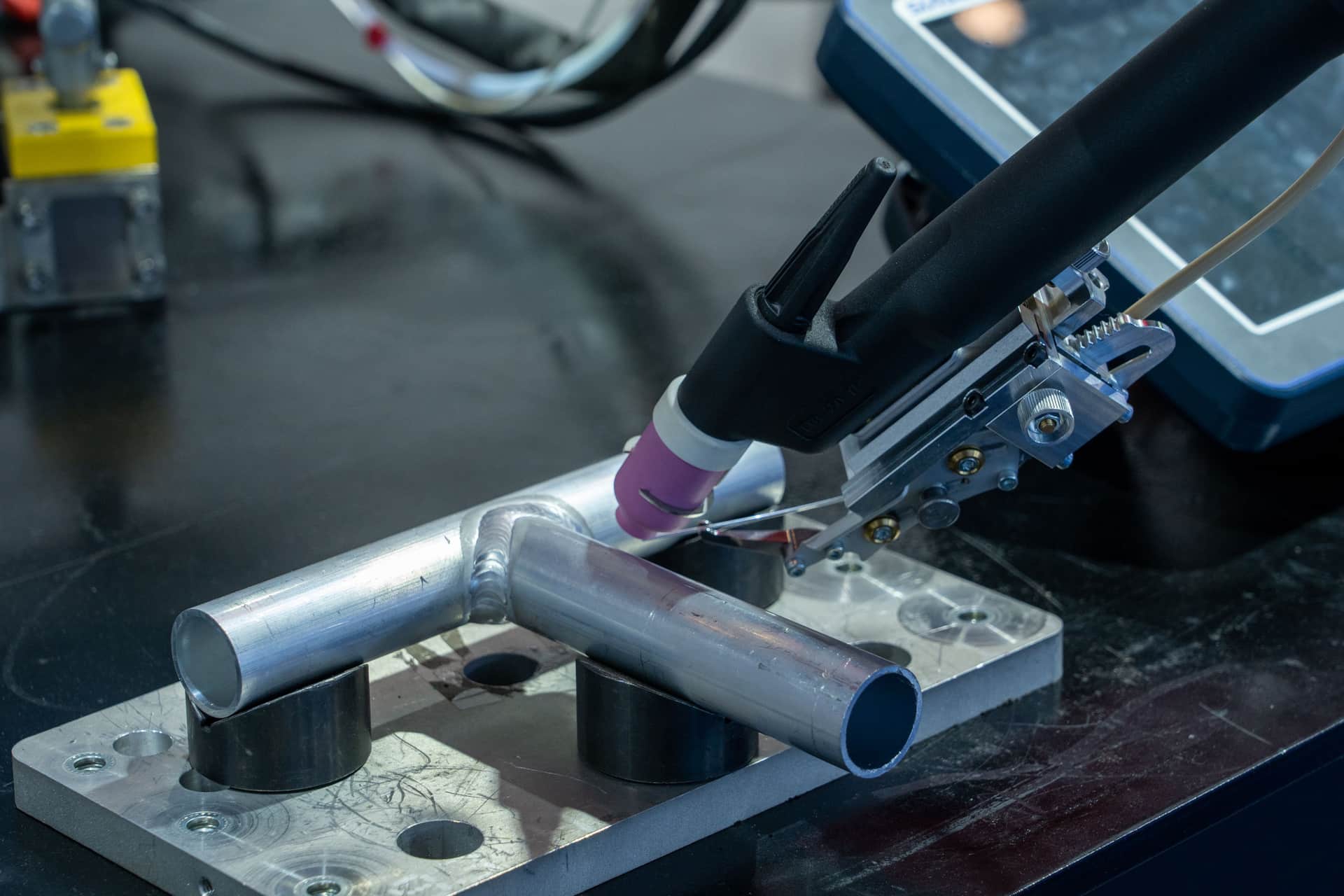 PrimeWeld TIG225XAC balance, AC frequency and pulse all adjustable, plus a genuine CK17 torch. | Best overall for aluminum | |
| 2 | AHP AlphaTIG 200XAC balance from 30 to 70 percent, 60% duty cycle, and 1/4 inch aluminum capacity. | Best value for aluminum | |
| 3 | Everlast PowerTIG 210EXTDeeper waveform and pulse adjustment than anything else at the price. | Most parameter control | |
| 4 |  CK Worldwide 2% lanthanated tungsten electrodesWorks on AC and DC, so one box covers aluminum and steel. | The right tungsten for AC |
Why aluminum needs AC
Aluminum instantly grows an oxide skin that melts at roughly three times the temperature of the metal beneath it. On AC, the electrode-positive half of each cycle blasts that oxide apart — the cleaning action — while the electrode-negative half does the heating. On DC there is no cleaning half, so you push a dirty, gray, unstable puddle around.
The three controls that matter
AC balance sets the split between the cleaning and penetrating halves of each cycle. More cleaning for dirty, anodized or salvaged aluminum; more penetration for thick clean material. This is the dial you actually use, and a machine without it forces one fixed compromise on every job.
AC frequency controls arc cone width. Higher frequency gives a narrower, more focused, stiffer arc — useful in fillets and corners where a wide arc heats everything nearby. Lower frequency gives a broader arc that suits wide flat welds.
Pulse alternates high and low current many times per second. On thin aluminum it is close to essential, because it delivers enough peak heat to fuse without accumulating enough average heat to collapse the part.
Aluminum's other problem: conductivity
Less discussed than the oxide and just as consequential in practice.
Aluminum conducts heat away from the joint far faster than steel. That produces a counterintuitive combination: aluminum needs more amperage than steel of the same thickness to get started, and then gets progressively easier to burn through as the whole part warms up.
Two consequences. First, it is why a 200-amp machine publishes three-eighths of an inch on steel and only a quarter inch on aluminum. Second, it is why the foot pedal matters so much — you genuinely do need to back off as the part heats, and there is no way to preset that.
On thicker aluminum, gentle preheat helps considerably: it stops the cold mass of the part stealing heat faster than the arc supplies it.
Filler rod for aluminum
Two alloys cover almost everything, and they are not interchangeable.
ER4043 flows well, produces a smoother bead, and is more forgiving to run. It is the usual choice for castings and general repair work.
ER5356 is stronger and harder, and it anodizes more consistently if the part will be finished. Structural work usually specifies it.
For a first attempt, ER4043 is easier. If the joint carries load or the part will be anodized, ER5356 is the right answer.
Cleaning, which is not optional here
Aluminum TIG is far less forgiving of surface contamination than steel, and the oxide starts reforming within minutes of cleaning.
Use a stainless steel wire brush reserved exclusively for aluminum. A brush that has touched steel embeds steel particles into the soft aluminum surface, and those particles contaminate the weld in a way that is genuinely difficult to diagnose.
Degrease first, brush second, weld immediately. Doing it in the other order pushes contaminants into the freshly abraded surface.
The alternative, honestly
If the aluminum is thicker than an eighth of an inch, the joint is utility rather than visible, and you already own a compatible MIG machine, a spool gun is a much cheaper route to a structurally sound weld. Welding aluminum with a MIG welder covers it, and TIG versus MIG for aluminum compares the results directly.
Where TIG becomes the only answer is thin aluminum, and anything where the weld will be seen.
Before you buy: check for AC
DC-only TIG machines and AC/DC machines are often listed at similar prices with the difference buried in a specification list. If aluminum is why you are buying, the machine must say AC/DC — and no accessory, torch or setting adds AC to a DC machine.
1. Best overall for aluminum
PrimeWeld TIG225X
AC balance, AC frequency and pulse all adjustable, plus a genuine CK17 torch.
Aluminum is where TIG's adjustable parameters stop being specifications and start being the job. PrimeWeld publishes adjustable AC balance, AC frequency and pulse alongside 10 to 225 amps, a 40% duty cycle at maximum, and aluminum capacity to a quarter inch.
Those three controls are exactly what aluminum asks for. Balance sets how aggressively you break the oxide; frequency focuses the arc; pulse lets you manage heat on thin material where aluminum's conductivity works against you.
The CK17 flex-head torch matters more on aluminum than on steel, because aluminum work is often awkward angles on fabricated parts, and a flexible head reaches what a rigid one does not.
What works
- It ships with a genuine CK Worldwide CK17 torch — the part everyone else upgrades to, included
- Auto voltage detection means no switch to set wrong
- Adjustable AC balance, AC frequency and pulse — the three controls that actually change how aluminum behaves
What does not
- 40% duty cycle at maximum is lower than the AlphaTIG's 60%, though both are far beyond hobby demand
- Costs meaningfully more than the AlphaTIG; the CK torch accounts for a good part of it
- Like every AC/DC inverter in this class it is heavy and wants a permanent bench spot
2. Best value for aluminum
AHP AlphaTIG 200X
AC balance from 30 to 70 percent, 60% duty cycle, and 1/4 inch aluminum capacity.
AHP publishes AC balance adjustable from 30 to 70 percent, AC/DC TIG at 10 to 200 amps, a 60% duty cycle at 200 amps, and aluminum capacity to a quarter inch.
The 30 to 70 percent balance range is wide enough to cover everything from heavily oxidized salvage aluminum to clean new stock, which is the practical requirement.
Aluminum's thermal conductivity means longer arc-on times than steel at the same thickness, so the 60% duty cycle is worth more here than the specification sheet implies.
The bundled torch is the first upgrade most owners make.
What works
- AC output is what makes aluminum possible at all — this is the cheapest widely supported machine that has it
- 60% duty cycle at 200 A is a genuinely high rating for the price
- Adjustable AC balance lets you trade cleaning action against penetration instead of accepting one compromise
What does not
- The bundled torch and consumables are the first thing most owners replace
- The manual is thin. Budget time for learning the machine as well as the process
- 50 lb and a foot pedal means it lives in one place
3. Most parameter control
Everlast PowerTIG 210EXT
Deeper waveform and pulse adjustment than anything else at the price.
Everlast publishes AC/DC TIG up to 210 amps on 120 or 240 volts, with deeper pulse and waveform control than its price peers, and US-based support.
For aluminum specifically, waveform control is genuinely useful once you know what you are doing with it — different AC waveforms change how the arc behaves on different alloys and thicknesses.
The honest caveat is that this is capability for later. On a first machine the number of adjustable parameters is overwhelming, and adjustments you cannot yet use are a distraction rather than an advantage.
What works
- Deep pulse and waveform control — more adjustable than anything else at this price point
- US-based support and parts availability, which is not the norm in this price bracket
What does not
- The number of adjustable parameters is genuinely overwhelming on a first TIG machine
- Priced above the AlphaTIG and PrimeWeld for capability most Level 3 welders will not reach for a year
Who this is wrong for: A first TIG machine for someone still learning to hold an arc length. The extra controls are ones you cannot yet use meaningfully.
4. The right tungsten for AC
CK Worldwide 2% lanthanated tungsten electrodes
Works on AC and DC, so one box covers aluminum and steel.
Aluminum on AC is hard on tungsten — the electrode-positive half of each cycle heats the tip, which is why AC tungsten balls over rather than staying pointed.
Two percent lanthanated handles AC well and works on DC too, so one box covers both. Blue band, commonly in 1/16, 3/32 and 1/8 inch.
Keep a dedicated grinding wheel for it. A wheel shared with steel embeds particles in the tip and contaminates the arc, and on aluminum contamination shows immediately.
What works
- Works on AC and DC, so one box covers aluminum and steel and you stop thinking about it
- Contains no thorium, so grinding dust carries no radioactive-material handling question
What does not
- More expensive per electrode than unbranded tungsten of the same designation
- Still needs a dedicated grinding wheel — sharing a wheel with steel contaminates the tip
Questions people actually ask
Can you weld aluminum with DC TIG?
Not practically. Aluminum's oxide layer melts far hotter than the metal beneath it, and AC's electrode-positive half-cycle is what breaks that oxide up.
On DC you end up pushing a dirty, gray, unstable puddle around. There is no accessory that adds AC to a DC machine.
What AC balance setting for aluminum?
More cleaning for dirty, anodized or salvaged aluminum; more penetration for thick clean stock. Machines typically offer a range around 30 to 70 percent.
Start mid-range, then move toward cleaning if the puddle looks gray and sluggish, or toward penetration if it is clean but shallow.
ER4043 or ER5356 for aluminum?
ER4043 flows better and produces a smoother bead, which makes it easier to learn on and the usual choice for castings and general repair.
ER5356 is stronger and anodizes more consistently, so structural work and parts that will be finished usually specify it.
Why is my aluminum weld gray and dirty?
Usually oxide that has not been cleaned, or too little cleaning action. Brush with a stainless brush used only on aluminum, immediately before welding, and increase the cleaning side of AC balance.
A brush that has touched steel embeds particles in the aluminum and contaminates the weld.
Why does aluminum need more amps than steel?
Because it conducts heat away from the joint far faster, so you are heating the whole part rather than just the weld area.
That also means the part gets progressively easier to burn through as it warms, which is why a foot pedal matters so much on aluminum.
Sources
Read next
- AC vs DC TIG: which do you actually need?
What AC output does, why DC cannot weld aluminum, and how to decide before you buy.
- TIG vs MIG for aluminum
How to decide by thickness and by whether the weld will be seen. Both processes work.
- Can you weld aluminum with a MIG welder?
Yes, with a spool gun, argon and aluminum wire. What the result looks like, and when TIG wins.
- The best TIG welders for beginners
AC/DC machines for a first TIG setup, and why the bundled torch matters as much as the welder.
- Can you weld aluminum with flux core?
No, and the reason is chemistry rather than technique. What to do instead, by budget.
- Level 3 · TIG: aluminum, stainless, and welds you meant to look like that
TIG is slower, harder and more expensive than wire welding. It is also the only way to weld aluminum properly at home, and the only way to get a bead you would photograph.
Back to Level 3 · TIG, or start over at Find Your Level.
Ryder M.
Ryder M. is the hands-on owner behind Magoo Media Group. He writes Arc & Bead's buying guides and picks every machine on the site. What every recommendation is based on — and what it is not based on — is set out on How We Pick.