The best pilot arc plasma cutters
A pilot arc is the one plasma feature that changes what you can cut rather than how fast you cut it. Here are the three machines in our registry that publish one, ranked on what they can do with it.
Arc & Bead is an Amazon Associate. If you buy through a link on this page we may earn a commission, at no extra cost to you. We have not physically tested the machines on this page and we say so on How We Pick.
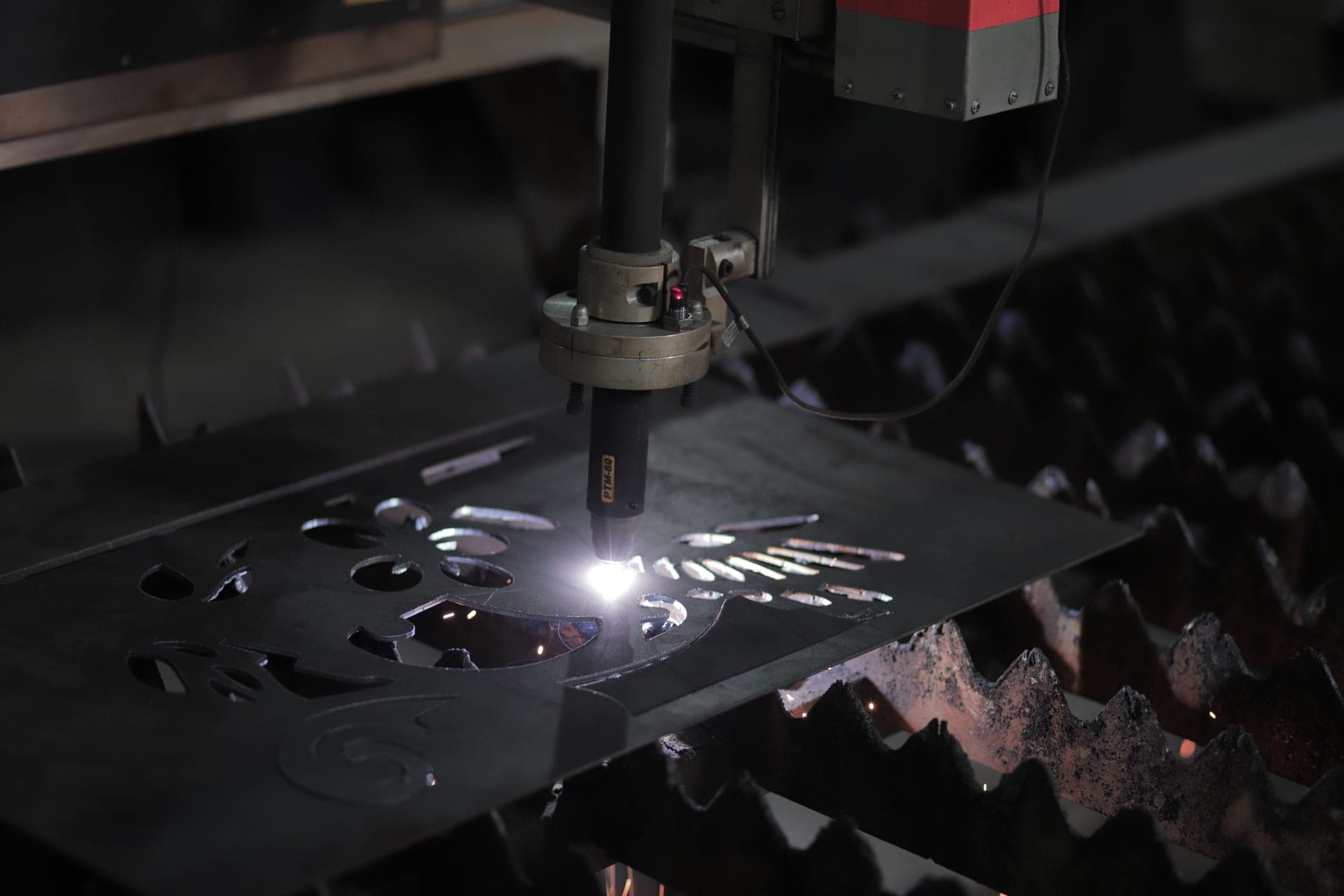
Quick picks
Tap any row to jump to the full write-up further down this page.
| # | Product | Best for | Price |
|---|---|---|---|
| 1 | 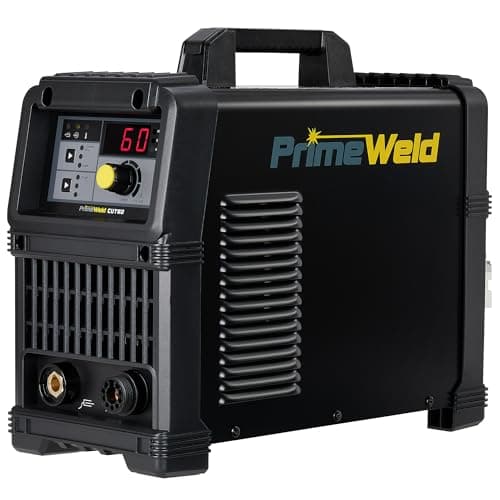 PrimeWeld CUT60A blowback non-HF pilot arc with 60 A on tap and a 7/8 in published capacity - the pilot-arc machine with the most cutting behind the feature. | Best overall | $699.00 · View on Amazon #ad How this is funded · Price as of November 28, 2026 |
| 2 | 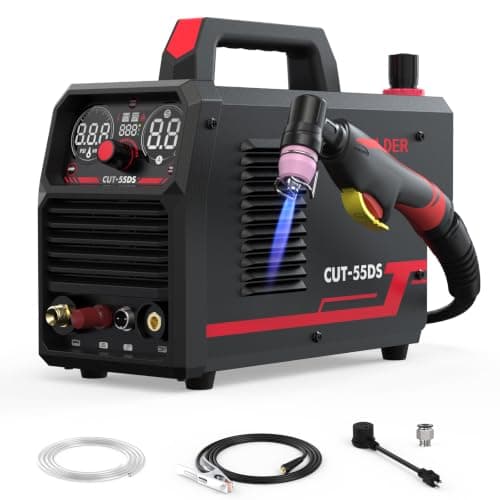 YESWELDER CUT-55DSThe cheapest dual-voltage pilot-arc machine here, and the only one that dials down to 10 A for thin sheet. | Budget pick | |
| 3 | 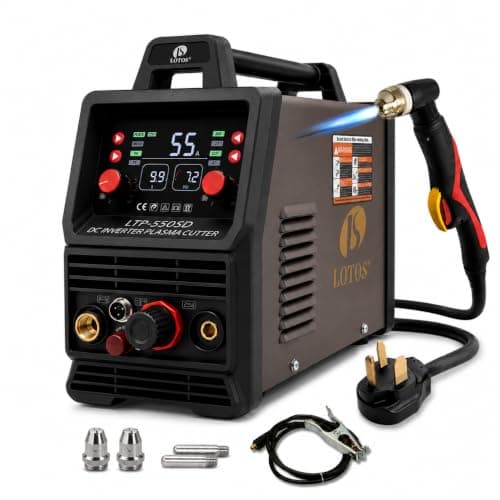 Lotos LTP5505DA non-touch pilot arc with a published 5/8 in clean cut and 3/4 in severance on 240 V, for a fraction of the machine above it. | Most capacity per dollar |
The short answer
A pilot arc is a small arc the machine strikes inside the torch, before the torch touches anything. It means you can start a cut on rusty, painted, galvanized or expanded metal — and across a gap — where a touch-start machine stalls because it cannot find a circuit.
Our overall pick is the PrimeWeld CUT60: a blowback non-HF pilot arc, 60 A on 240 V and a published 7/8 in capacity, for someone who cuts plate and may one day cut on a table. The budget pick is the YESWELDER CUT-55DS, the cheapest dual-voltage pilot-arc machine here and the only one that dials down to 10 A. For the most published cut capacity per dollar, the Lotos LTP5505D.
One warning that applies to all three: every one needs an external air compressor. If you do not own one, the machine with the compressor inside it is on our built-in compressor page, and it is a different purchase.
Prices in the table above are read from our live price feed when the page loads, each with its own "as of" date inside the buy button. All three machines returned a buyable offer in the refresh generated 2026-11-20, which is what qualified them for this page.
What a pilot arc actually changes
A plasma cutter needs a circuit through the workpiece. On a touch-start machine the torch tip has to make electrical contact with clean metal to strike, and the arc then transfers. That works perfectly on mill-finish plate and fails on four things you meet constantly: rust, paint, galvanising, and the far side of a gap.
A pilot-arc machine strikes a small arc between the electrode and the nozzle inside the torch and uses air to blow it out into the open. You bring that lit arc to the work. There is nothing to make contact with, so the condition of the surface stops mattering and you can start on expanded mesh, on the edge of a hole, or mid-air over a slot.
Three practical consequences follow. Consumables last longer, because touch-starting is what chews nozzles. Cutting rusty stock stops being a two-step job with a grinder first. And a cut you have to restart mid-line restarts without hunting for a clean spot.
Blowback or high frequency - the split inside the feature
"Pilot arc" does not describe one mechanism. There are two, and the difference decides one purchase in particular.
High-frequency ignition uses a high-voltage, high-frequency circuit to jump the gap and light the pilot arc. It is cheap, it works, and it radiates electrical noise — enough to interfere with CNC controllers, torch-height controllers and sometimes nearby electronics.
Blowback start moves the electrode mechanically to strike the arc, and air pressure then blows it back into position. No HF circuit means no HF noise. That is why PrimeWeld can publish the CUT60 as CNC compatible and YESWELDER does not say the same of the CUT-55DS.
If a CNC table is anywhere in your plan, buy the non-HF machine.
Retrofitting is not really an option: HF noise is a property of how the machine starts. Our HF vs non-HF plasma cutters page covers what the noise does to a controller and why shielding is a poor fix. For hand cutting only, HF ignition is a non-issue and you can ignore this section entirely.
What each one publishes
| Machine | Arc start | Output | Published cut | Duty cycle | Air |
|---|---|---|---|---|---|
| PrimeWeld CUT60 | Blowback non-HF pilot arc, CNC compatible | 20-30 A (120 V); 20-60 A (240 V) | Up to 7/8 in (20 mm) steel | 60% at max; 100% at 23 A / 46 A | External; 40-75 PSI, 5 CFM at 90 PSI |
| Lotos LTP5505D | Non-touch pilot arc | 20-55 A (240 V); 20-35 A (120 V) | 5/8 in clean, 3/4 in severance (240 V) | 60% at 55 A; 100% at 43 A (240 V) | External; front-panel regulator and gauge |
| YESWELDER CUT-55DS | Non-touch pilot arc, HF ignition | 10-55 A (220 V); 10-35 A (110 V) | 3/8 in rated, 1/2 in clean max, 3/4 in severance | 60% at 55 A; 100% at 35 A (110 V) | External; 55-70 PSI, 6.0 CFM max |
Rated, clean and severance cut are three different numbers
Plasma makers publish up to three capacity figures and they are not interchangeable. The rated or recommended cut is the thickness the machine cuts cleanly at a sensible travel speed, all day. The clean cut is the thickest material it will still sever with an edge worth welding. The severance cut is the thickest it will get through at all — slowly, with cleanup afterwards.
Buy on the rated figure. The YESWELDER publishes a 3/4 in severance cut and a 3/8 in rated cut, and the honest description of that machine is "a 3/8 in cutter". Our plasma cutter cut thickness chart lays the three numbers out side by side, and the 1-inch steel page is where to go if your work is genuinely thick.
The air supply is the hidden half of the purchase
All three machines here need an external compressor, and the CFM figure is where plasma budgets break. 5 CFM at 90 PSI is not a small requirement: a typical pancake or hotdog compressor cannot sustain it, so the machine cuts for thirty seconds and then waits for the tank.
Dry air matters as much as volume. Moisture in the line shortens consumable life and spoils the cut face, which is why a water trap is the first accessory. Plasma cutter air requirements covers the sizing, and plasma cutter consumables explained covers what dirty air costs you in nozzles.
Which one is yours?
You cut plate and might build a table: PrimeWeld CUT60. The blowback start is the only one of the three that belongs near a CNC controller.
You want pilot-arc starting for the least money: YESWELDER CUT-55DS, and the 10 A minimum makes it the thin-sheet machine as well.
You want the most cut capacity per dollar: Lotos LTP5505D — and the best plasma cutters for the price is the value view across the whole range rather than only the pilot-arc machines.
You do not own a compressor: stop here and read the best plasma cutters with a built-in air compressor. A machine that supplies its own air changes the budget more than any feature on this page.
You are not sure plasma is the right tool yet: is a plasma cutter worth it is the honest version of that question, and plasma cutter vs angle grinder is the comparison most people are actually making.
How we picked these
A published pilot arc, or not on the page. Every machine here carries a manufacturer-published arc-start specification naming a pilot or non-touch arc. One registry machine that publishes a pilot arc was excluded because it returned no buyable offer, and one popular dual-voltage machine was excluded because it publishes no arc-start figure at all. We do not infer a feature from a product photograph.
Ranked on what the pilot arc has behind it. Output, duty cycle and rated cut — because a pilot arc on a machine with no amps is a feature you cannot use.
No hands-on, no scores. We have cut nothing with these three. Every figure above is the maker's own published specification, and where a figure is a manufacturer rating rather than a standards-tested one, we say so. More on the method on how we pick.
1. Best overall
PrimeWeld CUT60
A blowback non-HF pilot arc with 60 A on tap and a 7/8 in published capacity - the pilot-arc machine with the most cutting behind the feature.
PrimeWeld publishes the CUT60 as a 120 V or 240 V single-phase machine with 20–30 A output on 120 V and 20–60 A on 240 V, a 60% duty cycle at maximum output (100% at 23 A on 120 V and 46 A on 240 V), a published cutting capacity up to 7/8 in (20 mm) steel, a blowback non-HF pilot arc described as CNC compatible, an IPT60 torch, an air requirement of 40–75 PSI at 5 CFM, a 30 lb weight and a three-year warranty.
The arc-start mechanism is why this one leads. A blowback start lifts the electrode mechanically to strike the pilot arc instead of using a high-frequency circuit to jump it, so you get non-touch starting without the HF noise that upsets nearby electronics — which is also why PrimeWeld can publish it as CNC compatible. If the torch ever goes on a table, that distinction is the whole purchase.
Behind the feature is capacity. 60 A on 240 V and a published 7/8 in capacity mean the pilot arc is still useful at thicknesses where a 50 A machine has run out of arc. The 100% duty cycle at 46 A is the figure to read if you cut long lines rather than short notches.
Against it: it needs an external compressor, and 5 CFM at 90 PSI is a real shop compressor rather than a pancake unit. It is the most expensive machine on this page. And the 120 V side is capped at 30 A, so the capacity you are paying for only exists on a 240 V circuit.
What works
- 60 A gives real headroom on 1/2 in plate instead of treating it as a severance cut
- Pilot-arc start and a well-regarded torch for the price
What does not
- Air demand at 60 A is beyond what a small compressor can sustain — budget for the compressor as part of the purchase
- Dual voltage, but on 120 V PrimeWeld publishes only 20–30 A — half the machine. The 60 A you are paying for needs a 240 V circuit
2. Budget pick
YESWELDER CUT-55DS
The cheapest dual-voltage pilot-arc machine here, and the only one that dials down to 10 A for thin sheet.
YESWELDER publishes the CUT-55DS as a 110 V or 220 V machine with 10–55 A output on 220 V and 10–35 A on 110 V, a 60% duty cycle at 55 A on 220 V and 100% at 35 A on 110 V, a rated cut of 3/8 in (10 mm) at 220 V and 5/16 in (8 mm) at 110 V, a 1/2 in maximum clean cut, a 3/4 in (18 mm) severance cut at 220 V, a non-touch pilot arc with HF ignition, an AG-60 torch and an air requirement of 55–70 PSI at up to 6.0 CFM.
It is the budget pick in the strict sense this site uses: the cheapest machine that still does the job the page is about. The pilot arc is published and the dual voltage is genuine, which is more than the bottom of this category usually offers — pilot-arc starting used to mean paying roughly twice this.
The 10 A minimum is a quietly important specification, and the reason this machine also appears on our sheet-metal page. Nothing else here goes below 20 A, and on thin material the ability to turn the arc DOWN matters more than headroom.
Against it: the pilot arc here is HF-ignited rather than blowback, so this is not the machine for a CNC table — HF vs non-HF plasma cutters is that decision in full. Rated cut is 3/8 in, half the PrimeWeld. And support is a mail-and-wait affair rather than a dealer counter.
What works
- Pilot arc at the bottom of the market, which used to mean paying twice as much
- Dual voltage, so a 110 V outlet gets you started
What does not
- Consumables are the running cost and they do not last like the name brands
- Owner feedback reports more variation between units than the established brands
Who this is wrong for: A CNC plasma table, where the high-frequency start is a liability rather than a detail, and anyone who regularly cuts past 3/8 in plate.
3. Most capacity per dollar
Lotos LTP5505D
A non-touch pilot arc with a published 5/8 in clean cut and 3/4 in severance on 240 V, for a fraction of the machine above it.
Lotos publishes the LTP5505D as an auto-sensing 110/120 V or 220/240 V machine with 20–55 A output on the high supply and 20–35 A on the low one, a 5/8 in (16 mm) clean cut at 240 V and 3/8 in (10 mm) at 120 V, a 3/4 in (19 mm) severance cut at 240 V, a 60% duty cycle at 55 A with 100% at 43 A on 240 V, a non-touch pilot arc, a front-panel air regulator and gauge, and a three-year limited warranty including one-year new replacement.
Per dollar of published cut capacity this is the most machine on the page. A 5/8 in clean cut is within reach of the PrimeWeld's 7/8 in and well past the YESWELDER's 3/8 in, and the pilot arc means that capacity is available on the painted, galvanized and rusted stock most home cutting actually involves.
Auto-sensing input is the convenience detail. There is no voltage switch to set wrong, which on a machine that moves between a garage outlet and a 240 V circuit removes the one mistake that costs a board.
Against it: the 20 A minimum makes it coarser than the YESWELDER on thin sheet, and it needs an external compressor. Note also that this entry is the LTP5505D, the current listing in the LTP family — if you have read older reviews of the LTP5000D, several published figures changed in the revision and the ones above are the current ones.
What works
- Pilot arc means it will start on painted, rusty or galvanized material where a touch-start machine stalls
- 5/8 in clean cut on 240 V is more capacity than most home shops will ever use
- Publishes a complete specification on BOTH supplies — output, clean cut, severance and duty cycle — which most dual-voltage machines do not
What does not
- You must supply clean dry air. A small pancake compressor will not keep up, and wet air destroys consumables fast
- On a 110 V outlet the top end falls from 55 A to 35 A and the clean cut from 5/8 in to 3/8 in
- The output floor is 20 A rather than the 10 A some competing machines publish, so it throttles down less far for thin sheet
- Consumable life is noticeably shorter than Hypertherm's, and the running cost shows it
Questions people actually ask
What is the best pilot arc plasma cutter?
Of the machines in our registry, the PrimeWeld CUT60. PrimeWeld publishes a blowback non-HF pilot arc described as CNC compatible, 20-60 A output on 240 V, a cutting capacity up to 7/8 in steel, a 60% duty cycle at maximum output and a three-year warranty.
The budget pick is the YESWELDER CUT-55DS, which publishes a non-touch pilot arc with HF ignition, dual 110 V / 220 V input and a 10 A minimum output.
What does a pilot arc do on a plasma cutter?
It strikes a small arc inside the torch so the torch never has to touch the workpiece to start a cut. That lets you start on rusty, painted, galvanized or expanded metal, and across a gap, where a touch-start machine cannot find a circuit.
It also extends consumable life, because touch-starting is the main cause of nozzle wear.
Is a pilot arc worth paying for?
If you cut anything other than clean mill-finish plate, yes. Rust, paint and galvanising are the normal condition of material in a home shop, and a touch-start machine makes you grind a clean spot before every start.
If you only ever cut new, clean sheet on a bench, the feature is a convenience rather than a capability.
Is a pilot arc the same as a non-HF start?
No. A pilot arc can be lit either by a high-frequency circuit or by a mechanical blowback action. Both give you non-touch starting; only the blowback type avoids the electrical noise that interferes with CNC controllers.
The PrimeWeld CUT60 publishes a blowback non-HF pilot arc. The YESWELDER CUT-55DS publishes a non-touch pilot arc with HF ignition.
Do pilot arc plasma cutters need a compressor?
All three machines on this page need an external air compressor, with published requirements between 5 and 6 CFM. That is more than a small pancake compressor can sustain.
If you do not own a compressor, a machine with one built in is a different and usually better purchase at this level.
Can a pilot arc cutter cut aluminum and stainless?
Yes. Plasma cuts any electrically conductive metal, and the pilot arc makes no difference to which metals work. What changes is edge quality and how much dross you clean up afterwards.
Our plasma cutters for aluminum and for stainless steel pages cover the speed and edge-finish differences.
Sources
- PrimeWeld - CUT60 published specifications: 120 V or 240 V single phase 50/60 Hz, 20-30 A output on 120 V and 20-60 A on 240 V, 60% duty cycle at maximum output with 100% at 23 A (120 V) / 46 A (240 V), cutting capacity up to 7/8 in (20 mm) steel, blowback non-HF pilot arc described as CNC compatible, IPT60 torch, air requirement 40-75 PSI and 5 CFM at 90 PSI, 30 lb, three-year warranty (registry entry, ASIN B07BYJPGB1)
- Lotos - LTP5505D published specifications: auto-sensing 110/120 V or 220/240 V input, 20-55 A DC on 220/240 V and 20-35 A DC on 110/120 V, clean cut 5/8 in (16 mm) at 220/240 V and 3/8 in (10 mm) at 110/120 V, severance cut 3/4 in (19 mm) at 220/240 V, duty cycle 60% at 55 A and 100% at 43 A on 220/240 V, non-touch pilot arc, external compressor required with front-panel regulator and gauge, three-year limited warranty including one-year new replacement (registry entry, ASIN B0052OX876)
- YESWELDER - CUT-55DS published specifications: 110 V or 220 V 60 Hz input, 10-55 A on 220 V and 10-35 A on 110 V, 60% duty cycle at 55 A (220 V) and 100% at 35 A (110 V), rated cut 3/8 in (10 mm) at 220 V and 5/16 in (8 mm) at 110 V, 1/2 in maximum clean cut, severance cut 3/4 in (18 mm) at 220 V and 9/16 in (14 mm) at 110 V, non-touch pilot arc with HF ignition, AG-60 torch, air 55-70 PSI at up to 6.0 CFM (registry entry, ASIN B083GPXF8Y)
- Arc & Bead live price layer (lib/prices.ts) - a buyable offer and a live price for all three featured machines confirmed against the price feed generated 2026-11-20; the Lotos LTP8000, which also publishes a pilot arc, returned no offer in the same refresh and is deliberately not featured
Read next
- HF vs non-HF plasma cutters
High-frequency versus blowback arc starting, what each costs you, and why CNC users care.
- The best plasma cutters for sheet metal
Four plasma cutters ranked for thin-gauge work on published minimum amperage, duty cycle at low output and air supply, with the 10 A dual-voltage machine named as the budget pick.
- The best plasma cutters with a built-in air compressor
Internal-compressor machines: what you trade in capacity, and when that trade is right.
- Plasma cutter air requirements
How to read CFM and PSI, why tank size is not the answer, and what a compressor must sustain.
- Plasma cutter cut thickness chart
Recommended versus severance capacity by amperage, and what you lose on a 110V outlet.
- Best Dual Voltage Plasma Cutters
Dual-voltage plasma cutters ranked on published 120 V output, not the 240 V headline figure.
Back to Level 4 · Plasma, or start over at Find Your Level.
Ryder M.
Ryder M. is the hands-on owner behind Magoo Media Group. He writes Arc & Bead's buying guides and picks every machine on the site. What every recommendation is based on — and what it is not based on — is set out on How We Pick.