The best plasma cutters for sheet metal
Everybody buys plasma on maximum thickness and then spends the next year cutting 16 gauge. On thin sheet the number that decides the cut is the LOWEST amperage the machine will hold steady.
Arc & Bead is an Amazon Associate. If you buy through a link on this page we may earn a commission, at no extra cost to you. We have not physically tested the machines on this page and we say so on How We Pick.
Quick picks
Tap any row to jump to the full write-up further down this page.
| # | Product | Best for | Price |
|---|---|---|---|
| 1 | 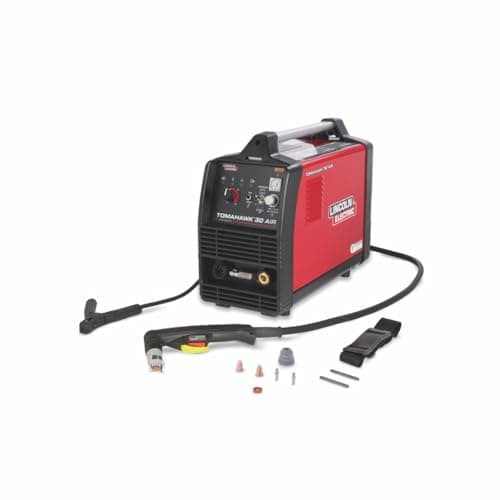 Lincoln Electric Tomahawk 30 AIR15-30 A with the compressor inside the machine: the narrowest, most controllable output range here, and nothing to plumb. | Best overall | $1,359.00 · View on Amazon #ad How this is funded · Price as of November 28, 2026 |
| 2 | 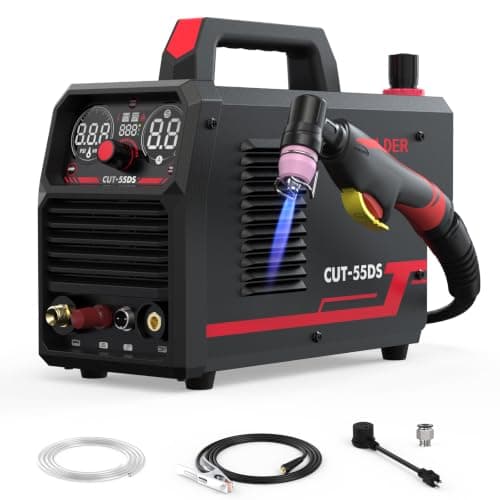 YESWELDER CUT-55DSThe only machine here that dials down to 10 A, on either 110 V or 220 V, for the least money. | Budget pick | |
| 3 | 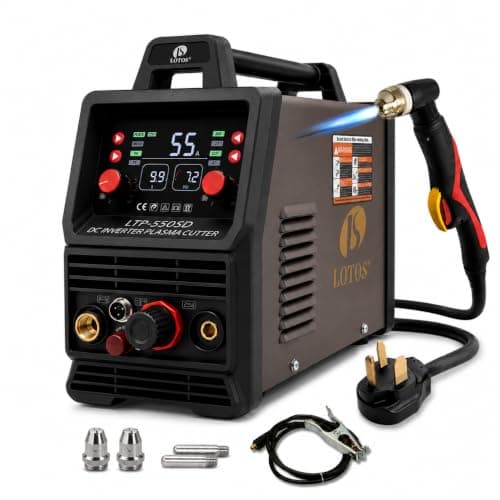 Lotos LTP5505DA 20 A minimum with a 100% duty cycle at 43 A - more capacity than sheet work needs, at a price that does not punish you for it. | Best if you already own a compressor | |
| 4 | 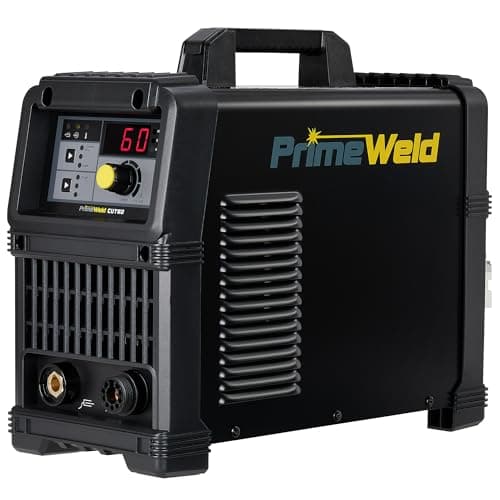 PrimeWeld CUT6020-60 A and a 7/8 in published capacity, with the blowback start that belongs near a CNC table. | Best if the same machine must cut plate | $699.00 · View on Amazon #ad How this is funded · Price as of November 28, 2026 |
The short answer
For sheet metal, buy on the lowest amperage the machine publishes and holds, not the highest. Too much current on thin material does not cut faster — it blows the edge out, warps the panel and leaves dross you cannot grind off a 20-gauge part.
Our overall pick is the Lincoln Electric Tomahawk 30 AIR: a 15–30 A range, 25 A at a 100% duty cycle and an air compressor inside the machine, which makes it the only one here you can carry to a bench and plug in. The budget pick is the YESWELDER CUT-55DS, the only machine in our registry that dials down to 10 A and runs on a 110 V outlet.
If you already own a shop compressor, the Lotos LTP5505D gives you far more capacity for the money with a 20 A floor. If the same machine has to cut plate later, the PrimeWeld CUT60.
Prices in the table above come from our live price feed, each with its own "as of" date inside the buy button. All four machines returned a buyable offer in the refresh generated 2026-11-20.
Why thin sheet is the harder cut
Plasma severs metal by melting a narrow line and blowing the melt out of the kerf with air. On 1/2 in plate there is enough metal around the cut to carry the heat away, and the arc has something substantial to work against. On 18 gauge there is neither.
Three things go wrong. The edge blows out, because the arc force is pushing on material with nothing behind it. The panel warps, because the heat you put in has nowhere to go and the sheet moves as it cools. And dross sticks to the underside in a way that is genuinely hard to clean off a part too thin to grind aggressively.
All three are heat-input problems, and heat input is amps, travel speed and standoff. Travel speed and standoff are your technique. Amps are what you buy, which is why minimum output is the specification this page ranks on.
What each one publishes
| Machine | Output range | Duty cycle | Thin-end capacity | Air supply |
|---|---|---|---|---|
| Lincoln Tomahawk 30 AIR | 15-30 A | 100% at 25 A; 60% at 30 A | 5/16 in recommended at 22 ipm; 3/8 in max | Internal compressor; external air also standard |
| YESWELDER CUT-55DS | 10-55 A (220 V); 10-35 A (110 V) | 100% at 35 A (110 V); 60% at 55 A (220 V) | 5/16 in (8 mm) rated at 110 V | External; 55-70 PSI, 6.0 CFM max |
| Lotos LTP5505D | 20-55 A (240 V); 20-35 A (120 V) | 100% at 43 A; 60% at 55 A (240 V) | 3/8 in (10 mm) clean cut at 120 V | External; front-panel regulator and gauge |
| PrimeWeld CUT60 | 20-30 A (120 V); 20-60 A (240 V) | 100% at 23 A (120 V) / 46 A (240 V) | Up to 7/8 in (20 mm) at 240 V | External; 40-75 PSI, 5 CFM at 90 PSI |
A plasma cutter is not always the right tool for thin sheet.
Below about 20 gauge, shears, nibblers and a cut-off wheel often give a cleaner edge with no heat distortion at all, and they cost a fraction of any machine here. Plasma earns its place on sheet when the cut is a curve, a hole in the middle of a panel, or a long line through material already fitted to something.
If you are cutting straight lines on flat stock at a bench, plasma cutter vs angle grinder is worth reading before you spend anything.
Settings that stop a thin cut blowing out
Turn the amps down first. Start at the bottom of the machine's range on scrap of the same gauge and walk up until it cuts cleanly. Most blown-out sheet cuts are a 45 A setting on a 16-gauge part.
Go faster, not slower. The instinct when a cut looks poor is to slow down, which puts more heat in and makes it worse. On thin material, travel speed is the cooling system.
Drag the shield if the torch allows it. A drag cup holds a consistent standoff better than a steady hand, and consistency is what a thin cut needs.
Set the air pressure deliberately. Too much pressure on thin stock adds arc force where there is nothing to resist it. Plasma cutter air requirements covers the numbers and the water trap.
Back the part up where you can. A sacrificial strip of the same metal under the cut line gives the arc something to work against.
Which one is yours?
Panel, bracket and patch work, and you want one box: Lincoln Tomahawk 30 AIR — providing you have a 230 V circuit.
You have a 110 V garage outlet and a tight budget: YESWELDER CUT-55DS. Ten amps is the lowest floor here.
You already own a 5 CFM compressor: Lotos LTP5505D. If this is your first machine of any kind, the best plasma cutters for beginners starts further back and covers the consumables and air you will also be buying.
Sheet now, plate later, maybe a table: PrimeWeld CUT60.
You are cutting rusty or galvanized sheet: make sure the machine publishes a pilot arc — all four here do, and the best pilot arc plasma cutters explains why that matters more than any other feature.
You will be welding the panels afterwards: MIG welding sheet metal is the other half of the job, and a helmet with a cut mode is what you need in front of your face while you do it.
How we picked these
Ranked on published minimum amperage and low-output duty cycle. That is the axis thin-gauge cutting actually turns on, and it is why the highest-capacity machine here finishes last rather than first.
Every figure is published by the maker. We have cut nothing. Where a machine publishes a recommended cut at a stated travel speed, as the Tomahawk does, that is the figure quoted rather than its severance number.
Availability verified first. All four returned a buyable offer in the price refresh generated 2026-11-20. More on the method on how we pick.
1. Best overall
Lincoln Electric Tomahawk 30 AIR
15-30 A with the compressor inside the machine: the narrowest, most controllable output range here, and nothing to plumb.
Lincoln publishes the Tomahawk 30 AIR as a 15–30 A machine with 25 A at a 100% duty cycle and 30 A at 60%, an internal air compressor with an external air connection also standard, a 230 V single-phase 60 Hz input drawing 16 A at rated output, a recommended cut of 5/16 in mild steel at 22 ipm, a maximum cut of 3/8 in at 14 ipm, a 1/2 in severance cut, an LC30 hand torch on a 10 ft lead, a 40 lb weight and a three-year machine warranty.
For sheet metal this is the right shape of machine, and the reason is the range rather than the ceiling. A 15–30 A span puts the whole adjustment range where thin material lives, so a small turn of the knob is a small change in heat input. On a 55 A machine the same movement steps across far more amps, and on 18 gauge that is the difference between a cut and a hole.
The internal compressor is the second reason. Thin-gauge work is usually bench work — brackets, patch panels, signs — and a machine you can carry to the bench and plug in removes the compressor, the hose and the water trap from the job. The 100% duty cycle at 25 A means it will also run a long continuous line, which is what cutting a panel is.
Against it, honestly: it is 230 V only, so there is no garage-outlet option. It is 40 lb, which is heavy for its output because the compressor is inside. And 30 A is a real ceiling — 3/8 in is the published maximum and you should not buy it expecting plate work.
What works
- The compressor is inside the machine, so the hidden second purchase that sinks most first plasma buys does not exist
- It takes external air as standard as well, so a shop compressor can carry the long cuts the internal pump has to pause for
- 25 A at a 100% duty cycle is a genuinely continuous rating rather than a figure you have to work around
- Lincoln publishes three years on the machine and a dealer network behind a tool that eats consumables
What does not
- 230 V single phase only. There is no 120 V option, so a garage without a 240 V circuit cannot run it at all
- 40 lb, which is portable for a machine carrying its own compressor but not the under-30-lb class
- Costs multiples of a budget 50 A machine while cutting thinner material
- Buy on the 5/16 in recommended figure: 1/2 in is a severance limit at 5 ipm, not a working thickness
Who this is wrong for: Anyone whose shop has no 230 V circuit, and anyone who needs more than 3/8 in capacity. Thirty amps is a sheet-metal and light-plate machine by design.
2. Budget pick
YESWELDER CUT-55DS
The only machine here that dials down to 10 A, on either 110 V or 220 V, for the least money.
YESWELDER publishes the CUT-55DS with 10–55 A output on 220 V and 10–35 A on 110 V, a 100% duty cycle at 35 A on 110 V, a rated cut of 5/16 in (8 mm) on 110 V, a non-touch pilot arc with HF ignition, an AG-60 torch and an air requirement of 55–70 PSI at up to 6.0 CFM.
The 10 A minimum is the lowest published figure in our registry and it is exactly what thin sheet wants. Run it on 110 V and you have a machine whose practical range is 10–35 A with a 100% duty cycle at the top of it — a thin-gauge configuration that happens to cost less than everything else here.
The pilot arc matters more on sheet than on plate. Thin material is usually the material that has been sitting outside: galvanized ducting, rusty panel steel, painted brackets. A non-touch start means you do not grind a clean spot first, and on a thin section there is less metal to spare before you have changed the part.
Against it: you supply the air, and 6.0 CFM is a real compressor. The HF ignition makes it the wrong machine for a CNC table. And support is mail-and-wait rather than a dealer counter.
What works
- Pilot arc at the bottom of the market, which used to mean paying twice as much
- Dual voltage, so a 110 V outlet gets you started
What does not
- Consumables are the running cost and they do not last like the name brands
- Owner feedback reports more variation between units than the established brands
3. Best if you already own a compressor
Lotos LTP5505D
A 20 A minimum with a 100% duty cycle at 43 A - more capacity than sheet work needs, at a price that does not punish you for it.
Lotos publishes 20–55 A on 220/240 V and 20–35 A on 110/120 V, auto-sensing input, a 3/8 in (10 mm) clean cut on 120 V and 5/8 in (16 mm) on 240 V, a 60% duty cycle at 55 A with 100% at 43 A on 240 V, a non-touch pilot arc, and a front-panel air regulator with a pressure gauge.
The front-panel regulator is the sheet-metal detail worth calling out. Air pressure is one of the variables that decides whether a thin cut blows out or cuts, and a gauge on the machine means you set it rather than guess at it from a compressor across the shop.
A 20 A minimum is coarser than the two machines above and still fine for 16 and 14 gauge. The trade is a wider adjustment range in exchange for considerably more capacity — if your sheet work is occasional and your plate work is not, this is the sensible compromise.
Against it: 20 A is a real floor, and on 18 gauge and thinner you will be cutting fast to stay ahead of the heat. External air only.
What works
- Pilot arc means it will start on painted, rusty or galvanized material where a touch-start machine stalls
- 5/8 in clean cut on 240 V is more capacity than most home shops will ever use
- Publishes a complete specification on BOTH supplies — output, clean cut, severance and duty cycle — which most dual-voltage machines do not
What does not
- You must supply clean dry air. A small pancake compressor will not keep up, and wet air destroys consumables fast
- On a 110 V outlet the top end falls from 55 A to 35 A and the clean cut from 5/8 in to 3/8 in
- The output floor is 20 A rather than the 10 A some competing machines publish, so it throttles down less far for thin sheet
- Consumable life is noticeably shorter than Hypertherm's, and the running cost shows it
4. Best if the same machine must cut plate
PrimeWeld CUT60
20-60 A and a 7/8 in published capacity, with the blowback start that belongs near a CNC table.
PrimeWeld publishes 20–30 A on 120 V and 20–60 A on 240 V, a 100% duty cycle at 23 A (120 V) or 46 A (240 V), a published capacity up to 7/8 in (20 mm) steel, a blowback non-HF pilot arc described as CNC compatible, and an IPT60 torch.
This is on the page for one reason: if you cut sheet now and plate later, buying twice is worse than buying wide. Run it on 120 V and the output range is 20–30 A — effectively the thin-gauge machine above — with a 240 V circuit available later for the 60 A work.
The blowback start is also the one here that suits a table, and sheet-metal cutting is where people most often end up wanting one: signs, brackets and repeat parts are table work.
Against it on this page specifically: a 20 A minimum, and the highest price here. For pure 16-gauge work you are paying for amps you will never switch on.
What works
- 60 A gives real headroom on 1/2 in plate instead of treating it as a severance cut
- Pilot-arc start and a well-regarded torch for the price
What does not
- Air demand at 60 A is beyond what a small compressor can sustain — budget for the compressor as part of the purchase
- Dual voltage, but on 120 V PrimeWeld publishes only 20–30 A — half the machine. The 60 A you are paying for needs a 240 V circuit
Who this is wrong for: Someone who only ever cuts thin sheet. Two thirds of this machine's output range will never be used, and the money is better spent on a compressor and consumables.
Questions people actually ask
What is the best plasma cutter for sheet metal?
Of the machines in our registry, the Lincoln Electric Tomahawk 30 AIR. Lincoln publishes a 15-30 A output range with 25 A at a 100% duty cycle, an internal air compressor, a recommended cut of 5/16 in mild steel at 22 ipm and a 230 V single-phase input.
The budget pick is the YESWELDER CUT-55DS, the only machine in our registry that publishes a 10 A minimum output and runs on a 110 V outlet.
What amperage should I use to cut sheet metal with plasma?
Start at the bottom of your machine's range and work up on scrap of the same gauge. Thin sheet generally wants the lowest setting that severs cleanly, which on 16 to 18 gauge is often 15 to 25 A.
Too much current does not cut faster. It blows the edge out, warps the panel and leaves dross that is hard to remove from thin material.
Will a plasma cutter warp sheet metal?
It can, and the cause is heat input rather than the process itself. Lower amperage, faster travel and a consistent standoff all reduce it, and a sacrificial backing strip under the cut line helps.
For straight cuts on flat stock at a bench, shears or a cut-off wheel distort nothing at all and are often the better tool.
What is the thinnest metal a plasma cutter will cut?
Most machines in this class will cut down to around 22 to 24 gauge if the amperage goes low enough and your travel speed is high enough. The limiting factor is the machine's minimum output, not its maximum.
That is why minimum amperage is the specification this page ranks on. A machine with a 20 A floor is coarse on very thin sheet; one with a 10 or 15 A floor is not.
Do I need a pilot arc for sheet metal?
It helps more on sheet than on plate. Thin material is often galvanized ducting or rusty panel steel, and a pilot arc starts the cut without touching clean metal, so you do not have to grind a start point into a part that thin.
All four machines on this page publish a pilot or non-touch arc.
Can I cut car body panels with a plasma cutter?
Yes, and curves and interior cut-outs are exactly where plasma beats a cut-off wheel. Use the lowest amperage that severs, move quickly, and remember that the heat-affected edge still needs cleaning up before you weld it.
Our MIG welding sheet metal page covers the welding side, which is where most panel jobs actually go wrong.
Sources
- Lincoln Electric - Tomahawk 30 AIR (K5457-1) published specifications: 15-30 A output, 25 A at 100% duty cycle and 30 A at 60%, internal air compressor with external air connection standard, 230 V single phase 60 Hz input drawing 16 A at rated output, recommended cut 5/16 in mild steel at 22 ipm, maximum cut 3/8 in at 14 ipm, severance cut 1/2 in at 5 ipm, LC30 hand torch with 10 ft lead, 40 lb, three-year machine and one-year torch warranty (registry entry, ASIN B0D98DBX3X)
- YESWELDER - CUT-55DS published specifications: 10-55 A on 220 V and 10-35 A on 110 V, 60% duty cycle at 55 A (220 V) and 100% at 35 A (110 V), rated cut 3/8 in (10 mm) at 220 V and 5/16 in (8 mm) at 110 V, non-touch pilot arc with HF ignition, AG-60 torch, air 55-70 PSI at up to 6.0 CFM (registry entry, ASIN B083GPXF8Y)
- Lotos - LTP5505D published specifications: 20-55 A DC on 220/240 V and 20-35 A DC on 110/120 V, auto-sensing input, clean cut 5/8 in at 220/240 V and 3/8 in at 110/120 V, duty cycle 60% at 55 A and 100% at 43 A on 220/240 V, non-touch pilot arc, front-panel air regulator and pressure gauge (registry entry, ASIN B0052OX876)
- PrimeWeld - CUT60 published specifications: 20-30 A on 120 V and 20-60 A on 240 V, 100% duty cycle at 23 A (120 V) / 46 A (240 V), capacity up to 7/8 in (20 mm) steel, blowback non-HF pilot arc described as CNC compatible, IPT60 torch, air 40-75 PSI and 5 CFM at 90 PSI (registry entry, ASIN B07BYJPGB1)
- Arc & Bead live price layer (lib/prices.ts) - a buyable offer and live price for all four featured machines confirmed against the price feed generated 2026-11-20; each buy button renders the live price with its own 'as of' date
Read next
- The best pilot arc plasma cutters
Three pilot-arc plasma cutters ranked on published output, duty cycle and cut capacity, with the cheapest genuinely supported pilot-arc machine named as the budget pick.
- Plasma cutter cut thickness chart
Recommended versus severance capacity by amperage, and what you lose on a 110V outlet.
- Plasma cutter air requirements
How to read CFM and PSI, why tank size is not the answer, and what a compressor must sustain.
- Plasma cutter vs angle grinder
An angle grinder cuts lengths; plasma cuts shapes. The one question that settles it.
- The best plasma cutters with a built-in air compressor
Internal-compressor machines: what you trade in capacity, and when that trade is right.
- MIG welding sheet metal without burning through
Stitch welding, heat management and copper backing — the techniques thin sheet actually needs.
Back to Level 4 · Plasma, or start over at Find Your Level.
Ryder M.
Ryder M. is the hands-on owner behind Magoo Media Group. He writes Arc & Bead's buying guides and picks every machine on the site. What every recommendation is based on — and what it is not based on — is set out on How We Pick.