The best 200 amp MIG welders
Two hundred amps is the rung where a wire machine stops being a bodywork tool and starts being a fabrication one. Here is what the three machines in our registry that publish it actually give you for the amps.
Arc & Bead is an Amazon Associate. If you buy through a link on this page we may earn a commission, at no extra cost to you. We have not physically tested the machines on this page and we say so on How We Pick.
Quick picks
Tap any row to jump to the full write-up further down this page.
| # | Product | Best for | Price |
|---|---|---|---|
| 1 | 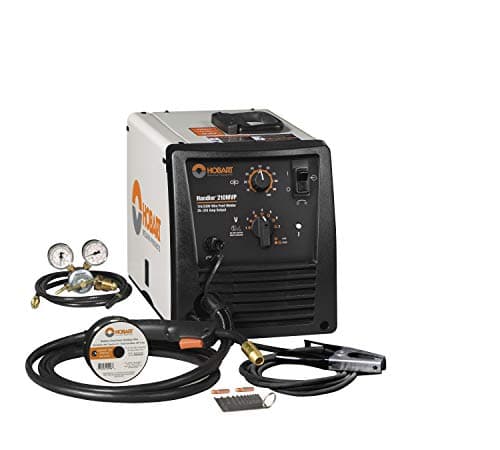 Hobart Handler 210 MVP210 A on 230 V with a published 3/8 in single-pass capacity and a 30% duty cycle at 150 A - the most welding behind the number. | Best overall | $1,334.60 · View on Amazon #ad How this is funded · Price as of November 28, 2026 |
| 2 | 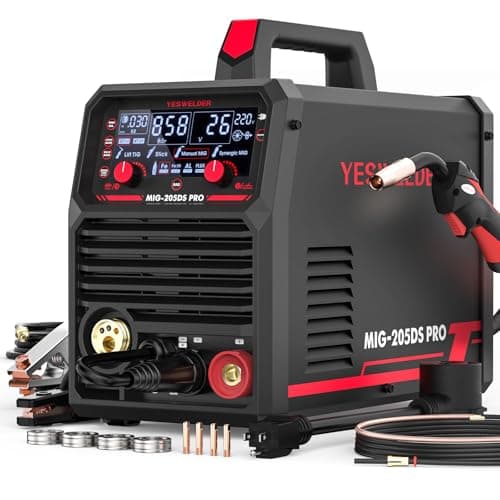 YESWELDER MIG-205DS PRO205 A on 220 V across five processes in a 22.7 lb box, for a fraction of the price of anything else that publishes 200 A. | Budget pick | |
| 3 | 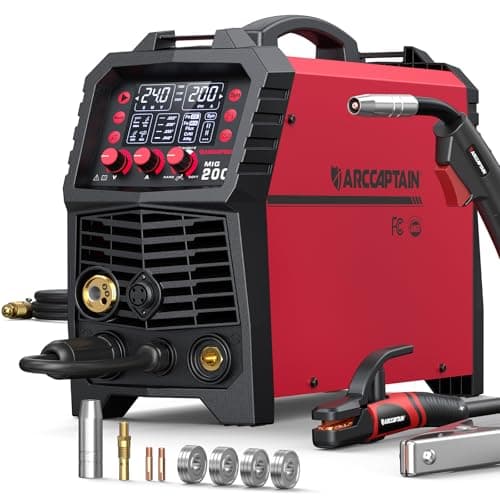 ARCCAPTAIN MIG200A published 200 A with synergic setup, 2T/4T trigger and burn-back adjustment - the easiest of the three to dial in. | Best synergic control |
The short answer
Two hundred amps is the output at which a wire machine covers roughly 3/8 in steel in a single pass, which is most of what a home shop builds. Below about 140 A you are a sheet-metal and light-bracket shop; at 200 A you are a fabrication one.
Our overall pick is the Hobart Handler 210 MVP: 210 A on 230 V, a published 3/8 in single-pass capacity, a 30% duty cycle at 150 A and a multi-voltage plug that also runs it at 140 A on a normal outlet. The budget pick is the YESWELDER MIG-205DS PRO, which publishes 205 A on 220 V across five processes at 22.7 lb for a fraction of the price.
For the easiest setup of the three, the ARCCAPTAIN MIG200: synergic control sets voltage and wire speed together from the material thickness.
Prices in the table above come from our live price feed, each with its own "as of" date inside the buy button. All three machines returned a buyable offer in the refresh generated 2026-11-20.
What 200 amps buys you, and what it does not
The useful way to read a MIG machine's output is as a thickness. Roughly, and on steel, every 0.001 in of single-pass thickness needs about one amp — so 140 A is about 1/8 in, and 200 A is about 1/4 in with margin, or 3/8 in where the manufacturer publishes it with a suitable joint preparation.
What 200 A does not buy is the right to run at 200 A continuously. Duty cycle is the percentage of a ten-minute period a machine can weld at a stated output, and at the top of the range it is always short. The Hobart publishes 30% at 150 A, which is three minutes of welding in every ten — and that is a reasonably generous figure for this class. Welder duty cycle explained is the full version, and it is the specification people regret ignoring.
The other thing 200 A does not buy is a 120 V circuit. Every machine here reaches its rated output only on 220/230 V; on a household outlet all three drop to somewhere between 140 and 160 A. What size breaker for a welder covers what the 240 V side needs.
What each one publishes
| Machine | Published output | Duty cycle | Steel capacity | Control | Weight |
|---|---|---|---|---|---|
| Hobart Handler 210 MVP | 25-210 A (140 A on 115 V, 210 A on 230 V) | 30% at 150 A; 20% at 90 A | 24 gauge to 3/8 in single pass | 7 voltage taps on 230 V, 4 on 115 V | Not published |
| YESWELDER MIG-205DS PRO | MIG 30-205 A (220 V); 30-160 A (110 V) | Not published | Not published | Wire feed 58-858 in/min; 5 processes | 22.7 lb |
| ARCCAPTAIN MIG200 | 200 A maximum | Not published | Not published | Synergic, 2T/4T, burn-back adjustment | Not published |
A 200 A machine on a 20 A household circuit is a 140 A machine.
All three of these are dual-voltage, and all three publish their headline output on the 220 V or 230 V side only. If your shop has no 240 V circuit yet, you are buying future capability rather than present capability — which is a perfectly good reason to buy, as long as it is deliberate.
Best budget 240V welders and what size wire for a welder outlet cover what the circuit itself costs.
The specifications that matter more than the amps
Duty cycle at a usable output. A published figure at 150 A tells you more than a maximum amperage does. The absence of one on two of these three machines is the honest weakness of this page, and we would rather say so than invent a number.
Wire feed range. Amps without wire speed is heat without fill. The YESWELDER publishes 58–858 in/min, which is the span a 200 A machine needs.
Voltage control type. Tapped settings are simple and coarse; infinite or synergic control lets you land between them. On thicker steel the taps are usually fine; on mixed work the finer control earns its keep.
Spool gun support. If aluminum is anywhere in the plan, the machine needs to take a spool gun, and the gun is a separate purchase of real size. MIG welders with spool gun capability is the page for that.
Gas. All three run gas MIG, which means a bottle, a regulator and a hose on top of the machine price. What gas for MIG welding and the best argon regulators are the two orders that follow.
Which one is yours?
Trailer, hitch and structural work, and you want published evidence: Hobart Handler 210 MVP. It is the only machine here that publishes a single-pass capacity and a duty cycle.
You want 200 A for the least money, and portability: YESWELDER MIG-205DS PRO.
You want the machine to help you set it: ARCCAPTAIN MIG200.
You mostly weld 1/8 in and thinner: you do not need 200 A. The best MIG welders under $500 and the best 110V MIG welders with gas are the honest pages for that work, and you will spend the difference on gas and consumables instead. If you have not run a wire machine before, MIG welding for beginners is the place to start before any amperage figure matters.
How we picked these
A published output of 200 A or more, or not on the page. One popular multiprocess machine in our registry publishes 180 A and is deliberately absent; it appears instead on our under-$500 multiprocess page where it qualifies honestly.
Ranked on what is published, not on what is claimed. The machine that publishes a duty cycle and a single-pass capacity leads the page, because at this output those are the figures that decide whether the amps are usable.
No hands-on, no scores. We have welded with none of these three, and every figure above is the maker's own. More on the method on how we pick.
1. Best overall
Hobart Handler 210 MVP
210 A on 230 V with a published 3/8 in single-pass capacity and a 30% duty cycle at 150 A - the most welding behind the number.
Hobart publishes the Handler 210 MVP as a gas MIG and flux-core machine running on 115 V or 230 V through its multi-voltage plug, with 25–210 A output (140 A on 115 V, 210 A on 230 V), a 30% duty cycle at 150 A and 20% at 90 A, a published steel capacity of 24 gauge to 3/8 in in a single pass, and seven voltage settings on 230 V with four on 115 V.
The single-pass capacity is the figure that justifies the page. 3/8 in in one pass is the point at which a wire machine covers almost anything a home shop builds — trailer tongues, hitch mounts, structural brackets — without multi-pass procedures you have to get right. Nothing else here publishes it. Our thick-steel page is where that capability leads.
The multi-voltage plug is the second reason. The machine moves between a garage outlet at 140 A and a 230 V circuit at 210 A by swapping an adapter, which makes it the one machine here that is genuinely useful before you have wired a dedicated circuit. 120V vs 240V welders is the decision it postpones.
Against it: it is far and away the most expensive machine on this page, roughly four times the YESWELDER. It is a tapped-voltage machine with seven settings rather than infinite control, so fine-tuning is coarser than the synergic machines below. And this ASIN has been the least reliably stocked entry in our registry across several price refreshes — it returned a live price in the 2026-11-20 run, but check the button before you plan around it.
What works
- The multi-voltage plug means you can buy it before you have run a 240 V circuit and get the full 210 A later
- 3/8 in single-pass capacity covers essentially every home fabrication job
- 30% duty cycle at 150 A is a real working duty cycle, not a demonstration figure
What does not
- Heavy enough that you will want a cart, which is another purchase
- On 115 V you get 140 A — no more than the Handler 140EZ, at a much higher price. The value only appears once you have the 240 V outlet
- No spool gun included, so aluminum is a further purchase
Who this is wrong for: Thin-gauge bodywork as the main job. A 210 A machine with seven voltage taps is more machine and less fine control than 22-gauge panel work wants.
2. Budget pick
YESWELDER MIG-205DS PRO
205 A on 220 V across five processes in a 22.7 lb box, for a fraction of the price of anything else that publishes 200 A.
YESWELDER publishes the MIG-205DS PRO as a gas MIG, flux-core, spool-gun MIG, lift TIG and stick machine on 110 V or 220 V, with MIG output 30–160 A at 110 V and 30–205 A at 220 V, stick 20–205 A and lift TIG 15–205 A at 220 V, a wire feed speed of 58–858 in/min, and a 22.7 lb weight.
It is the budget pick in the strict sense this site uses: the cheapest machine in our registry that publishes 200 A or more. At 22.7 lb it is also the only 200 A-class machine here you can lift with one hand, which matters if the weld is on a gate rather than a bench.
The wire-feed range is the specification worth noticing. 58–858 in/min is a wide span, and at 205 A you need the top end of it — a machine with plenty of amps and not enough wire speed runs out of fill before it runs out of heat.
Against it: YESWELDER publishes no duty cycle for this machine in our registry entry, which is the single most important missing figure at this output. 205 A on an inverter this light will not be a 60%-at-rated machine, and we will not guess at what it is. Support is mail-and-wait. And it is a five-process machine, which means five sets of consumables and five things to learn.
What works
- Synergic mode sets voltage and wire speed from the thickness you select, which removes the single hardest part of learning MIG
- Spool-gun capable, so aluminum is a gun purchase rather than a machine purchase
- 22.7 lb for a 205 A dual-voltage machine is remarkable
What does not
- Lift TIG is DC only and has no foot pedal, so it will not weld aluminum and is not a route to Level 3
- Five processes means five sets of consumables to stock
- Dealer support and warranty handling are not on the level of Hobart or Lincoln
3. Best synergic control
ARCCAPTAIN MIG200
A published 200 A with synergic setup, 2T/4T trigger and burn-back adjustment - the easiest of the three to dial in.
ARCCAPTAIN publishes the MIG200 as a gas MIG, flux-core, stick, lift TIG, spot and spool-gun machine on 110 V or 220 V dual voltage, with a 200 A maximum output and synergic control including 2T/4T trigger modes and burn-back adjustment.
Synergic control is the reason to choose this one. You set the wire diameter and the material thickness and the machine sets voltage and wire speed together; you adjust from there rather than from nothing. At 200 A, where the voltage and wire-speed window is narrower than most people expect, that is a genuine advantage — what is synergic MIG welding covers how much of the work it really does.
Burn-back adjustment is a small control with a daily payoff: it sets how long the arc runs after the trigger releases, which is the difference between a clean stop and a wire stuck in the puddle. 4T latching matters on long seams where holding a trigger becomes the limiting factor.
Against it: ARCCAPTAIN publishes a 200 A maximum with no duty cycle and no single-pass capacity figure in our registry entry, so there is less published evidence here than on the Hobart. Spool-gun aluminum capability needs a spool gun, which is a separate purchase — see do you need a spool gun for aluminum.
What works
- Spool-gun support is built in rather than a model-specific accessory question, and that question is the whole aluminum decision on a MIG machine
- Synergic control sets voltage from wire speed, so the first hour is spent welding rather than reading a chart
- Dual voltage and six processes mean it stays useful well past the point most first machines stop
What does not
- The spool gun is a separate purchase, and not a small one
- 200 A is the 220 V figure. On a household outlet the usable output is much lower
- Dealer support is thin next to Hobart or Lincoln, which is what you notice when something breaks
Questions people actually ask
What is the best 200 amp MIG welder?
Of the machines in our registry, the Hobart Handler 210 MVP. Hobart publishes 25-210 A output (140 A on 115 V and 210 A on 230 V), a 30% duty cycle at 150 A, a steel capacity of 24 gauge to 3/8 in in a single pass, and seven voltage settings on 230 V.
The budget pick is the YESWELDER MIG-205DS PRO, which publishes 205 A on 220 V across five processes at 22.7 lb.
How thick can a 200 amp MIG welder weld?
Roughly 1/4 in steel comfortably in a single pass, and up to 3/8 in where the manufacturer publishes it with suitable joint preparation. Hobart publishes 3/8 in single-pass for the Handler 210 MVP.
Thicker than that is multi-pass work, which is a technique question rather than a machine one.
Do you need 220V for a 200 amp MIG welder?
For the full 200 A, yes. All three machines on this page are dual voltage and all three publish their headline output on the 220 V or 230 V side only; on a 110 V household outlet they drop to between 140 and 160 A.
That is still a useful machine, but it is not a 200 A machine until the circuit is there.
Is 200 amps enough for a home shop?
For almost everything a home shop builds, yes. Gates, trailers, brackets, hitches, frames and furniture all sit inside a 200 A single-pass window.
The figure that limits you in practice is duty cycle, not amperage. A machine that welds three minutes in ten at 150 A is a different experience from one that welds six.
What duty cycle should a 200 amp MIG welder have?
Look for a published figure at a working output rather than at maximum. Hobart publishes 30% at 150 A for the Handler 210 MVP, which is reasonable for this class.
Two of the three machines on this page publish no duty cycle at all. That absence is worth weighing: a very light inverter at 200 A will not hold a long duty cycle.
Can a 200 amp MIG welder weld aluminum?
Only with a spool gun, and only if the machine supports one. Aluminum wire is too soft to push through a long gun liner, which is what the spool gun solves by carrying the spool at the handle.
The YESWELDER and the ARCCAPTAIN both publish spool-gun capability. The gun itself is a separate purchase.
Sources
- Hobart - Handler 210 MVP published specifications: gas MIG and flux-core, 115 V or 230 V via multi-voltage plug, 25-210 A output (140 A on 115 V, 210 A on 230 V), duty cycle 30% at 150 A and 20% at 90 A, steel capacity 24 gauge to 3/8 in single pass, 7 voltage settings on 230 V and 4 on 115 V (registry entry, ASIN B004USV5UC)
- YESWELDER - MIG-205DS PRO published specifications: gas MIG, flux-core, spool-gun MIG, lift TIG and stick, 110 V or 220 V 50/60 Hz, MIG output 30-160 A at 110 V and 30-205 A at 220 V, stick 20-140 A / 20-205 A, TIG 15-140 A / 15-205 A, wire feed speed 58-858 in/min, 22.7 lb (registry entry, ASIN B07TVCWDGW)
- ARCCAPTAIN - MIG200 published specifications: gas MIG, flux-core, stick, lift TIG, spot and spool gun processes, 110 V or 220 V dual voltage, 200 A maximum output, synergic control with 2T/4T and burn-back adjustment (registry entry, ASIN B0B1TGZ8XN)
- Arc & Bead live price layer (lib/prices.ts) - a buyable offer and live price for all three featured machines confirmed against the price feed generated 2026-11-20; the Hobart Handler 210 MVP has been the least reliably stocked ASIN in this registry across earlier refreshes and that history is disclosed on the page
Read next
- The best MIG welders under $1,000
What $1,000 buys in a gas MIG machine, and the one worth knowing sits just above the cap.
- The best dual voltage MIG welders
Four 120/240 V MIG welders ranked on whether they publish real output on both supplies, with the cheapest dual-voltage machine in our registry named as the budget pick.
- The best multiprocess welders under $500
Three multiprocess welders under $500 on live prices, ranked on how many of their published processes work without buying anything else, with the cheapest named as the budget pick.
- Welder Duty Cycle Explained
What a duty cycle rating means, the formula, and how much it really matters in a home shop.
- Best welders for thick steel
Above a quarter inch, published single-pass capacity and duty cycle are the only specs that matter.
- 120V vs 240V welders: which one do you actually need?
The decision that sets your ceiling: what each supply voltage welds, and what the circuit really costs.
Back to Level 2 · MIG, or start over at Find Your Level.
Ryder M.
Ryder M. is the hands-on owner behind Magoo Media Group. He writes Arc & Bead's buying guides and picks every machine on the site. What every recommendation is based on — and what it is not based on — is set out on How We Pick.