The best multiprocess welders under $500
Five processes on the front panel does not mean five processes in the box. These three all land under $500 on today's prices - here is what each one can really do the day it arrives.
Arc & Bead is an Amazon Associate. If you buy through a link on this page we may earn a commission, at no extra cost to you. We have not physically tested the machines on this page and we say so on How We Pick.
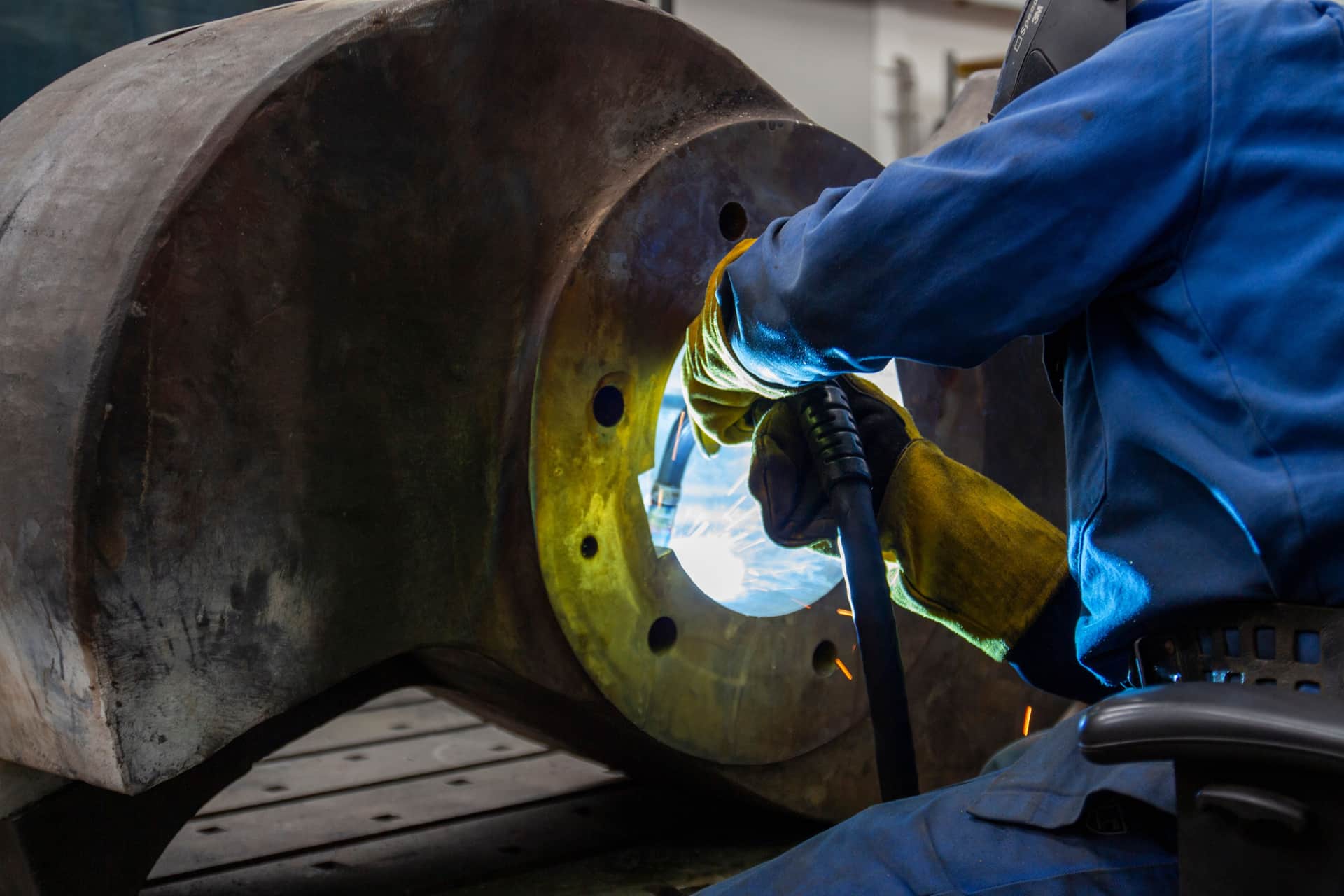
Quick picks
Tap any row to jump to the full write-up further down this page.
| # | Product | Best for | Price |
|---|---|---|---|
| 1 | 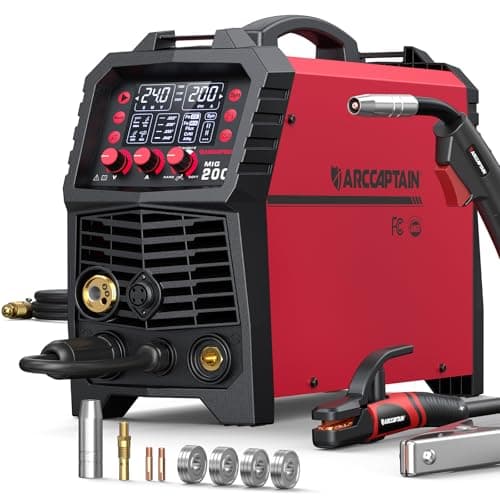 ARCCAPTAIN MIG200Six published processes with synergic setup, 2T/4T and burn-back control - the most capable panel under $500. | Best overall | |
| 2 | 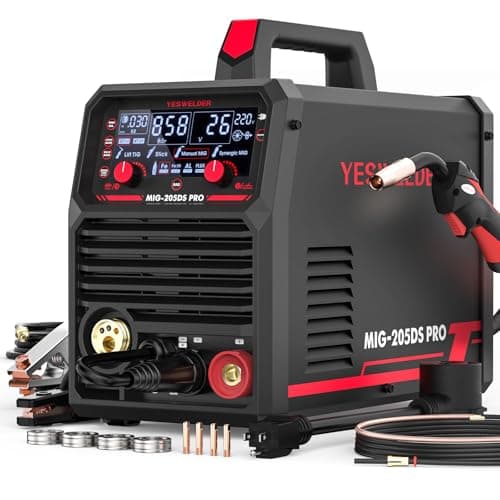 YESWELDER MIG-205DS PROFive processes and a published 205 A at 22.7 lb, for the least money of the three - the most output per dollar under $500. | Budget pick | |
| 3 | 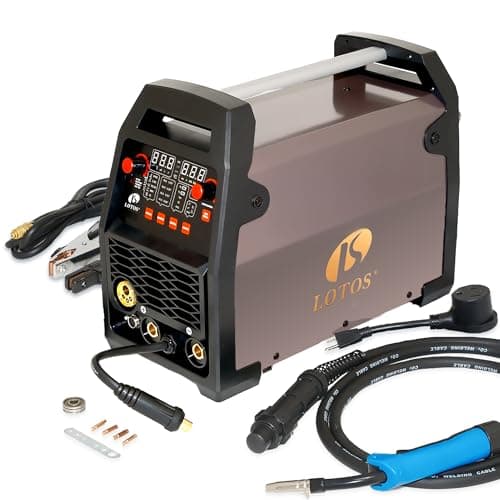 Lotos MIG180Six processes with the MIG torch, stick holder, clamp, tips, rollers, gas hose and a 240 V-to-120 V adapter all included. | Most complete in the box |
The short answer
Our overall pick under $500 is the ARCCAPTAIN MIG200: six published processes, a 200 A maximum, dual voltage, and synergic control that sets voltage and wire speed from the material thickness. It is the easiest of the three to actually get a weld out of.
The budget pick is the YESWELDER MIG-205DS PRO, which publishes 205 A across five processes at 22.7 lb for the lowest price here. For the most complete box — MIG torch, stick holder, clamp, rollers, gas hose and a voltage adapter all included — the Lotos MIG180.
All three prices are read live from our price feed with an "as of" date on each buy button, and all three sat under $500 in the refresh generated 2026-11-20. Prices move; the button is always the current number.
If you want the skill-framed version of this question rather than the price-framed one, the best multiprocess welders for beginners is the page that ranks the same category by how easy each machine is to learn on.
What "multiprocess" really means at this price
A multiprocess machine shares one power source and one control panel across several welding processes. Under $500 that almost always means the same four or five: gas MIG, gasless flux-core, stick, and lift-start DC TIG, with spot and spool-gun modes sometimes listed on top.
Two of those are genuinely ready to use out of the box. Flux-core needs only wire, and stick needs only electrodes and the holder. Those are the processes you will actually weld with in month one.
The other two are purchases. Gas MIG needs a bottle, a regulator and a hose — a real cost on top of the machine. Lift TIG needs a TIG torch, argon, tungsten and preferably a foot pedal, which on a $350 machine is most of the machine price again.
Count the processes you can use on day one, not the ones on the panel.
A five-process machine with no bottle and no TIG torch is a flux-core and stick machine. That is not a criticism — flux-core and stick cover an enormous amount of real work — but it should be the basis of the comparison.
Do you need gas for MIG welding is the honest version of the gas decision, and the best flux core welding wire is the only consumable you need to start.
What each one publishes
| Machine | Published processes | Output | Voltage | In the box |
|---|---|---|---|---|
| ARCCAPTAIN MIG200 | Gas MIG, flux-core, stick, lift TIG, spot, spool gun | 200 A maximum | 110 V or 220 V | Synergic control, 2T/4T, burn-back adjustment |
| YESWELDER MIG-205DS PRO | Gas MIG, flux-core, spool-gun MIG, lift TIG, stick | MIG 30-205 A (220 V); stick 20-205 A; TIG 15-205 A | 110 V or 220 V | Wire feed 58-858 in/min; 22.7 lb |
| Lotos MIG180 | Gas MIG, flux-core, stick, DC lift TIG, spot, spool-gun aluminum | MIG 180 A; DC TIG 180 A; stick 160 A | 110-125 V or 210-250 V | MIG torch, stick holder, clamp, tips, rollers, gas hose, 240-to-120 V adapter |
The $500 band, honestly
Three machines in our registry are multiprocess and under $500 on live prices, and all three are on this page. We did not pad the list with a machine that only fits the band on sale, and we did not include anything whose price we cannot read from the feed today.
What the band buys: 180–205 A, dual voltage, synergic or fine-tuned wire control, and the hardware for flux-core and stick. What it does not buy: a published duty cycle at a working amperage, an HF-start TIG arc, or a spool gun. Those are the three things you move up the market for.
If your budget is tighter than this, the honest answer is a single-process machine rather than a cheaper multiprocess one — the best welders under $300 covers that, and the best flux-core welders for the money is where most first machines should start. If it is looser, the best MIG welders under $1,000 is the next rung.
Which one is yours?
You want the most help setting the machine: ARCCAPTAIN MIG200.
You want the most amps per dollar, and portability: YESWELDER MIG-205DS PRO.
You want to weld the day it arrives without a second order: Lotos MIG180.
You only really want MIG: buy a MIG machine. The best MIG welders under $500 is the same budget spent on one process done properly, which is usually the better purchase.
You want aluminum: budget for the spool gun before you choose the machine. MIG welders with spool gun capability and do you need a spool gun for aluminum are the two pages that decide it.
How we picked these
Under $500 on a live price, or not on the page. Every machine here returned a buyable offer below $500 in the price feed generated 2026-11-20, and every buy button carries its own "as of" date so you can see when the number was read.
Ranked on usable processes, not listed ones. A six-process panel where two processes need a bottle and a torch is a two-process machine on arrival, and the page says so.
No hands-on, no scores. We have welded with none of these three. More on the method on how we pick.
1. Best overall
ARCCAPTAIN MIG200
Six published processes with synergic setup, 2T/4T and burn-back control - the most capable panel under $500.
ARCCAPTAIN publishes the MIG200 as a gas MIG, flux-core, stick, lift TIG, spot and spool-gun machine on 110 V or 220 V dual voltage, with a 200 A maximum output and synergic control including 2T/4T trigger modes and burn-back adjustment.
It leads because of the control rather than the process count. Synergic setup means you tell the machine the wire diameter and material thickness and it sets voltage and wire speed together — on a machine that is asking you to learn several processes at once, that is the difference between progress and frustration.
The 200 A maximum is also the highest output under $500 in our registry, which means the MIG side is not the compromise it usually is at this price. Burn-back adjustment and 4T latching are small controls that make long seams and clean stops noticeably easier.
Against it: lift TIG is scratch-start-adjacent rather than a real HF TIG arc, so treat the TIG mode as an occasional tool rather than a reason to buy. Aluminum needs a spool gun that costs most of the machine price again. And ARCCAPTAIN publishes neither a duty cycle with an amperage reference nor a single-pass capacity.
What works
- Spool-gun support is built in rather than a model-specific accessory question, and that question is the whole aluminum decision on a MIG machine
- Synergic control sets voltage from wire speed, so the first hour is spent welding rather than reading a chart
- Dual voltage and six processes mean it stays useful well past the point most first machines stop
What does not
- The spool gun is a separate purchase, and not a small one
- 200 A is the 220 V figure. On a household outlet the usable output is much lower
- Dealer support is thin next to Hobart or Lincoln, which is what you notice when something breaks
2. Budget pick
YESWELDER MIG-205DS PRO
Five processes and a published 205 A at 22.7 lb, for the least money of the three - the most output per dollar under $500.
YESWELDER publishes the MIG-205DS PRO as a gas MIG, flux-core, spool-gun MIG, lift TIG and stick machine on 110 V or 220 V, with MIG output 30–160 A at 110 V and 30–205 A at 220 V, stick 20–205 A and lift TIG 15–205 A at 220 V, a wire feed speed of 58–858 in/min, and a 22.7 lb weight.
It is the budget pick and the output-per-dollar winner: 205 A for the lowest price in this band, in a box light enough to carry to the work. If your plan is wire welding with stick as a backup for outdoor and rusty work, this is a lot of machine for the money.
The 15–205 A lift-TIG range is worth noting as the widest here, though lift TIG at 15 A is a thin-material capability you will only exploit with a torch and a bottle you do not yet own.
Against it: no published duty cycle, which at 205 A is the figure you most want. Support is mail-and-wait. And the five processes each need their own consumables, so the real cost of using all of them is well above the ticket price.
What works
- Synergic mode sets voltage and wire speed from the thickness you select, which removes the single hardest part of learning MIG
- Spool-gun capable, so aluminum is a gun purchase rather than a machine purchase
- 22.7 lb for a 205 A dual-voltage machine is remarkable
What does not
- Lift TIG is DC only and has no foot pedal, so it will not weld aluminum and is not a route to Level 3
- Five processes means five sets of consumables to stock
- Dealer support and warranty handling are not on the level of Hobart or Lincoln
Who this is wrong for: Anyone who wants a serious TIG arc. Lift TIG on a wire machine is a convenience, not a substitute for an HF-start TIG welder.
3. Most complete in the box
Lotos MIG180
Six processes with the MIG torch, stick holder, clamp, tips, rollers, gas hose and a 240 V-to-120 V adapter all included.
Lotos publishes the MIG180 as a gas MIG, gasless flux-core, stick, DC lift TIG, spot and spool-gun aluminum machine on 110–125 V or 210–250 V, with MIG output to 180 A, DC TIG to 180 A and stick to 160 A, a published mild-steel capacity to 1/4 in, 0.023–0.040 in solid and flux-cored wire, synergistic MIG with voltage fine tuning and an LED display, and a box containing the MIG torch, stick holder, work clamp, tips, drive rollers, gas hose and a 240 V to 120 V adapter.
The included-accessories list is the reason it is here. On a multiprocess machine the accessories are not a bonus — they are the difference between owning three processes and owning one. A stick holder, a gas hose and drive rollers for four wire sizes in the box is the most complete start of the three.
The published 1/4 in capacity and the 0.023 in wire support bracket the useful range nicely: thin enough for light panel work at the bottom, thick enough for bracket and frame work at the top. Voltage fine tuning on top of synergic control is the setup most people want.
Against it: 180 A is the lowest output here, so it is the one machine on this page that would not qualify for our 200 A page. It is also the most expensive of the three, and "spool-gun aluminum" still means buying a spool gun.
What works
- Stick capability matters more than it sounds: rusty, painted or outdoor steel is where MIG struggles and stick does not
- A published 160 A stick rating is a real stick machine, not a token third process on the switch
- Synergistic MIG sets voltage and wire speed together, so the first hour goes on welding rather than on a settings chart
What does not
- The headline 180 A and 160 A figures are the 240 V ratings; Lotos does not publish a separate 120 V output
- TIG is lift-start DC with no high-frequency start, and the torch is a separate purchase — treat it as a bonus, not a feature you bought
- The spool gun is also sold separately, and DC lift TIG cannot weld aluminum whatever gun you fit
- Dealer support and warranty handling are not on the level of Hobart or Lincoln
Questions people actually ask
What is the best multiprocess welder under $500?
Of the machines in our registry, the ARCCAPTAIN MIG200. ARCCAPTAIN publishes gas MIG, flux-core, stick, lift TIG, spot and spool-gun processes, a 200 A maximum output, 110 V or 220 V dual voltage, and synergic control with 2T/4T and burn-back adjustment.
The budget pick is the YESWELDER MIG-205DS PRO, which publishes 205 A on 220 V across five processes at 22.7 lb.
Are cheap multiprocess welders any good?
The MIG and flux-core sides of a good one are genuinely useful, and stick is a real capability. The TIG side is usually lift-start rather than high-frequency, which limits it to thicker work and a scratchier start.
Judge one on the process you will use most, and treat the others as a bonus rather than the reason to buy.
Can a multiprocess welder do TIG properly?
Not in this price band. All three machines here publish lift TIG, which strikes the arc by touching the tungsten to the work and lifting. It works, but it is harder to start cleanly than high-frequency TIG and it is DC only, so aluminum is out.
If TIG is the goal rather than a bonus, a dedicated TIG machine is the better purchase.
What do I still need to buy with a multiprocess welder?
For flux-core, wire only. For stick, electrodes. For gas MIG, a bottle, a regulator and a hose. For TIG, a torch, argon, tungsten and ideally a foot pedal.
That is why the machine with the most accessories in the box can be the cheapest machine to actually start welding with.
Do multiprocess welders under $500 run on 110V?
All three on this page are dual voltage and run on a 110 V household outlet, at reduced output. The YESWELDER publishes 30-160 A on 110 V against 30-205 A on 220 V.
You get a usable machine on a normal outlet and the full published output only on a 240 V circuit.
Is a multiprocess welder better than a MIG welder?
Only if you will use more than one process. A single-process MIG machine at the same price generally has better consumables, a simpler panel and fewer compromises.
The case for multiprocess is stick for outdoor and rusty work, which a MIG machine cannot do at all.
Sources
- ARCCAPTAIN - MIG200 published specifications: gas MIG, flux-core, stick, lift TIG, spot and spool gun processes, 110 V or 220 V dual voltage, 200 A maximum output, synergic control with 2T/4T and burn-back adjustment (registry entry, ASIN B0B1TGZ8XN)
- YESWELDER - MIG-205DS PRO published specifications: gas MIG, flux-core, spool-gun MIG, lift TIG and stick, 110 V or 220 V 50/60 Hz, MIG 30-160 A at 110 V and 30-205 A at 220 V, stick 20-140 A / 20-205 A, TIG 15-140 A / 15-205 A, wire feed 58-858 in/min, 22.7 lb (registry entry, ASIN B07TVCWDGW)
- Lotos - MIG180 published specifications: gas MIG, gasless flux-core, stick, DC lift TIG, spot and spool-gun aluminum, 110-125 V or 210-250 V input, MIG to 180 A, DC TIG to 180 A, stick to 160 A, mild steel to 1/4 in, 0.023-0.040 in solid and flux-cored wire, synergistic MIG with voltage fine tuning and LED display, supplied with MIG torch, stick holder, work clamp, tips, rollers, gas hose and a 240 V to 120 V adapter (registry entry, ASIN B0FDZ15SD4)
- Arc & Bead live price layer (lib/prices.ts) - all three machines returned a buyable offer under $500 against the price feed generated 2026-11-20; each buy button renders the live price with its own 'as of' date, and no price on this page is hardcoded
Read next
- The best multiprocess welders for beginners
When a multiprocess machine is genuinely right, and which of the extra modes are real.
- The best MIG welders under $500
What $500 buys in gas MIG, what it leaves out, and the machines that fit inside the cap.
- The best 200 amp MIG welders
Three MIG welders that publish 200 A or more, ranked on published duty cycle and single-pass capacity, with the lightest dual-voltage machine named as the budget pick.
- Do You Need a Spool Gun for Aluminum?
What a spool gun fixes, whether they are universal, whether they need gas, and what to do instead.
- What Is Synergic MIG Welding?
Synergic control explained: what the machine decides for you, what it still cannot know, and when to take it off.
- The best welders under $500
Five welders under $500 at current live prices, ranked on what this band uniquely unlocks - gas MIG with dual voltage and synergic control - with the cheapest machine as the budget pick.
Back to Level 2 · MIG, or start over at Find Your Level.
Ryder M.
Ryder M. is the hands-on owner behind Magoo Media Group. He writes Arc & Bead's buying guides and picks every machine on the site. What every recommendation is based on — and what it is not based on — is set out on How We Pick.