What gas do you need for MIG welding?
One list, by metal. The gas is not a preference — for two of these metals, the wrong choice simply does not weld.
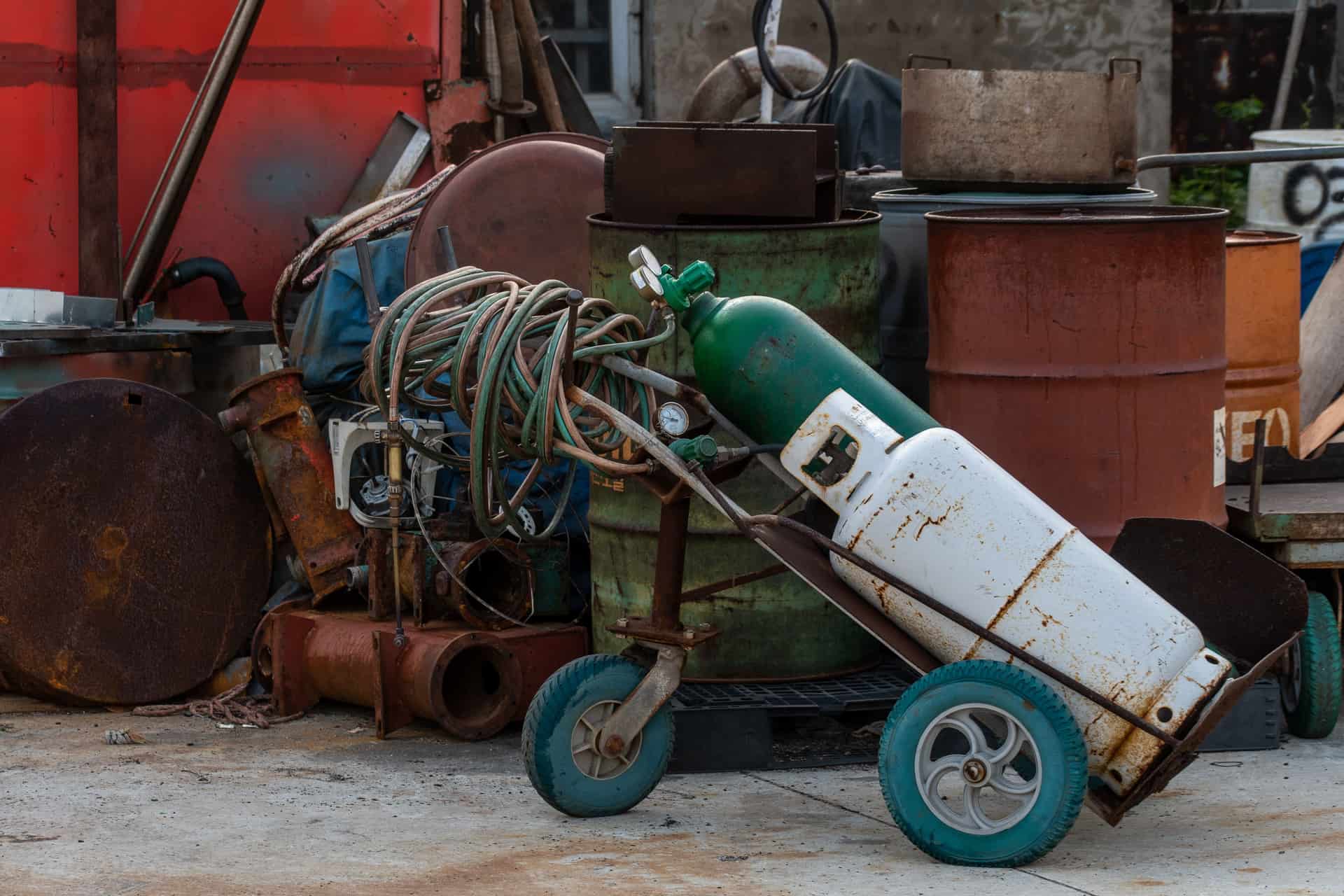
Which gas for which metal
- Mild steel → 75% argon / 25% CO2 (C25). The home-shop standard.
- Mild steel, deeper penetration, lower cost → 100% CO2. Harsher arc, much more spatter.
- Thin sheet and car body → 75/25, or an argon-rich mix with less CO2 for a softer arc.
- Aluminum → 100% argon. Nothing else works.
- Stainless steel → a tri-mix of helium, argon and CO2 in production; 98/2 argon/CO2 is the common home-shop choice.
Why the mix changes the weld
Argon is inert. It does not react with the weld pool, and it produces a stable, controllable arc with a narrow, finger-shaped penetration profile. On its own, on steel, it produces an arc that is stable but poorly wetted — the bead sits proud rather than flowing into the joint.
Carbon dioxide is reactive. It breaks down in the arc, which adds heat and widens the penetration profile, and it makes the arc harsher and much more prone to spatter.
Mixing them is a compromise that works better than either alone on steel. Seventy-five percent argon gives arc stability and low spatter; twenty-five percent CO2 gives the penetration and the wetting. That is why C25 became the default, and why it is the mix your supplier will assume you mean.
Mild steel: 75/25 or pure CO2
The case for pure CO2 is real and usually overstated by people who have not run it. It costs less per cylinder, it penetrates more deeply, and on thick material that penetration is genuinely useful.
What you pay for it: substantially more spatter, meaning more cleanup and more contact tip wear; a harsher, noisier arc that is harder to read while learning; and a less attractive bead. For a beginner, that combination is the wrong trade. Start on 75/25.
75/25 versus 100% argon covers the other comparison people get wrong — and it is a more consequential mistake than this one.
Aluminum: 100% argon, and no exceptions
This is the one where the wrong gas does not merely weld worse, it fails. Carbon dioxide reacts with aluminum, producing a contaminated, unstable, sooty weld that no amount of technique rescues.
Since 75/25 is a quarter CO2, it cannot be used for aluminum at all. That means a second cylinder rather than a swap, and it is a cost worth knowing about before you commit to aluminum work.
Gas is also only half the aluminum problem. The other half is feeding soft wire through a gun liner, which is what spool guns exist for — welding aluminum with a MIG welder covers the whole setup, and TIG for aluminum covers why a lot of people eventually change process instead.
Stainless: where home shops compromise
Production stainless MIG typically uses a tri-mix — around 90% helium, 7.5% argon, 2.5% CO2 — which gives good wetting with minimal carbon pickup. Carbon matters here: too much CO2 adds carbon to the weld, which reduces the corrosion resistance that is the entire reason for using stainless.
Tri-mix is expensive and not always easy to source locally, so most home shops run 98/2 argon/CO2, which keeps carbon pickup low and works acceptably. Plenty of people weld stainless on 75/25 and accept a less pretty, slightly less corrosion-resistant result for non-critical work. That is a legitimate compromise as long as you know you are making it.
Flow rate, and the mistake everyone makes
Flow is measured in cubic feet per hour, and 20 to 25 CFH covers most home welding.
The instinct when a weld looks porous is to turn the gas up. This is usually wrong and often makes it worse: excessive flow becomes turbulent at the nozzle and pulls air into the shield rather than excluding it. If a weld is porous, check for a draft, a blocked nozzle, a leaking hose or contaminated material before you touch the flow knob.
Drafts deserve particular attention because they are invisible. An open garage door, a shop fan, even a warm-air vent will strip the shield off a weld. That is exactly the situation where self-shielded flux-cored wire is the right answer instead — do you need gas for MIG welding makes the case.
What we would buy
1. For 75/25 and argon
Hobart argon/CO2 gas regulator
CGA-580 inlet with a flow gauge reading in cubic feet per hour.
Whichever gas you settle on, the regulator has to match the cylinder valve. CGA-580 is the inlet on argon and argon/CO2 mix cylinders in the US, which covers 75/25 and 100% argon — the two gases most home shops actually use.
Pure CO2 uses a CGA-320 inlet instead. That is a genuinely different fitting, and it is the most common reason a new regulator will not go onto a new bottle.
What works
- CGA-580 inlet is the fitting on the argon and argon/CO2 bottles a US gas supplier will hand you
- Reads flow directly in cubic feet per hour, which is the number the settings charts use
What does not
- Wrong fitting for 100% CO2 bottles, which use CGA-320 — check before you buy
- A gauge-type regulator is less precise than a true float flowmeter at low flow rates
2. If aluminum is on the list
Lincoln Electric Magnum 100SG spool gun
Short wire path at the gun, which is the actual fix for aluminum feeding.
Switching to 100% argon is necessary for aluminum but not sufficient. Aluminum wire is soft and crumples into a birdnest traveling through a standard gun liner. A spool gun carries a small spool at the gun so the wire travels only a few inches.
Check compatibility with your specific machine before buying — spool gun provision is model-specific, not universal.
What works
- Short wire path at the gun is the actual fix for aluminum feeding problems — soft wire never has to travel through a long liner
- Turns a machine you already own into an aluminum machine for far less than a new welder
What does not
- Only works with Lincoln machines that have the correct spool-gun provision — check your model before buying
- Aluminum MIG still needs 100% argon, so a second gas bottle or a bottle swap comes with it
Who this is wrong for: Machines without spool gun provision. This is not a universal accessory and it will not work on a machine that lacks the connection.
Questions people actually ask
What gas do I need for MIG welding steel?
A 75% argon / 25% carbon dioxide mix, commonly labeled C25 or 75/25, is the standard for mild steel in a home shop.
Pure CO2 is a cheaper alternative with deeper penetration, at the cost of a harsher arc and considerably more spatter.
What gas for MIG welding aluminum?
One hundred percent argon, with no CO2 at all. Carbon dioxide reacts with aluminum and produces a contaminated, unstable weld.
Because 75/25 contains a quarter CO2, aluminum means a second cylinder rather than a swap.
What gas for MIG welding sheet metal?
75/25 works well. Some welders prefer an argon-richer mix such as 90/10 for a softer arc and less heat input, which reduces the risk of burning through thin panels.
The bigger factors on sheet are travel speed, stitch welding rather than continuous beads, and letting the panel cool between passes.
Can I use the same gas for MIG and TIG?
For aluminum and stainless TIG, yes — TIG uses 100% argon, the same gas as aluminum MIG, so one cylinder can serve both.
You cannot use 75/25 for TIG. The CO2 content destroys the tungsten electrode.
What flow rate should I set?
Twenty to twenty-five cubic feet per hour suits most home MIG welding. More is not better — excessive flow becomes turbulent and draws air into the shield.
If a weld is porous, look for a draft, a spatter-blocked nozzle or a gas leak before increasing flow.
Sources
Read next
- Do you need gas for MIG welding?
When shielding gas is genuinely required and when flux-cored wire is the better answer.
- 75/25 argon/CO2 vs 100% argon: which do you need?
Not two grades of one thing — two gases for two metals. What happens when you swap them.
- Welding gas cylinder sizes
What each common cylinder holds, how long it lasts at real flow rates, and lease versus buy.
- Can you weld aluminum with a MIG welder?
Yes, with a spool gun, argon and aluminum wire. What the result looks like, and when TIG wins.
- Gas and power: the two things that decide what you can actually run
A machine you cannot plug in is a machine you do not own yet. This is the hub for the two questions that quietly decide every purchase on this site.
Back to Gas & Power, or start over at Find Your Level.
Ryder M.
Ryder M. is the hands-on owner behind Magoo Media Group. He writes Arc & Bead's buying guides and picks every machine on the site. What every recommendation is based on — and what it is not based on — is set out on How We Pick.