How many amps does a welder use?
The number on the box is output. The number your circuit cares about is input, and it is much smaller.
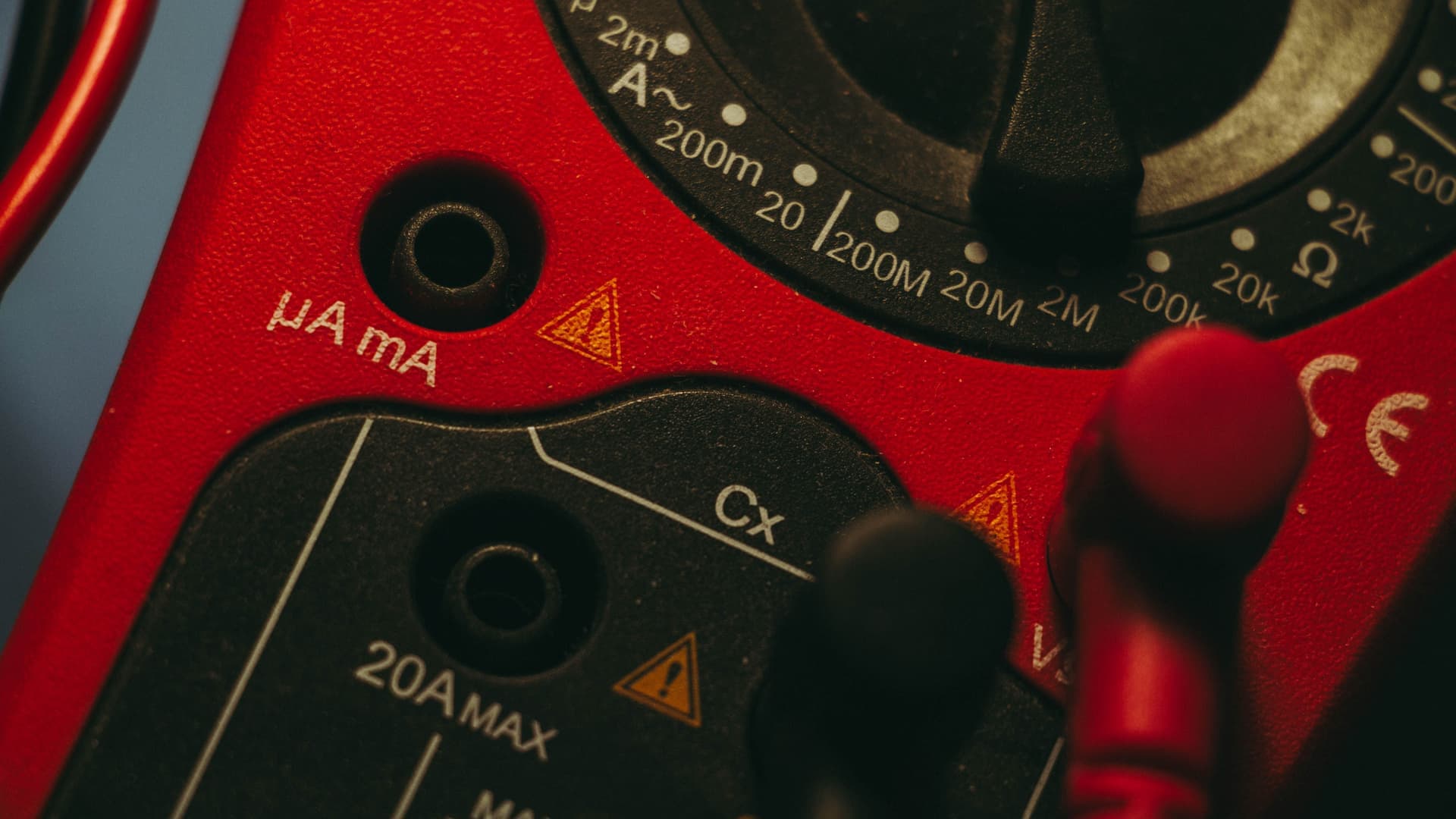
Input amps by machine type
| Welder type | Input voltage | Typical input amps | Typically specified breaker |
|---|---|---|---|
| Flux-core wire feed, 140 A class | 120 V | About 20 A at rated output | 20 A |
| Gas MIG, 140 A class | 120 V | About 20 A at rated output | 20 A |
| MIG, 210 A class | 240 V | Commonly 25–30 A at rated output | 30–50 A |
| AC/DC TIG, 200 A class | 240 V | Commonly 25–35 A at rated output | 30–50 A |
| Stick, 200 A class | 240 V | Commonly 30–40 A at rated output | 40–50 A |
| Plasma cutter, 50 A class | 240 V | Commonly 20–30 A at rated output | 30 A and above |
Why output amps mislead people
A welder is an energy converter. It takes your supply — a moderate current at a household voltage — and converts it into a very large current at a very low voltage, which is what actually melts steel. An arc might run at 19 volts and 90 amps. That is about 1,700 watts at the arc, and 1,700 watts drawn from a 120-volt supply is roughly 14 amps before you account for the machine's own inefficiency.
So a machine advertised as producing 140 amps sits comfortably on a 20-amp circuit. The advertised figure and the circuit figure are measuring different things at different points in the system.
Reading your own machine's figure
The rating plate gives rated input amperage — often labeled I1max or "input amps at rated output" — alongside the output it corresponds to. That pairing matters: a machine drawing 20 amps at 90 amps output draws less at 60 amps output.
Two consequences follow. First, published input figures are worst-case, because they are quoted at rated output and most home welding happens below it. Second, if you weld at maximum output with a high duty cycle, you are in the territory those figures describe — and that is when a marginal circuit shows itself.
What size breaker a welder needs covers how to turn that figure into a conversation with an electrician.
What makes actual draw higher than the plate
Three things, all worth knowing because they explain most mystery tripping.
Voltage drop. A long or thin extension cord delivers less voltage to the machine, which draws more current to compensate for the same output. This is the most common cause of a machine that works on one outlet and trips on another — welder extension cords covers the fix.
Shared loads. The circuit does not distinguish between your welder and the freezer on the same run. A compressor starting mid-weld adds its inrush to your draw.
Inrush at arc start. The moment of striking an arc is a brief spike above steady-state draw. Breakers are designed to tolerate short spikes, but a circuit already close to its limit has nothing left to absorb them.
The standing rule for anything electrical here
These figures are for understanding your machine and having a useful conversation. They are not a design specification for an installation. Breaker and conductor sizing depends on the National Electrical Code, your local amendments, conductor type, run length and ambient conditions — and your machine's own manual governs its requirements. Circuit work belongs to a licensed electrician.
What we would buy
1. The tool that answers this directly
Klein Tools CL800 digital clamp meter
Reads actual draw at your settings instead of relying on a published maximum.
Published input figures are stated at the machine's rated output. Most home welding happens well below that, so real draw is usually lower — sometimes much lower. A clamp meter tells you what is actually happening on your circuit at the settings you actually use.
That is genuinely useful information when you are deciding whether an existing circuit is fine or marginal. It is information for the electrician, not a substitute for one.
What works
- Lets you measure real input current at real settings, which is the only way to know whether a breaker is marginal or fine
- Reads voltage drop at the outlet under load — the actual diagnosis when a machine underperforms on a long run
What does not
- It tells you what is happening; it does not make anything safe. Circuit work still belongs to a licensed electrician
- More tool than you need if you only ever plug into one known-good outlet
Questions people actually ask
How many amps does a 110V welder use?
A 120-volt wire-feed welder in the 140-amp output class typically draws about 20 amps at its rated output, which is why manufacturers specify a 20-amp circuit.
At lower settings the draw is proportionally less. The rating plate gives the figure for your specific machine.
How many amps does a 240V welder use?
Commonly 25 to 40 input amps at rated output for home machines in the 200-amp output class, depending on process and efficiency, which is why 30 to 50 amp circuits are the norm.
Stick welding generally draws more input current than MIG at the same output because of the arc voltage involved.
Does duty cycle change how many amps a welder draws?
No. Duty cycle describes how long the machine can sustain an output before it must cool; it does not change the current drawn while it is welding.
What a higher duty cycle does mean is that the machine spends more of each ten minutes drawing that current, which matters for anything else sharing the circuit.
Can I measure my welder's draw myself?
Yes — a clamp meter around a single supply conductor will read input current while you weld. That gives you the real figure at your real settings rather than a published worst case.
Use it to inform a conversation with an electrician, not to justify running on an undersized circuit.
Why does my welder draw more on an extension cord?
Voltage drop along the cord means the machine receives less than the full supply voltage. To produce the same output it draws more current, which heats the cord further and drops the voltage more.
Heavier gauge and shorter runs are the fix.
Sources
Read next
- What size breaker do you need for a welder?
Read the rating plate, not the marketing. What decides the circuit, and what to tell your electrician.
- 120V vs 240V welders: which one do you actually need?
The decision that sets your ceiling: what each supply voltage welds, and what the circuit really costs.
- Welder extension cords: how to size one properly
Voltage drop, gauge and length — why a thin cord makes a good machine weld badly.
- The best 120V welders for beginners
Machines that run on an ordinary household circuit, and what that ceiling means for what you can build.
- Gas and power: the two things that decide what you can actually run
A machine you cannot plug in is a machine you do not own yet. This is the hub for the two questions that quietly decide every purchase on this site.
Back to Gas & Power, or start over at Find Your Level.
Ryder M.
Ryder M. is the hands-on owner behind Magoo Media Group. He writes Arc & Bead's buying guides and picks every machine on the site. What every recommendation is based on — and what it is not based on — is set out on How We Pick.