Welding wire size chart
Wire diameter is a setting most people forget they have — and on a 120-volt machine it is one of the most consequential ones.
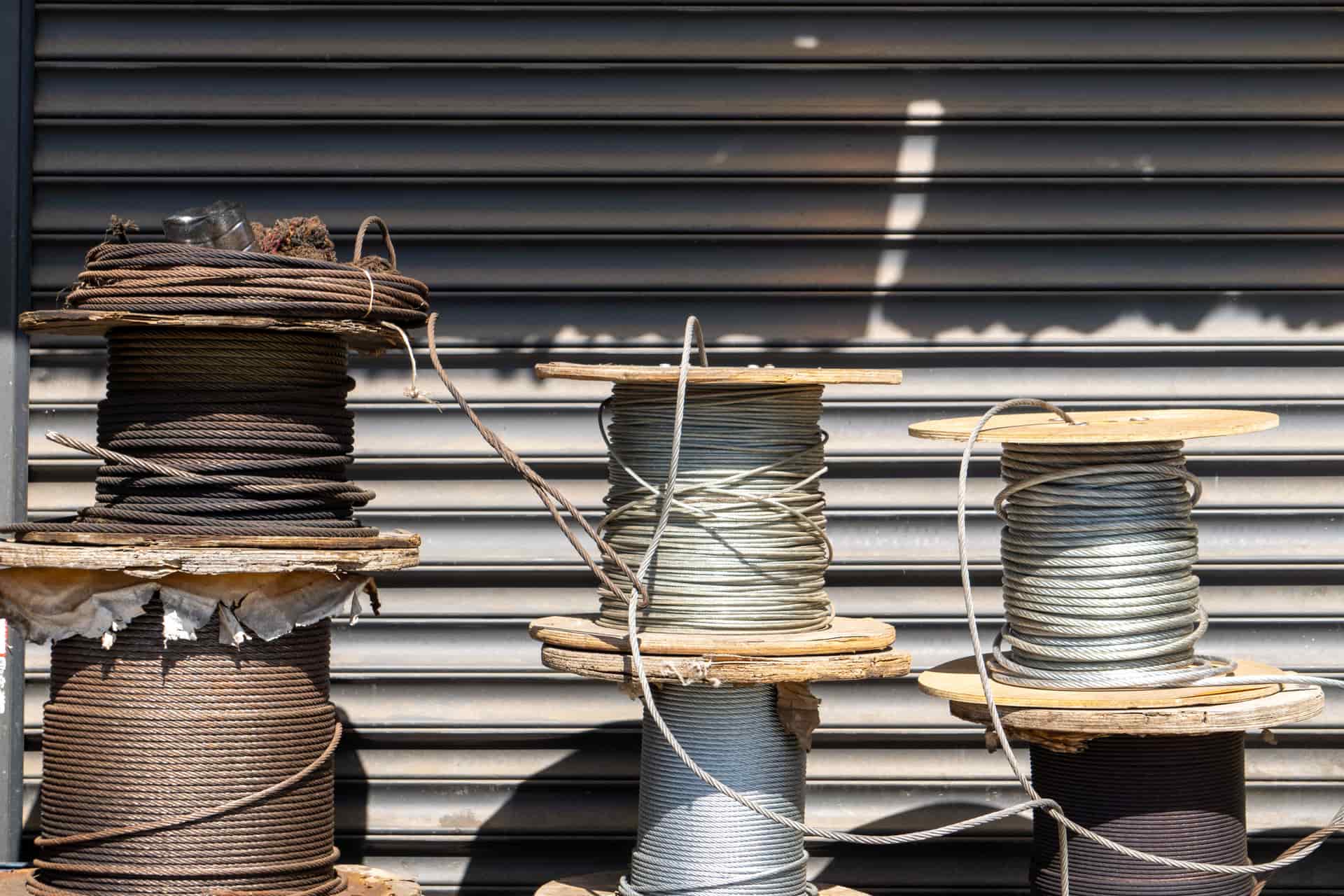
Wire size by material thickness
| Material thickness | Wire diameter | Typical amperage |
|---|---|---|
| 24–18 gauge | 0.030 in | Low end of the machine's range |
| 16 gauge to 1/8 in | 0.030 in | Roughly 40–110 A |
| 1/8 in to 3/16 in | 0.030 in or 0.035 in | Roughly 70–135 A |
| 3/16 in to 1/4 in | 0.035 in | Roughly 100–140 A |
| Over 1/4 in | 0.035 in, multiple passes | Beyond a 120 V machine in one pass |
Why diameter is a real setting
A thicker wire needs more current to melt at a stable rate. That is the whole of it, and every consequence follows.
On a 120-volt machine with a modest amperage ceiling, 0.035 inch wire can genuinely be too thick: the machine cannot supply the current to run it stably at the settings the joint needs, so you get a spitting arc, poor fusion and a frustrating session that looks like a faulty welder.
Conversely, 0.030 inch wire on quarter-inch plate deposits metal slowly and needs more passes, which is not dangerous but is slow.
The practical rule for a 120-volt machine: default to 0.030 inch. It covers everything from thin sheet to an eighth of an inch comfortably and reaches a quarter inch with a bevelled joint and multiple passes. Move to 0.035 inch only if you are consistently working at the top of your machine's range.
0.030 vs 0.035: the honest comparison
| 0.030 in | 0.035 in | |
|---|---|---|
| Best for | Sheet up to about 1/8 in | 1/8 in to 1/4 in |
| Current needed | Less | More |
| Suits a 120 V machine | Yes, comfortably | Only near the top of its range |
| Deposition rate | Slower | Faster |
| Control on thin material | Better | Harder, burn-through risk |
| Passes needed on 1/4 in | More | Fewer |
The classification matters as much as the diameter
Two self-shielded classifications dominate the shelf and they are not interchangeable.
E71T-11 is all-position and multi-pass rated. Use it for anything that holds weight, anything vertical, and anything requiring more than one pass.
E71T-GS is single-pass rated. It is cheaper, fine for practice and light single-pass work, and the wrong choice for a structural joint.
The AWS designation is on the spool. It is worth reading before you buy on price, because the price difference is small and the application difference is not.
Solid MIG wire, for comparison
If you later move to gas MIG, the equivalent solid wire is ER70S-6, and the diameters run smaller: 0.024 inch is common for thin sheet and body panels, 0.030 inch is the general default, and 0.035 inch appears on heavier work.
The 0.024 inch option is the specific reason gas MIG handles thin sheet so much better — there is no self-shielded equivalent that fine. MIG welding sheet metal covers it.
Storing wire, which nobody mentions
Flux-cored wire is hygroscopic: the flux absorbs moisture from the air, and damp flux produces porosity that looks exactly like a shielding problem.
Keep spools in a sealed container with a desiccant pack, or at minimum in a closed cabinet rather than open on a shelf in a damp garage. A spool with visible surface rust should be replaced rather than persevered with — you will spend longer diagnosing the welds than the wire costs.
If a machine that welded fine last month suddenly produces porous beads, the wire is a more likely culprit than the welder.
What we would buy
1. The 0.030 in default
Lincoln Electric Innershield NR-211-MP flux-cored wire
All-position, multi-pass rated, and available in both diameters with published procedures.
For a 120-volt machine, 0.030 inch is the diameter that matches the available amperage best, and this is the wire to buy it in. Lincoln publishes it as AWS E71T-11 in both 0.030 and 0.035 inch, with a maximum plate thickness of 5/16 inch for 0.045 inch and smaller diameters.
All-position and multi-pass rating matters more than it sounds: it is what makes this wire acceptable for a joint that holds weight, rather than only for a single-pass decorative bead.
What works
- Lincoln publishes full procedure tables for it, so there is a documented starting setting for every thickness
- All-position rated — it will run a vertical fillet, not just a flat bead
- Available in 1 lb, 5 lb and 10 lb spools, so a small machine does not need a big spool
What does not
- Noticeably more expensive per pound than unbranded E71T-GS wire
- Like every self-shielded wire it produces slag and more spatter than a gas process
2. The practice spool
Blue Demon E71TGS flux-cored wire
Cheap enough to burn on scrap, and single-pass rated — which is the limit to respect.
Learning wire diameter means running both and comparing, and doing that on premium wire is expensive. E71T-GS is fine for practice beads and light single-pass work.
The limitation is the classification itself: E71T-GS is single-pass rated. Use it to learn and for light work, and keep E71T-11 for anything structural.
What works
- Cheap enough per pound that practicing on scrap does not feel expensive
- Widely stocked, so a spool is rarely more than two days away
What does not
- E71T-GS is single-pass rated — it is not the wire for a multi-pass structural joint
- Runs dirtier than NR-211-MP, which matters when you are also learning to read your own bead
Who this is wrong for: Multi-pass or load-bearing joints. E71T-GS is single-pass rated and the classification is the constraint, not a suggestion.
Questions people actually ask
What size flux core wire should I use?
For a 120-volt machine, 0.030 inch is the sensible default. It runs stably at the amperage those machines can actually supply and covers everything from thin sheet up to about an eighth of an inch comfortably.
Move to 0.035 inch only if you are consistently working near the top of your machine's range on heavier material.
Is .035 wire better than .030?
Not better — different. It carries more current, deposits metal faster and suits thicker material, but it needs amperage a small machine may not have.
On a 120-volt welder, 0.035 inch can produce an unstable arc and poor fusion simply because the machine cannot feed it enough current.
Can I use .030 wire on 1/4 inch steel?
Yes, with a bevelled joint and multiple passes. It is slower than 0.035 inch but perfectly sound.
On a 120-volt machine this is often the better approach anyway, because the machine may not supply enough current to run 0.035 inch stably at the required settings.
What is the difference between E71T-11 and E71T-GS?
E71T-11 is all-position and multi-pass rated, making it suitable for structural joints and vertical work. E71T-GS is single-pass rated and cheaper.
Use E71T-GS for practice and light single-pass work, and E71T-11 for anything that holds weight.
Does welding wire go bad?
Yes. Flux-cored wire absorbs moisture from the air, and damp flux produces porosity that looks like a gas or shielding problem.
Store spools sealed with a desiccant pack. If a spool has visible surface rust, replace it rather than trying to weld through the problem.
Sources
Read next
- Flux-core welding settings chart
Starting settings by thickness, and a symptom-by-symptom guide to fixing a bad bead.
- Flux-core welding for beginners
Drag or push, polarity, reading your first bead, and what to change when it is wrong.
- MIG welding sheet metal without burning through
Stitch welding, heat management and copper backing — the techniques thin sheet actually needs.
- The best flux-core welders for beginners
Gasless machines that weld the day they arrive, and the duty-cycle figure that separates them.
- Level 1 · Flux-Core: one machine, one wall socket, no gas bottle
If you have never struck an arc, this is your page. One machine, a standard household outlet, and nothing else to buy before your first weld.
Back to Level 1 · Flux-Core, or start over at Find Your Level.
Ryder M.
Ryder M. is the hands-on owner behind Magoo Media Group. He writes Arc & Bead's buying guides and picks every machine on the site. What every recommendation is based on — and what it is not based on — is set out on How We Pick.