Flux Core Welding: Advantages and Disadvantages
Self-shielded wire wins outdoors, on thick steel and on material that is not clean. It loses on thin sheet, on appearance and on fume — and the trade is less about skill than about the job in front of you.
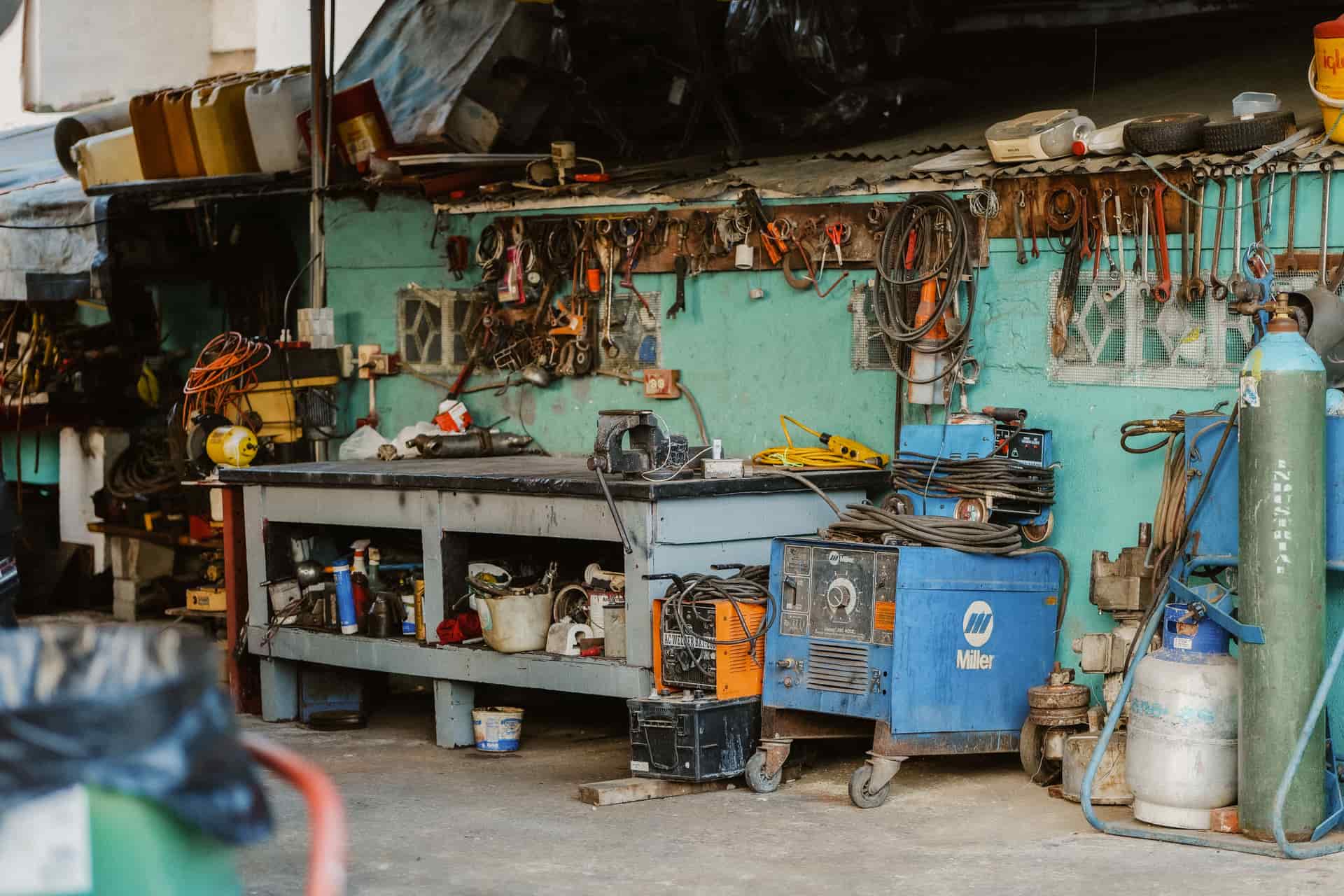
The advantages and disadvantages of flux core welding
Advantages: no gas bottle, regulator or cart to buy; it works outdoors and in wind where gas MIG cannot; it penetrates deeply, so a 120 V machine reaches 1/4 inch steel; it tolerates mill scale, rust and paint better than gas MIG; and the machines are light and cheap. Disadvantages: every weld leaves slag that must be chipped and brushed; it spatters far more; it produces significantly more fume, which matters in a garage; it is poor on thin sheet because the same deep penetration burns through; the bead is less attractive; and cheap E71T-GS wire is single-pass rated, so it is not the wire for a structural multi-pass joint.
Flux-core gets judged almost exclusively against gas MIG, which is a useful comparison and not the only one. This page assesses the process on its own terms, because the right question is not "is flux-core worse than MIG" — it is "does flux-core suit the work I actually have".
How the process works, in one paragraph
Self-shielded flux-cored wire is a hollow tube of steel filled with flux. As the arc melts the wire, the flux burns and produces its own shielding gas, so nothing has to be bottled and delivered. The residue of that flux floats to the surface of the weld and freezes there as slag, which is then chipped off. Everything good and bad about the process follows from those two facts.
The advantages
No gas, and no gas purchase. This is not a small saving. A gas setup means a cylinder, a flowmeter regulator, a deposit or lease, refills, and in practice a cart to keep the bottle upright. On a first machine, that is frequently more than the machine cost — which is why the site's Level 1 is flux-core and not MIG. What is the first welder to buy is the argument in full.
It works outdoors. A draft strips shielding gas off a gas-MIG puddle, and it takes very little air movement to do it. Self-shielded wire makes its shielding at the arc, continuously, so a breeze does not matter. For fence work, trailer repairs or anything at the far end of the yard, this is the whole reason the process exists.
Deep penetration from a small machine. Flux-cored wire runs hotter and digs deeper than solid wire at the same current. That is why a 140 A machine on a household outlet publishes a 1/4 inch steel capacity, where a comparable gas MIG machine publishes 3/16 inch — the Hobart Handler 140EZ's published figure. Getting more thickness out of the same circuit is a genuine advantage, and flux-core vs MIG strength and penetration goes into what it does and does not mean.
It tolerates dirty steel. Flux is a cleaning agent. Mill scale, light rust, paint residue and damp surfaces all disrupt a gas-MIG weld more than a flux-cored one. Not a licence to weld filthy material — preparation still improves every weld — but real-world steel is rarely clean, and this process minds less.
Portability. 19 lb for the Forney, 15 lb for the Lincoln, 11.4 lb for the YESWELDER. A machine you can carry in one hand with no bottle changes what jobs are possible.
The disadvantages
Slag, on every weld. The flux residue has to be chipped and wire-brushed off, and that is not optional — slag trapped between passes is a defect, and slag left on a surface will hold moisture and rust. It roughly doubles the time a joint takes.
Spatter. Far more than gas MIG, which means more cleanup, more nozzle maintenance and more spatter on things you did not want welded. Excessive flux-core spatter runs through the causes in order.
Fume. This is the disadvantage that matters most and gets mentioned least. Burning flux produces considerably more fume than a gas-shielded process, and in a closed garage that is a real exposure rather than a nuisance. Flux-core welding safety covers what is in it, and a P100 respirator plus ventilation is not an optional extra on this process.
Poor on thin sheet. The deep penetration that gets you 1/4 inch is exactly what blows holes in 20-gauge panel. Flux-core is the wrong process for car bodywork, and MIG vs flux-core for body work is unambiguous about it. If burn-through is your problem right now, flux-core burn through has the six causes.
Appearance. A flux-core bead under its slag is rougher than a gas-MIG bead and considerably rougher than TIG. For anything where the weld is visible — furniture, sculpture, a handrail — that matters.
Wire economics and wire class. Flux-cored wire costs more per pound than solid wire, and the cheap E71T-GS variety is single-pass rated, so it is not the wire for a multi-pass structural joint. Stepping up to E71T-11 fixes the rating and increases the cost. The welding wire size chart covers diameter, and flux-core polarity covers the one setup mistake that makes the process look far worse than it is.
Side by side
| Factor | Flux-core | What it means for the job |
|---|---|---|
| Shielding | Made at the arc by burning flux | No bottle, no regulator, no cart — and no draft sensitivity |
| Outdoors | Works in wind | The decisive advantage for fences, trailers and farm repairs |
| Penetration | Deep for the current | 1/4 in steel from a 140 A, 120 V machine; burns through sheet |
| Dirty material | More tolerant than gas MIG | Real-world steel is rarely clean; this process minds less |
| Post-weld work | Slag chipping and brushing on every weld | Roughly doubles the time per joint |
| Spatter | High | More cleanup, more nozzle maintenance |
| Fume | Significantly higher | Ventilation and a P100 respirator are requirements, not extras |
| Thin sheet | Poor | Wrong process for bodywork and anything under about 1/8 in |
| Appearance | Rougher bead | Wrong process where the weld shows |
| Wire | Costs more per pound; E71T-GS is single-pass rated | Budget E71T-11 for anything structural |
| Machine cost | Lowest entry cost of any process | The cheapest honest way to start welding at all |
One disadvantage that is really a purchasing decision
Several flux-core machines are gasless-only and will never run a shielding bottle — the Forney, the Lincoln Weld-Pak 90i FC and the YESWELDER FLUX-135PRO all state it plainly. That is fine if flux-core suits your work permanently. If you expect to add gas within a year, a machine that runs both — such as the Hobart Handler 140EZ, which runs flux-core on day one and gas MIG the day you buy a bottle — avoids buying twice. Flux core vs MIG for beginners is the decision page for that.
So when is flux-core the right answer?
Choose it if your work is structural rather than cosmetic, mostly 1/8 inch and thicker, often outdoors or away from a bench, on steel that is not clean, and if you want to start welding without buying a gas setup first.
Choose something else if your work is sheet metal or bodywork, if the welds will be visible, if you weld in a closed space with poor ventilation, or if you already own a gas setup and the work is indoors — in which case gas MIG is simply better at the same job.
The honest summary is that flux-core is not a beginner's compromise that you grow out of. It is a process with a specific set of strengths that stay useful at every level — which is why the machines at Level 2 and above on this site still run it. Flux core welding for beginners is the technique guide once you have decided.
What we would buy
Arc & Bead is an Amazon Associate. If you buy through a link on this page we may earn a commission, at no extra cost to you. We have not physically tested the machines on this page and we say so on How We Pick.
1. Best machine to take the advantages
Forney Easy Weld 261 140 FC-i
140 A with a 30% duty cycle at 90 A and 1/4 inch steel capacity at 19 lb, which is flux-core's portability and capacity arguments in one box.
Forney publishes flux-core (gasless) only; 120 V input on a 20 A circuit minimum; 140 A maximum output; a 30% duty cycle at 90 A; 0.030 inch flux-cored wire in 2 lb and 10 lb rolls; steel capacity up to 1/4 inch; and 19 lb.
Those figures are the advantages of flux-core made concrete. A quarter inch of steel from a machine that weighs 19 lb and plugs into a wall socket, with nothing else to buy, is not a thing gas MIG can offer — the bottle alone weighs more than the machine.
The 30% duty cycle at 90 A is unusually generous in this class and it matters for a flux-core-specific reason: the process is used for the kind of work where you weld a lot of inches in one go — a fence line, a trailer repair, a gate frame.
Infinite voltage and wire-speed control rather than four fixed taps is the third reason it leads. Flux-core is less tolerant than gas MIG of a slightly-off setting, so being able to dial a setting in rather than choose from four taps genuinely helps.
The disadvantages come with it. It will never run gas, so it cannot become your Level 2 machine. Every weld leaves slag to chip and brush. And it needs a 20 A circuit — a 15 A garage lighting circuit will trip at higher settings.
What works
- 30% duty cycle at 90 A is unusually generous for a 120 V machine in this class
- Infinite voltage and wire-speed control rather than four fixed taps, so you can actually dial a setting in
- 19 lb — genuinely carryable to the job instead of the job coming to it
- No gas bottle, no regulator, no second purchase before your first weld
What does not
- Flux-core only. It will never run gas, so it cannot become your Level 2 machine
- Every weld leaves slag that has to be chipped and wire-brushed off
- Needs a 20 A circuit — a 15 A garage lighting circuit will trip at higher settings
2. Best for the outdoor advantage
Lincoln Electric Weld-Pak 90i FC (K5255-1)
15 lb with a shoulder strap and a metal case, behind the best dealer and consumable network in the category — flux-core's portability taken literally.
Lincoln publishes flux-core (gasless) only; 120 V input; steel capacity up to 1/4 inch; two knobs for wire speed and infinite voltage; 15 lb; and a welding gun, nozzle, contact tip, work cable and clamp with a metal case included.
Flux-core's biggest single advantage is that it works where gas MIG cannot — in wind, outdoors, away from a bench. A 15 lb machine with a shoulder strap and a carry case is the version of that argument you can act on. Gas MIG in the same situation means a cylinder, a cart and a draft-free enclosure.
The two-knob interface is the right level of complexity for the process. Flux-core does not reward fine parameter control the way TIG does, and the shortest path from box to first bead is worth more on a first machine than a feature list.
Lincoln's consumable network is the third argument, and it is specific: flux-cored wire is the consumable you will buy most often, and NR-211-MP is on the shelf at most welding suppliers.
The costs: flux-core only, so no route to gas; noticeably more expensive than a budget-brand gasless machine of similar output; and slag on every weld.
What works
- Infinite voltage control rather than fixed taps, so a setting can actually be dialled in rather than chosen from four
- Two knobs and nothing else — the shortest path from box to first bead of anything Lincoln sells
- 15 lb with a shoulder strap and a metal carry case, so it goes to the work
- Lincoln's dealer and consumable network is the best in the category, which matters on a first machine
What does not
- Flux-core only. It will never run gas, so it cannot become your Level 2 machine
- Costs noticeably more than a budget-brand 135 A gasless machine of similar output
- Every weld leaves slag that has to be chipped and wire-brushed off
3. The wire that removes one disadvantage
Lincoln Electric Innershield NR-211-MP flux-cored wire
E71T-11, all-position, with Lincoln's own published procedure tables — which turns flux-core's setting sensitivity into a lookup rather than a guess.
Lincoln publishes an AWS E71T-11 classification; all-position rating; 0.030 inch and 0.035 inch diameters; a maximum plate thickness of 5/16 inch for 0.045 inch and smaller diameters; and DCEN (electrode negative) polarity.
Two of those lines address flux-core's real disadvantages directly. The all-position rating means it will run a vertical fillet rather than only a flat bead, which is what you need for the gate, bracket and frame work the process is used for. And Lincoln publishing full procedure tables means there is a documented starting setting for every thickness, so the process's sensitivity to settings becomes a lookup instead of an afternoon.
The E71T-11 classification is the other thing worth understanding. It is a different wire from the cheap E71T-GS that comes bundled with many machines, and the difference is that E71T-GS is single-pass rated — it is not the wire for a multi-pass structural joint.
Costs: noticeably more per pound than unbranded E71T-GS, and like every self-shielded wire it produces slag and more spatter than a gas process.
What works
- Lincoln publishes full procedure tables for it, so there is a documented starting setting for every thickness
- All-position rated — it will run a vertical fillet, not just a flat bead
- Available in 1 lb, 5 lb and 10 lb spools, so a small machine does not need a big spool
What does not
- Noticeably more expensive per pound than unbranded E71T-GS wire
- Like every self-shielded wire it produces slag and more spatter than a gas process
4. Cheapest way to find out if the trade suits you
YESWELDER FLUX-135PRO
135 A and synergic control at 11.4 lb, with stick and lift TIG included — the lowest-cost route into the process.
YESWELDER publishes gasless flux-core MIG, stick and lift TIG (TIG torch extra); 110 V input; 135 A maximum output; steel capacity to 3/32 inch (2.5 mm); 0.030 inch and 0.035 inch E71T-GS wire; and 11.4 lb.
It is on this page because the honest way to decide whether flux-core's trade suits you is to try it cheaply. At 11.4 lb and the bottom of the market, this is the lowest cost of finding out — and the included stick capability doubles down on flux-core's own strength, because rusty outdoor repairs are exactly where both processes beat gas MIG.
Synergic control is a genuine help on a gasless machine, where the voltage-to-wire-speed relationship is less forgiving than it is on gas MIG.
The limits are real and belong in the decision. No gas MIG, ever. 3/32 inch steel capacity is well short of the 1/4 inch the 140 A machines reach, which removes flux-core's thickness advantage. And consumables are less widely stocked than Lincoln's or Forney's.
What works
- Among the least expensive 110 V flux-core machines that is genuinely sold and supported
- 11.4 lb — light enough to store on a shelf rather than a cart
- Synergic control matches voltage to wire speed, which is the single hardest setting for a beginner to get right
- Stick and lift TIG are included in the price, so rusty outdoor repairs are not a second machine
What does not
- No gas MIG. It will never run a shielding bottle, so it cannot become your Level 2 machine
- 3/32 in steel capacity is well short of the 1/4 in the 140 A machines reach
- Consumables and torch parts are less widely stocked than the Lincoln or Forney equivalents
- The lift TIG torch is not in the box — budget for it if TIG is the reason you are buying
Who this is wrong for: Anyone whose main job is thicker than 3/32 inch. The capacity ceiling here undercuts the main reason to choose flux-core in the first place.
Questions people actually ask
What are the main advantages of flux core welding?
No gas bottle, regulator, lease or cart to buy; it works outdoors and in wind where gas MIG cannot; it penetrates deeply enough that a 140 A machine on a household outlet reaches 1/4 inch steel; it tolerates mill scale, rust and paint better than gas MIG; and the machines are light and cheap - 19 lb for the Forney, 15 lb for the Lincoln Weld-Pak 90i FC, 11.4 lb for the YESWELDER FLUX-135PRO.
The outdoor advantage is the decisive one. Self-shielded wire makes its shielding at the arc, so a breeze does not strip it away.
What are the disadvantages of flux core welding?
Slag on every weld that must be chipped and brushed off, which roughly doubles the time a joint takes; much more spatter than gas MIG; significantly more fume, which is a real exposure in a closed garage; poor performance on thin sheet because the deep penetration burns through; a rougher-looking bead; and wire that costs more per pound, with the cheap E71T-GS grade being single-pass rated.
The fume is the one that gets mentioned least and matters most. Ventilation and a P100 respirator are requirements on this process, not extras.
Is flux core welding strong enough for structural work?
The process is, with the right wire. The qualifier is the wire classification: E71T-GS, which is what comes bundled with many machines, is single-pass rated and is not the wire for a multi-pass structural joint.
E71T-11 - Lincoln's Innershield NR-211-MP, for example - is all-position rated with published procedure tables for every thickness. If a joint matters, buy the wire class that matches it rather than the cheapest spool.
Why is flux core worse than MIG on thin metal?
For exactly the reason it is better on thick metal: flux-cored wire runs hotter and penetrates deeper than solid wire at the same current. That is what gets a 120 V machine to 1/4 inch steel, and it is what blows holes in 20-gauge panel.
There is no setting that removes it, which is why flux-core is the wrong process for car bodywork. Gas MIG with thin solid wire is the right one.
Does flux core welding produce more fume than MIG?
Yes, significantly. The shielding on a self-shielded wire comes from flux burning at the arc, and that combustion is itself the extra fume - it is inherent to how the process works rather than a sign anything is wrong.
In an open yard that is manageable. In a closed garage it is the single most important reason to ventilate and to wear a P100 respirator under the helmet.
Will I grow out of flux core welding?
Not as a process. You may grow out of a gasless-only machine, which is a different thing - the Forney, the Lincoln Weld-Pak 90i FC and the YESWELDER FLUX-135PRO all state plainly that they will never run gas.
The process itself stays useful at every level. Outdoor repairs, dirty steel and thick sections are still flux-core's jobs, which is why the gas MIG machines in this registry also run flux-cored wire.
Is flux core cheaper than MIG overall?
Cheaper to start, often not cheaper to run. You skip the cylinder, regulator, deposit or lease, refills and usually a cart - which on a first purchase can exceed the cost of the machine.
Against that, flux-cored wire costs more per pound than solid wire, and you spend time chipping slag on every joint. For occasional work the entry saving dominates; for steady indoor work the running cost closes the gap.
Sources
- Forney Industries — Easy Weld 261 140 FC-i published specifications: flux-core only, 120 V on a 20 A circuit minimum, 140 A maximum, 30% duty cycle at 90 A, up to 1/4 in steel, 19 lb
- Lincoln Electric — Weld-Pak 90i FC (K5255-1) published specifications: flux-core only, 120 V, up to 1/4 in steel, infinite voltage control, 15 lb, gun and metal case included
- Lincoln Electric — Innershield NR-211-MP published specifications: AWS E71T-11, all-position, 0.030 in and 0.035 in, 5/16 in maximum plate for 0.045 in and smaller, DCEN polarity, published procedure tables
- YESWELDER — FLUX-135PRO published specifications: gasless flux-core MIG, stick and lift TIG, 110 V, 135 A maximum, capacity to 3/32 in (2.5 mm), E71T-GS wire, 11.4 lb
- Hobart Welders — Handler 140EZ published specifications: gas MIG and flux-core, 120 V, 30–140 A, 24 gauge to 3/16 in steel capacity
Read next
- Flux-core vs MIG for beginners: which should you learn on?
Where the shielding comes from, and how that one difference changes everything downstream.
- Flux-core welding for beginners
Drag or push, polarity, reading your first bead, and what to change when it is wrong.
- Flux-core welding safety
Fume, eyes and fire — including the risks that show up hours after you stop welding.
- Flux-core vs MIG: strength and penetration
Same 70 ksi class on both wires - the real divide is single-pass rating, plate limits and penetration profile.
- What is the first welder to buy?
The one job a first welder has to do, and the four specifications that decide whether it does it.
- Level 1 · Flux-Core: one machine, one wall socket, no gas bottle
If you have never struck an arc, this is your page. One machine, a standard household outlet, and nothing else to buy before your first weld.
Back to Level 1 · Flux-Core, or start over at Find Your Level.
Ryder M.
Ryder M. is the hands-on owner behind Magoo Media Group. He writes Arc & Bead's buying guides and picks every machine on the site. What every recommendation is based on — and what it is not based on — is set out on How We Pick.