The best angle grinders for welding
A welder uses a grinder more than the welder itself. Ranked on the three things that decide a grinder in a weld shop - how it behaves when a disc grabs, whether grinding dust kills the motor, and how fast you can change a wheel.
Arc & Bead is an Amazon Associate. If you buy through a link on this page we may earn a commission, at no extra cost to you. We have not physically tested the machines on this page and we say so on How We Pick.
Quick picks
Tap any row to jump to the full write-up further down this page.
| # | Product | Best for | Price |
|---|---|---|---|
| 1 | 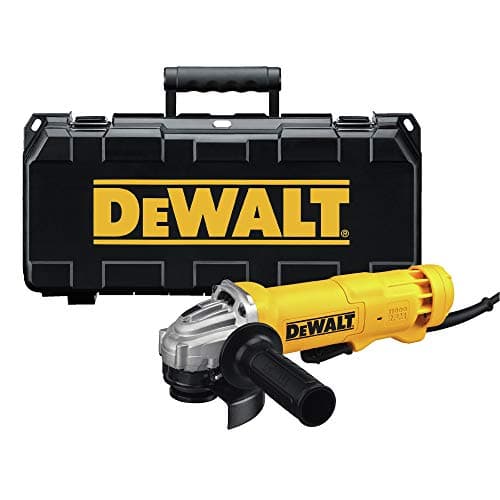 DeWalt DWE402K 4-1/2 in angle grinderEleven amps, tool-free wheel changes and a guard that rotates in one action. The grinder that does not make you choose. | Best all-round corded grinder | $127.09 · View on Amazon #ad How this is funded · Price as of November 13, 2026 |
| 2 | 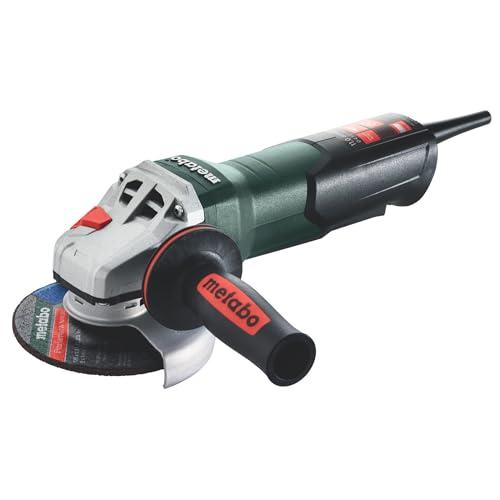 Metabo WP 11-125 Quick angle grinderA mechanical slip clutch and a switch that cannot be locked on. The pick if you are about to start cutting with a grinder. | Safest when a disc grabs | $166.80 · View on Amazon #ad How this is funded · Price as of November 13, 2026 |
| 3 | 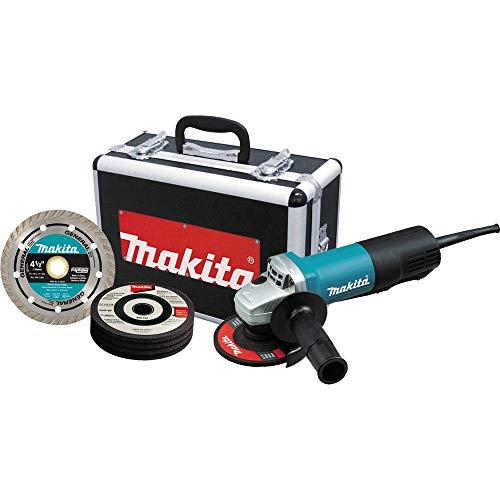 Makita 9557PBX1 4-1/2 in angle grinderA published 4.5 lb and the narrowest grip here, with a motor sealed against the exact dust that kills grinders in a weld shop. | Best for long sessions and overhead work | $124.00 · View on Amazon #ad How this is funded · Price as of November 13, 2026 |
| 4 | 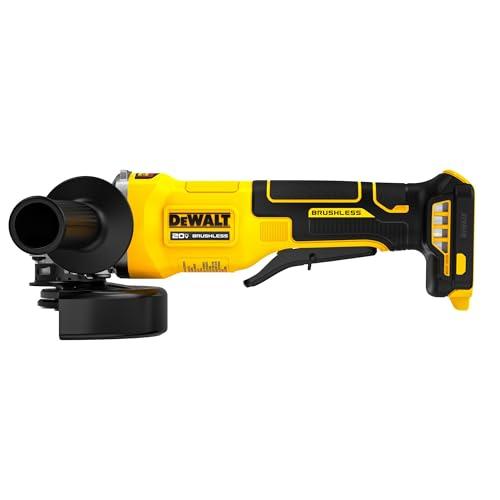 DeWalt DCG408B 20V MAX cordless angle grinderBrushless, 3.55 lb bare, with a kickback brake and an electronic clutch. The grinder for work that cannot come to the bench. | Best away from an outlet |
The short answer
A welder wants a 4-1/2 inch grinder, not a 7 inch, and should rank it on safety and sealing rather than amps. The DeWalt DWE402K is the all-rounder — 11 A, tool-free wheel changes, one-action guard. The Metabo WP 11-125 Quick is the safest here because it pairs a mechanical slip clutch with a switch that cannot be locked on, which is what you want the first time a cut-off disc binds. The Makita 9557PBX1 is the lightest at a published 4.5 lb with a sealed motor, best for long or overhead sessions. The DeWalt DCG408B is the cordless pick for work you cannot bring to a bench.
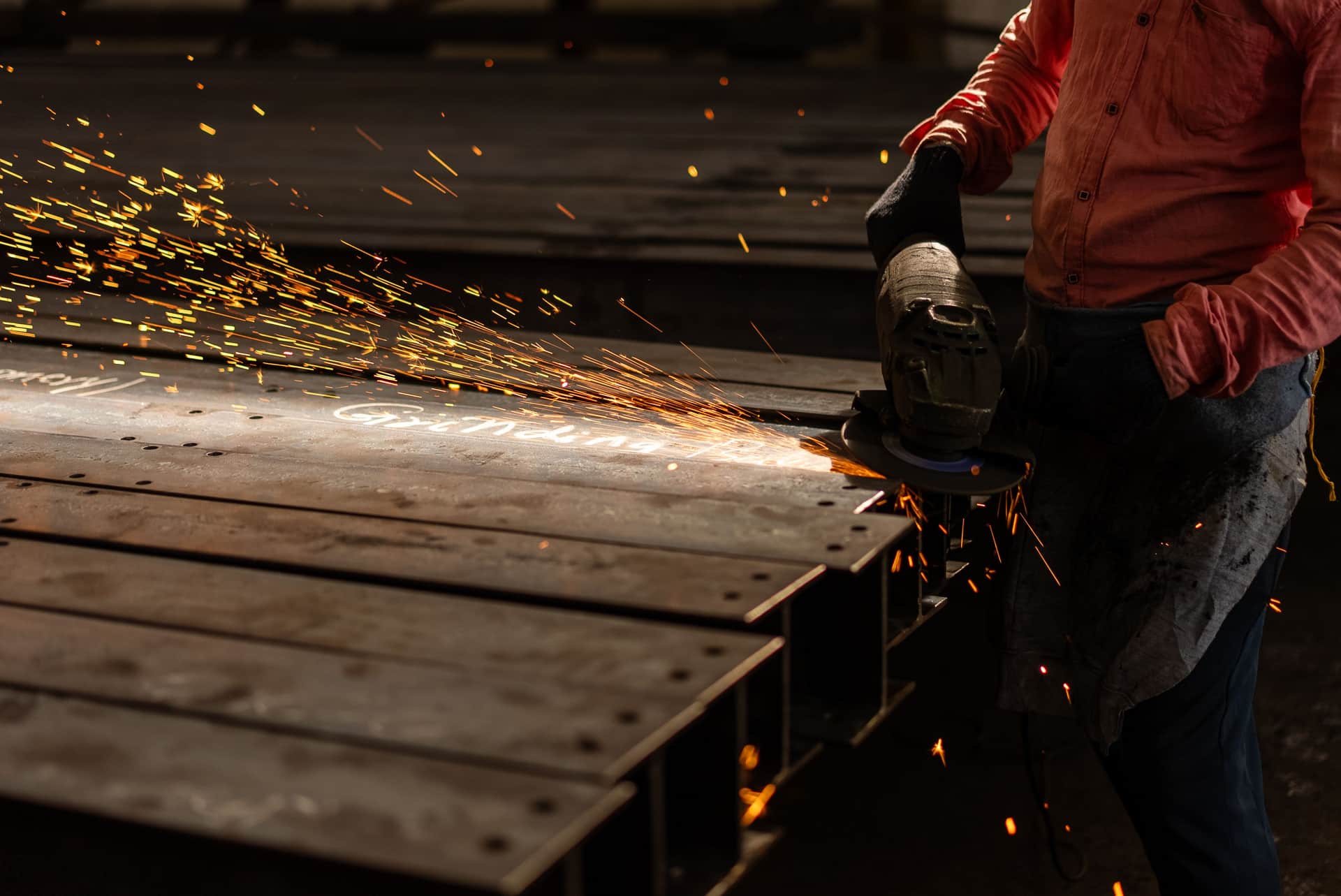
Here is the thing nobody tells a new welder: you will use the grinder more than the welder. Fit-up is grinding. Cleaning mill scale and paint off a joint is grinding. Chamfering an edge so a weld can reach the root is grinding. Knocking a proud bead flat, cutting stock to length, removing a tack you placed in the wrong place, taking the slag ridge off a flux-core weld — all grinding.
Which is why ranking grinders on amperage, the way general tool roundups do, misses the point. Every 4-1/2 in grinder worth buying has enough power for weld work. What separates them is how the tool behaves when a disc grabs, whether the motor survives a shop full of conductive steel dust, and how much friction stands between you and changing a wheel.
What we ranked on, in order
1. What happens when the disc binds. This is first because it is the thing that injures people. A cut-off disc jamming in a kerf stops instantly while the tool keeps going, and the energy goes into your wrists. Two defenses exist: a mechanical slip clutch that lets the drive give way, and an electronic kickback brake that cuts power when it detects the tool rotating. We rank a tool with either above one with neither.
2. Whether the switch can be locked on. A non-locking paddle stops the disc the moment you let go. A lock-on switch means a dropped grinder keeps spinning across the floor with a live disc. For a welder — who is often putting the grinder down hot, in a cluttered shop, with gloves on — that is the single easiest safety feature to get right and it costs nothing.
3. Sealing against grinding dust. Weld shops are the worst environment an angle grinder sees. The dust is fine, abrasive and electrically conductive, and it is what actually kills these tools: it gets into the bearings and the armature, and the motor dies long before anything else wears out. A manufacturer that publishes a specific defense against it has thought about this use.
4. Tool-free guard and disc changes. Not convenience features. A guard that needs a wrench to move is a guard that comes off and stays off, and a wheel change that needs a lost spanner is the reason people cut with a grinding wheel. Removing friction from the safe choice is how the safe choice gets made.
5. Weight and grip, judged for sustained use. Published weight and grip circumference decide whether you can hold the tool steady for the twentieth minute. These matter most overhead, which for trailer, gate and frame work is where a lot of welding actually happens.
Raw amperage came last, deliberately. Between 7.5 A and 11 A there is a real difference in heavy stock removal and almost none in weld cleanup.
A cut-off disc and a grinding wheel are not interchangeable.
The most common dangerous habit in a home shop is cutting with a grinding wheel, or side-loading a thin cut-off disc as though it were one. A cut-off disc is around 1 mm thick and is designed for load on its edge only; put side pressure on it and it can shatter at 11,000 rpm. A grinding wheel is thick and is designed for face load. Keep both, keep the guard on, and wear eye protection under the hood as well as behind it — your welding helmet is not grinding PPE unless it is rated for it, which is covered in the best welding helmets for beginners.
The four, on the specifications that actually differ
| Grinder | Motor / speed | Published weight | Kickback protection | Switch | Disc change |
|---|---|---|---|---|---|
| DeWalt DWE402K | 11 A corded, 11,000 rpm | Not published for this model | None published | Paddle with safety lock-off | Quick-Change, no wrench |
| Metabo WP 11-125 Quick | 11 A corded, 11,000 rpm | Not separable from packaging figure | S-automatic mechanical slip clutch | Non-locking paddle | M-Quick, tool-free |
| Makita 9557PBX1 | 7.5 A corded, 11,000 rpm | 4.5 lb | None published | Paddle with lock-on | Spanner required |
| DeWalt DCG408B | 20V MAX brushless, up to 9,000 rpm, up to 850 MWO | 3.55 lb bare tool | Kickback brake and E-Clutch | Paddle switch | Not published on this listing |
Two blanks in that table are the honest answer rather than a gap in the research. DeWalt does not publish a bare weight for the DWE402K on its listing, and the Metabo listing's only weight figure includes packaging. Printing either as a tool weight would have made the column look complete and been wrong.
Why 4-1/2 inch, and not bigger
A 7 or 9 in grinder removes material faster and is the wrong tool for welding. Three reasons, in order of how much they matter.
First, access. Weld cleanup happens in corners, inside angles and along fillets, and a large disc cannot reach into a joint. Most of the grinding a welder does is within an inch of a weld, in a place a 4-1/2 in disc barely fits.
Second, control. A large grinder has enough torque to take itself out of your hands when the disc catches, and it is heavy enough that you cannot stop it. The injuries are correspondingly worse.
Third, consumables. Four-and-a-half inch discs are the commonest abrasive size sold, in every type you need — grinding wheels, 1 mm cut-off discs, flap discs, wire cup brushes, surface conditioning discs. They are cheap, every hardware store has them, and that availability is worth more over a year than any single tool feature.
The one job the small grinder cannot do is cut thick plate accurately, and that is not a grinder problem. Past about 1/4 in a grinder is slow, loud and incapable of following a curve, which is where a plasma cutter earns its place — plasma cutter versus angle grinder is that comparison, and is a plasma cutter worth it is the honest version of the question.
The discs matter more than the grinder
Having spent this page on tools, here is the correction: for weld work the disc you fit changes the result far more than which of these four you own. Four types cover nearly everything a home welder does.
A grinding wheel — thick, rigid, usually 1/4 in — is for stock removal and knocking back a bead. A 1 mm cut-off disc is for cutting, edge-loaded only. A flap disc is the one most welders underuse: it blends and finishes a weld without the gouging a grinding wheel leaves, and it is what makes a bead look intentional. A wire cup brush removes mill scale, rust and paint without taking metal with it, which is the prep step that decides whether a weld fuses at all.
That last one is worth repeating because it is the commonest cause of a bad weld on a perfectly good machine. Mill scale is not metal, paint is not metal, and galvanizing is both not-metal and a fume hazard. The joint gets cleaned to bright steel first, every time — see beginner welding mistakes and, for what the fume side means, welding respiratory protection.
How we decided this
Published specifications only. Every figure on this page is the manufacturer's own published specification as carried on its product or retailer listing, read on the publication date. Where a listing published only a packaged weight, we left the cell blank and said why. We have not run, weighed or dropped any of these tools, we publish no scores, and we have tested nothing — which is stated plainly on how we pick.
We ranked for welding, not for tool reviews generally. The usual grinder roundup sorts by amps and finishes. The three things we put above amperage — kickback behavior, dust sealing and change friction — are the ones a weld shop actually tests, and they are why a 7.5 A tool is on this page above nothing and an 11 A one is not automatically first.
Availability checked before publishing. All four grinders were confirmed in stock and title-matched to their registry entries on the publication date.
Honest cons on all four, including the winner. The DeWalt has no published slip clutch. The Metabo is expensive and heavier. The Makita has a lock-on switch and the least power. The cordless one is a bare tool that needs a battery you may not own. Pick on which of those you can live with.
Next, if you have not bought the welder yet: what first welder to buy is the level-by-level decision, the welding starter kit checklist puts the grinder in order against everything else you need, and the best welding gloves for beginners is the other purchase you will make in the same week.
1. Best all-round corded grinder
DeWalt DWE402K 4-1/2 in angle grinder
Eleven amps, tool-free wheel changes and a guard that rotates in one action. The grinder that does not make you choose.
DeWalt publishes the DWE402K as a 4-1/2 in grinder with an 11 A AC/DC motor at 11,000 rpm on a 120 V household outlet, a paddle switch with safety lock-off, a Quick-Change wheel release that needs no wrench, a One-Touch guard that rotates through 360 degrees in a single action, and a 3-year limited warranty.
The two features worth the money are both about friction rather than power. A wrenchless wheel change means you actually swap from a grinding wheel to a cut-off disc when the job changes, instead of grinding through a cut with the wrong wheel because the wrench is somewhere in the shop. And a guard that repositions in one movement means the guard stays on, which is the only PPE decision on a grinder that people reliably get wrong.
Eleven amps at 11,000 rpm is the standard for this size and it is enough for everything a welder does: knocking back a proud bead, chamfering an edge before a root pass, cutting 1/8 in flat bar, taking mill scale off a joint. That last one is not optional — mill scale and paint are the two commonest causes of a bad weld, which is covered in beginner welding mistakes.
Where it loses: the paddle has a safety lock-off, which is a lock-ON by another name on some tools and is the one place the Metabo below is genuinely safer. It is also a middle answer on weight and on dust sealing rather than the best at either, and DeWalt does not publish a slip clutch for this model.
What works
- Every weld needs prep and cleanup, so this earns its place from your first day regardless of process
- Cut-off, grinding and wire-wheel discs all fit the same tool
- No air, no gas, no dedicated circuit
What does not
- Slow and physical on anything thicker than about 1/4 in
- Cannot follow a curve accurately — that is the thing a plasma cutter buys you
- Makes far more mess and noise than plasma cutting
2. Safest when a disc grabs
Metabo WP 11-125 Quick angle grinder
A mechanical slip clutch and a switch that cannot be locked on. The pick if you are about to start cutting with a grinder.
Metabo publishes the WP 11-125 Quick as 4-1/2 to 5 in, 11 A at 11,000 rpm, with a non-locking paddle switch, the S-automatic mechanical safety slip clutch, the M-Quick tool-free disc change at the spindle lock button, a tool-free adjustable burst-proof guard, auto-stop carbon brushes, a gear housing that rotates in 90-degree steps for left-handed or cutting work, and a 3-year limited warranty.
The slip clutch is why this is on the page. An angle grinder is the most dangerous tool in a home weld shop, and the specific thing that hurts people is a cut-off disc binding in the kerf: the disc stops, the tool does not, and 11,000 rpm of stored energy goes into your wrists. A mechanical clutch lets the drive slip before that happens. It is the same logic as a torque clutch on a drill and it is rarely fitted at this price.
The non-locking paddle is the second half of the argument and it costs nothing. A grinder that cannot be locked on is a grinder that stops the instant it leaves your hand, every time, with nothing for you to remember. For anyone who cuts as well as grinds — and a welder cuts constantly — those two features together are worth more than any amperage difference on this page.
The honest costs: it is the most expensive grinder here by a clear margin, for a tool mostly used to clean up welds; it is heavier in the hand than the Makita, which is felt overhead; Metabo spares and consumables are less widely stocked in the United States than DeWalt's or Makita's; and this listing is the bare tool, with no case or wheels.
What works
- The mechanical slip clutch is the single most useful safety feature on an angle grinder, and it is the reason this one is on the page: when a cut-off disc jams in a kerf, the clutch lets go before your wrist does
- A non-locking paddle means the disc stops the moment you let go, every time, with nothing to remember
- Tool-free disc change and a hand-adjustable guard remove the two excuses people use for running a grinder with the wrong wheel or no guard
- Rotatable gear housing makes a cut-off job comfortable instead of awkward
What does not
- The most expensive grinder here by a clear margin, for a tool you will mostly use to clean up welds
- Heavier in the hand than the Makita, and the extra mass is felt overhead rather than on a bench
- Metabo's own consumables and spares are less widely stocked in the United States than DeWalt's or Makita's
- No case or wheels in the box at this listing
3. Best for long sessions and overhead work
Makita 9557PBX1 4-1/2 in angle grinder
A published 4.5 lb and the narrowest grip here, with a motor sealed against the exact dust that kills grinders in a weld shop.
Makita publishes the 9557PBX1 as a 4-1/2 in grinder with a 7.5 A motor at 11,000 rpm, a published weight of 4.5 lb, a 2-1/2 in diameter barrel grip, a large paddle switch with lock-on, labyrinth construction plus zig-zag varnish on the armature to seal the motor and bearings against dust and debris, an all-ball-bearing design with a metal gear housing, a 6 ft cord, and a kit box containing an aluminum case, a turbo-rim diamond blade and a set of 24-grit grinding wheels. The warranty is 1 year.
Grip circumference is the specification nobody compares and everybody feels. At 2-1/2 in this is the narrowest barrel here, and on a tool you hold one-handed for twenty minutes at a stretch that decides whether your forearm or the job gives up first. Combined with the lightest published weight on the page, it is the grinder to pick if the work is overhead — grinding a weld on the underside of a trailer frame is a completely different task at 4.5 lb than at 6.
The sealing matters more in a weld shop than anywhere else. Grinding steel produces fine conductive dust, it is the thing that actually kills angle grinders, and Makita publishes two specific defenses against it. That is also why this tool has the longest reputation of the four among people who use grinders all day.
What you give up: 7.5 A is the least power here and it will bog on heavy stock removal where an 11 A tool will not. The wheel change needs the wrench. The guard adjusts with a fastener rather than by hand. And the lock-on switch is the one feature on this tool we would rather it did not have — a locked-on grinder that gets dropped keeps spinning.
What works
- A 2-1/2 in barrel grip is the narrowest here, and grip circumference is what decides whether a grinder is tiring after ten minutes or after an hour
- The labyrinth seal and varnished armature are aimed at exactly the thing that kills grinders in a weld shop: conductive grinding dust getting into the motor
- Ships as a kit with a case and wheels, so it is working the day it arrives
- 7.5 A keeps it genuinely light at a published 4.5 lb, which matters most when the work is overhead
What does not
- The lock-on switch is the one feature on this tool we would rather it did not have — a locked-on grinder that is dropped keeps spinning
- 7.5 A is the least power on this page. On heavy stock removal it will bog where an 11 A tool will not
- No tool-free wheel change: the lock nut needs the wrench, and the wrench gets lost
- The guard adjusts with a fastener rather than by hand
Who this is wrong for: Heavy stock removal and long cuts in thick plate. At 7.5 A this is a finesse grinder, and feeding it like an 11 A tool just makes it hot.
4. Best away from an outlet
DeWalt DCG408B 20V MAX cordless angle grinder
Brushless, 3.55 lb bare, with a kickback brake and an electronic clutch. The grinder for work that cannot come to the bench.
DeWalt publishes the DCG408B as a 4-1/2 in 20V MAX brushless grinder delivering up to 850 max watts out and up to 9,000 rpm no-load, weighing 3.55 lb as a bare tool, with anti-rotation features including a kickback brake and an E-Clutch, and a published run time of up to 56 cuts in 1/2 in rebar. It is sold as a bare tool: no battery, no charger.
Cordless is a better fit for welding than people expect, because most grinding does not happen at the bench. A gate is on its hinges, a trailer is on its axle, a bracket is already bolted to something — and that is exactly the work this site keeps pointing at in welders for gates and fences and welders for trailer repair. A cordless grinder is the tool that goes to the weld instead of the weld coming to the tool.
The kickback brake and E-Clutch do electronically what the Metabo does mechanically: detect the tool rotating when the disc has stopped and cut the drive. This is the only cordless grinder on the page with them, and on battery tools that protection is more important rather than less, because you are usually using them in awkward positions out at the work.
The honest arithmetic: it is a bare tool, so if you do not already run 20V MAX batteries the real cost is the tool plus a battery plus a charger, which changes the comparison completely. It turns 9,000 rpm against 11,000 on the corded tools, and surface speed is what makes a cut-off disc cut. And battery grinding is burst work — for an hour of weld cleanup, a cord is still the honest answer.
What works
- Cordless is the right answer more often than welders expect: most grinding happens at the work, and the work is frequently a gate on its hinges or a trailer on its axle
- The lightest tool on this page at a published 3.55 lb bare, which is the figure that matters when you are grinding above your head
- The kickback brake and E-Clutch do electronically what the Metabo's clutch does mechanically, and this is the only cordless tool here that has them
What does not
- Bare tool. If you do not already own 20V MAX batteries, the real price is the tool plus a battery plus a charger
- 9,000 rpm against 11,000 rpm on the corded tools, and surface speed is what makes a cut-off disc cut
- Battery grinding is burst work. For an hour of weld cleanup a cord is still the honest answer
Who this is wrong for: Your only grinder, unless you already own the batteries. As a second grinder it is excellent; as a first one it is a tool plus two more purchases.
Questions people actually ask
What size angle grinder is best for welding?
A 4-1/2 inch grinder. It reaches into corners and along fillets where a larger disc cannot, it is light enough to control one-handed when a disc catches, and 4-1/2 inch abrasives are the commonest size sold - so grinding wheels, cut-off discs, flap discs and wire cups are all cheap and everywhere.
A 7 or 9 inch grinder removes metal faster and is the wrong tool for weld cleanup. If you need to cut thick plate, a plasma cutter or a bandsaw is the answer, not a bigger grinder.
Do I need an angle grinder to weld?
In practice, yes - it is the first tool you buy after the welder, the helmet and the gloves. Joint prep is grinding: mill scale, paint and rust all have to come off down to bright steel or the weld will not fuse properly.
After welding, a grinder is what removes a tack in the wrong place, blends a proud bead and cuts stock to length. Most home welders use the grinder more hours than the welder.
What is a slip clutch on an angle grinder?
A mechanical clutch between the motor and the spindle that lets the drive slip if the disc suddenly stops - typically a cut-off disc binding in a cut. Without it, the tool keeps rotating and that energy goes into your wrists; it is the most common way an angle grinder injures someone.
Metabo calls its version S-automatic. Some brands use an electronic equivalent instead, detecting the tool rotating and cutting power - DeWalt's kickback brake and E-Clutch work this way.
Should a welding grinder be corded or cordless?
Corded for a first grinder, cordless as a second. Corded tools spin faster - 11,000 rpm against around 9,000 on a battery grinder - and surface speed is what makes a cut-off disc cut. They also run all day, which matters for an hour of weld cleanup.
Cordless earns its place out at the work: a gate on its hinges, a trailer on its axle, anything already bolted in place. Note that most cordless grinders are sold as bare tools, so the real price includes a battery and charger if you do not already have them.
Which grinder disc should I use for welds?
Four types cover nearly everything. A thick grinding wheel for stock removal and knocking a bead back. A 1 mm cut-off disc for cutting, edge-loaded only. A flap disc for blending and finishing a weld without gouging it. A wire cup brush for removing mill scale, rust and paint before you weld.
The flap disc and the wire cup are the two most home welders underuse, and they are the two that most change how a finished weld looks and whether it fused in the first place.
Why do angle grinders die in a welding shop?
Grinding dust. It is fine, abrasive and electrically conductive, and it gets into the bearings and the motor windings. The motor usually fails long before anything mechanical wears out.
That is why sealing is worth looking for in the specifications. Makita publishes labyrinth construction around the motor and bearings plus a varnish coating on the armature specifically to keep dust out. Blowing the tool out with compressed air after dirty jobs helps too.
Is a lock-on switch bad on an angle grinder?
It is the one feature we would rather not have on a grinder. A lock-on paddle keeps the disc spinning if the tool leaves your hand, so a dropped grinder travels across the floor with a live wheel.
A non-locking paddle stops the disc the moment you release it, with nothing for you to remember. If you are choosing between two otherwise similar grinders, the non-locking one is the safer buy.
Sources
- DeWalt - DWE402K 4-1/2 in angle grinder published specifications: 11 A AC/DC motor, 11,000 rpm, 120 V, paddle switch with safety lock-off, Quick-Change wheel release, One-Touch 360-degree guard, 3-year limited warranty; published on its Amazon product listing, ASIN B00U24VG0W (checked 2026-11-05)
- Metabo - WP 11-125 Quick (603624420) published specifications: 4-1/2 to 5 in, 11 A, 11,000 rpm, non-locking paddle switch, S-automatic mechanical safety slip clutch, M-Quick tool-free disc change, tool-free adjustable burst-proof guard, auto-stop carbon brushes, gear housing rotatable in 90-degree steps, Metabo Longlife motor, 3-year limited warranty; published on its Amazon product listing, ASIN B0BHCGKBDH (checked 2026-11-05)
- Makita - 9557PBX1 published specifications: 4-1/2 in, 7.5 A, 11,000 rpm, published 4.5 lb, 2-1/2 in barrel grip, large paddle switch with lock-on, labyrinth construction and zig-zag varnish sealing the motor and bearings, all-ball-bearing design, metal gear housing, 6 ft cord, aluminum case with turbo-rim diamond blade and 24-grit grinding wheels, 1-year warranty; published on its Amazon product listing, ASIN B0010DHFTK (checked 2026-11-05)
- DeWalt - DCG408B 20V MAX published specifications: 4-1/2 in, brushless, up to 850 max watts out, up to 9,000 rpm no load, 3.55 lb bare tool, anti-rotation kickback brake and E-Clutch, published run time up to 56 cuts in 1/2 in rebar, supplied as bare tool; published on its Amazon product listing, ASIN B0DQYLSHKF (checked 2026-11-05)
Read next
- Plasma cutter vs angle grinder
An angle grinder cuts lengths; plasma cuts shapes. The one question that settles it.
- The welding starter kit checklist
Everything that is not the welder, ordered by how much each item changes your results.
- The best welding gloves for beginners
Five welding gloves ranked on heat protection against feel, scoped to a first pair, with the published heat ratings separated from the marketing ones.
- Beginner welding mistakes, and how to fix them
Ten causes behind most bad first welds — including the two that look like machine faults.
- The best welding carts
Four welding carts ranked on cylinder security, storage and footprint, with static load ratings separated from what you can safely roll.
- Is a plasma cutter worth it?
The honest break-even: what plasma does that nothing else does, and the costs beyond the machine.
Back to Find Your Level, or start over at Find Your Level.
Ryder M.
Ryder M. is the hands-on owner behind Magoo Media Group. He writes Arc & Bead's buying guides and picks every machine on the site. What every recommendation is based on — and what it is not based on — is set out on How We Pick.