Best welders for stainless steel
The question almost always arrives as "which TIG machine". For most of what people actually build out of stainless, that is the expensive answer to a question MIG already solves.
Arc & Bead is an Amazon Associate. If you buy through a link on this page we may earn a commission, at no extra cost to you. We have not physically tested the machines on this page and we say so on How We Pick.
Quick picks
Tap any row to jump to the full write-up further down this page.
| # | Product | Best for | Price |
|---|---|---|---|
| 1 | 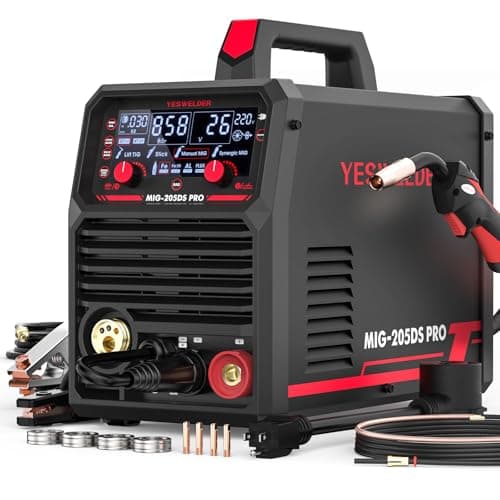 YESWELDER MIG-205DS PRORuns stainless MIG wire for anything structural and lift TIG when a visible seam needs it, on either voltage, from one machine. | Best overall for stainless | |
| 2 | 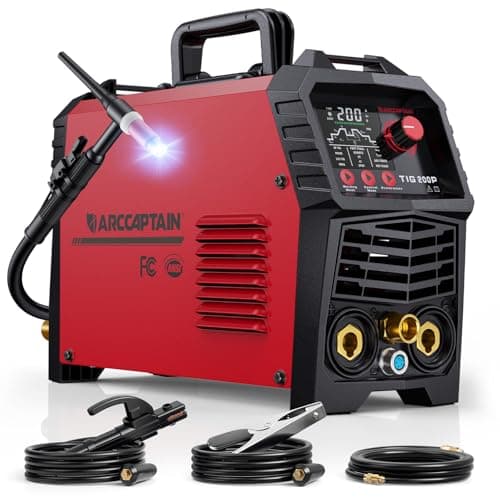 ARCCAPTAIN TIG200PHigh-frequency DC TIG from 10 A at 11.8 lb — the cheapest honest machine for stainless you will have to look at. | Best for thin, visible stainless | $249.99 · View on Amazon #ad How this is funded · Price as of November 13, 2026 |
| 3 | 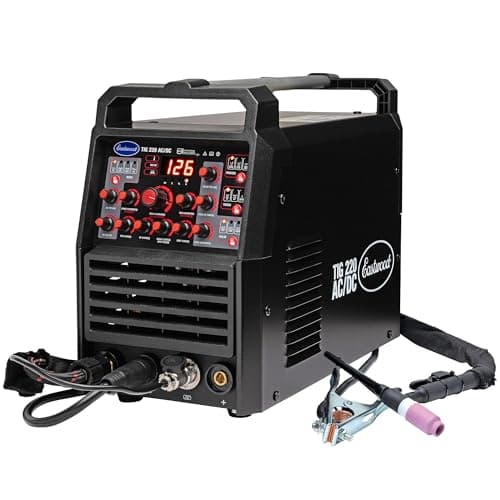 Eastwood TIG 220 AC/DC220 A AC/DC with a published 140 A on 120 V and a gas-lens flex torch, so stainless and aluminum come from the same machine. | Best if aluminum is coming too | $1,019.99 · View on Amazon #ad How this is funded · Price as of November 13, 2026 |
| 4 | 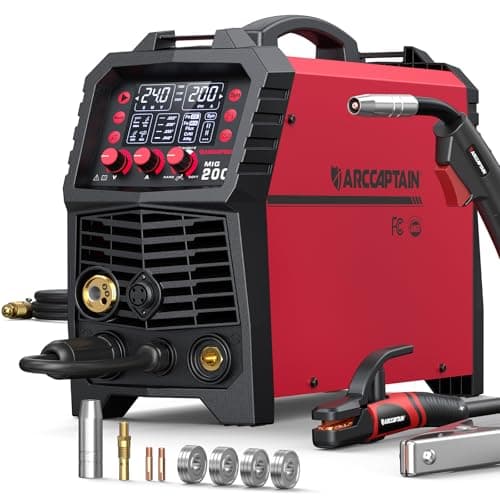 ARCCAPTAIN MIG200Six processes, synergic control and 200 A on 220 V — stainless MIG for less, if you can live with unpublished low-voltage figures. | Best synergic MIG on a budget | |
| 5 | 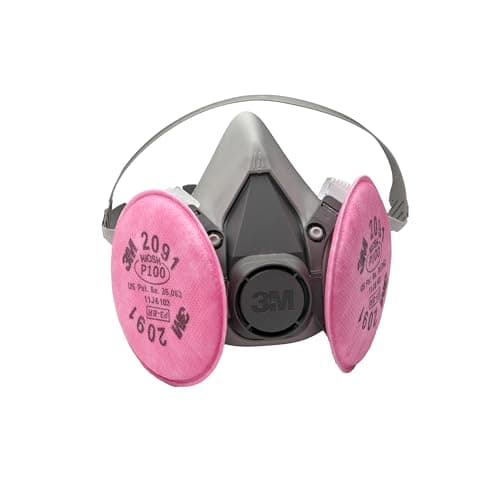 3M 6000-series half-mask respirator with P100 filtersP100 filtration under the hood, because stainless fume carries hexavalent chromium and the helmet does nothing about what you breathe. | The purchase stainless makes non-optional | $24.88 · View on Amazon #ad How this is funded · Price as of November 13, 2026 |
What welder do you need for stainless steel?
For most home stainless work, a MIG machine running ER308L wire — the YESWELDER MIG-205DS PRO is the best single answer because it MIGs stainless and lift-TIGs the visible joints from one machine. Buy DC TIG (the ARCCAPTAIN TIG200P) instead if the welds will be seen or the metal is thin, and AC/DC TIG (the Eastwood TIG 220 AC/DC) only if aluminum is also on the list. Stainless needs no alternating current.
That is the opposite of the advice this question usually gets, so here is the reasoning before the picks.
Stainless does not require TIG. It requires heat control
The reason stainless and TIG are glued together in people's heads is that the stainless you look at — restaurant kitchens, exhaust work, handrails, bike frames — is TIG-welded, because TIG is what produces a seam worth looking at. That is an appearance argument, not a strength one.
Stainless conducts heat away far more slowly than mild steel and expands more as it heats, which is why it warps and discolors when you put too much heat into it. Every real difficulty with stainless comes from that single property. A process that lets you control heat precisely — TIG — makes it easier. A process that moves fast and deposits efficiently — MIG — makes it faster and cheaper, and is perfectly sound on anything structural.
So the honest version of this buying decision is a question about the work, not the metal: will anyone look closely at the weld?
Which process, by what you are building
| What you are building | Process | Why |
|---|---|---|
| Frames, brackets, cages, anything structural | MIG with stainless wire | Fast, strong, far cheaper per joint. Appearance is not the requirement |
| Handrails, exhaust, visible seams | DC TIG | Heat control and a clean, narrow bead you can leave unground |
| Thin sheet, under about 16 gauge | DC TIG, low amperage | MIG blows through thin stainless before you can react to it |
| Repairs outdoors or on dirty metal | Stick with stainless electrodes | Tolerates wind and surface contamination that shielded processes do not |
| Stainless and aluminum both | AC/DC TIG | Aluminum needs AC; stainless uses the DC side of the same machine |
Three of the four machines below cover the first three rows. That is deliberate: those are the rows nearly every home stainless project falls into.
Wire and gas, which decide more than the machine
A MIG machine welds stainless because of what you load into it, so this is not an optional section.
Wire. ER308L is the standard filler for 304 stainless, which is the grade most stock and most fabrication jobs use. The L is the low-carbon version and it is the one to buy. Stainless wire is also stiffer than mild-steel wire, which is why drive-roll tension and burn-back settings matter more than they do on steel.
Gas. This is where stainless MIG costs more than mild-steel MIG. Short-circuit stainless MIG is conventionally run on a helium-rich tri-mix — commonly 90% helium, 7.5% argon, 2.5% carbon dioxide — and the high helium content means a higher flow rate, around 40 cubic feet per hour. You cannot run stainless properly on the 75/25 argon-CO2 mix in your mild-steel bottle and expect the same result; the carbon dioxide content is too high. What gas for MIG welding covers the mixes, and welding gas cylinder sizes covers what a second bottle commits you to.
On the TIG side it is simpler and cheaper: pure argon, and the only extra consideration is whether the back of the joint needs purging. What gas for TIG welding sets that out.
The fume on stainless is a different question
Welding stainless produces hexavalent chromium. OSHA regulates it under 29 CFR 1910.1026 at a permissible exposure limit of 5 micrograms per cubic meter as an eight-hour time-weighted average, and names stainless welding as a principal source. A welding helmet does nothing about what you breathe — which is why a respirator is a pick on this page rather than a footnote.
How we ranked these
Process fit for the actual work first. Most home stainless is structural, so the machine that does structural stainless well and visible stainless adequately outranks one that does the reverse.
Published low-voltage figures second. Two of these four machines state what they produce on a household outlet and two do not, and that gap decided the order within the MIG pair.
No credit for AC output. Stainless does not use it. A machine is not better for stainless because it can also weld aluminum — it is just more expensive, and only worth it if aluminum is genuinely on the list.
No estimated specifications. Where a manufacturer does not publish a figure, we say so rather than filling it in, and we have tested none of these machines — see how we pick.
How this page differs from our TIG stainless roundup
If you have already decided on TIG, you want the other page. Best TIG welders for stainless steel ranks TIG machines only and goes deeper into the things that matter once you are holding a torch: weld color and what the colors tell you, back purging the side of the joint you cannot see, filler rod selection, and heat input on thin material.
This page is for the earlier question — whether TIG is the process you need at all. Only one machine appears on both lists, which is the honest consequence of asking different questions.
And if the answer turns out to be "a first welder, which will mostly do mild steel and occasionally stainless", start at what size welder do I need instead — buying for the hardest metal you might one day touch is the most common way people overspend on a first machine.
1. Best overall for stainless
YESWELDER MIG-205DS PRO
Runs stainless MIG wire for anything structural and lift TIG when a visible seam needs it, on either voltage, from one machine.
YESWELDER publishes gas MIG, flux-core, spool-gun MIG, lift TIG and stick, 30 to 160 A MIG at 110 V and 30 to 205 A at 220 V, 15 to 140 A TIG at 110 V and 15 to 205 A at 220 V, 20 to 140 A stick at 110 V and 20 to 205 A at 220 V, wire feed speed from 58 to 858 in/min, and a weight of 22.7 lb.
It leads because stainless is mostly a MIG job and this is the cheapest capable machine that also lets you TIG the joints where appearance matters. Load ER308L wire for 304 stainless, put the right gas on it, and the machine is doing exactly what the big fabrication shops do on anything that is not a show surface. Then, for the one visible corner on a railing, lift TIG is there without a second purchase.
Synergic mode matters more on stainless than on mild steel. Stainless runs hotter for the same amperage because it conducts heat away far more slowly, so the margin between a sound weld and a warped, discolored panel is narrower — and a machine that sets voltage and wire speed from the thickness you select removes the part of that where beginners lose.
Published per-voltage output is the other reason it is first. You know what you get on a household outlet (160 A MIG) rather than inferring it, which is unusual in this class.
What works
- Synergic mode sets voltage and wire speed from the thickness you select, which removes the single hardest part of learning MIG
- Spool-gun capable, so aluminum is a gun purchase rather than a machine purchase
- 22.7 lb for a 205 A dual-voltage machine is remarkable
What does not
- Lift TIG is DC only and has no foot pedal, so it will not weld aluminum and is not a route to Level 3
- Five processes means five sets of consumables to stock
- Dealer support and warranty handling are not on the level of Hobart or Lincoln
Who this is wrong for: Thin stainless where every seam is visible, and aluminum. Lift TIG is DC only with no foot pedal, so it will never weld aluminum and it is not a route to show-quality TIG.
2. Best for thin, visible stainless
ARCCAPTAIN TIG200P
High-frequency DC TIG from 10 A at 11.8 lb — the cheapest honest machine for stainless you will have to look at.
ARCCAPTAIN publishes DC TIG with high-frequency non-contact start at 10 to 200 A, stick at 10 to 170 A, a 60% duty cycle, dual 110 V or 220 V input, and a weight of 11.8 lb.
Stainless is a DC job, which is the single fact that makes this machine a serious stainless option at a price no AC/DC machine reaches. You are not paying for alternating current you will not use on stainless, and the money goes into the arc start instead.
High-frequency start is the specification to insist on, and on stainless specifically. Scratch start contaminates the tungsten on every strike, and contamination on thin stainless is the difference between a clean, straw-colored seam and a grey, dirty one that has to be ground back. The 10 A bottom end is the other half of it: thin stainless needs a low, controllable arc more than it needs a high ceiling.
The honest limit is absolute and singular: it is DC only, so aluminum is permanently out and no accessory changes that. Pulse TIG is included and does help on thin stainless, but it does nothing for aluminum. A foot pedal and a better torch are extra and both are worth budgeting for.
What works
- High-frequency start rather than scratch start — the difference between a clean arc and a contaminated tungsten on every single strike
- 11.8 lb, so it goes to the work instead of the work coming to the bench
- Dual voltage, so it runs on a household outlet now and a 240 V circuit later
- The lowest price at which HF DC TIG is genuinely available from a supported brand
What does not
- DC only. No aluminum, now or ever, and no accessory changes that
- Still DC only, so the pulse that helps on thin stainless does nothing for aluminum
- A foot pedal and a better torch are extra, and both are worth budgeting for
Who this is wrong for: Anyone who also wants aluminum. See AC versus DC TIG before buying DC to save money — the upgrade path is a second machine.
3. Best if aluminum is coming too
Eastwood TIG 220 AC/DC
220 A AC/DC with a published 140 A on 120 V and a gas-lens flex torch, so stainless and aluminum come from the same machine.
Eastwood publishes AC/DC TIG and stick, 120 V or 240 V single-phase input, TIG output of 10 to 220 A on 240 V against 10 to 140 A on 120 V, stick at 20 to 180 A, an AC TIG duty cycle of 40% at the full 220 and 60% at 179, capacity to a quarter inch, high-frequency arc starting, and a WP-17F flex-head torch with the gas-lens collet body fitted.
On stainless alone, this machine is more than the job needs — stainless uses the DC side and the AC half of the machine sits idle. It is here for the buyer whose project list has stainless on it and aluminum underneath, because that is the one case where paying for AC now is cheaper than buying twice.
What it does add on stainless is control. Adjustable pulse and a 10 amp floor make thin sheet far more forgiving, and the flex-head torch with its gas lens is the part that gets you into the tight inside corners stainless fabrication is full of and keeps them shielded while you are there.
The costs are real: it is the most expensive machine on this page by a distance, and its 40% duty cycle at the full 220 amps is the lowest headline number here. Our Eastwood TIG 220 versus AHP AlphaTIG comparison is the page to read if this is the end of your shortlist.
What works
- It publishes both supply figures — 10 to 220 A on 240 V and 10 to 140 A on 120 V — so you can size the circuit before you buy instead of after
- Adjustable AC balance and AC frequency plus pulse frequency, peak on-time and base current: the controls that actually change how aluminum behaves
- Flex-head torch with a gas-lens kit, foot pedal, argon regulator/flowmeter and ground clamp are all in the box. Only the gas bottle is extra
- 22.93 lb. Almost nothing else in the AC/DC class is light enough to carry to the work rather than the other way round
What does not
- The 40% duty cycle applies at the full 220 A in AC TIG; the 60% figure is at 179 A. The AlphaTIG publishes 60% at 200 A
- The bundled torch is a WP-17 pattern — widely supported and cheap on consumables, but not a branded premium torch
- Full output needs the 240 V circuit. On 120 V Eastwood publishes 140 A in TIG and 120 A in stick, roughly two-thirds of the machine
- Eastwood publishes one 1/4 in capacity figure for the machine rather than separate steel and aluminum numbers, so there is less to compare on than some rivals give you
4. Best synergic MIG on a budget
ARCCAPTAIN MIG200
Six processes, synergic control and 200 A on 220 V — stainless MIG for less, if you can live with unpublished low-voltage figures.
ARCCAPTAIN publishes gas MIG, flux-core, stick, lift TIG, spot and spool-gun operation, dual 110 V or 220 V input, 200 A maximum output, and synergic control with 2T/4T and burn-back adjustment.
For stainless MIG specifically, burn-back adjustment is worth more than the process count. Stainless wire is stiffer and less forgiving at the end of a weld than mild steel, and being able to tune how much wire burns back into the tip is the difference between a clean restart and a stuck contact tip.
Synergic control does the same job here as on the YESWELDER — it sets voltage from wire speed so the first hour is welding rather than chart-reading, which matters on a metal that punishes too much heat.
Why it is fourth rather than first: 200 A is the 220 V figure and ARCCAPTAIN does not publish the usable output on a household outlet, so if a 120 V circuit is what you own, the number you care about is not stated. Dealer support is also thinner than Hobart or Lincoln, which is the thing you notice on exactly one day.
What works
- Spool-gun support is built in rather than a model-specific accessory question, and that question is the whole aluminum decision on a MIG machine
- Synergic control sets voltage from wire speed, so the first hour is spent welding rather than reading a chart
- Dual voltage and six processes mean it stays useful well past the point most first machines stop
What does not
- The spool gun is a separate purchase, and not a small one
- 200 A is the 220 V figure. On a household outlet the usable output is much lower
- Dealer support is thin next to Hobart or Lincoln, which is what you notice when something breaks
5. The purchase stainless makes non-optional
3M 6000-series half-mask respirator with P100 filters
P100 filtration under the hood, because stainless fume carries hexavalent chromium and the helmet does nothing about what you breathe.
3M publishes a reusable half-facepiece respirator taking P100 particulate filters (the 3M 2091 or equivalent) with NIOSH-approved particulate filtration. A P100 filter is, by the NIOSH classification, rated to capture at least 99.97% of airborne particles.
This is a pick on a machine roundup for one reason. Welding stainless produces hexavalent chromium, Cr(VI), and OSHA regulates it specifically: the permissible exposure limit is 5 micrograms per cubic meter as an eight-hour time-weighted average under 29 CFR 1910.1026, and OSHA names stainless steel welding as a principal source of exposure. Your welding helmet does nothing about it.
A half mask with P100 filters is the realistic home-shop answer. It sits under a welding hood, it costs a small fraction of any machine on this page, and it addresses the one part of stainless fabrication that is genuinely a health question rather than a quality one.
Honest limits: a particulate filter does nothing for gases, facial hair breaks the seal that the whole thing depends on, and a respirator is not a substitute for ventilation. Welding respiratory protection sets out when a mask is enough and when it is not.
What works
- P100 filtration handles welding fume particulate, which is the actual exposure in a home garage
- Low-profile 6000-series shell fits under most welding helmets without breaking the seal
- Filters are cheap and universally stocked
What does not
- Needs a proper seal against clean-shaven skin. Facial hair defeats it, and a defeated respirator protects nothing
- Particulate filters do not remove gases such as ozone or carbon monoxide — ventilation is still required
- Adds warmth and breathing resistance under a helmet
Questions people actually ask
What is the best welder for stainless steel?
For most home shops, a MIG machine running ER308L stainless wire - the YESWELDER MIG-205DS PRO is the best single answer because it MIGs stainless for structural work and lift-TIGs the joints you have to look at, from one machine on either voltage.
If the welds will be visible or the metal is thin, buy DC TIG instead. If aluminum is also on your list, buy AC/DC TIG.
Can you MIG weld stainless steel?
Yes, and it is what production shops do for anything structural. You need stainless filler wire - ER308L for 304 stainless - and the right shielding gas, conventionally a helium-rich tri-mix of around 90% helium, 7.5% argon and 2.5% carbon dioxide at roughly 40 cubic feet per hour.
What MIG will not give you is a show-quality seam. For visible work, TIG is the process.
Do you need a TIG welder for stainless steel?
No. Stainless needs heat control, not a specific process, and the reason stainless and TIG are associated is that the stainless people look at - handrails, exhaust, kitchen work - is TIG welded for appearance.
TIG becomes necessary rather than preferable on thin sheet, where MIG blows through before you can react, and on any seam that will be left unground.
Does stainless steel need AC or DC welding?
DC. Alternating current exists on a TIG machine to break up the oxide layer on aluminum, and stainless does not need it.
That is why a DC-only TIG machine is a serious stainless option at a price no AC/DC machine reaches - you are not paying for a capability stainless never uses. Buy AC/DC only if aluminum is also coming.
What gas do you use to MIG weld stainless steel?
Not the 75/25 argon-CO2 mix in your mild-steel bottle - the carbon dioxide content is too high. Short-circuit stainless MIG is conventionally run on a helium-rich tri-mix, commonly 90% helium, 7.5% argon and 2.5% carbon dioxide.
Because of the helium content, flow rates are higher, around 40 cubic feet per hour. On the TIG side it is simply pure argon.
Is welding stainless steel dangerous?
It carries a specific exposure that mild steel does not. Welding stainless produces hexavalent chromium, which OSHA regulates under 29 CFR 1910.1026 at a permissible exposure limit of 5 micrograms per cubic meter as an eight-hour time-weighted average, naming stainless welding as a principal source.
A welding helmet does nothing about what you breathe. A half-mask respirator with P100 filters under the hood, plus ventilation, is the realistic home-shop answer.
Can you weld stainless steel with a stick welder?
Yes, with stainless electrodes such as E308L-16, and it is the right process for outdoor repairs or metal you cannot get properly clean. Stick tolerates wind and surface contamination that MIG and TIG do not.
The trade is appearance and cleanup: more spatter, slag to chip, and a bead that usually needs grinding if anyone will see it.
What thickness of stainless can a 200-amp machine handle?
Enough for essentially all home stainless work, because the practical limit on stainless is usually the thin end rather than the thick one. The machines on this page publish mild-steel capacities up to 3/8 inch, and stainless at a given thickness needs similar or slightly less current.
Below about 16 gauge the question inverts: what matters is how LOW the machine's minimum output goes, which is why a TIG machine that starts at 10 amps is the thin-sheet answer.
Sources
- YESWELDER — MIG-205DS PRO published specifications: five processes, 30–160 A MIG at 110 V and 30–205 A at 220 V, 15–205 A TIG, 58–858 in/min wire feed, 22.7 lb
- ARCCAPTAIN — TIG200P published specifications: DC TIG 10–200 A with HF start, stick 10–170 A, 60% duty cycle, dual voltage, 11.8 lb; MIG200 published specifications: six processes, 200 A maximum, synergic control with 2T/4T and burn-back
- Eastwood — TIG 220 AC/DC (SKU 74010) published specifications: TIG 10–220 A on 240 V and 10–140 A on 120 V, stick 20–180 A, AC TIG duty cycle 40% at 220 A and 60% at 179 A, high-frequency start, WP-17F flex-head torch with gas lens kit and foot pedal in the box
- OSHA — Hexavalent chromium standard, 29 CFR 1910.1026: permissible exposure limit 5 µg/m³ as an 8-hour TWA; stainless steel welding named as a principal source of Cr(VI) exposure
- OSHA — Hexavalent Chromium (OSHA 3373) guidance publication, for the welding exposure and control sections
- Welding Tips and Tricks — stainless MIG practice: ER308L filler for 304 stainless and the 90/7.5/2.5 helium tri-mix at approximately 40 CFH
- 3M — 6000-series reusable half-facepiece respirator with 2091 P100 filters, NIOSH-approved particulate filtration. P100 is the NIOSH class rated at no less than 99.97% filtration efficiency
Read next
- The best TIG welders for stainless steel
Stainless is a DC job with a heat problem — the machines that control heat, and why you can skip AC.
- The best multiprocess welders for beginners
When a multiprocess machine is genuinely right, and which of the extra modes are real.
- What gas do you need for MIG welding?
Which shielding gas for which metal, and the one combination that cannot work.
- Welding respiratory protection: fume mask, PAPR or extraction
Half-mask, powered air or extraction — the three welding respiratory protection systems compared.
- Eastwood TIG 220 vs AHP AlphaTIG 200X
The two AC/DC TIG machines most home buyers shortlist, compared on the specifications that actually differ — and why the PrimeWeld TIG225X is no longer one of them.
- Find your level before you spend a penny
Most bad first welder purchases are not bad machines. They are the right machine bought by the wrong person, one level too early or one level too late.
Back to Find Your Level, or start over at Find Your Level.
Ryder M.
Ryder M. is the hands-on owner behind Magoo Media Group. He writes Arc & Bead's buying guides and picks every machine on the site. What every recommendation is based on — and what it is not based on — is set out on How We Pick.