The best welders under $500
Five hundred dollars is the most important price point in home welding. It is where gas MIG, dual voltage and synergic setting stop being compromises and start being standard.
Arc & Bead is an Amazon Associate. If you buy through a link on this page we may earn a commission, at no extra cost to you. We have not physically tested the machines on this page and we say so on How We Pick.
Quick picks
Tap any row to jump to the full write-up further down this page.
| # | Product | Best for | Price |
|---|---|---|---|
| 1 | 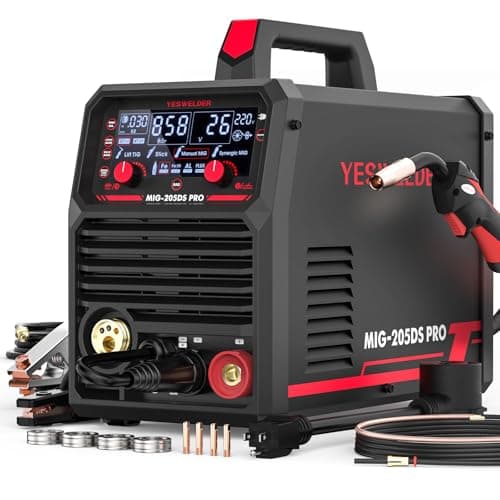 YESWELDER MIG-205DS PRO205 A on 220 V, 160 A on 110 V, and it publishes both - plus synergic setting and spool-gun provision, at 22.7 lb. | Best overall under $500 | |
| 2 | 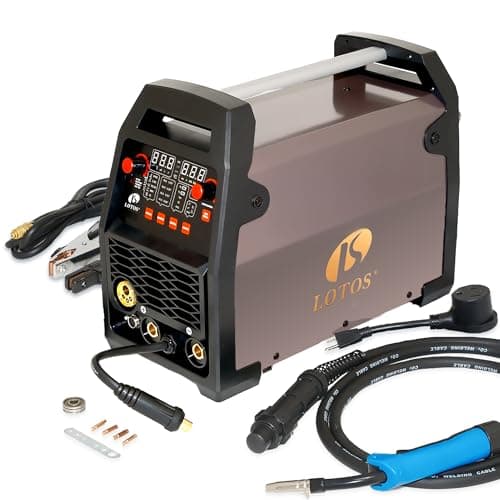 Lotos MIG180The cheapest gas MIG machine in our registry, with a real 160 A stick rating and 0.023 in wire capability. | Budget pick | $359.98 · View on Amazon #ad How this is funded · Price as of November 13, 2026 |
| 3 | 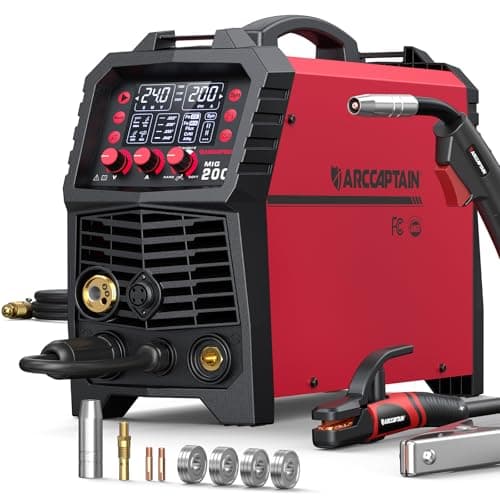 ARCCAPTAIN MIG200Spool-gun provision published as part of the machine, plus synergic control and burn-back adjustment. | Best for aluminum later | |
| 4 | 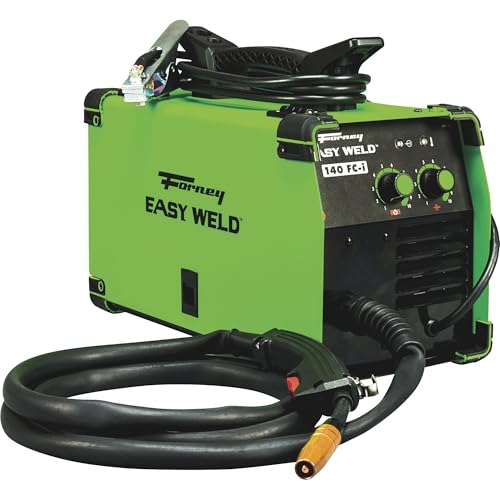 Forney Easy Weld 261 140 FC-iA 30% duty cycle at 90 A, infinite voltage control and 19 lb - the best-specified flux-core machine in the band. | Best gasless machine | $337.99 · View on Amazon #ad How this is funded · Price as of November 13, 2026 |
| 5 | 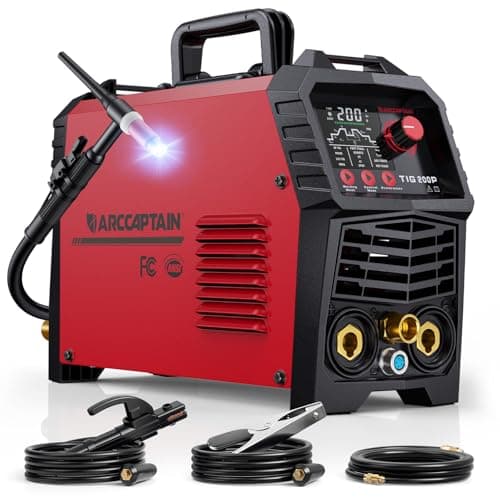 ARCCAPTAIN TIG200PHigh-frequency TIG start, pulse, spot and a 10 A floor at 11.8 lb - and it leaves most of the band's budget unspent. | Best TIG in the band | $249.99 · View on Amazon #ad How this is funded · Price as of November 13, 2026 |
The short answer
Eight machines in our registry carry a live price under $500, and what this band uniquely unlocks is gas MIG with dual voltage and synergic control — the combination that turns a first welder into a machine you keep.
Our overall pick is the YESWELDER MIG-205DS PRO: 205 A on 220 V, 160 A on 110 V, both published, with synergic setting and spool-gun provision at 22.7 lb. The budget pick is the Lotos MIG180, the cheapest gas MIG machine we list. For aluminum later, the ARCCAPTAIN MIG200; for gasless work, the Forney Easy Weld 261 140 FC-i; for thin and visible work, the ARCCAPTAIN TIG200P.
Every price is read from the live feed when the page loads and carries its own "as of" date inside the buy button. Prices move; the table is the authority rather than the heading.
Why $500 is the band that matters
Three capabilities arrive at once here, and they compound.
Gas MIG. A shielding gas bottle means no slag, far less spatter and a weld that can be left as it is. Under $300 that is a single machine; here it is most of them. Do you need gas for MIG welding is the honest version of that trade.
Dual voltage. Start on a household outlet, get the full machine when the 240 V circuit exists. That means the welder survives a workshop upgrade rather than being replaced by it — the dual voltage MIG welders page ranks machines on how honestly they publish it.
Synergic control. You select the thickness, the machine sets voltage and wire speed together. That removes the single hardest part of learning MIG, and what is synergic MIG welding explains where it helps and where it does not.
| Machine | Gas MIG? | Published output | Dual voltage | Spool gun? |
|---|---|---|---|---|
| YESWELDER MIG-205DS PRO | Yes | MIG 30-160 A (110 V); 30-205 A (220 V) | Yes, both figures published | Published as a process |
| Lotos MIG180 | Yes | MIG to 180 A; stick to 160 A (240 V) | Yes, 120 V output not published | Published as a process |
| ARCCAPTAIN MIG200 | Yes | 200 A maximum (220 V figure) | Yes, 110 V output not published | Published as a process |
| Forney Easy Weld 261 140 FC-i | No - flux-core only | 140 A maximum; 30% at 90 A | No - 120 V only | No |
| ARCCAPTAIN TIG200P | n/a - TIG | TIG 10-200 A; stick 10-170 A | Yes, 110 V output not published | n/a |
Budget the circuit and the bottle, not just the welder.
A dual-voltage machine on a household outlet gives you roughly two thirds of its rated output, and closing that gap means an electrician. What size breaker for a welder and what size wire for a welder outlet are the two figures to hand over. Gas MIG also needs a cylinder and a regulator, and that is a recurring cost rather than a one-off: welding gas cylinder sizes covers rental against exchange.
Which of the five is yours?
One machine for general fabrication: YESWELDER MIG-205DS PRO.
The same thing for less: Lotos MIG180, and accept that the 120 V output is not published.
Aluminum is coming: ARCCAPTAIN MIG200, then a spool gun.
No gas bottle, ever: Forney Easy Weld 261 140 FC-i, and the flux-core roundup is the full field.
Thin, visible or stainless work: ARCCAPTAIN TIG200P.
Single-pass 3/8 in steel or AC TIG: neither exists in this band. Welders under $1,000 is where both appear, and the 240 V machines is the dedicated page.
How we built this band
Band membership comes from the live price feed. Every machine here had a current price under $500 in our price layer on the publication date, and each buy button shows that price with its own date.
Picked for coverage, not for one winner. Eight machines qualify for the band and five are on the page, chosen so that each of the five jobs people buy in this band has an answer. We did not list every qualifying machine for the sake of length.
No hands-on. We have welded with none of them and publish no scores. Every figure is the manufacturer's own published specification. More on the method on how we pick.
1. Best overall under $500
YESWELDER MIG-205DS PRO
205 A on 220 V, 160 A on 110 V, and it publishes both - plus synergic setting and spool-gun provision, at 22.7 lb.
YESWELDER publishes this machine at MIG 30–160 A on 110 V and 30–205 A on 220 V, stick 20–140 A and 20–205 A, lift TIG 15–140 A and 15–205 A, a wire feed speed range of 58–858 in/min, spool-gun MIG among its five processes, and 22.7 lb.
It wins the band for one reason above the others: it tells you what it does on both supplies, for every process. In a band full of machines advertising one big number that turns out to be the 240 V figure, that is the difference between planning a purchase and discovering one.
The rest of the case is capability. Synergic mode sets voltage and wire speed from the thickness you choose, which removes the hardest part of learning MIG. Spool-gun provision means aluminum later is a gun purchase rather than a second welder. And 22.7 lb for a 205 A dual-voltage machine is genuinely remarkable.
Against it: the lift TIG is DC only with no foot pedal, so it is not a route to Level 3; five processes means five sets of consumables to stock; and dealer support and warranty handling are not on Hobart's or Lincoln's level.
What works
- Synergic mode sets voltage and wire speed from the thickness you select, which removes the single hardest part of learning MIG
- Spool-gun capable, so aluminum is a gun purchase rather than a machine purchase
- 22.7 lb for a 205 A dual-voltage machine is remarkable
What does not
- Lift TIG is DC only and has no foot pedal, so it will not weld aluminum and is not a route to Level 3
- Five processes means five sets of consumables to stock
- Dealer support and warranty handling are not on the level of Hobart or Lincoln
2. Budget pick
Lotos MIG180
The cheapest gas MIG machine in our registry, with a real 160 A stick rating and 0.023 in wire capability.
Lotos publishes the MIG180 for 110–125 V or 210–250 V, with gas MIG, gasless flux-core, stick, DC lift TIG, spot and spool-gun aluminum, MIG to 180 A, DC TIG to 180 A, stick to 160 A, mild steel to 1/4 in, wire from 0.023 to 0.040 in, and synergistic MIG with voltage fine tuning. A MIG torch, stick holder, work clamp, tips, rollers, gas hose and a 240 V to 120 V adapter are in the box.
The budget pick in the strict sense: the least expensive machine in our registry that does this page's job, which is gas MIG. Everything cheaper is gasless or TIG-only.
The 160 A stick rating is what makes it more than a cheap wire machine. Rusty, painted or outdoor steel is where MIG struggles and stick does not, and 160 A published is a real stick machine rather than a third position on a switch.
Against it: the headline figures are the 240 V ratings with no published 120 V output; the TIG is lift-start DC and the torch is extra; the spool gun is extra and DC lift TIG cannot weld aluminum whatever gun you fit; and support is thin.
What works
- Stick capability matters more than it sounds: rusty, painted or outdoor steel is where MIG struggles and stick does not
- A published 160 A stick rating is a real stick machine, not a token third process on the switch
- Synergistic MIG sets voltage and wire speed together, so the first hour goes on welding rather than on a settings chart
What does not
- The headline 180 A and 160 A figures are the 240 V ratings; Lotos does not publish a separate 120 V output
- TIG is lift-start DC with no high-frequency start, and the torch is a separate purchase — treat it as a bonus, not a feature you bought
- The spool gun is also sold separately, and DC lift TIG cannot weld aluminum whatever gun you fit
- Dealer support and warranty handling are not on the level of Hobart or Lincoln
3. Best for aluminum later
ARCCAPTAIN MIG200
Spool-gun provision published as part of the machine, plus synergic control and burn-back adjustment.
ARCCAPTAIN publishes the MIG200 as gas MIG, flux-core, stick, lift TIG, spot and spool gun on 110 V or 220 V, at a 200 A maximum with synergic control, 2T/4T operation and burn-back adjustment.
On a wire machine, aluminum is a feeding problem rather than a settings problem, and whether your welder supports a spool gun is usually the entire aluminum decision. Having that published as part of the machine rather than as a model-compatibility question removes the most common buy-then-discover problem in this category.
Burn-back adjustment is the detail worth knowing about: it sets how long the arc runs on after the trigger releases, which decides whether the wire sticks in the weld or balls at the tip. On short tack welds you notice it constantly.
Against it: the spool gun is a separate and not small purchase, the 200 A is the 220 V figure with no published 110 V number, and dealer support is thin next to Hobart or Lincoln.
What works
- Spool-gun support is built in rather than a model-specific accessory question, and that question is the whole aluminum decision on a MIG machine
- Synergic control sets voltage from wire speed, so the first hour is spent welding rather than reading a chart
- Dual voltage and six processes mean it stays useful well past the point most first machines stop
What does not
- The spool gun is a separate purchase, and not a small one
- 200 A is the 220 V figure. On a household outlet the usable output is much lower
- Dealer support is thin next to Hobart or Lincoln, which is what you notice when something breaks
4. Best gasless machine
Forney Easy Weld 261 140 FC-i
A 30% duty cycle at 90 A, infinite voltage control and 19 lb - the best-specified flux-core machine in the band.
Forney publishes the Easy Weld 261 140 FC-i as flux-core only, 120 V on a 20 A circuit minimum, 140 A maximum output, a 30% duty cycle at 90 A, 0.030 in flux-cored wire in 2 lb and 10 lb rolls, a steel capacity up to 1/4 in, and 19 lb.
A 30% duty cycle at 90 A is unusually generous for a 120 V machine in this class, and duty cycle is the specification that physically stops you. Infinite voltage and wire-speed control rather than four fixed taps is the other reason it is here: a setting can be dialled in rather than chosen from a short list.
Who it is for: someone who has decided gas is not worth the bottle, the regulator and the refills, and wants the best gasless machine rather than the cheapest one. Outdoor and windy work is the other honest case, because there is no shielding gas to blow away.
Against it: flux-core only, so it will never become your Level 2 machine; every weld leaves slag to chip and brush; and it needs a 20 A circuit, so a 15 A garage lighting circuit will trip at higher settings.
What works
- 30% duty cycle at 90 A is unusually generous for a 120 V machine in this class
- Infinite voltage and wire-speed control rather than four fixed taps, so you can actually dial a setting in
- 19 lb — genuinely carryable to the job instead of the job coming to it
- No gas bottle, no regulator, no second purchase before your first weld
What does not
- Flux-core only. It will never run gas, so it cannot become your Level 2 machine
- Every weld leaves slag that has to be chipped and wire-brushed off
- Needs a 20 A circuit — a 15 A garage lighting circuit will trip at higher settings
Who this is wrong for: Anyone who wants gas MIG eventually. It cannot run a gas bottle at any point, so buying it and then wanting clean slag-free welds means buying a second machine.
5. Best TIG in the band
ARCCAPTAIN TIG200P
High-frequency TIG start, pulse, spot and a 10 A floor at 11.8 lb - and it leaves most of the band's budget unspent.
ARCCAPTAIN publishes the TIG200P with HF TIG, lift TIG, pulse TIG, spot TIG and stick on 110 V or 220 V, TIG 10–200 A, stick 10–170 A, a 60% duty cycle, non-contact HF arc start, and 11.8 lb.
It is in this band rather than the one below because it is the right answer for a specific person: someone whose work is thin, visible or stainless, who does not need wire speed. HF start, a 10 A floor and pulse are the three things that make that work possible, and this is the cheapest machine that has all three.
Who it is not for: anyone welding aluminum. DC only, permanently. The AC TIG machines start above this band and the next band up is where they appear.
Also against it: a foot pedal and a better torch are both extra, and both are worth budgeting for from the start.
What works
- High-frequency start rather than scratch start — the difference between a clean arc and a contaminated tungsten on every single strike
- 11.8 lb, so it goes to the work instead of the work coming to the bench
- Dual voltage, so it runs on a household outlet now and a 240 V circuit later
- The lowest price at which HF DC TIG is genuinely available from a supported brand
What does not
- DC only. No aluminum, now or ever, and no accessory changes that
- Still DC only, so the pulse that helps on thin stainless does nothing for aluminum
- A foot pedal and a better torch are extra, and both are worth budgeting for
Questions people actually ask
What is the best welder under $500?
Of the machines in our registry under $500, the YESWELDER MIG-205DS PRO is the most capable and the most honestly specified: MIG 30-160 A at 110 V and 30-205 A at 220 V, with both figures published, plus synergic control, spool-gun provision and a 22.7 lb weight.
The cheapest gas MIG machine we list is the Lotos MIG180.
Can you get a gas MIG welder for under $500?
Yes, and this is the band where it becomes the norm rather than the exception. Three of the five machines on this page run a shielding gas bottle, which means no slag to chip and far less spatter.
Remember to budget the cylinder and regulator as well - that is a recurring cost rather than a one-off purchase.
Is a $500 welder good enough for home use?
For most home shops, yes. A dual-voltage 200 A machine with synergic control will handle gates, trailers, brackets, repairs and general fabrication up to about 1/4 inch comfortably.
Where it stops is single-pass 3/8 inch steel, AC TIG for aluminum, and dealer support - all three of which need a higher budget.
Can a welder under $500 weld aluminum?
Not out of the box. Three machines on this page publish spool-gun provision, which is the MIG route to aluminum - but the gun is a separate purchase and so is a cylinder of 100 percent argon.
AC TIG, which is the other route, does not exist in this band at all. The cheapest AC machine we list sits above $500.
How thick can a welder under $500 weld?
Around 1/4 inch in a single pass on the gas MIG machines here, which is the figure Lotos publishes for the MIG180 and is consistent with a 200 A dual-voltage machine on a 240-volt circuit.
On a 120-volt outlet expect noticeably less - roughly two thirds of the rated output, where makers publish both figures.
Flux core or gas MIG under $500?
Gas MIG if you want welds that can be left as they are, and if a cylinder in the shop is acceptable. Flux-core if you weld outdoors, hate bottles, or want the simplest possible setup - the Forney Easy Weld 261 140 FC-i publishes a 30 percent duty cycle at 90 A and infinite voltage control, which is a well-specified machine rather than a cheap one.
The catch with flux-core-only machines is that they can never run gas later.
Sources
- YESWELDER - MIG-205DS PRO published specifications: gas MIG, flux-core, spool-gun MIG, lift TIG and stick, 110 V or 220 V, MIG 30-160 A at 110 V and 30-205 A at 220 V, stick 20-140 A and 20-205 A, lift TIG 15-140 A and 15-205 A, wire feed 58-858 in/min, 22.7 lb (as recorded in this site's product registry, ASIN B07TVCWDGW)
- Lotos - MIG180 published specifications: gas MIG, gasless flux-core, stick, DC lift TIG, spot and spool-gun aluminum, 110-125 V or 210-250 V, MIG to 180 A, DC TIG to 180 A, stick to 160 A, mild steel to 1/4 in, wire 0.023-0.040 in, synergistic MIG; MIG torch, stick holder, work clamp, tips, rollers, gas hose and 240 V to 120 V adapter included (read 2026-10-19, recorded in this site's product registry, ASIN B0FDZ15SD4)
- ARCCAPTAIN - MIG200 published specifications: gas MIG, flux-core, stick, lift TIG, spot and spool gun, 110 V or 220 V, 200 A maximum, synergic control with 2T/4T and burn-back adjustment (as recorded in this site's product registry, ASIN B0B1TGZ8XN)
- Forney - Easy Weld 261 140 FC-i published specifications: flux-core (gasless) only, 120 V on a 20 A circuit minimum, 140 A maximum output, 30% duty cycle at 90 A, 0.030 in flux-cored wire in 2 lb and 10 lb rolls, steel capacity to 1/4 in, 19 lb (as recorded in this site's product registry, ASIN B07CP9CDVQ)
- ARCCAPTAIN - TIG200P published specifications: HF TIG, lift TIG, pulse TIG, spot TIG and stick, 110 V or 220 V, TIG 10-200 A, stick 10-170 A, 60% duty cycle, non-contact HF arc start, 11.8 lb (recorded in this site's product registry, ASIN B0GXK5BVPJ)
- Arc & Bead live price layer (lib/prices.ts) - price-band membership verified on 2026-11-10 against the price data in this site's price layer, which was generated on 2026-11-06; each buy button renders the live price at request time with its own 'as of' date, so the table rather than this page's heading is the current authority
Read next
- The best welders under $300
Four welders under $300 at current live prices, sorted by the one process each does properly, with the cheapest machine in our registry named as the budget pick.
- The best welders under $1,000
Four welders under $1,000 at current live prices, ranked on what the band uniquely unlocks - AC output for aluminum - with the cheapest machine that will still be enough in two years.
- The best dual voltage MIG welders
Four 120/240 V MIG welders ranked on whether they publish real output on both supplies, with the cheapest dual-voltage machine in our registry named as the budget pick.
- The best MIG welders under $500
What $500 buys in gas MIG, what it leaves out, and the machines that fit inside the cap.
- What Is Synergic MIG Welding?
Synergic control explained: what the machine decides for you, what it still cannot know, and when to take it off.
- Best Welders for a Home Garage
Welders chosen for garage constraints: the existing circuit, storage footprint, ventilation and fire risk.
Back to Find Your Level, or start over at Find Your Level.
Ryder M.
Ryder M. is the hands-on owner behind Magoo Media Group. He writes Arc & Bead's buying guides and picks every machine on the site. What every recommendation is based on — and what it is not based on — is set out on How We Pick.