The best welders under $300
Three hundred dollars buys a real welder. What it does not buy is a machine that does everything, so the only useful question in this band is which one thing you need it to do well.
Arc & Bead is an Amazon Associate. If you buy through a link on this page we may earn a commission, at no extra cost to you. We have not physically tested the machines on this page and we say so on How We Pick.
Quick picks
Tap any row to jump to the full write-up further down this page.
| # | Product | Best for | Price |
|---|---|---|---|
| 1 | 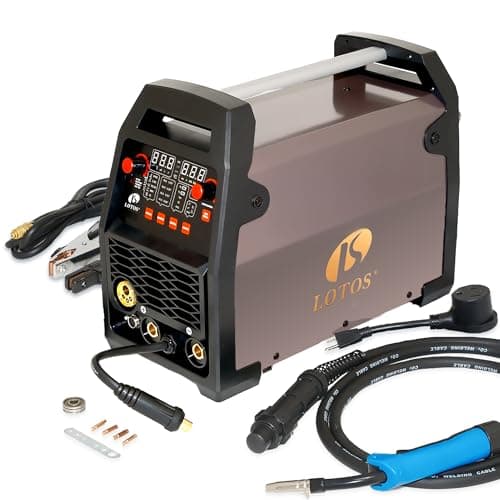 Lotos MIG180The only machine in the band that does gas MIG, and it publishes a real 160 A stick rating on top. | Best overall under $300 | $359.98 · View on Amazon #ad How this is funded · Price as of November 13, 2026 |
| 2 | 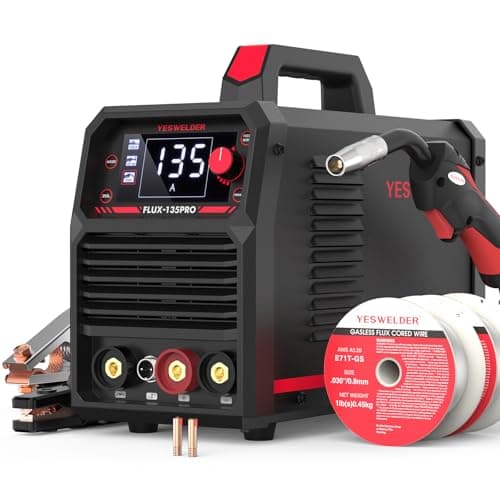 YESWELDER FLUX-135PROThe cheapest welder in our registry, at 11.4 lb, with stick and lift TIG included in the price. | Budget pick | |
| 3 | 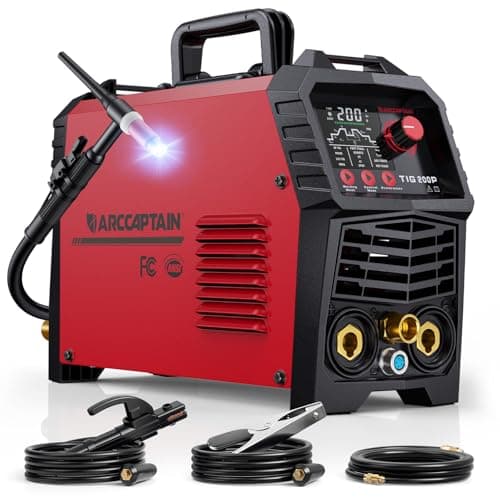 ARCCAPTAIN TIG200PGenuine high-frequency TIG start at the lowest price it exists at, with a 10 A floor and 11.8 lb. | Best TIG in the band | $249.99 · View on Amazon #ad How this is funded · Price as of November 13, 2026 |
| 4 | 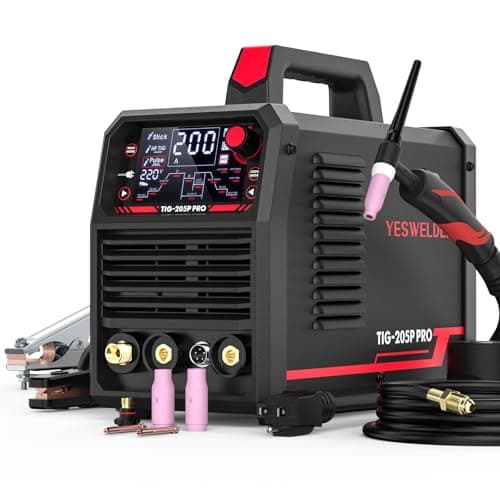 YESWELDER TIG-205PPulse TIG on steel and stainless with auto-sensing dual voltage, at 10.7 lb. | Cheapest pulse TIG |
The short answer
Four welders in our registry carry a live price under $300, and the honest way to read the band is that it buys one process done properly on a household outlet, not a machine that does everything.
Our overall pick is the Lotos MIG180, because it is the only machine in the band that runs gas MIG and it publishes a real 160 A stick rating as well. The budget pick is the YESWELDER FLUX-135PRO, the cheapest welder we list. For TIG, the ARCCAPTAIN TIG200P gives you genuine high-frequency start at the lowest price it exists at.
Every price is read from the live feed when the page loads and carries its own "as of" date inside the buy button. Prices move, so the table is the authority rather than the heading.
What $300 buys, and what it does not
It buys a genuinely usable welder. Inverter technology has made 135 to 200 A machines light, cheap and capable, and every machine in this band will join 1/8 in steel properly. On a trailer bracket, a gate hinge or a shelf frame, nothing here is the limiting factor — you are.
What it does not buy is any of these three things. A 240 V machine. Everything here is designed around a household outlet, and the one dual-voltage machine does not publish its 120 V output. AC output. Aluminum TIG needs AC and the cheapest AC machine in our registry is more than twice this band. Dealer support. These are direct-to-consumer brands, which is most of why they cost what they do.
If you are not sure which process you need at all, start at the first welder to buy and what size welder do I need rather than with a price band.
| Machine | Processes | Published output | Steel capacity | Weight |
|---|---|---|---|---|
| Lotos MIG180 | Gas MIG, flux-core, stick, DC lift TIG, spot, spool gun | MIG to 180 A; stick to 160 A (240 V figures) | To 1/4 in | Not published |
| YESWELDER FLUX-135PRO | Gasless flux-core, stick, lift TIG (torch extra) | 135 A maximum (110 V) | To 3/32 in | 11.4 lb |
| ARCCAPTAIN TIG200P | HF TIG, lift TIG, pulse TIG, spot TIG, stick | TIG 10-200 A; stick 10-170 A | Not published | 11.8 lb |
| YESWELDER TIG-205P | DC TIG (HF start), pulse TIG, stick | To 200 A (manufacturer rating) | Not published | 10.7 lb |
The real cost is never just the machine.
A gas MIG machine needs a cylinder, a regulator and a gas hose; a TIG machine needs argon, tungsten, filler rod and a foot pedal. Flux-core is the only process in this band that needs nothing but wire, which is most of why it is where this site tells beginners to start. Add a helmet and gloves to all of them — the welding starter kit checklist puts the whole day-one list in order, and welding gas cylinder sizes covers the bottle arithmetic.
Which of the four is yours?
You want to learn to weld and are not sure you will stick with it: YESWELDER FLUX-135PRO. Cheapest, lightest, nothing else to buy but wire.
You want welds that look finished: Lotos MIG180 with a gas bottle. Gas MIG leaves no slag.
You want to weld thin stainless or visible tube: ARCCAPTAIN TIG200P or YESWELDER TIG-205P. TIG with pulse.
You want to repair rusty outdoor steel: Lotos MIG180 for the 160 A stick arc, or see the best stick welders for home use.
You want aluminum: nothing in this band does it. The cheapest route is an AC TIG machine or a MIG machine with a spool gun, and both start well above $300. The next band up is welders under $500.
How we built this band
Band membership comes from the live price feed. Every machine here had a current price under $300 in our price layer on the publication date, and each buy button shows that price with its own date. A machine whose price we could not read is not in the band.
Sorted by process, not by score. These four machines do genuinely different jobs, and ranking a flux-core machine against a TIG machine on one axis would be useless. The page names the one process each does properly.
No hands-on. We have welded with none of them and publish no scores. Every figure is the manufacturer's own published specification. More on the method on how we pick.
1. Best overall under $300
Lotos MIG180
The only machine in the band that does gas MIG, and it publishes a real 160 A stick rating on top.
Lotos publishes the MIG180 for 110–125 V or 210–250 V input, with gas MIG, gasless flux-core, stick, DC lift TIG, spot and spool-gun aluminum, MIG to 180 A, DC TIG to 180 A, stick to 160 A, a mild steel capacity of 1/4 in, wire from 0.023 to 0.040 in, and synergistic MIG with voltage fine tuning.
It wins the band because of the gas bottle. Everything else under $300 in our registry is gasless or DC TIG; this is the one machine that will run a shielding gas bottle, which means cleaner welds with no slag to chip on anything you want to look finished. That alone changes what the band can do.
The 160 A published stick rating is the second reason, and it is not a token process on a switch. Rusty, painted and outdoor steel is where wire welding struggles and stick does not, which covers most farm and trailer repairs.
Against it: the headline 180 A and 160 A figures are the 240 V ratings and Lotos does not publish a separate 120 V output, so a household circuit gets you an unstated amount less; the lift TIG has no HF start and the torch is extra; the spool gun is extra; and dealer support is not on Hobart's or Lincoln's level.
What works
- Stick capability matters more than it sounds: rusty, painted or outdoor steel is where MIG struggles and stick does not
- A published 160 A stick rating is a real stick machine, not a token third process on the switch
- Synergistic MIG sets voltage and wire speed together, so the first hour goes on welding rather than on a settings chart
What does not
- The headline 180 A and 160 A figures are the 240 V ratings; Lotos does not publish a separate 120 V output
- TIG is lift-start DC with no high-frequency start, and the torch is a separate purchase — treat it as a bonus, not a feature you bought
- The spool gun is also sold separately, and DC lift TIG cannot weld aluminum whatever gun you fit
- Dealer support and warranty handling are not on the level of Hobart or Lincoln
2. Budget pick
YESWELDER FLUX-135PRO
The cheapest welder in our registry, at 11.4 lb, with stick and lift TIG included in the price.
YESWELDER publishes the FLUX-135PRO as gasless flux-core MIG, stick and lift TIG (TIG torch extra), 110 V input, 135 A maximum output, a steel capacity up to 3/32 in (2.5 mm), 0.030 in and 0.035 in E71T-GS flux-cored wire, and 11.4 lb.
The budget pick: the least expensive machine we list. For someone who has never struck an arc and wants to find out whether they like it, this is the lowest-risk entry in the band — no gas bottle, no regulator, no 240 V circuit, and 11.4 lb means it lives on a shelf rather than owning floor space.
Synergic control is unusual at the price and genuinely useful: it matches voltage to wire speed, which is the single hardest setting for a beginner to get right.
The honest ceiling: no gas MIG ever, so it cannot become your Level 2 machine, and a 3/32 in steel capacity is well short of the 1/4 in the 140 A machines reach. Consumables are also less widely stocked than Lincoln or Forney equivalents. The route this machine starts is in flux-core welding for beginners.
What works
- Among the least expensive 110 V flux-core machines that is genuinely sold and supported
- 11.4 lb — light enough to store on a shelf rather than a cart
- Synergic control matches voltage to wire speed, which is the single hardest setting for a beginner to get right
- Stick and lift TIG are included in the price, so rusty outdoor repairs are not a second machine
What does not
- No gas MIG. It will never run a shielding bottle, so it cannot become your Level 2 machine
- 3/32 in steel capacity is well short of the 1/4 in the 140 A machines reach
- Consumables and torch parts are less widely stocked than the Lincoln or Forney equivalents
- The lift TIG torch is not in the box — budget for it if TIG is the reason you are buying
3. Best TIG in the band
ARCCAPTAIN TIG200P
Genuine high-frequency TIG start at the lowest price it exists at, with a 10 A floor and 11.8 lb.
ARCCAPTAIN publishes the TIG200P with HF TIG, lift TIG, pulse TIG, spot TIG and stick on 110 V or 220 V, TIG output 10–200 A, stick 10–170 A, a 60% duty cycle, non-contact high-frequency arc start, and 11.8 lb.
High-frequency start is the specification worth the money here. The alternative — scratch or lift start — means touching the tungsten to the work on every single strike, which contaminates the electrode and means stopping to regrind it. HF establishes the arc in air. At this price that used to be unavailable.
Who it is for: someone who already knows they want TIG for steel or stainless — thin tube, brackets, anything where the weld is visible — and is not waiting for aluminum.
The limit is absolute: DC only. No aluminum now or ever, and the pulse that helps on thin stainless does nothing for aluminum. A foot pedal and a better torch are both extra and both worth budgeting for.
What works
- High-frequency start rather than scratch start — the difference between a clean arc and a contaminated tungsten on every single strike
- 11.8 lb, so it goes to the work instead of the work coming to the bench
- Dual voltage, so it runs on a household outlet now and a 240 V circuit later
- The lowest price at which HF DC TIG is genuinely available from a supported brand
What does not
- DC only. No aluminum, now or ever, and no accessory changes that
- Still DC only, so the pulse that helps on thin stainless does nothing for aluminum
- A foot pedal and a better torch are extra, and both are worth budgeting for
Who this is wrong for: Anyone who wants to weld aluminum. DC-only TIG cannot do it at any setting - that needs AC, which starts well above this band.
4. Cheapest pulse TIG
YESWELDER TIG-205P
Pulse TIG on steel and stainless with auto-sensing dual voltage, at 10.7 lb.
YESWELDER publishes the TIG-205P as DC TIG with HF start, pulse TIG and stick, on 110 V or 220 V auto-sensing, up to 200 A by the manufacturer's rating, 10.7 lb, with a 5-pin foot pedal socket and the pedal sold separately.
Pulse is the reason it is in the band rather than simply cheap. Pulsing the current lets the puddle partially freeze between peaks, which is the most effective way to weld thin stainless without burning through or warping it — and at this price pulse is normally absent.
Auto-sensing voltage is the other convenience: plug it into whatever outlet exists and it works it out.
Against it: DC only, and YESWELDER states plainly that it cannot weld aluminum. The foot pedal is a separate purchase, and TIG without one is harder than it needs to be. Buying this and then wanting aluminum means buying a second machine.
What works
- Pulse TIG on steel and stainless at a price well below any AC/DC machine
- If you never intend to weld aluminum, you are not paying for AC you will not use
- HF arc ignition with 2T/4T and spot modes, which is more control than the price suggests
- 10.7 lb, so it moves to the work rather than owning a bench
What does not
- DC only. YESWELDER states plainly that it cannot be used to weld aluminum, and no accessory changes that
- Buying it and then wanting aluminum means buying a second machine
- The foot pedal is a separate purchase, and TIG without one is harder than it needs to be
Questions people actually ask
Can you get a decent welder for under $300?
Yes. Inverter technology has made 135 to 200 amp machines light, cheap and genuinely capable, and every machine in this band will join 1/8 inch steel properly.
What you do not get is a 240-volt machine, AC output for aluminum TIG, or a dealer network. Those are the three things the price buys elsewhere.
What is the best welder under $300?
Of the machines in our registry under $300, the Lotos MIG180 is the most capable: it is the only one in the band that runs gas MIG, and Lotos publishes MIG to 180 A, stick to 160 A, a 1/4 inch mild-steel capacity and 0.023 to 0.040 inch wire.
The cheapest welder we list is the YESWELDER FLUX-135PRO at 135 A on a household outlet.
Is a cheap welder worth buying for a beginner?
For learning, yes - a gasless flux-core machine on a household outlet gets you laying beads within an hour and costs less than the helmet and gloves you also need.
The caution is the ceiling. A flux-core-only machine will never run a gas bottle, so it cannot become your second machine. If you already know you want gas MIG, buying a machine that does it is cheaper than buying twice.
Can a welder under $300 weld aluminum?
No, not in our registry. Aluminum TIG needs AC output, and the cheapest AC machine we list costs more than twice this band. Aluminum MIG needs a spool gun, and the machines with that provision plus the gun itself also sit above $300.
A DC lift-TIG mode on a cheap multiprocess machine does not change this - DC cannot get through the oxide layer.
How thick can a $300 welder weld?
On published figures, from 3/32 inch on the YESWELDER FLUX-135PRO up to 1/4 inch on the Lotos MIG180 - and the Lotos figure is its 240-volt rating.
Thicker steel is possible with joint preparation and multiple passes, but single-pass 3/8 inch needs a 240-volt machine well above this band.
Will these prices stay under $300?
Not guaranteed. Every price on this page is read from our live feed when the page loads and carries its own date inside the buy button, because machines in this band move in price regularly.
Treat the table as the current answer. If something has risen out of the band, the live number will show it before this page can.
Sources
- Lotos - MIG180 published specifications: gas MIG, gasless flux-core, stick, DC lift TIG, spot and spool-gun aluminum, 110-125 V or 210-250 V, MIG to 180 A, DC TIG to 180 A, stick to 160 A, mild steel to 1/4 in, wire 0.023-0.040 in, synergistic MIG (read 2026-10-19, recorded in this site's product registry, ASIN B0FDZ15SD4)
- YESWELDER - FLUX-135PRO published specifications: gasless flux-core MIG, stick and lift TIG (torch extra), 110 V, 135 A maximum, steel to 3/32 in (2.5 mm), 0.030 in and 0.035 in E71T-GS wire, 11.4 lb (corrected 2026-10-16 against the live listing; recorded in this site's product registry, ASIN B08CBBHFX5)
- ARCCAPTAIN - TIG200P published specifications: HF TIG, lift TIG, pulse TIG, spot TIG and stick, 110 V or 220 V, TIG 10-200 A, stick 10-170 A, 60% duty cycle, non-contact HF arc start, 11.8 lb (recorded in this site's product registry, ASIN B0GXK5BVPJ)
- YESWELDER - TIG-205P published specifications: DC TIG with HF start, pulse TIG and stick, 110 V or 220 V auto-sensing, up to 200 A manufacturer rating, 10.7 lb, 5-pin foot pedal socket with pedal sold separately; YESWELDER states it cannot be used to weld aluminum (replaced 2026-10-16; recorded in this site's product registry, ASIN B0BVYHBQZ6)
- Arc & Bead live price layer (lib/prices.ts) - price-band membership verified on 2026-11-10 against the price data in this site's price layer, which was generated on 2026-11-06; each buy button renders the live price at request time with its own 'as of' date, so the table rather than this page's heading is the current authority
Read next
- The best welders under $500
Five welders under $500 at current live prices, ranked on what this band uniquely unlocks - gas MIG with dual voltage and synergic control - with the cheapest machine as the budget pick.
- What is the first welder to buy?
The one job a first welder has to do, and the four specifications that decide whether it does it.
- The best flux-core welders at the entry end of the market
The entry end of the flux-core market, what you give up there, and where the prices come from.
- The welding starter kit checklist
Everything that is not the welder, ordered by how much each item changes your results.
- What size welder do I need?
Amperage against thickness, duty cycle read honestly, and whether you need a bigger machine or a different circuit.
- The best welders for sheet metal
Five welders ranked on the published bottom of their amperage range and the smallest wire they accept - the two specifications that decide whether thin steel joins or blows through.
Back to Find Your Level, or start over at Find Your Level.
Ryder M.
Ryder M. is the hands-on owner behind Magoo Media Group. He writes Arc & Bead's buying guides and picks every machine on the site. What every recommendation is based on — and what it is not based on — is set out on How We Pick.