The best welder kits for beginners
Nobody searching for a welder kit wants a welder. They want to open one box and weld. Here is what each machine really ships with, and what the word kit is doing on the listing.
Arc & Bead is an Amazon Associate. If you buy through a link on this page we may earn a commission, at no extra cost to you. We have not physically tested the machines on this page and we say so on How We Pick.
Quick picks
Tap any row to jump to the full write-up further down this page.
| # | Product | Best for | Price |
|---|---|---|---|
| 1 | 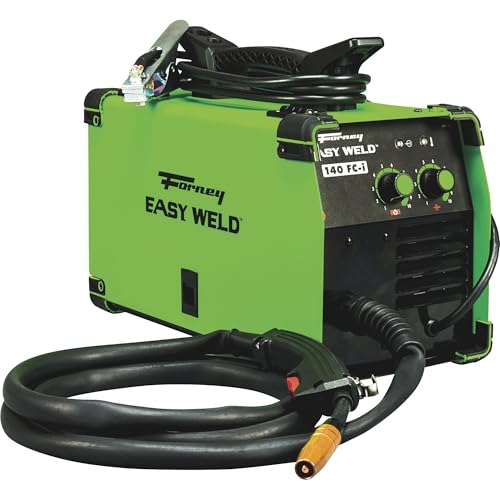 Forney Easy Weld 261 140 FC-iThe only box here that includes the adapter you need to plug the machine into the outlet you actually have. Gun, clamp, adapter — and nothing you will not use. | Best box for a true first machine | $337.99 · View on Amazon #ad How this is funded · Price as of November 13, 2026 |
| 2 | 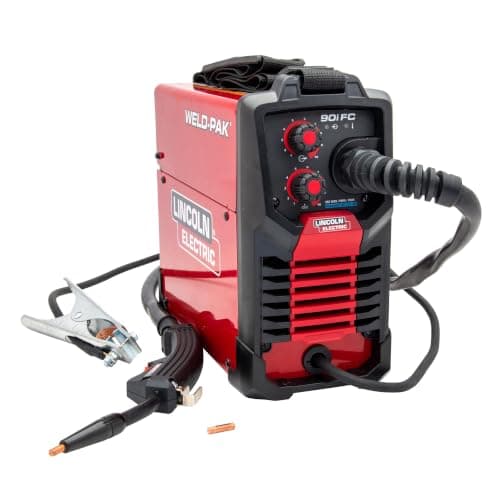 Lincoln Electric Weld-Pak 90i FC (K5255-1)Both common contact tip sizes and a metal carrying case in the box, backed by the deepest consumable network in the category. | Best box if you want parts from a counter | $328.00 · View on Amazon #ad How this is funded · Price as of November 13, 2026 |
| 3 | 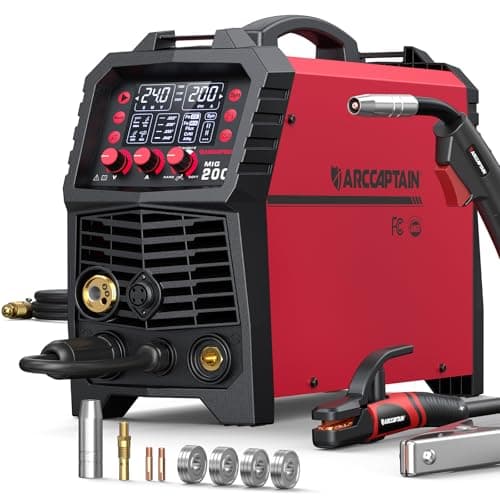 ARCCAPTAIN MIG200A nozzle, a diffuser, both common contact tips and three drive rollers alongside the leads — the small parts that stop a wire feeder, shipped as spares. | Most spare consumables in the box | |
| 4 | 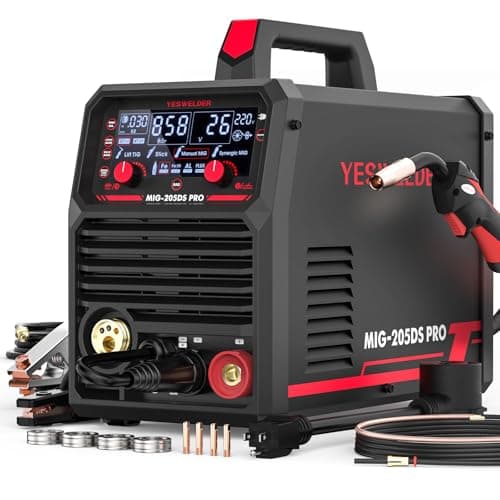 YESWELDER MIG-205DS PROSpare drive rollers, a graphene liner and a dual-voltage adapter cord in the box — the parts you only learn you needed after the machine stops feeding. | Best box for growing into gas | |
| 5 | 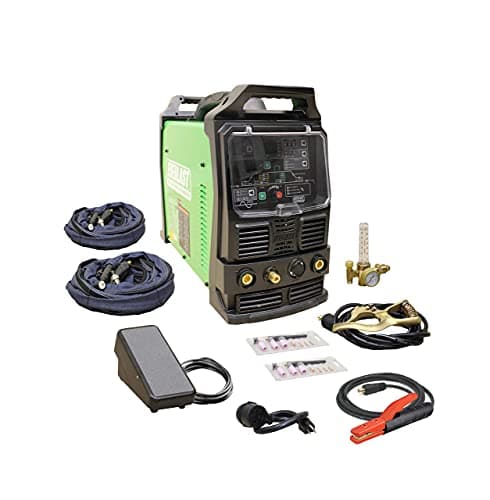 Everlast PowerTIG 210EXTTwo TIG torches, a foot pedal, an argon regulator, stick leads and starter consumables. Everything except the gas, the helmet and the gloves. | The only box that is genuinely a complete kit |
The short answer
There is no beginner welder kit in the sense most people mean it. Not one machine below ships with a helmet, gloves or welding wire, and only one ships a gas regulator. On published box contents: the Forney Easy Weld 140 FC-i is the best first box because it includes the 20 A to 15 A plug adapter that lets it run on a normal garage outlet; the Lincoln Weld-Pak 90i FC adds both contact tip sizes and a metal case; the ARCCAPTAIN MIG200 ships three 10 ft lead sets but no regulator; the YESWELDER MIG-205DS PRO ships spare drive rollers and a liner; and the Everlast PowerTIG 210EXT is the only genuinely complete box here — two TIG torches, a foot pedal and an argon regulator — at several times the price. Budget for a helmet and gloves on every single one of them.
"Kit" is the least regulated word in welding retail. On one listing it means a machine, a helmet, gloves, a wire brush and a spool of wire. On the next it means a machine and the gun that has to be attached for the machine to function at all. Both say kit. Only one of them saves you a second purchase.
So this page does not rank welders on amperage, duty cycle or how the arc behaves — three other pages here already do that, and the links at the bottom point at them. It ranks them on one axis: what the manufacturer publishes as being inside the box, and what the gap between that box and a finished weld actually costs you.
What we ranked on, in order
1. Does the box let the machine run on the circuit you have? This is first because it is the most common wasted weekend. A welder specified for a 20 A circuit with a 20 A plug cannot be plugged into a standard 15 A garage outlet, and a dual-voltage machine shipped with one cord runs on one of its two voltages. What size breaker you need is the page for the circuit itself.
2. Can the machine do the thing on its own feature list? A gas MIG machine without a regulator cannot weld with gas. A TIG machine without a torch cannot TIG. A multiprocess machine advertising aluminum without a spool gun cannot weld aluminum. Every one of those is a feature on a listing that is also a separate purchase, and a kit that leaves one out is not a kit.
3. Does the box contain the consumables that fail first? Contact tips, drive rollers and liners are the three parts that stop a wire-feed welder, and all three are cheap, small and easy to be caught without. A box with spares is a box that keeps working through the first mistake.
4. Length of leads. Rarely mentioned, immediately felt. A 6 ft gun means the machine has to come to the work. A 10 ft gun and a 10 ft ground means the work can stay where it is, which for gates, trailers and anything bolted down is the difference between doing the job and not.
5. What is still missing after all of that. We state it on every pick, because a $300 machine plus $180 of required extras is a $480 machine and the listing will not tell you so.
No welder on this page includes a helmet. Assume yours does not either.
A handful of budget machines do bundle a hood, and it is almost always a fixed-shade passive mask or the cheapest auto-darkening cartridge available. That is the one item where the bundled version actively costs you — you cannot see the puddle, so you cannot learn. The best welding helmets for beginners is scoped to exactly this purchase, and passive versus auto-darkening explains why the bundled hood is the part to replace first.
What is published as being in each box
| Machine | In the box | Not included |
|---|---|---|
| Forney Easy Weld 261 140 FC-i | 8 ft MIG gun, 8 ft ground clamp, 20 A to 15 A plug adapter | Wire, helmet, gloves, brush, chipping hammer |
| Lincoln Weld-Pak 90i FC | Gun with nozzle and tip, 0.030 and 0.035 in contact tips, work cable and clamp, metal case | Wire, helmet, gloves, plug adapter |
| ARCCAPTAIN MIG200 | MIG torch, ground clamp, electrode holder, gas hose, nozzle, diffuser, 0.030 and 0.035 in contact tips, adapter, 3 drive rollers | Gas regulator, shielding gas, wire, helmet, gloves |
| YESWELDER MIG-205DS PRO | 10 ft MIG gun kit with tips and wrench, 10 ft work clamp, 10 ft electrode holder, V/W/U drive roller set, graphene liner, gas hose, 220 V to 110 V adapter | Gas regulator, spool gun, wire, helmet, gloves |
| Everlast PowerTIG 210EXT | 9 and 26 series TIG torches with 12.5 ft cables, two torch switches, foot pedal, RH-191 argon regulator with hose, stick holder and ground clamp with 10 ft cables, NEMA 6-50 input cable, starter consumables | Argon bottle, helmet, gloves, filler rod |
Read down the right-hand column rather than the left. The pattern is that the three machines most people searching for a beginner kit will actually buy are missing the same three items — wire, helmet, gloves — and the two gas-capable ones are additionally missing the regulator without which the gas capability is decoration.
Why the gasless machines come closer to being kits
It is not generosity. A gasless flux-core welder has a shorter list of required parts, so its box is nearer to complete by default. There is no regulator, no hose, no bottle and no rental agreement, because the shielding comes from inside the wire.
That is the strongest practical argument for starting at Level 1 and it has nothing to do with the arc. A gas MIG setup is a machine, a regulator, a bottle and a gas supplier, and every one of those is a decision. A gasless machine is a machine, a spool of wire and an outlet. Flux-core versus MIG for beginners weighs the rest of that trade, and do you need gas for MIG welding answers the question directly.
The cost is slag and smoke. Every flux-core weld leaves slag that has to be chipped and brushed off, and self-shielded wire produces noticeably more fume than gas MIG, which is a ventilation requirement rather than an inconvenience — see flux-core welding safety.
What the box leaves out, and roughly what the gap costs
We do not print prices in page copy on this site — the only numbers you will see are inside the buy buttons, read from Amazon once a day and stamped with the date. What we can tell you is the shape of the gap, because it is consistent.
The helmet is the largest single line and the one worth the most. A decent auto-darkening hood costs a meaningful fraction of a budget machine and changes your welds more than any setting does, because you cannot control a puddle you cannot see. Welding helmets for the money is where that decision lives.
Gloves and a jacket are small and not optional — flux-core throws spatter that lands on forearms. Welding gloves and jackets covers which type for which process. Wire is a per-spool cost and the size matters: on a 120 V machine the answer is almost always 0.030 inch, for the reasons in the welding wire size chart.
For a gas machine, add a regulator and a bottle. The bottle is the part that surprises people, because it is usually a lease or an exchange rather than a purchase, and the size you choose sets how often you are driving to refill it. And across all of them, add the clamps, a wire brush, a chipping hammer and an angle grinder, because fit-up and cleanup are most of welding and none of it is in any box.
The one thing a bundle can get right
Everything above is skeptical about bundles, so here is the exception. When a bundle includes the consumables and leads specific to that machine — the right contact tips, the right drive rollers, the matching liner, a torch with the correct connector — that is real value, because sourcing a machine-specific part later is the annoying kind of shopping. The Lincoln's pair of tip sizes and the YESWELDER's rollers and liner are exactly this, and they are why those two rank where they do.
When a bundle includes generic PPE — a hood, a pair of gloves, safety glasses — it is almost always the cheapest version available, bought at a price that is only possible because it is not very good. The value is near zero and you will replace it. Judge a kit on the machine-specific parts and ignore the PPE entirely.
How we decided this
Published box contents only. Every item in the table is the manufacturer's own published list as carried on its product or retailer specification listing, read on the date in the source note. Box contents are a claim about what physically ships, so we do not infer them from a spec sheet and we do not estimate them. We have opened none of these boxes and say so on how we pick.
Availability checked before publishing. All five machines were confirmed in stock and title-matched to their registry entries on the publication date. A machine we cannot confirm is currently purchasable does not get recommended here.
We rank the box, not the badge. The Everlast wins the box outright and we still tell you not to buy it first. A ranking on one axis is only useful if it also says where that axis stops mattering.
No fabricated bundles. Retailer bundle listings change weekly and frequently repackage the same machine with different extras, so we rank the manufacturer's standard box — the one thing that is stable. If a seller is offering a bundle on top of it, treat the extras as a bonus rather than as the reason to buy.
Next steps from here: the best 120V welders for beginners ranks the same price band on the machine rather than the box, what first welder to buy is the level-by-level version of the decision, and how to weld for the first time is what to do once the box is open.
1. Best box for a true first machine
Forney Easy Weld 261 140 FC-i
The only box here that includes the adapter you need to plug the machine into the outlet you actually have. Gun, clamp, adapter — and nothing you will not use.
Forney publishes the box as an 8 ft MIG gun, an 8 ft ground clamp and a 20 A to 15 A plug adapter, with the machine specified for 120 V on a 20 A circuit minimum, 140 A maximum output, a 30% duty cycle at 90 A, capacity from 24 gauge to 1/4 inch, support for 0.030 and 0.035 inch flux-cored wire, infinite voltage and wire-feed-speed control, and a weight of 19 lb.
The adapter is why this wins the box. A machine rated for a 20 A circuit normally arrives with a 20 A plug, and a standard household garage outlet is 15 A — so the single most common first-day failure with a gasless welder is not the arc, it is discovering the plug does not fit. Forney shipping the adapter means the machine runs on the outlet you already have, on the first afternoon, without a trip to a hardware store.
Because it is gasless flux-core, the box is also complete in a way no gas machine's box can be: there is no regulator to be missing and no bottle to rent. Infinite control on both knobs matters more than it sounds here too, because learning flux-core is learning to nudge voltage and wire speed until the arc sounds right, and a machine with four fixed taps will not let you land between two of them.
What the box does not contain: wire, a helmet, gloves, a chipping hammer or a wire brush. Add roughly a spool of 0.030 inch flux-cored wire and the PPE from the starter kit checklist and you are welding. Forney's consumable network is also thinner than Lincoln's — contact tips are usually an online order rather than a counter visit — and at 19 lb it is the heaviest of the three small machines here.
What works
- 30% duty cycle at 90 A is unusually generous for a 120 V machine in this class
- Infinite voltage and wire-speed control rather than four fixed taps, so you can actually dial a setting in
- 19 lb — genuinely carryable to the job instead of the job coming to it
- No gas bottle, no regulator, no second purchase before your first weld
What does not
- Flux-core only. It will never run gas, so it cannot become your Level 2 machine
- Every weld leaves slag that has to be chipped and wire-brushed off
- Needs a 20 A circuit — a 15 A garage lighting circuit will trip at higher settings
2. Best box if you want parts from a counter
Lincoln Electric Weld-Pak 90i FC (K5255-1)
Both common contact tip sizes and a metal carrying case in the box, backed by the deepest consumable network in the category.
Lincoln publishes the box as a welding gun with nozzle and contact tip, work cable and clamp, 0.030 and 0.035 inch contact tips, and a metal carrying case. The machine is 120 V single phase, 20 to 120 A output with a rated 90 A at 21 V and a 30% duty cycle, a 20 to 200 inch-per-minute wire feed range, two-knob control with infinite voltage, capacity to 1/4 inch, and 15 lb.
Two items in that list are quietly worth more than they look. Shipping both contact tip sizes means you can run 0.030 inch wire on day one and 0.035 inch later without a second purchase — and a flux-core machine consumes tips continuously, so the spares are not decoration. The metal case means a 15 lb machine can live on a garage shelf and travel in a truck bed without the wire feed drifting out of alignment, which is a real failure mode for a small welder.
The rest of its argument is not in the box at all: Lincoln tips and nozzles are stocked at welding suppliers, farm and ranch stores and big-box hardware across the United States. The first time a tip burns back and welds itself to the wire — and it will — that is the difference between twenty minutes and three days.
What it costs you: a 120 A ceiling against Forney's 140 A, no plug adapter, and no published figure at the thin end of its capacity. It is also usually the pricier of the two for less rated output. If you want the rest of that decision, Forney Easy Weld 140 FC-i versus Lincoln Weld-Pak 90i FC takes the two machines apart row by row.
What works
- Infinite voltage control rather than fixed taps, so a setting can actually be dialled in rather than chosen from four
- Two knobs and nothing else — the shortest path from box to first bead of anything Lincoln sells
- 15 lb with a shoulder strap and a metal carry case, so it goes to the work
- Lincoln's dealer and consumable network is the best in the category, which matters on a first machine
What does not
- Flux-core only. It will never run gas, so it cannot become your Level 2 machine
- Costs noticeably more than a budget-brand 135 A gasless machine of similar output
- Every weld leaves slag that has to be chipped and wire-brushed off
3. Most spare consumables in the box
ARCCAPTAIN MIG200
A nozzle, a diffuser, both common contact tips and three drive rollers alongside the leads — the small parts that stop a wire feeder, shipped as spares.
ARCCAPTAIN publishes the box as the machine, a MIG welding torch, a welding ground clamp, a welding electrode holder, a gas hose, a nozzle, a diffuser, a 0.030 inch contact tip, a 0.035 inch contact tip, an adapter, three drive rollers and the manual. The machine is a 110/220 V multiprocess unit rated to 200 A covering gas MIG, gasless flux-core, stick, spot and lift TIG.
On the box-contents axis this is the most generous machine under its price, and the reason is the small parts. A nozzle, a diffuser, both common contact tip sizes and three drive rollers is the complete set of things that wear out or need swapping on a wire feeder — so the first time a tip burns back or you change wire size, the part is already in the drawer. Nothing else in this price class ships all of them.
The electrode holder is the second thing to notice: it means the machine can strike a stick electrode straight out of the box, which turns a MIG welder into the tool you reach for on rusty outdoor steel where gas MIG struggles. Stick versus MIG is the page for when that matters.
The honest gap is the gas regulator. ARCCAPTAIN ships the hose but not the regulator, and states plainly that the regulator, the wire and the shielding gas are the items you still have to pick up — so if gas MIG is the reason you are buying, budget for a regulator and a bottle before the machine arrives. What gas for MIG welding covers which mix to ask for, and welding gas cylinder sizes covers the bottle.
Also not included: the TIG torch and the spool gun. Both are listed as separate purchases, so the lift-TIG and aluminum capabilities on the feature list are capability you have to buy twice. That is normal at this price and it is still a lot of machine — it just is not a kit.
What works
- Spool-gun support is built in rather than a model-specific accessory question, and that question is the whole aluminum decision on a MIG machine
- Synergic control sets voltage from wire speed, so the first hour is spent welding rather than reading a chart
- Dual voltage and six processes mean it stays useful well past the point most first machines stop
What does not
- The spool gun is a separate purchase, and not a small one
- 200 A is the 220 V figure. On a household outlet the usable output is much lower
- Dealer support is thin next to Hobart or Lincoln, which is what you notice when something breaks
Who this is wrong for: Anyone who wants to open one box and weld this weekend. A gas machine missing its regulator is a second order and a bottle run before the first bead.
4. Best box for growing into gas
YESWELDER MIG-205DS PRO
Spare drive rollers, a graphene liner and a dual-voltage adapter cord in the box — the parts you only learn you needed after the machine stops feeding.
YESWELDER publishes the box as a 10 ft YW-L150-10E MIG gun kit with contact tips and a wrench, a 10 ft work clamp, a 10 ft electrode holder, a drive roller set with V, W and U grooves (one V-groove pre-installed), a graphene feeding liner, a gas hose and a 220 V to 110 V power adapter. The machine takes 110 V or 220 V and publishes 30 to 205 A MIG, 15 to 205 A TIG and 20 to 205 A stick on 220 V, dropping to 30 to 160 A MIG on 110 V.
The drive roller set and the liner are the unusual inclusions and they are the most practical items on any box list here. Wire feeding is where a cheap MIG machine frustrates people, and the commonest cause is a drive roller with the wrong groove for the wire you have switched to. Shipping all three groove profiles — V for steel, U for soft aluminum wire, W for flux-cored — means changing wire type is a roller swap rather than a parts order, and the graphene liner is the part that makes aluminum feed at all.
The 220 V to 110 V adapter matters for the same reason Forney's plug adapter does: the machine runs on either circuit, and the box contains what you need for both rather than for whichever one the factory assumed. It also publishes the 110 V figure honestly — 30 to 160 A on a household circuit against 30 to 205 A on 220 V — which is the number most listings in this class leave out. If you are deciding between circuits, 120V versus 240V welders is the page for it.
What is missing is the same thing: no gas regulator, and no spool gun for the aluminum the listing advertises. Its own head-to-head — YESWELDER MIG-205DS PRO versus ARCCAPTAIN MIG200 — resolves which of the two budget multiprocess machines to take once the box is not the deciding factor.
What works
- Synergic mode sets voltage and wire speed from the thickness you select, which removes the single hardest part of learning MIG
- Spool-gun capable, so aluminum is a gun purchase rather than a machine purchase
- 22.7 lb for a 205 A dual-voltage machine is remarkable
What does not
- Lift TIG is DC only and has no foot pedal, so it will not weld aluminum and is not a route to Level 3
- Five processes means five sets of consumables to stock
- Dealer support and warranty handling are not on the level of Hobart or Lincoln
5. The only box that is genuinely a complete kit
Everlast PowerTIG 210EXT
Two TIG torches, a foot pedal, an argon regulator, stick leads and starter consumables. Everything except the gas, the helmet and the gloves.
Everlast publishes the box as a 9 series air-cooled TIG torch with a 12.5 ft cable, a 26 series air-cooled TIG torch with a 12.5 ft cable, two torch switches, a stick electrode holder with a 10 ft cable, a ground clamp with a 10 ft cable, a Power Pedal TIG Deluxe 22K foot pedal, an RH-191 argon regulator with hose, a 6 ft input cable with a NEMA 6-50 plug, and a starter consumable kit.
That is the only box on this page that arrives able to weld without a second order. The foot pedal and the regulator are the two items that make it so — on every other TIG machine in this price class both are separate purchases, and a TIG welder without a pedal is markedly harder to learn than one with it. Two torches is unusual too: the 9 series is the small one for thin material in tight corners, the 26 series is the larger one for anything with heat behind it.
The machine behind the box is 120/240 V, publishing 3 to 210 A DC TIG and 5 to 210 A AC TIG on 240 V, 20 to 160 A stick, a 60% duty cycle at the full 210 A, pulse to 500 Hz DC, AC frequency 20 to 250 Hz, AC balance 5 to 90% electrode positive, three AC waveforms and nine stored programs.
What it costs you, and this is the honest part: it is several times the price of everything above it on this page, it weighs 62 lb, and on a 120 V circuit TIG output caps at 120 A rather than 210 A. Nobody buying their first welder should buy this one. It is here because it is the answer to what people are actually searching for when they search for a kit, and because knowing that the complete box exists at this price tells you something true about the cheaper ones. Our full review of the 210EXT goes through it properly.
What works
- Deep pulse and waveform control — more adjustable than anything else at this price point
- US-based support and parts availability, which is not the norm in this price bracket
- Two TIG torches, a foot pedal and an argon regulator all ship in the box, so the ticket price is close to the real cost of welding
- Published 60% duty cycle at the full 210 A rather than at a reduced current
What does not
- The number of adjustable parameters is genuinely overwhelming on a first TIG machine
- Priced above the AlphaTIG and the Eastwood for capability most Level 3 welders will not reach for a year
- 62 lb and 25 inches wide — this is a bench machine, not one that moves to the work
- On a 120 V circuit TIG output is capped at 120 A, so the 210 A headline is the 240 V figure
Who this is wrong for: A first welder, at any budget. This is a Level 3 bench machine with a complete accessory set, and buying it to learn on means paying for nine stored programs you will not use for a year.
Questions people actually ask
Do welder kits come with a helmet?
Almost never, and none of the five machines on this page does. A few budget bundles do include a hood, and it is normally a fixed-shade passive mask or the cheapest auto-darkening cartridge on the market.
That is the one bundled item that actively holds you back, because welding is controlling a puddle you have to be able to see. Budget for a real auto-darkening helmet as a separate purchase on any machine you buy.
What is actually in the box with a beginner welder?
On a gasless flux-core machine, typically the welding gun, a ground clamp and sometimes a plug adapter or spare contact tips. On a gas-capable MIG machine, usually the gun, ground clamp, an electrode holder and a gas hose - but not the gas regulator.
Wire, a helmet, gloves, a wire brush and a chipping hammer are not included on any machine on this page. Neither is the gas bottle on the machines that can use one.
Is a welding kit cheaper than buying the parts separately?
For machine-specific parts, usually yes - the right contact tips, drive rollers, liner and a torch with the correct connector are worth having in the box, because sourcing them later for your exact machine is the fiddly kind of shopping.
For generic PPE it is usually not. A bundled hood and gloves are priced low because they are not good, and you end up buying the real versions anyway. Judge a kit on the machine-specific contents and ignore the PPE.
Does a MIG welder kit include the gas regulator?
Often not, and it is the single most common missing part. Both budget multiprocess machines on this page ship a gas hose but no regulator, and a hose without a regulator welds nothing with gas.
The larger TIG machine here does include an argon regulator. If gas is the reason you are buying, confirm the regulator is in the published box contents before you order, and remember the bottle itself is a separate lease or exchange.
What else do I need to buy after the welder arrives?
An auto-darkening welding helmet, leather welding gloves, a jacket or long-sleeved flame-resistant cotton, welding wire in the right size, a wire brush, a chipping hammer, clamps and an angle grinder.
You also need a circuit the welder is not sharing with a freezer and a compressor, and a work surface that will not catch fire. If you are using an extension cord, it needs to be heavy enough not to cost you voltage at the arc.
Which beginner welder box is the most complete?
Of the three machines a beginner would realistically buy, the Lincoln Weld-Pak 90i FC ships the most useful extras - both common contact tip sizes and a metal carrying case - and the Forney Easy Weld 140 FC-i ships the single most practical item, the 20 A to 15 A plug adapter that lets it run on a normal garage outlet.
The only genuinely complete box on this page belongs to the Everlast PowerTIG 210EXT, which includes two TIG torches, a foot pedal and an argon regulator. It is also several times the price and the wrong first machine.
Why do the lead lengths matter?
Because they decide whether the work comes to the machine or the machine comes to the work. A 6 ft gun means welding inside a small radius of wherever the welder is sitting.
A 10 ft gun with a 10 ft ground means you can weld a gate on its hinges, a trailer on its axle or a bracket that is already bolted in place. For anything you cannot lift onto a bench, that is the difference between doing the job and not.
Sources
- Forney Industries - Easy Weld 261 140 FC-i published specifications and box contents as carried on its retailer specification listing: 8 ft MIG gun, 8 ft ground clamp, 20 A to 15 A adapter, 120 V on a 20 A circuit minimum, 140 A output, 30% duty cycle at 90 A, 24 gauge to 1/4 in, 19 lb (checked 2026-10-29)
- Lincoln Electric - WELD-PAK 90i FC (K5255-1) published specifications and included items: gun with nozzle and contact tip, work cable and clamp, 0.030 and 0.035 in contact tips, metal carrying case, 120 V single phase, 20-120 A with a rated 90 A at 21 V and 30% duty cycle, 20-200 in/min wire feed, 15 lb (checked 2026-10-29)
- ARCCAPTAIN - MIG200 published package list: 1 MIG200 multiprocess welder, 1 MIG welding torch, 1 welding ground clamp, 1 welding electrode holder, 1 welding gas hose, 1 nozzle, 1 diffuser, 1 0.030 in contact tip, 1 0.035 in contact tip, 1 adapter, 1 user manual, 3 drive rollers, with MIG wire, shielding gas, a gas regulator and stick electrodes stated as the items still to buy (checked 2026-10-29)
- YESWELDER - MIG-205DS PRO published package contents and specifications: YW-L150-10E 10 ft MIG gun kit with contact tips and wrench, 10 ft work clamp, 10 ft electrode holder, V/W/U drive roller set, graphene feeding liner, gas hose, 220 V-to-110 V power adapter; 110/220 V input, 30-205 A MIG and 15-205 A TIG on 220 V, 30-160 A MIG on 110 V (checked 2026-10-29)
- Everlast - PowerTIG 210EXT published specifications and included accessories as carried on the Arc-Zone product listing: 9 and 26 series air-cooled TIG torches with 12.5 ft cables, two torch switches, stick holder and ground clamp with 10 ft cables, Power Pedal TIG Deluxe 22K, RH-191 argon regulator with hose, NEMA 6-50 input cable, starter consumable kit; 3-210 A DC TIG and 5-210 A AC TIG on 240 V, 60% duty cycle at 210 A, 62 lb (checked 2026-10-29)
Read next
- The welding starter kit checklist
Everything that is not the welder, ordered by how much each item changes your results.
- The best 120V welders for beginners
Machines that run on an ordinary household circuit, and what that ceiling means for what you can build.
- What is the first welder to buy?
The one job a first welder has to do, and the four specifications that decide whether it does it.
- The best flux-core welders for beginners
Gasless machines that weld the day they arrive, and the duty-cycle figure that separates them.
- The best welding helmets for beginners
The purchase that improves a beginner's welds fastest, and where spending more stops helping.
- Everlast PowerTIG 210EXT review
A published-specification review of the Everlast PowerTIG 210EXT - what its duty cycle, waveforms and included accessories actually buy you, and who should not buy it.
Back to Find Your Level, or start over at Find Your Level.
Ryder M.
Ryder M. is the hands-on owner behind Magoo Media Group. He writes Arc & Bead's buying guides and picks every machine on the site. What every recommendation is based on — and what it is not based on — is set out on How We Pick.