The best portable welders
Portable means two things at once: light enough to carry in one hand, and able to run off whatever outlet is at the far end of the job. These four publish both.
Arc & Bead is an Amazon Associate. If you buy through a link on this page we may earn a commission, at no extra cost to you. We have not physically tested the machines on this page and we say so on How We Pick.
Quick picks
Tap any row to jump to the full write-up further down this page.
| # | Product | Best for | Price |
|---|---|---|---|
| 1 | 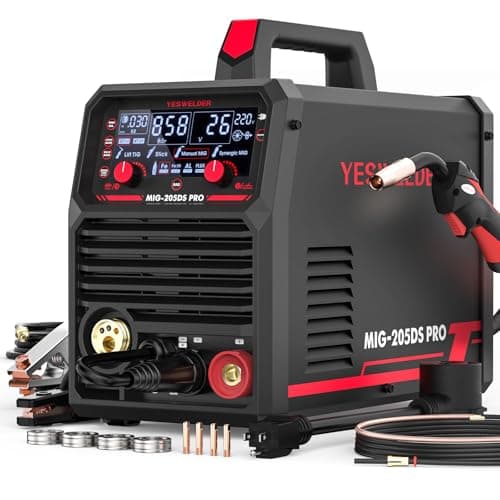 YESWELDER MIG-205DS PRO22.7 lb for five processes and a published 205 A on 220 V - by far the most capability per pound here. | Best overall | |
| 2 | 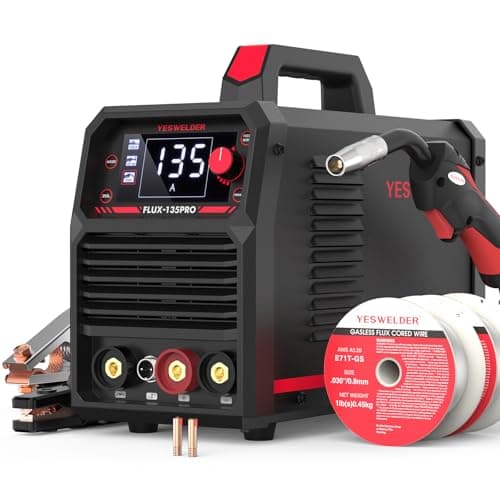 YESWELDER FLUX-135PRO11.4 lb, 110 V, gasless - the lightest machine in our registry and the one that needs nothing but wire. | Budget pick | |
| 3 | 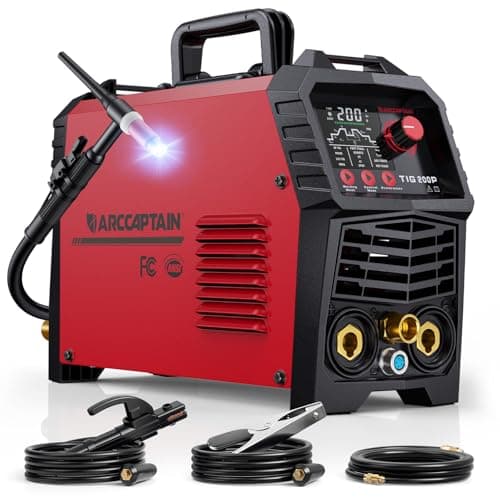 ARCCAPTAIN TIG200P11.8 lb with HF TIG, lift TIG, pulse TIG, spot and stick, and a published 60% duty cycle. | Lightest TIG option | $249.99 · View on Amazon #ad How this is funded · Price as of November 28, 2026 |
| 4 | 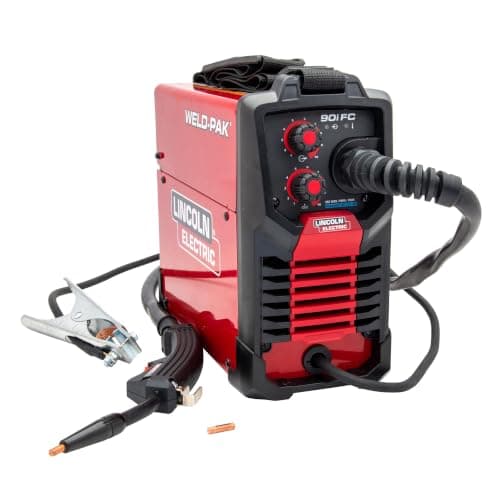 Lincoln Electric Weld-Pak 90i FC (K5255-1)15 lb, 120 V, gasless, with a metal carry case and gun, clamp and consumables in the box - from a brand with a dealer network. | Best supported portable | $328.00 · View on Amazon #ad How this is funded · Price as of November 28, 2026 |
The short answer
A portable welder has to be two things: light enough to carry in one hand, and able to run on the 120 V outlet that exists where the work is. A 40 lb machine that needs a 240 V circuit is a shop welder with a handle on it.
Our overall pick is the YESWELDER MIG-205DS PRO: 22.7 lb, five processes, 110 V or 220 V, and a published 205 A when it gets back to a real circuit. The budget pick is the YESWELDER FLUX-135PRO, at 11.4 lb the lightest machine in our registry and gasless, so it needs nothing but wire.
For portable TIG, the ARCCAPTAIN TIG200P at 11.8 lb with a published 60% duty cycle. For a machine that travels in a case with a dealer behind it, the Lincoln Weld-Pak 90i FC at 15 lb with a 1/4 in published capacity.
Prices in the table above come from our live price feed, each with its own "as of" date inside the buy button. All four machines returned a buyable offer in the refresh generated 2026-11-20.
Portable means the whole kit, not the machine
The machine is rarely the heaviest thing you carry. Think about what has to arrive with it:
A gas bottle, if the process needs one. A small argon or 75/25 cylinder is heavier and far more awkward than any machine here, and it needs securing in a vehicle. This is the single strongest argument for gasless flux-core as a portable process — do you need gas for MIG welding is the honest version of that trade.
An extension cord of the right gauge. Welders draw hard, and a thin cord drops voltage until the machine misbehaves in ways that look like a machine fault. Welder extension cords is the sizing.
Your helmet, gloves and a clamp. The safety kit travels with the machine or the trip is wasted.
Wire, tips and a chipping hammer. Running out of contact tips a mile from the shop is a specific kind of annoying.
What each one publishes
| Machine | Published weight | Processes | Output | Voltage | Capacity |
|---|---|---|---|---|---|
| YESWELDER FLUX-135PRO | 11.4 lb | Gasless flux-core, stick, lift TIG (torch extra) | 135 A max (manufacturer rating) | 110 V | Up to 3/32 in (2.5 mm) |
| ARCCAPTAIN TIG200P | 11.8 lb | HF TIG, lift TIG, pulse TIG, spot TIG, stick | TIG 10-200 A; stick 10-170 A | 110 V or 220 V | Not published |
| Lincoln Weld-Pak 90i FC | 15 lb | Flux-core (gasless) only | Infinite voltage, two-knob control | 120 V | Up to 1/4 in |
| YESWELDER MIG-205DS PRO | 22.7 lb | Gas MIG, flux-core, spool-gun MIG, lift TIG, stick | MIG 30-160 A (110 V); 30-205 A (220 V) | 110 V or 220 V | Not published |
The outlet decides more than the machine does.
Every machine here runs on a standard 120 V household supply, which is what makes them portable at all. What varies is what a given circuit will actually deliver: a 15 A lighting circuit on a long run of thin cable is not the same supply as a 20 A garage outlet, and a welder is the appliance most likely to find the difference.
If the machine trips the breaker or the arc wanders, suspect the circuit before the welder. What size breaker for a welder and what size generator to run a welder cover both ends of that problem, including why generator ratings mislead.
What you give up to carry it
Duty cycle. A light machine has small heat sinks and a small fan. Two of the four here publish no duty cycle at all, and on a portable inverter that absence is meaningful. Welder duty cycle explained is why it is the specification that bites on a long repair.
Capacity. The lightest machine here publishes 3/32 in. The heaviest publishes 205 A. That is the trade in one line.
Wire capacity. Light machines usually take 2 lb spools rather than 10 lb ones, which means more spool changes and a higher cost per pound of wire.
Robustness. A portable machine gets dropped, rained on and left in a cold vehicle. A case and a dealer network are worth more here than on a bench machine.
Which one is yours?
Repairs away from the shop, and you want one machine for everything: YESWELDER MIG-205DS PRO.
The lightest possible machine, gasless, light repairs: YESWELDER FLUX-135PRO, and the flux-core machines at the entry end of the market is the wider view of that price point.
Portable TIG on steel and stainless: ARCCAPTAIN TIG200P.
A machine that lives in a truck: Lincoln Weld-Pak 90i FC — case, leads and dealer support.
Farm, gate and fence repairs specifically: the best flux-core welders for farm use and best welders for gates and fences are written for that work, where portability and rusty steel arrive together.
You have no power at the job at all: no machine here helps. What size generator to run a welder is the page, and the honest answer involves a bigger generator than you expect.
How we picked these
A published weight, or not on the page. Only machines whose makers publish a weight are ranked here, because weight is the axis of the query. Several machines in our registry are probably portable and publish no figure; we did not weigh them and we did not guess.
120 V operation required. A machine that only runs on 240 V is not portable in the sense anyone searching this means, however light it is.
Ranked on capability per pound. The heaviest machine here leads because it is still a one-handed carry and does five times as much. More on the method on how we pick.
1. Best overall
YESWELDER MIG-205DS PRO
22.7 lb for five processes and a published 205 A on 220 V - by far the most capability per pound here.
YESWELDER publishes the MIG-205DS PRO at 22.7 lb, with gas MIG, flux-core, spool-gun MIG, lift TIG and stick processes, 110 V or 220 V input, MIG output 30–160 A at 110 V and 30–205 A at 220 V, stick 20–205 A and lift TIG 15–205 A at 220 V, and a wire feed speed of 58–858 in/min.
Weight is only half of portable, and this machine is the one that gets both halves right. Twenty-two pounds is a one-handed carry; running on 110 V means the outlet at the far end of the job will do; and having stick on board means that when you get there and the steel is rusty and the wind is blowing, you can still weld. Outdoor welding is where that combination pays.
The 220 V option is what makes it more than a field machine. Carry it to the gate on 110 V, bring it back to the shop and plug it into a 240 V circuit for 205 A. Very little else in this weight class publishes that.
Against it: no published duty cycle, which on a light inverter at high output is the figure you most want. Gas MIG means carrying a bottle too, which is not portable at all. And five processes means five sets of consumables to keep in the box.
What works
- Synergic mode sets voltage and wire speed from the thickness you select, which removes the single hardest part of learning MIG
- Spool-gun capable, so aluminum is a gun purchase rather than a machine purchase
- 22.7 lb for a 205 A dual-voltage machine is remarkable
What does not
- Lift TIG is DC only and has no foot pedal, so it will not weld aluminum and is not a route to Level 3
- Five processes means five sets of consumables to stock
- Dealer support and warranty handling are not on the level of Hobart or Lincoln
2. Budget pick
YESWELDER FLUX-135PRO
11.4 lb, 110 V, gasless - the lightest machine in our registry and the one that needs nothing but wire.
YESWELDER publishes the FLUX-135PRO at 11.4 lb, with gasless flux-core MIG, stick and lift TIG (TIG torch extra), 110 V input, 135 A maximum output (a manufacturer rating), a steel capacity up to 3/32 in (2.5 mm), and 0.030 in and 0.035 in E71T-GS wire.
It is the budget pick and the lightest machine in our registry by some margin. More importantly for portability, gasless flux-core needs no bottle: wire, a clamp and an outlet and you are welding. A gas MIG machine that weighs 15 lb is not portable if it travels with a cylinder.
Eleven pounds is the weight at which a welder stops living on a cart. It goes in a car boot, up a ladder in one hand, and out to a trailer in the yard without a second trip.
Against it: a published capacity of 3/32 in is thin — this is a bracket, sheet and light-repair machine, not a trailer-frame one. The 135 A figure is a manufacturer rating rather than a tested output. And flux-core leaves slag to chip on every weld.
What works
- Among the least expensive 110 V flux-core machines that is genuinely sold and supported
- 11.4 lb — light enough to store on a shelf rather than a cart
- Synergic control matches voltage to wire speed, which is the single hardest setting for a beginner to get right
- Stick and lift TIG are included in the price, so rusty outdoor repairs are not a second machine
What does not
- No gas MIG. It will never run a shielding bottle, so it cannot become your Level 2 machine
- 3/32 in steel capacity is well short of the 1/4 in the 140 A machines reach
- Consumables and torch parts are less widely stocked than the Lincoln or Forney equivalents
- The lift TIG torch is not in the box — budget for it if TIG is the reason you are buying
Who this is wrong for: Anything structural. A published 3/32 in capacity is a light-repair rating, and a trailer tongue or hitch mount needs several times it.
3. Lightest TIG option
ARCCAPTAIN TIG200P
11.8 lb with HF TIG, lift TIG, pulse TIG, spot and stick, and a published 60% duty cycle.
ARCCAPTAIN publishes the TIG200P at 11.8 lb with HF TIG, lift TIG, pulse TIG, spot TIG and stick processes, 110 V or 220 V dual voltage, TIG output 10–200 A and stick 10–170 A, a 60% duty cycle and high-frequency non-contact arc start.
A genuine HF-start TIG machine at under 12 lb is a recent development and a useful one. The classic portable TIG problem was that the machine, the bottle and the torch made a trolley job out of a one-handed one; this halves that by at least removing the machine from the equation.
It also publishes a duty cycle, which neither YESWELDER machine does. 60% is a real figure even without an amperage reference, and the stick mode means the same box handles the outdoor repairs a TIG torch cannot.
Against it: DC only, so no aluminum. TIG still needs argon, and a bottle is the heaviest item in the kit. And the foot pedal is extra — see TIG welders with a foot pedal.
What works
- High-frequency start rather than scratch start — the difference between a clean arc and a contaminated tungsten on every single strike
- 11.8 lb, so it goes to the work instead of the work coming to the bench
- Dual voltage, so it runs on a household outlet now and a 240 V circuit later
- The lowest price at which HF DC TIG is genuinely available from a supported brand
What does not
- DC only. No aluminum, now or ever, and no accessory changes that
- Still DC only, so the pulse that helps on thin stainless does nothing for aluminum
- A foot pedal and a better torch are extra, and both are worth budgeting for
4. Best supported portable
Lincoln Electric Weld-Pak 90i FC (K5255-1)
15 lb, 120 V, gasless, with a metal carry case and gun, clamp and consumables in the box - from a brand with a dealer network.
Lincoln publishes the Weld-Pak 90i FC (K5255-1) at 15 lb, flux-core gasless only, 120 V input, a steel capacity up to 1/4 in, two knobs for wire speed and infinite voltage, and a box containing the welding gun, nozzle, contact tip, work cable and clamp, and a metal case.
The case is why it is here rather than a footnote. A portable welder lives in a vehicle, and a machine with a proper case and its leads stored with it is the one that arrives at the job complete. Dealer support is the other half: a name-brand machine has parts, and a portable machine takes more knocks than a bench one.
A published 1/4 in capacity is more than twice the YESWELDER's at four pounds more weight, and infinite voltage control rather than fixed taps means you can land a setting rather than choose the nearest one.
Against it: gasless flux-core only, forever — it will never take a bottle, so it cannot become your gas MIG machine later. Flux-core vs MIG for beginners is that decision. Lincoln publishes no duty cycle for it in our registry entry.
What works
- Infinite voltage control rather than fixed taps, so a setting can actually be dialled in rather than chosen from four
- Two knobs and nothing else — the shortest path from box to first bead of anything Lincoln sells
- 15 lb with a shoulder strap and a metal carry case, so it goes to the work
- Lincoln's dealer and consumable network is the best in the category, which matters on a first machine
What does not
- Flux-core only. It will never run gas, so it cannot become your Level 2 machine
- Costs noticeably more than a budget-brand 135 A gasless machine of similar output
- Every weld leaves slag that has to be chipped and wire-brushed off
Questions people actually ask
What is the best portable welder?
Of the machines in our registry, the YESWELDER MIG-205DS PRO. YESWELDER publishes a 22.7 lb weight with gas MIG, flux-core, spool-gun MIG, lift TIG and stick processes, 110 V or 220 V input and MIG output of 30-160 A on 110 V and 30-205 A on 220 V.
The budget pick is the YESWELDER FLUX-135PRO at a published 11.4 lb, which is gasless and so needs nothing but wire to weld.
How much does a portable welder weigh?
The machines on this page publish weights between 11.4 lb and 22.7 lb. Anything under about 25 lb is a genuine one-handed carry.
Remember the machine is rarely the heaviest item: a gas bottle weighs more than any of them, which is why gasless flux-core is the most genuinely portable process.
Can a portable welder run on a normal outlet?
All four machines on this page run on a standard 120 V household supply. What varies is what the circuit delivers - a 15 A lighting circuit on a long thin cable is not the same as a 20 A garage outlet.
If the breaker trips or the arc wanders, suspect the circuit and the extension cord before the welder.
Are portable welders any good for thick steel?
Within their published capacity, yes. The Lincoln Weld-Pak 90i FC publishes up to 1/4 in and the YESWELDER MIG-205DS PRO publishes 205 A on 220 V.
The lightest machines are not: a published 3/32 in capacity is light repair work, not structural fabrication.
What is the lightest welder you can buy?
In our registry, the YESWELDER FLUX-135PRO at a published 11.4 lb, with the ARCCAPTAIN TIG200P just behind at 11.8 lb.
Below that weight you are generally looking at stick-only inverters, which are lighter still but need electrodes and more skill to start cleanly.
Is a portable welder worth it if I have a garage?
If everything you weld fits on the bench, a heavier machine with a better duty cycle is the better buy at the same price.
Portability earns its place the first time the job cannot move: a gate, a trailer in the yard, a vehicle on a ramp, or a repair at someone else's property.
Sources
- YESWELDER - MIG-205DS PRO published specifications: gas MIG, flux-core, spool-gun MIG, lift TIG and stick, 110 V or 220 V 50/60 Hz, MIG 30-160 A at 110 V and 30-205 A at 220 V, stick 20-140 A / 20-205 A, TIG 15-140 A / 15-205 A, wire feed 58-858 in/min, 22.7 lb (registry entry, ASIN B07TVCWDGW)
- YESWELDER - FLUX-135PRO published specifications: gasless flux-core MIG, stick and lift TIG (TIG torch extra), 110 V input, 135 A maximum (manufacturer rating), steel capacity up to 3/32 in (2.5 mm), 0.030 in and 0.035 in E71T-GS wire, 11.4 lb (registry entry, ASIN B08CBBHFX5)
- ARCCAPTAIN - TIG200P published specifications: HF TIG, lift TIG, pulse TIG, spot TIG and stick, 110 V or 220 V dual voltage, TIG 10-200 A and stick 10-170 A, 60% duty cycle, high-frequency non-contact arc start, 11.8 lb (registry entry)
- Lincoln Electric - Weld-Pak 90i FC (K5255-1) published specifications: flux-core gasless only, 120 V input, steel capacity up to 1/4 in, two-knob wire speed and infinite voltage control, 15 lb, supplied with welding gun, nozzle, contact tip, work cable and clamp and a metal case (registry entry, ASIN B0BTV38YKM)
- Arc & Bead live price layer (lib/prices.ts) - a buyable offer and live price for all four machines confirmed against the price feed generated 2026-11-20; each buy button renders the live price with its own 'as of' date
Read next
- The best welders for gates and fences
Outdoors, at the post, on an extension cord. Four gasless-capable machines for gate work.
- The best flux core welders for outdoor welding
Four gasless flux-core welders ranked for outdoor work on published duty cycle, weight and steel capacity, with the cheapest machine in our registry named as the budget pick.
- Welder extension cords: how to size one properly
Voltage drop, gauge and length — why a thin cord makes a good machine weld badly.
- What size generator do you need to run a welder?
How to size a generator to a welder, and the inverter-welder warning nobody prints on the box.
- Welder Duty Cycle Explained
What a duty cycle rating means, the formula, and how much it really matters in a home shop.
- The best welding safety gear
The four protective items every home welder needs - helmet, gloves, jacket and respirator - ranked on published ratings, with the cheapest honest option named in each category.
Back to Find Your Level, or start over at Find Your Level.
Ryder M.
Ryder M. is the hands-on owner behind Magoo Media Group. He writes Arc & Bead's buying guides and picks every machine on the site. What every recommendation is based on — and what it is not based on — is set out on How We Pick.