The best welders for gates and fences
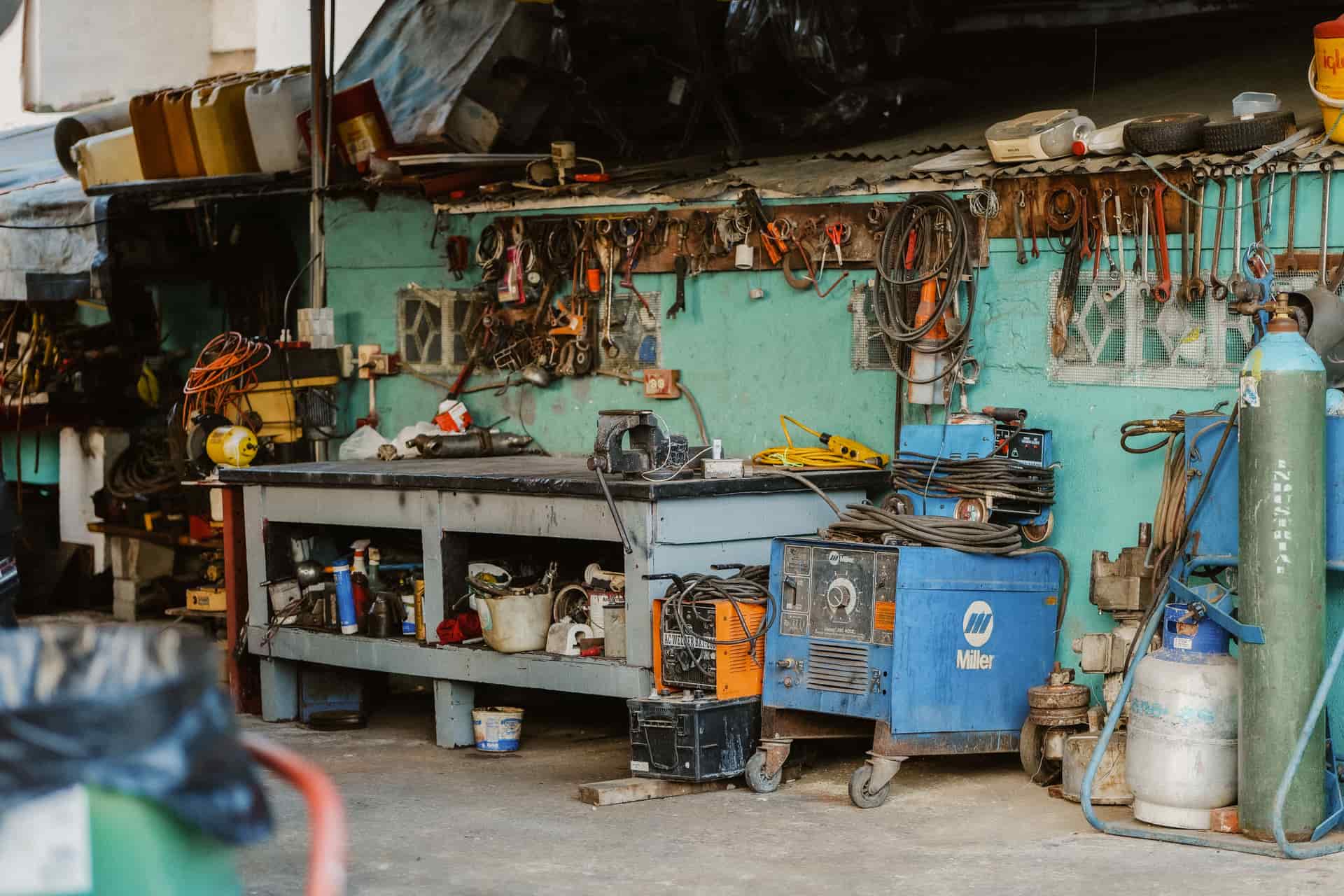
This is the job that decides the machine by where it happens. Outdoors, at the post, on a cord — and gas does not survive any of that.
Arc & Bead is an Amazon Associate. If you buy through a link on this page we may earn a commission, at no extra cost to you. We have not physically tested the machines on this page and we say so on How We Pick.
Quick picks
Tap any row to jump to the full write-up further down this page.
| # | Product | Best for | Price |
|---|---|---|---|
| 1 | 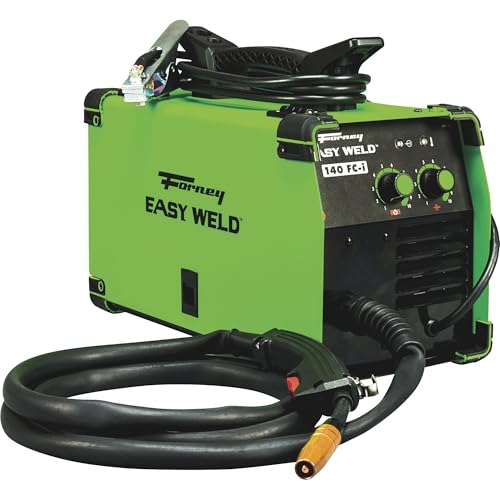 Forney Easy Weld 261 140 FC-i19 lb of gasless 140 A with infinite control and a published 1/4 in capacity. Goes to the post. | Best overall for gate work | $337.99 · View on Amazon #ad How this is funded · Price as of November 13, 2026 |
| 2 | 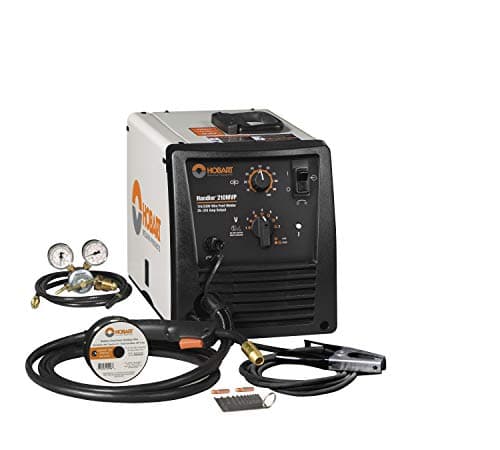 Hobart Handler 210 MVPFlux-core capable at up to 210 A, with a published 3/8 in single-pass rating for post plate. | Best for heavy gates and posts | |
| 3 | 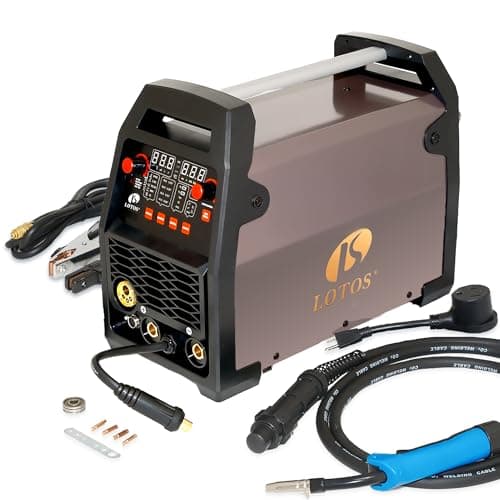 Lotos MIG180Flux-core plus a published 160 A stick rating — the right pair for rusty existing steel. | Best with stick for posts | $359.98 · View on Amazon #ad How this is funded · Price as of November 13, 2026 |
| 4 | 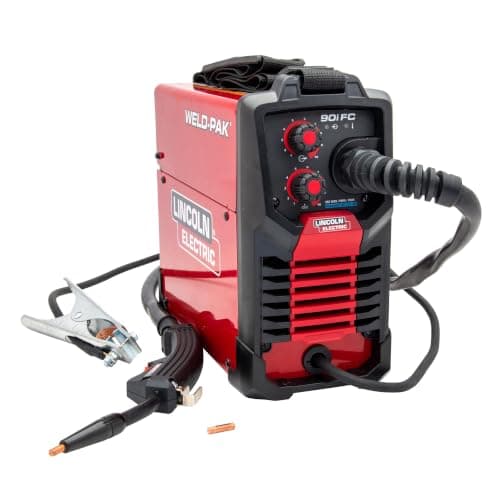 Lincoln Electric Weld-Pak 90i FC (K5255-1)Gasless on a wall socket, a quarter-inch capacity, and parts on every hardware-store shelf. | Best name brand for gate work | $328.00 · View on Amazon #ad How this is funded · Price as of November 13, 2026 |
What welder is best for gates and fences?
A portable 120 V machine that runs self-shielded flux-core, with enough output for the square tube and hinge plate you are using. Gate and fence work happens outdoors at the post, where a breeze strips shielding gas off the puddle and leaves porosity you cannot see — so gasless capability is not a compromise here, it is the requirement. Heavy driveway gates with 1/4 to 3/8 inch hinge plate want a 240 V machine as well.
This is a job where the location decides the machine, and that is unusual enough to be worth stating plainly. Three constraints follow from it.
It is outdoors, so shielding gas is out. A gas MIG weld needs still air. A breeze of a few miles an hour pulls the shield off the puddle and the weld comes out porous — and porosity is worse than a visibly bad weld, because the bead looks fine and the joint is weak. On a gate hinge that holds a hundred-kilogram frame, that matters. Self-shielded flux-core carries its shielding inside the wire and does not care about wind, which is the entire reason the process exists.
The work does not move. You can build a gate frame on a bench, but you hang it at the post, and hinge welding happens where the post is. That puts a hard limit on machine weight and a hard requirement on running from whatever power reaches the fence line.
The thickness range is wide. Decorative infill at 16 gauge in the same project as 1/4-inch hinge plate on a steel post. A machine with a narrow usable range does one of those two badly.
How we ranked them
1. Self-shielded flux-core capability. Non-negotiable for anything welded in place outdoors. Every machine on this page runs it.
2. Weight and input flexibility. Can one person carry it to the far gate post, and will it run from the power available there?
3. Output at the heavy end. Hinge plate and post brackets are the thick parts. This is where the 120 V machines reach their ceiling.
4. Duty cycle. A gate frame is a long sequence of similar welds. 30% at 90 amps is noticeably more comfortable than 20%.
The published numbers, side by side
| Machine | Gasless | Input | Output | Steel capacity | Duty cycle |
|---|---|---|---|---|---|
| Forney Easy Weld 140 FC-i | Flux-core only | 120 V, 20 A minimum | Up to 140 A | Up to 1/4 in | 30% at 90 A |
| Hobart Handler 210 MVP | Gas MIG or flux-core | 115 V or 230 V | 25–210 A (140 A on 115 V) | 24 ga to 3/8 in single pass | 30% at 150 A |
| Lotos MIG180 | Gas MIG, flux-core and stick | 110–125 V or 210–250 V | MIG to 180 A; stick to 160 A | Up to 1/4 in | — |
| Lincoln Weld-Pak 90i FC | Flux-core only | 120 V | — | Up to 1/4 in | — |
The extension cord is part of the purchase
Gate work almost always means a cord, and an undersized one is the most common reason a machine appears to underperform outdoors. Voltage drops along a long thin cord, the arc gets less than the machine expects, and the symptom is poor penetration that reads exactly like a welder problem.
The practical rule is to go heavier and shorter than feels necessary — 12 gauge at most lengths, 10 gauge for a long run on a 140 amp machine, and never two cords joined together. Welder extension cords has the gauge and length figures, and how many amps a welder uses covers the draw you are planning around.
If there is no power at the fence at all, a generator is the other answer, and it has its own requirements — what size generator to run a welder covers them.
Galvanised fence steel needs preparation, not bravery
A great deal of fencing and post material is galvanised. Welding through a zinc coating releases zinc oxide fume, which causes metal fume fever — a short, genuinely unpleasant illness with flu-like symptoms, and the reason this comes up on every outdoor job.
Grind the coating back a couple of inches either side of the weld, stay upwind, and wear a P100 respirator. Welding respiratory protection covers what a particulate filter does and does not handle. Then cold-galvanising spray over the finished weld restores the corrosion protection you ground off, which is the step people skip and then wonder why the joint rusts first.
What to run, and how to hang a gate squarely
0.030-inch flux-cored wire covers almost all gate work; 0.035 inch if you are consistently at the thick end. The wire size chart has the thickness pairings and the settings chart has starting voltage and wire speed.
The welding is the easy part of a gate. Squareness is the hard part, and the fix is the same every time: build the frame flat on the ground or a bench, check the diagonals rather than the corners, tack everything before welding anything, and weld in an alternating sequence so the heat pulls in opposite directions rather than all one way. A gate welded corner by corner in order comes out of the jig as a parallelogram, and no amount of hinge adjustment fixes that.
Which one to buy
Forney Easy Weld 140 FC-i for most gate and fence work. Gasless, 19 pounds, infinite control, and a published 1/4-inch capacity is the right machine for the job at the price.
Hobart Handler 210 MVP for heavy driveway gates and steel posts, where a 3/8-inch single-pass rating and 210 amps on 240 V give you margin the 120 V machines do not have.
Lotos MIG180 if much of your work is repairs to existing rusty or painted steel, where stick tolerance is worth more than extra amperage.
Lincoln Weld-Pak 90i FC if the job is a garden gate or a light railing panel and you want a name-brand gasless machine with parts on every hardware-store shelf.
For farm gates and implement repair, flux-core welders for farm use covers the same conditions at larger scale.
1. Best overall for gate work
Forney Easy Weld 261 140 FC-i
19 lb of gasless 140 A with infinite control and a published 1/4 in capacity. Goes to the post.
Forney publishes flux-core only, 120 V on a 20 amp circuit minimum, 140 amps maximum, a 30% duty cycle at 90 amps, 0.030 and 0.035-inch flux-cored wire, up to 1/4-inch steel capacity, and 19 pounds.
Every one of those figures is the right one for this job. Gasless means wind is irrelevant, which is the single most important property for outdoor work. 19 pounds means it goes to the fence line rather than the fence coming to it. Up to 1/4 inch covers the heaviest square tube and post plate a domestic gate uses. And 30% at 90 amps is a generous duty cycle for a 120 V machine, which matters because gate frames are a lot of similar welds in sequence.
Infinite voltage and wire-speed control rather than four taps is the quality-of-life specification. Gate work mixes 1.5-inch square tube at 16 gauge with heavier post brackets, and a dial follows that where taps do not.
The trade is slag on every bead. Outdoors on a painted gate that is a wire brush and five minutes, not a problem — and it is the price of not having a cylinder to carry out to a field.
What works
- 30% duty cycle at 90 A is unusually generous for a 120 V machine in this class
- Infinite voltage and wire-speed control rather than four fixed taps, so you can actually dial a setting in
- 19 lb — genuinely carryable to the job instead of the job coming to it
- No gas bottle, no regulator, no second purchase before your first weld
What does not
- Flux-core only. It will never run gas, so it cannot become your Level 2 machine
- Every weld leaves slag that has to be chipped and wire-brushed off
- Needs a 20 A circuit — a 15 A garage lighting circuit will trip at higher settings
2. Best for heavy gates and posts
Hobart Handler 210 MVP
Flux-core capable at up to 210 A, with a published 3/8 in single-pass rating for post plate.
Hobart publishes 115 V or 230 V input via the multi-voltage plug, 25 to 210 amps (140 amps on 115 V), a 30% duty cycle at 150 amps, a 24-gauge to 3/8-inch single-pass steel capacity, and seven voltage settings on 230 V.
A big driveway gate is a different structure from a garden gate. Two-inch or larger square tube, heavy hinge plate welded to a steel post, a drop bolt mount and sometimes a cantilever track — all of which can be 1/4 to 3/8 inch. A 3/8-inch single-pass rating handles that with margin.
The reason it is on this page rather than only on a shop page is that it runs flux-core as well as gas. You can build the frame in the garage on gas and then take it out to hang on flux-core, which is exactly how gate work splits in practice.
Dual voltage helps for the same reason. At 230 V in the shop you have the full 210 amps; on a 115 V cord at the fence you have 140, which is still more than hanging work needs.
What works
- The multi-voltage plug means you can buy it before you have run a 240 V circuit and get the full 210 A later
- 3/8 in single-pass capacity covers essentially every home fabrication job
- 30% duty cycle at 150 A is a real working duty cycle, not a demonstration figure
What does not
- Heavy enough that you will want a cart, which is another purchase
- On 115 V you get 140 A — no more than the Handler 140EZ, at a much higher price. The value only appears once you have the 240 V outlet
- No spool gun included, so aluminum is a further purchase
Who this is wrong for: Carrying any distance from power. It is the heaviest option here and 210 A needs a 240 V circuit to reach.
3. Best with stick for posts
Lotos MIG180
Flux-core plus a published 160 A stick rating — the right pair for rusty existing steel.
Lotos publishes gas MIG, gasless flux-core, stick and DC lift TIG on either 120 V or 240 V, with MIG to 180 A, stick to 160 A and a 1/4 inch mild-steel capacity.
Stick is what this adds over the machine above it, and on fence work it earns its place more often than you would think. A lot of gate and fence jobs are not new fabrication — they are welding a new hinge to an existing rusty post, repairing a railing that has been painted six times, or adding a bracket to galvanised steel somebody else put in twenty years ago.
Stick electrodes tolerate all of that far better than wire does, and they need nothing but the machine and a rod. For a repair at the far end of a property on a long cord, a stick electrode and this machine is a genuinely capable combination.
Read the headline figures carefully, though. The 180 A and 160 A ratings are the 240 V numbers and Lotos does not publish a separate 120 V output, so on a household circuit you are working well below them. That is enough for gate frames and hinge plate at the published 1/4 inch with preparation, and not enough for repeated heavy post work — the Hobart above is the machine for that.
What works
- Stick capability matters more than it sounds: rusty, painted or outdoor steel is where MIG struggles and stick does not
- A published 160 A stick rating is a real stick machine, not a token third process on the switch
- Synergistic MIG sets voltage and wire speed together, so the first hour goes on welding rather than on a settings chart
What does not
- The headline 180 A and 160 A figures are the 240 V ratings; Lotos does not publish a separate 120 V output
- TIG is lift-start DC with no high-frequency start, and the torch is a separate purchase — treat it as a bonus, not a feature you bought
- The spool gun is also sold separately, and DC lift TIG cannot weld aluminum whatever gun you fit
- Dealer support and warranty handling are not on the level of Hobart or Lincoln
4. Best name brand for gate work
Lincoln Electric Weld-Pak 90i FC (K5255-1)
Gasless on a wall socket, a quarter-inch capacity, and parts on every hardware-store shelf.
Lincoln publishes flux-core only operation on 120 volts, a capacity of up to a quarter of an inch in mild steel, and a 15-pound inverter with a shoulder strap and a metal carry case. The gun, nozzle, contact tip, work cable and clamp are in the box.
Gasless on a wall socket is the right configuration for gate work, because a gate is usually welded where it stands rather than on a bench, and a shielding bottle in any breeze is a liability rather than an upgrade.
The quarter-inch capacity covers domestic gate work properly: hinge plate, box-section frames, trellis and railing panels, and repairs to existing fencing. Two knobs with infinite voltage control mean you can make a small change and watch what it does rather than jumping between fixed taps.
The constraint is what it will never become. There is no gas capability here at all, so when the work moves indoors and you want a clean bead without slag, that is a new machine rather than a bottle.
What works
- Infinite voltage control rather than fixed taps, so a setting can actually be dialled in rather than chosen from four
- Two knobs and nothing else — the shortest path from box to first bead of anything Lincoln sells
- 15 lb with a shoulder strap and a metal carry case, so it goes to the work
- Lincoln's dealer and consumable network is the best in the category, which matters on a first machine
What does not
- Flux-core only. It will never run gas, so it cannot become your Level 2 machine
- Costs noticeably more than a budget-brand 135 A gasless machine of similar output
- Every weld leaves slag that has to be chipped and wire-brushed off
Who this is wrong for: Anyone who will want gas MIG later, and anyone welding heavy driveway-gate post plate — a quarter inch is the published ceiling, not a starting point.
Questions people actually ask
What welder should I use for a metal gate?
A portable 120 V machine running self-shielded flux-core, with enough output for your square tube and hinge plate. Gate work happens outdoors, and flux-core carries its shielding inside the wire so wind does not affect it.
For heavy driveway gates with 1/4 to 3/8 inch hinge plate, a 240 V machine with a published 3/8 inch single-pass rating gives you the margin you want.
Can you MIG weld a gate outside?
Not reliably with gas. A breeze of a few miles an hour strips the shielding gas off the puddle, and the result is porosity you cannot see in a bead that looks fine.
On a hinge carrying a heavy gate that is a real risk. Use self-shielded flux-core for anything welded in place outdoors, or build the frame indoors on gas and hang it on flux-core.
What wire size for welding gates?
0.030 inch flux-cored wire covers almost all gate and fence work. Step up to 0.035 inch if you are consistently welding at the thick end - heavy hinge plate and post brackets.
Our wire size chart has the thickness pairings and the settings chart has starting voltage and wire speed figures.
How do I stop a welded gate coming out crooked?
Build the frame flat on the ground or a bench, check the diagonals rather than the corners, tack everything before welding anything, and weld in an alternating sequence so the heat pulls in opposite directions.
A gate welded corner by corner in order comes out as a parallelogram, and hinge adjustment will not fix it.
Is it safe to weld galvanised fence posts?
Only with preparation. Welding through zinc coating releases zinc oxide fume, which causes metal fume fever - flu-like symptoms for a day or so.
Grind the coating back a couple of inches either side of the weld, stay upwind, and wear a P100 respirator. Afterwards, cold-galvanising spray over the weld restores the corrosion protection you ground off.
Sources
- Forney — Easy Weld 261 140 FC-i published specifications: 140 A, 30% at 90 A, up to 1/4 in, 19 lb
- Hobart — Handler 210 MVP published specifications: gas and flux-core, 25–210 A, 3/8 in single pass
- Lotos — MIG180 published specifications: six modes, 110–125 V or 210–250 V, MIG to 180 A, stick to 160 A, 1/4 in mild steel
- Lincoln Electric — Weld-Pak 90i FC (K5255-1) published specifications: 120 V, up to 1/4 in
- OSHA — zinc oxide and metal fume fever guidance on welding coated steels
Read next
- The best flux-core welders for farm use
Gasless machines for outdoor, rusty, away-from-the-bench farm repairs — and what runs off a generator.
- The best welders for 1/4 inch steel
Quarter-inch steel is where 120V machines run out. Four with the published capacity, ranked.
- Welder extension cords: how to size one properly
Voltage drop, gauge and length — why a thin cord makes a good machine weld badly.
- What size generator do you need to run a welder?
How to size a generator to a welder, and the inverter-welder warning nobody prints on the box.
- Flux-core welding settings chart
Starting settings by thickness, and a symptom-by-symptom guide to fixing a bad bead.
- Find your level before you spend a penny
Most bad first welder purchases are not bad machines. They are the right machine bought by the wrong person, one level too early or one level too late.
Back to Find Your Level, or start over at Find Your Level.
Ryder M.
Ryder M. is the hands-on owner behind Magoo Media Group. He writes Arc & Bead's buying guides and picks every machine on the site. What every recommendation is based on — and what it is not based on — is set out on How We Pick.