The best welding safety gear
Four items stand between you and the arc, and only one of them is the helmet everybody buys first. Here is what each one should publish before you trust it.
Arc & Bead is an Amazon Associate. If you buy through a link on this page we may earn a commission, at no extra cost to you. We have not physically tested the machines on this page and we say so on How We Pick.
Quick picks
Tap any row to jump to the full write-up further down this page.
| # | Product | Best for | Price |
|---|---|---|---|
| 1 | 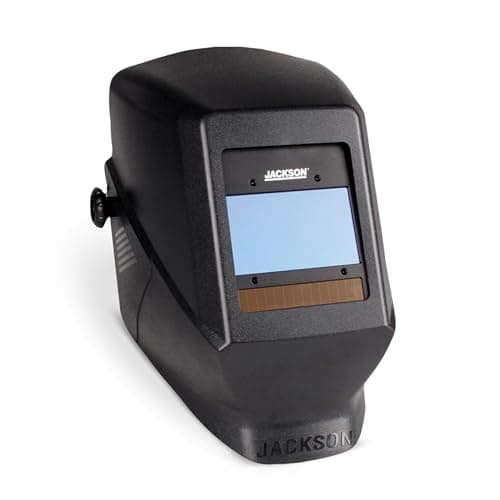 Jackson Safety Insight VariableA published 1/1/1/1 optical class and an ANSI Z87.1 rating, in a narrow shell built for long sessions. | Start here: the helmet | |
| 2 | 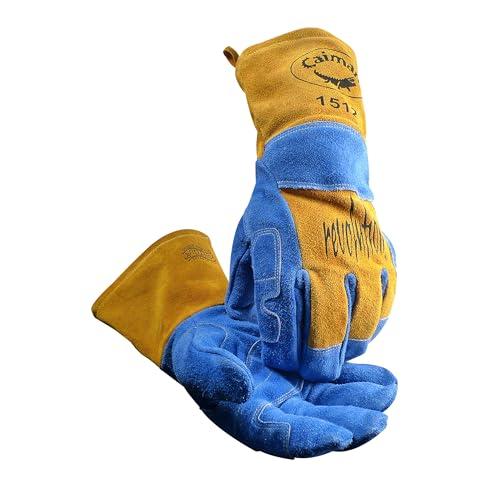 Caiman 1512 split cowhide MIG/stick glovesThe only glove here with an ANSI contact heat level you can check - level 3 to ASTM F1060-18, 392 degrees F. | Gloves with a published rating | $28.99 · View on Amazon #ad How this is funded · Price as of November 28, 2026 |
| 3 | 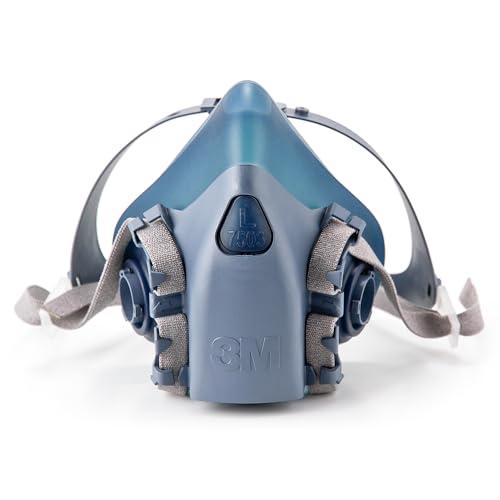 3M 7502 silicone half facepiece respiratorA silicone half facepiece from the 7500 series 3M itself lists for welding, taking P100 filters on a bayonet mount. | The piece most people skip | $37.22 · View on Amazon #ad How this is funded · Price as of November 28, 2026 |
| 4 | 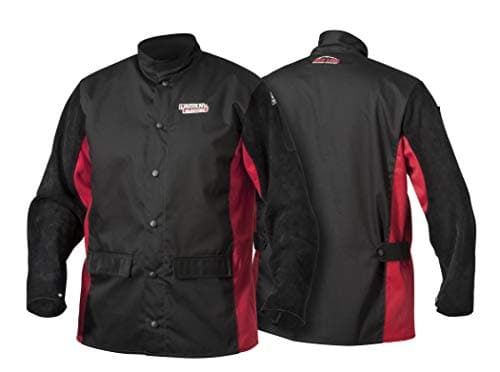 Lincoln Electric split-leather sleeved welding jacket (K2986)Split-leather sleeves on a flame-resistant cotton body - leather where spatter lands, cloth where it does not. | Jacket, for overhead and out-of-position | $164.00 · View on Amazon #ad How this is funded · Price as of November 28, 2026 |
The short answer
Four items do the work: a helmet, gloves, a respirator and a jacket. Buy them in that order of urgency, and check a published figure on each rather than a marketing claim.
Our picks: the Jackson Safety Insight Variable helmet, which publishes a 1/1/1/1 optical class and an ANSI Z87.1 rating; Caiman 1512 gloves, the only ones here with a standards-referenced heat rating (ANSI contact heat level 3, ASTM F1060-18); the 3M 7502 half mask with P100 filters, which is the piece most home welders skip; and the Lincoln K2986 jacket, leather-sleeved for out-of-position work.
The cheapest honest version of this kit is the same helmet with RAPICCA 16-inch gloves and the 3M 6000-series mask with filters included — both are on the linked pages below, both are under $25, and neither is a compromise on protection class.
Prices in the table above come from our live price feed, each with its own "as of" date inside the buy button. All four items returned a buyable offer in the refresh generated 2026-11-20.
What you are actually protecting against
Four hazards, and they do not all arrive at once.
Radiation. An arc emits ultraviolet and infrared as well as visible light. UV burns the cornea — arc eye — and burns exposed skin like strong sunlight, in minutes. This is what the helmet and covered skin are for, and it is the one hazard that affects bystanders too.
Heat and spatter. Molten metal lands on your hands, forearms and feet, rolls into boot tops and sits in trouser cuffs. Gloves and sleeves handle it; synthetic clothing makes it dramatically worse by melting.
Fume. Condensed metal particulate, small enough to reach deep lung tissue, carrying whatever the base metal and coating were made of. The helmet does nothing about it.
Noise and debris from the rest of the job. Grinding throws sparks and particles further than welding does, which is why safety glasses go on under the hood and stay on when it lifts.
What each one publishes
| Item | Category | Published protection figure | Material / construction |
|---|---|---|---|
| Jackson Safety Insight Variable | Auto-darkening helmet | 1/1/1/1 optical class; ANSI Z87.1; shade 9-13 variable | Narrow HSL shell with extended front lip |
| Caiman 1512 | MIG / stick gloves | ANSI contact heat level 3 (ASTM F1060-18, 392 F) | Premium split cowhide, wool lined, Kevlar stitched |
| 3M 7502 + P100 filters | Half-mask respirator | NIOSH-approved with 3M filters; P100 = 99.97% of aerosols | Silicone face seal, drop-down harness, bayonet fitting |
| Lincoln K2986 | Welding jacket | Not published | Split-leather sleeves on flame-resistant cotton, snap front |
Three things that cost nothing and matter as much as the gear.
Natural fibres only. Cotton, wool and leather char. Polyester and nylon melt onto skin, and that is a far worse burn than the spark that caused it. Check what your trousers are made of.
Boots over trousers, not under. A trouser cuff over a boot is a funnel for molten metal. Sleeves over gloves, for the same reason, unless the glove cuff is long enough to go over.
Screen the arc from other people. Anyone who can see your arc can get arc eye from it. In a shared garage, a screen or a closed door is part of the kit. Is welding in a garage safe covers the ventilation and fire side.
The order to buy them in
1. Helmet. Non-negotiable and first. An auto-darkening lens is worth the money over passive because you can see the joint before you strike, which makes you weld better as well as safer. The best welding helmets for beginners is the page.
2. Gloves. Second, and buy for the process. Heavy cowhide for MIG, flux-core and stick; thin goatskin for TIG. The best welding gloves for beginners covers the split.
3. Respirator. Third, and far earlier than most people buy it. Under $50 and it addresses the hazard with the longest timescale. The best welding respirators under $50.
4. Jacket. Fourth, because a long-sleeved cotton shirt genuinely covers bench welding. Buy the jacket when you start welding out of position or under a vehicle. Welding gloves and jackets goes further on fit.
What is not on this list and should be: safety glasses under the hood, hearing protection for grinding, a fire extinguisher within reach, and boots that are not canvas. None of them is a welding-specific purchase, which is exactly why they get forgotten.
Which kit is yours?
First machine, flux-core, in a garage: helmet, long gloves and a respirator. Flux-core produces more fume and more spatter than gas MIG, so the gloves want length and the mask is not optional — flux-core welding safety is the process-specific page.
Mostly bench MIG: helmet, cowhide gloves, respirator. A cotton shirt will do until you work overhead.
TIG: a helmet with a low published TIG trigger rating matters more than anything else here, and the gloves get thinner. The best welding helmets for TIG welding.
Plasma cutting: you need a shade range that goes down to 5–8, which this helmet does not have. Do you need a welding helmet for plasma cutting answers it.
Overhead or under a vehicle: the jacket moves up the list, and a cap under the helmet stops spatter finding your scalp.
How we picked these
One item per category, ranked on a published protection figure. Where a maker publishes a standards-referenced rating — an optical class, an ANSI contact heat level, a NIOSH filter class — that item won its slot. Marketing temperatures with no test method attached were not treated as evidence.
The cheapest honest option is named, not hidden. In two of the four categories there is a cheaper registry product with the same protection class, and the short answer above says which.
No hands-on, no scores, no testing. We have worn none of this equipment. More on the method on how we pick.
This page names one jacket because it covers four PPE categories at once. If the jacket is the decision you are actually making, the best welding jackets ranks five of them against each other, including two that cost a fraction of the one above and publish more about themselves.
1. Start here: the helmet
Jackson Safety Insight Variable
A published 1/1/1/1 optical class and an ANSI Z87.1 rating, in a narrow shell built for long sessions.
Jackson Safety publishes the Insight Variable with a 3.94 x 2.36 in viewing area, variable shade 9–13 with weld, torch and grind modes, a 1/1/1/1 optical class, a narrow HSL shell with an extended front lip, and an ANSI Z87.1 rating.
The helmet is the one piece of safety gear nobody skips, which means the question is never whether to buy one but what to check. Two published figures answer it: an optical class, so the lens is consistent across the window rather than only in the center, and a standards reference, so the shell has been tested to something. This publishes both, which at its price is uncommon.
The extended front lip is the detail that belongs on a safety page. It keeps spatter off your throat on upward and out-of-position welds, which is the gap a plain shell leaves between helmet and collar.
Against it: a shade range starting at 9 does not cover plasma cutting, which needs shades 5–8, and Jackson publishes no minimum TIG trigger amperage. If you TIG thin material or cut, see the helmets under $200 page for the alternatives.
What works
- Light on the neck, which is the complaint that actually ends a long session
- Jackson's shells and headgear parts are easy to source separately
What does not
- Viewing area is small next to a VIKING 3350 or a panoramic helmet
- Not a low-amperage TIG helmet
2. Gloves with a published rating
Caiman 1512 split cowhide MIG/stick gloves
The only glove here with an ANSI contact heat level you can check - level 3 to ASTM F1060-18, 392 degrees F.
Caiman publishes the 1512 as premium split cowhide with a wool lining, Kevlar stitching, an ANSI contact heat level 3 rating tested to ASTM F1060-18 (392 degrees F), the Kontour pre-curved finger pattern, and a 30-day limited warranty.
A published, standards-referenced heat rating is rare in welding gloves, and it is the reason this is the pick. Almost every glove in the category is sold on a marketing temperature with no test method attached; this one names the standard, which means the number can be compared against another glove tested the same way.
Wool lining and split cowhide is the traditional MIG and stick combination: thick enough for radiant heat on a long weld, and insulating rather than merely tough. The pre-curved pattern reduces the effort of gripping a gun, which is what makes a heavy glove tiring.
Against it: split cowhide is too thick for the gun control fine TIG work needs. For that, thinner goatskin gloves are the right tool, and most welders end up owning both.
What works
- Caiman publishes an actual tested heat figure — ANSI contact heat level 3 under ASTM F1060-18 — which almost nothing else in this price band does
- Wool lining insulates better than cotton at the same thickness, which is why it is in gloves intended for stick work
- The pre-curved pattern means the glove is already the shape of a closed hand, so holding a gun does not fight the leather
What does not
- Split cowhide plus a wool liner is thick. Fine for MIG and stick, hopeless for feeding TIG filler
- Wool is the warmest liner here and the slowest to dry out if it gets wet
- A 30-day warranty is a warranty against defects, not against wear — these are consumables
Who this is wrong for: TIG welding. A thick split-cowhide MIG glove removes the feel a TIG torch and filler rod need; a goatskin TIG glove is a different purchase.
3. The piece most people skip
3M 7502 silicone half facepiece respirator
A silicone half facepiece from the 7500 series 3M itself lists for welding, taking P100 filters on a bayonet mount.
3M publishes the 7502 as a reusable half facepiece with an advanced silicone face seal, a dual-mode head harness with integrated drop-down suspension, the Cool Flow exhalation valve, and a bayonet fitting taking 6000-series cartridges and 2000, 2200, 7000 and 5000 series particle filters, NIOSH-approved with 3M filters — with welding listed among 3M's own recommended applications.
This is the item that belongs on a safety list and almost never appears on a shopping one. A welding helmet protects your eyes and face from radiation and spatter and does nothing at all about what you breathe. Welding fume is condensed metal particulate, and in a home garage there is usually no extraction to take it away.
Pair it with P100 filters — 99.97% against solid and liquid aerosols, which is the right class for metal fume. The drop-down harness means the mask comes off your mouth between welds without removing anything.
Against it: it is a facepiece only, so filters are a second line on the order. And a half mask only seals on a clean-shaven face — that is how negative-pressure respirators work, not a preference. The respirators under $50 page covers the complete-kit alternatives.
What works
- 3M names welding in the published application list for this facepiece, which very few masks do explicitly
- The 7500 series silicone seal is the most comfortable of the three 3M shells here over a two-hour session
- Takes gas and vapor cartridges as well as particulate filters, so it grows beyond fume if you ever need it to
- Exhalation valve cover aimed downward to reduce fogging under a lens
What does not
- Facepiece only — budget filters on top
- Costs noticeably more than the 6000-series shell for a comfort gain rather than a protection gain
- This listing is Medium; sizes are separate listings and the fit is the whole point of a respirator
- Particulate filters do not remove gases — ventilation still matters
4. Jacket, for overhead and out-of-position
Lincoln Electric split-leather sleeved welding jacket (K2986)
Split-leather sleeves on a flame-resistant cotton body - leather where spatter lands, cloth where it does not.
Lincoln publishes the K2986 as a welding jacket with split-leather sleeves on a flame-resistant cotton body, with a snap front and collar.
The hybrid construction is the point. A full-leather jacket is the most protective and the most unpleasant to wear for an hour; a cotton-only jacket is comfortable and burns through where spatter concentrates. Leather sleeves with an FR cotton body puts the protection on the forearms and shoulders, which is where spatter actually lands when you weld with your arms up.
This matters most for the work where sparks fall on you rather than away from you: overhead welds, vertical welds, and anything done lying under a vehicle. On a bench with the work in front of you, a long-sleeved cotton shirt covers a surprising amount.
Against it: Lincoln publishes no sizing chart or weight in our registry entry, and a snap front is less protective than a full leather closure for heavy out-of-position work. Natural fibres only is the rule either way — synthetics melt.
What works
- Leather sleeves stop spatter that a cotton shirt merely delays — the difference matters most overhead
- High collar protects the neck, which is where a burn ruins a whole day
- The cotton body is cooler and less restrictive than an all-leather jacket without giving up arm protection
What does not
- Still hot to wear. In a summer garage you will weld in shorter bursts
- The flame-resistant cotton body is not leather — for heavy out-of-position stick work the all-leather jacket is the right one
Questions people actually ask
What safety gear do I need for welding?
Four things: an auto-darkening helmet, leather gloves suited to your process, a P100 half-mask respirator, and natural-fibre clothing with a welding jacket for out-of-position work.
Add safety glasses under the hood, hearing protection for grinding and a fire extinguisher within reach. None of those is welding-specific, which is why they get forgotten.
What is the best welding helmet for safety?
Look for a published optical class and a standards reference rather than a brand claim. The Jackson Safety Insight Variable publishes a 1/1/1/1 optical class and an ANSI Z87.1 rating, which is unusual at its price.
If you weld out of position, four arc sensors matter too, because a blocked sensor is what lets a lens flash clear.
Do I need a respirator for welding?
In a home garage with limited ventilation, yes. Welding fume is respirable metal particulate and a welding helmet does nothing about it - the hood protects your eyes and skin, not your lungs.
A P100 half mask costs less than a good pair of gloves. It only seals on a clean-shaven face.
Can I weld in a cotton shirt?
A heavy long-sleeved cotton shirt is acceptable for bench welding where sparks fall away from you, and it is far better than any synthetic fabric, which melts onto skin.
For overhead, vertical or under-vehicle work, a leather-sleeved jacket is the right answer because that is where spatter lands on you rather than past you.
What heat rating should welding gloves have?
Look for a rating with a test standard attached. The Caiman 1512 publishes ANSI contact heat level 3 tested to ASTM F1060-18 at 392 degrees F, which can be compared against other gloves tested the same way.
A bare temperature claim with no standard named tells you nothing comparable.
Is welding safety gear different for TIG?
The gloves are. TIG needs thin goatskin for torch and filler-rod feel, where MIG and stick want thick cowhide for radiant heat.
The helmet matters differently too: TIG arcs at low amperage make very little light, so a helmet with a published low minimum trigger amperage is important in a way it is not for MIG.
Sources
- Jackson Safety - Insight Variable (46129) published specifications: 3.94 x 2.36 in viewing area, variable shade 9-13 with weld, torch and grind modes, 1/1/1/1 optical class, narrow HSL shell with extended front lip, ANSI Z87.1 (registry entry, ASIN B01HTMLSGG)
- Caiman - 1512 published specifications: premium split cowhide, wool lining, Kevlar stitching, ANSI contact heat level 3 tested to ASTM F1060-18 (392 degrees F), Kontour pre-curved finger alignment, MIG and stick processes, 30-day limited warranty (registry entry, ASIN B07T2PN838)
- 3M - 7502 half facepiece published specifications: reusable 7500-series half facepiece, advanced silicone face seal, dual-mode harness with integrated drop-down suspension, Cool Flow exhalation valve, bayonet fitting for 6000-series cartridges and 2000 / 2200 / 7000 / 5000 series particle filters, NIOSH-approved with 3M cartridges, filters or supplied air, welding listed among recommended applications (registry entry, ASIN B008MCUT86)
- Lincoln Electric - K2986 welding jacket published specifications: split-leather sleeves on a flame-resistant cotton body, snap front with collar (registry entry, ASIN B00547HDS6)
- Arc & Bead live price layer (lib/prices.ts) - a buyable offer and live price for all four items confirmed against the price feed generated 2026-11-20; each buy button renders the live price with its own 'as of' date
Read next
- The best welding respirators under $50
Three half-mask respirators under $50 plus the P100 filter to pair with them, ranked on face seal, harness and whether filters ship in the box.
- The best welding gloves for beginners
Five welding gloves ranked on heat protection against feel, scoped to a first pair, with the published heat ratings separated from the marketing ones.
- Welding gloves and jackets
Why MIG gloves and TIG gloves are opposite tools, and when a leather jacket stops being optional.
- The welding starter kit checklist
Everything that is not the welder, ordered by how much each item changes your results.
- Is Welding in a Garage Safe?
The garage-specific hazards - shared air, stored fuel, concrete spalling, the car - and what to do about each.
- The best welding helmets under $200
Three auto-darkening helmets under $200 on live prices, ranked on published optical class, shade range and TIG rating, with the cheapest large-view helmet named as the budget pick.
Back to Find Your Level, or start over at Find Your Level.
Ryder M.
Ryder M. is the hands-on owner behind Magoo Media Group. He writes Arc & Bead's buying guides and picks every machine on the site. What every recommendation is based on — and what it is not based on — is set out on How We Pick.