Welding helmets for glasses wearers
Almost every helmet technically fits over glasses. The question is whether you can still bear it after an hour.
Arc & Bead is an Amazon Associate. If you buy through a link on this page we may earn a commission, at no extra cost to you. We have not physically tested the machines on this page and we say so on How We Pick.
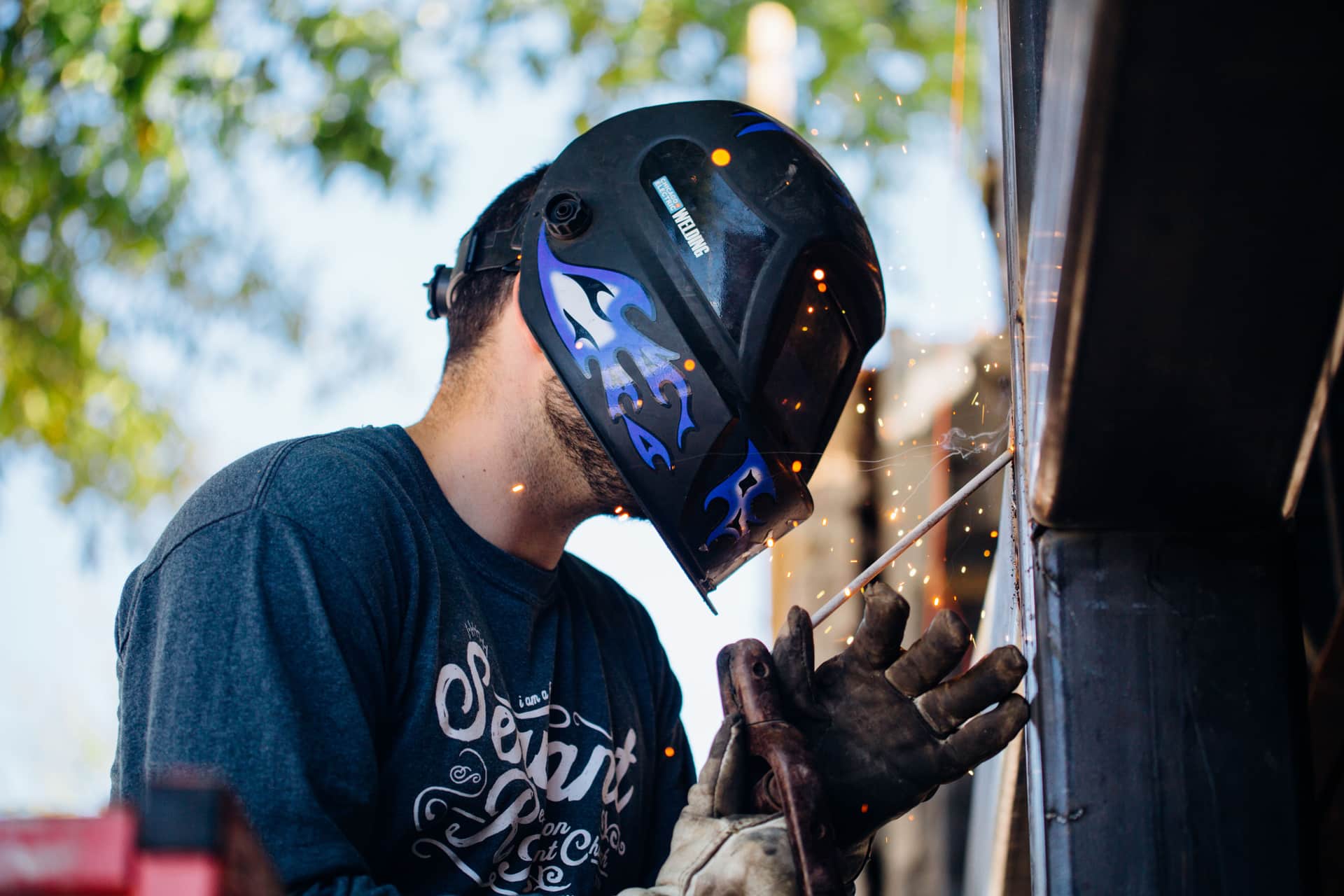
The three problems, in order of how often they end a session
Temple pressure — a shallow shell presses the arms of your glasses into the sides of your head. Fogging — your breath is trapped inside the shell and condenses on the nearest cold surface, which is your lenses. Lens-to-filter contact — deep frames touch the filter, smearing it and scratching the cover lens. Shell depth largely determines the first and third.
Why shell depth is the specification nobody publishes
Manufacturers publish viewing area, shade range, optical clarity and sensor count. Almost none publish the distance from the filter to your face, which is the number that decides whether glasses are comfortable.
The practical proxies: a deeper shell is usually taller front to back and looks more bulbous in profile; large-view helmets are generally deeper than low-profile ones; and helmets marketed as fitting over respirators tend to be deeper, because a respirator needs the same clearance glasses do.
Fixing temple pressure
The instinct is to buy a bigger helmet. The better first move is to adjust the one you have.
Most headgear adjusts in several axes: crown height, circumference, tilt angle, and — the important one — distance from the face. Moving the shell forward relieves temple pressure directly. It costs you a little balance, because the shell's weight is further from your head, which is why good headgear matters.
The second option is to change glasses rather than helmets. Thin-armed frames, or a spare pair of slim safety glasses kept for welding, solve the problem for less than a helmet costs.
Fogging, and what actually works
Your breath rises, hits the coldest nearby surface, and condenses. Inside a helmet that surface is either your glasses or the filter.
What works: directing breath downward and away, which a properly fitted respirator or even a simple face covering under the helmet does incidentally. Anti-fog treatment on the lenses — the same products swimmers and motorcyclists use. Warming the helmet before starting, since a cold shell in a cold garage is the worst case. And moving air through the shop, which you want anyway for fume.
What does not work: wiping the lenses, which lasts thirty seconds and gets spatter dust on them.
The alternative most people have not considered
Cheater lenses — magnifying lenses that clip inside the helmet, in front of the filter, in the same position a reading glass would sit.
If your glasses are for reading distance rather than distance vision, this can replace them entirely while welding. No frames, no temple pressure, nothing to fog, and the magnification is positioned for exactly the working distance you weld at. They are cheap, available in a range of dioptres, and they fit most helmets.
The limitation: if you need your glasses to see across the room, you still need them for everything except the weld itself, which means putting them on and off constantly.
What to check before you buy
Can you try it on? Fit is individual enough that this beats every specification. If buying online, buy from somewhere with a returns policy and treat the first hour of use as the test.
How far does the headgear move the shell? Adjustment range matters more than shell size, because it is what lets you relieve pressure without changing helmets.
Is the viewing area large? Glasses frames restrict peripheral vision, so a large view recovers part of what they take.
Will a respirator also have to fit? If you need both — and for flux-core you should consider it — respirators and fume safety covers the combination, which needs more clearance again.
One thing not to do
Do not weld without your glasses on the basis that you can see the arc anyway. You need to see the joint, the puddle edge and where you are going — and a weld you cannot see properly is a weld you are placing by guesswork. If frames genuinely will not work, use a cheater lens rather than going without.
What we would buy
1. Best deep shell on a budget
YESWELDER LYG-M800H large-view helmet
Deep shell and a panoramic lens, so glasses sit clear of the filter.
Shell depth is the specification that matters here and it is almost never published, so this comes down to shape rather than a number. A deep shell with a panoramic lens gives glasses room to sit without the frames pressing against the filter or the temples against your head.
The panoramic lens helps for a second reason. Glasses restrict your field of view already, so a wider window recovers some of what the frames take away.
What works
- Panoramic view at a fraction of a name-brand large-view helmet's price
- True-color lens makes the puddle and the weld pool edge much easier to read than a green lens
- Deep shell accommodates most prescription glasses without pressure on the temples
What does not
- Published optical-class figures are inconsistent between listings — treat unstated clarity as unverified
- Headgear adjustment is coarse compared with the X6 or Halo systems
2. Best adjustment range
Lincoln Electric VIKING 3350
X6 headgear adjusts in more axes than most, which is how you relieve temple pressure.
The fix for temple pressure is usually not a bigger helmet but better headgear adjustment — specifically the ability to move the shell forward, away from your face, while keeping the balance right.
Lincoln's X6 headgear adjusts in more axes than most systems, alongside a 12.5 square inch view and 1/1/1/1 clarity. The large view is worth extra here because glasses frames eat into peripheral vision.
What works
- 12.5 sq in of view at 1/1/1/1 clarity is the combination that makes a helmet stop being something you tolerate
- The external grind button means you switch modes without lifting the hood — the single feature you notice most every day
- Shade 5 low end covers plasma cutting, so one helmet spans all four levels
What does not
- Costs several times a budget auto-darkening helmet
- Physically large, and in a tight corner the shell finds things to bump into
3. Best if you want low profile instead
ESAB Sentinel A50
Halo headgear distributes weight well, though the shell is shallow by design.
A deliberate counter-recommendation. The Sentinel is low-profile by design, which is exactly the wrong direction for deep frames — but its Halo headgear distributes weight unusually well, and weight on the bridge of your nose is a separate problem from depth.
ESAB publishes 1.4 pounds, a 3.93 by 2.36 inch view, five-point Halo headgear and a TIG rating below 2 amps. If your glasses are slim and your complaint is weight rather than depth, this is the better answer.
What works
- Rated to trigger below 2 A, which is the specification that matters for low-amperage TIG on thin material
- The touchscreen and memory settings mean you set shade once per job type and never hunt again
- Low-profile shell genuinely helps in tight work — the least head-bumping helmet in this group
What does not
- Optical class 1/1/1/2 rather than 1/1/1/1 — the difference is measurable, though few people see it in use
- Premium price, and the touchscreen is one more thing that can fail
Who this is wrong for: Large or thick frames. The low-profile shell is the whole design, and it is the opposite of what deep frames need.
4. Cheapest way to find out
Antra AH6-660
Four sensors and ANSI Z87.1, cheap enough to try before committing.
Fit is individual enough that buying an expensive helmet before knowing whether deep shells suit you is a gamble. An inexpensive four-sensor, ANSI Z87.1 helmet is a reasonable way to learn what your actual complaint is — depth, weight or fogging — before spending more.
Antra publishes a 3.86 by 2.50 inch view, four sensors and a 4/5 to 9 and 9 to 13 shade range.
What works
- Four sensors and a shade-4 light state at a price where two sensors is the norm
- ANSI Z87.1 rated, which is the line between eye protection and a novelty
- Cheap enough that starting here and upgrading later costs less than agonizing over it
What does not
- Headgear is the weak point — it is the part owners most often report replacing
- Optical class is not published as 1/1/1/1, and over a long session you can feel the difference
- Switching speed is adequate for MIG and stick but is not a low-amperage TIG helmet
Questions people actually ask
Can you wear glasses under a welding helmet?
Yes, and most helmets accommodate them. What varies is comfort over a long session: shallow shells press the arms of your glasses into your temples, and deep frames can touch the filter.
Shell depth and headgear adjustment range are what decide it, and neither is usually published.
How do I stop my glasses fogging in a welding helmet?
Direct your breath downward and away — a respirator or even a simple face covering under the helmet does this incidentally. Use an anti-fog treatment on the lenses, and warm the helmet before starting, since a cold shell in a cold garage is the worst case.
Wiping the lenses lasts about thirty seconds.
What is a cheater lens?
A magnifying lens that clips inside the helmet in front of the filter, positioned at welding distance. If your glasses are for reading distance rather than distance vision, it can replace them entirely while welding.
No frames means no temple pressure and nothing to fog. They are inexpensive and fit most helmets.
Should I buy a bigger helmet or different glasses?
Try adjusting the headgear first — moving the shell forward relieves temple pressure directly and costs nothing.
After that, a spare pair of slim-armed frames kept for welding is usually cheaper than a new helmet and solves the problem just as well.
Do prescription safety glasses help?
Yes, particularly slim wraparound frames designed for use under other equipment. They sit closer to the face and have thinner arms than typical everyday frames.
They are also useful outside the helmet, for grinding and cutting, where you need eye protection without a hood.
Sources
Read next
- Welding helmets for large heads
Headgear adjustment, not shell size, decides the fit — and headgear is usually replaceable.
- The best welding helmets for beginners
The purchase that improves a beginner's welds fastest, and where spending more stops helping.
- Welding respirators and fume safety
What is in welding fume, what a P100 filter does and does not remove, and when it is mandatory.
- The best auto-darkening welding helmets
Viewing area, optical clarity and low-amperage triggering, compared across four helmets.
- Helmets and PPE: the gear that decides what you can see
Every level needs a helmet. What the right helmet is changes as the level changes — and a bad one is the most common reason a beginner's welds look worse than their technique.
Back to Helmets & PPE, or start over at Find Your Level.
Ryder M.
Ryder M. is the hands-on owner behind Magoo Media Group. He writes Arc & Bead's buying guides and picks every machine on the site. What every recommendation is based on — and what it is not based on — is set out on How We Pick.