The best welding helmets for MIG welding
MIG asks less of a helmet than TIG does, and that changes which specifications are worth paying for. Three of them, and one you can ignore.
Arc & Bead is an Amazon Associate. If you buy through a link on this page we may earn a commission, at no extra cost to you. We have not physically tested the machines on this page and we say so on How We Pick.
Quick picks
Tap any row to jump to the full write-up further down this page.
| # | Product | Best for | Price |
|---|---|---|---|
| 1 | 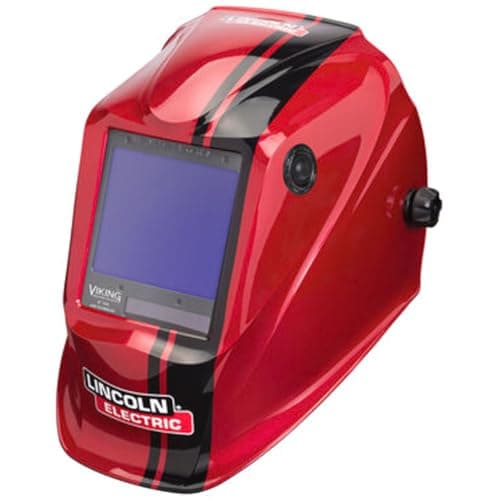 Lincoln Electric VIKING 335012.5 sq in at 1/1/1/1 with headgear you can wear all afternoon. The default answer. | Best overall for MIG | $556.55 · View on Amazon #ad How this is funded · Price as of November 13, 2026 |
| 2 | 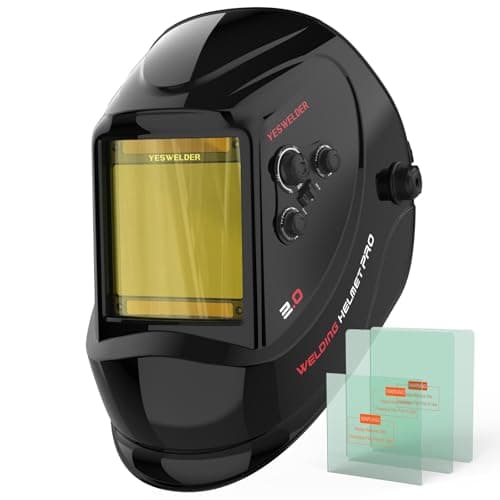 YESWELDER LYG-M800H large-view helmetA true-color panoramic lens and light-state grind mode at a fraction of the price. | Biggest window for the money | |
| 3 | 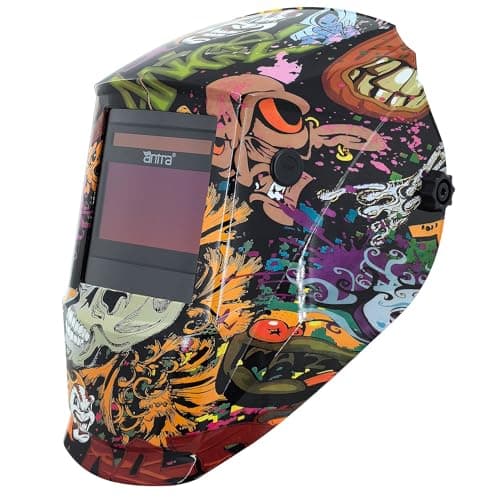 Antra DP3-6404A 2-amp trigger rating and a genuine ANSI Z87.1 marking at entry money. Enough helmet for MIG. | Best at the entry end | $69.95 · View on Amazon #ad How this is funded · Price as of November 13, 2026 |
| 4 | 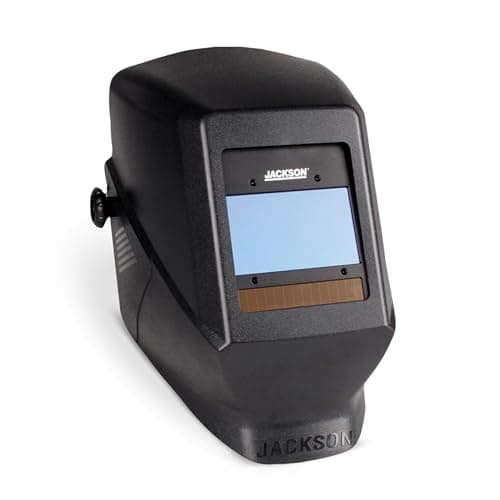 Jackson Safety Insight VariableA variable-shade lens with grind mode in a light shell, ANSI Z87.1 marked. | Lightest for long sessions | $203.99 · View on Amazon #ad How this is funded · Price as of November 13, 2026 |
What a MIG helmet actually needs
A four-sensor auto-darkening lens, a shade range that covers 10 to 13, a grind mode, and the largest window and best headgear you can afford. MIG produces a bright, continuous arc that any competent cartridge will detect, so trigger sensitivity — the specification that decides a TIG helmet — is not the deciding factor here. Comfort over long beads is.
This is the page that exists because the rest of the site kept needing it. The helmet hub has a page for TIG, organized around minimum trigger amperage, and one for plasma cutting, organized around the shade 8 low end. MIG — the process most people reading this site actually run — had neither, and it needs a different answer from both.
The reason is the arc. A MIG arc at 90 to 180 amps is bright, continuous and sustained. It is the easiest possible job for an auto-darkening cartridge, which means the specification that separates helmets on the TIG page — a published minimum trigger amperage — stops separating them here. Almost any four-sensor helmet triggers reliably on MIG.
That frees the budget, and it should go somewhere specific.
How we ranked them, in order
1. Viewing area. First, not fourth, and this is the reversal from the TIG page. MIG runs fast and often in long continuous beads, so you are tracking a joint moving under you rather than holding still on one spot. Seeing the seam ahead of the arc without moving your head is what a big window buys.
2. Headgear and balance. A MIG session is long and frequently interrupted, which means a lot of nodding the hood up and down. Headgear that holds its adjustment and distributes weight is the difference between stopping because the work is done and stopping because your neck is tired.
3. Grind mode, ideally on an external control. MIG work is punctuated by grinding — mill scale off before, tacks dressed during, high beads knocked back after. A grind mode holds the lens light so sparks do not trigger it, and an external button means you switch without lifting the hood and losing your position.
4. Four arc sensors. Cheap insurance for the awkward positions, and the one specification we would not go below even at the entry end.
Deliberately last: minimum TIG amperage. If MIG is genuinely all you do, an unpublished TIG rating costs you nothing. If TIG is in your future, buy for that now — the TIG page explains why that blank becomes the whole decision.
The published numbers, side by side
| Helmet | Viewing area | Sensors | Optical class | Grind mode | Shade range |
|---|---|---|---|---|---|
| Lincoln VIKING 3350 | 12.5 sq in | — | 1/1/1/1 | External button | 5–13 |
| YESWELDER LYG-M800H | Panoramic true-color | — | Not published | Light-state grind | Variable |
| Antra DP3-6404 | Not published | Not published | Not published | Yes | 3/5–13 |
| Jackson Safety Insight Variable | — | — | Not published | Yes | Variable |
What shade for MIG welding
OSHA's Table I-5 sets a minimum protective shade of 10 for gas metal arc welding at 60 to 160 amps, rising to 11 at 160 to 250 amps. Most home MIG sits in the first band.
Two practical notes. OSHA explicitly allows going one shade lighter than the table where the specified shade makes the weld zone too dark to see, provided you stay above the stated minimum — useful latitude when you are learning to read a puddle. And the shade 13 top end on every helmet here is more range than MIG will ever use; it is there for TIG and for higher-current work. The shade chart reproduces the full table by process and current.
The setting that fixes most MIG helmet complaints
Delay. It controls how long the lens stays dark after the arc stops, and MIG is the process where the default is most often wrong for the work. Too short and you get a flash of glare off hot metal at the end of every bead. Too long and tacking feels like working blind, because the lens is still dark when you want to see where the next tack goes.
Short delay for tacking and short beads, longer for continuous work. It is free, it takes ten seconds, and it is the control most owners never find.
What the helmet does not protect you from
MIG produces less visible smoke than flux-core, which makes it easy to assume fume is not a problem. It is still respirable metal particulate, and a welding helmet does nothing about it — the hood is not a respirator and was never designed as one.
A half-mask with P100 filters worn under the hood is the standard answer for a home shop, and welding respiratory protection covers how that compares to the alternatives. Gloves and jackets covers the rest of what the helmet leaves exposed.
Which one to buy
Lincoln VIKING 3350 if you want to buy one helmet and stop thinking about helmets — the window, the optics and the headgear are all at the top of this page, and the shade 5 low end means it still works if you move to plasma.
YESWELDER LYG-M800H if the window is what you care about and the budget is real. On MIG specifically, the unpublished specifications cost you nothing.
Antra DP3-6404 if this is your first helmet and the machine took the budget. A published 2-amp trigger rating and a Z87.1 marking is a real floor, and MIG is the process that asks least of a lens.
And if you have not bought the machine yet, MIG welders for beginners is the page to read first.
If you also run stick, the requirement changes in a way that is easy to get wrong — best welding helmets for stick welding covers why stick wants a darker shade and tougher cover lenses, and why it is the one process where a cheap lens costs you almost nothing.
1. Best overall for MIG
Lincoln Electric VIKING 3350
12.5 sq in at 1/1/1/1 with headgear you can wear all afternoon. The default answer.
Lincoln publishes 12.5 square inches, a 1/1/1/1 optical class, the 4C lens, X6 headgear, a variable shade 5 to 13 range and an external grind button. For MIG that is a near-ideal specification set, and it is close to the only helmet most welders ever need to buy.
The window is the part you feel on MIG specifically. MIG runs faster than TIG and often in longer continuous beads, so you are tracking a joint that moves under you rather than holding position on a puddle. A 12.5 square inch window means you can see where the seam runs ahead of the arc without lifting your head out of position.
The external grind button matters more on MIG than anywhere else on this site, because MIG work is relentlessly interrupted by grinding — tacking, dressing a tack, cleaning mill scale, knocking back a high bead. Every mode change that needs the hood lifted is a few seconds and a lost torch angle, and on a day of fit-up those add up.
The shade 5 low end is a bonus rather than a MIG requirement. It is what lets this one helmet also cover plasma cutting, where OSHA's minimum for light cutting is shade 8 — out of reach of a helmet that stops at 9.
What works
- 12.5 sq in of view at 1/1/1/1 clarity is the combination that makes a helmet stop being something you tolerate
- The external grind button means you switch modes without lifting the hood — the single feature you notice most every day
- Shade 5 low end covers plasma cutting, so one helmet spans all four levels
What does not
- Costs several times a budget auto-darkening helmet
- Physically large, and in a tight corner the shell finds things to bump into
2. Biggest window for the money
YESWELDER LYG-M800H large-view helmet
A true-color panoramic lens and light-state grind mode at a fraction of the price.
A large true-color panoramic lens, a variable shade range with a light-state grind mode, and solar power with a replaceable battery. On MIG, where the arc is bright and continuous and triggering is not in question, a big window is the single thing that most changes how the work feels — and this is the cheapest honest route to one.
True-color lenses are worth a sentence because the marketing around them is thick. The claim is not that you see more; it is that the color cast of the dark state is closer to neutral, so the puddle and the surrounding plate are easier to tell apart. On MIG, where you are judging the leading edge of a fast-moving puddle against mill scale, that is a real if modest help.
What you give up against the Lincoln is published detail. YESWELDER does not state an optical class or a minimum TIG amperage. For MIG neither blank is a problem — the arc is bright enough that any four-sensor lens will trigger, and the optical-class question matters most over long precision work. For TIG, both blanks are the reason this is not the pick on the TIG helmet page.
It also fits over prescription glasses better than most shells in its price class, which is covered properly on the glasses-wearers page.
What works
- Panoramic view at a fraction of a name-brand large-view helmet's price
- True-color lens makes the puddle and the weld pool edge much easier to read than a green lens
- Deep shell accommodates most prescription glasses without pressure on the temples
What does not
- Published optical-class figures are inconsistent between listings — treat unstated clarity as unverified
- Headgear adjustment is coarse compared with the X6 or Halo systems
Who this is wrong for: Low-amperage TIG. No published optical class and no stated TIG rating means nothing is claimed about either.
3. Best at the entry end
Antra DP3-6404
A 2-amp trigger rating and a genuine ANSI Z87.1 marking at entry money. Enough helmet for MIG.
A true-color lens with a 3/5 to 13 shade range and a shade lock, a DC TIG rating down to 2 amps, a quick grind button, an ANSI Z87.1 marking, and solar power with battery backup. On MIG this is genuinely adequate, and saying so is the point of including it.
The reason it works here and not on the TIG page is the arc. A 120 amp MIG arc is bright, continuous and sustained, which is the easy case for an auto-darkening lens. The hard case — a dim 15 amp TIG arc struck and stopped repeatedly — is the one that exposes a cartridge whose optical class nobody has stated, and it is not a case MIG puts you in.
A published trigger rating at this price is the specification worth noting. Helmets at the same money routinely state no figure at all, and those are the ones that surprise you in a corner or with a hand in the way.
The blanks are the honest limit. Antra publishes no viewing area and no optical class for this lens, so on a long seam you are buying on the absence of a claim — and that is exactly the fatigue the helmets above are solving.
What works
- A published 2 A TIG rating at the bottom of the market, where the usual answer is no rating at all
- Shade 5 low end covers plasma cutting, so one cheap helmet spans more than MIG
- Quick grind/weld button and shade lock — two things that are normally the first upgrade
- Cheap enough that starting here and upgrading later costs less than agonizing over it
What does not
- Antra does not publish a 1/1/1/1 optical class for it, and over a long session you can feel the difference
- Headgear is the weak point on budget helmets generally, and this one is no exception
- A small shell: next to a VIKING 3350 the view is noticeably tighter
Who this is wrong for: Long production beads, where an unpublished viewing area is a real unknown, and any precision TIG.
4. Lightest for long sessions
Jackson Safety Insight Variable
A variable-shade lens with grind mode in a light shell, ANSI Z87.1 marked.
A variable auto-darkening lens with a grind mode and an ANSI Z87.1 marking, in a shell light enough that neck fatigue stops being the thing that ends your session. That is a narrower claim than the helmets above make and it is the right claim for a particular reader.
Weight is the specification people shop by and the wrong one to shop by, with one exception: overhead work. Welding above your head puts the whole mass of the helmet on your neck at an angle it was not designed for, and there the difference between shells is not subtle. If a meaningful share of your MIG is overhead — under a vehicle, inside a frame — this is a real consideration rather than a spec-sheet one.
Grind mode on a lighter mid-priced helmet is the other reason it is here. It holds the lens in its light state so the cartridge does not trigger on sparks, which on a MIG fit-up day you will use more often than you weld.
Jackson does not publish an optical class or a TIG rating for this model, so the same caution applies as to the two helmets above it: for MIG the blanks do not matter, for TIG they do.
What works
- Light on the neck, which is the complaint that actually ends a long session
- Jackson's shells and headgear parts are easy to source separately
What does not
- Viewing area is small next to a VIKING 3350 or a panoramic helmet
- Not a low-amperage TIG helmet
Questions people actually ask
What shade helmet do I need for MIG welding?
OSHA's Table I-5 sets a minimum protective shade of 10 for gas metal arc welding at 60 to 160 amps, rising to 11 at 160 to 250 amps. Most home MIG sits in the first band.
OSHA allows going one shade lighter than the table where the specified shade makes the weld zone too dark to see, as long as you stay above the minimum.
Is a cheap helmet good enough for MIG welding?
For MIG, often yes. A MIG arc is bright, continuous and sustained, which is the easiest case for an auto-darkening lens, so the trigger-sensitivity specification that separates TIG helmets does not separate helmets here.
Insist on four arc sensors and an ANSI Z87.1 marking. What you give up at the entry end is window size and headgear comfort, not safety.
What is the difference between a MIG helmet and a TIG helmet?
The specification that decides each one. A TIG helmet is decided by the minimum amperage the lens is rated to trigger on, because a low-current TIG arc produces very little light.
A MIG helmet is decided by viewing area and headgear comfort, because the arc is bright enough that triggering is not in question and the real cost is fatigue over long beads.
Do I need a grind mode on a MIG helmet?
It is one of the most useful features for MIG specifically, because MIG work is constantly interrupted by grinding - scale off before, tacks dressed during, high beads knocked back after.
Grind mode holds the lens in its light state so sparks do not trigger it. An external button is better than an internal one, because you switch without lifting the hood and losing your torch position.
Will a MIG helmet work for flux-core welding?
Yes. Flux-core runs at similar currents and produces a comparably bright arc, and OSHA's Table I-5 groups flux-cored arc welding with gas metal arc welding at the same shade numbers.
Flux-core produces considerably more fume, so the respirator question is more pressing there than the helmet question.
Sources
- Lincoln Electric — VIKING 3350 published specifications: 12.5 sq in, 1/1/1/1, 4C lens, X6 headgear
- YESWELDER — LYG-M800H published specifications: true-color panoramic lens, grind mode
- Antra — DP3-6404 published specifications: 3/5–13 shade range with shade lock, 2 A DC TIG rating, ANSI Z87.1, solar plus battery
- Jackson Safety — Insight Variable auto-darkening helmet published specifications
- OSHA — 29 CFR 1910.133 Table I-5, filter lenses for protection against radiant energy
Read next
- The best welding helmets for beginners
The purchase that improves a beginner's welds fastest, and where spending more stops helping.
- The best auto-darkening welding helmets
Viewing area, optical clarity and low-amperage triggering, compared across four helmets.
- Welding helmet shade chart
OSHA's minimum protective shades by process and arc current, and how to use them in practice.
- Welding respiratory protection: fume mask, PAPR or extraction
Half-mask, powered air or extraction — the three welding respiratory protection systems compared.
- The best MIG welders for beginners
Gas-capable machines for a home shop, and the one specification that makes learning MIG easier.
- Helmets and PPE: the gear that decides what you can see
Every level needs a helmet. What the right helmet is changes as the level changes — and a bad one is the most common reason a beginner's welds look worse than their technique.
Back to Helmets & PPE, or start over at Find Your Level.
Ryder M.
Ryder M. is the hands-on owner behind Magoo Media Group. He writes Arc & Bead's buying guides and picks every machine on the site. What every recommendation is based on — and what it is not based on — is set out on How We Pick.