The best welding helmets for plasma cutting
Cutting needs a lighter shade than welding at the same current, which catches people out — and the arc you are detecting is partly buried in the cut.
Arc & Bead is an Amazon Associate. If you buy through a link on this page we may earn a commission, at no extra cost to you. We have not physically tested the machines on this page and we say so on How We Pick.
Quick picks
Tap any row to jump to the full write-up further down this page.
| # | Product | Best for | Price |
|---|---|---|---|
| 1 | 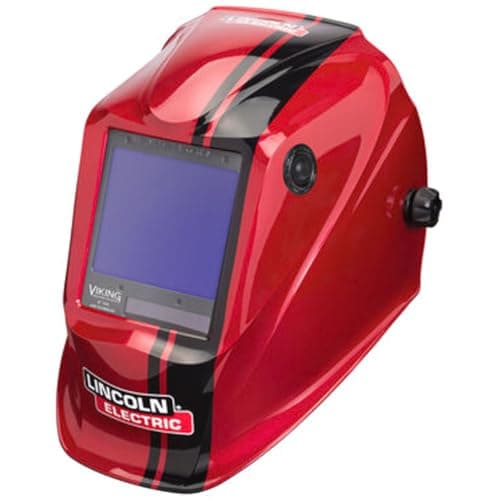 Lincoln Electric VIKING 3350Shade 5–13 covers cutting and welding, with 12.5 sq in and an external grind button. | Best overall for plasma | $556.55 · View on Amazon #ad How this is funded · Price as of November 13, 2026 |
| 2 | 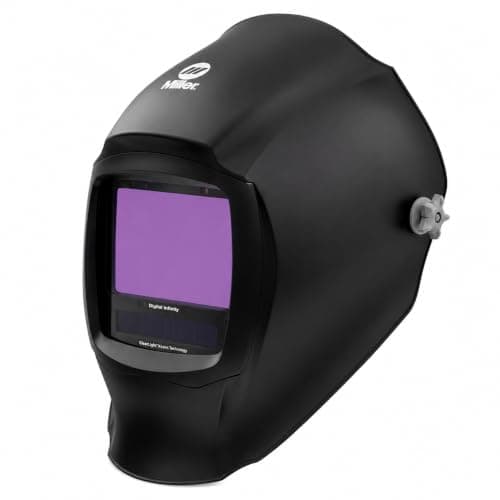 Miller Digital InfinityA dedicated cut mode at shade 5–8, plus X-Mode for when the kerf hides the arc. | Best for sustained cutting | |
| 3 | 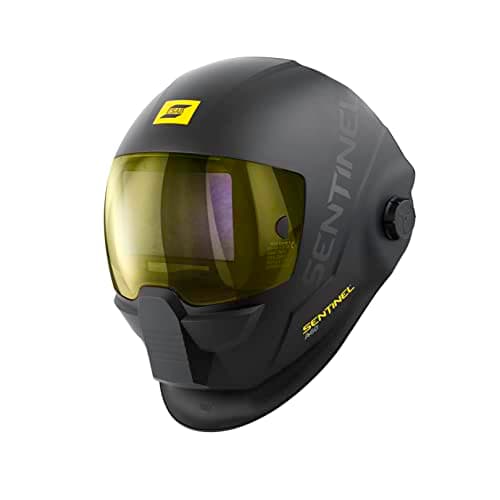 ESAB Sentinel A60Shade 3/5–13 in half-steps with shade lock, and a published 2 A DC TIG rating. | Best if it also has to do TIG | |
| 4 | 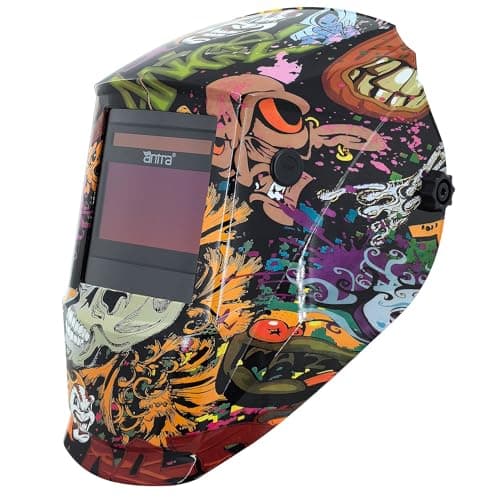 Antra DP3-6404A 3/5 to 13 range covers the plasma band, with ANSI Z87.1 and a shade lock. | Cheapest helmet that reaches shade 8 | $69.95 · View on Amazon #ad How this is funded · Price as of November 13, 2026 |
What a plasma helmet actually has to do
A helmet for plasma cutting needs a shade range that reaches shade 8 — OSHA's minimum protective shade for plasma arc cutting under 300 amps, which covers all home plasma work — and enough sensors to trigger on an arc that is partly confined inside the nozzle and the kerf. The Lincoln Electric VIKING 3350 covers it at shade 5 to 13 with 12.5 square inches of view; a weld-only helmet whose range stops at 9 does not.
| Lincoln VIKING 3350 | Miller Digital Infinity | ESAB Sentinel A60 | Antra DP3-6404 | |
|---|---|---|---|---|
| Shade range | Variable 5–13 | Weld 8–13, cut 5–8, grind 2.5 | 3/5–13 in 0.5 steps | 3/5–13 with shade lock |
| Reaches shade 8 | Yes, with margin | Yes, dedicated cut mode | Yes, in half steps | Yes |
| Viewing area | 12.5 sq in | 13.4 sq in | 13.02 sq in | Not published |
| Sensors | Not published | 4 | 4 | Not published |
| Holds dark through sensor blockage | No published mode | Yes — X-Mode | No published mode | Shade lock |
| Optical class | 1/1/1/1 | Not published as four digits | 1/1/1/1 | Not published |
| External grind button | Yes | Grind mode at 2.5 | Yes | Yes |
Why cutting needs a lighter shade than welding
This surprises people, and getting it wrong in the cautious direction is just as much a problem as getting it wrong in the dangerous one.
OSHA's protective shade table is built around the process, not simply the current. For light plasma arc cutting under 300 amps the minimum protective shade is 8. For MIG at 60 to 160 amps it is 10.
The reason is geometry. A plasma cutting arc is largely confined within the nozzle and then within the kerf it has just made, so a smaller share of its radiant energy reaches your face than a welding arc burning in the open at the same current.
The practical consequence runs both ways. A helmet fixed at shade 10 is legal but so dark that you cannot see the cut line, which produces wandering cuts and people lifting the hood to look — the actual hazard. A helmet that cannot reach 8 at all is simply the wrong tool. The shade chart has the full OSHA table by process and current.
Sensor blockage is the plasma-specific problem
Auto-darkening lenses work by detecting arc light with sensors on the front of the cartridge. If the sensors cannot see the arc, the lens does not darken, and the lens flickering back to light mid-cut is both unpleasant and genuinely hazardous.
Plasma cutting is where this happens most, for three reasons that stack.
The torch is held very close to the plate, often dragging on it, so the arc sits in a narrow gap. Much of the arc is inside the nozzle and then inside the kerf, which is the same geometry that allows the lighter shade. And cutting is frequently done at awkward angles over a workpiece, where your own hand and the torch body sit between the arc and the helmet.
Four sensors rather than two is the cheap part of the answer, and all four picks here have at least that. Miller's X-Mode is the engineered answer: it holds the lens dark through blockage rather than relying on continuous line of sight.
The one helmet on this site to avoid for plasma
The Lincoln Electric VIKING 1840 publishes a variable shade range of 7 to 13. That does technically cover shade 8, so it is usable — but it has no margin below the minimum, no external grind button on the base model, and a 7.0 square inch window that is tight for following a cut line. It is an excellent TIG helmet and a poor choice if cutting is a real part of your work.
What else changes when you are cutting rather than welding
More spatter, travelling further. Plasma is designed to blow molten metal out of the kerf, and a good deal of it comes back up at you. Shell coverage and a jacket matter more here than at the bench. Gloves and jackets covers the rest of it.
Substantially more fume. Cutting generates more airborne particulate than welding for the same reason. A half-mask respirator under the hood is working equipment here, not a precaution — and that makes shell depth a real purchasing criterion, because a shallow helmet will not close over a respirator. Respirators and fume safety goes through fit.
You are following a line, not watching a pool. This is why viewing area weighs more heavily on this page than it would on a TIG one. You need to see where the torch is going as well as where it is.
If you already own a welding helmet
Check one specification before buying anything: whether its shade range reaches 8.
If it does, and it has four sensors, it is probably adequate for occasional cutting. Set it to 8, make a test cut on scrap, and confirm the lens holds dark through the whole cut rather than flickering.
If it does not reach 8 — many weld-only helmets start at 9 or 10 — then no setting makes it right, and that is the case for a second helmet or a replacement.
Whether a plasma cutter is worth it puts the helmet into the full cost of getting into cutting, which is usually larger than the machine price suggests.
If the question is whether you need a hood for cutting at all rather than which one to buy, do you need a welding helmet for plasma cutting answers it directly, with the OSHA shade minimums and the three hazards a helmet does not cover.
1. Best overall for plasma
Lincoln Electric VIKING 3350
Shade 5–13 covers cutting and welding, with 12.5 sq in and an external grind button.
Lincoln publishes a variable shade 5 to 13, 12.5 square inches of viewing area, a 1/1/1/1 optical clarity rating, the 4C lens with X6 headgear, and a low-profile external grind button.
The shade range is the headline. Starting at 5 means the helmet reaches comfortably below shade 8 — OSHA's minimum for plasma arc cutting under 300 amps — with room to go lighter still for very low-current work, and reaches 13 at the other end for heavy stick. One helmet genuinely covers all four levels on this site.
Viewing area matters more for cutting than for welding, because you are following a line over a distance rather than watching a puddle in one place. Twelve and a half square inches is enough to track a cut without repositioning your head constantly.
The external grind button earns its place too: cutting and cleaning up the cut are the same job, and switching modes without lifting the hood is what makes that bearable.
What works
- 12.5 sq in of view at 1/1/1/1 clarity is the combination that makes a helmet stop being something you tolerate
- The external grind button means you switch modes without lifting the hood — the single feature you notice most every day
- Shade 5 low end covers plasma cutting, so one helmet spans all four levels
What does not
- Costs several times a budget auto-darkening helmet
- Physically large, and in a tight corner the shell finds things to bump into
2. Best for sustained cutting
Miller Digital Infinity
A dedicated cut mode at shade 5–8, plus X-Mode for when the kerf hides the arc.
Miller publishes 13.4 square inches of viewing area, the ClearLight lens, four arc sensors, a DC TIG rating down to 5 amps, X-Mode, and four modes with published shade ranges: weld 8 to 13, cut 5 to 8, grind 2.5, and X-Mode 8 to 13.
A published cut mode with its own 5 to 8 shade range is exactly the right shape for this job. You set cutting once and it stays set, rather than hunting a number inside a weld range every time you switch tasks.
X-Mode is the feature that matters most here and it is widely misunderstood. It holds the lens dark through sensor blockage — and plasma cutting is where sensor blockage happens most, because the torch is held close to the plate and much of the arc is confined inside the nozzle and the kerf rather than radiating at your face.
At 13.4 square inches it has the largest window here, which on a long traced cut is the difference you actually feel.
What works
- 13.4 sq in is the largest view in this group, and on long fabrication work that is the difference you actually feel
- X-Mode holds the lens dark through sensor blockage — the fix for out-of-position welding where your hand covers a sensor
What does not
- The most expensive helmet on this site by a wide margin
- Everything it adds over a VIKING 3350 is a refinement, not a capability
- Rated to 5 A rather than the 2 A of the Lincoln and ESAB helmets, which matters on very thin stainless
Who this is wrong for: Anyone whose cutting is occasional. This is the most expensive helmet on this site by a wide margin, and almost everything it adds over a VIKING 3350 is refinement rather than capability.
3. Best if it also has to do TIG
ESAB Sentinel A60
Shade 3/5–13 in half-steps with shade lock, and a published 2 A DC TIG rating.
ESAB publishes a 4.65 by 2.80 inch window at 13.02 square inches, a 3/5 to 13 shade range in 0.5-step increments with shade lock, a 1/1/1/1 optical class, a DC TIG rating down to 2 amps, four arc sensors, 0.08 millisecond switching, nine memory settings, an external grind button and adjustable Halo headgear.
The half-shade increments are genuinely useful for cutting. Shade 8 is the minimum for light plasma work and the comfortable setting is often just above it — being able to stop at 8.5 rather than jumping to 9 is a real improvement in how well you see the cut line.
Shade lock then keeps it there, which matters when the same helmet is also doing low-amperage TIG at a completely different setting. Nine memory settings exist for precisely this, and a shop that both cuts and TIGs is the one case where that is not over-specification.
A 2-amp DC TIG rating and a full 1/1/1/1 optical class alongside 13.02 square inches is a combination almost nothing else offers.
What works
- Published DC TIG rating down to 2 A — the one specification that decides whether a helmet is usable on thin stainless
- 13.02 sq in at a full 1/1/1/1 optical class, which is a combination almost nothing else offers
- Half-shade increments and shade lock let you settle on an exact shade rather than jumping between whole numbers
- External grind button, so switching modes does not mean lifting the hood and losing your torch position
What does not
- The most expensive helmet on this site apart from the Miller, and much of what it adds over a VIKING 3350 is refinement
- Nine memory settings is more configuration than a home shop running one or two processes will ever use
- Replaces the outgoing Sentinel A50, so older reviews and accessory guides may not match this shell
4. Cheapest helmet that reaches shade 8
Antra DP3-6404
A 3/5 to 13 range covers the plasma band, with ANSI Z87.1 and a shade lock.
Antra publishes a true-colour lens with a 3/5 to 13 shade range and a shade lock, a DC TIG rating down to 2 amps, tack, weld and cut memory presets, a quick grind button, ANSI Z87.1 certification, and solar power with battery backup.
The reason it belongs on this specific page is that the range runs continuously through shade 8, which means this inexpensive helmet does the one thing a plasma helmet has to do, while plenty of weld-only helmets costing more stop at 9 and never reach down to the cutting band at all.
The shade lock is also directly relevant. Plasma arcs flicker and a lens that keeps hunting between shades is tiring to follow a long cut with; locking the shade stops it.
Be realistic about the rest. Antra does not publish a viewing area or an optical class for this lens, and the headgear is the part owners most often replace. As a helmet bought specifically because you now also cut, it does the job.
What works
- A published 2 A TIG rating at the bottom of the market, where the usual answer is no rating at all
- Shade 5 low end covers plasma cutting, so one cheap helmet spans more than MIG
- Quick grind/weld button and shade lock — two things that are normally the first upgrade
- Cheap enough that starting here and upgrading later costs less than agonizing over it
What does not
- Antra does not publish a 1/1/1/1 optical class for it, and over a long session you can feel the difference
- Headgear is the weak point on budget helmets generally, and this one is no exception
- A small shell: next to a VIKING 3350 the view is noticeably tighter
Questions people actually ask
What shade helmet do I need for plasma cutting?
Shade 8 is OSHA's minimum protective shade for light plasma arc cutting under 300 amps, which covers all home plasma work. A helmet with a variable range starting at 5 gives you margin below that and covers welding at the other end.
A helmet whose range stops at 9 or 10 is the wrong tool — it is too dark to follow a cut line, which leads to lifting the hood, which is the real hazard.
Can I use my welding helmet for plasma cutting?
If its shade range reaches 8 and it has four sensors, usually yes. Set it to 8, make a test cut on scrap, and confirm the lens holds dark through the whole cut rather than flickering.
If it cannot reach 8, no setting makes it suitable, and that is the case for a replacement.
Why does plasma cutting use a lighter shade than welding?
Because OSHA's protective shade table is built around the process, not just the current. A plasma cutting arc is largely confined inside the nozzle and then inside the kerf, so less radiant energy reaches your face than from a welding arc burning in the open at the same amperage.
The minimum for light plasma cutting under 300 amps is shade 8, against shade 10 for MIG at 60 to 160 amps.
Why does my auto-darkening lens flicker when I plasma cut?
Sensor blockage. The torch is held close to the plate, much of the arc sits inside the nozzle and the kerf, and your hand or the torch body often sits between the arc and the helmet.
Four sensors rather than two helps. Miller's X-Mode is the engineered fix — it holds the lens dark through blockage instead of relying on continuous line of sight.
Do I need a respirator as well as a helmet for plasma cutting?
Yes. Plasma cutting generates substantially more airborne particulate than welding, because the process blows molten metal out of the kerf by design.
Cut outdoors or with real extraction, and wear a half-mask respirator rated for metal fume under the hood. That makes shell depth a purchasing criterion, because a shallow helmet will not close over a respirator.
Sources
- OSHA — Arc welding and cutting standard (29 CFR 1910.254), protective shade number table
- Lincoln Electric — VIKING 3350 and VIKING 1840 published specifications
- Miller Electric — Digital Infinity published modes and shade ranges
- ESAB — Sentinel A60 published specifications
- Antra — DP3-6404 published specifications: 3/5–13 shade range, 2 A DC TIG rating, ANSI Z87.1
Read next
- Welding helmet shade chart
OSHA's minimum protective shades by process and arc current, and how to use them in practice.
- The best welding helmets for the money
Where the price curve flattens, the four specifications you pay for, and what wins at each point.
- Is a plasma cutter worth it?
The honest break-even: what plasma does that nothing else does, and the costs beyond the machine.
- The best plasma cutters for home use
Home-shop machines, why the compressor is the real purchase, and how to read cut-capacity numbers.
- Welding respirators and fume safety
What is in welding fume, what a P100 filter does and does not remove, and when it is mandatory.
- Helmets and PPE: the gear that decides what you can see
Every level needs a helmet. What the right helmet is changes as the level changes — and a bad one is the most common reason a beginner's welds look worse than their technique.
Back to Helmets & PPE, or start over at Find Your Level.
Ryder M.
Ryder M. is the hands-on owner behind Magoo Media Group. He writes Arc & Bead's buying guides and picks every machine on the site. What every recommendation is based on — and what it is not based on — is set out on How We Pick.