The best welding jackets
Leather, hybrid or flame-resistant cotton is the only decision that matters here, and it is decided by where the spatter lands rather than by how much you want to spend.
Arc & Bead is an Amazon Associate. If you buy through a link on this page we may earn a commission, at no extra cost to you. We have not physically tested the machines on this page and we say so on How We Pick.
Quick picks
Tap any row to jump to the full write-up further down this page.
| # | Product | Best for | Price |
|---|---|---|---|
| 1 | 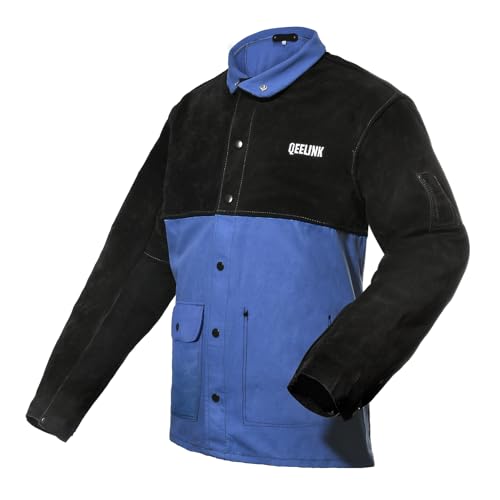 QeeLink split-leather sleeve hybrid welding jacketSplit cowhide on the sleeves, shoulders and chest with a 10 oz FR cotton body - leather where spatter lands, breathable fabric where it does not. | Best overall | |
| 2 | 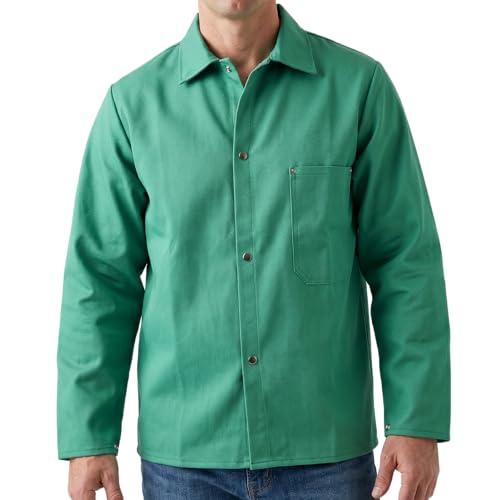 MAGID SparkGuard 1830 FR cotton welding jacketThe cheapest jacket here and the only one that publishes a test standard - 9 oz FR cotton sateen meeting ASTM D6413-99. | Budget pick | |
| 3 | 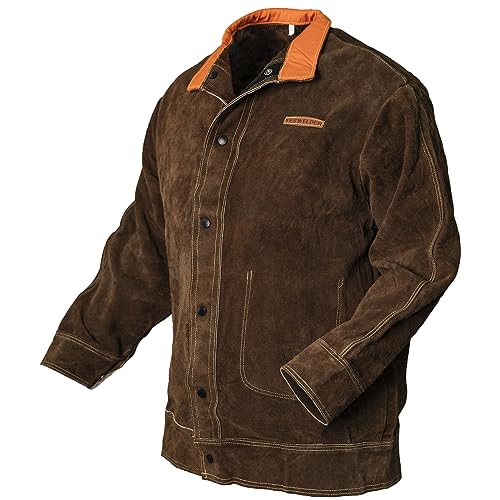 YESWELDER AP-7130 split cowhide welding jacketFull split cowhide with a stand-up collar and a cotton lining - the only construction here that genuinely shrugs off falling spatter. | Best for overhead and out-of-position work | |
| 4 | 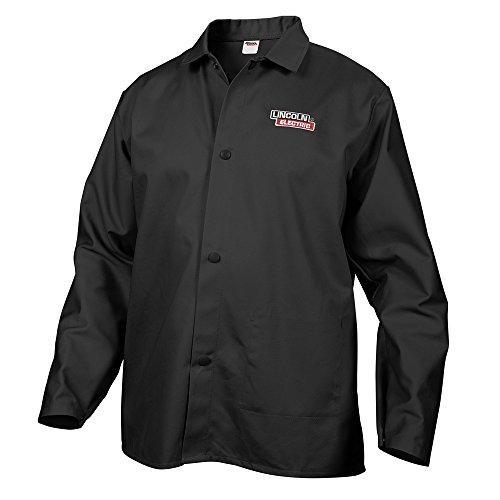 Lincoln Electric KH808 FR cloth welding jacket9 oz FR cotton with snap cuffs from Lincoln Electric, at a cloth-jacket price and with a part number a supply counter knows. | Best supported cloth jacket | |
| 5 | 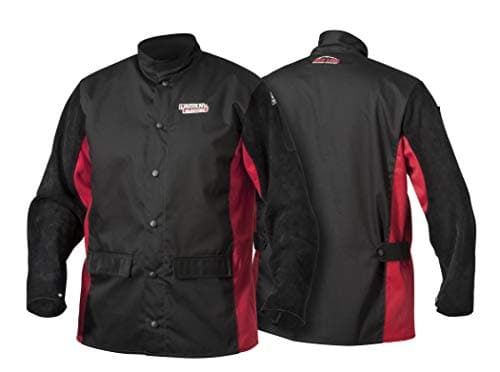 Lincoln Electric split-leather sleeved welding jacket (K2986)Split-leather sleeves on a flame-resistant cotton body with a snap front - the hybrid layout, with Lincoln's dealer network behind it. | Best hybrid from a legacy brand | $164.00 · View on Amazon #ad How this is funded · Price as of November 28, 2026 |
The short answer
Welding jackets come in three constructions and the choice is decided by where the spatter lands. FR cotton is cool, cheap and right for bench work. Hybrid jackets put leather on the sleeves, shoulders and chest and fabric everywhere else. Full leather is for overhead and out-of-position welding, where molten metal falls on you.
Our overall pick is the QeeLink split-leather hybrid: cowhide on the three surfaces that catch spatter, 10 oz FR cotton on the rest, Kevlar stitching and an adjustable neck, cuffs and waist. The budget pick is the MAGID SparkGuard 1830, the cheapest jacket here and the only one that publishes a test standard — 9 oz FR cotton sateen meeting ASTM D6413-99.
For overhead work, the YESWELDER AP-7130 in full split cowhide with a stand-up collar. If you want a legacy brand, Lincoln's KH808 in cloth or K2986 as the hybrid.
Prices in the table above are read from our live price feed when the page loads, each with its own "as of" date inside the buy button. All five jackets returned a buyable offer in the refresh run on 2026-11-27.
The criteria, in the order they decide the purchase
1. Where you weld, which sets the material. Bench work with the joint in front of you sends sparks away from your body, and FR cotton is genuinely enough. Overhead and vertical work drops molten metal onto your shoulders, and leather is the only honest answer. Everything else on this list is secondary to that one question.
2. A published test standard, where one exists. ASTM D6413 is the vertical flame test and the only named standard any of these five publishes. In this category, silence is the norm — four of the five jackets here describe themselves as flame resistant without naming a test. That is not necessarily a bad garment, but a published standard is the only checkable claim available.
3. Fabric weight. 9 oz and 10 oz are the figures published here. Heavier cloth is more protective and hotter; this is the same trade as leather-versus-cotton, in miniature.
4. Closures and adjustment. Cuffs, collar and waist are where spatter gets in. Snap cuffs are a minimum; adjustable cuffs, neck and waist are better. A lay-down collar leaves your neck exposed in a way a stand-up collar does not.
5. Stitching and hardware. Kevlar or other heat-resistant thread, and rivets at stress points. Cheap jackets fail at the seams and under the arms long before the material gives up.
6. Length. A 30 in jacket covers the hip, which is where spatter collects if you weld seated. Only one maker here publishes a length.
We did not rank on arc-rating or ATPV, because not one of these five publishes one. Those figures belong to electrical-arc-flash clothing, and treating them as interchangeable with welding spatter protection would be dishonest. Arc & Bead publishes no scores.
What each one publishes
| Jacket | Construction | Fabric weight | Published standard | Closures | Length |
|---|---|---|---|---|---|
| QeeLink hybrid (QLCJ) | Split cowhide sleeves, shoulders, chest; FR cotton body | 10 oz FR cotton | None published | Adjustable neck, cuffs and waist; Kevlar thread, rivets | Not published |
| YESWELDER AP-7130 | 100% split cowhide leather, cotton lined | Not published | None published | Stand-up collar, copper-plated buttons, Kevlar double stitch | Not published |
| Lincoln K2986 | Split-leather sleeves on FR cotton body | Not published | None published | Snap front with collar | Not published |
| Lincoln KH808 | FR cotton cloth | 9 oz FR cotton | None published | Snap sleeves, inside left pocket | Not published |
| MAGID SparkGuard 1830 | 100% cotton sateen, FR treated | 9 oz | Meets ASTM D6413-99; FR through 50+ washes | Leather-reinforced metal snaps at placket and wrists | 30 in |
What you wear under the jacket matters as much as the jacket.
Synthetics melt. A polyester t-shirt under a leather jacket is a worse burn than no jacket at all if spatter gets past the collar, because molten fabric sticks to skin. Cotton, wool and leather char and stop; nylon, polyester and fleece do not.
The same rule decides trousers, and trousers are where most people are careless. Natural fibres, no cuffs, and boots over the trouser leg rather than under it — a cuff over a boot is a funnel for molten metal. The best welding safety gear covers the rest of the kit in the order it matters.
Leather, hybrid or cloth - the decision in full
Full leather. Split cowhide stops spatter, resists grinding sparks and lasts years. It is also hot, stiff and heavy, and it costs you fine motor control at the cuff. Buy it if you weld overhead, do heavy stick work, or grind as much as you weld.
Hybrid. Leather on the sleeves, shoulders and chest; FR fabric on the back and sides. This covers most of what a home welder does at a fraction of the heat load, and it is the construction we would recommend to someone buying one jacket. Both of our top two constructions here are hybrids for that reason.
FR cotton. Light, cool, cheap, and it resists ignition rather than deflecting molten metal. Right for bench MIG and TIG, wrong for falling spatter. The honest way to think about it: FR cotton stops your clothes catching fire; leather stops the spatter reaching your clothes.
One process note. Flux-core throws noticeably more spatter than gas MIG, and flux-core spatter is a diagnosable problem rather than a fact of life — but while you are learning it, dress for it. TIG throws almost none, which is why TIG welders get away with cloth and thin gloves.
Fit, and the four gaps
The cuff. Should close. An open sleeve catches spatter and holds it against your wrist. Snap or adjustable cuffs on every jacket here except the hybrid-leather Lincoln.
The collar. A stand-up collar covers the neck; a lay-down collar does not. For overhead work this is the single most important fit detail on the garment.
The waist. A jacket that rides up while your arms are raised exposes your midriff at exactly the wrong moment. An adjustable waist fixes it; length helps too.
The glove overlap. Sleeve over glove cuff, or glove cuff over sleeve — pick one deliberately. For overhead, glove over sleeve. For bench work, either. Welding gloves and jackets goes further on sizing and overlap.
Which one is yours?
One jacket for everything, bought once: QeeLink hybrid.
Bench welding, hot garage, tight budget: MAGID SparkGuard 1830 — and it is the only one here with a published test standard.
Overhead, under a vehicle, or heavy stick: YESWELDER AP-7130 full cowhide.
You buy everything from one brand: Lincoln KH808 for cloth, K2986 for the hybrid.
You do not own a helmet yet: buy that first. The jacket is the fourth purchase, after the helmet, the gloves and a respirator — the best welding helmets for beginners and the best welding respirators under $50 are those two decisions.
You are setting up the bench as well as the body: the best welding tables is the other half of the same shopping trip.
How we picked these
Ranked on construction and published standards. Material decides protection, and a named test standard is the only checkable claim in this category. That is why the cheapest jacket here is the budget pick rather than an also-ran: it publishes more about itself than jackets costing five times as much.
Four of the five publish no test standard. We say so in the table rather than dressing a description up as a rating, and we did not quote arc ratings or ATPV figures, because none of these garments publishes one and those numbers belong to a different hazard.
Availability verified before featuring. All five returned a buyable offer with a live price in the refresh run on 2026-11-27. Four were resolved into our registry for this page by live lookups and title-verified against brand and model.
No hands-on, no scores. We have worn none of these jackets and have burn-tested nothing. More on the method on how we pick.
1. Best overall
QeeLink split-leather sleeve hybrid welding jacket
Split cowhide on the sleeves, shoulders and chest with a 10 oz FR cotton body - leather where spatter lands, breathable fabric where it does not.
QeeLink publishes the QLCJ as a hybrid jacket with split cowhide leather on the sleeves, shoulders and chest and 10 oz flame-resistant cotton elsewhere, sewn with heat-resistant US Kevlar thread, heavy-duty corrosion-resistant rivets at high-stress areas, and an adjustable neck, cuffs and waist.
The hybrid layout is the right answer for most home welding, and the reason is heat endurance rather than protection. A full-leather jacket protects more and comes off after forty minutes in a warm garage; a jacket that gets taken off protects nothing. Putting leather on the three surfaces that actually catch spatter — forearms, shoulders, chest — and breathable FR cotton on the back and sides is the compromise that gets worn.
Three adjustment points is the detail that separates it from cheaper jackets. The neck, the cuffs and the waist are exactly the three gaps a loose jacket leaves open, and a cuff that closes is the difference between spatter bouncing off your sleeve and spatter finding your forearm. Kevlar thread and riveted stress points address the other common failure: cheap jackets come apart at the seams and under the arms long before the material fails.
Against it: QeeLink publishes no test standard. "Flame resistant" here is a description of the fabric rather than a named test, which is the category norm and still worth knowing. A cotton back is still a cotton back for overhead work. There is no published garment length. And the leather panels make sizing up less comfortable than on a plain cloth jacket, so order to your actual size.
What works
- The hybrid layout is the right compromise: leather on the three surfaces that catch spatter, breathable FR cotton on the rest
- Adjustable neck, cuffs AND waist — the three gaps a loose jacket leaves open
- Kevlar thread and riveted stress points, which is where cheap jackets fail first
- Costs a third of a full-leather jacket and covers most of the same work
What does not
- QeeLink publishes no test standard, so the FR claim is a description rather than a measured rating
- A cotton back is still a cotton back for overhead work
- No published garment length
- Sizing runs per listing; the leather panels make a size-up less comfortable than on a cloth jacket
2. Budget pick
MAGID SparkGuard 1830 FR cotton welding jacket
The cheapest jacket here and the only one that publishes a test standard - 9 oz FR cotton sateen meeting ASTM D6413-99.
MAGID publishes the SparkGuard 1830 as a 9 oz 100% cotton sateen jacket, flame-resistant treated, meeting ASTM D6413-99, 30 in long, with leather-reinforced non-reflective metal snaps at the placket and wrists, a lay-down collar, a riveted inside left breast pocket, and FR performance published through 50+ industrial washes.
It is the budget pick in the strict sense this site uses, and it is also the only jacket on this page with a named test behind it. ASTM D6413 is the vertical flame test: a measured procedure rather than an adjective. In a category where almost every listing says "flame resistant" and stops there, a published standard is the single most useful thing a maker can tell you.
The published wash durability matters more than it looks. FR cotton is cotton that has been treated, and a treatment that washes out leaves you wearing an ordinary cotton jacket that you believe is protective. Fifty-plus industrial washes is a real claim about the treatment surviving use.
A 30 in length is the other quiet advantage: it covers the hip, which is where spatter collects when you weld sitting down — and a lot of home welding happens sitting down.
Against it: cotton resists ignition, it does not stop heavy spatter or grinding sparks the way cowhide does. There is no leather reinforcement at the shoulders or forearms, which are the high-impact areas. The light green is conspicuous. And this is not the jacket for overhead work or heavy stick welding — for that, buy leather.
What works
- Publishes an actual test standard — ASTM D6413 — which almost nothing else at this price does
- 9 oz cotton sateen is far cooler than leather, and heat fatigue is the reason jackets come off
- 30 in length covers the hip, which is where spatter lands when you weld seated
- FR treatment published to survive 50+ washes, so it does not quietly stop being FR
What does not
- Cotton, not leather: it resists ignition but it will not stop heavy spatter or grinding sparks the way cowhide does
- No leather reinforcement at the shoulders or forearms, which are the high-impact areas
- Light green is conspicuous if you dislike being seen in PPE
- Not the jacket for overhead work or heavy stick welding
Who this is wrong for: Overhead welding, heavy stick work and grinding. FR cotton is the right choice for bench MIG and the wrong one when molten metal is falling on you.
3. Best for overhead and out-of-position work
YESWELDER AP-7130 split cowhide welding jacket
Full split cowhide with a stand-up collar and a cotton lining - the only construction here that genuinely shrugs off falling spatter.
YESWELDER publishes the AP-7130 as a 100% heavy-duty split cowhide leather jacket with a stand-up collar, a soft cotton lining, double stitching in US Kevlar thread, copper-plated buttons and a tool pocket.
When sparks fall on you rather than away from you, leather is not a preference. Overhead welds, vertical welds and anything done lying under a vehicle put molten metal onto your shoulders and chest at an angle that cloth cannot handle, and full cowhide is the answer the trade settled on a century ago.
The stand-up collar is the detail that earns the pick. Your neck is the gap a lay-down collar leaves, and it is directly in the firing line overhead. The cotton lining is the other half: unlined leather is unbearable after an hour, which means it does not get worn, which means it does not protect. Copper-plated buttons and Kevlar double stitching rather than plastic fasteners is the difference between three seasons and one.
Against it, honestly: it is hot. Full leather in a closed garage in summer is a genuine endurance test and the main reason hybrid jackets exist. YESWELDER publishes no test standard and no garment weight. It is stiffer than any cloth jacket here, which costs arm mobility on fine work. And brand support is mail-and-wait rather than a counter you can walk into.
What works
- Full split cowhide, which is the only construction that genuinely shrugs off heavy spatter and grinding sparks
- Stand-up collar is the detail that matters overhead — the neck is the gap a lay-down collar leaves
- Cotton lining makes all-day leather bearable; unlined leather does not get worn twice
- Kevlar double stitching and copper-plated buttons rather than plastic fasteners
What does not
- Hot. Full leather in a closed garage in summer is a real endurance test
- YESWELDER publishes no test standard and no garment weight
- Heavier and stiffer than any cloth jacket here, which costs you arm mobility on fine work
- Mail-and-wait brand support rather than a counter you can walk into
4. Best supported cloth jacket
Lincoln Electric KH808 FR cloth welding jacket
9 oz FR cotton with snap cuffs from Lincoln Electric, at a cloth-jacket price and with a part number a supply counter knows.
Lincoln publishes the KH808 as a 9 oz flame-resistant cotton jacket for protecting the arms and torso from welding spatter and heat, with snap sleeves for form-fitting cuffs and an inside left pocket. This listing is the X-Large.
The argument for it over the MAGID is brand continuity rather than specification. If your machine, your consumables and your gloves already come from Lincoln, this is the jacket a welding supply counter will have on the shelf under a part number, and replacements will be the same garment in three years. That matters more in PPE than it sounds: sizing and fit are the whole experience, and re-ordering a known fit beats re-learning one.
Snap cuffs are the functional detail worth naming. An open sleeve is a funnel — and spatter inside a cuff is the burn everybody remembers. 9 oz FR cotton breathes, so it stays on in a hot garage, which is the whole point of a cloth jacket.
Against it: Lincoln publishes no test standard in this listing, no ASTM or NFPA reference, which is a real gap next to the MAGID at a lower price. Cloth only, so no leather at the shoulders or forearms. There is no published length. And sizing is per listing, so check the size before ordering.
What works
- Lincoln Electric support and a part number a welding supply counter recognizes, at a cloth-jacket price
- Snap cuffs close the wrist gap, which is where spatter finds its way into a sleeve
- 9 oz FR cotton breathes, so it gets worn in a hot garage instead of hung up
- Black does not show the inevitable burn marks the way light fabric does
What does not
- Lincoln publishes no test standard for this jacket — no ASTM or NFPA reference in the listing
- Cloth only: no leather at the shoulders or forearms
- Sizing is per listing and this one is X-Large, so check the size before ordering
- No published length figure
5. Best hybrid from a legacy brand
Lincoln Electric split-leather sleeved welding jacket (K2986)
Split-leather sleeves on a flame-resistant cotton body with a snap front - the hybrid layout, with Lincoln's dealer network behind it.
Lincoln publishes the K2986 as a welding jacket with split-leather sleeves on a flame-resistant cotton body, with a snap front and collar.
This is the same idea as the QeeLink from a brand your welding supplier stocks, and it is the jacket to buy if you would rather pay more and deal with one company for the machine, the consumables and the gear. Leather sleeves on an FR cotton body is the layout that covers the most work for the least discomfort, and it is the construction we would point most home welders at regardless of brand.
It is also the jacket we already recommend on the safety-gear roundup, where it stands in for the whole category. Seeing it here against four alternatives is the point of this page: it is a good jacket at roughly three times the price of a hybrid that publishes more about itself.
Against it: Lincoln publishes very little about it — two specification lines, no test standard, no published length, no leather weight. It is the most expensive jacket on this page by a wide margin. And a snap front is less protective than a full leather closure for heavy out-of-position work, which is the job its leather sleeves otherwise suit.
What works
- Leather sleeves stop spatter that a cotton shirt merely delays — the difference matters most overhead
- High collar protects the neck, which is where a burn ruins a whole day
- The cotton body is cooler and less restrictive than an all-leather jacket without giving up arm protection
What does not
- Still hot to wear. In a summer garage you will weld in shorter bursts
- The flame-resistant cotton body is not leather — for heavy out-of-position stick work the all-leather jacket is the right one
Who this is wrong for: A tight budget. Nothing it publishes justifies three times the price of the QeeLink hybrid; what you are buying is the brand and the dealer behind it.
Questions people actually ask
What is the best welding jacket?
Of the jackets in our registry, the QeeLink split-leather hybrid. QeeLink publishes split cowhide on the sleeves, shoulders and chest with a 10 oz flame-resistant cotton body, US Kevlar stitching, riveted stress points and an adjustable neck, cuffs and waist.
The budget pick is the MAGID SparkGuard 1830, the only jacket on the page that publishes a test standard - 9 oz FR cotton sateen meeting ASTM D6413-99.
Do I need a leather welding jacket or is cotton enough?
It depends on where the spatter goes. For bench welding with the joint in front of you, flame-resistant cotton is genuinely enough and far more comfortable.
For overhead, vertical or under-vehicle work, molten metal falls onto your shoulders and chest, and only leather reliably deflects it. A hybrid jacket - leather sleeves and shoulders on a cotton body - covers both cases for most home welders.
What standard should a welding jacket meet?
ASTM D6413 is the vertical flame test and the one standard any jacket on this page names - the MAGID SparkGuard 1830 publishes compliance with D6413-99.
Most welding jackets publish no standard at all. That does not make them unsafe, but a named test is the only claim you can actually check, so it is worth weighing.
Can you wear a regular jacket for welding?
Not a synthetic one. Polyester, nylon and fleece melt and stick to skin, which turns a minor spatter burn into a serious one.
Heavy cotton, wool and leather char and stop. If you have no welding jacket yet, a thick cotton long-sleeved shirt is an acceptable stopgap for bench work and is not acceptable for overhead welding.
How should a welding jacket fit?
Loose enough to move and closed at the gaps. The cuffs should snap or adjust shut, the collar should cover the neck for overhead work, and the jacket should be long enough not to ride up above your waist when your arms are raised.
Sizing is per listing on all five jackets here, so check the specific size before ordering rather than assuming your usual one.
Does flame-resistant cotton stop being flame resistant after washing?
It can, which is why the published wash durability matters. FR cotton is cotton with a treatment applied, and a treatment that washes out leaves an ordinary cotton jacket you believe is protective.
MAGID publishes FR performance through 50+ industrial washes for the SparkGuard 1830. Follow the maker's laundering instructions, and never use fabric softener or bleach on FR clothing.
Do welding jackets protect against UV?
Yes, and that is an underrated reason to wear one. An arc emits ultraviolet that burns exposed skin like strong sunlight in minutes, and any of these jackets covers the arms and torso completely.
That is also why a short-sleeved shirt is a bad idea even in summer, and why bystanders need the arc screened from them.
Sources
- QeeLink - split leather sleeve welding jacket (QLCJ) published specifications: split cowhide leather on arms, sleeves, shoulders and chest; 10 oz FR cotton in other areas; sewn with heat-resistant US Kevlar thread; heavy-duty corrosion-resistant rivets at high-stress areas; adjustable neck, cuffs and waist; published uses include welding, blacksmithing, steel mills, shipyards, automotive and torch work (resolved by live Creators searchItems + getItems lookup 2026-11-27, ASIN B08P4DZX6L)
- MAGID - SparkGuard 1830 published specifications: 9 oz 100% cotton sateen, flame-resistant treated, meets ASTM D6413-99, FR treatment published through 50+ industrial washes, 30 in length, leather-reinforced non-reflective metal snap closures at placket and wrists, set-in snap-closure sleeves, lay-down collar, riveted inside left breast pocket, PVC-free (resolved 2026-11-27, ASIN B001RX4MA8)
- YESWELDER - AP-7130 leather welding jacket published specifications: 100% heavy-duty split cowhide leather, stand-up collar, soft cotton lining, double stitching with US Kevlar thread, copper-plated buttons, tool pocket (resolved 2026-11-27, ASIN B0989MVSLD)
- Lincoln Electric - KH808 flame-resistant cloth welding jacket published specifications: jacket for protecting the arms and torso from welding spatter and heat, cotton for breathability, 9 ounce flame-resistant material, inside left pocket, snap sleeves for form-fitting cuffs (resolved 2026-11-27, ASIN B00LB7AQNM)
- Lincoln Electric - K2986 welding jacket published specifications: split-leather sleeves on a flame-resistant cotton body, snap front with collar (registry entry, ASIN B00547HDS6)
- ASTM D6413 - Standard Test Method for Flame Resistance of Textiles (Vertical Test), the standard the MAGID SparkGuard jacket publishes compliance with and the only named test referenced by any jacket on this page
- Arc & Bead live price layer (lib/prices.ts) - a buyable offer and live price for all five jackets confirmed against the price feed generated 2026-11-27; each buy button renders the live price with its own 'as of' date
Read next
- The best welding safety gear
The four protective items every home welder needs - helmet, gloves, jacket and respirator - ranked on published ratings, with the cheapest honest option named in each category.
- Welding gloves and jackets
Why MIG gloves and TIG gloves are opposite tools, and when a leather jacket stops being optional.
- The best welding gloves for beginners
Five welding gloves ranked on heat protection against feel, scoped to a first pair, with the published heat ratings separated from the marketing ones.
- The best welding respirators under $50
Three half-mask respirators under $50 plus the P100 filter to pair with them, ranked on face seal, harness and whether filters ship in the box.
- The best welding tables
Four steel welding tables ranked on published load capacity, fixture-hole standard and footprint, with the cheapest table in our registry named as the budget pick.
- The best welding helmets for beginners
The purchase that improves a beginner's welds fastest, and where spending more stops helping.
Back to Helmets & PPE, or start over at Find Your Level.
Ryder M.
Ryder M. is the hands-on owner behind Magoo Media Group. He writes Arc & Bead's buying guides and picks every machine on the site. What every recommendation is based on — and what it is not based on — is set out on How We Pick.