The best welders for metal art
Sculpture is not small fabrication. It is hundreds of short welds on mixed, thin, awkwardly held material — and that changes what to buy.
Arc & Bead is an Amazon Associate. If you buy through a link on this page we may earn a commission, at no extra cost to you. We have not physically tested the machines on this page and we say so on How We Pick.
Quick picks
Tap any row to jump to the full write-up further down this page.
| # | Product | Best for | Price |
|---|---|---|---|
| 1 | 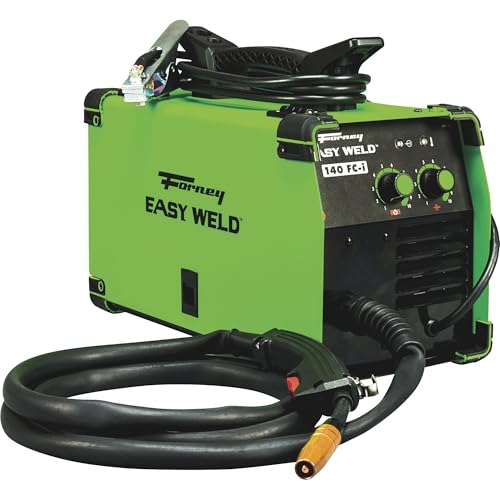 Forney Easy Weld 261 140 FC-iInfinite control, 19 lb, no bottle, and a 30% duty cycle at 90 A — the machine you actually reach for. | Best overall for sculpture | $337.99 · View on Amazon #ad How this is funded · Price as of November 13, 2026 |
| 2 | 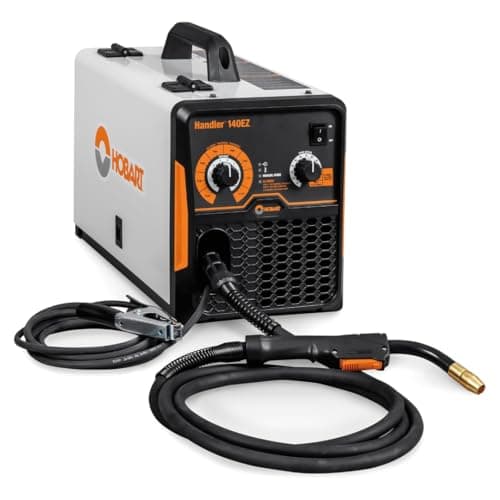 Hobart Handler 140EZA 30 A bottom end with gas, so thin sheet and found material stop blowing through. | Best for clean work on thin stock | $720.00 · View on Amazon #ad How this is funded · Price as of November 13, 2026 |
| 3 | 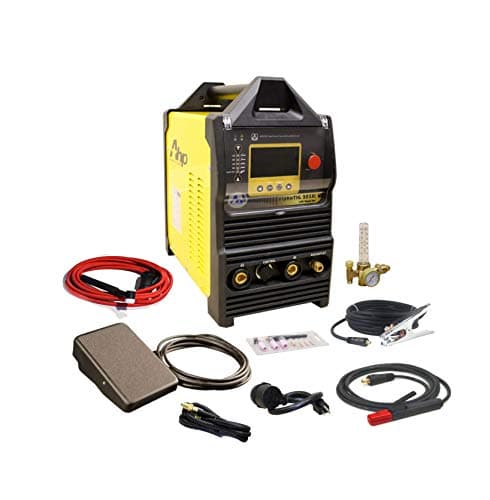 AHP AlphaTIG 200XAC/DC TIG from 10 A, so copper-colored steel beads, thin stainless and aluminum are all available. | Best for visible welds and mixed metals | $689.00 · View on Amazon #ad How this is funded · Price as of November 13, 2026 |
| 4 | 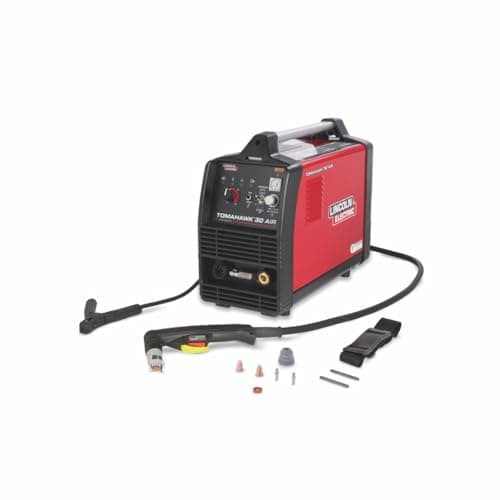 Lincoln Electric Tomahawk 30 AIRAn internal compressor and a 5/16 in recommended cut — freehand shapes without an air setup. | The tool that shapes the material | $1,359.00 · View on Amazon #ad How this is funded · Price as of November 13, 2026 |
What welder is best for metal art?
A light 120 V machine with infinite voltage and wire-speed control, able to run at low amperage. Metal art is mostly short tack welds on thin, mixed, awkwardly supported material, so the specifications that matter are low-end control and portability — not maximum output or duty cycle. Gas MIG is worth it if the weld is part of the finish; flux-core is better if you work outdoors or move around.
Sculpture reads like small-scale fabrication and behaves nothing like it. Four differences drive every recommendation on this page.
It is mostly tacking. A fabricated bracket has three welds. A sculpture has two hundred, most of them an inch long or less, with minutes of positioning in between. Duty cycle — the thing roundups rank machines by — barely applies, because you are never welding long enough to reach it.
The material is thin and inconsistent. Found steel, offcuts, salvaged sheet, rod and bar in the same piece, often with no idea of the gauge until you weld it. A wide output range, and particularly a low minimum, matters more than a high maximum.
Nothing is held properly. There is no jig for a sculpture. Pieces are balanced, clamped at odd angles, and tacked in mid-air. That rewards a process you can run one-handed, which is wire — and it is the strongest argument against TIG for assembly work.
The weld is often visible. In fabrication the bead gets ground flat or hidden. In art it is frequently part of the piece, which changes the calculus on gas versus gasless and makes TIG genuinely attractive for the pieces where it is affordable in time.
How we ranked them
1. Low-end output and control. Can it weld 18 gauge without blowing through, and can you dial it rather than choosing the nearest tap? This is first because it is the constraint you hit on your first piece.
2. Weight and setup. Art gets made in whatever space is available. A 19-pound machine with no bottle is in a different category of usable from a 50-pound machine with a cylinder.
3. Whether the weld needs cleaning. Flux-core leaves slag on every bead. On a sculpture you often cannot reach a finished joint to chip it, which is a real argument for gas.
4. Output ceiling, last. 140 amps covers essentially all sculptural work. A 200 amp machine is not better for this; it is just heavier.
The published numbers, side by side
| Machine | Process | Output range | Control | Shielding | Weight |
|---|---|---|---|---|---|
| Forney Easy Weld 140 FC-i | Flux-core | Up to 140 A | Infinite voltage and wire speed | Self-shielded | 19 lb |
| Hobart Handler 140EZ | Gas MIG, flux-core | 30–140 A | Tapped voltage | Gas or self-shielded | — |
| AHP AlphaTIG 200X | AC/DC TIG, stick | 10–200 A TIG | Foot pedal, AC balance 30–70% | Argon | 50 lb |
| Lincoln Tomahawk 30 AIR | Plasma cutting | 15–30 A | — | Internal compressor | 40 lb |
Two things to spend on before a better welder
Clamps, and more of them than you think. The limiting factor on sculptural assembly is almost never the machine — it is holding two awkward shapes in the right relationship with both of your hands already occupied. Spring clamps, locking pliers, welding magnets and a few right-angle clamps change what you can build more than any upgrade to the welder will.
An angle grinder. Cutting, cleaning, dressing a bead and shaping an edge is most of the hours on a piece. It is the tool the starter kit checklist puts first for good reason, and it does the straight cuts a plasma cutter is overkill for.
Working with found and mixed material
Two cautions that are specific to art and do not come up in fabrication.
Galvanised steel. A great deal of salvaged material — fence wire, brackets, roofing, conduit — is zinc coated. Welding it releases zinc oxide fume, which causes a genuinely unpleasant short illness known as metal fume fever. Grind the coating back well beyond the weld area, work in real cross-ventilation, and wear a respirator. Welding respiratory protection covers what a particulate filter does and does not handle.
Unknown alloys. Found material is not always mild steel. Cast iron, galvanised sheet, stainless, aluminum and coated or plated stock all behave differently and some are not weldable with a wire machine at all. A spark test on a grinder tells you more than guessing — and if a piece will not weld sensibly, that is information about the material rather than a fault in the machine.
Which one to buy
Forney Easy Weld 140 FC-i for most people making sculpture. Infinite control, 19 pounds, no bottle, and a published 1/4-inch capacity covers essentially everything an art piece needs.
Hobart Handler 140EZ if your work is thin and the welds are visible. The 25 amp floor and the absence of slag are worth the bottle.
AHP AlphaTIG 200X if the bead is the art, or if you want aluminum and stainless in your vocabulary. Accept that it is slower and that the work has to be clamped.
Lincoln Tomahawk 30 AIR if your pieces are cut shapes rather than assembled stock, and your shop has a 240-volt circuit. Add it to a welder rather than instead of one.
Not sure which rung you are on? Find your level routes by what you want to build, and welding projects by skill level sequences the practice.
Two neighbouring crafts have their own pages. Welders for knife making covers billet tacks, bolsters and the jigs around them, and welders for small projects covers short welds on small parts generally.
1. Best overall for sculpture
Forney Easy Weld 261 140 FC-i
Infinite control, 19 lb, no bottle, and a 30% duty cycle at 90 A — the machine you actually reach for.
Forney publishes flux-core only, 120 V on a 20 amp circuit minimum, 140 amps maximum, a 30% duty cycle at 90 amps, 0.030 and 0.035-inch wire, up to 1/4-inch capacity, and 19 pounds — with infinite voltage and wire-speed control rather than fixed taps.
Infinite control is the specification that makes this the sculpture pick. Art work means constantly changing material — 16 gauge sheet, then 1/8-inch flat bar, then 3/8-inch round rod — and a four-tap machine makes you choose the nearest setting every time. A dial lets you follow the material.
No gas bottle is the second reason, and it is a bigger deal for art than for fabrication. Sculpture happens where there is room: a driveway, a yard, a shared workshop corner. A machine that weighs 19 pounds and needs nothing but a wall socket goes wherever the piece is, and does not need somewhere secure to store a cylinder.
The 30% duty cycle at 90 amps is better matched to art than it looks. Sculpture is hundreds of short welds with long gaps for positioning and clamping, so you will rarely reach the limit at all.
What works
- 30% duty cycle at 90 A is unusually generous for a 120 V machine in this class
- Infinite voltage and wire-speed control rather than four fixed taps, so you can actually dial a setting in
- 19 lb — genuinely carryable to the job instead of the job coming to it
- No gas bottle, no regulator, no second purchase before your first weld
What does not
- Flux-core only. It will never run gas, so it cannot become your Level 2 machine
- Every weld leaves slag that has to be chipped and wire-brushed off
- Needs a 20 A circuit — a 15 A garage lighting circuit will trip at higher settings
2. Best for clean work on thin stock
Hobart Handler 140EZ
A 30 A bottom end with gas, so thin sheet and found material stop blowing through.
Hobart publishes gas MIG and flux-core capability, 115 V on a 20 amp dedicated circuit, 30 to 140 amps, and a 30% duty cycle at 90 amps.
The 30 amp minimum is the number that matters for art. Thin decorative stock — 18 to 20 gauge sheet, light rod, salvaged material of unknown thinness — wants very low current, and a machine that cannot go below 70 amps burns holes in it. This goes lower than anything else on the page.
Running it on gas rather than flux-core is the other half of the argument. No slag is a real advantage on sculpture specifically, because you often cannot reach a finished weld to chip and brush it — the piece has closed around it. A gas MIG weld needs a wire brush at worst.
Gas also means a cleaner bead with less spatter to grind off a visible surface, and on work where the weld is part of the finish rather than hidden, that is the whole point.
The cost is a bottle, a regulator and somewhere to keep them, which is the thing that makes the Forney above the more practical choice for a lot of people.
What works
- The most documented 120 V MIG family there is — every settings question has already been answered somewhere
- Runs flux-core on day one and gas MIG the day you buy a bottle, so the machine survives the level change
- EZ Mode sets the machine from two turns of a knob, and infinite voltage control is still there when you want to override it
- Spool-gun ready, so aluminum is a gun purchase rather than a new machine
What does not
- 3/16 in is the published capacity. A trailer deck in one sitting is beyond it
- Single-voltage: it will never take advantage of a 240 V circuit if you later run one
- 53 lb is heavy for a 120 V machine — it wants a cart rather than a shelf
3. Best for visible welds and mixed metals
AHP AlphaTIG 200X
AC/DC TIG from 10 A, so copper-colored steel beads, thin stainless and aluminum are all available.
AHP publishes AC/DC TIG and stick capability, 110 V or 220 V single-phase input, a TIG output range of 10 to 200 amps, a 60% duty cycle at 200 amps TIG, a mild steel capacity of 24 gauge to 3/8 inch, aluminum to 1/4 inch, AC balance adjustable from 30 to 70%, and 50 pounds.
TIG is the process for art where the weld is the aesthetic. A TIG bead on steel can be laid as a row of stacked dimes with heat tinting you control, and plenty of sculptural work treats that as the finish rather than something to grind flat. No wire process will give you that.
The 10 amp bottom end opens up material nothing else here can handle — thin stainless sheet, fine rod, delicate assemblies. And AC capability means aluminum, which is a genuinely different sculptural material: lighter, it stays bright outdoors, and it polishes.
The honest costs are two. TIG is much slower than wire, which on a piece with two hundred joints is a real constraint. And it is two-handed with a foot pedal, so the work has to be held by clamps or a jig rather than by you — TIG for beginners is honest about the learning curve.
What works
- AC output is what makes aluminum possible at all — this is the cheapest widely supported machine that has it
- 60% duty cycle at 200 A is a genuinely high rating for the price
- Adjustable AC balance lets you trade cleaning action against penetration instead of accepting one compromise
What does not
- The bundled torch and consumables are the first thing most owners replace
- The manual is thin. Budget time for learning the machine as well as the process
- 50 lb and a foot pedal means it lives in one place
Who this is wrong for: Fast assembly of a large piece with many joints. TIG is slow and needs both hands, so the work must be held for you.
4. The tool that shapes the material
Lincoln Electric Tomahawk 30 AIR
An internal compressor and a 5/16 in recommended cut — freehand shapes without an air setup.
Lincoln publishes 15 to 30 amps output, an internal air compressor requiring no external air, an external air connection as standard, a 230-volt single-phase input, a recommended cut of 5/16-inch mild steel at 22 inches per minute, a 3/8-inch maximum at 14 inches per minute, a 1/2-inch severance cut at 5 inches per minute, and 40 pounds.
This is on a welder page because for a lot of metal art, cutting is the larger half of the work. Plasma cuts curves freehand through plate, which is how you make a silhouette, a leaf, a lettering panel or a pierced screen. An angle grinder cuts straight lines and a jigsaw does not cut steel plate at all.
The internal compressor is the specification that makes it realistic for an art workshop rather than a fabrication shop. Every other plasma cutter on this site needs an external compressor with enough CFM and a water trap — a second purchase, loud, and taking up floor space. Plasma cutter air requirements covers what that actually involves.
It is expensive for 30 amps and that is the trade. You are paying for the compressor being inside it and for a dealer-supported machine, not for cutting capacity — and it wants a 240-volt circuit, because Lincoln publishes no 120-volt option. Is a plasma cutter worth it is the honest version of that decision.
What works
- The compressor is inside the machine, so the hidden second purchase that sinks most first plasma buys does not exist
- It takes external air as standard as well, so a shop compressor can carry the long cuts the internal pump has to pause for
- 25 A at a 100% duty cycle is a genuinely continuous rating rather than a figure you have to work around
- Lincoln publishes three years on the machine and a dealer network behind a tool that eats consumables
What does not
- 230 V single phase only. There is no 120 V option, so a garage without a 240 V circuit cannot run it at all
- 40 lb, which is portable for a machine carrying its own compressor but not the under-30-lb class
- Costs multiples of a budget 50 A machine while cutting thinner material
- Buy on the 5/16 in recommended figure: 1/2 in is a severance limit at 5 ipm, not a working thickness
Who this is wrong for: Anyone who only needs straight cuts. An angle grinder with cut-off wheels does that for a fraction of the money.
Questions people actually ask
What kind of welder do metal artists use?
Most use a light 120 V wire machine - flux-core or gas MIG - because sculpture is mostly short tack welds on thin, awkwardly held material. Low-end output control and portability matter far more than maximum amperage.
Artists whose welds are part of the finished surface often add TIG, which produces a bead you can treat as the aesthetic rather than something to grind flat.
Is flux-core or MIG better for metal art?
Flux-core if you work outdoors, move around, or have nowhere to store a gas cylinder. Gas MIG if the welds are visible, because it leaves no slag and far less spatter on a surface that is part of the piece.
On sculpture the slag point matters more than usual - once a piece closes up around a joint you often cannot reach it to chip and brush.
Do I need a plasma cutter for metal art?
Only if you cut shapes rather than assemble stock. Plasma cuts curves freehand through plate, which is how silhouettes, lettering and pierced panels get made; an angle grinder only cuts straight lines.
If your work is built from bar, rod and offcuts, an angle grinder with cut-off wheels does everything you need for a fraction of the money.
Is it safe to weld galvanised salvaged metal?
Not without preparation. Welding zinc-coated steel releases zinc oxide fume, which causes metal fume fever - a short but genuinely unpleasant illness.
Grind the coating back well beyond the weld area, work in real cross-ventilation, and wear a P100 respirator. A lot of salvaged material - fence wire, brackets, roofing, conduit - is galvanised.
What amperage do I need for metal sculpture?
Far less than you would expect. Most sculptural work sits between 30 and 120 amps, so a 140 amp machine covers essentially all of it.
The specification that actually limits you is the minimum, not the maximum. Thin decorative stock wants very low current, and a machine whose lowest setting is 70 amps will blow holes in 18 gauge sheet.
Sources
- Forney — Easy Weld 261 140 FC-i published specifications: infinite control, 140 A, 30% at 90 A, 19 lb
- Hobart — Handler 140EZ published specifications: 30–140 A, 115 V, gas and flux-core
- AHP — AlphaTIG 200X published specifications: 10–200 A TIG, AC balance 30–70%, 24 ga to 3/8 in
- Lincoln Electric — Tomahawk 30 AIR (K5457-1) published specifications: 15–30 A, internal air compressor with an external air connection standard, 230 V 1-phase input, 5/16 in recommended cut at 22 ipm, 40 lb
- OSHA — zinc oxide and metal fume fever guidance on welding coated steels
Read next
- The best welders for hobbyists
Machines for a few hours a month, and the three specifications that still matter at that rate.
- Welding projects by skill level
A project sequence where each one teaches one new thing, matched to the machine you have.
- The welding starter kit checklist
Everything that is not the welder, ordered by how much each item changes your results.
- Is a plasma cutter worth it?
The honest break-even: what plasma does that nothing else does, and the costs beyond the machine.
- Welding respiratory protection: fume mask, PAPR or extraction
Half-mask, powered air or extraction — the three welding respiratory protection systems compared.
- Find your level before you spend a penny
Most bad first welder purchases are not bad machines. They are the right machine bought by the wrong person, one level too early or one level too late.
Back to Find Your Level, or start over at Find Your Level.
Ryder M.
Ryder M. is the hands-on owner behind Magoo Media Group. He writes Arc & Bead's buying guides and picks every machine on the site. What every recommendation is based on — and what it is not based on — is set out on How We Pick.