Best welders for small projects
If nothing you build is longer than your forearm, the specification that matters is the bottom of the range — not the top.
Arc & Bead is an Amazon Associate. If you buy through a link on this page we may earn a commission, at no extra cost to you. We have not physically tested the machines on this page and we say so on How We Pick.

Quick picks
Tap any row to jump to the full write-up further down this page.
| # | Product | Best for | Price |
|---|---|---|---|
| 1 | 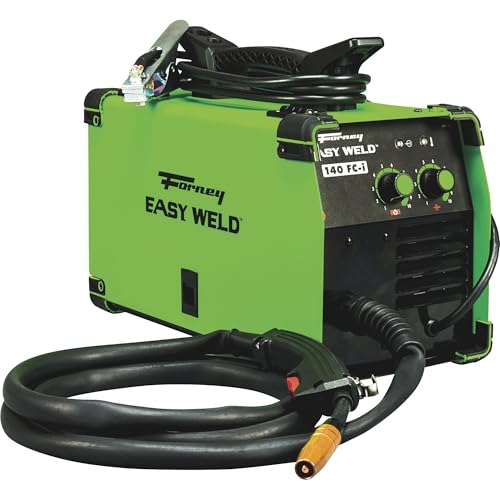 Forney Easy Weld 261 140 FC-iOne wall socket, no gas bottle, two dials — the shortest distance between deciding to weld something and welding it. | Best overall for small projects | $337.99 · View on Amazon #ad How this is funded · Price as of November 13, 2026 |
| 2 | 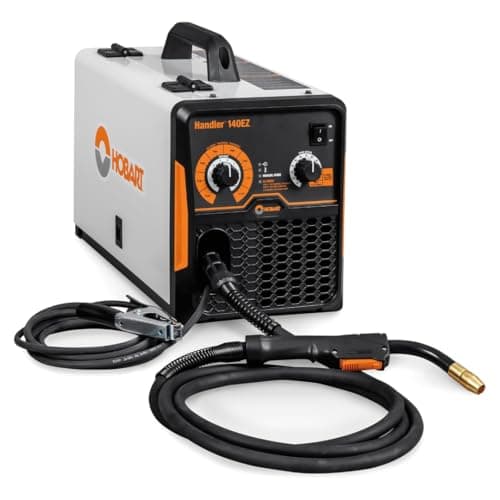 Hobart Handler 140EZA 30 A floor and infinite voltage control, so small thin parts get a setting rather than a compromise. | Best for small and tidy | $720.00 · View on Amazon #ad How this is funded · Price as of November 13, 2026 |
| 3 | 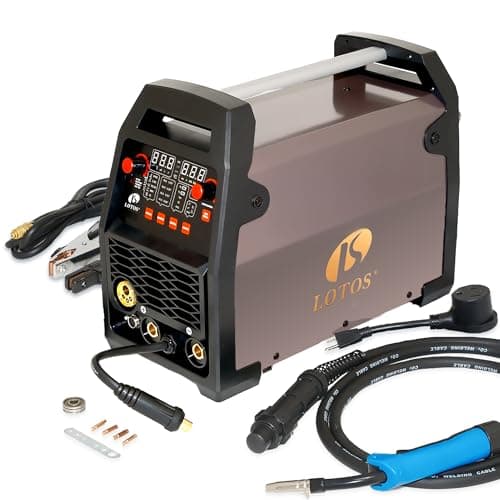 Lotos MIG180Adds stick to a wire shop, which is what rusty, painted and outdoor steel actually needs. | Best for repairs rather than builds | $359.98 · View on Amazon #ad How this is funded · Price as of November 13, 2026 |
| 4 | 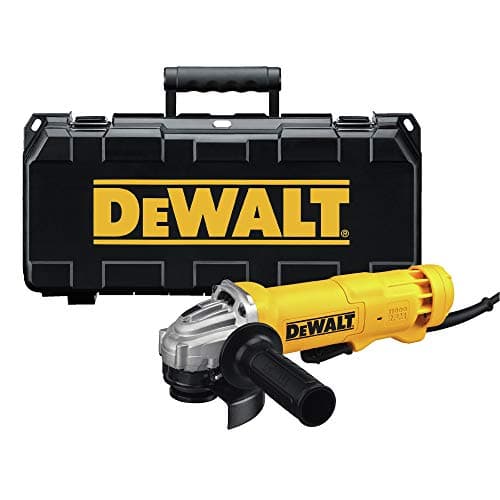 DeWalt DWE402K 4-1/2 in angle grinderCutting, cleanup and bevelling — the three things every small project needs that the welder does not do. | The tool that finishes the job | $127.09 · View on Amazon #ad How this is funded · Price as of November 13, 2026 |
The short answer
For small projects the best welder is the Forney Easy Weld 261 140 FC-i: a 120-volt flux-core machine with two dials, no gas bottle and no setup, which is what actually gets short jobs finished. If you want clean, visible welds instead, the Hobart Handler 140EZ and its 30-amp floor is the better pick.
Almost every welder roundup ranks on capacity, because capacity is easy to compare. On small work that ordering is close to useless. Nobody abandons a shelf bracket because their machine ran out of amps — they abandon it because the machine is a twenty-minute production to set up for a four-inch weld.
So this page ranks on three things instead: how fast you can be welding from a cold start, how low and controllable the bottom of the output range is, and how little the machine needs around it. That produces a genuinely different order from the best welders for hobbyists, which ranks by who you are rather than by the size of what you make.
Published specifications, side by side
| Machine | Processes | Input | Output | Gas required? |
|---|---|---|---|---|
| Forney Easy Weld 261 140 FC-i | Self-shielded flux-core | 120 V | Infinite voltage and wire-feed adjustment | No |
| Hobart Handler 140EZ | Gas MIG, flux-core | 115 V, 20 A circuit | 30–140 A | Optional |
| Lotos MIG180 | Gas MIG, flux-core, stick, DC lift TIG, spot, spool-gun aluminum | 110–125 V or 210–250 V | MIG to 180 A; stick to 160 A | Optional |
| DeWalt DWE402K | 4-1/2 in angle grinder | 120 V | Not applicable | No |
What counts as a small project
It is worth being concrete, because "small" does a lot of work in a sentence like this. On this page it means three things together.
Short welds. A few inches at a time, not a continuous seam down a six-foot frame. This is what makes duty cycle a non-issue: you are stopping to reposition far more than the machine is stopping to cool.
Thin to medium stock. Sheet, angle iron, square tube, flat bar — generally under an eighth of an inch and rarely over a quarter. Above that you are on the thick steel page whether you planned to be or not.
One session. Brackets, hooks, repairs, a small frame, a tool holder. Things you start and finish in an evening, which is why setup time dominates the arithmetic.
Why the bottom of the range matters more than the top
Small parts are usually thin parts, and thin steel punishes heat. A machine advertised at 140 amps tells you nothing useful about small work; what you want to know is what its lowest usable setting is, and how finely you can move around near it.
The Hobart publishes a 30 A floor on 120 V with infinite voltage control, which is why it is the pick for anyone who wants tidy welds on thin material — a low floor and a knob you can nudge are the two halves of the same answer on thin stock.
If you find yourself blowing holes in everything, flux-core burn-through is the page that diagnoses it, and the answer is usually wire diameter and stitch length rather than the machine.
The cheapest upgrade on a small-projects bench
Clamps. Not a better welder — clamps. Small parts move when heated, and a part that moves between tack and weld is the single most common reason a small project ends up in the scrap bin. Spend the next fifty dollars there before you spend it on amps.
How we ranked these
Time from cold to arc. Flux-core wins outright: no bottle, no regulator, no flow check. This is the specification nobody publishes and everybody experiences.
Low-end control. A stated minimum amperage and a reasonable number of voltage settings, because thin material lives at the bottom of the range.
What the job really is. If your small projects are mostly repairs to rusty outdoor steel, stick capability beats a better MIG arc, which is why the multiprocess machine is third rather than fourth.
What has to be bought alongside. A grinder is not an accessory on small work; it is half the process. Our how we pick page sets out the full method, including what we have not tested.
1. Best overall for small projects
Forney Easy Weld 261 140 FC-i
One wall socket, no gas bottle, two dials — the shortest distance between deciding to weld something and welding it.
Forney publishes this as a 120 V flux-core machine with infinite voltage and wire-feed adjustment, and it is on top of a small-projects page for a reason that has nothing to do with output. Small jobs are killed by setup time, not by amperage. A bracket takes four inches of weld and twenty minutes of thinking; if the machine needs a bottle opened, a regulator set and a flow rate checked first, the bracket does not get made this evening.
Self-shielded flux-cored wire removes all of that. Plug in, set two dials, weld. There is no gas to run out of and nothing to put away afterwards, which is the actual reason this machine gets used more than more capable ones that live under a bench.
The honest trade is spatter and slag. Flux-core leaves both, so budget grinding time — flux-core welding spatter covers how much of that is settings and how much is the process. On a painted bracket nobody will see, it does not matter. On a visible joint it does.
Capacity is the real ceiling: 120 V flux-core at this size is a quarter-inch machine at best, and comfortable well below that. What size welder you need is the page to check that against your actual parts list.
What works
- 30% duty cycle at 90 A is unusually generous for a 120 V machine in this class
- Infinite voltage and wire-speed control rather than four fixed taps, so you can actually dial a setting in
- 19 lb — genuinely carryable to the job instead of the job coming to it
- No gas bottle, no regulator, no second purchase before your first weld
What does not
- Flux-core only. It will never run gas, so it cannot become your Level 2 machine
- Every weld leaves slag that has to be chipped and wire-brushed off
- Needs a 20 A circuit — a 15 A garage lighting circuit will trip at higher settings
Who this is wrong for: Visible, cosmetic joints. Flux-core leaves slag and spatter, so anything you want to look clean without grinding wants gas MIG instead.
2. Best for small and tidy
Hobart Handler 140EZ
A 30 A floor and infinite voltage control, so small thin parts get a setting rather than a compromise.
Hobart publishes 30 to 140 A on 120 V, with gas MIG and flux-core capability, a 30% duty cycle at 90 A, a 24-gauge to 3/16-inch single-pass capacity, and infinite voltage control set from two turns of a knob.
The 30 A floor is the specification worth paying for on small work. Small parts are often also thin parts, and a machine whose lowest usable setting is already too hot leaves you managing heat with travel speed alone — which is the hardest variable for a beginner to control. A low bottom end gives you somewhere to sit.
The 30% duty cycle at 90 A is roughly three minutes of arc in every ten, and on a small-projects page that is not the limitation it sounds. Short welds with thinking time between them are exactly the duty cycle this machine was rated for.
Single-voltage is the long-term catch: it will never use a 240 V circuit if you run one later. For small work that may never matter.
What works
- The most documented 120 V MIG family there is — every settings question has already been answered somewhere
- Runs flux-core on day one and gas MIG the day you buy a bottle, so the machine survives the level change
- EZ Mode sets the machine from two turns of a knob, and infinite voltage control is still there when you want to override it
- Spool-gun ready, so aluminum is a gun purchase rather than a new machine
What does not
- 3/16 in is the published capacity. A trailer deck in one sitting is beyond it
- Single-voltage: it will never take advantage of a 240 V circuit if you later run one
- 53 lb is heavy for a 120 V machine — it wants a cart rather than a shelf
3. Best for repairs rather than builds
Lotos MIG180
Adds stick to a wire shop, which is what rusty, painted and outdoor steel actually needs.
Lotos publishes gas MIG, gasless flux-core, stick and DC lift TIG on 120 V or 240 V input, with MIG to 180 A, stick to 160 A and synergistic MIG that sets voltage and wire speed together.
Stick is the reason it earns a place. A great many small projects are not projects at all — they are repairs to something that has been outside for ten years. MIG wants clean metal and struggles with rust, mill scale and paint; stick does not care nearly as much. A gate hinge, a mower deck, a fence post bracket: these are stick jobs that MIG makes needlessly difficult.
Treat the lift TIG as a bonus, not a feature you paid for: it is DC with no high-frequency start and the torch is a separate purchase, so no aluminum from it. A spool gun is supported for aluminum MIG, but that is another separate purchase again. Published capacity is 1/4 inch mild steel, and the headline amperages are the 240 V ratings.
What works
- Stick capability matters more than it sounds: rusty, painted or outdoor steel is where MIG struggles and stick does not
- A published 160 A stick rating is a real stick machine, not a token third process on the switch
- Synergistic MIG sets voltage and wire speed together, so the first hour goes on welding rather than on a settings chart
What does not
- The headline 180 A and 160 A figures are the 240 V ratings; Lotos does not publish a separate 120 V output
- TIG is lift-start DC with no high-frequency start, and the torch is a separate purchase — treat it as a bonus, not a feature you bought
- The spool gun is also sold separately, and DC lift TIG cannot weld aluminum whatever gun you fit
- Dealer support and warranty handling are not on the level of Hobart or Lincoln
4. The tool that finishes the job
DeWalt DWE402K 4-1/2 in angle grinder
Cutting, cleanup and bevelling — the three things every small project needs that the welder does not do.
On small work, the grinder does more of the job than the welder does. Cutting stock to length, cleaning mill scale and paint back to bright metal, knocking the slag off a flux-core bead, and dressing a weld flat: four of the five steps in a small bracket are grinder work.
It is also the preparation tool that decides whether the weld works at all. MIG and flux-core both need clean metal to fuse properly, and "clean" means ground, not wiped.
Hearing and eye protection are not optional with one of these, and a grinder throws sparks much further than a welding arc does — which matters more in a garage than in a shop.
What works
- Every weld needs prep and cleanup, so this earns its place from your first day regardless of process
- Cut-off, grinding and wire-wheel discs all fit the same tool
- No air, no gas, no dedicated circuit
What does not
- Slow and physical on anything thicker than about 1/4 in
- Cannot follow a curve accurately — that is the thing a plasma cutter buys you
- Makes far more mess and noise than plasma cutting
Who this is wrong for: Nothing, really — but it is not a substitute for a chop saw if you are cutting a lot of stock to repeatable lengths.
Questions people actually ask
What is the best welder for small projects?
The Forney Easy Weld 261 140 FC-i, on the basis that small jobs are lost to setup time rather than to amperage. It is a 120-volt flux-core machine with two dials and no gas bottle, so you are welding within a minute of plugging it in.
If your small projects need to look clean rather than just hold, the Hobart Handler 140EZ and its published 30 A floor is the better choice.
Do I need gas for small welding projects?
No. Self-shielded flux-cored wire needs no shielding gas at all, which is exactly why it suits short jobs - there is nothing to set up and nothing to put away.
The trade is slag and spatter, so if the weld will be visible and you do not want to grind it, gas MIG is worth the bottle.
How many amps do I need for small projects?
Far fewer than most roundups imply. For stock under an eighth of an inch, a 140 A class 120-volt machine is comfortable, and you will spend most of your time well below its ceiling.
The more useful number is the minimum. A machine with a published 30 A floor gives you somewhere to sit on thin material; one that starts too hot leaves travel speed as your only heat control.
Is a 120V welder enough for small jobs?
For genuinely small work, yes. A 120-volt machine on a dedicated 20 A circuit covers sheet, angle, square tube and flat bar up to roughly a quarter inch.
It stops being enough when you want thickness or long continuous welds, which is a duty-cycle and amperage question rather than a small-projects one.
What else do I need besides the welder?
An auto-darkening helmet, gloves, an angle grinder and clamps - in roughly that order of urgency.
The grinder does more of a small project than the welder does: cutting stock, cleaning metal back to bright, removing slag and dressing welds. And clamps are the cheapest fix for the most common failure, which is a small part moving as it heats.
Should I buy a multiprocess welder for small projects?
Only if your small projects are mostly repairs. Stick capability genuinely helps on rusty, painted or outdoor steel, where MIG and flux-core both struggle.
For new fabrication from clean stock, the extra processes are capability you pay for and rarely use, and the simpler machine gets used more.
Sources
- Forney Industries — Easy Weld 261 140 FC-i published specifications: 120 V, infinite voltage and wire-feed adjustment
- Hobart Welders — Handler 140EZ published specifications: 30–140 A, 120 V, 30% duty cycle at 90 A, 24 ga to 3/16 in single pass
- Lotos — MIG180 published specifications: gas MIG, gasless flux-core, stick, DC lift TIG, spot and spool-gun aluminum on 110–125 V or 210–250 V; MIG to 180 A, stick to 160 A; 1/4 in mild steel
- DeWalt — DWE402K 4-1/2 in angle grinder published specifications
Read next
- The best welders for hobbyists
Machines for a few hours a month, and the three specifications that still matter at that rate.
- What size welder do I need?
Amperage against thickness, duty cycle read honestly, and whether you need a bigger machine or a different circuit.
- The best welders for metal art
Metal art is thin, awkward and mostly tacking. Four machines for sculpture, plus the cutter.
- Best welders for thick steel
Above a quarter inch, published single-pass capacity and duty cycle are the only specs that matter.
- The best flux-core welders for beginners
Gasless machines that weld the day they arrive, and the duty-cycle figure that separates them.
- Find your level before you spend a penny
Most bad first welder purchases are not bad machines. They are the right machine bought by the wrong person, one level too early or one level too late.
Back to Find Your Level, or start over at Find Your Level.
Ryder M.
Ryder M. is the hands-on owner behind Magoo Media Group. He writes Arc & Bead's buying guides and picks every machine on the site. What every recommendation is based on — and what it is not based on — is set out on How We Pick.