Best welders for knife making
A welder does not make the blade. It makes the billet hold together, the guard sit true, and the jigs that make the rest repeatable.
Arc & Bead is an Amazon Associate. If you buy through a link on this page we may earn a commission, at no extra cost to you. We have not physically tested the machines on this page and we say so on How We Pick.
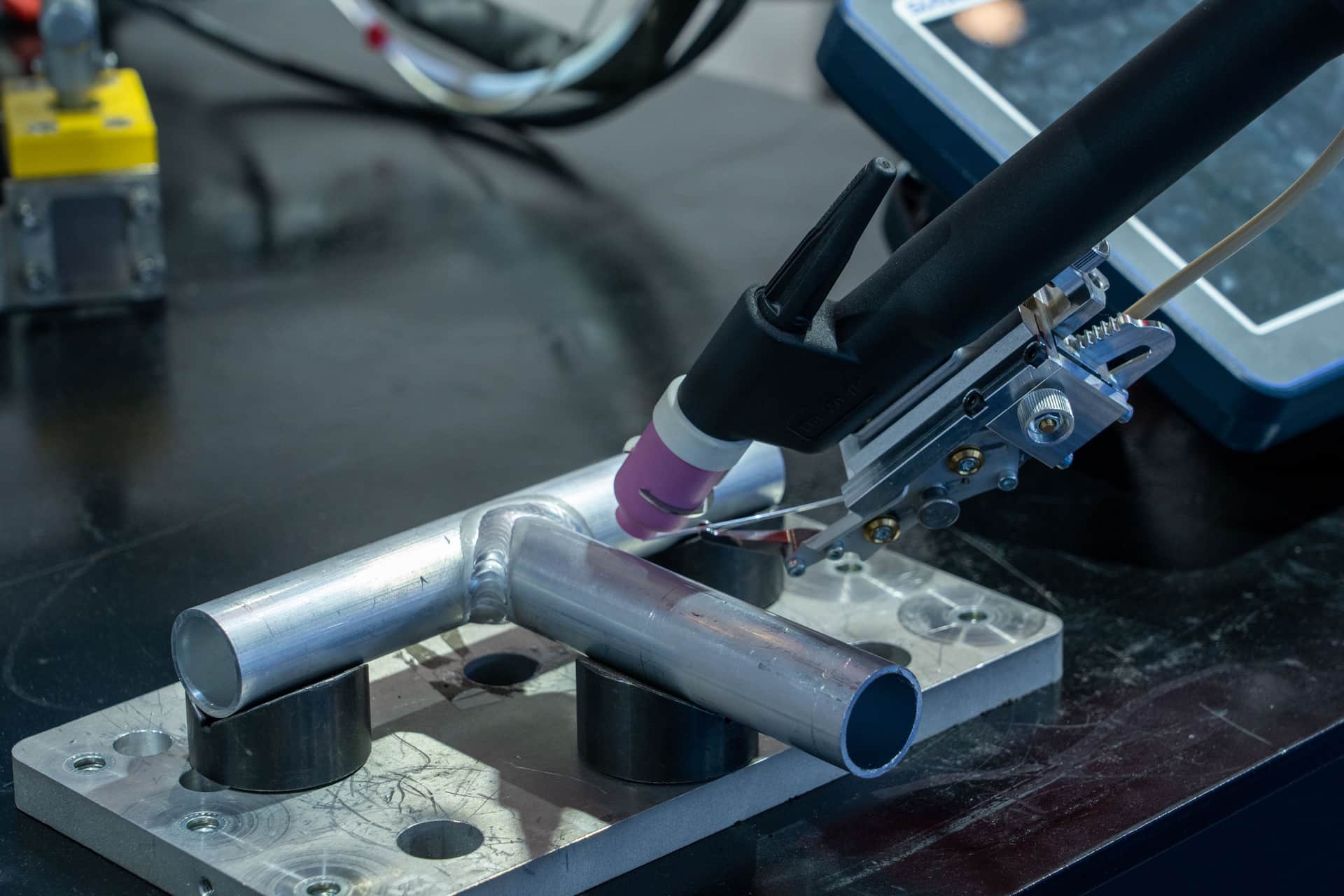
Quick picks
Tap any row to jump to the full write-up further down this page.
| # | Product | Best for | Price |
|---|---|---|---|
| 1 | 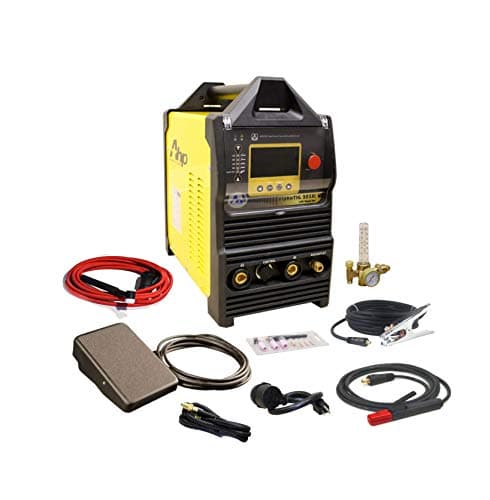 AHP AlphaTIG 200XAC/DC TIG from 10 A, so a 1/16 in bolster and a billet corner get the same machine and neither gets destroyed. | Best overall for knife making | $689.00 · View on Amazon #ad How this is funded · Price as of November 13, 2026 |
| 2 | 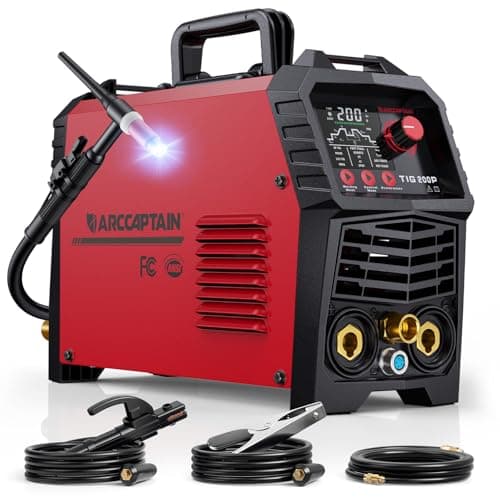 ARCCAPTAIN TIG200PGenuine HF-start DC TIG to 200 A at 11.8 lb, with a 60% duty cycle — if nothing you make needs AC. | Best for carbon-steel billet work | $249.99 · View on Amazon #ad How this is funded · Price as of November 13, 2026 |
| 3 | 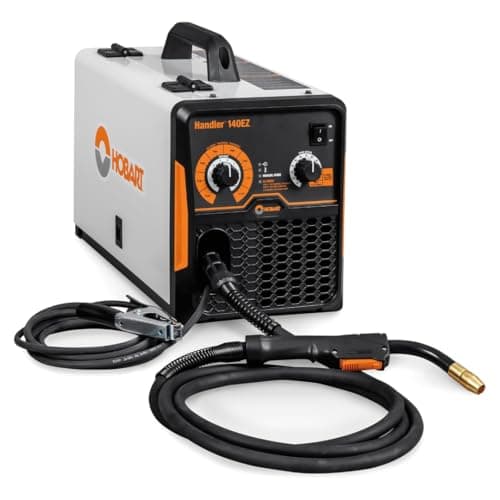 Hobart Handler 140EZ30 to 140 A of gas MIG and flux-core on a household circuit — the fast machine for everything around the knife. | Best for jigs and fixtures | $720.00 · View on Amazon #ad How this is funded · Price as of November 13, 2026 |
| 4 | 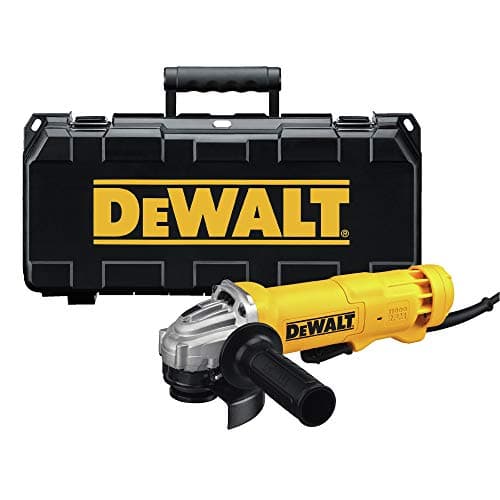 DeWalt DWE402K 4-1/2 in angle grinderCutting, cleanup and profile work — which on a knife bench is most of the job the welder does not do. | The tool you will use most | $127.09 · View on Amazon #ad How this is funded · Price as of November 13, 2026 |
What a welder is actually for in knife making
The best welder for knife making is the AHP AlphaTIG 200X: AC/DC TIG from 10 A with a foot pedal, which is what small stainless guards, bolsters and tang work need. A welder does not make the blade — it tacks billets and canisters for forging, joins fittings, and builds the jigs the rest of the work relies on.
Start with the honest framing, because a lot of what is written about this subject implies a welder is a knifemaking tool in the way a forge or a belt grinder is. It is not. The blade gets forged or stock-removed and then heat treated; a weld anywhere in the cutting edge is a defect, not a technique.
What a welder does is four specific jobs, and they want different things from a machine:
Tacking billets and canisters. Stacking layers for damascus, or sealing a canister of powder, needs tacks that survive to the first forge weld. Requirement: easy, fast, not pretty.
Guards, bolsters and fittings. Small stainless or brass parts that have to sit true, where the weld is visible and heat distortion ruins a fit. Requirement: low-amperage precision.
Tang extensions and repairs. Joining a mild-steel handle tang to a high-carbon blade billet, done before heat treatment. Requirement: control, and an understanding that dissimilar steels behave differently.
Jigs, fixtures and shop furniture. Grinder attachments, quench stands, forge tables, racks. Requirement: speed, on ordinary mild steel.
Published specifications, side by side
| Machine | Process | Output | Supply | Duty cycle |
|---|---|---|---|---|
| AHP AlphaTIG 200X | AC/DC TIG and stick | 10–200 A TIG | 110 V or 220 V | 60% at 200 A TIG |
| ARCCAPTAIN TIG200P | DC TIG (HF start) and stick | 10–200 A TIG, 10–170 A stick | 110 V or 220 V | 60% |
| Hobart Handler 140EZ | Gas MIG and flux-core | 30–140 A | 115 V, 20 A circuit | 30% at 90 A |
| DeWalt DWE402K | 4-1/2 in angle grinder | Not applicable | 120 V | Not applicable |
Why TIG leads a knifemaking page
Two of the four jobs above are small-part precision work, and that is TIG's entire argument.
A foot pedal means you control heat continuously while you weld, rather than setting it in advance and hoping. On a bolster the size of a coin, that is the difference between a fitted part and a warped one. A low published floor — 10 amps on both TIG machines here — means the machine can actually be turned down far enough to matter.
TIG is also the right process for stainless, which a great deal of knife hardware is. It puts in less total heat for a given joint, and less heat means less discoloration and less distortion on a part that has to mate with a handle. TIG welders for stainless steel goes deeper on that, and how to get good TIG welds covers the technique.
One thing this page will not claim
Nothing here is a substitute for a forge, a belt grinder or a heat-treat oven, and a welder does not shorten the learning curve on any of them. Treat the machine as the thing that holds work together and builds the fixtures — not as a step in making the blade.
Dissimilar steels, briefly and honestly
Welding a mild-steel tang to a high-carbon blade is common practice, and it has a real constraint: the two steels respond differently to heat, and the hardenable one is affected well beyond the visible weld.
The practical consequence is sequence. This work is done before heat treatment, not after, so the whole assembly goes through the thermal cycle together. Welding onto a hardened, tempered blade puts an unhardened and untempered zone into finished steel, and no filler choice fixes that.
Beyond that, filler selection for dissimilar and high-carbon steels is a metallurgy question rather than a machine question, and it is outside what this site covers. What we can tell you is which machines give you the control to execute it.
How we ranked these
Low-end control first. The jobs that are genuinely hard here are small and precise, so a published minimum amperage and a foot pedal matter more than a ceiling.
Process honesty second. The DC machine is listed with its absolute limitation stated, because "no aluminum ever" is the kind of thing people discover after the purchase.
What you will actually weld most. Jigs and fixtures outnumber knife components by a wide margin in most shops, which is why a MIG machine is on the list at all.
No invented capability. We have not tested any of these machines and we do not claim knife-specific endorsements that manufacturers do not make. Our how we pick page sets out the method.
1. Best overall for knife making
AHP AlphaTIG 200X
AC/DC TIG from 10 A, so a 1/16 in bolster and a billet corner get the same machine and neither gets destroyed.
AHP publishes AC/DC TIG and stick, 10 to 200 A of TIG output, a 60% duty cycle at 200 A TIG, 30 to 70% AC balance adjustment, and a capacity of 24 gauge to 3/8 inch on mild steel with aluminum to a quarter inch, from a 50 lb machine running on 110 V or 220 V.
The bottom of that range is why it leads. Knife work is small, precise and often on stainless: a guard, a bolster, a tang extension, a stainless pin. A 10 amp floor plus a foot pedal means you can put a measured amount of heat into a part the size of a postage stamp — which is the opposite of what a wire-feed machine does.
AC capability matters for a reason specific to this craft too. A fair amount of knife hardware and fittings are aluminum or non-ferrous, and AC is what makes aluminum possible at all. AC versus DC TIG explains why.
Two honest caveats: the bundled torch and consumables are the first thing most owners replace, and at 50 lb with a foot pedal, the machine lives in one place. Neither is a problem in a shop that already has a grinder and a forge bolted down.
What works
- AC output is what makes aluminum possible at all — this is the cheapest widely supported machine that has it
- 60% duty cycle at 200 A is a genuinely high rating for the price
- Adjustable AC balance lets you trade cleaning action against penetration instead of accepting one compromise
What does not
- The bundled torch and consumables are the first thing most owners replace
- The manual is thin. Budget time for learning the machine as well as the process
- 50 lb and a foot pedal means it lives in one place
Who this is wrong for: Anyone who only needs to tack billets together. That is a job a far cheaper machine does, and the TIG capability goes unused.
2. Best for carbon-steel billet work
ARCCAPTAIN TIG200P
Genuine HF-start DC TIG to 200 A at 11.8 lb, with a 60% duty cycle — if nothing you make needs AC.
ARCCAPTAIN publishes DC TIG with high-frequency start at 10 to 200 A, stick at 10 to 170 A, a 60% duty cycle, dual 110 V or 220 V input, and a weight of 11.8 lb.
For damascus and canister work specifically, DC is all you need: the billet is carbon steel, the canister is mild steel, and the welds are tacks and seams that hold things together through forging rather than structural joints in the finished knife. High-frequency start is the feature to care about — scratch start on a tiny, precise tack contaminates the tungsten every single time.
At 11.8 lb it also goes to the work. On a knife bench where the vice, the grinder and the forge all own their own space, a machine you can lift with one hand is a genuine advantage.
The limitation is absolute and worth stating plainly: DC only, so no aluminum ever. No pulse either, which means thin stainless depends on your hand rather than on the machine.
What works
- High-frequency start rather than scratch start — the difference between a clean arc and a contaminated tungsten on every single strike
- 11.8 lb, so it goes to the work instead of the work coming to the bench
- Dual voltage, so it runs on a household outlet now and a 240 V circuit later
- The lowest price at which HF DC TIG is genuinely available from a supported brand
What does not
- DC only. No aluminum, now or ever, and no accessory changes that
- Still DC only, so the pulse that helps on thin stainless does nothing for aluminum
- A foot pedal and a better torch are extra, and both are worth budgeting for
Who this is wrong for: Aluminum fittings, guards or hardware of any kind. DC cannot weld aluminum and no accessory changes that.
3. Best for jigs and fixtures
Hobart Handler 140EZ
30 to 140 A of gas MIG and flux-core on a household circuit — the fast machine for everything around the knife.
Hobart publishes 30 to 140 A on 120 V, gas MIG and flux-core capability, a 30% duty cycle at 90 A, and a 24-gauge to 3/16-inch single-pass capacity.
Most of the welding a knifemaker actually does is not on knives. It is on the jigs, fixtures, blade-grinder attachments, quench tank stands, forge tables and tool racks that make the knife work repeatable. That is ordinary mild-steel fabrication, and MIG is much faster at it than TIG.
It will also tack a canister or a billet together perfectly well. A tack that holds stock through the first forge weld does not need to be pretty, and this is a far cheaper way to get one than a TIG machine.
Where it will not help is precision work on a finished knife — a wire-feed arc puts too much heat into too small an area, and a 3/16-inch published capacity caps the heavy ones.
What works
- The most documented 120 V MIG family there is — every settings question has already been answered somewhere
- Runs flux-core on day one and gas MIG the day you buy a bottle, so the machine survives the level change
- EZ Mode sets the machine from two turns of a knob, and infinite voltage control is still there when you want to override it
- Spool-gun ready, so aluminum is a gun purchase rather than a new machine
What does not
- 3/16 in is the published capacity. A trailer deck in one sitting is beyond it
- Single-voltage: it will never take advantage of a 240 V circuit if you later run one
- 53 lb is heavy for a 120 V machine — it wants a cart rather than a shelf
4. The tool you will use most
DeWalt DWE402K 4-1/2 in angle grinder
Cutting, cleanup and profile work — which on a knife bench is most of the job the welder does not do.
A grinder is not an accessory in a knife shop. Cutting stock, cleaning scale off a billet before a tack, dressing a weld on a canister seam, and squaring the ends of bar stock are all grinder work, and all of them happen before or after every weld.
It also does the one thing this page should be honest about: most knife shaping is abrasive, not thermal. A belt grinder does the blade. This does everything the belt grinder should not be used for.
Hearing protection and a face shield are not optional, and a grinder throws sparks a long way further than an arc does — which matters a great deal in a shop that also has a forge and oil in it.
What works
- Every weld needs prep and cleanup, so this earns its place from your first day regardless of process
- Cut-off, grinding and wire-wheel discs all fit the same tool
- No air, no gas, no dedicated circuit
What does not
- Slow and physical on anything thicker than about 1/4 in
- Cannot follow a curve accurately — that is the thing a plasma cutter buys you
- Makes far more mess and noise than plasma cutting
Who this is wrong for: Blade profiling and bevels. That is belt-grinder work, and a 4-1/2 inch angle grinder is the wrong tool for a controlled bevel.
Questions people actually ask
What kind of welder do you need for knife making?
A TIG machine if you want to weld guards, bolsters and fittings, because those are small precise parts where heat control decides the fit. The AHP AlphaTIG 200X publishes a 10 A floor, AC/DC output and foot-pedal control.
If all you need is to tack billets and canisters together and build jigs, a 140 A class MIG machine does it faster and much more cheaply.
Do you need a welder to make knives?
No. A blade is forged or stock-removed and then heat treated, and a weld in the cutting edge is a defect rather than a technique.
A welder earns its place in four other jobs: tacking damascus billets and canisters, joining guards and bolsters, extending tangs before heat treatment, and building the jigs and fixtures that make the rest repeatable.
Can you MIG weld a damascus billet together?
Yes, for tacking. The tack only has to hold the stack together until the first forge weld takes over, so it does not need to be pretty or deeply penetrating.
What MIG is not good for is precision work on a finished knife - a wire-feed arc puts too much heat into too small an area.
Can you weld a tang onto a knife blade?
It is common practice, and the sequence matters: do it before heat treatment so the whole assembly goes through the thermal cycle together.
Welding onto an already hardened and tempered blade introduces an unhardened, untempered zone into finished steel, and no filler choice corrects that.
Is TIG or MIG better for knife fittings?
TIG, clearly. Fittings are small, often stainless, and have to mate accurately with a handle, so total heat input and distortion are the limiting factors rather than speed.
A foot pedal lets you adjust heat continuously while welding, which on a part the size of a coin is the difference between a fitted piece and a warped one.
What else should a knifemaker weld?
The shop. Belt-grinder attachments and rests, quench tank stands, forge tables, anvil stands, stock racks and layout fixtures are all ordinary mild-steel fabrication.
This is where most of the actual arc time goes in a knife shop, and it is why a fast MIG machine earns a place on the bench alongside a TIG one.
Sources
- AHP — AlphaTIG 200X published specifications: 10–200 A AC/DC TIG, 60% duty cycle at 200 A, 30–70% AC balance, 24 ga to 3/8 in mild steel
- ARCCAPTAIN — TIG200P published specifications: 10–200 A DC TIG with HF start, 10–170 A stick, 60% duty cycle, 11.8 lb
- Hobart Welders — Handler 140EZ published specifications: 30–140 A, 120 V, 30% duty cycle at 90 A, 24 ga to 3/16 in single pass
- DeWalt — DWE402K 4-1/2 in angle grinder published specifications
Read next
- The best welders for metal art
Metal art is thin, awkward and mostly tacking. Four machines for sculpture, plus the cutter.
- The best TIG welders for stainless steel
Stainless is a DC job with a heat problem — the machines that control heat, and why you can skip AC.
- The best TIG welders for beginners
AC/DC machines for a first TIG setup, and why the bundled torch matters as much as the welder.
- Best welders for small projects
Short welds and small parts reward low-end control and fast setup, not maximum amperage.
- How to get good TIG welds
The five variables behind a good TIG bead, in the order they go wrong. Settings are only one.
- Find your level before you spend a penny
Most bad first welder purchases are not bad machines. They are the right machine bought by the wrong person, one level too early or one level too late.
Back to Find Your Level, or start over at Find Your Level.
Ryder M.
Ryder M. is the hands-on owner behind Magoo Media Group. He writes Arc & Bead's buying guides and picks every machine on the site. What every recommendation is based on — and what it is not based on — is set out on How We Pick.