The best welders for hobbyists
Welding occasionally changes which specifications matter. Most of the figures the roundups argue about only bite at rates a hobby never reaches.
Arc & Bead is an Amazon Associate. If you buy through a link on this page we may earn a commission, at no extra cost to you. We have not physically tested the machines on this page and we say so on How We Pick.
Quick picks
Tap any row to jump to the full write-up further down this page.
| # | Product | Best for | Price |
|---|---|---|---|
| 1 | 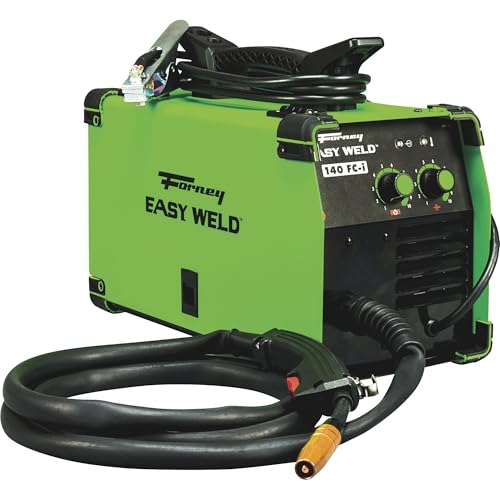 Forney Easy Weld 261 140 FC-iOne wall socket, no bottle, 19 lb, and nothing to maintain between sessions. | Best overall for hobby use | $337.99 · View on Amazon #ad How this is funded · Price as of November 13, 2026 |
| 2 | 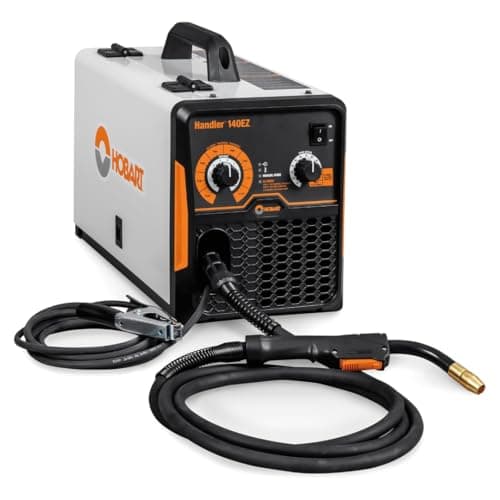 Hobart Handler 140EZRuns gasless today and takes a bottle whenever you decide, on an ordinary outlet. | Best if gas is already in the plan | $720.00 · View on Amazon #ad How this is funded · Price as of November 13, 2026 |
| 3 | 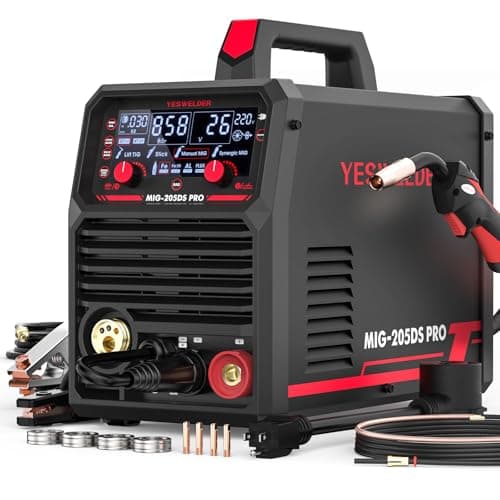 YESWELDER MIG-205DS PROFive processes and synergic control, so each new job is a setting rather than a purchase. | Best if the projects keep changing | |
| 4 | 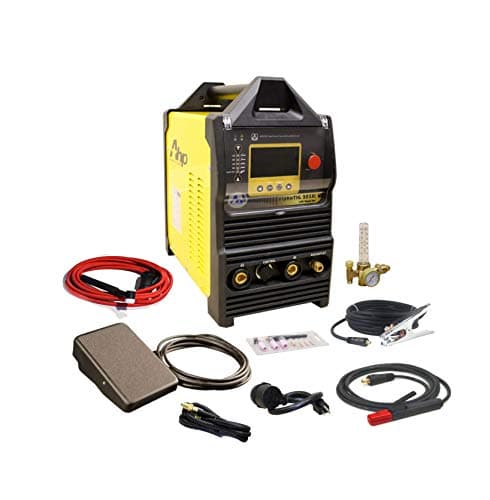 AHP AlphaTIG 200XAC/DC TIG at the lowest widely supported price, for aluminum and thin stainless. | Best when the hobby is already specific | $689.00 · View on Amazon #ad How this is funded · Price as of November 13, 2026 |
What "hobbyist" actually changes
For a few hours of welding a month, the best machine is usually a 120-volt flux-core or gas-capable wire welder around 140 amps: it plugs into an outlet you already have, needs no bottle to sit unused, and stores on a shelf. Duty cycle, the figure roundups argue about hardest, almost never binds at hobby rates. What does bind is circuit, storage space and how much setup stands between you and a bead.
| Forney 261 140 FC-i | Hobart Handler 140EZ | YESWELDER MIG-205DS PRO | AHP AlphaTIG 200X | |
|---|---|---|---|---|
| Process | Flux-core only | Gas MIG and flux-core | MIG, flux-core, spool gun, lift TIG, stick | AC/DC TIG and stick |
| Input | 120 V, 20 A circuit | 115 V, 20 A dedicated | 110 V or 220 V | 110 V or 220 V |
| Output | 140 A max | 30–140 A | 30–160 A at 110 V; 30–205 A at 220 V | 10–200 A TIG |
| Duty cycle | 30% at 90 A | 30% at 90 A | Not published per amperage | 60% at 200 A TIG |
| Steel capacity | Up to 1/4 in | Not published as a single-pass figure | Not published as a single-pass figure | 24 ga to 3/8 in |
| Aluminum | No | No | With a spool gun | Yes, to 1/4 in |
| Weight | 19 lb | Not published | 22.7 lb | 50 lb |
| Gas bottle needed | No | Only for gas MIG | Only for gas MIG and TIG | Yes, argon |
Why duty cycle stops being the argument
Duty cycle is the percentage of a ten-minute period a machine can weld at a stated amperage before it needs to cool. A 30% rating at 90 amps means three minutes of arc time in ten.
That sounds restrictive written down, and it is the figure that dominates most welder comparisons. In a home shop welding a few hours a month it is almost never what stops you. You stop to reposition the work, to re-clamp, to chip slag, to grind a tack flat, to find the magnet you put down somewhere. Arc-on time in a hobby session is a small fraction of bench time, and the machine cools through every one of those pauses.
Duty cycle starts to matter when you run long continuous seams — a trailer deck, a long fence rail — because that is where arc time becomes continuous. If that is your work, you are reading the wrong page and the 240-volt roundup is the right one.
Treat any duty cycle quoted without an amperage attached as marketing rather than a specification. The omission is deliberate.
The three specifications that do still matter
The circuit it needs. This is the one that actually stops people. A 120-volt machine on a dedicated 20-amp circuit covers roughly a quarter inch of steel in a single pass, which is most hobby fabrication. A 240-volt machine needs an electrician between you and your first weld. 120V versus 240V welders works through the decision and what size breaker a welder needs covers what to ask for. Circuit work belongs to a licensed electrician.
Whether it needs a bottle. A gas setup is a cylinder — usually leased, so it charges whether you weld or not — plus a regulator, a cart to chain it to, and solid wire. For somebody welding every weekend that is a sensible cost. For somebody welding four times a year it is a subscription to a cylinder standing in a corner. Whether you need gas for MIG is the honest version of that argument.
How much setup stands between you and a bead. The real enemy of a hobby is friction. A machine that lives under a bench and needs a bottle wheeled out, a regulator checked and a polarity swap confirmed gets used less than one you lift onto the bench and switch on. This is not a specification anyone publishes, and it is the single best predictor of whether a welder gets used.
What a hobby does not need to pay for
Output you cannot plug in. A 210-amp machine on a household outlet gives you 140 amps — the same as a much cheaper 140-amp machine. The premium only converts into capability on the day the 240-volt circuit exists.
Processes you have not needed yet. Multiprocess machines are excellent second welders and confusing first ones. When a weld goes wrong you want one thing to examine, not five.
Industrial duty cycles. A 100% rating at 200 amps is a genuinely different machine, and it costs what that implies. It buys arc time a hobby does not consume.
Consumables, and the part nobody mentions
Welding infrequently has one real downside, and it is wire. Flux-cored wire is hygroscopic — the flux core absorbs moisture from the air — and a half-used spool left on the machine for a year welds visibly worse than a fresh one, with more spatter and more porosity.
The fix is unglamorous: buy smaller spools than the value-per-pound maths suggests, pull the spool off and bag it with a desiccant between sessions, and do not diagnose a settings problem on wire that has been open since last summer. The wire size chart covers diameter, which is the other half of that decision.
Buy for the level you are at, plus one
The most expensive hobby mistake in this category is buying three levels ahead. A machine bought for the welding you imagine doing in 2029 is harder to learn on, needs a circuit you do not have, and will have been superseded by the time you want it. Buying one rung up from where you are is enough headroom. Find your level sets out the four rungs.
What to buy alongside it
The machine is rarely the whole purchase. An auto-darkening helmet, gloves, a jacket for out-of-position work, clamps and an angle grinder are what turn a welder into a working setup — and for a hobby budget it is worth deciding the split before you spend, because a cheap helmet alongside a good machine is the wrong way round. The starter kit checklist lists it, and the best helmets for the money covers where the helmet curve flattens.
If you already know what you want to make
Two pages start from the project rather than from the hours. Welders for metal art is for sculpture — hundreds of short welds on thin, mixed, awkwardly held material, which rewards low-end control and a 19-pound machine over output. Welders for gates and fences is for work done at the post, where the location decides the machine.
This page ranks machines by who you are. To rank them by the size of what you build instead, the best welders for small projects ranks on setup time and low-end control, which produces a different order.
If the duty-cycle argument above was new to you, welder duty cycle explained sets out the formula, shows how the rating rises as you back the output off, and works out how much arc time a real home-shop job actually uses.
1. Best overall for hobby use
Forney Easy Weld 261 140 FC-i
One wall socket, no bottle, 19 lb, and nothing to maintain between sessions.
Forney publishes 140 amps maximum on a 120-volt 20-amp circuit, a 30% duty cycle at 90 amps, capacity up to a quarter inch of steel, and 19 pounds. Infinite voltage and wire-speed control rather than fixed taps.
What makes it the default for a hobby specifically is what it does not have. No gas bottle means no cylinder lease running whether you weld or not, no regulator, and nothing that goes flat while the machine sits for two months. The 19 pounds means it lives on a shelf rather than owning floor space, which in a shared garage is often the binding constraint rather than anything on the spec sheet.
The 30% duty cycle at 90 amps is unusually generous in this class, and at hobby rates you will essentially never reach it — you stop to reposition, clamp and chip slag long before the machine wants a rest.
The honest limit: it is flux-core only and always will be. If you already know you want gas, this is not the machine to start with.
What works
- 30% duty cycle at 90 A is unusually generous for a 120 V machine in this class
- Infinite voltage and wire-speed control rather than four fixed taps, so you can actually dial a setting in
- 19 lb — genuinely carryable to the job instead of the job coming to it
- No gas bottle, no regulator, no second purchase before your first weld
What does not
- Flux-core only. It will never run gas, so it cannot become your Level 2 machine
- Every weld leaves slag that has to be chipped and wire-brushed off
- Needs a 20 A circuit — a 15 A garage lighting circuit will trip at higher settings
2. Best if gas is already in the plan
Hobart Handler 140EZ
Runs gasless today and takes a bottle whenever you decide, on an ordinary outlet.
Hobart publishes 30 to 140 amps, a 30% duty cycle at 90 amps, 120-volt input, a single-pass capacity from 24 gauge to three-sixteenths of an inch, and infinite voltage control set from two turns of a knob.
The reason it belongs on a hobby list is that it does not force the gas decision at purchase time. It runs self-shielded flux-cored wire out of the box and accepts a cylinder and regulator later, which suits a hobby that may or may not turn into something more.
It is also the most thoroughly documented 120-volt wire machine in existence. When you come back to it after six weeks away and cannot remember a setting, that matters more than any specification.
The 30% duty cycle at 90 amps is lower than the Forney's, and it needs its own 20-amp circuit rather than sharing one with a freezer and the shop lights.
What works
- The most documented 120 V MIG family there is — every settings question has already been answered somewhere
- Runs flux-core on day one and gas MIG the day you buy a bottle, so the machine survives the level change
- EZ Mode sets the machine from two turns of a knob, and infinite voltage control is still there when you want to override it
- Spool-gun ready, so aluminum is a gun purchase rather than a new machine
What does not
- 3/16 in is the published capacity. A trailer deck in one sitting is beyond it
- Single-voltage: it will never take advantage of a 240 V circuit if you later run one
- 53 lb is heavy for a 120 V machine — it wants a cart rather than a shelf
3. Best if the projects keep changing
YESWELDER MIG-205DS PRO
Five processes and synergic control, so each new job is a setting rather than a purchase.
YESWELDER publishes gas MIG, flux-core, spool-gun MIG, lift TIG and stick on 110 or 220 volts — 30 to 160 amps MIG at 110 volts and 30 to 205 amps at 220 volts, wire feed from 58 to 858 inches per minute, 22.7 pounds.
A hobby that wanders is the one case where a multiprocess machine genuinely earns its complexity. If this month is a gate and next month is a trailer repair on rusty steel, having stick in the same box is the difference between doing the job and waiting.
Synergic control is what keeps five processes tolerable at hobby rates: select the material thickness and the machine sets voltage and wire speed from a published table. You are not relearning five sets of parameters after every gap.
What works
- Synergic mode sets voltage and wire speed from the thickness you select, which removes the single hardest part of learning MIG
- Spool-gun capable, so aluminum is a gun purchase rather than a machine purchase
- 22.7 lb for a 205 A dual-voltage machine is remarkable
What does not
- Lift TIG is DC only and has no foot pedal, so it will not weld aluminum and is not a route to Level 3
- Five processes means five sets of consumables to stock
- Dealer support and warranty handling are not on the level of Hobart or Lincoln
Who this is wrong for: Someone who wants one process to get good at. Five modes means five sets of consumables to stock and five ways to have the wrong configuration, including polarity, which is opposite between flux-core and solid wire.
4. Best when the hobby is already specific
AHP AlphaTIG 200X
AC/DC TIG at the lowest widely supported price, for aluminum and thin stainless.
AHP publishes AC/DC TIG and stick, 10 to 200 amps TIG, a 60% duty cycle at 200 amps, mild steel from 24 gauge to three-eighths of an inch, aluminum to a quarter inch, AC balance adjustable from 30 to 70%, and 50 pounds.
This is on the list for one kind of hobbyist: someone whose hobby already has a shape. Bicycle frames, small aluminum fabrication, art pieces in thin stainless. For that person a wire machine is the wrong tool and no amount of practice fixes it, because aluminum needs AC output and a MIG machine without a spool gun simply cannot feed the wire.
Be clear-eyed about what you are taking on. TIG is a two-handed process with a foot pedal, and it takes meaningfully longer to become useful at than wire feeding. At 50 pounds plus a pedal, it also occupies a permanent spot.
What works
- AC output is what makes aluminum possible at all — this is the cheapest widely supported machine that has it
- 60% duty cycle at 200 A is a genuinely high rating for the price
- Adjustable AC balance lets you trade cleaning action against penetration instead of accepting one compromise
What does not
- The bundled torch and consumables are the first thing most owners replace
- The manual is thin. Budget time for learning the machine as well as the process
- 50 lb and a foot pedal means it lives in one place
Questions people actually ask
What is the best welder for a hobbyist?
For most hobbies, a 120-volt wire-feed welder around 140 amps. It runs on a circuit you probably already have, handles roughly a quarter inch of steel in a single pass, and needs no gas bottle if you run self-shielded flux-cored wire.
The exception is a hobby that already has a shape — aluminum fabrication or thin stainless — where an AC/DC TIG machine is the right tool from the start.
Does duty cycle matter for hobby welding?
Much less than roundups imply. Duty cycle is the share of a ten-minute period a machine can weld at a stated amperage, and in a home shop you stop to reposition, clamp and chip slag long before the machine needs to cool.
It starts to matter on long continuous seams — a trailer deck or a long fence rail — because that is where arc time becomes continuous rather than occasional.
Is a 120V welder enough for hobby work?
For most hobby fabrication, yes. A 120-volt machine welds up to about a quarter inch of steel in a single pass, which covers gates, brackets, frames, furniture and repairs.
You need 240 volts for thicker material in one pass, or for a duty cycle that lets you work continuously instead of in bursts.
Should a hobbyist buy a multiprocess welder?
Only if you already know you need two processes. Multiprocess machines are excellent second welders and confusing first ones, because a bad weld gives you five sets of settings to examine instead of one.
The genuine exception is work split between clean indoor steel and rusty outdoor repairs, where MIG plus stick in one box is the correct answer rather than a compromise.
How long does welding wire last if I only weld occasionally?
Flux-cored wire absorbs moisture from the air, and a half-used spool left on the machine for a year welds noticeably worse — more spatter, more porosity — than a fresh one.
Buy smaller spools than the price-per-pound maths suggests, and bag the spool with a desiccant between sessions rather than leaving it mounted.
Sources
Read next
- What size welder do I need?
Amperage against thickness, duty cycle read honestly, and whether you need a bigger machine or a different circuit.
- What is the first welder to buy?
The one job a first welder has to do, and the four specifications that decide whether it does it.
- The best flux-core welders for beginners
Gasless machines that weld the day they arrive, and the duty-cycle figure that separates them.
- The welding starter kit checklist
Everything that is not the welder, ordered by how much each item changes your results.
- The best welding helmets for the money
Where the price curve flattens, the four specifications you pay for, and what wins at each point.
- Find your level before you spend a penny
Most bad first welder purchases are not bad machines. They are the right machine bought by the wrong person, one level too early or one level too late.
Back to Find Your Level, or start over at Find Your Level.
Ryder M.
Ryder M. is the hands-on owner behind Magoo Media Group. He writes Arc & Bead's buying guides and picks every machine on the site. What every recommendation is based on — and what it is not based on — is set out on How We Pick.