The best welders for 1/4 inch steel
Quarter-inch plate is the threshold the whole 120V class is built up to and no further. Here is what clears it, and what only just reaches it.
Arc & Bead is an Amazon Associate. If you buy through a link on this page we may earn a commission, at no extra cost to you. We have not physically tested the machines on this page and we say so on How We Pick.
Quick picks
Tap any row to jump to the full write-up further down this page.
| # | Product | Best for | Price |
|---|---|---|---|
| 1 | 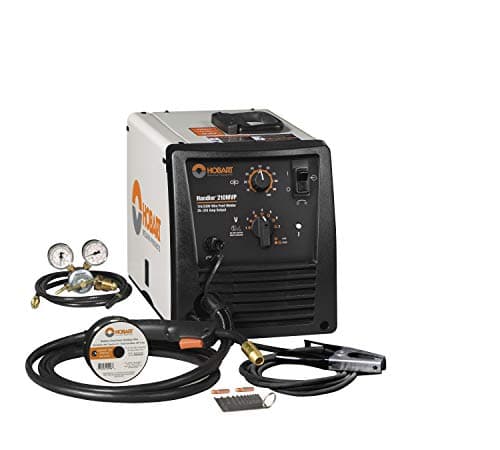 Hobart Handler 210 MVPA published 3/8 in single-pass capacity, so 1/4 in is comfortably inside the envelope rather than at its edge. | Best overall | |
| 2 | 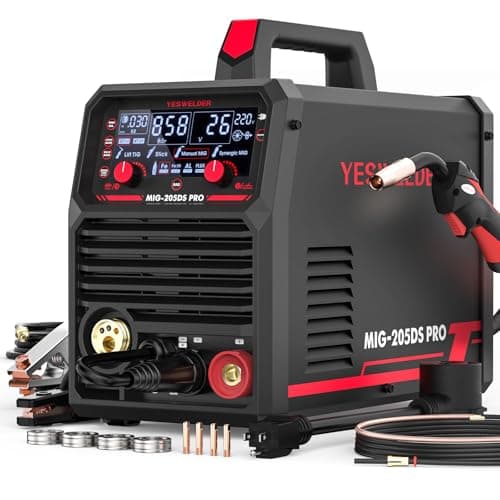 YESWELDER MIG-205DS PRO205 A of MIG or stick on 220 V, which clears 1/4 in on either process, from a 22.7 lb machine. | Most processes at the thickness | |
| 3 | 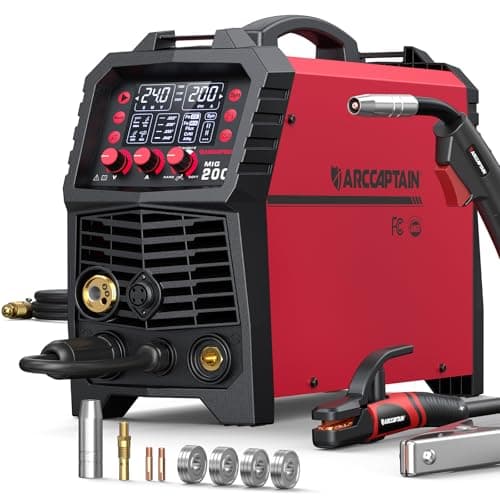 ARCCAPTAIN MIG200Synergic control at 200 A, so the voltage and wire speed pairing is handled for you. | Easiest to set correctly | |
| 4 | 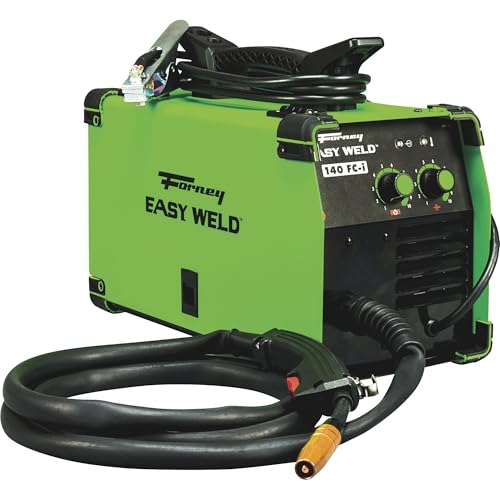 Forney Easy Weld 261 140 FC-iA stated 1/4 in capacity and a 30% duty cycle at 90 A, on a household outlet, for 19 lb. | Cheapest with a published 1/4 in rating | $337.99 · View on Amazon #ad How this is funded · Price as of November 13, 2026 |
What size welder do you need for 1/4 inch steel?
Around 180 to 200 amps for a confident single-pass weld on 1/4 inch mild steel, which in practice means a 240 V machine. A 140 amp 120 V machine will do 1/4 inch at the top of its range with joint preparation or multiple passes — several publish exactly that capacity — but it has no margin left. The rule of thumb is roughly 1 amp per 0.001 inch of thickness for single-pass mild steel.
Quarter-inch steel is the most useful single number in home welding, because it is where the whole 120 V class stops. Machine after machine in that category publishes a capacity of "up to 1/4 inch" — the Forney Easy Weld 140 FC-i does, and it is not a coincidence. A 20 amp household circuit will support about 140 welding amps, 140 amps gets you to about a quarter of an inch, and that is the ceiling the class is designed up to.
So the question behind this page is really: do you want to be at that ceiling, or above it?
Single pass, and why the phrase matters
A single-pass capacity is the thickness a machine will fuse in one run of the torch on a square butt joint. It is the figure manufacturers publish and the one worth comparing.
You can weld thicker than a machine's single-pass rating by preparing the joint — grinding a bevel so the weld has somewhere to go — and running multiple passes, which is how structural steel is welded at every thickness. Done properly it is entirely sound. Done casually, with no bevel and three beads stacked on top of each other, it is a weld that looks thick and has not fused at the root.
That is why margin matters at this thickness more than at any other. On thin steel, too much machine shows up immediately as a hole. At 1/4 inch, too little machine shows up as cold lap — a bead sitting on unfused parent metal, which looks like a weld and carries almost no load. It is invisible without cutting the joint open, and it is the single most common serious defect in home welding.
The published numbers, side by side
| Machine | Input | Output | Published steel capacity | Duty cycle |
|---|---|---|---|---|
| Hobart Handler 210 MVP | 115 V or 230 V | 25–210 A (140 A on 115 V) | 24 ga to 3/8 in single pass | 30% at 150 A |
| YESWELDER MIG-205DS PRO | 110 V or 220 V | MIG 30–205 A; stick 20–205 A at 220 V | — | — |
| ARCCAPTAIN MIG200 | 110 V or 220 V | 200 A max | — | — |
| Forney Easy Weld 261 140 FC-i | 120 V, 20 A minimum | 140 A max | Up to 1/4 in | 30% at 90 A |
| YESWELDER FLUX-135PRO | 110 V | 135 A max | Up to 3/32 in | — |
The arithmetic, so you can check any machine
The conventional rule for single-pass mild steel is roughly 1 amp per 0.001 inch of thickness. Quarter-inch is 0.250 inch, so about 250 amps for a comfortable single pass on a square butt joint — which is why 1/4 inch gets described as both "a 140 amp machine will do it" and "you want 200 amps" depending on who is talking.
Both are true, and the difference is joint type. A fillet weld in a T-joint or a lap joint at 1/4 inch is comfortably inside a 180 to 200 amp machine, because the heat has two surfaces to work into. A square butt joint at the same thickness is the hard case. Most real home fabrication is fillets and laps, which is why 180 to 200 amps is the practical answer rather than 250.
How many amps a welder uses works the input side of this — what the machine draws from the wall rather than what it puts into the steel. And what size welder do I need covers the full thickness-to-amperage table across every level.
The cheapest way to weld thicker than your machine
Preheat and preparation, not a bigger welder. Grinding a 30 to 37 degree bevel on each edge of a 1/4-inch butt joint gives the weld a V to fill and lets a smaller machine fuse the root properly. Two or three passes into a prepared joint is sound practice, not a bodge.
Preheating thick steel to a hand-warm temperature with a propane torch slows the cooling rate and reduces the risk of a hard, brittle heat-affected zone. Neither costs anything, and between them they are most of the difference between a 140 amp machine being adequate at 1/4 inch and being inadequate.
What about TIG and stick at this thickness
Stick is genuinely good at 1/4 inch and better than its reputation suggests. A 7018-class electrode at 150 to 180 amps makes an excellent structural weld on quarter-inch plate, tolerates dirty steel, and needs no gas. If the 1/4-inch steel you are welding is outdoors or rusty, stick capability is worth more than another fifty amps of MIG.
TIG will do it — the AHP AlphaTIG 200X publishes a mild steel capacity to 3/8 inch — but it is slow at this thickness and there is rarely a reason. TIG earns its place on thin stainless, on aluminum and where the bead has to look perfect, which Level 3 covers. On structural quarter-inch steel, wire or stick is faster and no weaker.
Which one to buy
Hobart Handler 210 MVP if you expect to work at 1/4 inch regularly and have 240 V. A 3/8-inch rating gives you the margin that makes quarter-inch easy rather than maximal.
YESWELDER MIG-205DS PRO if the thick steel you weld is dirty, outdoors or already installed somewhere. Stick at 205 amps plus 22.7 pounds is the right combination for that.
ARCCAPTAIN MIG200 if this is your first time working at structural thickness and you would rather the machine set the pairing for you.
Forney Easy Weld 140 FC-i if 1/4 inch is the occasional job rather than the norm, and you want the cheapest machine that publishes the capacity. Prepare your joints and it will do what Forney says it will.
If what you are actually welding is a trailer, welders for trailer repair is the more specific page. For gates and fence posts at this thickness, see welders for gates and fences.
A quarter inch is a threshold rather than a ceiling. For what happens above it — single-pass capacity, duty cycle and multi-pass technique — the best welders for thick steel picks the question up from here.
1. Best overall
Hobart Handler 210 MVP
A published 3/8 in single-pass capacity, so 1/4 in is comfortably inside the envelope rather than at its edge.
Hobart publishes 115 V or 230 V input via the multi-voltage plug, 25 to 210 amps (140 amps on 115 V, 210 amps on 230 V), a 30% duty cycle at 150 amps, a 24-gauge to 3/8-inch single-pass steel capacity, and seven voltage settings on 230 V against four on 115 V.
The reason this is first is the margin. A machine rated to exactly 1/4 inch does 1/4 inch at its absolute ceiling, with everything set to maximum and nothing in reserve. A machine rated to 3/8 inch does 1/4 inch in the middle of its range, which means a cooler setting, a finer adjustment and a weld you can control rather than one the machine is just about managing.
Seven voltage taps on 230 V is the under-appreciated half of that. Capacity gets you to the thickness; granularity gets you a good weld at it. Four taps on a 120 V machine means choosing the nearest acceptable setting; seven means something close to the right one.
Do not buy it to run on 115 V. At that input it is a 140 amp machine with four taps, which is a more expensive Handler 140EZ. What size breaker for a welder covers what the 240 V circuit costs.
What works
- The multi-voltage plug means you can buy it before you have run a 240 V circuit and get the full 210 A later
- 3/8 in single-pass capacity covers essentially every home fabrication job
- 30% duty cycle at 150 A is a real working duty cycle, not a demonstration figure
What does not
- Heavy enough that you will want a cart, which is another purchase
- On 115 V you get 140 A — no more than the Handler 140EZ, at a much higher price. The value only appears once you have the 240 V outlet
- No spool gun included, so aluminum is a further purchase
2. Most processes at the thickness
YESWELDER MIG-205DS PRO
205 A of MIG or stick on 220 V, which clears 1/4 in on either process, from a 22.7 lb machine.
Gas MIG, flux-core, spool-gun MIG, lift TIG and stick; 110 V or 220 V; MIG 30 to 205 amps and stick 20 to 205 amps at 220 V; wire feed 58 to 858 inches per minute; 22.7 pounds.
Having stick at 205 amps as well as MIG is what makes this interesting at this thickness. Quarter-inch steel is often structural and frequently outdoors or dirty — gate posts, brackets, hitch work, repairs to existing fabrication. Stick handles contamination and wind better than solid wire with gas, and at 1/4 inch you have the amperage to run a 7018-class electrode properly.
On 110 V the MIG range drops to 30 to 160 amps, which still reaches 1/4 inch but at the top of the machine. Publishing both figures separately rather than one headline number is the thing worth noticing here.
At 22.7 pounds it is also the lightest machine on this page by a wide margin, which matters when the 1/4-inch steel in question is already installed somewhere.
What works
- Synergic mode sets voltage and wire speed from the thickness you select, which removes the single hardest part of learning MIG
- Spool-gun capable, so aluminum is a gun purchase rather than a machine purchase
- 22.7 lb for a 205 A dual-voltage machine is remarkable
What does not
- Lift TIG is DC only and has no foot pedal, so it will not weld aluminum and is not a route to Level 3
- Five processes means five sets of consumables to stock
- Dealer support and warranty handling are not on the level of Hobart or Lincoln
3. Easiest to set correctly
ARCCAPTAIN MIG200
Synergic control at 200 A, so the voltage and wire speed pairing is handled for you.
Gas MIG, flux-core, stick, lift TIG, spot and spool-gun capability; 110 V or 220 V dual voltage; 200 amps maximum; synergic control with 2T/4T and burn-back adjustment.
Thick steel punishes a bad setting differently from thin steel. On sheet you get burn-through, which is obvious. At 1/4 inch you get a weld that looks acceptable and has not fused to the root — cold lap — which is invisible and is the failure mode that matters on anything load-bearing.
Synergic control is the direct answer to that. You give the machine one input and it sets voltage and wire speed as a matched pair, which removes the specific mistake — too little voltage for the wire speed — that produces cold lap in the first place. For someone working at 1/4 inch for the first time it is worth more than twenty amps of headroom.
200 amps on 220 V is ample for the thickness. Support runs through the manufacturer rather than a dealer counter, which is the trade at this end of the market.
What works
- Spool-gun support is built in rather than a model-specific accessory question, and that question is the whole aluminum decision on a MIG machine
- Synergic control sets voltage from wire speed, so the first hour is spent welding rather than reading a chart
- Dual voltage and six processes mean it stays useful well past the point most first machines stop
What does not
- The spool gun is a separate purchase, and not a small one
- 200 A is the 220 V figure. On a household outlet the usable output is much lower
- Dealer support is thin next to Hobart or Lincoln, which is what you notice when something breaks
4. Cheapest with a published 1/4 in rating
Forney Easy Weld 261 140 FC-i
A stated 1/4 in capacity and a 30% duty cycle at 90 A, on a household outlet, for 19 lb.
Forney publishes flux-core only, 120 V on a 20 amp circuit minimum, 140 amps maximum, a 30% duty cycle at 90 amps, 0.030 and 0.035-inch flux-cored wire, a steel capacity of up to 1/4 inch, and 19 pounds.
That published figure is the entire reason this machine is on the page: it is the cheapest thing here that the manufacturer states will do the thickness. And the 30% duty cycle at 90 amps is unusually generous for its class, which matters because 1/4-inch work means longer beads than sheet work does.
Read "up to" honestly, though. At 1/4 inch you are at the ceiling of a 140 amp machine, which means maximum settings, careful joint preparation, and a bevel or multiple passes on a butt joint rather than one confident pass. It will do it. It will not do it with margin.
Flux-core also means slag on every bead and no gas bottle to buy — a genuine advantage outdoors and on dirty steel, which a lot of 1/4-inch work is.
What works
- 30% duty cycle at 90 A is unusually generous for a 120 V machine in this class
- Infinite voltage and wire-speed control rather than four fixed taps, so you can actually dial a setting in
- 19 lb — genuinely carryable to the job instead of the job coming to it
- No gas bottle, no regulator, no second purchase before your first weld
What does not
- Flux-core only. It will never run gas, so it cannot become your Level 2 machine
- Every weld leaves slag that has to be chipped and wire-brushed off
- Needs a 20 A circuit — a 15 A garage lighting circuit will trip at higher settings
Who this is wrong for: Repeated structural work at 1/4 in and above. At that thickness it is at its ceiling, with nothing in reserve.
Questions people actually ask
What amp welder do I need for 1/4 inch steel?
Around 180 to 200 amps for a confident single-pass weld, which in practice means a 240 V machine. The conventional rule is roughly 1 amp per 0.001 inch of thickness for single-pass mild steel.
A 140 amp 120 V machine will do 1/4 inch at the top of its range with a bevelled joint or multiple passes, and several publish exactly that capacity - but with no margin in reserve.
Can a 120V welder weld 1/4 inch steel?
Yes, at its ceiling. A 20 amp household circuit supports about 140 welding amps, and 140 amps gets you to about a quarter inch - which is why so many machines in that class publish a capacity of exactly 'up to 1/4 inch'.
Expect to grind a bevel and run more than one pass on a butt joint. Fillet and lap joints at that thickness are easier, because the heat has two surfaces to work into.
What does single-pass capacity mean?
The thickness a machine will fuse in one run of the torch on a square butt joint. It is the figure manufacturers publish and the one worth comparing between machines.
You can weld thicker by grinding a bevel and running multiple passes, which is how structural steel is welded at every thickness. Done with proper preparation it is entirely sound.
What is cold lap and why does it matter at 1/4 inch?
A bead sitting on parent metal it has not actually fused to. It looks like a weld and carries almost no load.
On thin steel, too little heat shows up obviously. At 1/4 inch it hides, because the bead can look full and correct while the root never melted. It is the most common serious defect in home welding and the main argument for buying a machine with margin.
Is stick welding good for 1/4 inch steel?
Very. A 7018-class electrode at 150 to 180 amps makes an excellent structural weld on quarter-inch plate, tolerates rust and paint far better than solid wire with gas, and needs no shielding gas at all.
If the thick steel you are welding is outdoors or dirty, stick capability is worth more than another fifty amps of MIG output.
Sources
- Hobart — Handler 210 MVP published specifications: 24 ga to 3/8 in single pass, 25–210 A, 30% at 150 A
- Forney — Easy Weld 261 140 FC-i published specifications: up to 1/4 in steel, 140 A, 30% at 90 A
- YESWELDER — MIG-205DS PRO published specifications: MIG and stick output by input voltage
- ARCCAPTAIN — MIG200 published specifications: 200 A, synergic control
- American Welding Society — joint preparation and multi-pass practice for plate thicknesses above single-pass capacity
Read next
- What size welder do I need?
Amperage against thickness, duty cycle read honestly, and whether you need a bigger machine or a different circuit.
- The best welders for trailer repair
Rusty steel, wind and no bench. Four machines that handle trailer work, and why stick matters.
- The best welders for gates and fences
Outdoors, at the post, on an extension cord. Four gasless-capable machines for gate work.
- How many amps does a welder use?
Input amps by machine type and voltage, and why it is a completely different number from the output on the box.
- 120V vs 240V welders: which one do you actually need?
The decision that sets your ceiling: what each supply voltage welds, and what the circuit really costs.
- Find your level before you spend a penny
Most bad first welder purchases are not bad machines. They are the right machine bought by the wrong person, one level too early or one level too late.
Back to Find Your Level, or start over at Find Your Level.
Ryder M.
Ryder M. is the hands-on owner behind Magoo Media Group. He writes Arc & Bead's buying guides and picks every machine on the site. What every recommendation is based on — and what it is not based on — is set out on How We Pick.