The best welders for trailer repair
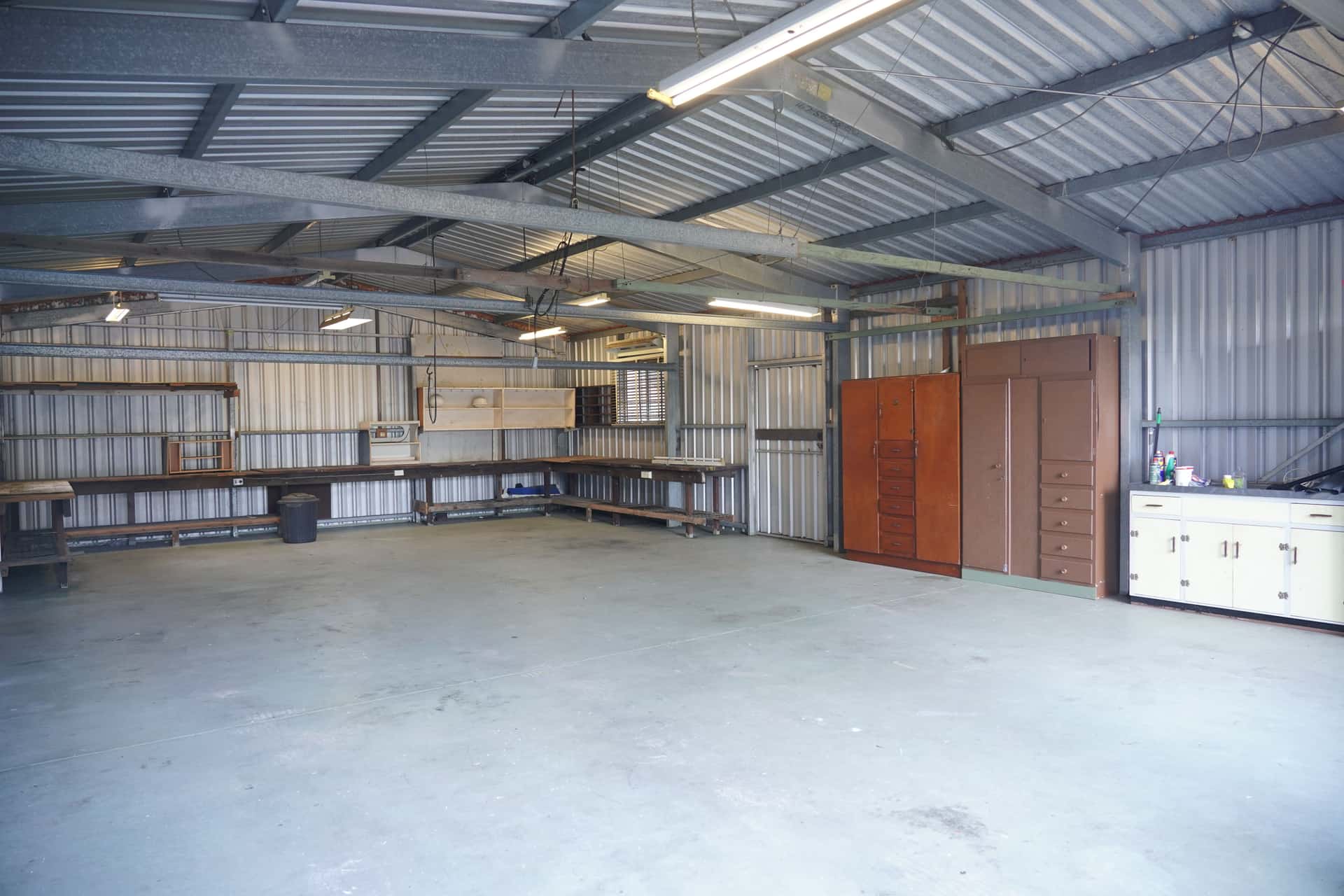
A trailer is the one job that punishes a pure gas MIG machine — rusty steel, a windy driveway and no bench to bring it to.
Arc & Bead is an Amazon Associate. If you buy through a link on this page we may earn a commission, at no extra cost to you. We have not physically tested the machines on this page and we say so on How We Pick.
Quick picks
Tap any row to jump to the full write-up further down this page.
| # | Product | Best for | Price |
|---|---|---|---|
| 1 | 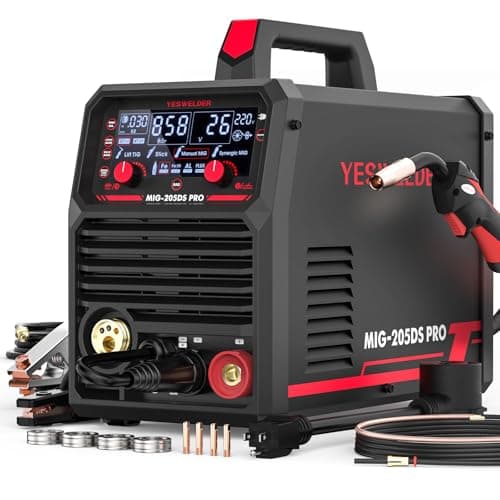 YESWELDER MIG-205DS PROFive processes including stick, 22.7 lb, and dual voltage — the three things trailer work actually needs. | Best overall for trailers | |
| 2 | 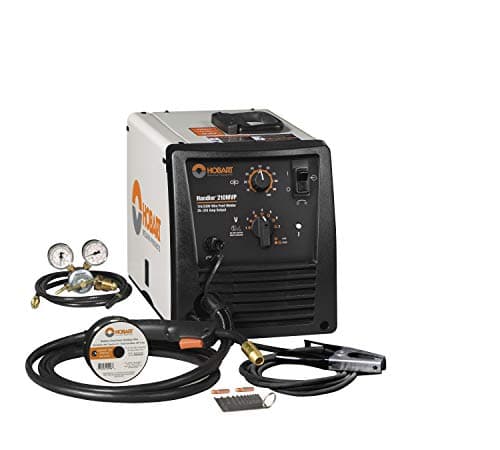 Hobart Handler 210 MVPA published 3/8 in single-pass capacity and 30% duty cycle at 150 A — the one that handles tongue and axle steel. | Most capacity for frame work | |
| 3 | 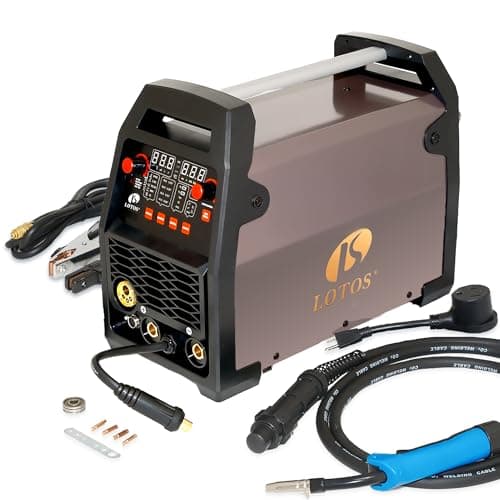 Lotos MIG180Gas MIG, flux-core, stick and DC lift TIG, and it runs off a household outlet. | Best portable with stick | $359.98 · View on Amazon #ad How this is funded · Price as of November 13, 2026 |
| 4 | 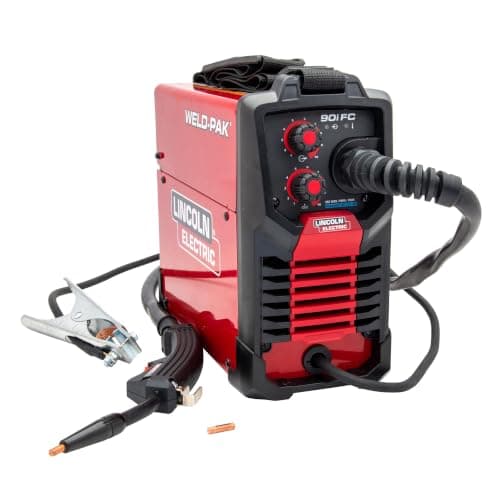 Lincoln Electric Weld-Pak 90i FC (K5255-1)Gasless flux-core on a household outlet, with everything you need in the box. | Simplest option that arrives working | $328.00 · View on Amazon #ad How this is funded · Price as of November 13, 2026 |
What welder do you need for trailer repair?
A dual-voltage multiprocess machine that can run flux-core and stick as well as gas MIG, with enough output for 1/4 to 3/8 inch steel. Trailer repair is outdoor work on rusty, painted steel of mixed thickness, which is the exact combination that makes a pure gas MIG machine the wrong tool — gas blows away in wind and solid wire does not tolerate contamination.
Most "best welder for X" pages answer this one with whatever gas MIG machine they recommend everywhere else. That is the wrong answer, and the reasons are specific enough to be worth spelling out.
The steel is dirty. A trailer has spent its life in weather and road salt. Surface rust, chassis paint, undercoating and an unknown factory weld are all normal, and you frequently cannot grind back to bright metal because the area is boxed in or you would remove structure doing it. Solid wire with gas is the least contamination-tolerant process in common use. Stick is the most.
The work is outdoors. Trailers get repaired where they are parked. Shielding gas needs still air — a breeze of a few miles an hour will strip it off the puddle, and the result is porosity you cannot see and a weld that fails later. Flux-core carries its shielding inside the wire, which is precisely why it exists.
The thickness varies wildly. Fender sheet in the same afternoon as a 3/8-inch spring hanger. A machine with a narrow usable range makes one of those two jobs bad.
It is often structural. A coupler, a tongue, a safety-chain mount or an axle bracket carries load at highway speed with other people behind it. That is a different standard of care from a garden gate, and it is the reason the cheapest pick on this page is explicitly limited to the jobs that are not structural.
How we ranked them
1. Process flexibility, with stick weighted heavily. Flux-core solves wind; stick solves dirt. A machine with both covers the two conditions that define this job.
2. Output at the top end. Enough for 1/4 inch comfortably and 3/8 inch if the repair is structural. This is where 120 V machines hit their ceiling.
3. Duty cycle. Structural trailer welds are long, not tacks. 30% at 150 amps is a different experience from 30% at 90.
4. Portability and input flexibility. The trailer does not come to you. Light enough to carry, and able to run from whatever power is actually at the site.
The published numbers, side by side
| Machine | Processes | Input | Output | Steel capacity | Weight |
|---|---|---|---|---|---|
| YESWELDER MIG-205DS PRO | MIG, flux-core, spool gun, lift TIG, stick | 110 V or 220 V | MIG 30–205 A; stick 20–205 A at 220 V | — | 22.7 lb |
| Hobart Handler 210 MVP | Gas MIG, flux-core | 115 V or 230 V | 25–210 A (140 A on 115 V) | 24 ga to 3/8 in single pass | — |
| Lotos MIG180 | Gas MIG, flux-core, stick, DC lift TIG, spot, spool-gun aluminum | 110–125 V or 210–250 V | MIG to 180 A; stick to 160 A | Up to 1/4 in | — |
| Lincoln Weld-Pak 90i FC | Flux-core only | 120 V | — | Up to 1/4 in | — |
Structural trailer welds are not a learning project
A coupler, tongue, spring hanger, safety-chain mount or axle bracket carries load on a public road. If a weld on one of those fails, the trailer leaves the vehicle at speed. That is the one category of home welding where "good enough" is the wrong standard and getting it inspected or done by a shop is a reasonable decision rather than a defeat.
Lights, fenders, floors, steps, toolboxes, tie-down points on a deck and bodywork are genuinely good first jobs. Know which group your repair is in before you strike an arc, and if you are not sure, treat it as structural.
Why stick keeps coming up
Because contamination tolerance is a real property of a process, not a technique you can learn around. Solid wire with a gas shield relies on the gas excluding air from the puddle; rust, paint and oil introduce hydrogen and oxygen directly into it, and the result is porosity and inclusions. A stick electrode's flux coating generates its own shielding gas and a slag that floats contamination out of the puddle, which is why repair and maintenance work has run on stick for decades.
You still clean what you can. A wire wheel on a grinder over rusty steel costs five minutes and improves any process. The point is that on a trailer you often cannot clean all of it, and the machine choice should assume that rather than pretend otherwise.
Flux-core wire sits between the two: more tolerant than solid wire with gas, less tolerant than stick, and it brings wind immunity with it. Stick versus MIG covers the full comparison, and the wire size chart covers which diameter to run at which thickness.
Which one to buy
YESWELDER MIG-205DS PRO if you want one machine that covers the whole job — stick for the rusty repairs, flux-core for the windy ones, gas MIG for the clean ones, and light enough to carry out to the trailer.
Hobart Handler 210 MVP if your trailer work is structural and you have 240 V. A published 3/8-inch single-pass rating and a 30% duty cycle at 150 amps is the right specification for frame steel.
Lotos MIG180 if the work is at the trailer with a household outlet, and having stick available matters more to you than reaching 210 amps.
Lincoln Weld-Pak 90i FC if the job is a fender, a light mount or a bracket and you want a name-brand gasless machine with parts you can actually buy.
For farm trailers and implements specifically, flux-core welders for farm use approaches the same conditions from the gasless end. If the thickness is the whole question, welders for 1/4 inch steel is the capability page.
1. Best overall for trailers
YESWELDER MIG-205DS PRO
Five processes including stick, 22.7 lb, and dual voltage — the three things trailer work actually needs.
Gas MIG, flux-core, spool-gun MIG, lift TIG and stick; 110 V or 220 V input; 30 to 205 amps MIG and 20 to 205 amps stick at 220 V; 22.7 pounds.
The reason this is first and not a bigger gas machine is the stick capability. Trailer steel is the dirtiest material most home welders ever join — surface rust, old paint, road salt, chassis coating, and often an existing weld of unknown origin underneath. Stick electrodes are far more tolerant of all of that than solid wire with gas, and on a repair you cannot grind back to clean bright metal, stick is the process that works rather than the process you wish worked.
Flux-core is the second reason. A trailer is outdoors, and shielding gas blows away in a breeze — a gas MIG weld in wind is a porous weld that looks fine and is not. Flux-core carries its own shielding in the wire, so wind stops being a problem. Flux-core versus MIG covers that trade in full.
At 22.7 pounds and dual voltage it also goes to the trailer, which is the practical constraint nobody lists: you are not carrying a tandem-axle frame into a garage. On a generator or a long cord at 110 V you still have 160 amps of MIG, which is enough for most frame and fender work.
What works
- Synergic mode sets voltage and wire speed from the thickness you select, which removes the single hardest part of learning MIG
- Spool-gun capable, so aluminum is a gun purchase rather than a machine purchase
- 22.7 lb for a 205 A dual-voltage machine is remarkable
What does not
- Lift TIG is DC only and has no foot pedal, so it will not weld aluminum and is not a route to Level 3
- Five processes means five sets of consumables to stock
- Dealer support and warranty handling are not on the level of Hobart or Lincoln
2. Most capacity for frame work
Hobart Handler 210 MVP
A published 3/8 in single-pass capacity and 30% duty cycle at 150 A — the one that handles tongue and axle steel.
Hobart publishes 115 V or 230 V input, 25 to 210 amps, a 30% duty cycle at 150 amps, a 24-gauge to 3/8-inch single-pass steel capacity, and seven voltage settings on 230 V.
Trailer steel is not one thickness, and that is the problem this machine solves. Fenders and sheet panels are thin; a tongue, a coupler mount, a spring hanger or an axle bracket can be 1/4 to 3/8 inch. A 140 amp machine handles the first group comfortably and the second only with multiple passes and a lot of preheat optimism. A published 3/8-inch single-pass rating removes that compromise.
The 30% duty cycle at 150 amps matters more here than on most pages. Trailer repair tends to be long structural welds rather than short tacks — a full-perimeter weld on a new spring hanger plate, for instance — and that is exactly the work a 20% machine makes you wait through.
It runs flux-core as well as gas, so the wind problem is solved. What it does not do is stick, which is the one argument against it on genuinely rusty repairs.
What works
- The multi-voltage plug means you can buy it before you have run a 240 V circuit and get the full 210 A later
- 3/8 in single-pass capacity covers essentially every home fabrication job
- 30% duty cycle at 150 A is a real working duty cycle, not a demonstration figure
What does not
- Heavy enough that you will want a cart, which is another purchase
- On 115 V you get 140 A — no more than the Handler 140EZ, at a much higher price. The value only appears once you have the 240 V outlet
- No spool gun included, so aluminum is a further purchase
Who this is wrong for: Repairs you cannot clean back to decent metal. Without stick capability, rusty and painted steel is harder than it needs to be.
3. Best portable with stick
Lotos MIG180
Gas MIG, flux-core, stick and DC lift TIG, and it runs off a household outlet.
Lotos publishes gas MIG, gasless flux-core, stick, DC lift TIG, spot and spool-gun aluminum; 110–125 V or 210–250 V input; MIG to 180 A and stick to 160 A. For trailer work on a driveway with an extension cord, that combination is unusually well matched to the job.
Stick on a machine you can plug into a household outlet is the specific thing worth paying for here. It means you can put 6011 or 6013 into a rusty hanger bracket on a trailer parked in a yard, with nothing but that outlet. No bottle to carry out, no gas to blow away, and an electrode that does not mind what the steel has been through.
The published capacity is the real limit: 1/4 inch mild steel. On 1/4-inch you are working at the top of the machine; on 3/8-inch you are doing multiple passes and should probably not be. For fenders, floors, lights, mounts and light frame repair it is enough. Note too that the 180 A and 160 A figures are the 240 V ratings — Lotos publishes no separate 120 V output.
Watch the extension cord. A long undersized cord costs you voltage at the arc and shows up as poor penetration you will blame on the welder — welder extension cords has the gauge and length figures.
What works
- Stick capability matters more than it sounds: rusty, painted or outdoor steel is where MIG struggles and stick does not
- A published 160 A stick rating is a real stick machine, not a token third process on the switch
- Synergistic MIG sets voltage and wire speed together, so the first hour goes on welding rather than on a settings chart
What does not
- The headline 180 A and 160 A figures are the 240 V ratings; Lotos does not publish a separate 120 V output
- TIG is lift-start DC with no high-frequency start, and the torch is a separate purchase — treat it as a bonus, not a feature you bought
- The spool gun is also sold separately, and DC lift TIG cannot weld aluminum whatever gun you fit
- Dealer support and warranty handling are not on the level of Hobart or Lincoln
4. Simplest option that arrives working
Lincoln Electric Weld-Pak 90i FC (K5255-1)
Gasless flux-core on a household outlet, with everything you need in the box.
Lincoln publishes flux-core only operation on 120 volts, a capacity of up to a quarter of an inch in mild steel, infinite voltage control on two knobs, and a 15-pound inverter with a shoulder strap and a metal carry case.
What it does well is arrive working. Gasless flux-core on a wall socket means no bottle, no regulator and no wind problem, and the gun, nozzle, contact tip, work cable and clamp are already in the box — so if the job is a bent fender bracket on a utility trailer this weekend, nothing on this page gets you there with fewer purchases.
Read the quarter-inch figure as a single-pass ceiling rather than an invitation. This machine is here for fenders, light mounts, floor plate, steps and bracketry — the trailer jobs that are not structural. It is not a frame machine and Lincoln does not claim it is.
The honest limit is that it has no gas capability at all. Every weld leaves slag to chip, and the day you want a clean bead is the day you buy a different welder.
What works
- Infinite voltage control rather than fixed taps, so a setting can actually be dialled in rather than chosen from four
- Two knobs and nothing else — the shortest path from box to first bead of anything Lincoln sells
- 15 lb with a shoulder strap and a metal carry case, so it goes to the work
- Lincoln's dealer and consumable network is the best in the category, which matters on a first machine
What does not
- Flux-core only. It will never run gas, so it cannot become your Level 2 machine
- Costs noticeably more than a budget-brand 135 A gasless machine of similar output
- Every weld leaves slag that has to be chipped and wire-brushed off
Who this is wrong for: Anything structural, and anyone who expects to run gas later. Tongues, couplers, spring hangers and axle brackets are past the published capacity, full stop.
Questions people actually ask
What welder is best for trailer repair?
A dual-voltage multiprocess machine that runs flux-core and stick as well as gas MIG, with enough output for 1/4 to 3/8 inch steel.
Trailer repair is outdoor work on rusty, painted steel of mixed thickness. Gas blows away in wind and solid wire does not tolerate contamination, which is why a pure gas MIG machine is the wrong default here.
Can you weld a trailer frame with a 120V welder?
For fenders, floors, light mounts, steps and bracketry, yes. For structural frame members - tongue, coupler, spring hangers, axle brackets - a 120 V machine is at or past its ceiling.
Those parts carry load at highway speed. A published 3/8 inch single-pass capacity on a 240 V machine is the right specification for them.
Should I use flux-core or gas MIG on a trailer?
Flux-core, if the trailer is outdoors. Shielding gas needs still air, and a breeze of a few miles an hour will strip it off the puddle and leave porosity you cannot see.
Flux-core carries its shielding inside the wire, so wind stops being a factor. Gas MIG is the better choice only if the work is inside and the steel is clean.
Why is stick welding recommended for trailer repair?
Contamination tolerance. A stick electrode's flux coating generates its own shielding gas and a slag that floats contamination out of the puddle, which is why repair work has run on stick for decades.
Trailer steel is rusty, painted and often impossible to grind back to bright metal. Solid wire with gas is the least tolerant process in common use; stick is the most.
Is it safe to weld your own trailer?
For non-structural parts - lights, fenders, floors, steps, toolboxes - it is ordinary home welding and a good first job.
For the coupler, tongue, safety-chain mounts, spring hangers and axle brackets, a failure puts the trailer on the road behind you at speed. If you are not confident, having that work inspected or done by a shop is a reasonable decision.
Sources
- YESWELDER — MIG-205DS PRO published specifications: five processes, stick output, 22.7 lb
- Hobart — Handler 210 MVP published specifications: 3/8 in single pass, 30% duty cycle at 150 A
- Lotos — MIG180 published specifications: six modes, 110–125 V or 210–250 V, MIG to 180 A, stick to 160 A, 1/4 in mild steel
- Lincoln Electric — Weld-Pak 90i FC (K5255-1) published specifications: 120 V, up to 1/4 in
- American Welding Society — guidance on surface condition and contamination tolerance by process
Read next
- Stick vs MIG welding for a home shop
Stick handles rust, wind and thick plate; MIG is faster and cleaner. Why most shops want both.
- The best flux-core welders for farm use
Gasless machines for outdoor, rusty, away-from-the-bench farm repairs — and what runs off a generator.
- The best welders for 1/4 inch steel
Quarter-inch steel is where 120V machines run out. Four with the published capacity, ranked.
- Welder extension cords: how to size one properly
Voltage drop, gauge and length — why a thin cord makes a good machine weld badly.
- Flux-core vs MIG for beginners: which should you learn on?
Where the shielding comes from, and how that one difference changes everything downstream.
- Level 2 · MIG: when the gas bottle is finally worth it
You can already lay a bead. This level is about what changes when you add a gas bottle — and about being honest that it is not only an upgrade.
Back to Level 2 · MIG, or start over at Find Your Level.
Ryder M.
Ryder M. is the hands-on owner behind Magoo Media Group. He writes Arc & Bead's buying guides and picks every machine on the site. What every recommendation is based on — and what it is not based on — is set out on How We Pick.