The best respirators for welding
The helmet protects your eyes and does nothing about what you are breathing. The right answer is cheaper than most people expect, and the specification that matters is not comfort - it is the filter class.
Arc & Bead is an Amazon Associate. If you buy through a link on this page we may earn a commission, at no extra cost to you. We have not physically tested the machines on this page and we say so on How We Pick.
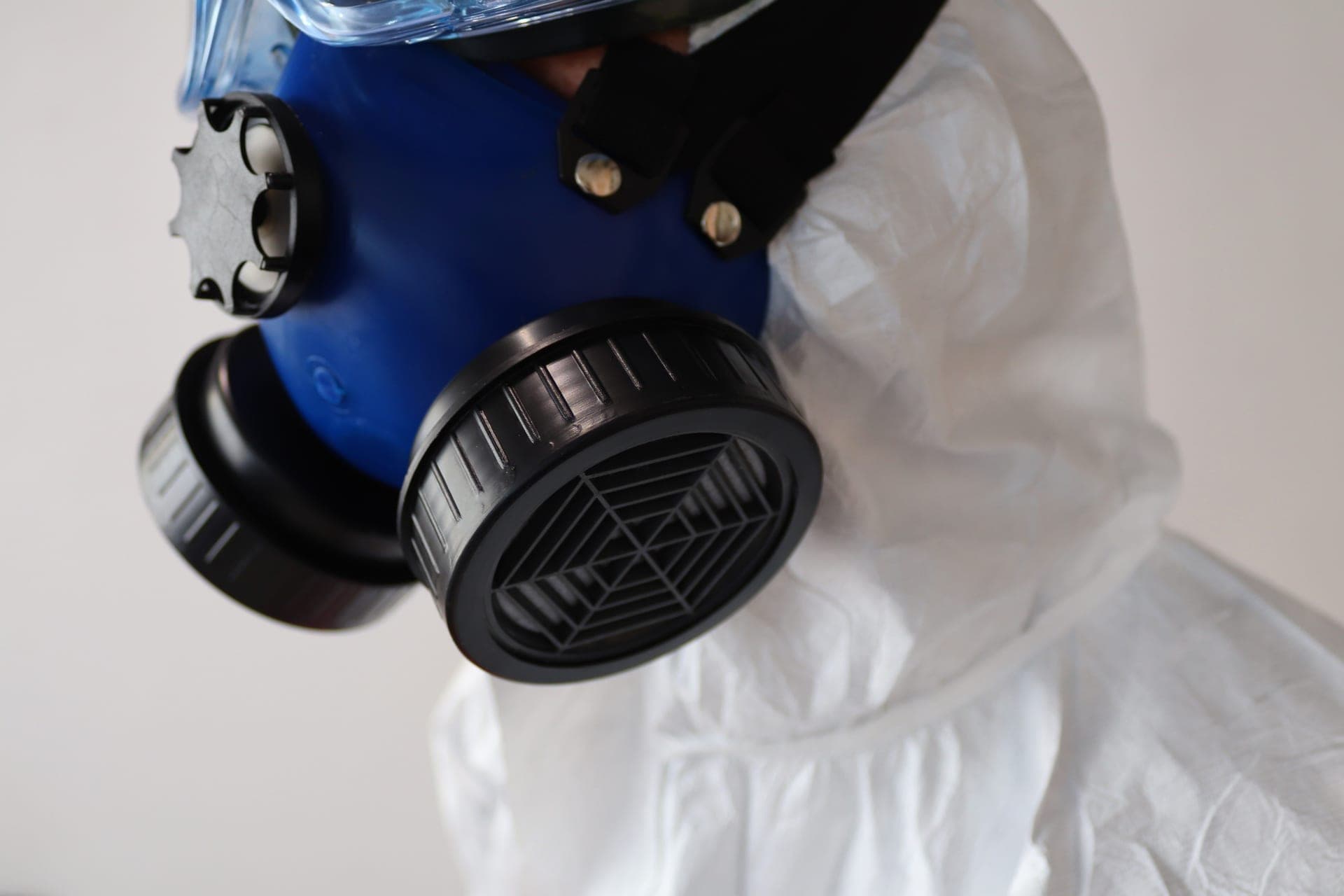
Quick picks
Tap any row to jump to the full write-up further down this page.
| # | Product | Best for | Price |
|---|---|---|---|
| 1 | 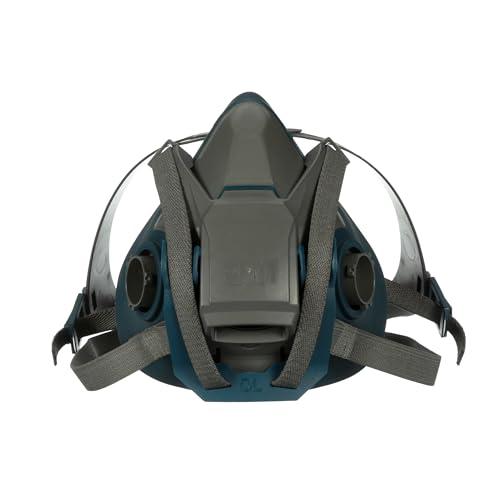 3M Rugged Comfort Quick Latch 6503QL half facepieceThe only mask here that 3M itself publishes as compatible with welding and grinding shields, with a one-hand latch that drops it off your face without removing the headgear. | Best overall | $20.80 · View on Amazon #ad How this is funded · Price as of November 28, 2026 |
| 2 | 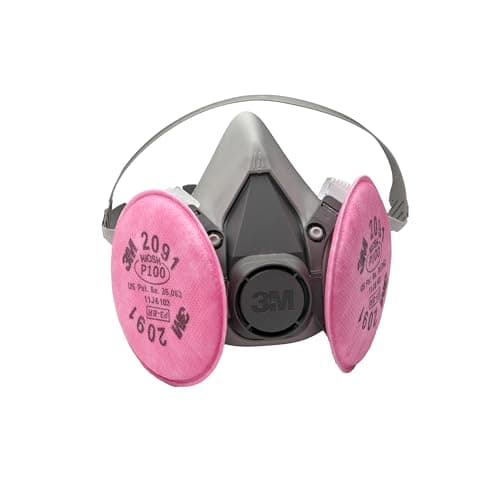 3M 6000-series half-mask respirator with P100 filtersThe cheapest way to be welding with real protection today, because the P100 filters are already in the box. | Budget pick | $24.88 · View on Amazon #ad How this is funded · Price as of November 28, 2026 |
| 3 | 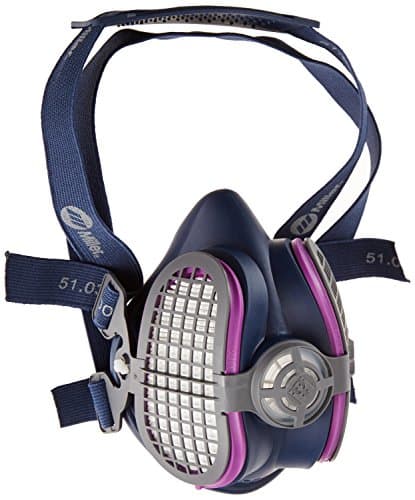 Miller LPR-100 half-mask respiratorDesigned from the start to sit under a welding helmet rather than adapted to it, with a large non-return exhaust valve. | Lowest profile under a hood | $51.88 · View on Amazon #ad How this is funded · Price as of November 28, 2026 |
| 4 | 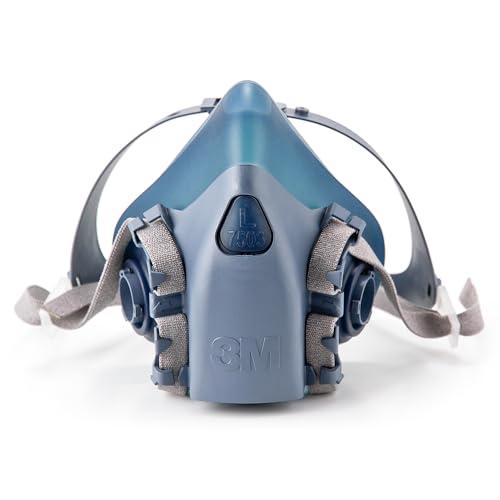 3M 7502 silicone half facepiece respiratorThe silicone 7500-series shell, and the one facepiece here whose published application list names welding outright. | Best for long sessions | $37.22 · View on Amazon #ad How this is funded · Price as of November 28, 2026 |
| 5 | 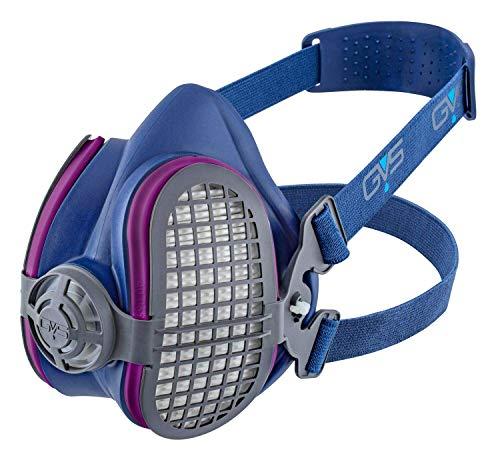 GVS SPR457 Elipse P100 half maskIntegrated flat filters and a latex-free, silicone-free seal - the mask for a tight shell or a skin reaction. | Flattest, and silicone-free | $59.12 · View on Amazon #ad How this is funded · Price as of November 28, 2026 |
| 6 | 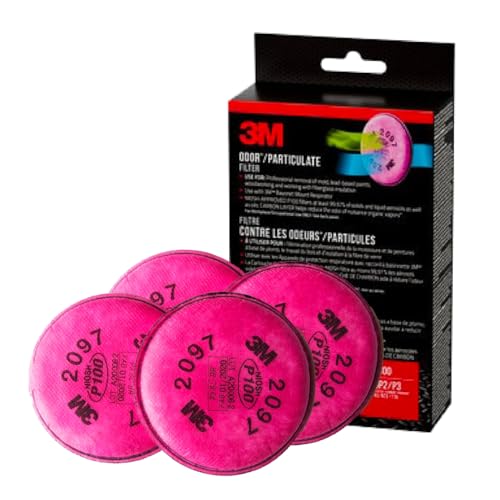 3M 2097 P100 odor and particulate filters (2 pairs)P100 at 99.97% efficiency, fits all three 3M facepieces here, and the most widely stocked respirator consumable in the country. | The filter to fit | $18.98 · View on Amazon #ad How this is funded · Price as of November 28, 2026 |
The short answer
Welding fume is condensed metal oxide — a particulate, not a gas — so the filter class to buy is P100, the highest particulate class NIOSH certifies. A sealed half-mask with P100 filters, worn under the helmet, is the standard answer, and it costs less than a decent pair of welding gloves.
Our overall pick is the 3M Rugged Comfort 6503QL, the only mask here that 3M publishes as compatible with welding and grinding shields, with a one-hand latch that drops it off your face between welds. The budget pick is the 3M 6000-series half mask with P100 filters — the cheapest ready-to-weld option, because the filters are already in the box. For the lowest profile under a hood, the Miller LPR-100.
Prices in the table come from the live price feed when the page loads, each with its own "as of" date inside the buy button. Availability of all six products was confirmed through that feed before publishing.
The criteria, in the order they decide the purchase
1. Filter class, and nothing else first. P100 or do not bother. Welding fume is fine metal oxide particulate, and P100 is rated at 99.97% against solid and oil-based aerosols. An N95 is a lower class and a cloth mask is not a respirator at all. Every product on this page is P100 or takes P100 filters; that was the entry requirement, not a tiebreaker.
2. Profile under the helmet. A respirator that fits your face and not your hood is a respirator you will stop wearing. What fouls a helmet is cartridge bulk at the cheekbone and chin, so the shapes that work are low-profile shells with flat or outboard filters. Two products here publish that fit explicitly — 3M for the 6500 series and Miller for the LPR-100 — and one, the GVS, is simply the flattest thing in the category.
3. Seal material and fit. The seal is the whole mechanism. Silicone is more comfortable and more durable; thermoplastic elastomer is cheaper and perfectly serviceable; GVS's hypoallergenic TPE is the answer if silicone irritates your skin. All of them have the same requirement: a seal against clean-shaven skin. Facial hair under the seal line defeats a respirator completely, and a defeated respirator protects nothing while making you feel protected, which is worse than none.
4. Whether filters are in the box. Two of these masks ship ready to wear and two are facepieces only. That changes the real cost by roughly the price of the filters, and it is the single most common surprise in this category.
5. Filter availability. Filters are a consumable with a replacement schedule, so where you can buy them matters as much as what they cost. 3M bayonet P100s are stocked everywhere in the US; Miller and GVS filters are proprietary.
6. The quick-latch question. Not a specification, and the reason the top pick is the top pick. A mask you can drop and raise one-handed gets worn through a whole session; a mask that has to come off over your head does not.
We did not rank on brand, on price alone, or on anything we would have had to measure ourselves. Arc & Bead has worn none of these respirators, has run no fit test, and publishes no scores.
What each one publishes
| Product | Filter class | Filters included? | Seal | Published fit claim |
|---|---|---|---|---|
| 3M Rugged Comfort 6503QL | Takes 3M bayonet P100 | No - facepiece only | Silicone | 3M: low profile, compatible with welding and grinding shields |
| 3M 6000-series with P100 | P100 (3M 2091 or equivalent) | Yes | Thermoplastic elastomer | Low-profile 6000-series shell |
| Miller LPR-100 | P100 (Miller SA00818) | Yes | Not published | Miller: fits easily under most welding helmets |
| 3M 7502 | Takes 3M bayonet P100 or gas/vapor cartridges | No - facepiece only | Advanced silicone | 3M lists welding among recommended applications |
| GVS SPR457 Elipse P100 | P100, NIOSH TC-84A-6949 | Yes | Hypoallergenic TPE, latex- and silicone-free | GVS: lightweight and compact, full range of vision; welding not listed |
| 3M 2097 filters (2 pairs) | P100, 99.97% efficiency | n/a - filters only | n/a | Fits 3M 6000, 6500 and 7500 series |
A respirator does not replace ventilation.
Every product on this page filters particles. None of them removes gases, and welding produces two that matter: ozone, formed when ultraviolet light from the arc hits the air around it, and carbon monoxide, mostly from CO2 breaking down in the shielding gas. The only answers to those are air movement and extraction.
So the order is: open the door, get air moving across the work rather than into your face, and wear the respirator as well. Welding respiratory protection covers extraction and powered-air options, and is welding in a garage safe is the practical version for a one-car shop. OSHA's welding standard is the named authority on both.
Two materials that change the answer
Galvanized steel. Welding through a zinc coating drives off zinc oxide fume, and the short-term result — metal fume fever — is a genuinely unpleasant flu-like illness that arrives hours later. A P100 is the right filter class for it, but the real answer is to grind the coating back from the joint first and ventilate hard. Do not treat a mask as permission to weld galvanized in a closed space.
Stainless steel. Welding stainless produces hexavalent chromium, which OSHA regulates under its own standard and which is a far more serious exposure than mild steel fume. P100 filtration is again the right class, and again it is not the whole answer: extraction at the source is. If stainless is a regular part of your work rather than an occasional bracket, read OSHA's hexavalent chromium material before deciding a half-mask is sufficient. The machines for that work are on the best TIG welders for stainless steel.
Aluminum and mild steel are the easier cases, and a sealed P100 under the hood with the door open covers home-shop work on both.
Fit, facial hair, and the thing nobody mentions
A tight-fitting respirator works by sealing to skin. Stubble under the seal line leaks, and a leak is not partial protection — unfiltered air takes the easy path, so a mask that leaks is close to no mask at all. If you have a beard you are not keeping clean-shaven at the seal line, a tight-fitting half mask is the wrong product and a powered-air hood is the honest alternative.
Check the seal every time you put it on: cover the filters with your palms, inhale gently, and the facepiece should pull in slightly and hold. If air sneaks in at the nose or the jaw, adjust the straps and try again. That ten-second check is the difference between wearing a respirator and carrying one.
Sizing is the other half. Three of the products here link a specific size — Large on the 6503QL, Medium on the 7502, Small/Medium on the LPR-100 — and the other sizes are separate listings. Order the size, not the model.
What this costs against what else you buy
A complete P100 half mask costs less than a pair of mid-range welding gloves and a fraction of any helmet on this site. In the order of things to own it sits immediately after the helmet and the gloves, and ahead of every machine upgrade — the welding starter kit checklist puts the whole day-one list in sequence.
The gloves are on the best welding gloves under $50, and if the helmet is still outstanding, welding helmets under $300 is the band page. The one process that makes a respirator least optional is the one most beginners start on: self-shielded flux-core, covered in flux-core welding safety and the best flux core welding wire, which produces considerably more fume than any gas process.
How we picked these
P100 was the entry requirement. Nothing below that class is on the page at any price, and that excluded a large number of cheaper products.
Ranked on whether it will actually be worn. Fit under a hood, seal comfort and one-handed operation are the three things that decide whether a respirator is used or shelved, so they are the axes — after the filter class, which is not negotiable.
Availability verified before featuring. All six returned a buyable offer in the price refresh run on the publication date. Four of them were resolved into our registry for this page by a live lookup and title-verified against brand and model.
No hands-on, and no fit testing. We have worn none of these and publish no scores. Where a maker does not publish a figure, the table says so. More on the method on how we pick.
Four of the masks here sit under $50, and which of them includes filters in the box changes the ranking completely. The best welding respirators under $50 is that band on its own, ranked on face seal, harness and whether the listing is a facepiece or a complete kit.
1. Best overall
3M Rugged Comfort Quick Latch 6503QL half facepiece
The only mask here that 3M itself publishes as compatible with welding and grinding shields, with a one-hand latch that drops it off your face without removing the headgear.
3M publishes the Rugged Comfort 6503QL as a reusable half facepiece in the 6500 series, with a resilient silicone face seal, a Quick Latch drop-down harness operated with one hand, a three-size adjustable head cradle on polyester/spandex straps, the 3M Cool Flow exhalation valve, and a bayonet connection compatible with all 3M bayonet cartridges and filters. It is NIOSH-approved with 3M cartridges, filters or supplied air, and this listing is the Large size.
Two published lines decide this pick. The first is 3M's own: a "low profile half face piece design offers a wide field of view and compatibility with welding and grinding shields". Very few masks say that explicitly, and the ones that do not are the ones that press into the inside of a helmet shell and break their own seal when you nod.
The second is the latch. Welding is not a continuous activity — you weld, lift the hood, check the bead, move a clamp, talk to someone, drink water, weld again. A quick latch lets the mask drop to your chest and come back up without undoing the harness, which is the difference between a respirator you wear and one you take off after the second interruption and forget to put back on. That is not a comfort feature; it is the reason it gets used.
The honest costs. It is a facepiece only — filters are a separate purchase, so budget the 2097s below on top of the ticket price. This listing is Large, and the medium-size 6502QL is a different listing; fit is the whole mechanism of a respirator, so size it properly. Like every particulate respirator it removes particles and not gases, and it needs a seal against clean-shaven skin.
What works
- 3M publishes this one as low-profile and compatible with welding and grinding shields — not adapted to the job, specified for it
- The quick-latch drop-down is the feature that matters most under a hood: you drop the mask to talk or drink without breaking the headgear
- Silicone face seal keeps its shape in heat, which a thermoplastic seal does not
- The exhalation valve cover directs breath downward, which is what stops a lens fogging
What does not
- Facepiece only — filters are a separate purchase, so the real cost is higher than the ticket price
- This listing is the Large size; the 6502QL medium is a different listing
- Like any particulate respirator it does not remove gases such as ozone or carbon monoxide
- Needs a seal against clean-shaven skin; facial hair defeats it
2. Budget pick
3M 6000-series half-mask respirator with P100 filters
The cheapest way to be welding with real protection today, because the P100 filters are already in the box.
The budget pick in the strict sense this site uses, with one refinement that matters here: it is the least expensive complete respirator in our registry. The 6503QL above has a lower ticket price and no filters; this one arrives ready to wear. Compare total cost rather than headline price and this is the cheapest route to a sealed P100 mask under your hood.
3M publishes it as a reusable half facepiece with P100 particulate filters, NIOSH-approved particulate filtration, in the low-profile 6000-series shell.
Who it is for: anyone who has been welding without a respirator and wants that to stop this week. Self-shielded flux-core — which is where most people on this site start — produces considerably more fume than gas MIG, and a 120 V machine in a closed garage is the worst combination of the two. Is welding in a garage safe is the honest version of that problem.
Against it: the 6000-series harness is a plain two-strap cradle with no quick latch, so taking it on and off is a two-hand job. The seal is a thermoplastic elastomer rather than silicone, which is less tolerant of heat over years of use. And the same two limits apply as to everything on this page: particulate filters do not remove gases, and facial hair defeats the seal.
What works
- P100 filtration handles welding fume particulate, which is the actual exposure in a home garage
- Low-profile 6000-series shell fits under most welding helmets without breaking the seal
- Filters are cheap and universally stocked
What does not
- Needs a proper seal against clean-shaven skin. Facial hair defeats it, and a defeated respirator protects nothing
- Particulate filters do not remove gases such as ozone or carbon monoxide — ventilation is still required
- Adds warmth and breathing resistance under a helmet
3. Lowest profile under a hood
Miller LPR-100 half-mask respirator
Designed from the start to sit under a welding helmet rather than adapted to it, with a large non-return exhaust valve.
Miller publishes the LPR-100 as a reusable half-mask supplied with P100 filters (Miller SA00818), NIOSH-approved, in a low-profile shell that Miller states fits easily under most welding helmets, with a large non-return exhaust valve. The listing we link is the Small/Medium size, Miller part ML00894; the Medium/Large size is a separate listing.
The filters sit outboard and flat, which is the detail that matters inside a helmet: a shell that presses a round cartridge into your cheek is a shell that lifts the seal off your face on the same movement. If your current complaint is that a mask and a hood cannot both fit, this is the product built for that complaint.
The large non-return exhaust valve is the second reason, and it is about endurance. The work of breathing through a respirator is what makes people take it off after forty minutes, and a bigger exhaust path is the straightforward fix.
Against it: Miller's filters are less widely stocked than 3M's pink P100s, so plan replacements ahead rather than assuming a hardware store will have them. Check the size before ordering, because the two sizes are separate listings. And it is a particulate mask, so gases are not in scope.
What works
- The lowest-profile option here — it was designed for exactly this use, not adapted to it
- Filters sit outboard, so the helmet shell does not press them into your face
- The large non-return exhaust valve is the reason it is less tiring to wear for a long session
What does not
- Filters are less widely stocked than 3M's, so plan replacements ahead
- The listing we link is the Small/Medium size — check the size before ordering, because the M/L is sold separately
- Same hard limit as any particulate respirator: it does not remove gases
4. Best for long sessions
3M 7502 silicone half facepiece respirator
The silicone 7500-series shell, and the one facepiece here whose published application list names welding outright.
3M publishes the 7502 as a reusable half facepiece in advanced silicone, with a dual-mode head harness and integrated drop-down suspension, the Cool Flow exhalation valve, an exhalation valve cover that directs breath and moisture downward to reduce fogging, and bayonet connections taking 6000-series gas/vapor cartridges or 2000 / 2200 / 7000 / 5000 series particle filters. 3M lists welding among its recommended applications. This listing is the Medium size.
The reason to pay more than the 6000-series shell costs is the seal material. Silicone stays supple, tolerates heat and cleans up better than a thermoplastic seal over a few years, and on a two-hour session the difference between a seal that moves with your face and one that fights it is the difference between a respirator you keep on and one you don't.
The downward-aimed valve cover is worth naming on a welding page specifically: exhaled moisture rising inside a closed helmet is what fogs an auto-darkening lens, and a fogged lens gets lifted.
Against it: facepiece only, so filters are extra. It costs noticeably more than the 6000-series for a comfort gain rather than a protection gain — the filter class is what protects you, and that is identical. And this listing is Medium; sizes are separate listings.
What works
- 3M names welding in the published application list for this facepiece, which very few masks do explicitly
- The 7500 series silicone seal is the most comfortable of the three 3M shells here over a two-hour session
- Takes gas and vapor cartridges as well as particulate filters, so it grows beyond fume if you ever need it to
- Exhalation valve cover aimed downward to reduce fogging under a lens
What does not
- Facepiece only — budget filters on top
- Costs noticeably more than the 6000-series shell for a comfort gain rather than a protection gain
- This listing is Medium; sizes are separate listings and the fit is the whole point of a respirator
- Particulate filters do not remove gases — ventilation still matters
Who this is wrong for: Anyone buying their first respirator on a tight budget. It protects exactly as well as the cheaper 6000-series shell with the same filters - you are paying for comfort, which matters later rather than first.
5. Flattest, and silicone-free
GVS SPR457 Elipse P100 half mask
Integrated flat filters and a latex-free, silicone-free seal - the mask for a tight shell or a skin reaction.
GVS publishes the SPR457 Elipse P100 as a reusable half mask with replaceable P100 filters included, NIOSH approval number P100 TC-84A-6949 meeting 42 CFR 84, made from a soft thermoplastic odorless elastomer that is hypoallergenic with no latex and no silicone, with an easy-adjust headband and a published filter life of up to five years. GVS describes it as extremely lightweight and compact, offering a full range of vision without interfering with other eye or ear protection. This listing is the M/L size.
The filters are molded flat into the sides of the mask rather than standing off the face on cartridges, which makes it the lowest-bulk option here by some distance. If a helmet shell with a deep chin or a tight pivot fouls everything else you have tried, this is the shape that fits.
Latex-free and silicone-free is the other reason it is here. Silicone seals suit most people and irritate a few, and when they do, the choice of masks shrinks fast.
The honest caveat, and it is important: GVS publishes this for dust and fume particulate — its own list includes iron, zinc and aluminum dusts — but it does not list welding among its applications. P100 is the correct filter class for welding fume, so the protection class is right; just understand that you are buying a P100 particulate mask rather than a welding-specific product. There is also no gas or vapor cartridge option at all, and the filters are proprietary and far less widely stocked than 3M's.
What works
- Genuinely low-profile: GVS publishes it as extremely lightweight and compact with a full field of vision and no interference with other eye or ear protection
- Filters are included and integrated flat into the mask rather than standing off the face, which is what fouls a helmet shell
- Latex-free and silicone-free, which matters if a silicone seal irritates your skin
- Published NIOSH approval number, so the P100 claim is checkable
What does not
- GVS publishes it for dust and fume particulate — including iron, zinc and aluminum dusts — but does not list welding among its applications. Treat it as a P100 particulate mask, which is the right class for fume, rather than as a welding-specific product
- No gas or vapor cartridge option at all, unlike the 3M bayonet masks
- Filters are proprietary and far less widely stocked than 3M's pink P100s
- Same hard limit as every particulate mask: it does not remove gases
6. The filter to fit
3M 2097 P100 odor and particulate filters (2 pairs)
P100 at 99.97% efficiency, fits all three 3M facepieces here, and the most widely stocked respirator consumable in the country.
3M publishes the 2097 as a P100 odor/particulate filter with 99.97% filtration efficiency against solids and liquid aerosols, for use with 3M 6000, 6500 and 7500 series facepieces, sold here as two pairs.
A facepiece without filters protects nothing, so this is the other half of two of the picks above. P100 is the class to buy: welding fume is condensed metal oxide particulate, and P100 is the highest particulate class NIOSH certifies, rated to 99.97% against both solid and oil-based aerosols.
The practical argument for these over a cheaper 2091 is odor relief, which is a real comfort difference in a closed garage — and the practical argument for 3M filters generally is stocking. Pink P100 cartridges are on the shelf at every hardware store and welding counter in the US, which matters for a consumable you should be replacing on a schedule.
Against it: odor relief is nuisance-level only. This is not a gas or vapor cartridge, and it does not protect against ozone or carbon monoxide — the two gases welding actually produces. It does not fit the Miller LPR-100 or the GVS Elipse, which take their own filters. And breathing resistance climbs as filters load, so they need replacing on time rather than when they look dirty.
What works
- P100 is the filter class that matches welding fume, which is a metal-fume particulate rather than a gas
- Fits all three 3M facepieces on this site, so one filter decision covers the whole range
- Pink P100 filters are the most widely stocked respirator consumable in the US — replacements are never far away
- Sold in pairs, which is how they are used and replaced
What does not
- Odor relief is nuisance-level only. This is not a gas or vapor cartridge and does not protect against ozone or carbon monoxide
- Does not fit Miller's LPR-100 or the GVS Elipse — those take their own filters
- A consumable: they load up and breathing resistance climbs, so they need replacing on a schedule rather than when they look dirty
Who this is wrong for: Anyone expecting gas protection. An odor-relief P100 is a particulate filter with a comfort feature, not a chemical cartridge - ventilation and fume extraction are what deal with gases.
Questions people actually ask
Do I need a respirator for welding?
If you weld indoors, in a garage, or on anything coated, yes. Welding fume is fine metal oxide particulate that goes deep into the lungs, and a welding helmet does nothing about it - the helmet protects your eyes and face.
A sealed half-mask with P100 filters costs less than a pair of mid-range welding gloves, which makes it the cheapest significant safety upgrade most home welders can make.
What kind of respirator do you need for welding?
A tight-fitting half-mask with P100 particulate filters. P100 is the highest particulate class NIOSH certifies, rated at 99.97 percent against solid and oil-based aerosols, and welding fume is a particulate rather than a gas.
An N95 is a lower class, and a surgical or cloth mask is not a respirator at all. Gas and vapor cartridges are a different product for a different exposure.
Will a respirator fit under a welding helmet?
The low-profile ones will. What fouls a helmet is cartridge bulk at the cheekbone and chin, so look for a low-profile shell with flat or outboard filters.
3M publishes the 6500 series as compatible with welding and grinding shields, Miller publishes the LPR-100 as fitting easily under most welding helmets, and the GVS Elipse has its filters molded flat into the mask - the lowest bulk of any option here.
Does a P100 respirator protect against welding gases?
No. P100 filters remove particulate only. Welding also produces ozone, formed when the arc's ultraviolet light hits the surrounding air, and carbon monoxide, largely from CO2 in the shielding gas breaking down - and a particulate filter does nothing about either.
The answer to gases is ventilation and extraction. Wear the respirator as well, not instead.
Can you wear a respirator with a beard?
Not a tight-fitting one, not effectively. A half mask seals to skin, and stubble under the seal line lets unfiltered air take the easy path - a leaking respirator is close to no respirator while feeling like protection.
If you are not keeping clean-shaven at the seal line, a powered-air welding hood is the honest alternative.
What is the best respirator for welding galvanized steel?
The filter class is the same - P100 - because zinc oxide fume is a particulate. The difference is everything around it: grind the zinc coating back from the joint before you weld, and ventilate hard.
Metal fume fever from zinc is a real and unpleasant short-term illness, and a half mask is not permission to weld galvanized in a closed space.
How often should welding respirator filters be replaced?
On a schedule rather than when they look dirty. P100 filters load up with particulate over time and breathing resistance climbs, which is the usual sign people act on - but by then you have been working harder to breathe for a while.
Follow the maker's guidance for your usage, replace them if they get wet or damaged, and keep a spare pair so a loaded filter is never a reason to weld without one.
Sources
- 3M - Rugged Comfort Quick Latch Half Facepiece Reusable Respirator 6503QL published specifications: 6500 series reusable half facepiece, resilient silicone face seal, Quick Latch one-hand drop-down design, 3-size adjustable head cradle with polyester/spandex straps, 3M Cool Flow exhalation valve, exhalation valve cover directing breath downward to reduce fogging, bayonet connection compatible with all 3M bayonet cartridges and filters, published as low profile with a wide field of view and compatibility with welding and grinding shields, NIOSH-approved with 3M cartridges, filters or supplied air, Large size (resolved by live Creators searchItems + getItems lookup 2026-11-20, ASIN B00IF7RCU6)
- 3M - 7502 Reusable Respirator Half Facepiece published specifications: 7500 series, advanced silicone face seal, dual-mode head harness with integrated drop-down suspension, 3M Cool Flow valve, exhalation valve cover directing exhaled breath and moisture downward to reduce fogging, bayonet connections for 3M 6000 series gas/vapor cartridges and 2000 / 2200 / 7000 / 5000 series particle filters, recommended applications include welding, NIOSH-approved, Medium size (resolved 2026-11-20, ASIN B008MCUT86)
- 3M - Odor/Particulate Filter 2097 published specifications: P100, 99.97% filtration efficiency against solids and liquid aerosols, for use with 3M 6000, 6500 and 7500 series facepieces, supplied as 2 pairs (resolved 2026-11-20, ASIN B007STCT00)
- GVS - SPR457 Elipse P100 half mask published specifications: reusable half mask with replaceable and reusable P100 filters included, NIOSH approval number P100 TC-84A-6949 meeting 42 CFR 84, soft thermoplastic odorless elastomer that is hypoallergenic with no latex or silicone, easy-to-adjust headband, published filter life up to 5 years, published as extremely lightweight and compact with a full range of vision; published application list covers dust and fume particulate including iron, zinc and aluminum dusts and does NOT list welding (resolved 2026-11-20, ASIN B013SIIBFQ)
- 3M - 6000-series half facepiece with P100 filters, and Miller - LPR-100 half-mask respirator (Miller ML00894, P100 filters SA00818, published as fitting easily under most welding helmets, large non-return exhaust valve): both as recorded in this site's product registry, availability reconfirmed 2026-11-20
- NIOSH / 42 CFR 84 - particulate respirator classification, including the P100 class rating of 99.97% efficiency against solid and oil-based aerosols
- OSHA - Welding, Cutting and Brazing standard (29 CFR 1910 Subpart Q) and OSHA's hexavalent chromium standard, the named authorities for welding fume ventilation and for stainless steel welding exposure
Read next
- Welding respiratory protection: fume mask, PAPR or extraction
Half-mask, powered air or extraction — the three welding respiratory protection systems compared.
- Welding respirators and fume safety
What is in welding fume, what a P100 filter does and does not remove, and when it is mandatory.
- Flux-core welding safety
Fume, eyes and fire — including the risks that show up hours after you stop welding.
- Is Welding in a Garage Safe?
The garage-specific hazards - shared air, stored fuel, concrete spalling, the car - and what to do about each.
- The best welding gloves under $50
Five welding gloves under $50 at current live prices, ranked on leather type and seam construction, with the one standards-based heat rating separated from the brand claims.
- The best flux core welding wire
Three self-shielded flux-cored wires ranked on AWS classification, spool size against the machine that has to feed it, and published feed behavior - with the cheapest per pound named as the budget pick.
Back to Helmets & PPE, or start over at Find Your Level.
Ryder M.
Ryder M. is the hands-on owner behind Magoo Media Group. He writes Arc & Bead's buying guides and picks every machine on the site. What every recommendation is based on — and what it is not based on — is set out on How We Pick.