3M Speedglas alternatives
Speedglas set the standard for a reason, and part of that reason is a respirator system nothing on this page can replace. Here is what the rest of it is, and which helmets match it.
Arc & Bead is an Amazon Associate. If you buy through a link on this page we may earn a commission, at no extra cost to you. We have not physically tested the machines on this page and we say so on How We Pick.
Quick picks
Tap any row to jump to the full write-up further down this page.
| # | Product | Best for | Price |
|---|---|---|---|
| 1 | 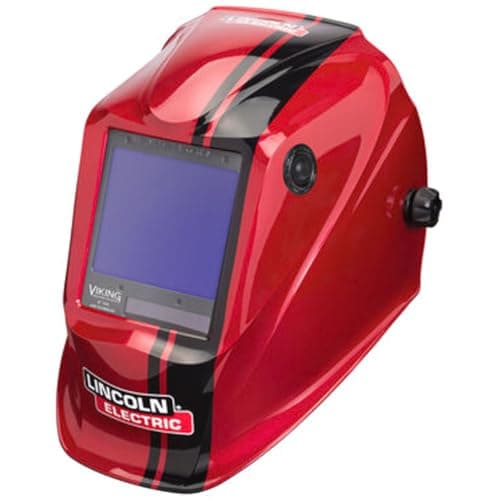 Lincoln Electric VIKING 3350A published 2 A TIG rating for AC and DC, full 1/1/1/1 clarity, a shade 5 low end and 12.5 sq in - the nearest thing here to a Speedglas specification sheet. | Closest match | $556.55 · View on Amazon #ad How this is funded · Price as of November 13, 2026 |
| 2 | 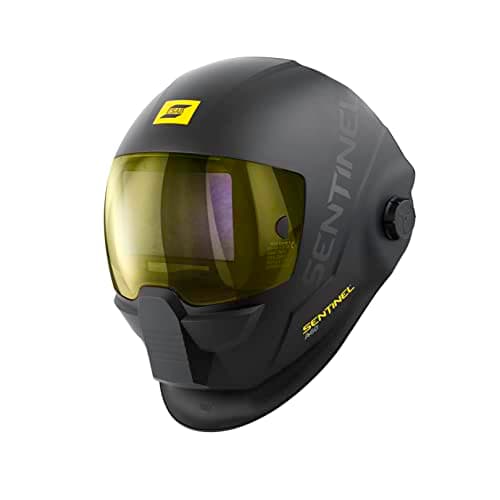 ESAB Sentinel A60A 3/5-13 range in half-shade increments with shade lock and nine memories - the most Speedglas-like control set here. | Closest on shade control | |
| 3 | 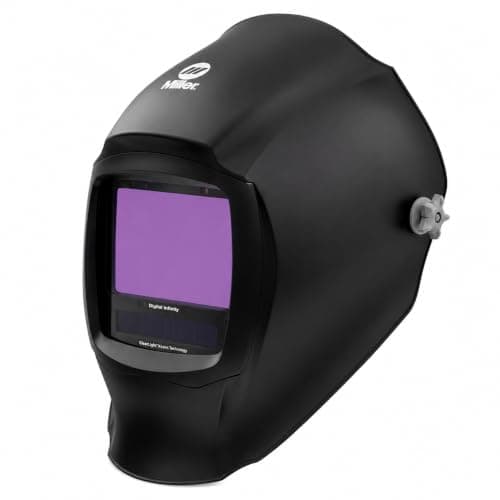 Miller Digital Infinity13.4 sq in - the largest published window in our registry - plus X-Mode for blocked-sensor conditions. | Closest on viewing area | |
| 4 | 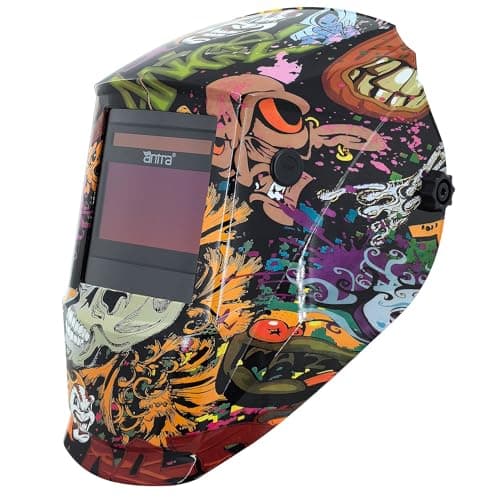 Antra DP3-6404A 3/5-13 range with shade lock and a published 2 A TIG rating, for a small fraction of a Speedglas. | Budget pick | $69.95 · View on Amazon #ad How this is funded · Price as of November 13, 2026 |
The short answer
3M publishes the Speedglas 9100 Series with seven variable dark shades — 5, 8 and 9 through 13 — across several filter sizes, with low-amperage TIG sensitivity (retailer listings give the 9100X a TIG rating better than 1 A), and designed around integration with 3M's Adflo powered-air respirator. Shade 13 UV/IR protection is permanent on the filter. It is a benchmark product and nothing here suggests otherwise.
The closest alternative in our registry is the Lincoln VIKING 3350: a 5–13 shade range, a 2 A TIG rating stated for AC and DC, full 1/1/1/1 clarity. The closest control set is the ESAB Sentinel A60. The largest window is the Miller Digital Infinity. The budget answer is the Antra DP3-6404.
What none of them replaces: the Adflo powered-air integration. If clean air is why you were buying a Speedglas, read welding respiratory protection before you choose a helmet at all.
Prices in the table are read from the live feed with their own "as of" date inside each buy button. Speedglas helmets are not in our registry, so there is no price or buy link for one here — this page compares against what 3M publishes.
What Speedglas is known for
Shade range, including a shade 5 low end. 3M publishes the 9100 Series with seven variable dark shades: 5, 8 and 9 through 13. The 5 is what makes a welding helmet usable for plasma cutting and oxy-fuel, which produce far less light than an arc. A helmet whose range starts at 9 is a welding-only helmet.
Low-amperage sensitivity. Retailer listings for the 9100X give a TIG rating better than 1 A, and for the 9100XXi a five-level sensitivity described for TIG above 1 A as well as MIG/MAG and stick. That is the specification that decides whether a lens triggers on an arc that barely makes light — thin stainless TIG, essentially.
The respirator system. The 9100 range is built to take 3M's Adflo powered air, and for anyone welding in a confined shop that is not a convenience feature but the reason for the purchase. No helmet in our registry offers it.
One caveat before comparing numbers: the 9100 line has several filter and shell variants (9100X, 9100XX, 9100XXi, 9100 FX) and the viewing area and sensitivity figures differ between them. If you are comparing against a specific Speedglas, check which model the listing in front of you is.
| Helmet | Shade range | Viewing area | Low-amp TIG | Powered air? |
|---|---|---|---|---|
| 3M Speedglas 9100 Series (for reference) | Variable 5, 8, 9-13 (seven dark shades) | Varies by filter: 9100X 2.1 x 4.2 in; 9100XX / XXi approx 2.8 x 4.2 in | 9100X listed at better than 1 A | Yes - designed for 3M Adflo |
| Lincoln VIKING 3350 | Variable 5-13 | 12.5 sq in | 2 A, stated for AC and DC | No |
| ESAB Sentinel A60 | 3/5-13 in 0.5 steps, shade lock | 13.02 sq in | 2 A (DC) | No |
| Miller Digital Infinity | Weld 8-13, cut 5-8, grind 2.5 | 13.4 sq in | 5 A (DC) | No |
| Antra DP3-6404 | 3/5-13 with shade lock | Not published | 2 A (DC) | No |
The one gap no alternative closes.
Every helmet on this page is a passive shell: it protects your eyes and face and does nothing about what you breathe. Self-shielded flux-core in particular produces a great deal of fume, and a welding helmet is irrelevant to it. If powered air was the reason for the Speedglas, the honest options are a half-mask respirator under a helmet, real extraction, or buying the integrated system. Welding respiratory protection and welding respirators and fume safety cover both routes.
Name the reason, then take the helmet
If it was the shade 5 low end for plasma: VIKING 3350, Sentinel A60 or the Antra — all three publish it. The plasma-cutting helmet page is scoped to that.
If it was low-amperage TIG sensitivity: VIKING 3350 for the AC-and-DC rating, Sentinel A60 for DC. Welding helmets for TIG goes through what the rating means.
If it was the big window: Miller Digital Infinity, and the large-view roundup is the full field.
If it was stored settings and fine shade control: ESAB Sentinel A60.
If it was the price that stopped you: Antra DP3-6404, which publishes the shade range and the 2 A rating for a fraction of the cost. Helmets under $500 is the band page.
If it was powered air: buy the Speedglas, or build the respirator side separately. Nothing here replaces it.
How we chose these alternatives
Each pick matches a named published strength. We did not assemble a list of premium helmets. Every pick above states the specific Speedglas characteristic it matches and what it gives up.
Facts about Speedglas are 3M's own, with model variation stated. We have not worn a Speedglas and no Speedglas product is in our registry. The shade range comes from 3M's own 9100 Series page; the viewing-area and sensitivity figures are model-specific and come from retailer listings, which is why the table says so rather than quoting one number as if it covered the line.
Nothing here is a criticism of the product. The reasons people buy Speedglas are real, and one of them — integrated powered air — nothing in our registry offers. More on the method on how we pick.
1. Closest match
Lincoln Electric VIKING 3350
A published 2 A TIG rating for AC and DC, full 1/1/1/1 clarity, a shade 5 low end and 12.5 sq in - the nearest thing here to a Speedglas specification sheet.
Lincoln publishes the VIKING 3350 at a 12.5 sq in viewing area, 1/1/1/1 optical clarity, a variable 5–13 shade range, a 2 A TIG rating stated for AC and DC, four arc sensors, a 1/25,000 s light-to-dark switching speed, the 4C lens with X6 headgear, a low-profile external grind button, 22 oz and a five-year warranty.
It matches the Speedglas argument on the two points that matter most. 3M publishes the 9100 Series with seven variable dark shades — 5, 8 and 9 through 13 — and the shade 5 end is what makes a helmet usable for plasma cutting as well as welding; the 3350's 5–13 range covers the same span. And retailer listings for the 9100X give a TIG rating better than 1 A, which is the headline sensitivity figure; Lincoln's published 2 A stated for both AC and DC is the closest commitment in our registry, and the AC half is stronger than most helmets at any price make.
Who it is for: someone who wanted a Speedglas for the shade range and the low-amperage sensitivity rather than for the respirator system.
Against it: physically large, 22 oz, and several times the price of a budget auto-darkening helmet. The full write-up is in the VIKING 3350 review.
What works
- 12.5 sq in of view at 1/1/1/1 clarity is the combination that makes a helmet stop being something you tolerate
- The external grind button means you switch modes without lifting the hood — the single feature you notice most every day
- Shade 5 low end covers plasma cutting, so one helmet spans all four levels
What does not
- Costs several times a budget auto-darkening helmet
- Physically large, and in a tight corner the shell finds things to bump into
2. Closest on shade control
ESAB Sentinel A60
A 3/5-13 range in half-shade increments with shade lock and nine memories - the most Speedglas-like control set here.
ESAB publishes the Sentinel A60 at 4.65 x 2.80 in (13.02 sq in), a 1/1/1/1 optical class, a 3/5–13 shade range in 0.5-step increments with shade lock, a published DC TIG rating down to 2 A, four arc sensors, a 1/25,000 s light-to-dark switching speed with an adjustable 0.1–0.9 s dark-to-light delay, nine memory settings, an external grind button and adjustable Halo headgear.
The reason it is here: the 9100 Series is bought by people who switch processes and want the lens configured for each one, and the Sentinel's nine memories plus half-shade steps are the closest equivalent arrangement in our registry. An adjustable dark-to-light delay is the other Speedglas-adjacent control — useful when you want the lens to stay dark briefly after the arc stops so the glow of hot metal does not dazzle you.
A 3/5–13 range also matches the 9100 Series on span, including the shade 5 low end for plasma and the shade 3 light state.
Against it: nine memories is more configuration than a two-process home shop will use, and it replaces the Sentinel A50, so older accessory guides may not match this shell.
What works
- Published DC TIG rating down to 2 A — the one specification that decides whether a helmet is usable on thin stainless
- 13.02 sq in at a full 1/1/1/1 optical class, which is a combination almost nothing else offers
- Half-shade increments and shade lock let you settle on an exact shade rather than jumping between whole numbers
- External grind button, so switching modes does not mean lifting the hood and losing your torch position
What does not
- The most expensive helmet on this site apart from the Miller, and much of what it adds over a VIKING 3350 is refinement
- Nine memory settings is more configuration than a home shop running one or two processes will ever use
- Replaces the outgoing Sentinel A50, so older reviews and accessory guides may not match this shell
3. Closest on viewing area
Miller Digital Infinity
13.4 sq in - the largest published window in our registry - plus X-Mode for blocked-sensor conditions.
Miller publishes the Digital Infinity at a 13.4 sq in viewing area with the ClearLight 4X lens, 1/1/1/2 optical clarity to EN 379, a 1/25,000 s switching speed, four arc sensors, weld 8–13, cut 5–8, grind 2.5 and X-Mode 8–13, a shade 2.5 light state, a DC TIG rating down to 5 A, 21.4 oz and a four-year lens warranty.
3M publishes the 9100 Series in several filter sizes — the 9100X is listed at 2.1 x 4.2 in and the 9100XX and 9100XXi filters at around 2.8 x 4.2 in — so anyone shopping Speedglas for the big-window models is shopping for roughly 11 to 12 sq in. The Miller is larger than that.
X-Mode is the capability worth naming on a premium-helmet page: it holds the lens dark electromagnetically when a sensor is blocked, which is the classic failure of out-of-position welding where your own hand covers a sensor.
Against it: 1/1/1/2 rather than a full 1/1/1/1, and a 5 A TIG rating rather than the 2 A of the ESAB and Lincoln helmets. On very thin stainless that second figure is the one that decides it.
What works
- 13.4 sq in is the largest view in this group, and on long fabrication work that is the difference you actually feel
- X-Mode holds the lens dark through sensor blockage — the fix for out-of-position welding where your hand covers a sensor
What does not
- The most expensive helmet on this site by a wide margin
- Everything it adds over a VIKING 3350 is a refinement, not a capability
- Rated to 5 A rather than the 2 A of the Lincoln and ESAB helmets, which matters on very thin stainless
4. Budget pick
Antra DP3-6404
A 3/5-13 range with shade lock and a published 2 A TIG rating, for a small fraction of a Speedglas.
Antra publishes the DP3-6404 with a true-colour lens and full digital control and display, a 3/5–13 shade range with shade lock, a published DC TIG rating down to 2 A, tack, weld and cut memory presets plus a grind/weld button, and a solar cell with battery assist.
It is the budget pick in the strict sense: the least expensive registry helmet that does this page's job. And it genuinely does it on two counts — the 3/5–13 span matches the 9100 Series on range including the plasma end, and a published 2 A DC TIG rating is the sensitivity figure most budget helmets omit entirely.
Who it is for: someone who priced a Speedglas, reconsidered, and wants the two specifications that matter rather than the badge.
Against it, stated plainly: Antra does not publish a 1/1/1/1 optical class, and over a long session you can feel the difference. Headgear is the weak point on budget helmets generally, and it is a small shell — next to a 3350 the view is noticeably tighter.
What works
- A published 2 A TIG rating at the bottom of the market, where the usual answer is no rating at all
- Shade 5 low end covers plasma cutting, so one cheap helmet spans more than MIG
- Quick grind/weld button and shade lock — two things that are normally the first upgrade
- Cheap enough that starting here and upgrading later costs less than agonizing over it
What does not
- Antra does not publish a 1/1/1/1 optical class for it, and over a long session you can feel the difference
- Headgear is the weak point on budget helmets generally, and this one is no exception
- A small shell: next to a VIKING 3350 the view is noticeably tighter
Who this is wrong for: All-day professional use. No optical class is published for it and the headgear is basic - two of the things a Speedglas buyer is actually paying for.
Questions people actually ask
What is a good alternative to a 3M Speedglas?
The closest in our registry is the Lincoln VIKING 3350: a variable 5-13 shade range that matches the Speedglas shade 5 low end for plasma, a 2 amp TIG rating stated for AC and DC, a full 1/1/1/1 optical class and a 12.5 square inch window.
What it does not have is 3M's Adflo powered-air integration, and no helmet we list does.
Why are Speedglas helmets so expensive?
Three published reasons. The shade range is wide - 3M publishes seven variable dark shades including a shade 5 low end for plasma and gas work. Low-amperage sensitivity is high, with the 9100X listed at better than 1 amp for TIG. And the range is designed to integrate with 3M's Adflo powered-air respirator.
That third point is the one no cheaper helmet replaces.
Is the Lincoln VIKING 3350 as good as a Speedglas?
On eye protection specifications they are closely matched: Lincoln publishes a 5-13 shade range, 1/1/1/1 optical clarity and a 2 amp TIG rating for AC as well as DC, which is a stronger commitment than most helmets of any price make.
The gap is the respirator system. If you weld in a confined space and wanted powered air, the two are not comparable products.
What shade range does a Speedglas have?
3M publishes the 9100 Series with seven variable dark shades: 5, 8 and 9 through 13, with shade 13 UV and IR protection permanent on the filter.
The shade 5 is the part worth noting - it is what makes the helmet usable for plasma cutting and oxy-fuel work, which produce far less light than an electric arc.
Can I get a welding helmet with powered air for less?
Not in our registry - every helmet we list is a passive shell with no respirator integration. The cheaper route is a half-mask respirator with P100 filters worn under a standard helmet, which is a real and effective option but less comfortable over long sessions.
Our respiratory protection page covers the choice between a half-mask, extraction and a powered system.
Which Speedglas model should I compare against?
Check the specific variant, because the figures differ. The 9100X filter is listed at a 2.1 x 4.2 inch viewing area; the 9100XX and 9100XXi filters at roughly 2.8 x 4.2 inches. Sensitivity figures also vary by model.
The shade range is consistent across the 9100 Series at 5, 8 and 9-13, so that is the specification safest to compare on.
Sources
- 3M - Speedglas 9100 Series welding helmets product page: seven variable dark shades (5, 8 and 9-13) for most types of arc welding; multiple models with various viewing-area sizes (read 2026-11-10)
- 3M Speedglas 9100X / 9100XX / 9100XXi retailer specification listings, used for the model-specific figures: 9100X viewing area 2.1 x 4.2 in (54 x 107 mm) with a TIG rating better than 1 A; 9100XX / 9100XXi filters listed at approximately 72-73 x 107 mm (2.8 x 4.2 in); 9100XXi sensitivity described as five-level for TIG above 1 A and MIG/MAG and stick; shade 13 UV/IR protection permanent; ANSI Z87.1-2010 (read 2026-11-10). Figures vary by model and are secondary sources rather than 3M's own datasheet
- Lincoln Electric - VIKING 3350 published specifications: 12.5 sq in viewing area, variable shade 5-13, 1/1/1/1 optical clarity, 2 A TIG rating stated for AC and DC, four arc sensors, 1/25,000 s switching, 4C lens with X6 headgear, low-profile external grind button, 22 oz, five-year warranty (recorded in this site's product registry, ASIN B07V9T5XQ1)
- ESAB - Sentinel A60 published specifications: 4.65 x 2.80 in (13.02 sq in), 1/1/1/1 optical class, shade 3/5-13 in 0.5-step increments with shade lock, DC TIG down to 2 A, four sensors, 1/25,000 s light-to-dark with 0.1-0.9 s adjustable dark-to-light delay, nine memory settings, external grind button, adjustable Halo headgear (recorded in this site's product registry, ASIN B0BLQ92744)
- Miller - Digital Infinity published specifications: 13.4 sq in viewing area, ClearLight 4X lens, 1/1/1/2 optical clarity (EN 379), weld 8-13 / cut 5-8 / grind 2.5 / X-Mode 8-13, DC TIG down to 5 A, 1/25,000 s switching, 21.4 oz, four-year lens warranty (read 2026-10-29, recorded in this site's product registry, ASIN B0DC1V62WG)
- Antra - DP3-6404 published specifications: true-colour lens with full digital control and display, shade 3/5-13 with shade lock, DC TIG down to 2 A, tack / weld / cut memory presets plus grind/weld button, solar cell with battery assist (read 2026-10-16, recorded in this site's product registry, ASIN B0CV9P2YLP)
Read next
- Lincoln VIKING 3350 review
A published-specification review of the Lincoln VIKING 3350 - what its 1/1/1/1 clarity, AC-and-DC 2 A TIG rating and external grind button actually buy, and who should buy something else.
- The best welding helmets under $500
Six welding helmets under $500 at current live prices, ranked on published optical class and low-amperage TIG rating, with the cheapest helmet in our registry as the budget pick.
- The best large view welding helmets
Four welding helmets ranked on published viewing area in square inches, with optical class read alongside it and the cheapest panoramic helmet in our registry named as the budget pick.
- Welding respiratory protection: fume mask, PAPR or extraction
Half-mask, powered air or extraction — the three welding respiratory protection systems compared.
- The best welding helmets for TIG welding
TIG helmets are decided by minimum trigger amperage, not viewing area. Four that publish the figure.
- The best professional grade auto-darkening welding helmets
Professional grade means four published specifications, not a price band. Three helmets that state all four.
Back to Helmets & PPE, or start over at Find Your Level.
Ryder M.
Ryder M. is the hands-on owner behind Magoo Media Group. He writes Arc & Bead's buying guides and picks every machine on the site. What every recommendation is based on — and what it is not based on — is set out on How We Pick.