The best welding helmets under $500
Five hundred dollars is the band where a helmet stops asking you to compromise. Below it you choose between clarity, window size and a TIG rating; inside it you can have all three.
Arc & Bead is an Amazon Associate. If you buy through a link on this page we may earn a commission, at no extra cost to you. We have not physically tested the machines on this page and we say so on How We Pick.
Quick picks
Tap any row to jump to the full write-up further down this page.
| # | Product | Best for | Price |
|---|---|---|---|
| 1 | 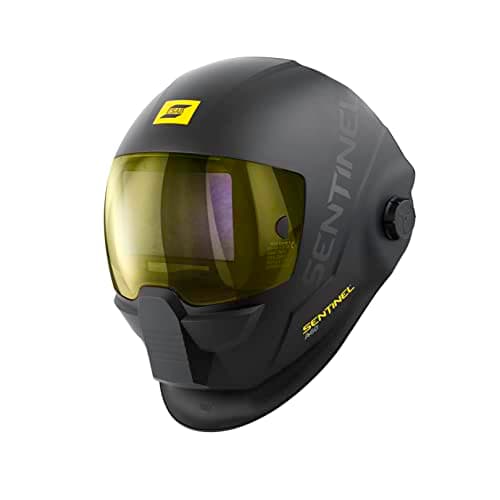 ESAB Sentinel A6013.02 square inches, a full 1/1/1/1 optical class and a published 2 A TIG rating. Nothing else in the band has all three. | Best overall under $500 | |
| 2 | 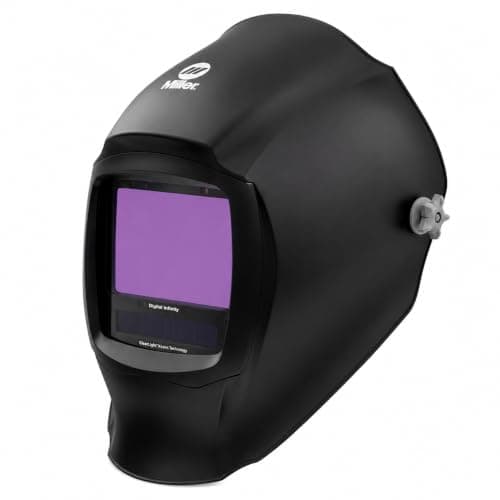 Miller Digital Infinity13.4 square inches and X-Mode, at 1/1/1/2 clarity and a 5 A TIG rating rather than 2 A. | Largest view in the band | |
| 3 | 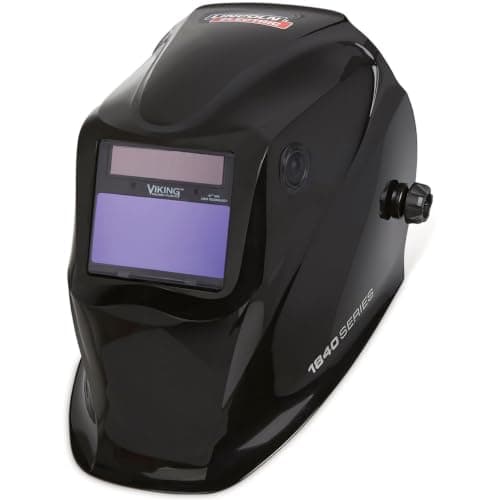 Lincoln Electric VIKING 1840A published 2 A TIG rating and full 1/1/1/1 clarity at the lowest price Lincoln publishes them at, in a small window. | Best value | |
| 4 | 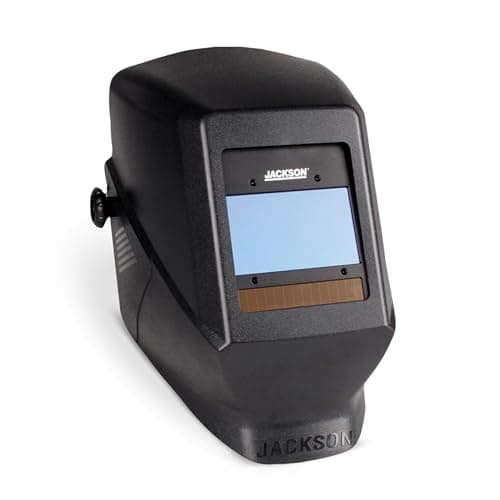 Jackson Safety Insight Variable1/1/1/1 clarity in a narrow, light shell with three published modes - the helmet for someone whose neck ends the session. | Lightest | $203.99 · View on Amazon #ad How this is funded · Price as of November 13, 2026 |
| 5 | 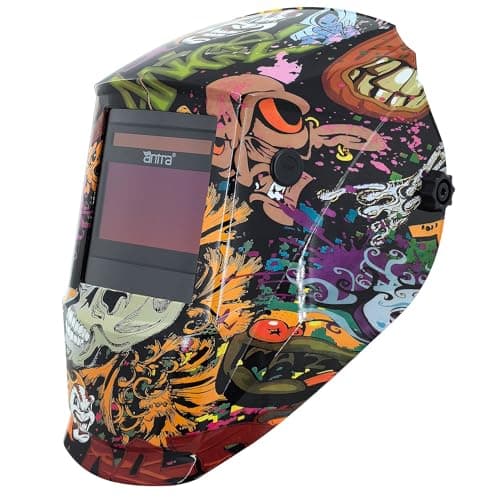 Antra DP3-6404A published 2 A TIG rating and a shade 5 low end at the bottom of the market, where the usual answer is neither. | Best cheap helmet with real specs | $69.95 · View on Amazon #ad How this is funded · Price as of November 13, 2026 |
| 6 | 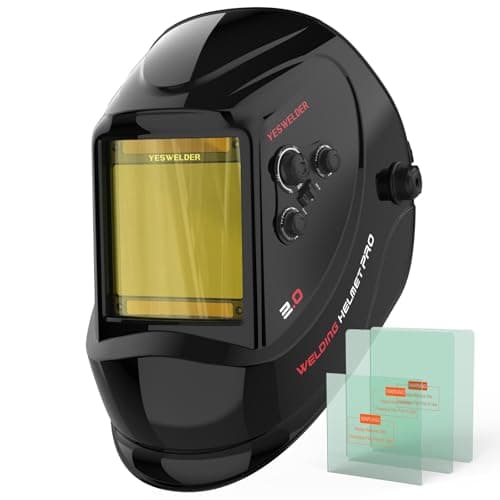 YESWELDER LYG-M800H large-view helmetThe cheapest helmet in our registry, and a panoramic window, with its clarity figures honestly unverified. | Budget pick |
The short answer
Six helmets in our registry carry a live price under $500, and the band is wide enough that it spans three different kinds of buyer. The two specifications worth paying for are a published optical class — 1/1/1/1 is top marks in all four EN 379 categories — and a published low-amperage TIG rating, because a lens with no TIG rating may not trigger on an arc that barely makes light.
Our overall pick is the ESAB Sentinel A60: 13.02 sq in, a full 1/1/1/1 and a 2 A TIG rating, which nothing else in the band combines. The best value is the Lincoln VIKING 1840, which has both of those specifications in a smaller window for less. The budget pick is the YESWELDER LYG-M800H, the cheapest helmet we list.
Every price is read from the live feed when the page loads and carries its own "as of" date inside the buy button. Prices move, so the table is the authority rather than this heading — if a helmet has risen out of the band, the live number will show it before we can.
The two numbers that decide a helmet
Optical class. Four digits, 1/1/1/1 at best, rating optical quality, diffusion of light, variation in luminous transmittance and angle dependence. A helmet that publishes 1/1/1/1 is making a verifiable claim against a standard. A helmet that publishes nothing is making none, and over a two-hour session the difference shows up as eye strain rather than as anything dramatic. The auto-darkening lens page explains what each digit measures.
Low-amperage TIG rating. A DC TIG arc at 10 A produces very little light, and a lens with insufficient sensitivity simply does not darken — which is how people flash themselves. A published rating of 2 A or 5 A is a commitment; silence is not. Of the helmets in this band, the ESAB and both Lincolns publish 2 A, the Miller publishes 5 A, and the Jackson, the YESWELDER and the Antra's optical class are each a gap stated on this page rather than glossed over.
| Helmet | Viewing area | Optical class | TIG rating | Shade range |
|---|---|---|---|---|
| ESAB Sentinel A60 | 13.02 sq in | 1/1/1/1 | 2 A (DC) | 3/5-13, 0.5 steps, shade lock |
| Miller Digital Infinity | 13.4 sq in | 1/1/1/2 | 5 A (DC) | Weld 8-13, cut 5-8, grind 2.5 |
| Lincoln VIKING 1840 | 7.0 sq in | 1/1/1/1 | 2 A (DC) | Variable 7-13 |
| Jackson Insight Variable | 9.3 sq in | 1/1/1/1 | Not published | Variable 9-13 |
| Antra DP3-6404 | Not published | Not published | 2 A (DC) | 3/5-13 with shade lock |
| YESWELDER LYG-M800H | Panoramic; not stated | Inconsistently published | Not published | Variable, with grind mode |
The helmet above this band, for context.
The Lincoln VIKING 3350 sits just outside $500 and is the helmet most welders end up with: 12.5 sq in, 1/1/1/1, a 2 A rating for AC and DC, an external grind button and a five-year warranty. If your budget can stretch, read the 3350 review before you decide — and the 3350 against the Sentinel A60 is the head-to-head.
Which of the six is yours?
Fabrication, more than one process, buying once: ESAB Sentinel A60.
Overhead and out-of-position work: Miller Digital Infinity, for the window and X-Mode.
Seated TIG at the bench: Lincoln VIKING 1840. The 2 A rating and the 4-point pivot headgear matter more there than window size does.
Long sessions where your neck gives up first: Jackson Insight Variable.
A first helmet, or a spare: Antra DP3-6404 if you want a published TIG rating, YESWELDER LYG-M800H if you want the biggest window for the least money or you wear glasses.
If none of those describes you, the beginner-scoped page is the best welding helmets for beginners and the cheaper band is welding helmets under $100.
How we built this band
Band membership comes from the live price feed. Every helmet here had a current price under $500 in our price layer on the publication date, and each buy button shows that price with its own date. A helmet whose price we could not read is not in the band.
Ranked on published specifications, not on brand. The winner is the helmet that publishes the most of what matters, which is why a mid-priced ESAB beats the most expensive helmet in the band on this page and loses to it on the large-view page.
Gaps are stated. Three helmets here do not publish something the others do, and each one says so in its own write-up. We have worn none of these helmets and publish no scores. More on the method on how we pick.
The band below, and a different axis
If $500 is more than you want to spend, welding helmets under $300 is the band below this one, and it forces a choice this band does not: nothing under $300 publishes both a certified 1/1/1/1 optical class and a low-amperage TIG rating. If the lens itself is what you are shopping on rather than the ceiling, the best true color welding helmets ranks the color-rendering field and explains what that claim is and is not worth.
1. Best overall under $500
ESAB Sentinel A60
13.02 square inches, a full 1/1/1/1 optical class and a published 2 A TIG rating. Nothing else in the band has all three.
ESAB publishes the Sentinel A60 at 4.65 x 2.80 in (13.02 sq in) with a 1/1/1/1 optical class, a 3/5–13 shade range in 0.5-step increments with shade lock, a DC TIG rating down to 2 A, four arc sensors, a 1/25,000 s light-to-dark switching speed with an adjustable 0.1–0.9 s dark-to-light delay, nine memory settings, an external grind button and adjustable Halo headgear.
That combination is the reason to spend in this band rather than below it. A full 1/1/1/1 means top marks in all four EN 379 categories. A published 2 A TIG rating means the lens is specified to trigger on an arc that barely makes light, which is what thin stainless TIG is. And 13.02 sq in is large-view territory. Helmets that publish all three usually cost more than this.
Who it is for: anyone who runs more than one process and expects the helmet to be the last one they buy. The half-shade increments and the shade 5 low end mean it covers MIG, TIG and plasma from one hood.
Against it: nine memory settings is more configuration than a two-process home shop will use, and it replaces the outgoing Sentinel A50, so older reviews and accessory guides may not match this shell.
What works
- Published DC TIG rating down to 2 A — the one specification that decides whether a helmet is usable on thin stainless
- 13.02 sq in at a full 1/1/1/1 optical class, which is a combination almost nothing else offers
- Half-shade increments and shade lock let you settle on an exact shade rather than jumping between whole numbers
- External grind button, so switching modes does not mean lifting the hood and losing your torch position
What does not
- The most expensive helmet on this site apart from the Miller, and much of what it adds over a VIKING 3350 is refinement
- Nine memory settings is more configuration than a home shop running one or two processes will ever use
- Replaces the outgoing Sentinel A50, so older reviews and accessory guides may not match this shell
2. Largest view in the band
Miller Digital Infinity
13.4 square inches and X-Mode, at 1/1/1/2 clarity and a 5 A TIG rating rather than 2 A.
Miller publishes the Digital Infinity at a 13.4 sq in viewing area with the ClearLight 4X lens, 1/1/1/2 optical clarity to EN 379, a 1/25,000 s switching speed, four arc sensors, weld 8–13, cut 5–8, grind 2.5 and X-Mode 8–13, a shade 2.5 light state, a DC TIG rating down to 5 A, a CR2450 battery, 21.4 oz and a four-year lens warranty with five outside and two inside cover lenses included.
It has the biggest window in the band, and X-Mode is a genuine capability rather than a refinement: it holds the lens dark electromagnetically when a sensor is blocked, which is the exact failure of out-of-position welding where your own hand covers a sensor.
Who it is for: fabrication work, especially overhead and in awkward positions, where both the window and X-Mode pay for themselves.
Against it on this page specifically: 1/1/1/2 rather than a full 1/1/1/1, and a 5 A TIG rating against the 2 A of the ESAB and the two Lincolns. If thin stainless TIG is your work, that second figure is the one that decides it.
What works
- 13.4 sq in is the largest view in this group, and on long fabrication work that is the difference you actually feel
- X-Mode holds the lens dark through sensor blockage — the fix for out-of-position welding where your hand covers a sensor
What does not
- The most expensive helmet on this site by a wide margin
- Everything it adds over a VIKING 3350 is a refinement, not a capability
- Rated to 5 A rather than the 2 A of the Lincoln and ESAB helmets, which matters on very thin stainless
3. Best value
Lincoln Electric VIKING 1840
A published 2 A TIG rating and full 1/1/1/1 clarity at the lowest price Lincoln publishes them at, in a small window.
Lincoln publishes the VIKING 1840 at a 7.0 sq in viewing area, a variable 7–13 shade range, 1/1/1/1 optical clarity, a DC TIG rating down to 2 A, the 4C lens, 4-point pivot headgear with ratchet tightening, and a low-profile external grind control.
The two specifications that matter most on a helmet are both here, at roughly two thirds of the price of the two helmets above. The 4-point pivot headgear with two top straps is also worth naming: it spreads weight properly for long seated TIG sessions, which is where helmet comfort actually gets tested.
Who it is for: bench work and TIG, where the window size matters less because the joint is in front of you and your head is not at an awkward angle.
Against it: 7.0 sq in is noticeably tighter than the 12 to 13.4 sq in helmets, the range starts at shade 7 so it does not reach the shade 5 end plasma cutting wants, and the DIN 2.5 light state is darker between welds than the helmets above it.
What works
- A published 2 A DC TIG rating — the same figure as helmets costing several times more
- Full 1/1/1/1 optical clarity, which budget helmets almost never publish at all
- 4-point pivot headgear with two top straps spreads weight properly for long seated TIG sessions
What does not
- 7.0 sq in is a small window — noticeably tighter than the 12.5 to 13.4 sq in helmets above it
- Shade range starts at 7, so it does not reach the shade 5 end that plasma cutting wants
- DIN 2.5 light state rather than the 3 or 4 of the helmets above it, so the view between welds is darker
4. Lightest
Jackson Safety Insight Variable
1/1/1/1 clarity in a narrow, light shell with three published modes - the helmet for someone whose neck ends the session.
Jackson publishes the Insight Variable at a 3.94 x 2.36 in viewing area (9.3 sq in), a variable 9–13 shade range with weld, torch and grind modes, a 1/1/1/1 optical class, a narrow HSL shell with an extended front lip and ANSI Z87.1 certification.
Light on the neck is the honest reason to buy it, and it is the complaint that actually ends a long session — not window size and not clarity. The narrow shell also gets into places a large-view helmet cannot, which matters for vehicle and in-situ repair work.
Jackson's shells and headgear parts being easy to source separately is a practical advantage over several years of ownership.
Against it: the viewing area is small, and it is not a low-amperage TIG helmet — the 9–13 range does not reach shade 5 for plasma, and no low-amp TIG rating is published.
What works
- Light on the neck, which is the complaint that actually ends a long session
- Jackson's shells and headgear parts are easy to source separately
What does not
- Viewing area is small next to a VIKING 3350 or a panoramic helmet
- Not a low-amperage TIG helmet
Who this is wrong for: Low-amperage TIG and plasma cutting. The shade range starts at 9 and no low-amp TIG rating is published, so treat it as a MIG, stick and gas-work helmet.
5. Best cheap helmet with real specs
Antra DP3-6404
A published 2 A TIG rating and a shade 5 low end at the bottom of the market, where the usual answer is neither.
Antra publishes the DP3-6404 with a true-color lens and full digital control and display, a 3/5–13 shade range with shade lock, a published DC TIG rating down to 2 A, tack, weld and cut memory presets plus a grind/weld button, and a solar cell with battery assist.
A 2 A TIG rating at this price is genuinely unusual — most budget helmets publish no TIG rating at all, which is a quiet way of saying the lens may not reliably trigger on a low-amperage arc. The shade 5 low end also means one cheap helmet spans MIG, TIG and plasma.
Who it is for: a first helmet, or a second helmet to keep in the truck. Cheap enough that starting here and upgrading later costs less than agonising over the decision.
Against it: Antra does not publish a 1/1/1/1 optical class, and over a long session you can feel the difference. Headgear is the weak point on budget helmets generally and this is no exception, and it is a small shell — next to a VIKING 3350 the view is noticeably tighter.
What works
- A published 2 A TIG rating at the bottom of the market, where the usual answer is no rating at all
- Shade 5 low end covers plasma cutting, so one cheap helmet spans more than MIG
- Quick grind/weld button and shade lock — two things that are normally the first upgrade
- Cheap enough that starting here and upgrading later costs less than agonizing over it
What does not
- Antra does not publish a 1/1/1/1 optical class for it, and over a long session you can feel the difference
- Headgear is the weak point on budget helmets generally, and this one is no exception
- A small shell: next to a VIKING 3350 the view is noticeably tighter
6. Budget pick
YESWELDER LYG-M800H large-view helmet
The cheapest helmet in our registry, and a panoramic window, with its clarity figures honestly unverified.
YESWELDER publishes the LYG-M800H as a true-color panoramic lens with a variable shade range including a light-state grind mode, a solar cell with a replaceable battery, and a deep shell that accommodates most prescription glasses without pressure on the temples.
It is the budget pick: the least expensive helmet we list. What it buys that nothing else at this price does is window size and glasses clearance, which for a glasses wearer is often the difference between a helmet they use and one they do not.
Who it is for: a first helmet on a tight budget, a spare, or a glasses wearer who wants to know whether a deep shell solves their problem before spending real money.
Against it, stated plainly: published optical-class figures are inconsistent between listings, so treat its clarity as unverified; no low-amperage TIG rating is published; and the headgear adjustment is coarse next to an X6 or Halo system.
What works
- Panoramic view at a fraction of a name-brand large-view helmet's price
- True-color lens makes the puddle and the weld pool edge much easier to read than a green lens
- Deep shell accommodates most prescription glasses without pressure on the temples
What does not
- Published optical-class figures are inconsistent between listings — treat unstated clarity as unverified
- Headgear adjustment is coarse compared with the X6 or Halo systems
Questions people actually ask
What is the best welding helmet under $500?
Of the helmets in our registry under $500, the ESAB Sentinel A60 publishes the strongest combination: a 13.02 square inch viewing area, a full 1/1/1/1 optical class and a DC TIG rating down to 2 amps, plus half-shade increments and an external grind button.
For less money the Lincoln VIKING 1840 publishes the same optical class and the same 2 amp rating in a 7.0 square inch window.
How much should I spend on a welding helmet?
Enough to get a published optical class and, if you will TIG weld, a published low-amperage TIG rating. In our registry that starts well under $100 for the TIG rating alone and around the $200 to $400 mark for both together.
Above roughly $500 you are buying window size, headgear quality and warranty length rather than a different class of eye protection.
What does 1/1/1/1 mean on a welding helmet?
It is the EN 379 optical class, and the four digits rate optical quality, diffusion of light, variation in luminous transmittance, and angle dependence. One is the best score in each category, so 1/1/1/1 is top marks across the board.
A helmet that publishes no optical class is making no claim at all. Over a long session that usually shows up as eye strain rather than anything obvious.
Do I need a 2 amp TIG rating on a welding helmet?
You do if you TIG weld thin material. A DC TIG arc at very low amperage produces little light, and a lens without enough sensitivity does not darken - which is the most common way welders flash themselves.
For MIG, flux-core and stick welding it does not matter, because those arcs are bright enough to trigger any auto-darkening lens.
Is a $400 welding helmet better than a $100 one?
Usually in three measurable ways: a published optical class, a larger viewing area and better headgear. Whether those are worth four times the price depends on how long your sessions are and whether you wear it daily.
What a $100 helmet can match is the TIG rating - the Antra DP3-6404 in our registry publishes a 2 amp rating well below $100, which several dearer helmets do not.
Will these helmets stay under $500?
Not guaranteed. Every price on this page is read from our live feed when the page loads and carries its own date inside the buy button, because helmet listing prices move.
Treat the table as the current answer. If a helmet has risen above the band, the live number will tell you before this page can.
Sources
- ESAB - Sentinel A60 published specifications: 4.65 x 2.80 in (13.02 sq in), 1/1/1/1 optical class, shade 3/5-13 in 0.5-step increments with shade lock, DC TIG down to 2 A, four arc sensors, 1/25,000 s light-to-dark with 0.1-0.9 s adjustable delay, nine memory settings, external grind button, adjustable Halo headgear (recorded in this site's product registry, ASIN B0BLQ92744)
- Miller - Digital Infinity published specifications: 13.4 sq in viewing area, ClearLight 4X lens, 1/1/1/2 optical clarity (EN 379), 1/25,000 s switching, four arc sensors, weld 8-13 / cut 5-8 / grind 2.5 / X-Mode 8-13, shade 2.5 light state, DC TIG down to 5 A, CR2450 battery, 21.4 oz, four-year lens warranty (read 2026-10-29, recorded in this site's product registry, ASIN B0DC1V62WG)
- Lincoln Electric - VIKING 1840 published specifications: 7.0 sq in viewing area, variable shade 7-13, 1/1/1/1 optical class, DC TIG down to 2 A, 4C lens, 4-point pivot headgear with ratchet tightening, low-profile external grind control, DIN 2.5 light state (recorded in this site's product registry, ASIN B0H1JTHQTN)
- Jackson Safety - Insight Variable published specifications: 3.94 x 2.36 in viewing area, variable shade 9-13 with weld, torch and grind modes, 1/1/1/1 optical class, narrow HSL shell with extended front lip, ANSI Z87.1 (recorded in this site's product registry, ASIN B01HTMLSGG)
- Antra - DP3-6404 published specifications: true-color lens with full digital control and display, shade 3/5-13 with shade lock, DC TIG down to 2 A, tack / weld / cut memory presets plus grind/weld button, solar cell with battery assist (read 2026-10-16, recorded in this site's product registry, ASIN B0CV9P2YLP)
- YESWELDER - LYG-M800H published description: true-color panoramic lens, variable shade with light-state grind mode, solar cell with replaceable battery, deep shell for prescription glasses; optical-class figures inconsistently published and treated here as unverified (recorded in this site's product registry, ASIN B07M5WKCYX)
- Arc & Bead live price layer (lib/prices.ts) - price-band membership verified on 2026-11-10 against the price data in this site's price layer, which was generated on 2026-11-06; each buy button renders the live price at request time with its own 'as of' date, so the table rather than this page's heading is the current authority
Read next
- The best welding helmets at the entry end of the market
What an entry-level helmet compromises, and the two specifications to insist on regardless.
- The best welding helmets for the money
Where the price curve flattens, the four specifications you pay for, and what wins at each point.
- The best large view welding helmets
Four welding helmets ranked on published viewing area in square inches, with optical class read alongside it and the cheapest panoramic helmet in our registry named as the budget pick.
- Lincoln VIKING 3350 review
A published-specification review of the Lincoln VIKING 3350 - what its 1/1/1/1 clarity, AC-and-DC 2 A TIG rating and external grind button actually buy, and who should buy something else.
- The best auto-darkening welding lens, and how to read the specs
The cartridge is the helmet. Optical class, switching speed, sensors and trigger amperage, explained.
- The best welding helmets for TIG welding
TIG helmets are decided by minimum trigger amperage, not viewing area. Four that publish the figure.
Back to Helmets & PPE, or start over at Find Your Level.
Ryder M.
Ryder M. is the hands-on owner behind Magoo Media Group. He writes Arc & Bead's buying guides and picks every machine on the site. What every recommendation is based on — and what it is not based on — is set out on How We Pick.